Best Heirloom Plant Varieties
Heirloom varieties are open-pollinated cultivars passed down for generations — prized for complex flavor, storied history, and seed-saving potential. These varieties let you save seeds and grow the same crop next year.
1009 varieties across 29 categories
Browse by Category
All 1009 Varieties
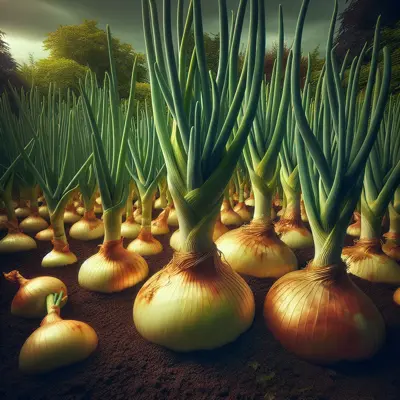
Ailsa Craig Sweet Onion
A legendary exhibition onion variety from Scotland that can grow to enormous sizes while maintaining sweet, mild flavor. This pale yellow globe onion is famous for winning competitions and producing bulbs that can weigh 2-3 pounds when grown with proper care. Despite its impressive size, Ailsa Craig maintains excellent eating quality and stores reasonably well.
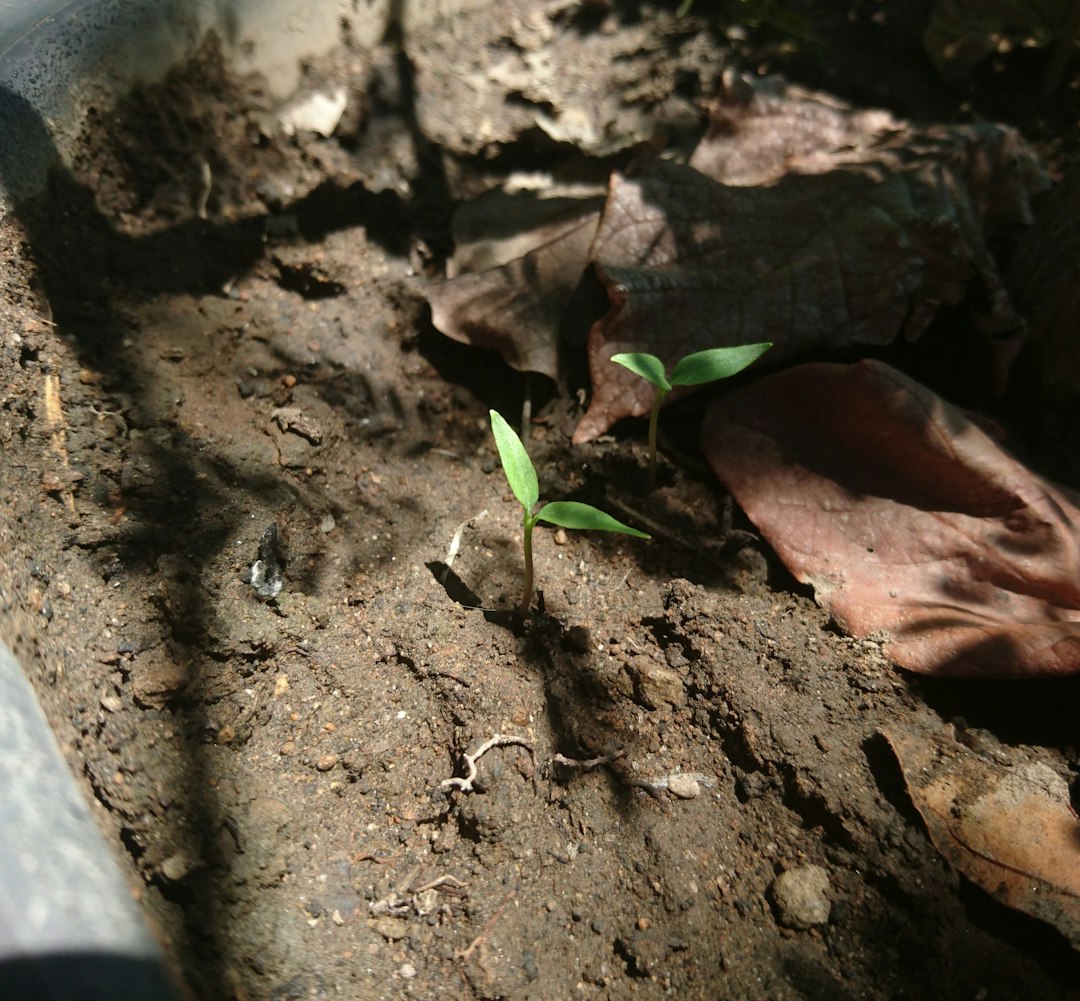
Bandit
Bandit has beautiful very dark blue-green, upright leaves and good uniformity. The shank grows very thick with minimal bulbing. NOTE: For ease of sowing, Bandit's seed is coated with an inert, NOP-compliant film.
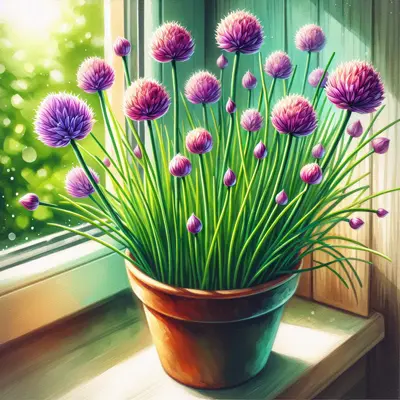
Common Chives
Common Chives (Allium schoenoprasum) are a classic perennial herb featuring slender, tubular green leaves that grow in dense clumps and reach 12-18 inches tall. Delicate purple-pink pompom flowers appear in spring, adding ornamental appeal. Ready to harvest at 75-85 days from seed, though established plants provide year-round cutting. This hardy heirloom offers mild, delicate onion flavor with subtle sharpness, making it ideal for finishing dishes, garnishing soups, and creaming into sauces. Unlike stronger alliums, chives complement rather than overpower. Extremely cold-hardy and low-maintenance.
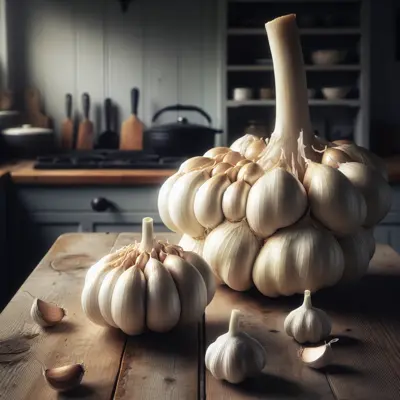
Elephant Garlic
Despite its name, Elephant Garlic is actually more closely related to leeks than true garlic, producing massive bulbs that can weigh up to one pound each. The flavor is much milder and sweeter than regular garlic, making it perfect for roasting whole or for those who want garlic flavor without the bite. Each enormous clove can be as large as a regular garlic bulb.
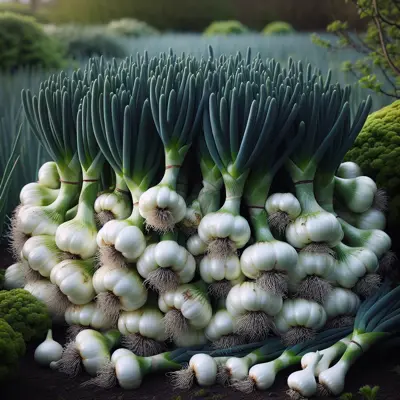
Evergreen Hardy White
Evergreen Hardy White is an heirloom Allium variety prized for its mild, tender white onions with a delicate flavor less pungent than standard onions. Reaching maturity in approximately 65 days, this cold-hardy cultivar produces elongated white bulbs suitable for fresh eating and cooking. The plant tolerates a wide range of soil conditions and thrives in full sun to partial shade. Its hardiness and ease of cultivation make it an excellent choice for gardeners seeking a versatile, sweet onion option that stores moderately well and brings subtle onion flavor to dishes without overwhelming heat.
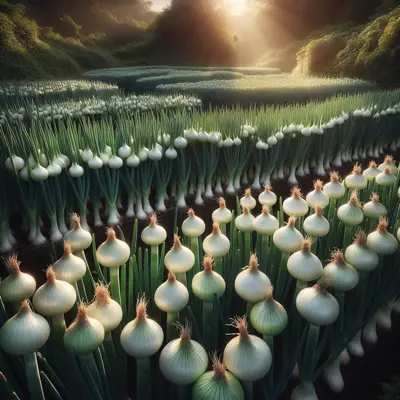
Evergreen White Bunching Onion
A hardy perennial scallion variety that lives up to its name by providing fresh green onions year-round in most climates. This vigorous variety forms thick white bases and dark green tops that can be harvested continuously by cutting and allowing to regrow. Perfect for gardeners who want a permanent source of fresh scallions without replanting.
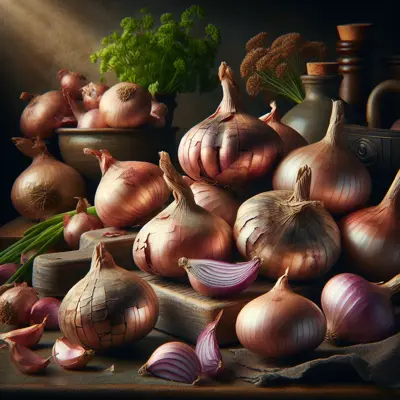
French Gray Shallot
The gourmet cook's dream shallot, prized by French chefs for its complex, wine-like flavor and firm texture that holds up beautifully in cooking. These traditional gray-skinned shallots multiply from single bulbs into clusters of 6-12 bulbs with rose-colored flesh and incredible storage life. Their sophisticated flavor is milder than onions but more complex than garlic.
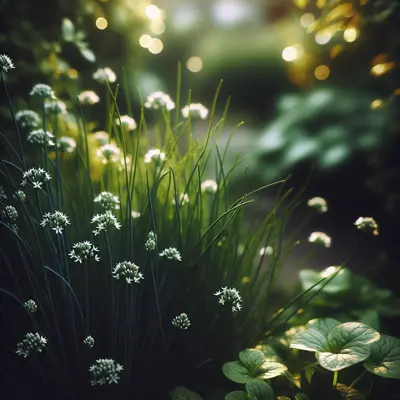
Garlic Chives
Wide, flat leaves are attractive and easy to harvest. Mild garlic flavor.
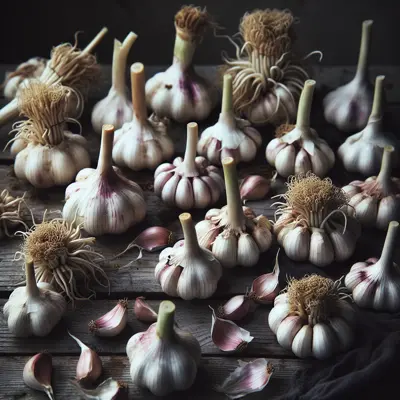
German Extra Hardy Garlic
A robust hardneck garlic variety that lives up to its name by surviving the harshest winters while producing large, flavorful bulbs with 4-6 cloves each. This porcelain-type garlic offers excellent storage life and a rich, complex flavor that becomes sweet and nutty when roasted. It's an ideal choice for northern gardeners who want reliable garlic production and the bonus of edible scapes in early summer.
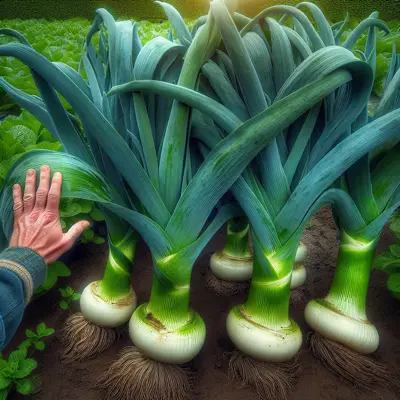
Giant Musselburgh
A legendary Scottish heirloom leek that produces enormous, thick white stems up to 3 inches in diameter and excellent cold hardiness. This impressive variety has been grown since the 1830s and remains a favorite for its mild, sweet flavor and ability to overwinter in harsh climates. Giant Musselburgh is the go-to choice for gardeners wanting impressive leeks for soups and braising.
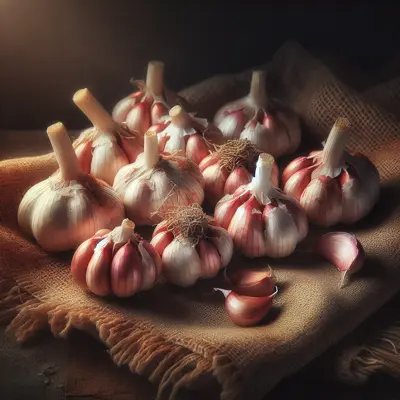
Inchelium Red Softneck Garlic
An award-winning heirloom softneck garlic from Washington state that's perfect for beginners and delivers exceptional flavor. These large, plump bulbs store for up to 10 months and offer a rich, full-bodied garlic taste that's not overpowering. The most reliable garlic variety for gardeners in warmer climates where hardnecks struggle.
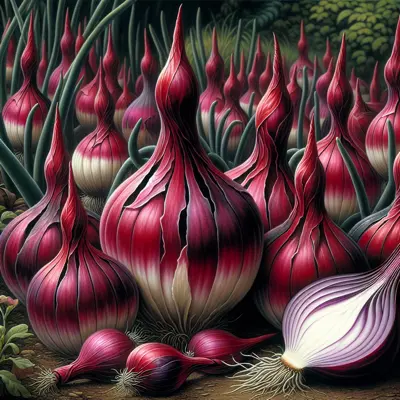
Italian Red Torpedo Onion
An elegant elongated onion with stunning deep red skin and crisp white flesh streaked with purple rings. This intermediate-day variety offers a perfect balance of sweet and sharp flavors that mellows beautifully when cooked. The distinctive torpedo shape and vibrant color make it a standout in both the garden and on the plate.
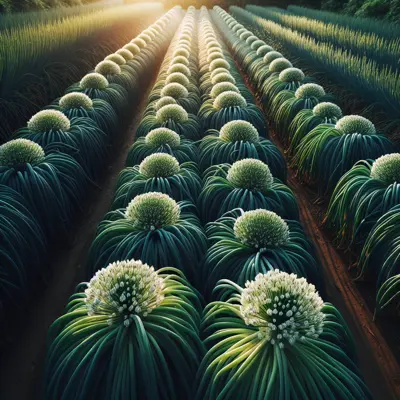
Japanese Bunching Onions
Japanese bunching onions are delicate, slender green onions that mature in approximately 65 days. Unlike bulbing onions, they form elongated white shanks with tender green tops, making them ideal for both raw and cooked applications. These heirloom varieties are prized for their mild, sweet onion flavor and exceptionally crisp texture. They're a staple in Japanese cuisine, perfect for garnishing dishes, stir-fries, and salads. Their easy growing requirements and continuous harvest potential make them a favorite among home gardeners seeking fresh, flavorful alliums.
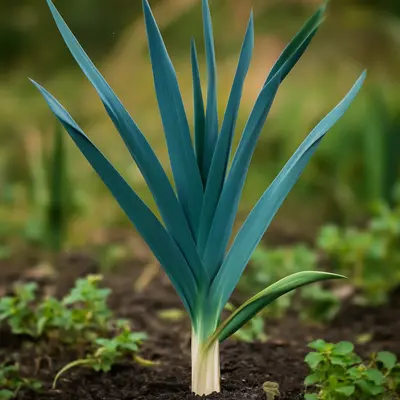
King Richard
Beautiful full-sized leeks. In favorable soil and culture, the white shanks are over a foot long to the first leaf. Medium-green leaves with full habit. For baby leeks, plant closely (40 seeds/ft.) and harvest at finger size. While not hardy enough for overwintering, they will withstand medium-heavy frost (32° to 20°F/0° to -7°C) without losing their healthy appearance.
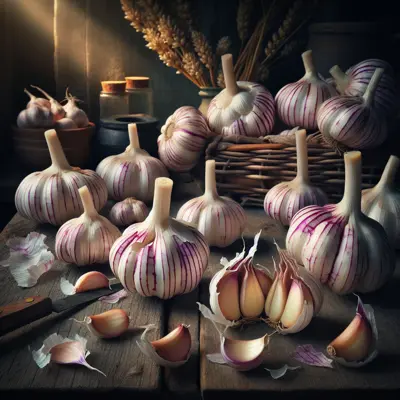
Music Hardneck Garlic
The gold standard of hardneck garlic varieties, prized by both home gardeners and gourmet chefs for its exceptional flavor and reliability. Music produces large, easy-to-peel cloves with a perfect balance of heat and sweetness that intensifies when cooked. This Italian heirloom is incredibly cold-hardy and stores beautifully for 8-10 months.
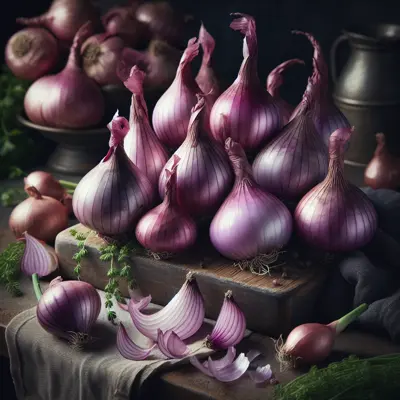
Purple de Lautrec Shallot
A prestigious French heirloom shallot with protected designation of origin status, prized by chefs worldwide for its complex, wine-like flavor. The elongated bulbs have beautiful purple-tinged skin and develop multiple cloves with incomparable taste. This is the shallot that elevates French cuisine to culinary art.
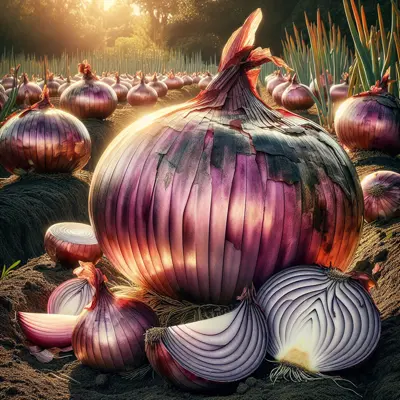
Purple Top Walla Walla
The sweet, mild onion that made Walla Walla, Washington famous. This beloved heirloom variety produces large, flattened bulbs with purple-tinged skin and crisp white flesh so sweet they can be eaten like apples. Perfect for those who want to grow their own version of this premium market onion.
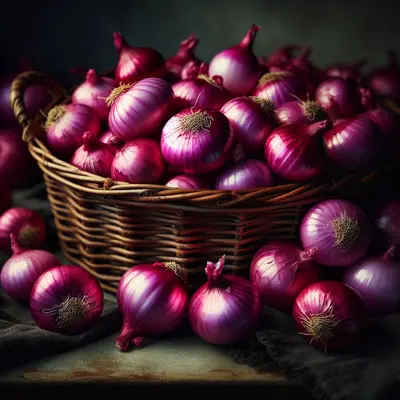
Purplette
These flavorful specialty onions mature early and hold well. Purplette is a glossy rich burgundy, transforming to a nice pastel pink when cooked or pickled. Can be harvested at golf ball size or very young as baby bunching onions with purple pearl ends. Best at 40° latitude and higher.
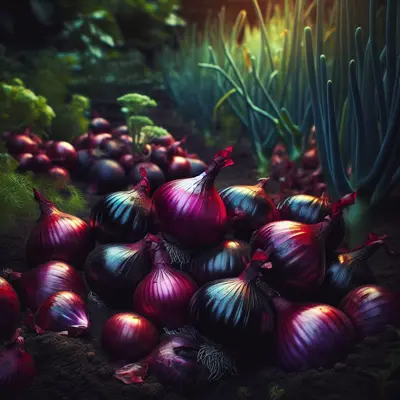
Red Burgundy Onion
A stunning deep red storage onion that combines beautiful color with excellent keeping qualities and robust flavor. The dark burgundy skin and purple-tinged white flesh make this variety as ornamental as it is functional in the kitchen. Red Burgundy stores for 6-8 months when properly cured, making it ideal for gardeners who want year-round homegrown onions.
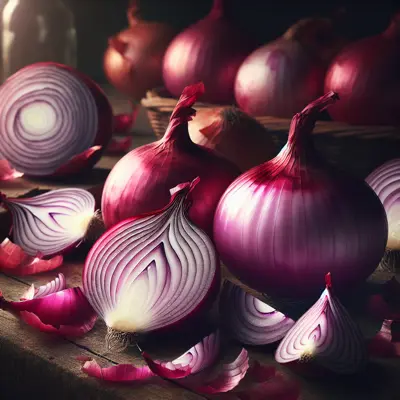
Rossa di Milano
An onion so lovely, it's almost a shame to eat it. Selected by the late Dr. John Navazio under tough organic growing conditions, our 'Rossa di Milano' strain is up to 10 days earlier than others boasting the same name. One of the most thrips-resistant long-day onions in our trials. Bulbs are large to colossal in size and exhibit the true grano shape with distinctly flattened tops. Suited for long storage (6+ months) with thin necks that easily dry down. Strong, bronze-pink skins and great uniformity. An excellent cooking onion, Rossa di Milano contributes an abundance of sweetness and pungency to any cuisine. Your new favorite onion. Can be successfully grown in the northern reaches of the intermediate-day region. Adaptation: 38-50° latitude.
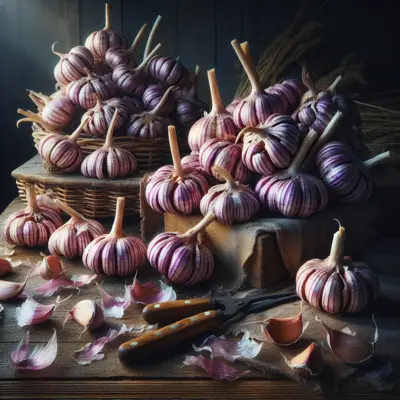
Siberian Garlic
An extremely hardy hardneck garlic variety that survives brutal winters and produces beautiful purple-striped bulbs with complex, robust flavor. This reliable performer sends up dramatic curling scapes in summer and develops 8-12 cloves per bulb with excellent storage life. Siberian is perfect for northern gardeners who want dependable garlic with gourmet flavor and stunning appearance.
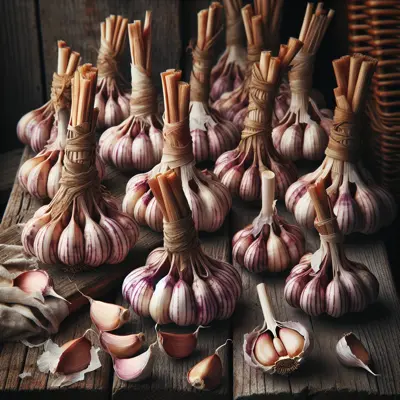
Spanish Roja Garlic
A legendary hardneck garlic variety brought to the Pacific Northwest by Spanish immigrants, Spanish Roja offers full-bodied flavor with a satisfying heat that doesn't overpower. Known for its beautiful purple-striped bulb wrappers and reliable performance in cold climates. This is the garlic that made Spokane famous among garlic enthusiasts.
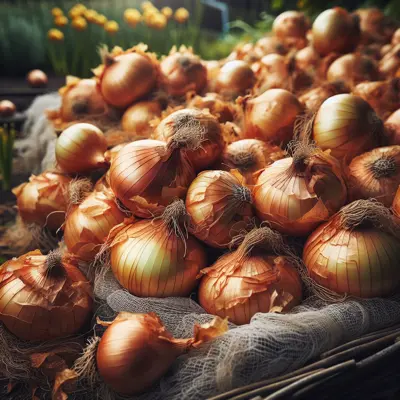
Stuttgart
A classic German heirloom onion prized for its exceptional storage life and reliable performance in cool climates. This flat-topped yellow onion develops firm, dense bulbs with crisp white flesh and a pleasantly sharp flavor that mellows beautifully when cooked. Stuttgart's outstanding keeping quality makes it a favorite among gardeners who want to store their harvest through winter.
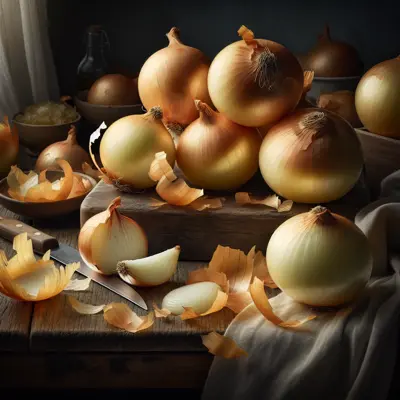
Walla Walla Sweet Onion
Juicy, sweet, regional favorite. In the Northwest, which has normal low winter temperatures above -10°F (-23°C), seed is sown in late August, and a crop of very large, flattened, ultra-mild onions is harvested early the next summer. SPRING PLANTING: Walla Walla may be spring planted using seeds or plants in colder regions where winter survival is hit or miss. It is not as big or sweet as the wintered-over crop, but still milder and juicier than others from spring planting. Nice as a "green top" onion. Not for storage. Adaptation: 35-55° latitude. Also offered organic, and as plants.
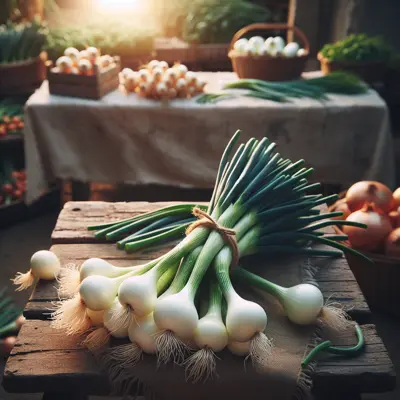
White Lisbon Bunching Onion
The classic European bunching onion prized for its crisp white stems and mild onion flavor. Perfect for continuous harvesting throughout the growing season, these versatile scallions can be harvested young for tender greens or left to mature for thicker stems. A kitchen garden essential that's incredibly easy to grow.
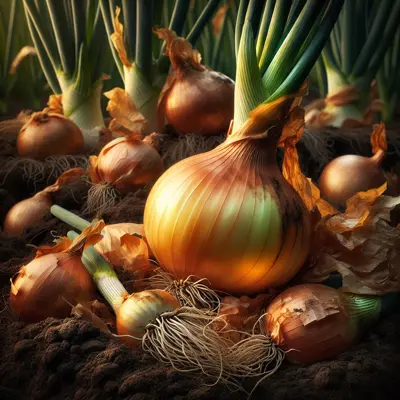
Yellow Sweet Spanish Onion
A classic long-day onion variety beloved for producing enormous, mild-flavored bulbs that can reach softball size or larger. These golden-skinned beauties are incredibly versatile in the kitchen, sweet enough to eat raw yet substantial enough for cooking. Perfect for northern gardeners who want to grow impressive onions that store well through winter.
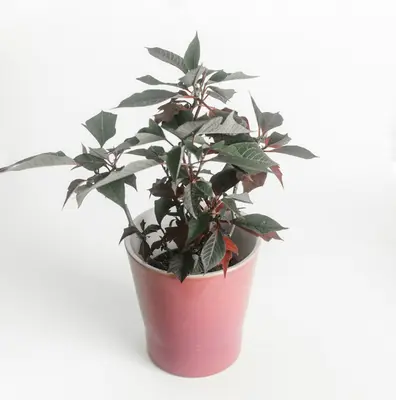
Amethyst
Thinner, straighter, and more attractive than Royal Burgundy. Pods avg. 5-5 1/2" long and are set high on upright plants. Very good flavor raw or cooked. Pods turn green when cooked. Tan seeds. Bush bean.
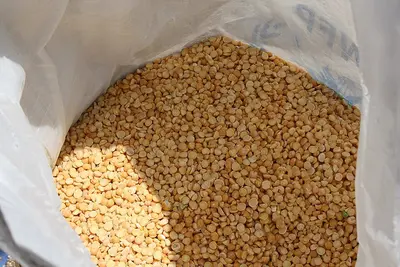
Bamako
Straight, dainty, 4-5" pods on upright, tidy plants. Well-suited to hand harvest because stems stay on, keeping the pod intact. Bush bean.
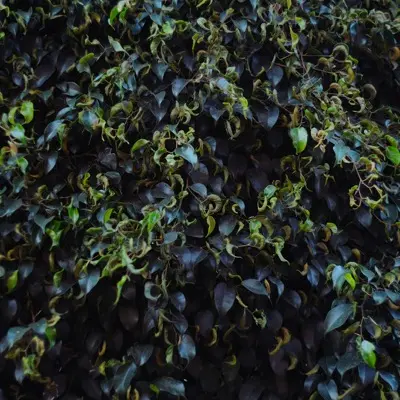
Black Turtle Bush Bean
A classic dry bean variety prized for its rich, earthy flavor and meaty texture that makes it perfect for Latin American cuisine. These small, glossy black beans are incredibly nutritious and store exceptionally well, making them a pantry staple for home gardeners who want to grow their own protein source.
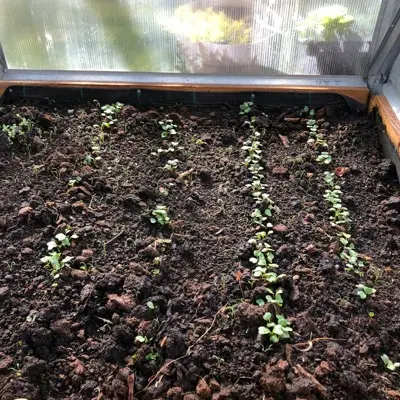
Black Valentine Bush Bean
A reliable heirloom bush bean prized for its exceptional cold tolerance and ability to produce in less-than-ideal conditions. This hardy variety has been a garden staple since the early 1900s, producing abundant crops of tender green pods even in cool weather. Black Valentine is the go-to choice for northern gardeners and anyone wanting a dependable, no-fuss bean variety.
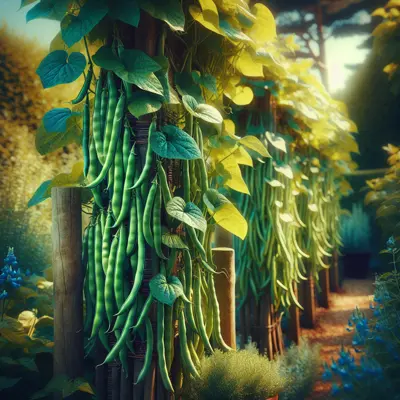
Blue Lake Pole Bean
The gold standard of pole beans, Blue Lake produces heavy yields of tender, stringless pods that maintain their quality whether picked young or allowed to mature. This reliable variety climbs vigorously to 6-8 feet and delivers consistent harvests throughout the season, making it a favorite among home gardeners who want maximum production from minimal space.
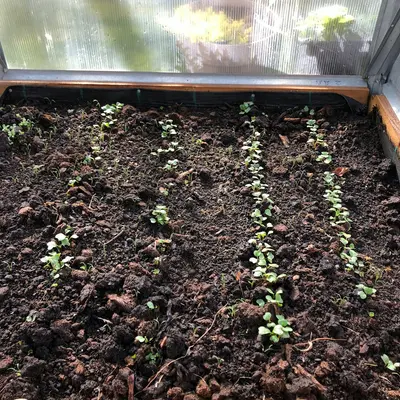
Borlotto Bush Bean
An Italian heirloom treasure that produces stunning speckled pods streaked with red and cream, making it as ornamental as it is delicious. Also known as cranberry beans, these dual-purpose beauties can be harvested young as tender snap beans or left to mature for plump, flavorful shelling beans perfect for Italian cuisine.
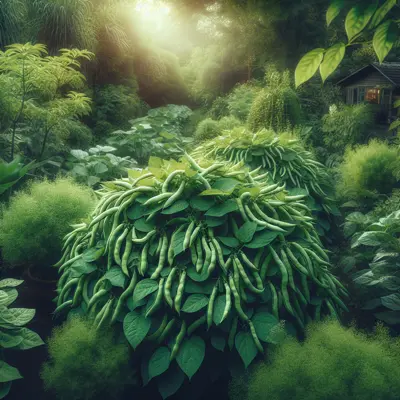
Bountiful Bush Bean
A tried-and-true heirloom from 1898 that lives up to its name with incredibly heavy yields of tender, stringless pods. This variety is prized for its long harvest window and ability to produce well even in less-than-ideal conditions. Gardeners love its reliability and the fact that it continues producing over several weeks rather than all at once.
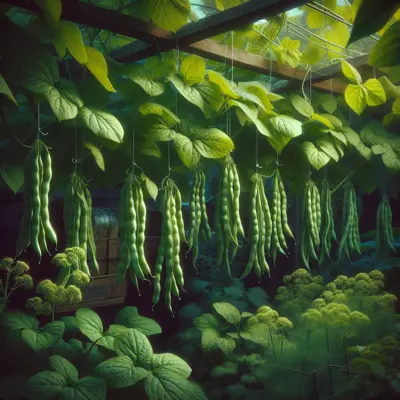
Burpee's Stringless Green Pod
A beloved heirloom introduced in 1894 that revolutionized bean growing by being one of the first truly stringless varieties available to home gardeners. These productive plants produce tender, meaty pods with exceptional flavor that remains consistent throughout the harvest season. A perfect choice for gardeners seeking reliable, old-fashioned quality with the convenience of modern stringless technology.
Bush Romano Italian
A classic Italian flat-podded bush bean that produces wide, meaty pods with exceptional flavor and tender texture. These productive plants deliver the authentic taste of Italian cuisine right from your garden, perfect for fresh eating or preserving. Romano beans are prized by chefs and home cooks alike for their superior cooking qualities and rich, nutty flavor.
Calypso Bush Bean
A striking heirloom dry bean featuring distinctive black and white orca-like markings that make it as beautiful as it is delicious. Originally from the Caribbean, this compact bush variety produces abundant pods filled with kidney-shaped beans perfect for soups, stews, and Caribbean dishes. The dramatic two-toned pattern and rich, earthy flavor make Calypso beans a favorite among both gardeners and chefs.
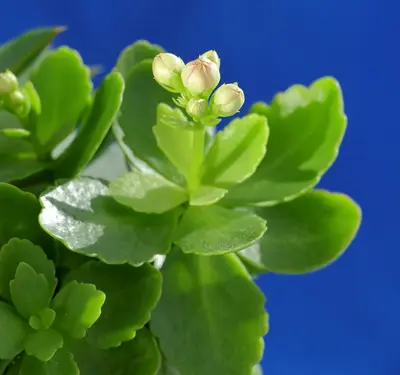
Capitano
Flat pods avg. 5 1/2-6" and have a rich flavor. Plants are large and semi-upright. Pairs nicely with Dulcina. White seeds. Bush bean.
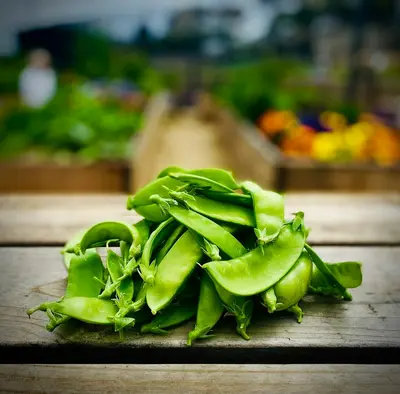
Carminat
Much nicer than older purple pole bean varieties. Harvest pods at 8-9". Excellent, rich, and slightly sweet flavor. Suitable for fresh use in salads or cooked. Beans turn green when cooked. Tan seeds. Pole bean; requires trellising.
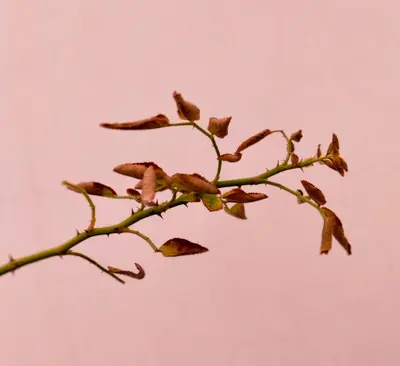
Cherokee Pink Bean
A rare and beautiful heirloom dry bean with stunning pink and burgundy mottled coloring that's been passed down through Cherokee families for generations. This vigorous bush variety not only produces gorgeous beans but also offers exceptional flavor and nutrition, making it perfect for both ornamental and culinary purposes. The striking appearance and cultural significance make this a must-grow variety for heirloom enthusiasts.
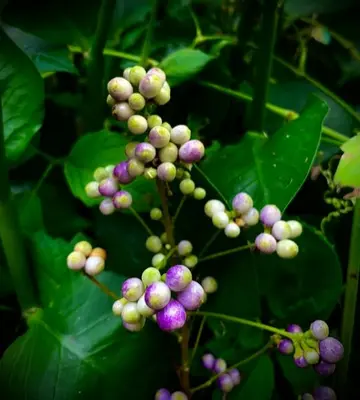
Cherokee Purple Bean
Cherokee Purple Bean is a stunning heirloom snap bean variety prized for its distinctive dark purple pods that mature in approximately 72 days. The beans are notably slender and tender with an excellent snap texture when picked at peak immaturity. This variety delivers a sweet, mild flavor that stands out among purple bean cultivars, making it equally suited for fresh eating, steaming, or stir-frying. The plants produce prolifically in full sun, and the vibrant purple color adds visual appeal to any garden bed. True to its heirloom heritage, Cherokee Purple Bean offers home gardeners an unusual yet reliable producer with superior taste and texture.
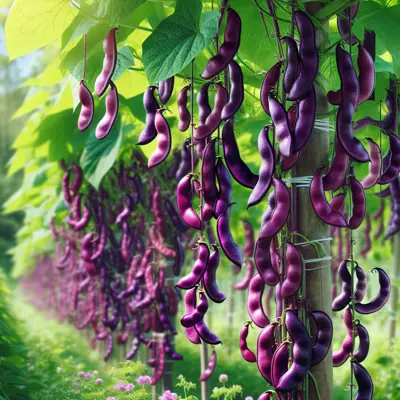
Cherokee Purple Pod Bean
A stunning heirloom pole bean that produces gorgeous deep purple pods on vigorous vines, creating an eye-catching display in any garden. Beyond their ornamental value, these beans offer excellent flavor and turn green when cooked, making them both beautiful and delicious. This Cherokee Nation variety represents centuries of careful seed saving and cultural heritage.
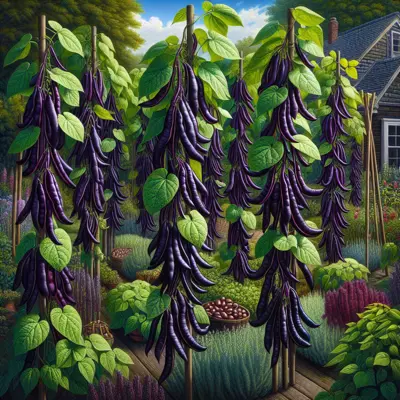
Cherokee Trail of Tears
A sacred heirloom bean carried by Cherokee people during their forced relocation in the 1830s, preserving both history and exceptional flavor. These beautiful purple-black beans produce abundantly and are prized for their rich, meaty texture and deep, complex flavor that improves with cooking. A living piece of American history that connects modern gardeners to indigenous agricultural traditions.
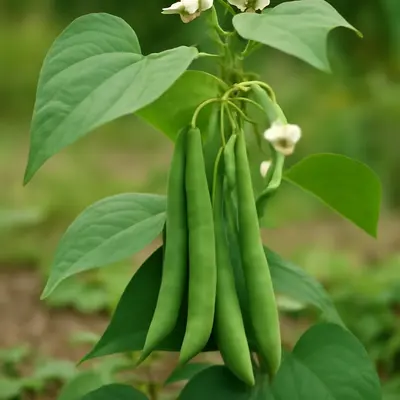
Cobra
Straight, medium-green pods with sweet flavor. The pods are shorter than Fortex's at 6-7", but are faster to mature. Purple flowers. Black seeds. Pole bean; requires trellising.
Detroit Dark Red Bush Bean
An eye-catching heirloom variety that produces deep burgundy-red pods on sturdy bush plants. While the pods turn green when cooked, they're absolutely stunning in the garden and at harvest. This productive variety offers the same great taste as traditional green beans with the added visual appeal of colorful pods.
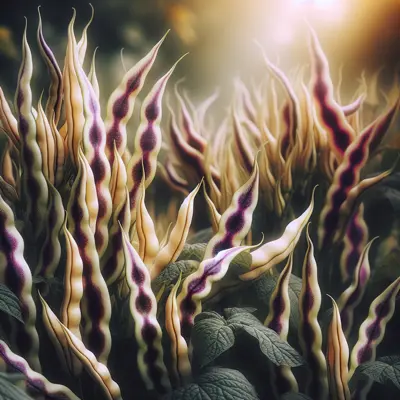
Dragon Tongue
A stunning Dutch heirloom that transforms any garden into a conversation piece with its cream-colored pods dramatically streaked with purple flames. Beyond their striking appearance, these beans offer exceptional flavor when harvested young as snap beans, with a tender texture and sweet, nutty taste that's perfect fresh or lightly cooked. The purple markings fade when cooked, but the superior flavor remains.
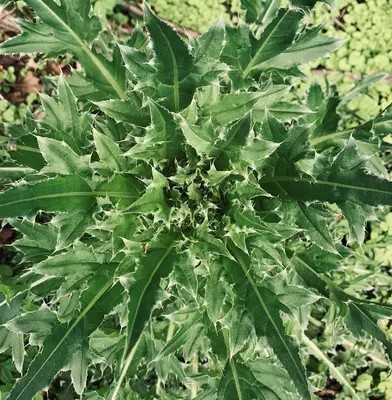
Dragon's Tongue
Avg. 6-6 1/2" flat pods are pale yellow with purple streaks. They are tender, sweet, and good in salads or cooked. Purple disappears upon cooking. Tan seeds with dark speckles. Bush bean.
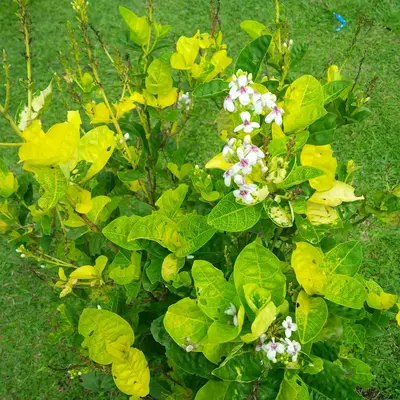
Dulcina
The sweet medium-green pods avg. 5 1/2-6 x 3/4", and are borne on large semi-upright plants. White seeds. Plant Variety Protected. Bush bean.
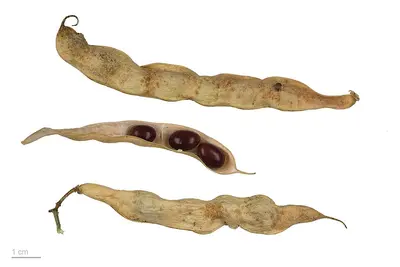
Flambo
Pods avg. 5 1/2" and contain attractive, specked beans. For shell beans, harvest when pods turn dark red with a yellow background. Flambo is excellent fresh, frozen, or canned. Also makes a fine dry bean. Bush bean.
Fortex
Growing to over 11", Fortex produces extra-long round pods. Early and very productive, the beans may be picked at 7" in length for extra-slender "filet" beans. Green firm-textured pods are completely stringless and delicious at all lengths, even after the seeds enlarge. Walnut brown seeds. Pole bean; requires trellising.
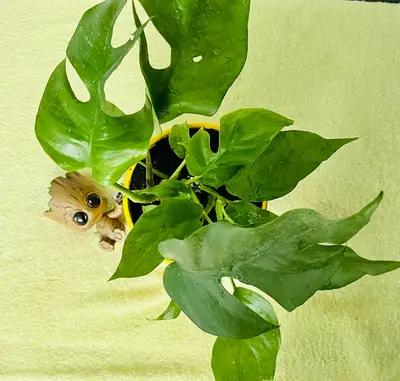
Gold Marie Vining Bean
A stunning French heirloom that produces bright golden-yellow pods on vigorous climbing vines. This variety offers the best of both worlds with tender, flavorful snap beans when young and excellent shell beans when mature. The brilliant yellow color makes it a showstopper in the garden and adds vibrant color to any dish.
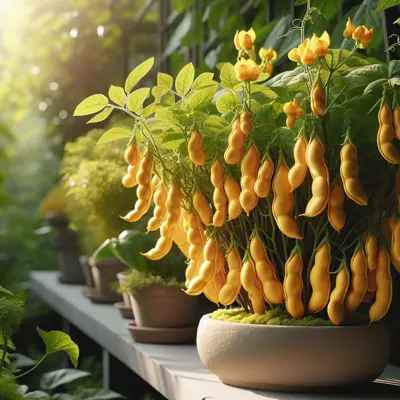
Golden Wax Bush Bean
A classic yellow wax bean that's been delighting gardeners since the 1870s with its bright golden pods and exceptional tenderness. These compact bush plants produce heavy yields of stringless, buttery-flavored beans that are as beautiful as they are delicious, making them perfect for both the dinner table and farmers market sales.
Goldilocks
The 5-6" pods are straight, attractive, flavorful and borne on large upright plants. Good heat tolerance. Concentrated set with good field-holding ability. Plant Variety Protected. White seeds. Bush bean.
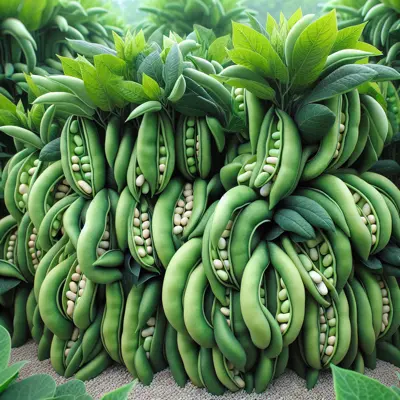
Henderson Bush Lima
A compact, early-maturing lima bean perfect for northern gardens and small spaces, producing abundant crops of small, buttery lima beans in just 65 days. This reliable heirloom has been a garden favorite since the 1880s, valued for its dependable production and rich, creamy flavor. Unlike larger lima varieties, Henderson Bush thrives in cooler conditions and doesn't require the long, hot growing season that limits other lima beans.
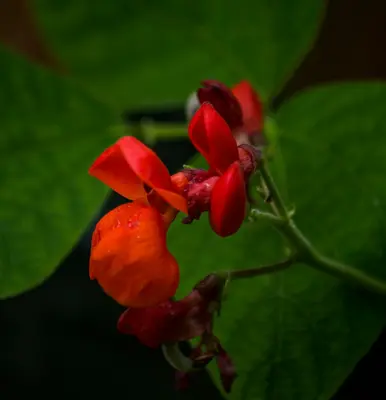
Henderson Lima Bush
A compact, early-maturing lima bean that's been a garden favorite since 1888, perfect for short growing seasons and small spaces. These productive bushes yield tender, buttery baby lima beans that are much more palatable than large limas, with a creamy texture and mild flavor. An excellent choice for gardeners new to growing lima beans or those wanting a reliable, heat-tolerant variety.
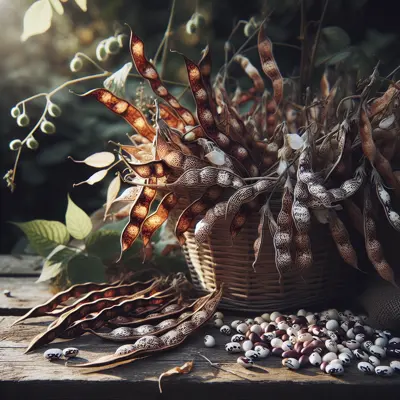
Jacob's Cattle Bush Bean
A stunning heirloom dry bean with distinctive white and maroon spotted patterns that earned its name from resembling the biblical Jacob's spotted cattle. This New England heritage variety combines beautiful appearance with exceptional flavor, making it both a conversation starter and a delicious addition to soups and stews.
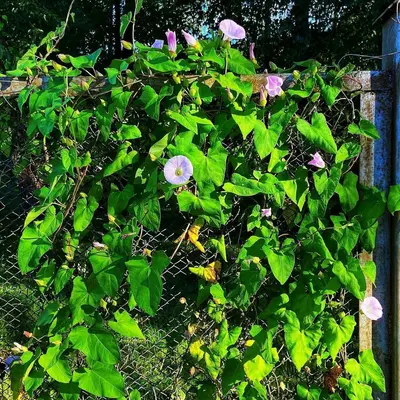
Jacob's Cattle Pole Bean
A historic New England heirloom dating back to the 1800s, named for its resemblance to the speckled cattle mentioned in the Biblical story of Jacob. This vigorous pole variety produces beautiful white beans with distinctive maroon splotches and offers exceptional flavor and protein content. The beans have been a staple in Maine cuisine for generations and are prized for their ability to hold their shape and absorb flavors in traditional bean dishes.
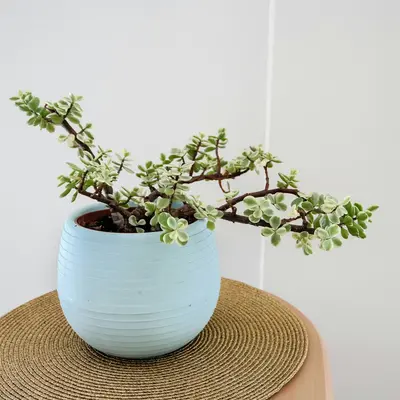
Jade
Arguably the best-tasting bush bean we offer, Jade's 6-7", slender, deep green pods are exceptionally tender and delicious. High-yielding even under heat or cold stress, Jade has been a customer favorite since its debut in our 1992 catalog. Pale green seeds. Bush bean.
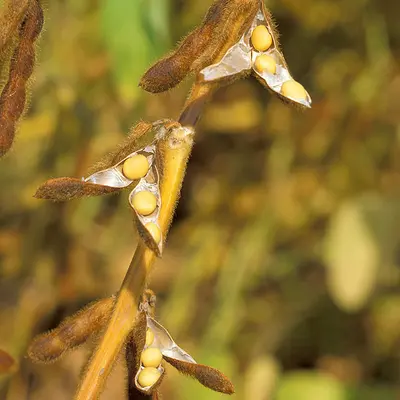
Karikachi
Very tall, upright plants are sturdy and vigorous, producing large plump pods averaging three seeds each. Tastes great when steamed. Larger yields than Tohya and strong resistance to lodging. Indeterminate. Light tan pubescence. Bush bean.
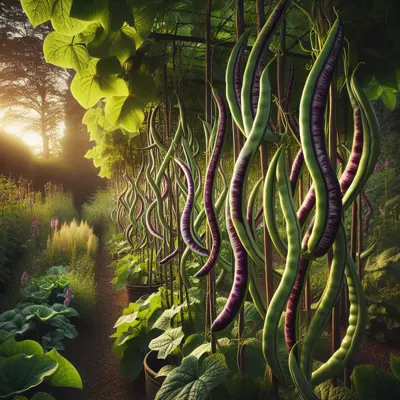
Kentucky Wonder Pole
America's most beloved heirloom pole bean, cherished by gardeners since the 1850s for its incredible productivity and old-fashioned bean flavor. These vigorous climbing vines produce an abundance of long, curved pods that are best harvested young and tender, though they can also be left to mature for excellent shell beans. A true garden workhorse that keeps producing until frost.
King of the Garden Lima Pole
The undisputed champion of lima beans, this vigorous pole variety produces enormous pods filled with large, buttery lima beans that are considered the finest flavored available. Dating back to the 1880s, this heirloom climber delivers impressive yields and sets the standard for what a premium lima bean should taste like.
Lazy Housewife Pole Bean
Despite its unfortunate historical name, this 1800s heirloom is beloved for its completely stringless pods and dual-purpose nature as both snap and shell bean. The creamy white seeds are delicious fresh or dried, and the plants are incredibly productive climbers. This variety truly lives up to its reputation for being low-maintenance while delivering exceptional harvests.
Lima King of the Garden Pole
An impressive pole lima bean that produces the largest, most flavorful lima beans you can grow in a home garden. This vigorous climbing variety yields enormous pods packed with 4-5 buttery, sweet beans that are considered the gold standard for fresh or dried lima bean cuisine.
Marvel of Venice
Full of flavor, the 8-9" pods are 3/4" wide and borne on vigorous vines. This white-seeded variety is remarkably early (earlier than the black-seeded variety with the same name). Pole bean; requires trellising.
Maxibel
High yields of slender, 7" green pods. Extended pod set. Brown mottled seeds. Bush bean.
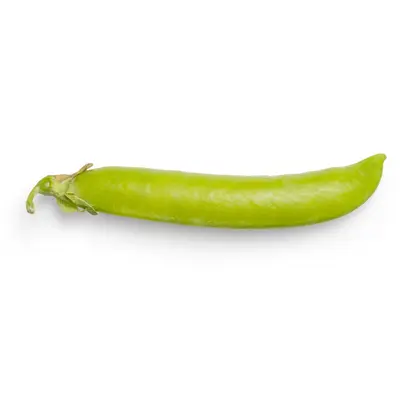
Monte Gusto
This elegant, flavorful wax bean is a clear improvement over older varieties. Pods mature at 8-8 1/2" but may also be harvested as very attractive filet beans at 7". Better-tasting than bush wax beans. Brown seeds. Pole bean; requires trellising.
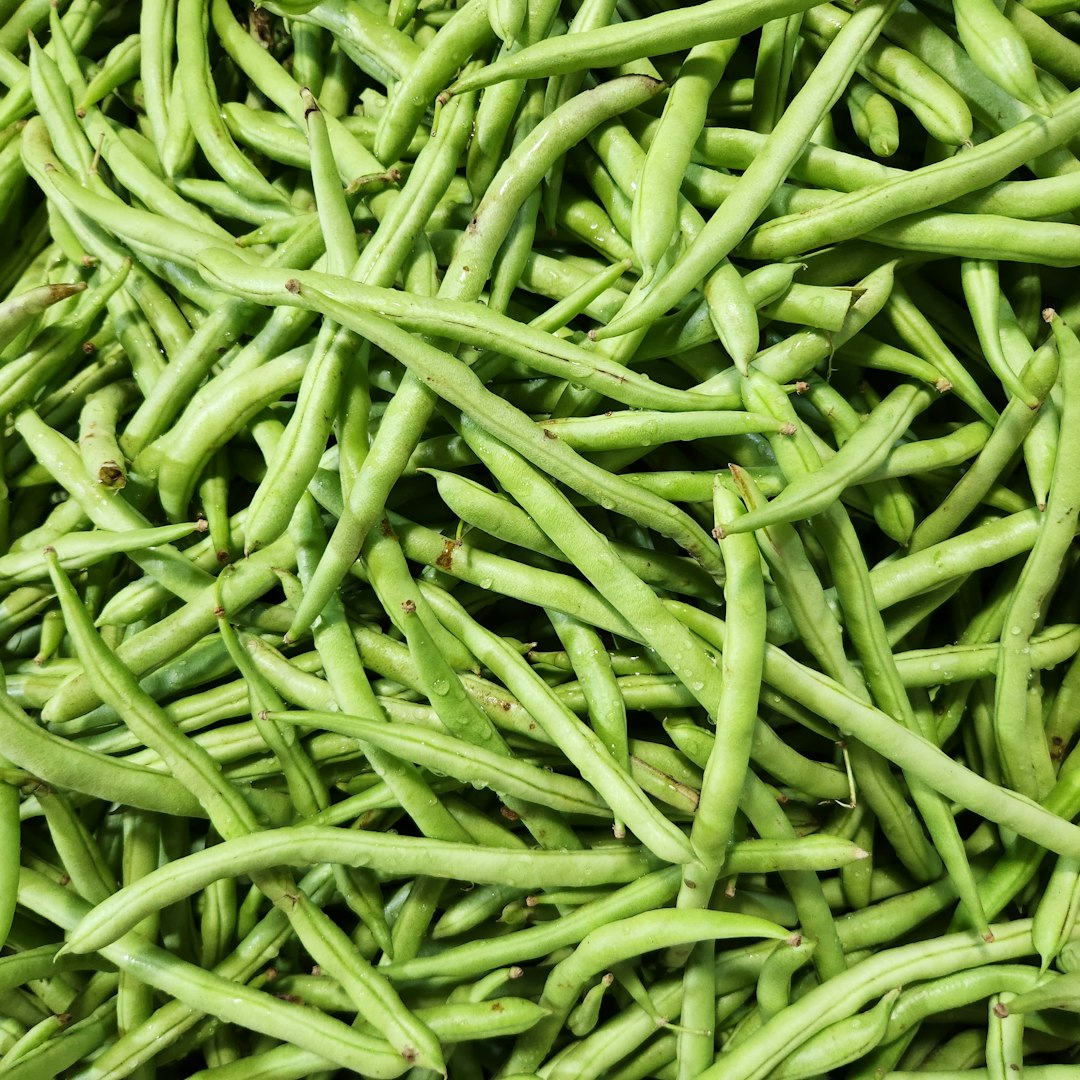
Northeaster
This early maturing Roma-type pole bean has a deliciously rich, sweet flavor. The 8" long, 1" wide, flat green pods are stringless and stay tender for long periods. Extra vigorous in the seedling stage with strong vine growth. white seeds. Pole bean; requires trellising.
Pencil Pod Black Wax Bean
A treasured heirloom wax bean dating back to the 1890s, Pencil Pod Black Wax produces beautiful golden-yellow pods that are perfectly round and stringless. This reliable bush variety offers exceptional flavor and tender texture, making it a favorite among gardeners who appreciate both historical significance and superior eating quality. The bright yellow pods are easy to spot for harvesting and add vibrant color to garden beds.
Pole Lima Speckled Christmas
A stunning heirloom lima bean that lives up to its festive name with cream-colored beans decorated in burgundy speckles that resemble holiday ornaments. This vigorous pole variety climbs 8-10 feet and produces abundant large, flat pods filled with buttery, flavorful lima beans. The combination of exceptional taste, beautiful appearance, and reliable production makes this a standout variety for gardeners seeking something special.
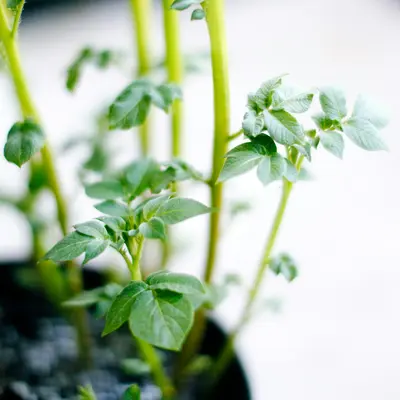
Provider
Provider can be planted earlier than other beans because it tolerates cool soils. Compact plants are easy to grow and adaptable to diverse soil and climate conditions. Produces 5 1/2" fleshy, round pod green beans. Purple seeds. Bush bean.
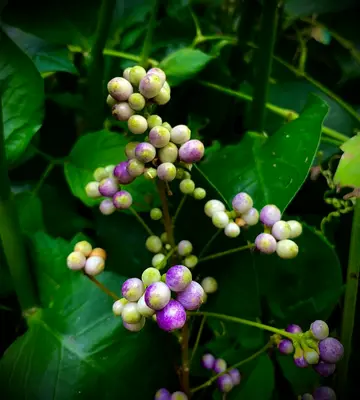
Purple Podded Bush Bean
A stunning heirloom variety that produces vibrant purple pods that turn green when cooked, making it both ornamental and delicious in the garden. These eye-catching plants are incredibly easy to harvest since the colorful pods stand out dramatically against the green foliage. Beyond their beauty, these beans offer excellent flavor and are perfect for gardeners who want something unique and conversation-worthy.
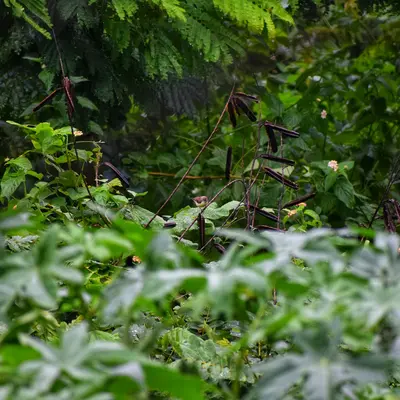
Purple Podded Pole Bean
An eye-catching heirloom climbing bean that produces abundant clusters of deep purple pods on vigorous 8-foot vines. The stunning purple pods make this variety a garden showstopper while providing excellent eating quality and productivity. This dual-purpose beauty serves as both an edible crop and an attractive garden accent that climbs any support structure.
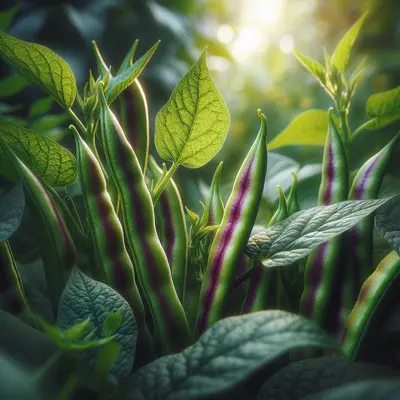
Purple Top Bush Bean
A stunning heirloom variety that produces beautiful purple-streaked pods on compact bush plants, adding both color and flavor to the garden. The tender young pods are excellent fresh, while mature beans can be dried for winter storage, making this a true dual-purpose variety that's been treasured by gardeners for generations.
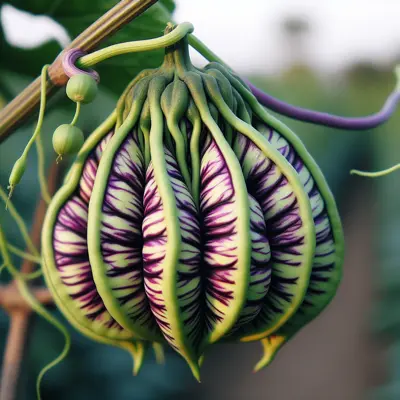
Purple Top Turnip Bean
A stunning heirloom pole bean that produces beautiful purple-streaked pods that transform to green when cooked. This vigorous climber not only provides an abundant harvest but also adds ornamental value to the garden with its attractive purple-tinged foliage and colorful pods. The tender, flavorful beans have been cherished by gardeners for generations and offer both visual appeal and exceptional taste.
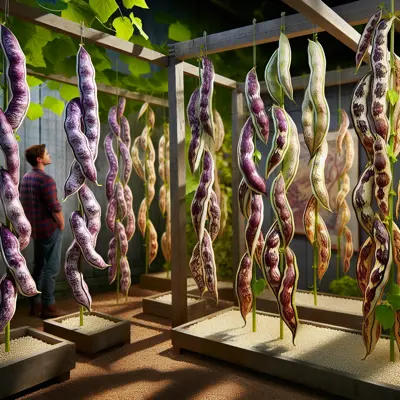
Rattlesnake Pole Bean
A striking heirloom pole bean featuring distinctive purple streaks and mottled patterns that resemble rattlesnake markings, making it as ornamental as it is productive. This heat-tolerant Southern favorite produces abundant harvests of tender, flavorful pods throughout the summer, even in challenging growing conditions. The vigorous vines not only provide delicious beans but also create an eye-catching display in the garden with their unique coloration.
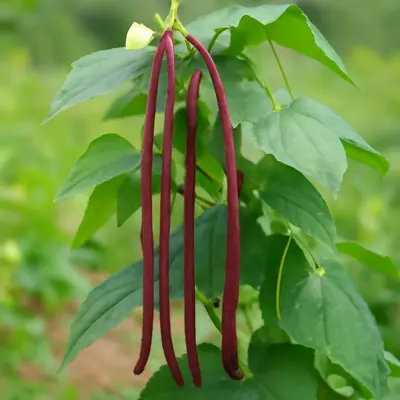
Red Noodle
16-20" long beans are borne in clusters of up to four beans each. Healthy, vigorous plants. Sweet flavor. Burgundy color will fade when cooked. Red seeds. Pole bean; requires trellising.
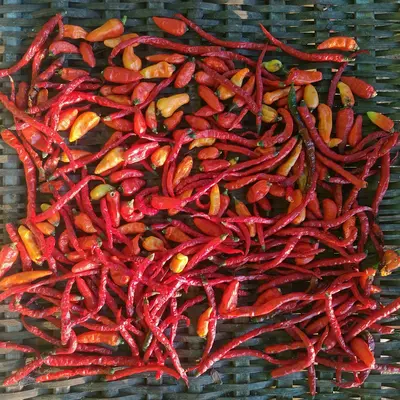
Red Noodle Long Bean
An eye-catching Asian variety that produces incredibly long, burgundy-red pods that can reach up to 24 inches in length while maintaining tenderness and flavor. This vigorous climbing bean is not only productive but adds dramatic color and height to the garden with its striking appearance. Popular in Asian cuisine, these beans are tender when young and maintain their beautiful color when lightly cooked.
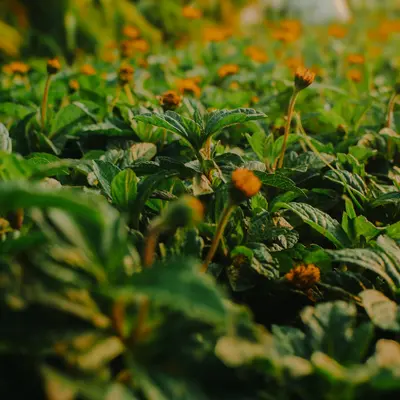
Rocdor
Rocdor has straight, 6 1/2" long, slender pods that have a deep-yellow color. Early and productive on upright plants. The black seeds germinate well in cool soil. Bush bean.
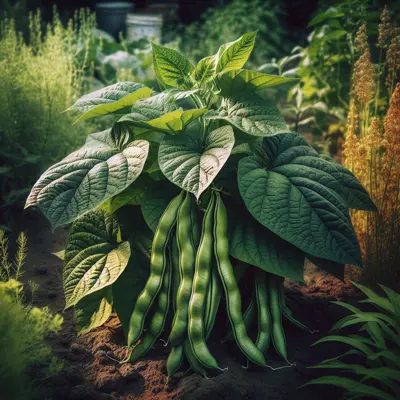
Romano Italian Bush Bean
A classic Italian heirloom prized by chefs and home gardeners for its exceptionally wide, flat pods and rich, intense flavor. These meaty beans have a distinctly different taste and texture from regular green beans, with a more substantial bite and earthy flavor that holds up beautifully to cooking. Popular in Mediterranean cuisine, Romano beans are perfect for gardeners who want something special beyond ordinary green beans.

Scarlet Runner Bean
Scarlet flowers against green, heart-shaped foliage. Rapid climbers. Beans are edible and delicious when young. Keep pods picked for continuous bloom. May simply be called scarlet runner. A hummingbird favorite. Edible Flowers: The flowers offer a mild and sweet flavor. Use them to garnish or in salads, soups, and desserts.
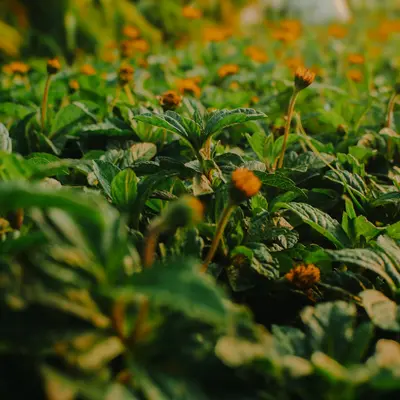
Tavera
Sets the standard for uniformity and eating quality in a filet bean. "Extra-fine" grade beans are short, 4-5" long with medium-dark green, round pods. Medium-size plants. White seeds. Bush bean.
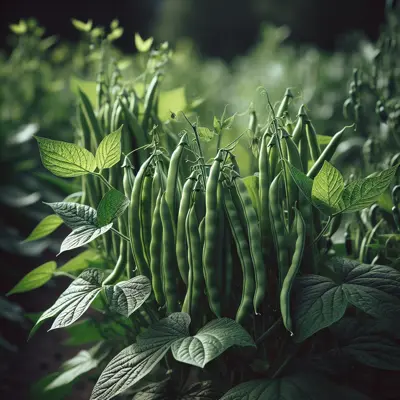
Tendergreen Bush Bean
A time-tested heirloom that has been delighting gardeners since 1925 with its exceptional tenderness and flavor. These medium-green, stringless pods are incredibly productive and maintain their quality even when picked large. Known for its reliability and adaptability, Tendergreen is the perfect choice for beginning gardeners seeking a foolproof, delicious bean variety.
Tohya
Plump pale green pods avg. 3 seeds per pod. Excellent eating quality. Compact plants avg. 2' and have a concentrated set, which allows for hand or machine harvest. For retail sales, harvest whole plants and strip the leaves, leaving the pods on the stalks. Determinate. White pubescence. Bush bean.
Topcrop Bush Bean
A classic All-America Selections winner from 1950 that remains one of the most reliable bush beans for home gardeners. This prolific variety produces straight, stringless pods with excellent flavor and texture. Known for its concentrated harvest period and exceptional disease resistance, making it perfect for both fresh eating and preserving.
Velour
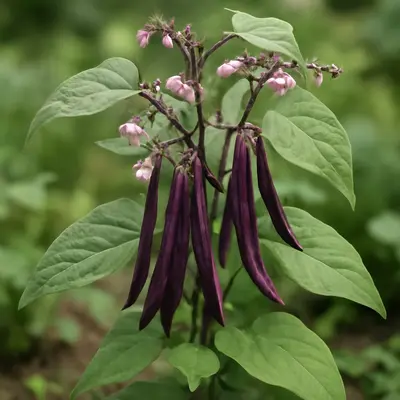
"Extra-fine" grade beans are 4-5" long with straight, slender, bright purple pods. Turns green upon cooking. Medium-size upright plants yield well. Small, light brown seeds. Bush bean.
Vermont Cranberry Bush Bean
A beloved New England heirloom that's been grown in Vermont gardens since the 1700s, featuring beautiful burgundy-red beans that resemble cranberries when dried. This compact bush variety is perfectly adapted to shorter growing seasons and produces reliable yields of flavorful beans that have sustained New England families for centuries. The rich color and exceptional flavor make it a favorite for traditional baked bean recipes and modern farm-to-table cuisine.
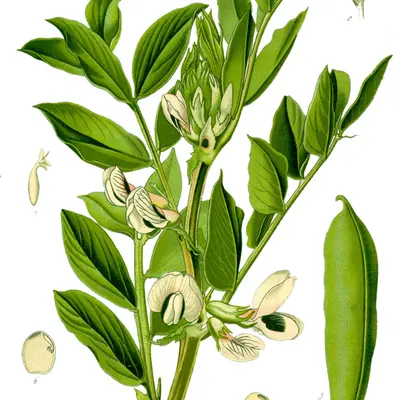
Vroma
Vroma produces large, 6 1/2-7" pods with 4-5 large seeds. Cook like a shell bean when the seeds are pale green. Strong, heat tolerant plants resist lodging. Light brown seeds. Bush bean.
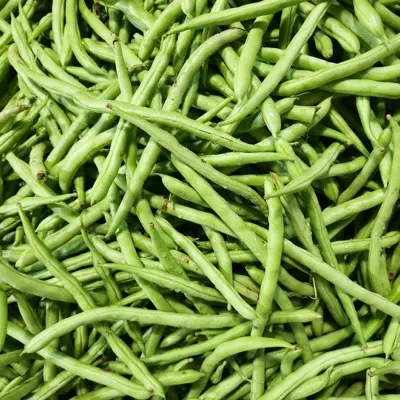
Yard Long Bean
An exotic Asian climbing bean that produces dramatically long, slender pods up to 3 feet in length, creating a stunning conversation piece in any garden. Also known as Chinese long beans or asparagus beans, these vigorous vines are heat-loving and incredibly productive in warm climates. The tender young pods have a unique flavor that's nuttier and more complex than regular green beans, making them prized in Asian cuisine.
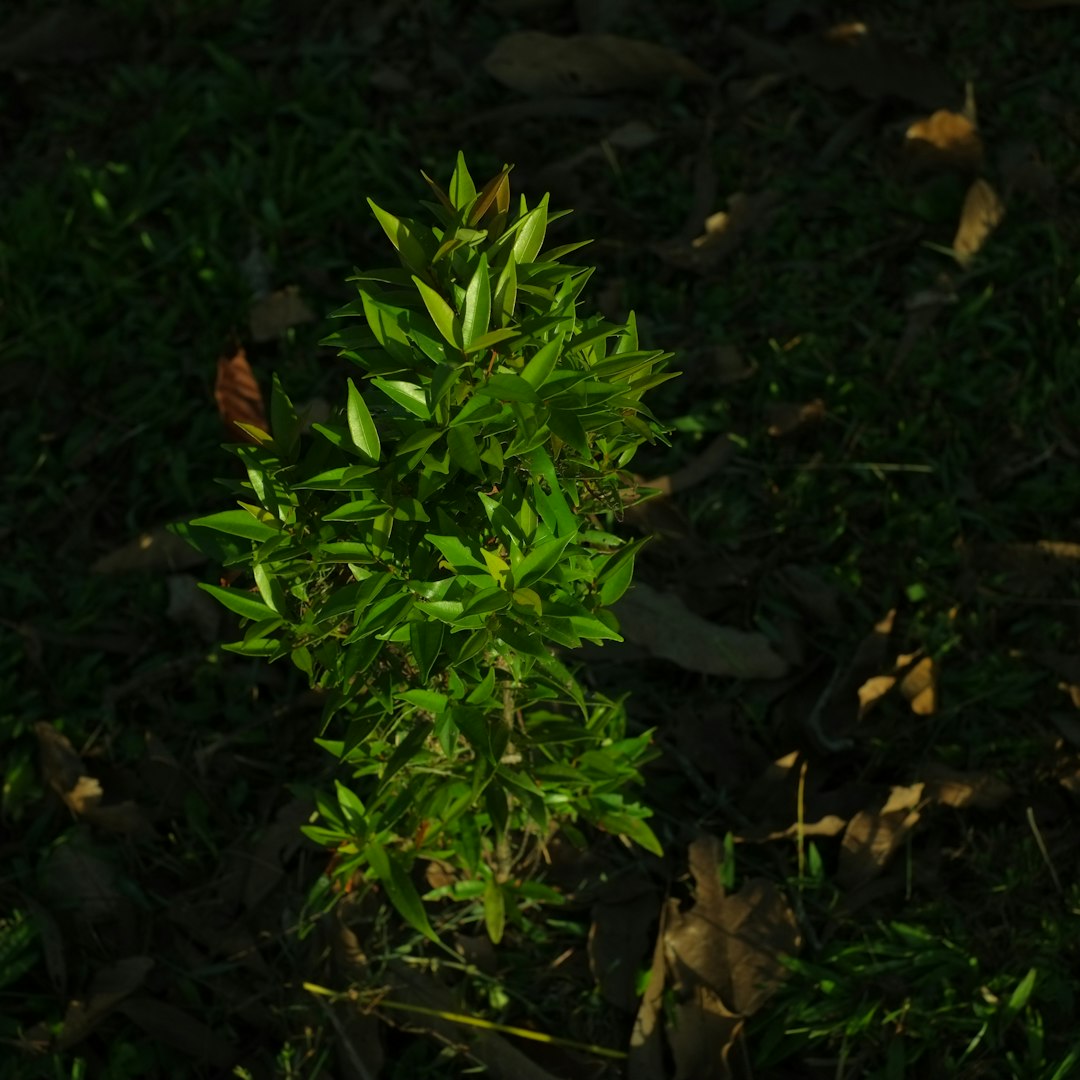
Alexandria
Day-neutral. A gourmet treat and easy landscape plant. These decorative little plants produce delicious, aromatic red strawberries, about twice the size of wild berries but much smaller than the standard type. Perennials, Alpine strawberries stay compact and produce few runners, making them suitable for rock gardens, path edgings, pots, and window boxes. Initial harvest begins the first year, with full harvest beginning the second year. Grows best in Zones 5-8.Edible Flowers: Flowers add a mild, strawberry-like flavor if sprinkled on salads or when used as a garnish for drinks and desserts.
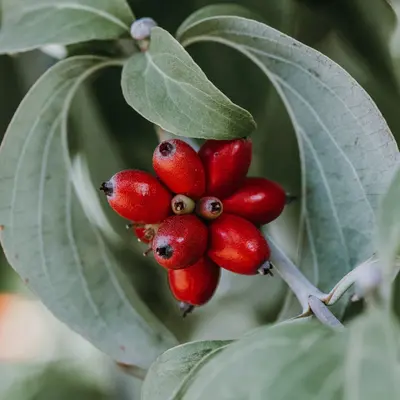
Goji Berry (Wolfberry)
An ancient superfruit gaining popularity among health-conscious gardeners for its exceptional nutritional value and antioxidant content. This hardy shrub produces bright red berries with a sweet-tart flavor reminiscent of cranberries. Once established, goji berries are extremely drought-tolerant and can produce for decades.
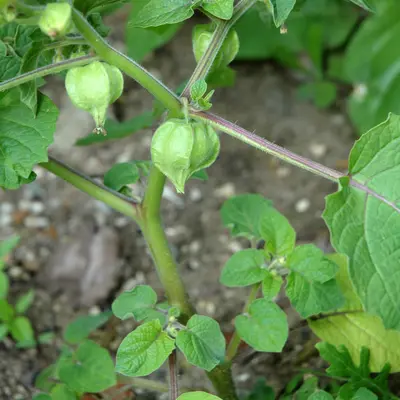
Goldie
A conversation piece at markets, well-liked by children. This old-fashioned tomato family member bears 1/2- 3/4" sweet golden berries inside papery husks, resembling small, straw-colored Japanese lanterns. The flavor is quite sweet and a bit wild. Plants are profusely branching, prolific, and drop ripe fruits. Fruits can be eaten raw, dried like raisins, frozen, canned, or made into preserves, cooked pies, and desserts.
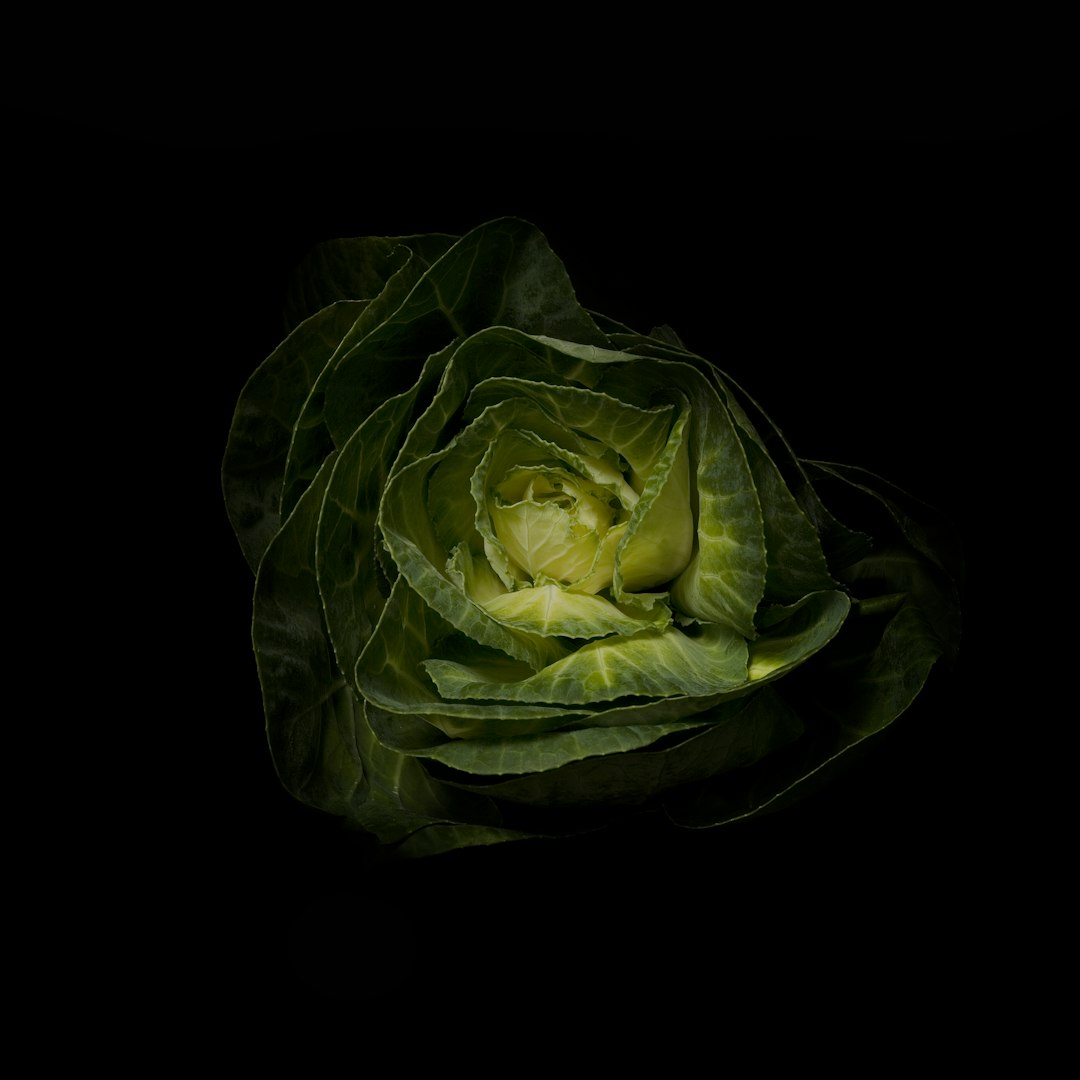
Amazing
Medium-size plants with domed, solid curds and self-blanching, upright wrapper leaves when well fed. Tolerant to both heat and cold stress.
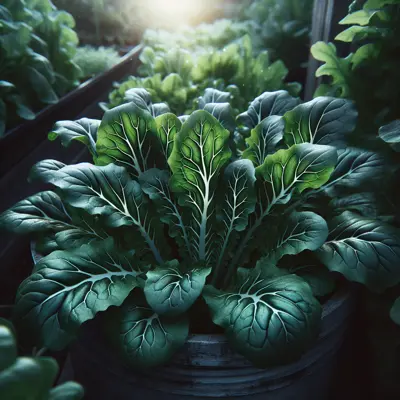
Arugula 'Rocket'
This fast-growing salad green delivers a peppery, nutty punch that transforms ordinary salads into gourmet experiences. The deeply lobed leaves are ready to harvest in just weeks, making it perfect for succession planting and continuous fresh salads. Cool weather brings out the best flavor, while hot weather intensifies the spiciness for those who love bold, peppery greens.
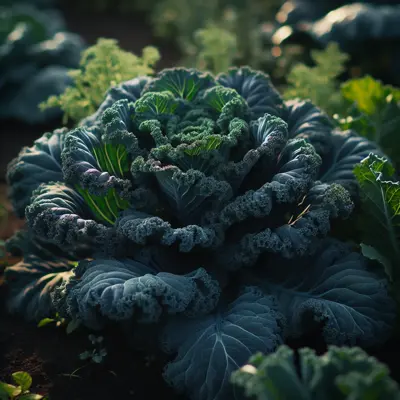
Black Magic Kale
Black Magic is a well-maintained selection of Toscano kale with long, narrow leaves for attractive and tall, straight bunches. Dark blue-green leaves with beautiful savoy. Lacinato or "dinosaur" type kale.
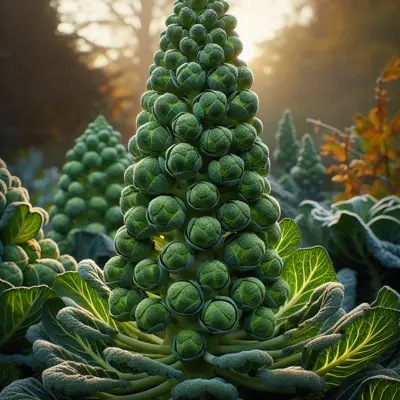
Brussels Sprouts 'Long Island Improved'
A reliable heirloom Brussels sprouts variety that produces abundant harvests of sweet, compact sprouts along tall, sturdy stalks. This cold-hardy variety actually improves in flavor after frost, developing a nutty sweetness that makes it perfect for roasting. An excellent choice for gardeners wanting to grow their own fresh Brussels sprouts without the bitterness often found in store-bought varieties.
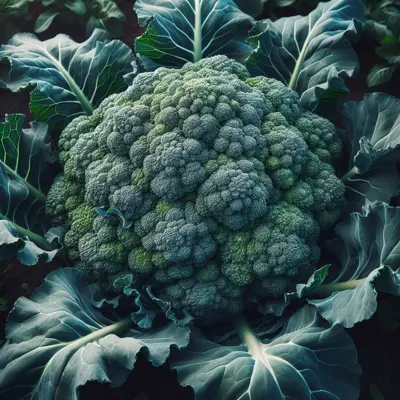
Calabrese Broccoli
The classic Italian heirloom that gave us the broccoli we know today, originating from the Calabria region. This traditional variety produces medium-sized blue-green heads with excellent flavor and reliable side shoot production after the main head is harvested. A must-grow for gardeners seeking authentic Italian flavor and continuous harvests.
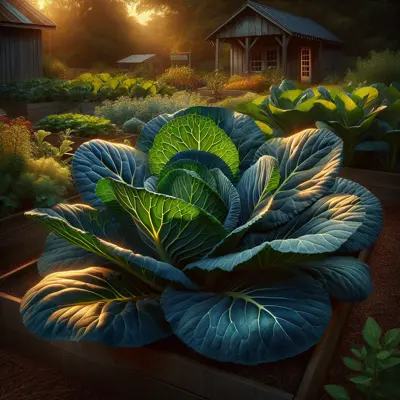
Collard Greens 'Georgia Southern'
The quintessential Southern collard green variety, prized for its large, blue-green leaves that become sweet and tender after cooking. This heat-tolerant heirloom thrives in hot summers when other greens bolt, and actually improves in flavor after frost. A must-have for traditional Southern cooking and an excellent source of nutrition for the home garden year-round.
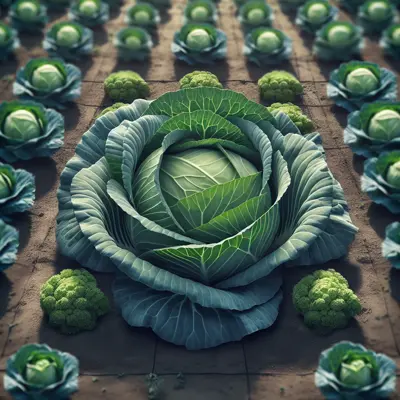
Copenhagen Market Cabbage
A classic early-maturing cabbage that's been a gardener favorite since 1909, prized for its reliability and compact growth habit. This Danish heirloom produces perfectly round, solid heads with crisp, sweet leaves that are ideal for fresh eating or quick cooking. Its ability to mature quickly while maintaining excellent quality makes it perfect for successive plantings.
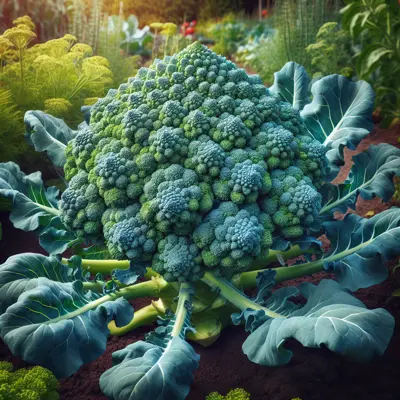
De Cicco Broccoli
A traditional Italian heirloom variety producing small, avg. 3-4", main heads projected well above the foliage followed by a large yield of side-shoot spears. Nonuniform in maturity, resulting in a long harvest period. Grow as later succession to BC1611. Longer harvest period than other sprouting broccoli varieties, with more variation in shoot size. For spring or fall production. Pinching recommended to encourage heavier side-shoot production. Unsized seed.
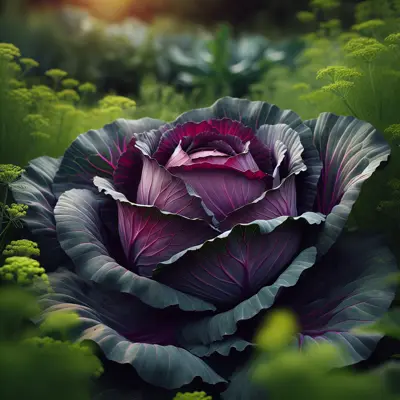
Detroit Dark Red
A classic heirloom cabbage prized for its deep burgundy-red color and exceptional storage capabilities. This reliable variety produces dense, round heads with crisp texture and sweet flavor that intensifies after light frosts. Perfect for both fresh eating and traditional fermented preparations like sauerkraut.
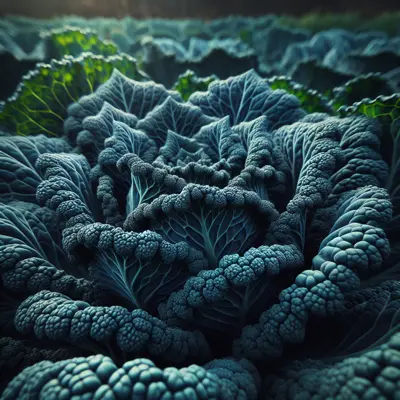
Dinosaur Kale
Dinosaur Kale is a heirloom Brassica featuring distinctive bumpy, deeply textured dark green leaves that resemble dinosaur skin—the source of its charming name. Maturing in 125 days under full sun, this variety stands out for its remarkably sweet, nutty flavor with significantly less bitterness than curly kale varieties, making it exceptionally palatable both raw and cooked. The tender leaves are ideal for salads, smoothies, and sautéed dishes. Thriving in rich, well-drained soil amended with organic matter, Dinosaur Kale is an easy-to-grow variety perfect for both beginners and experienced gardeners.
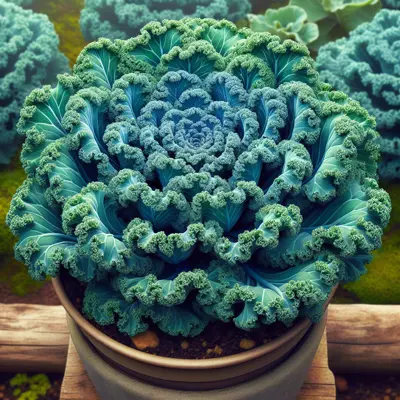
Dwarf Blue Curled Kale
A compact heirloom kale variety dating back to the 1860s, prized for its intensely curled blue-green leaves and sweet flavor that improves with frost. This space-saving variety is perfect for small gardens and containers while still providing abundant harvests of tender, flavorful leaves. The attractive, heavily ruffled foliage also makes it an excellent ornamental edible.
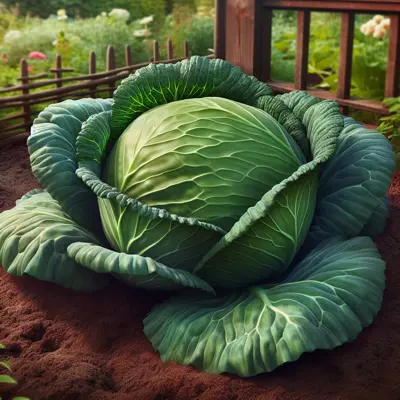
Early Flat Dutch Cabbage
A classic heirloom cabbage dating back to the 1840s, prized for its large, flattened heads that can weigh 10-15 pounds. This reliable variety produces solid, sweet heads with excellent storage qualities and is perfect for making sauerkraut or coleslaw.
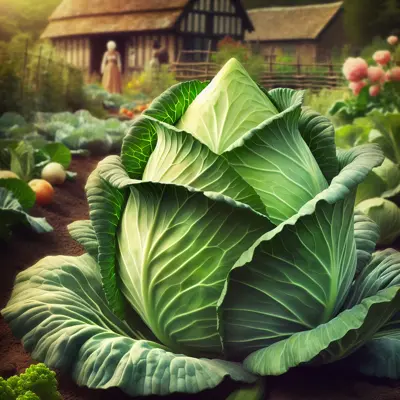
Early Jersey Wakefield Cabbage
A treasured heirloom dating back to the 1840s, this variety produces compact, conical heads that are perfect for small gardens and early harvests. Known for its sweet, tender leaves and reliable performance, it's an excellent choice for gardeners wanting to try a piece of American agricultural history. The pointed heads are distinctively attractive and space-efficient.
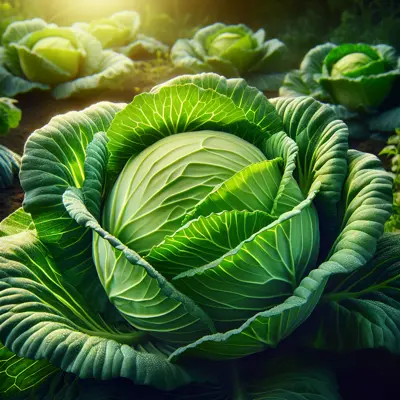
Golden Acre Cabbage
A compact, early-maturing cabbage that's perfect for small gardens and beginning gardeners seeking reliable results. This variety produces perfectly round, solid heads with sweet, crisp leaves and has the advantage of maturing quickly without taking up excessive garden space. An excellent choice for succession planting and container growing.
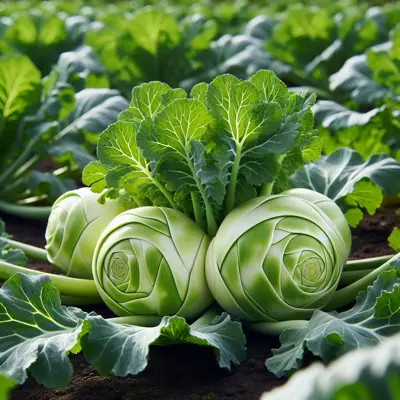
Kohlrabi 'Early White Vienna'
This unique vegetable produces crisp, sweet bulbs that taste like a cross between cabbage and turnip, with a delightful apple-like crunch. The pale green bulbs are best harvested young and tender, offering a refreshing addition to salads or excellent roasted as a side dish. Easy to grow and fast-maturing, this heirloom variety is perfect for gardeners wanting to try something new and delicious.
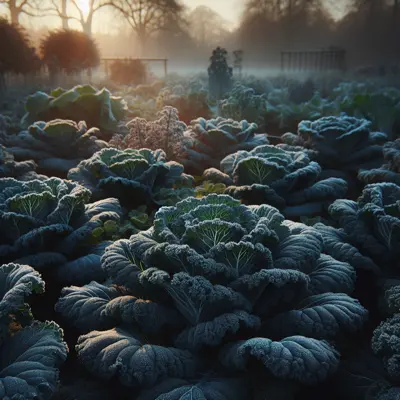
Lacinato Kale
Also known as 'Dinosaur Kale' or 'Tuscan Kale', this Italian heirloom features distinctive dark blue-green leaves with a pebbled texture resembling reptilian skin. The narrow, strap-like leaves have a sweeter, more tender flavor than curly kale and become incredibly sweet after frost exposure. An absolute must-have for the health-conscious gardener seeking both nutrition and gourmet flavor.
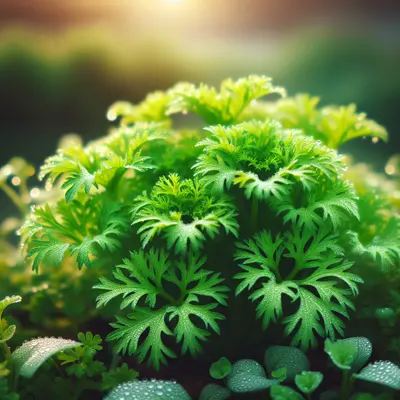
Mizuna
Mizuna is a Japanese mustard green featuring delicate, feathery leaves with a lacy appearance that resemble fine parsley. This heirloom brassica matures quickly in 21-45 days, making it ideal for succession planting. Unlike assertive mustard greens, mizuna offers a mild, slightly peppery flavor with a fresh, clean taste that adds subtle complexity to salads and Asian dishes. The tender leaves are less fibrous than standard mustard varieties, allowing them to be eaten raw or lightly cooked. Mizuna thrives in cool seasons and tolerates partial shade, making it versatile for various growing conditions.
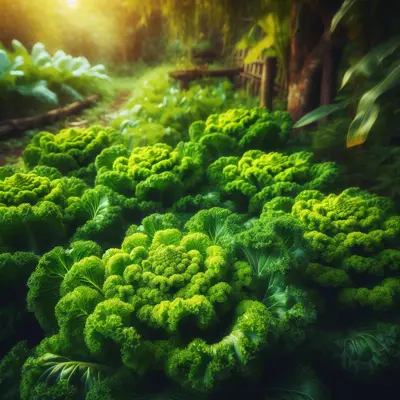
Mustard Greens 'Southern Giant Curled'
A beloved heirloom variety that's been a Southern garden staple for over 100 years, producing massive yields of deeply frilled, bright green leaves. This heat-tolerant variety grows vigorously in conditions that would stress other greens, making it perfect for extending the harvest season. The young leaves are mild enough for salads, while mature leaves develop the characteristic peppery bite that makes them perfect for traditional Southern cooking.
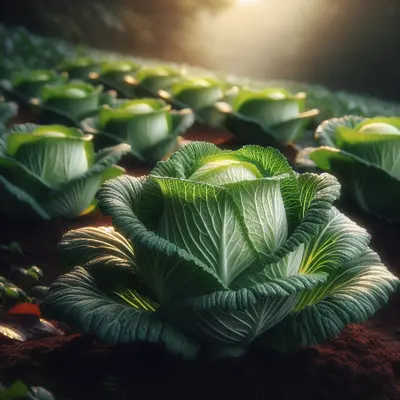
Napa Cabbage 'Michihili'
This classic Chinese cabbage produces tall, cylindrical heads with tender, sweet leaves perfect for Asian cuisine and fresh salads. The pale green leaves have crisp white ribs and a delicate flavor that's much milder than regular cabbage. Fast-growing and heat-tolerant, 'Michihili' is ideal for gardeners wanting to add authentic Asian vegetables to their garden repertoire.
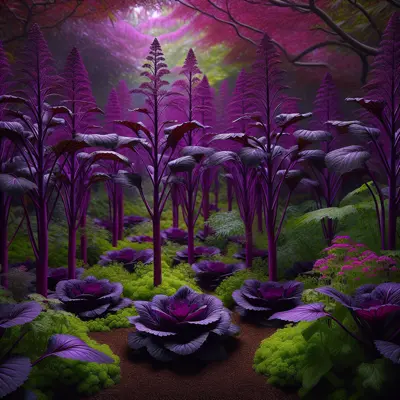
Osaka Purple Mustard
A stunning Japanese mustard green with deep purple leaves and bright green stems that creates an eye-catching contrast in any garden bed or salad bowl. This fast-growing beauty offers a mild mustard flavor when young that intensifies as leaves mature, giving you versatility from baby greens to cooking greens.
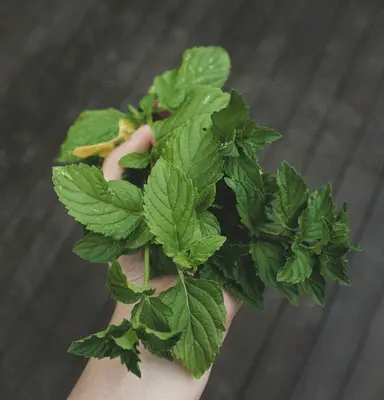
Peppermint
Peppermint is a heirloom Brassica cabbage variety prized for its distinctive pale green coloring and tender, crinkled leaves. Reaching maturity in approximately 60 days, this early-season cultivar offers a notably mild cabbage flavor with a crisp, delicate texture that makes it exceptionally versatile. The leaves are sweeter and more tender than traditional varieties, making Peppermint cabbage ideal for fresh, raw applications such as slaws and salads, while remaining excellent for light cooking. This easy-to-grow variety thrives in full sun with well-drained, fertile soil and is particularly valued by home gardeners seeking a refined cabbage experience.
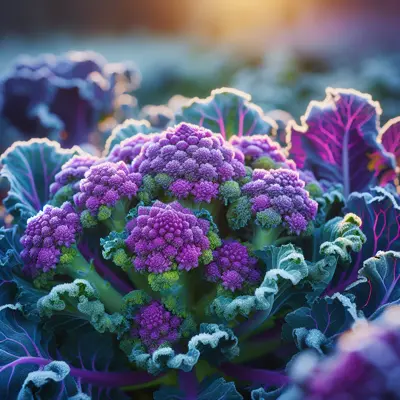
Purple Sprouting Broccoli 'Early Purple Sprouting'
A stunning heirloom variety that produces abundant purple flower heads over an extended harvest period. Unlike regular broccoli, this cold-hardy gem overwinters and provides fresh spears when little else is growing in the garden. The purple heads turn green when cooked and offer a sweet, nutty flavor that's considered superior to regular broccoli.
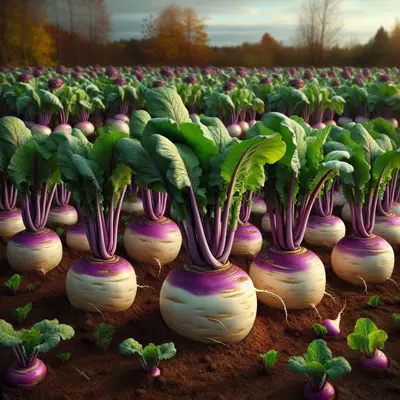
Purple Top Turnip
Purple Top Turnip is a classic heirloom variety featuring distinctive purple-tinged shoulders that fade to white at the base, creating an attractive two-tone appearance. These small to medium roots mature in just 37 days, making them quick from seed to harvest. The mild, sweet flesh develops additional complexity after frost, becoming noticeably sweeter. Young roots offer a subtle peppery bite, while mature roots are tender and suitable for roasting, mashing, or raw consumption. The purple coloring is both ornamental and traditional, making this an excellent choice for gardeners seeking reliable, flavorful turnips with minimal fuss.
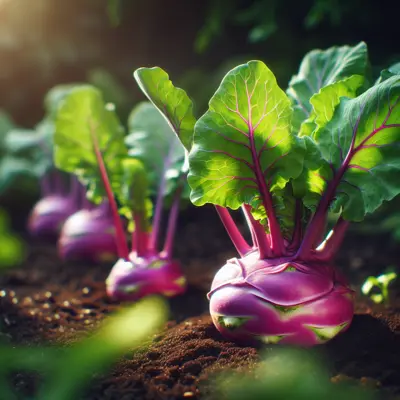
Purple Vienna Kohlrabi
An eye-catching heirloom kohlrabi with striking purple-red skin and crisp white interior that tastes like a cross between cabbage and turnip. This unique vegetable is perfect for gardeners wanting to try something different, and it's surprisingly easy to grow with a sweet, mild flavor when harvested young.
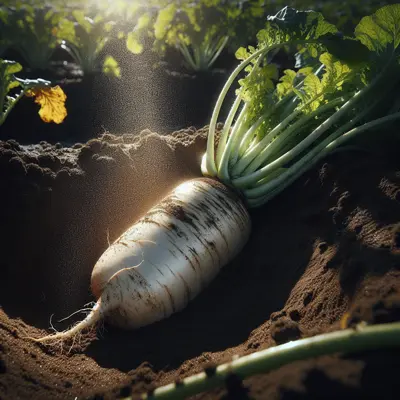
Radish 'Daikon 'Miyashige'
A premium Japanese daikon variety prized for its exceptionally sweet, crisp flesh and smooth white skin. These impressively large roots can reach 14-18 inches long while maintaining perfect tenderness throughout. This variety is particularly valued for its ability to stay mild and juicy even when large, making it perfect for fresh eating and traditional Asian preparations.
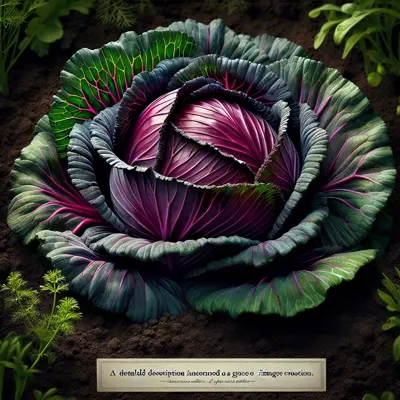
Red Acre Cabbage
An early-maturing red cabbage that forms compact, baseball-sized heads perfect for small families and succession planting. This reliable variety produces gorgeous deep purple-red heads that hold their color beautifully when cooked and adds stunning visual appeal to any garden or plate.
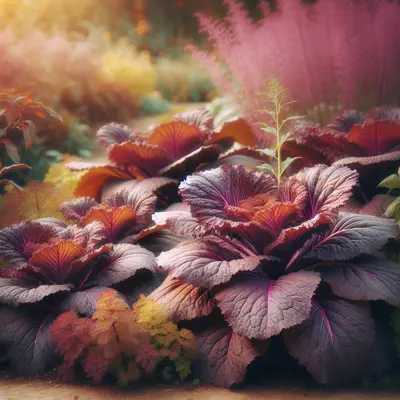
Red Giant Mustard
A stunning Asian green with large, bronze-red leaves that add dramatic color to both the garden and the dinner plate. This vigorous heirloom variety provides continuous harvests of spicy, peppery leaves that mellow when cooked. Red Giant's bold appearance and robust flavor make it a favorite among adventurous gardeners and chefs.
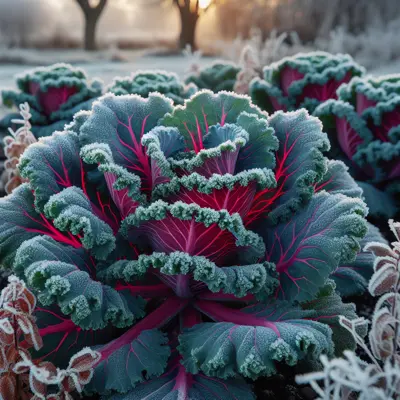
Red Russian Kale
Stems are purple; leaves are flat and toothed with purple veins. Mature plants are medium-tall and leaves are tender compared to other kales. For salads and light cooking. Sized seed. Also available in organic seed.
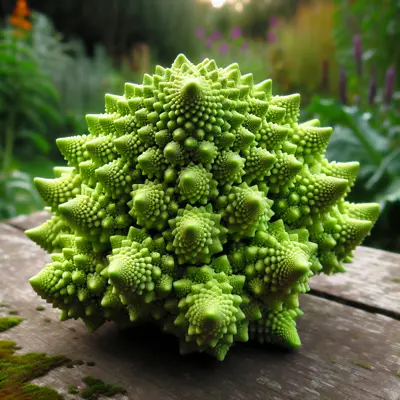
Romanesco
Romanesco is a striking Italian heirloom brassica featuring distinctive spiraling, lime-green heads composed of fractal-like florets that resemble miniature trees. Maturing in approximately 95 days, it bridges broccoli and cauliflower with a sophisticated nutty-sweet flavor profile and tender-crisp texture. Its mild brassica notes and delicate taste distinguish it from heartier cruciferous varieties, making it exceptional for both raw preparations and light cooking. Visually compelling and culinarily refined, Romanesco commands attention on any plate while remaining approachable for gardeners willing to manage its moderate to challenging cultivation requirements.
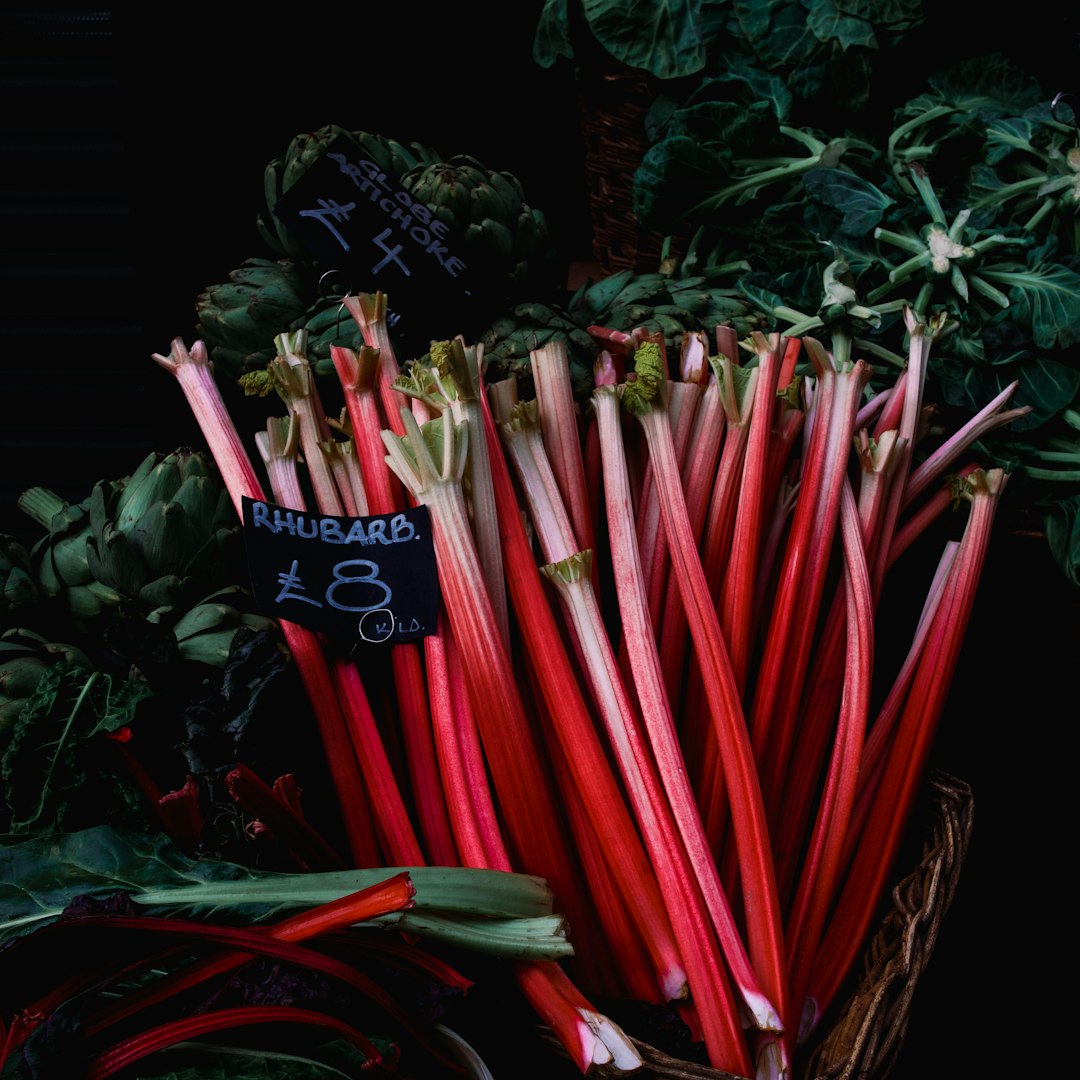
Ruby Red or Rhubarb Chard
Candy-apple red stems and bronze to dark green, red-veined leaves. Moderate bolt tolerance. NOTE: Young Ruby Red plants may go to seed if exposed to sustained night temperatures in the low 50s; time sowings to avoid these conditions. Decorticated (rubbed), sized seeds.
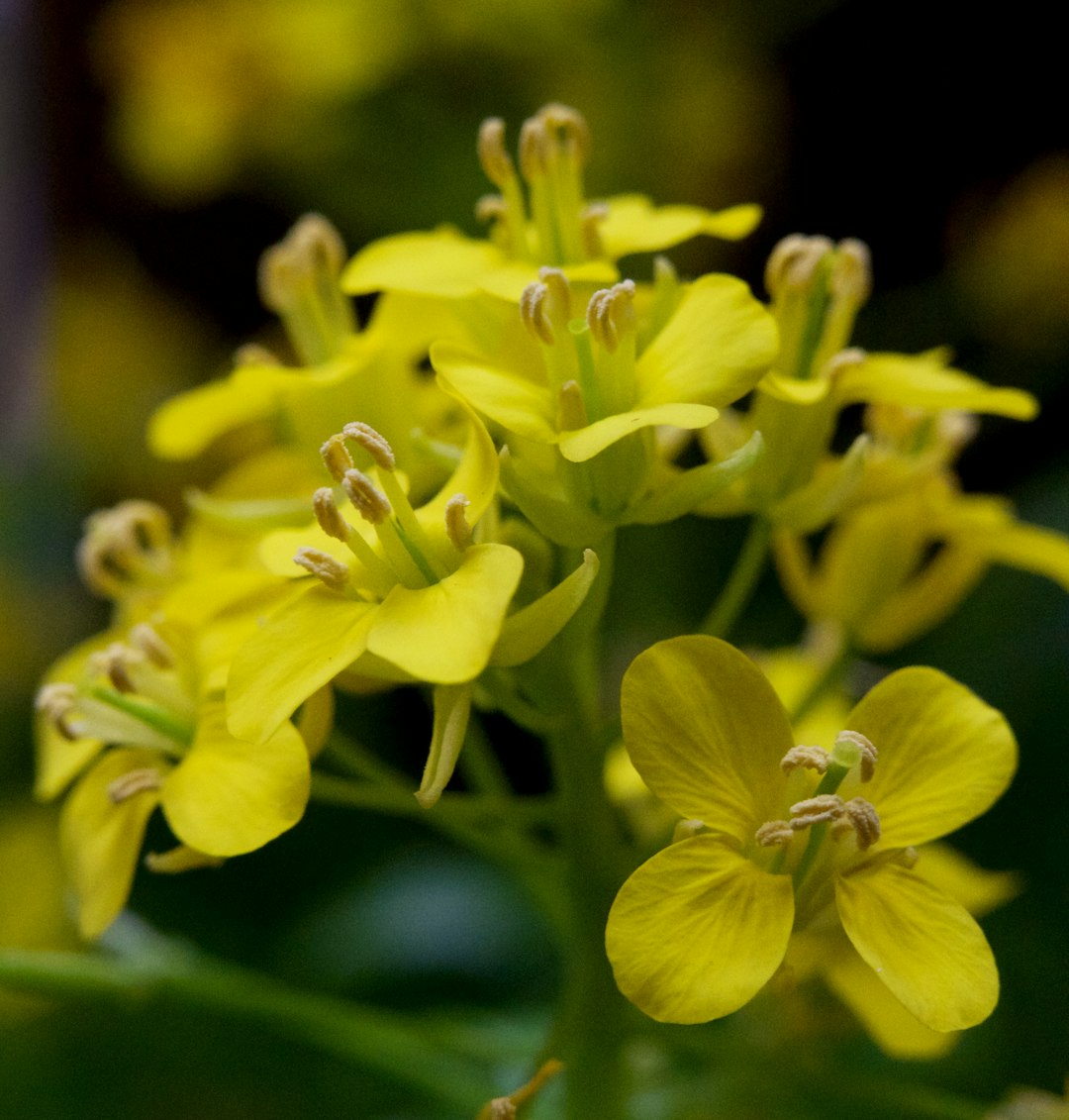
Spring Raab
The most versatile broccoli raab variety for growing throughout the season - especially for spring and summer harvest, and overwintering in mild climates. Large plants mature over a 1-2 week period. Large, tender, abundant leaves borne on thin stems with delicate buds.
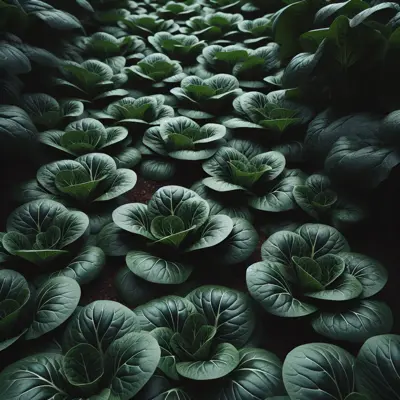
Tatsoi
Tatsoi is a compact Asian brassica featuring glossy, dark green spoon-shaped leaves arranged in a dense rosette, typically reaching 4-6 inches tall. Ready to harvest in 40-50 days, this heirloom variety offers a mild mustard flavor balanced with subtle sweetness and tender, succulent texture. Its small, self-contained growth habit makes it ideal for succession planting and container cultivation. Tatsoi works exceptionally well in stir-fries, salads, and Asian cuisine, where its delicate leaves and stems can be used whole.
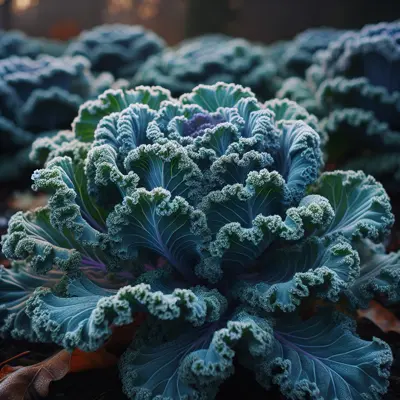
Vates Dwarf Blue Curled Kale
A compact, cold-hardy kale variety that was specifically bred for both home gardens and commercial production, winning an AAS award for its reliability. The tightly curled, blue-green leaves pack incredible nutrition into a space-saving plant that actually improves in flavor after frost touches the leaves.
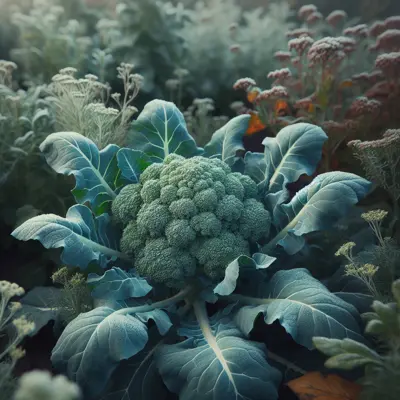
Waltham 29 Broccoli
Developed at the University of Massachusetts, this cold-hardy broccoli variety was specifically bred to extend the growing season well into winter in northern climates. It produces medium-sized, deep blue-green heads followed by an abundance of tender side shoots that can be harvested for weeks. This reliable performer is perfect for gardeners wanting fresh broccoli through the fall and early winter months.
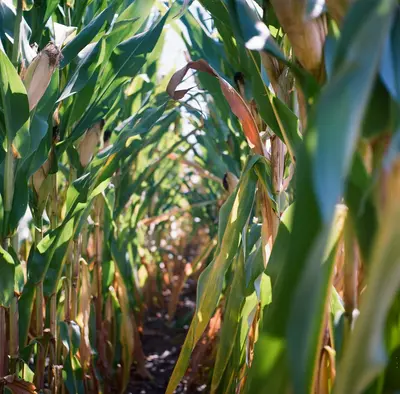
Ashworth
A remarkable cold-tolerant heirloom sweet corn specifically bred for northern gardens and short growing seasons. This hardy variety can germinate in cooler soils and tolerate light frosts, making it possible to grow sweet corn in challenging climates where other varieties fail. The compact plants produce flavorful ears with excellent eating quality despite the shorter season requirements.
Butter and Sugar
This beloved bicolor variety creates a stunning visual display with alternating yellow and white kernels on each ear. Known for its exceptional sweetness and tender texture, Butter and Sugar combines the best qualities of both yellow and white corn varieties. Perfect for gardeners who want both beauty and flavor in their sweet corn harvest.
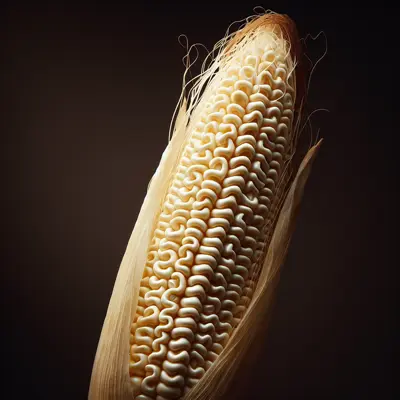
Country Gentleman
This unique heirloom variety produces ears with an irregular 'shoe peg' kernel arrangement rather than traditional rows, creating maximum sweetness in every bite. Dating back to the 1890s, Country Gentleman offers old-fashioned corn flavor with tender, cream-colored kernels that are perfect for cutting off the cob. A conversation starter that delivers both novelty and exceptional taste.
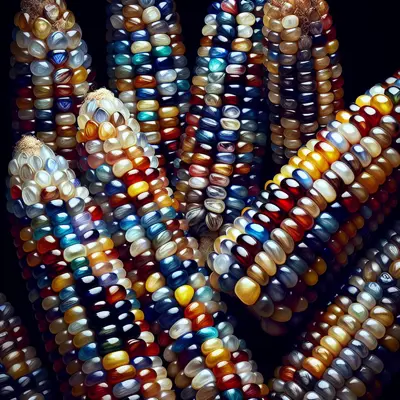
Glass Gem
A distinctive presentation in fall displays, the glassy-looking kernels are unique to this variety. Kernels can be popped, but results may vary. Sturdy plants can reach 10' tall. Avg. ear size 6-8". Requires a fairly long growing season for favorable yields. Bred by the late Carl Barnes, an Oklahoma Cherokee who dedicated his career to reclaiming and preserving seed of traditional Native American corns.
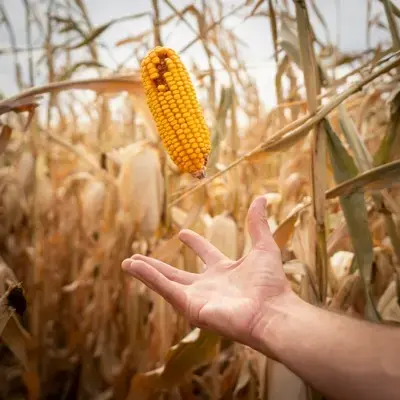
Golden Bantam
A true heirloom classic that's been delighting gardeners since 1902, Golden Bantam is the corn variety that set the standard for sweet corn flavor. This compact variety produces tender, golden kernels with an intense, old-fashioned corn taste that modern hybrids try to emulate. Perfect for small gardens and those who want to grow a piece of American agricultural history.
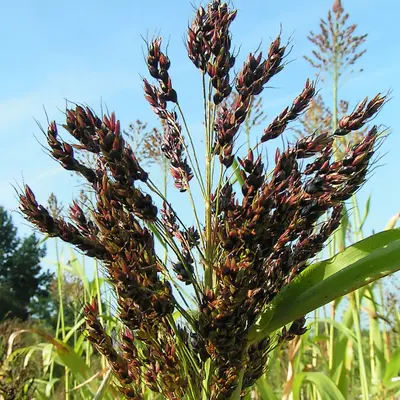
Mixed Broom Corn
An appealing mix of brightly colored seed heads for an attractive fall display. Approx. 10 stems/plant. Plant every two weeks for a continuous harvest. Drought tolerant. Plants avg. 8-9' tall.

Painted Mountain
Developed for its hardiness, earliness, drought tolerance, and nutritional density in the mountains of Montana. Avg. 6-7" multicolor ears for roasting or grinding into high-nutrition flour or hominy grits. Bred by Dave Christensen of Big Timber, MT from multiple Native American heirlooms. Avg. 4' plants.
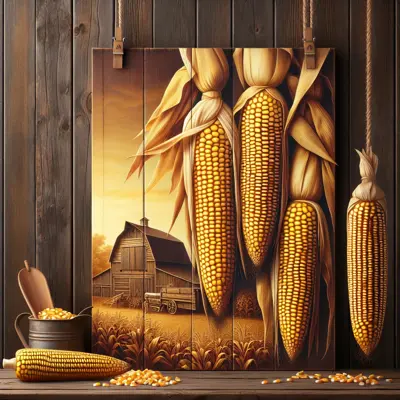
Reid's Yellow Dent
A legendary heirloom dent corn with over 150 years of American agricultural history, originally developed in Illinois in the 1840s. This variety became the foundation for modern corn breeding and remains popular among heritage gardeners for its reliability and multi-purpose uses. Perfect for those interested in preserving agricultural history while producing versatile corn for grinding, livestock feed, or ornamental use.
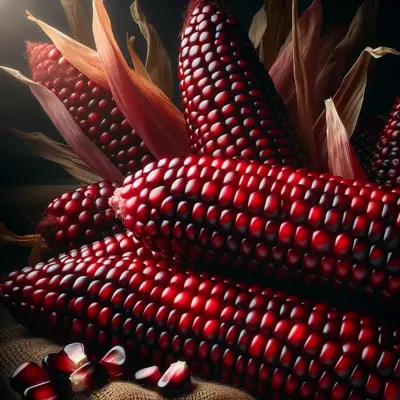
Ruby Queen
This stunning ornamental and culinary corn produces ears with deep ruby-red kernels that look like precious gems. While primarily grown for decoration and grinding into colorful cornmeal, the young ears can also be eaten fresh when harvested early. Ruby Queen adds dramatic color to fall displays while providing a unique ingredient for adventurous home cooks and bakers.
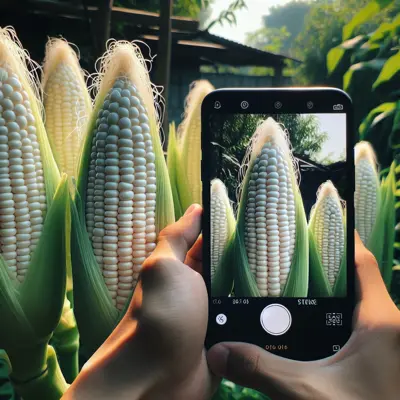
Silver King
A stunning white sweet corn that produces large, tender ears filled with plump, milky-white kernels bursting with classic corn sweetness. This reliable heirloom variety has been a garden favorite since the 1950s, delivering consistent harvests of beautiful ears that are perfect for fresh eating, freezing, or canning. Silver King's vigorous stalks and excellent ear fill make it an ideal choice for gardeners wanting dependable white corn with old-fashioned flavor.
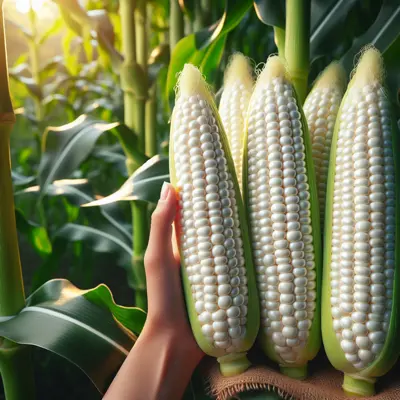
Silver Queen
The gold standard of white sweet corn varieties, Silver Queen has been the benchmark for sweetness and tenderness since 1958. This reliable heirloom produces large ears packed with creamy white kernels that deliver exceptional flavor and crisp texture. A true classic that continues to dominate home gardens and farmers markets across America.
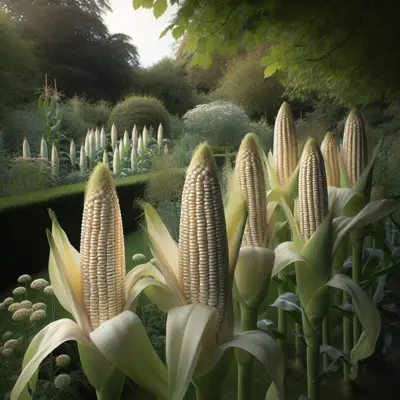
Stowell's Evergreen
Dating back to 1848, Stowell's Evergreen earned its name for staying tender and sweet longer than other varieties, remaining in perfect eating condition for weeks. This tall, vigorous heirloom produces large ears with deep white kernels and is considered one of the finest varieties for canning and preserving. Its reliable performance and extended harvest window make it invaluable for serious corn growers.
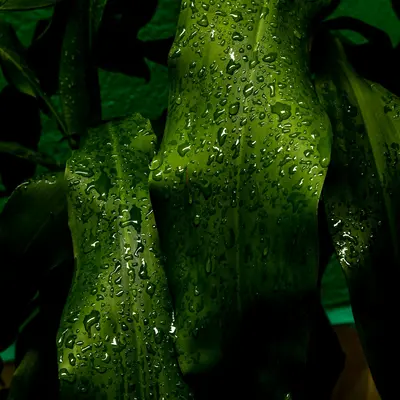
Ashley Cucumber
A heat-tolerant southern favorite developed specifically for hot, humid climates where other cucumbers fail. This reliable heirloom produces abundant 7-8 inch dark green fruits with crisp, mild flesh and excellent disease resistance. Ashley's ability to keep producing through summer heat makes it invaluable for gardeners in challenging growing conditions.
Beit Alpha
A Mediterranean heirloom cucumber that produces sweet, crisp fruits with tender, thin skin that never needs peeling. Originally from Israel, this parthenocarpic variety sets fruit without pollination and delivers consistently uniform, blocky cucumbers perfect for fresh eating. The compact vines are incredibly productive and produce smooth, dark green fruits that maintain their quality even in hot weather.
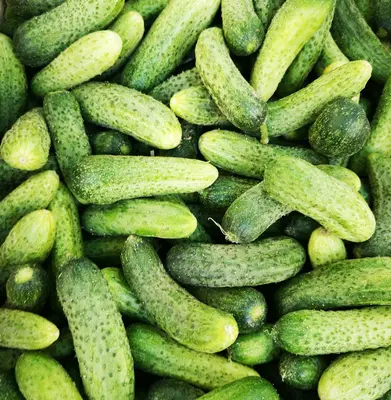
Boston Pickling
A treasured heirloom from the 1880s that's become the go-to choice for homemade pickles and relishes. These compact, warted fruits have the perfect size and firm texture that pickle enthusiasts demand. Incredibly productive plants will keep you supplied with pickles all season long.

Chicago Pickling
A time-tested heirloom variety that's been the backbone of American pickle production since the 1880s, originally developed for the commercial pickle industry in Chicago. These medium-sized cucumbers have the perfect balance of firm flesh and tender skin that makes exceptional pickles, whether harvested small for gherkins or larger for dill pickles. Their reliable production and disease tolerance have made them a favorite among home gardeners for over a century.
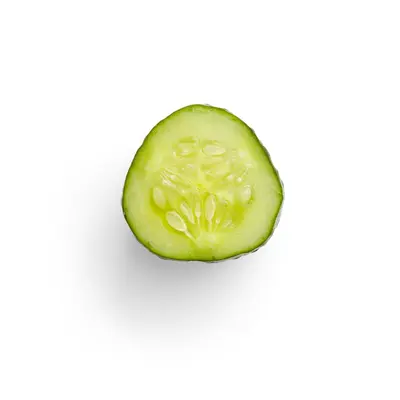
Crystal Apple Cucumber
A unique heirloom variety that produces round, apple-shaped white fruits with crisp, refreshing flesh and a distinctive appearance. This Australian heritage variety offers exceptional heat tolerance and continues producing when other cucumbers fail. Crystal Apple's unusual appearance and excellent flavor make it a conversation starter that's surprisingly versatile in the kitchen.

Diva
Diva's seedless, thin-skinned cucumbers are distinctly crisp, sweet, and bitter-free. Adapted to open-field production and protected cropping. A fantastic variety for the home garden. Harvest at 5-7". Parthenocarpic. AAS Winner. Also available treated.

English Telegraph
A classic European greenhouse variety that produces exceptionally long, smooth-skinned cucumbers with virtually no seeds and thin, edible skin. These elegant cucumbers can reach impressive lengths of 12-20 inches while maintaining crisp texture and mild, sweet flavor throughout. Perfect for gardeners who want restaurant-quality cucumbers with that distinctive English cucumber taste and appearance.
Japanese Climbing
A vigorous heirloom climber that can reach 10 feet tall, producing unique long, slender fruits with exceptional sweet flavor and tender skin that never needs peeling. The dramatic vertical growth makes this variety a beautiful and productive addition to trellises, fences, and garden structures. Heat-tolerant and incredibly productive throughout the season.
Lemon Cucumber
Lemon Cucumber is a unique heirloom variety that produces small, round, lemon-yellow fruits, each weighing 2-3 ounces. These diminutive cucumbers reach maturity in 65 days and are immediately recognizable by their distinctive pale yellow color and slightly bumpy skin. Unlike standard slicing cucumbers, Lemon Cucumbers are prized for their exceptionally sweet, mild, and crisp flavor with complete absence of bitterness. The refreshing taste makes them ideal for fresh eating straight from the garden, salads, and light snacking. Their compact size and prolific production on vigorous vines make them a favorite among home gardeners.

Marketmore 76
Long dark green cucumbers. The slender, refined "Marketmore look" has long been the standard for slicing cucumbers in the North. 8-9" fruits stay uniformly dark green even under weather stress. Begins bearing late, but picks for a relatively long time.
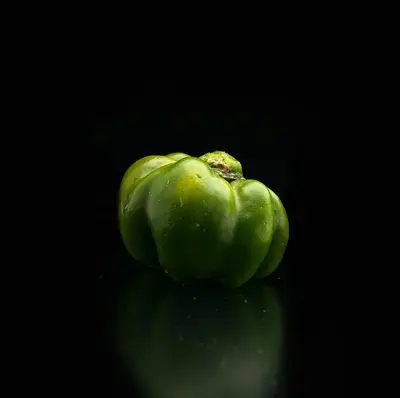
Mexican Sour Gherkin
Cute 1" long fruits look like miniature watermelons and taste like cucumbers with tangy citrus overtones. Vines start growing slowly but can get up to 10' long. Can be eaten fresh or pickled. Fruits can be sold in half-pint or clamshell containers at markets that appreciate novelty. Also known as the Cucamelon and mouse melon. Not particularly high yielding. Trellising recommended. NOTE: We recommend harvesting these cucumbers promptly as they tend to get seedy if allowed to grow longer than 1".
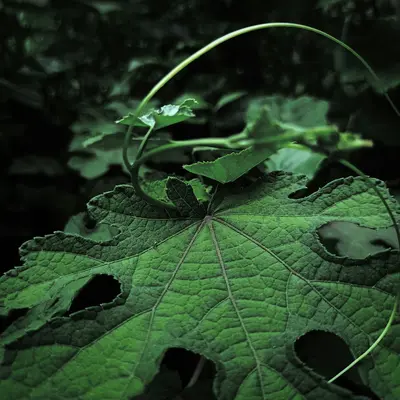
National Pickling
The gold standard for homemade pickles, this prolific heirloom has been the choice of serious picklers since 1924. It produces an enormous harvest of blocky, thick-walled cucumbers that maintain perfect crispness when pickled and have the ideal flesh-to-seed ratio for processing. The vigorous vines continue producing all season long, giving you plenty of cucumbers for fresh eating and preserving.
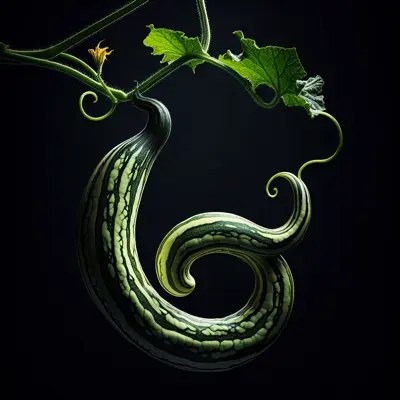
Painted Serpent Cucumber
A stunning Armenian-type cucumber that's as beautiful as it is delicious, featuring distinctive light and dark green striped skin that looks hand-painted. These long, curved fruits can reach up to 20 inches and have incredibly sweet, crisp flesh with no hint of bitterness. This eye-catching variety is perfect for gardeners who want something truly unique that tastes as good as it looks.
Parisian Pickling Gherkin
A classic French heirloom prized for producing abundant tiny cucumbers perfect for traditional cornichon pickles. These compact plants yield hundreds of small, bumpy fruits that should be harvested daily when just 1-2 inches long. The ultimate variety for gourmet pickle enthusiasts who want to create authentic European-style preserved cucumbers.
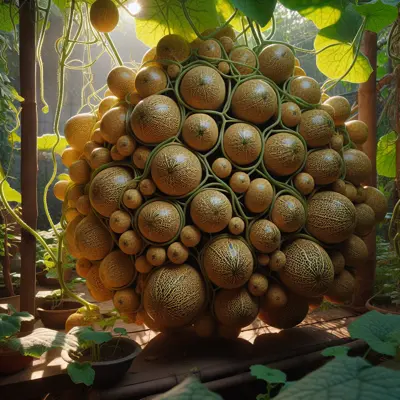
Poona Kheera
A stunning Indian heirloom cucumber that starts creamy white and transforms to golden-brown with dark netting as it matures, offering gardeners both beauty and exceptional flavor. The round to oval fruits have crisp, white flesh with a refreshing taste that remains sweet even when fully mature. This unique variety is as ornamental as it is delicious, making it a conversation starter in any garden.
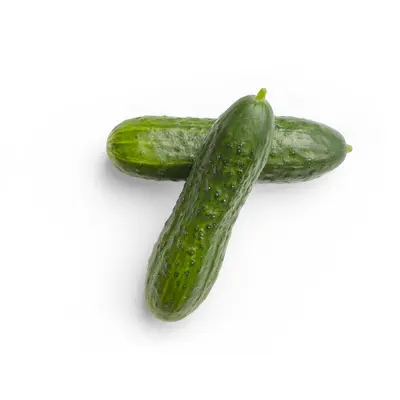
Straight Eight
A classic American heirloom cucumber that has been a garden staple since 1935 and won the All-America Selections award. Famous for its perfectly straight, uniform 8-inch fruits with crisp texture and excellent flavor. This reliable variety produces consistently even in variable weather conditions, making it a favorite for both beginners and experienced gardeners.
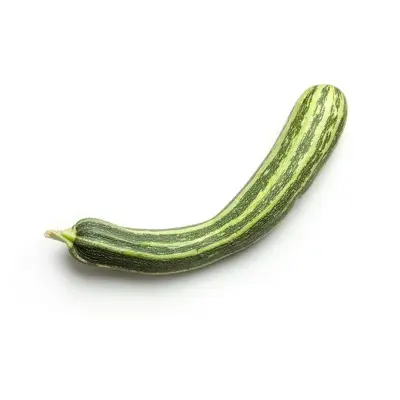
Suyo Long
A sweet-flavored, ribbed fruit growing up to 15" long. Widely adapted, grows well in hot weather, and sets early. Try using this unusual-looking cucumber in salads, for bread-and-butter or mixed vegetable pickles. Excellent eating quality. Bitter-free. Trellis for straight fruits.
Telegraph Improved
A classic English greenhouse cucumber variety that produces exceptionally long, smooth fruits with crisp, mild flesh and virtually no seeds. Originally developed for Victorian greenhouses, this productive climber can reach impressive lengths of 20+ inches and offers the authentic taste of premium European cucumbers. Perfect for gardeners wanting to grow restaurant-quality cucumbers at home.
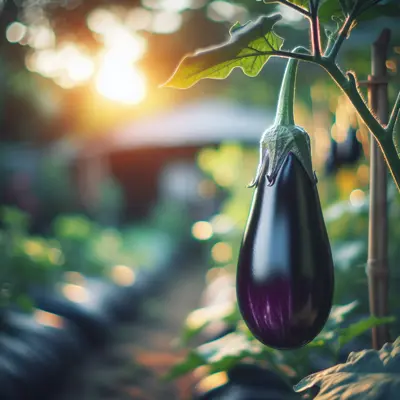
Black Beauty
Black Beauty is a classic heirloom eggplant known for its glossy, deep purple-black skin and elongated oval shape. Reaching maturity in 90-100 days, this variety produces firm, creamy-textured fruit with a mild flavor and minimal bitterness. The tender, smooth flesh makes it ideal for roasting, grilling, and Mediterranean dishes. A reliable producer in full sun conditions, Black Beauty remains a gardener favorite for its consistent yields and superior culinary quality.
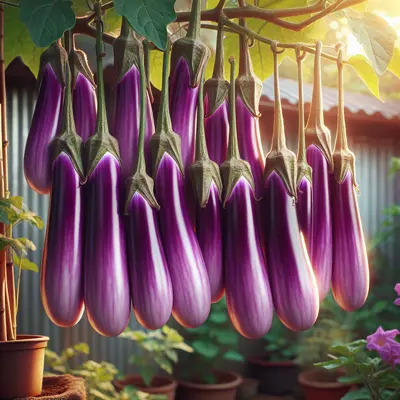
Chinese Long
A slender Asian heirloom producing gorgeous lavender-purple fruits that can reach up to 20 inches in length. The tender, mild flesh has fewer seeds than globe varieties and never turns bitter, making it perfect for stir-fries and Asian cuisine. This productive variety is beloved by gardeners for its elegant appearance and exceptional eating quality.
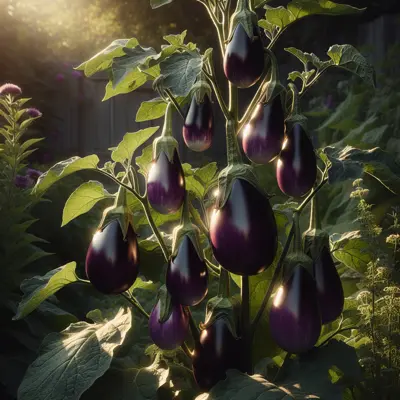
Classic
Classic eggplant is a heirloom variety prized for its glossy, deep purple skin and elegant elongated shape. Reaching maturity in 65-75 days, this dependable cultivar thrives in full sun to partial shade and produces abundantly in well-drained, fertile soil. Its defining characteristic is a mild, creamy flesh with minimal bitterness—a quality that makes it exceptionally versatile in the kitchen. Whether roasted, grilled, or fried, Classic eggplant delivers tender, flavorful results without requiring extensive preparation to remove bitter compounds. An ideal choice for gardeners seeking reliable yields and superior eating quality.
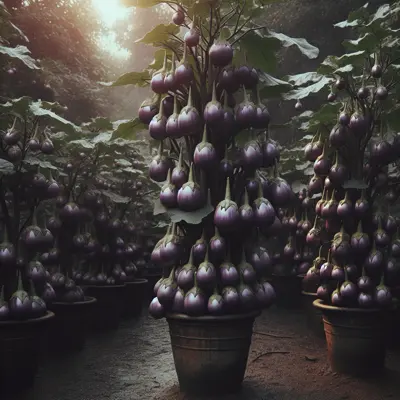
Japanese Long
An elegant Asian variety producing slender, foot-long fruits with incredibly tender skin that never needs peeling. The sweet, mild flesh has virtually no bitterness and cooks quickly, making it perfect for stir-fries and Asian cuisine. This productive variety offers a completely different eggplant experience from traditional globe types.
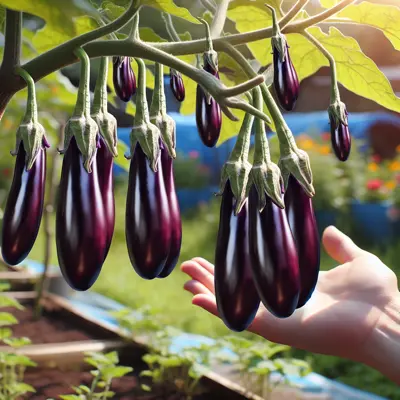
Japanese Long Purple
A stunning Japanese heirloom variety producing glossy, deep purple fruits that can reach 10 inches in length. The slender, curved eggplants have tender skin and mild, sweet flesh with minimal seeds, making them perfect for Asian cuisine. This productive plant delivers an abundant harvest of beautiful fruits that are as ornamental as they are delicious.
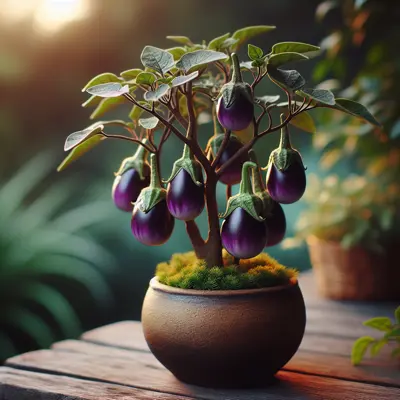
Japanese Purple Pickling
A productive Japanese heirloom that produces slender, glossy purple fruits perfect for Asian cuisine and pickling. The tender, mild flesh has virtually no bitterness and cooks quickly, making it ideal for stir-fries, tempura, and traditional Japanese preparations. This reliable variety is beloved by home gardeners for its consistent production and exceptional eating quality.
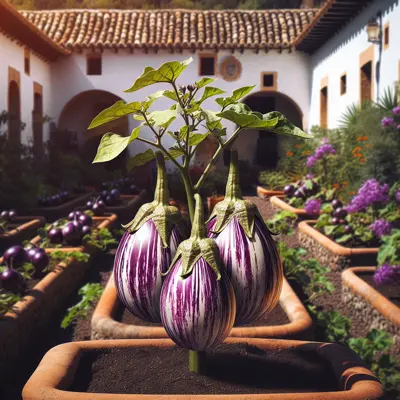
Listada de Gandia
This stunning Spanish heirloom showcases purple and white striped fruits that look almost too beautiful to eat. The oval fruits have incredibly creamy flesh with a mild, sweet flavor and the eye-catching striped pattern makes them conversation starters in any garden. A productive variety that brings both beauty and exceptional taste to the kitchen.
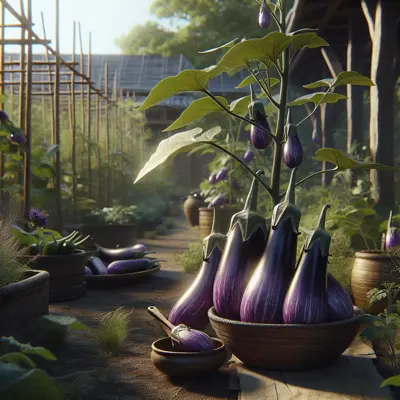
Long Purple
A classic heirloom variety that has been grown in American gardens since the 1800s, producing beautiful elongated purple fruits with excellent flavor. This reliable variety is known for its consistent production and traditional eggplant taste that's perfect for classic recipes. The fruits have tender flesh with a rich, satisfying flavor that develops beautifully when cooked.
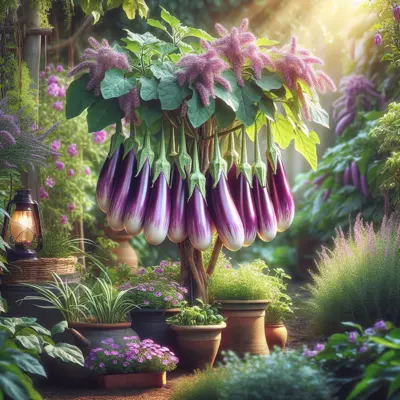
Ping Tung Long
This Taiwanese heirloom produces stunning 12-inch long, slender purple fruits that are incredibly tender and sweet with no bitterness. The beautiful lavender flowers and prolific production make it both an ornamental and culinary treasure. Perfect for Asian cuisine, it maintains its silky texture even when fully mature.
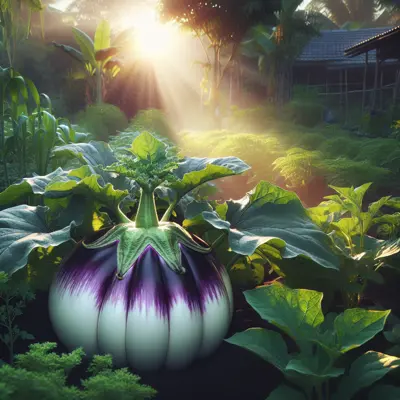
Purple Top
Purple Top is a classic heirloom eggplant prized for its distinctive deep purple fruits with a contrasting pale green crown at the stem end. Reaching maturity in just 37 days from transplant, this variety produces medium-sized, elongated fruits with creamy, mild flesh and subtle earthy undertones. Its heirloom pedigree and forgiving growing habits make it a favorite for home gardeners seeking reliable production and authentic eggplant flavor for traditional dishes like eggplant parmesan and moussaka.
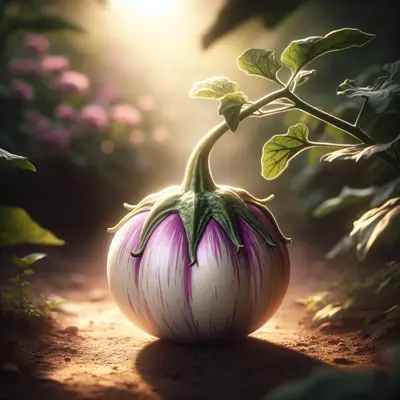
Rosa Bianca
Round fruit streaked with white and violet. Plump and variably ribbed, measuring about 4-6" long by 5-7" diameter. Mild, creamy taste. This traditional Italian variety is best adapted to regions with warm nights. Expect low yields in cool areas. Green calyx.
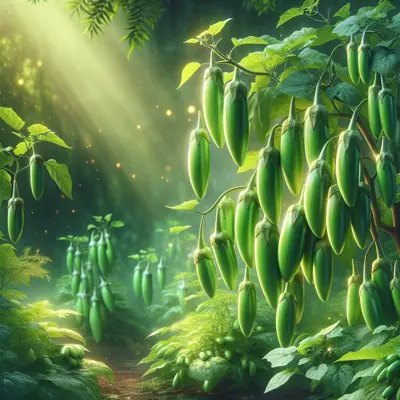
Thai Long Green
An authentic Asian variety prized for its slender, bright green fruits that are essential in Thai and Southeast Asian cooking. These tender eggplants have thin skin, few seeds, and never develop bitterness, making them perfect for curries, stir-fries, and grilled dishes. A must-grow for anyone serious about Asian cuisine.
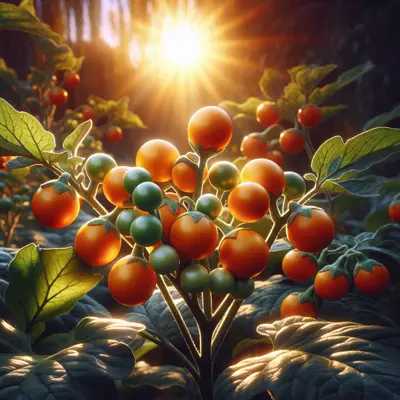
Turkish Orange
An exotic heirloom variety that produces stunning small, round fruits that start green and ripen to a beautiful bright orange color. These golf ball-sized eggplants are not only ornamental but also deliciously sweet and creamy when cooked, making them perfect for stuffing or unique culinary presentations. This conversation-starter variety brings both beauty and flavor to any garden.
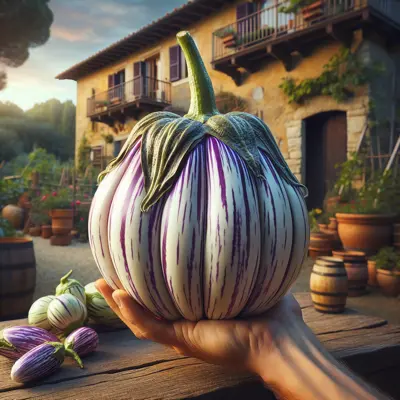
Violette di Firenze
A treasured Italian heirloom from Florence that produces large, ribbed fruits with stunning light purple skin and distinctive white stripes. This variety has been grown in Tuscan gardens for generations, prized for its meaty texture and rich flavor that's perfect for traditional Italian dishes. The dramatic ribbed shape and beautiful coloring make it as ornamental as it is delicious.
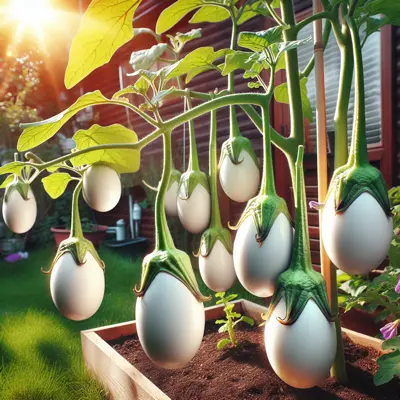
White Egg
These charming white eggplants look exactly like giant chicken eggs hanging from the plant, creating a delightful conversation piece in any garden. The creamy white fruits have exceptionally tender flesh and mild, sweet flavor that converts even eggplant skeptics. This productive heirloom variety adds visual interest while delivering superior taste and texture.
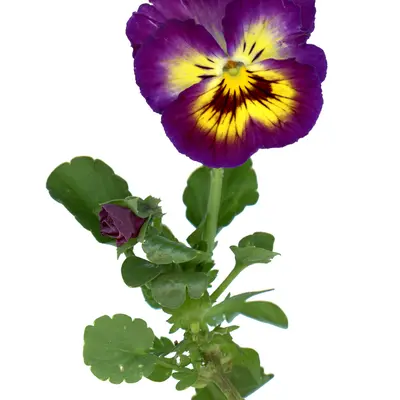
Aalsmeer King Size Mix
Cheerful, 2 1/2-3 1/2" bicolor blooms in shades of gold, purple, plum, lavender, rose, and white. Mildly fragrant blooms. We found Aalsmeer King Size Mix to be one of the fastest varieties to reach a height tall enough for cutting in our overwintered trials. In our unheated tunnel (Zone 5), it yielded 16-22" long stems that are perfect for mixing with tulips and daffodils in early spring bouquets. Also known as pansy, Johnny jump-up, European field pansy, heart's ease, and hybrid violet.Edible Flowers: Decorative and edible garnish for salads and desserts with slight wintergreen flavor. While a popular choice for brightening up salad mix, the flowers are also good for candying.
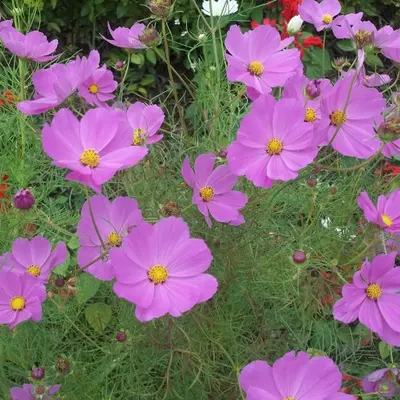
Afternoon White
Afternoon White was bred for cut-flower production. As a tetraploid, it has more substantive flowers and stems. In our trials, it produces strong, straight stems and 2-4" white blooms with bright yellow centers. Early to flower. Blooms are not as profuse as more common cosmos varieties, but the superior stem and flower quality make Afternoon White a good cut-flower choice.
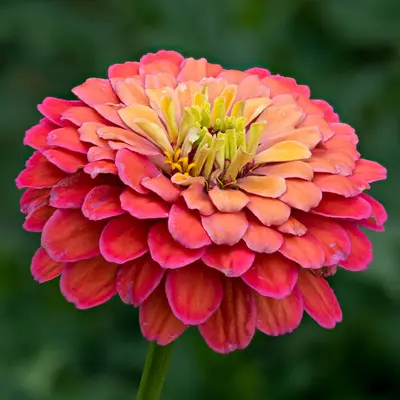
Agave
Gorgeous blend of sunset colors and large, heavily quilled double blooms. Early flowering plants produce 4-6" densely petaled blooms in a cohesive blend of muted buff, coral, gold, peach, pink, and orange hues. For years we've admired these special colors that appear only occasionally in some of the field-grown mixes and in 2019, we began breeding Agave. Contains a very small percentage of semidouble and/or single blooms.
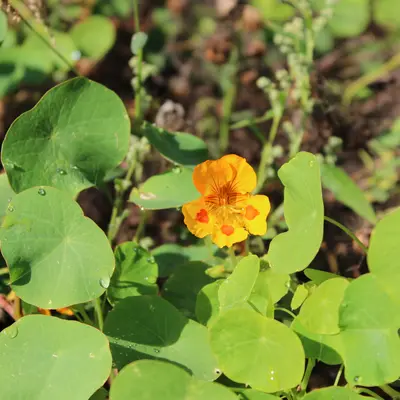
Alaska Mix
Improved strain of brilliant 2" single flowers in yellow, crimson, orange, salmon and cherry. Compact, mound-shaped plants. Also known as garden nasturtium and Indian cress. Edible Flower: Use the flowers as garnishes, or stuff with soft cheese. The flowers can be minced and added to butters and the immature seed heads can be pickled. Nasturtiums are a popular choice for adding color to salad mix. Peppery-flavored foliage is also edible.
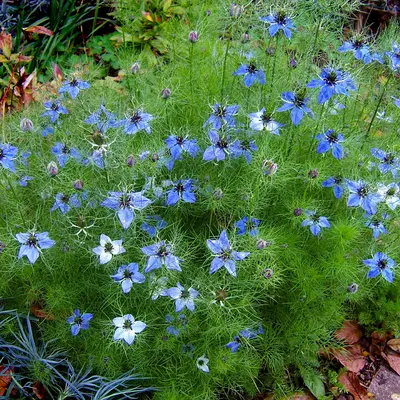
Albion Black Pod
Fluffy 1 3/4-2" blooms fade to large dark plum-colored seed pods on stiff, 12-24" stems. Accented by attractive, ferny foliage. Whimsical, balloon-shaped seed pods dry readily/easily. Flowers attract and feed bees as well as other beneficial insects. Also known as Love in a Mist.
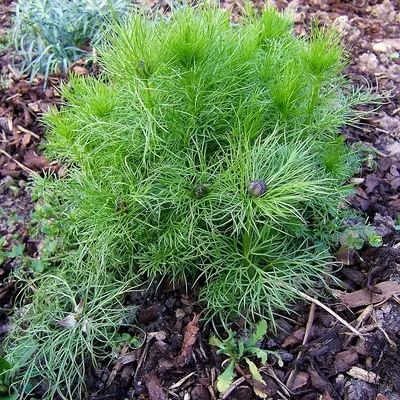
Albion Green Pod
Fluffy 1 3/4-2" blooms fade to large light green seed pods on 12-24" stiff stems. Accented by attractive, ferny foliage. Whimsical, balloon-shaped seed pods dry readily/easily. Flowers attract and feed bees as well as other beneficial insects. Also known as Love in a Mist.
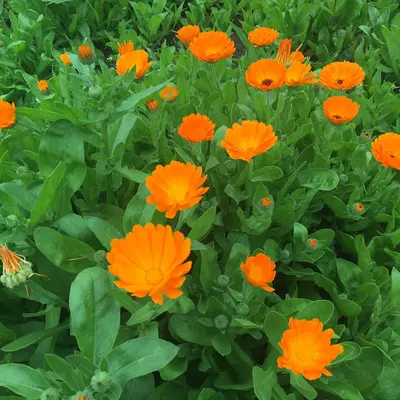
Alpha
High resin content for medicinal use. 2-3 1/2" blooms. Also known as pot marigold, common marigold, and Scotch marigold.Edible Flowers: Petals of the flowers can be used fresh or dried in "flower confetti," soups, soufflés, rice dishes, baked goods, and to garnish desserts. Calendula is a popular choice for brightening up salad mix. Flavor is tangy and slightly bitter. Remove the petals from the flower base before consuming as the base can be quite bitter.
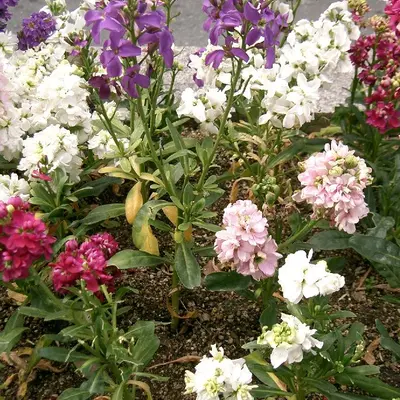
Antique Pink
Tightly spaced florets on thick, strong, straight stems. Single-stem or column type stock for one-cut harvest. Blooms have chartreuse green centers with pale pink edges. Plants produce about 55% double-flowering plants. Overall, very similar to the Iron series in performance. NOTE: This variety produces one flowering stem per plant. Pinching is not advisable as it will terminate flowering. Edible Flowers: The peppery, clove-like flavor of the flowers lends itself well to use as a garnish on salads, desserts, and drinks.
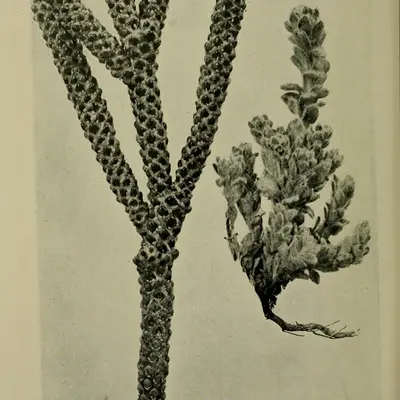
Apricot/Peach Mix
Apricot/Peach Mix is an heirloom flowering variety that produces delicate blossoms in soft apricot and peach tones, creating a harmonious blend of warm spring colors. Mature plants display abundant blooms in 75-85 days, making them excellent for cutting gardens and ornamental displays. These flowers are prized for their natural color gradation and long vase life, distinguishing them from single-variety cultivars. Ideal for full-sun borders and landscape arrangements.
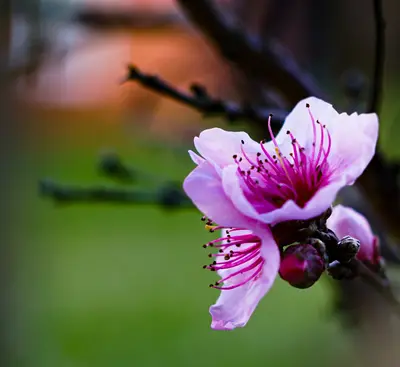
Apricotta
Tall, vigorous, densely branching plants. Delicate single blooms have a slightly ruffled edge and glow in shades of blush, apricot, and rose. We have observed variation in bloom color: some flowers are lighter in color, while some express more rose than apricot. The 2 1/2-3" blooms are not as full or uniform as we would like. Still, we appreciate the variety for its productive plants and its ability to unify warm and cool hues in arrangements.
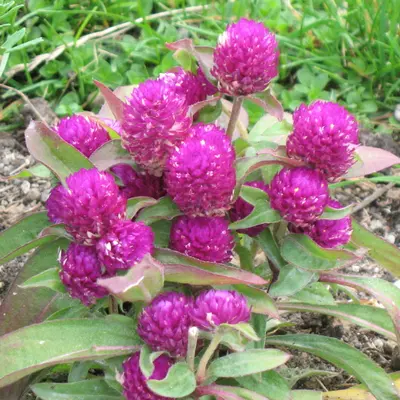
Audray Mix
The Audray series offers highly uniform plants with tall stems for cut flowers. Compared to the QIS series, Audray is taller and more uniform but a bit later to flower, and with a limited color range. Mixture includes: Audray White, Bicolor Rose, Pink, and Purple Red. 1 1/2" blooms. Also known as globe amaranth and common globe amaranth.
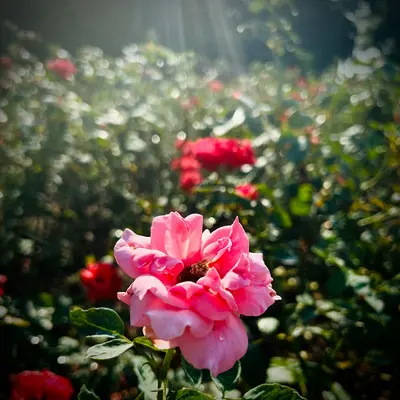
Audray Pink
We've found Audray Pink and Audray White to be some of the tallest and most upright varieties in the Gomphrena globosa type, resulting in a higher number of usable stems. Highly uniform plant performance. Despite the name, the bloom color of Audray Pink has more of a lavender or cool pink hue. 1 1/2" blooms. Compared to the QIS series, Audray is taller and more uniform but a bit later to flower, and with a limited color range. Also known as globe amaranth and common globe amaranth.
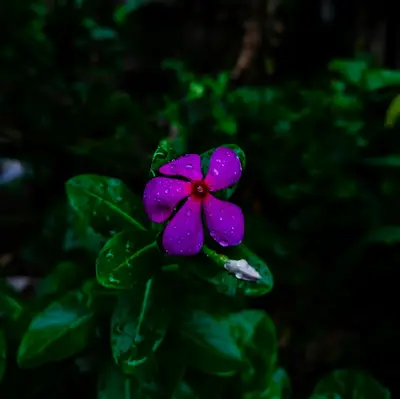
Audray Purple-Red
Audray Purple-Red is very similar to QIS™ Purple in terms of productivity and the bloom color is identical. Slightly later to flower and taller than QIS Purple.1 1/2" blooms. Also known as globe amaranth and common globe amaranth.
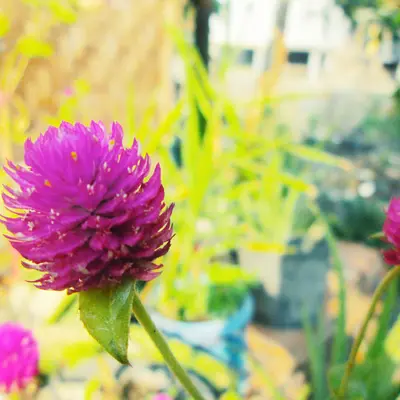
Audray White
1 1/2" blooms on long stems and uniform plants. Sturdy white blooms are an excellent special detail in wedding design work and boutonnieres, in addition to wholesale and market bouquets. Also known as globe amaranth and common globe amaranth.
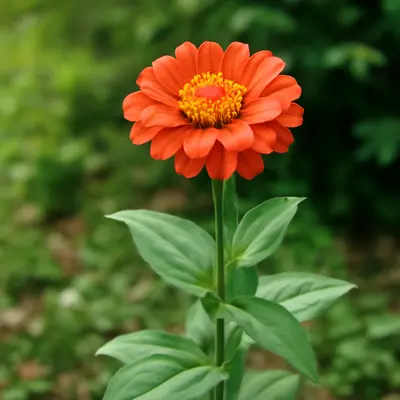
Aurora
In 2019, Johnny's Breeding Team started selecting Aurora for its unique two-tone flowers with contrasting centers. Early flowering plants produce 4-6" wide dahlia-shaped double blooms. Hues of apricot, butter yellow, coral, gold, orange, and pink give this special mix a nuanced vintage look that sets it apart. May yield a small percentage of semidouble or single blooms and approximately 5% cactus-flowered blooms.
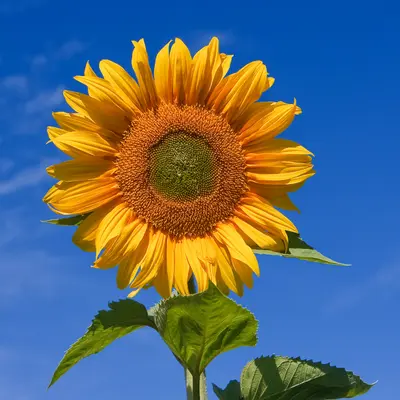
Autumn Beauty
Tall, extremely vigorous plants produce bold, beautiful flowers up to 8" across. Bright yellow, bronze, and purple shades with some bicolors. Good choice for farmscaping, sunflower mazes, and tall border rows. Bears pollen; good for bee forage. Stem length is 15-44". Branching; produces many long stems.Edible Flowers: Flower buds can be fried and the petals used as a garnish in salads and desserts; the flavor is bittersweet.
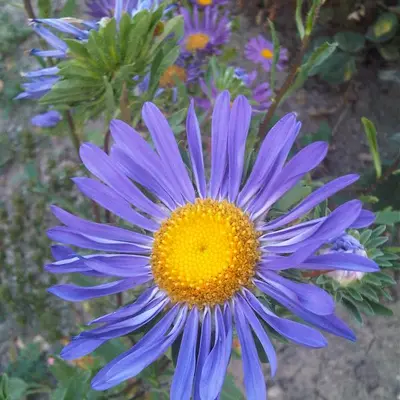
Azumi XL Blue
The Azumi series offers 2-3 1/2" pom-pom style blooms in rich jewel tones on sturdy, vigorous plants. Recommended for growing as a spray-type cut flower. Plants yield one cut per plant; each cut is a large spray of stems and flowers. The primary flower will be larger, surrounded by multiple slightly smaller blooms. Alternately, single stems can be harvested, although stem length will be shorter than when harvested as a one-cut spray type. Lavender-blue bloom color. Azumi XL Blue flowers are the earliest of the Azumi series in our trials. Fusarium tolerant.
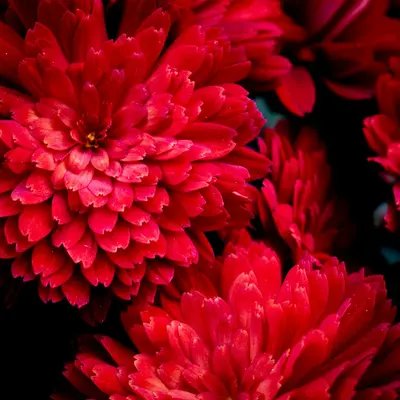
Azumi XL Red
The Azumi series offers 2-3 1/2" pom-pom style blooms in rich jewel tones on sturdy, vigorous plants. Recommended for growing as a spray-type cut flower. Plants yield one cut per plant; each cut is a large spray of stems and flowers. The primary flower will be larger, surrounded by multiple slightly smaller blooms. Alternately, single stems can be harvested, although stem length will be shorter than when harvested as a one-cut spray type. Deep red blooms open with a creamy white center that darkens as blooms mature. Fusarium tolerant.
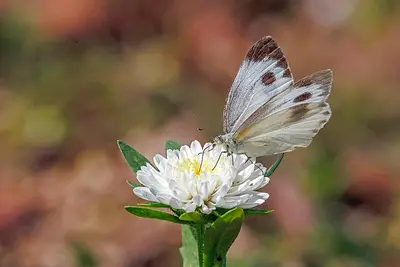
Azumi XL Rose
The Azumi series offers 2-3 1/2" pom-pom style blooms in rich jewel tones on sturdy, vigorous plants. Recommended for growing as a spray-type cut flower. Plants yield one cut per plant; each cut is a large spray of stems and flowers. The primary flower will be larger, surrounded by multiple slightly smaller blooms. Alternately, single stems can be harvested, although stem length will be shorter than when harvested as a one-cut spray type. Flower color is bright rose with a cream center. Fusarium tolerant.
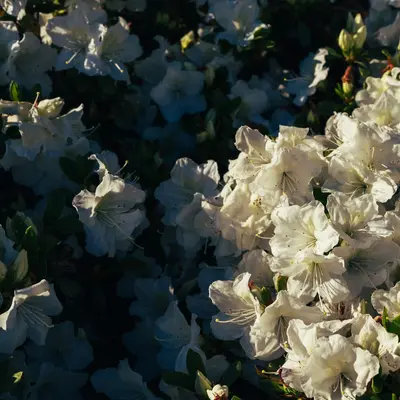
Azumi XL White
The Azumi series offers 2-3 1/2" pom-pom style blooms in rich jewel tones on sturdy, vigorous plants. Recommended for growing as a spray-type cut flower. Plants yield one cut per plant; each cut is a large spray of stems and flowers. The primary flower will be larger, surrounded by multiple slightly smaller blooms. Alternately, single stems can be harvested, although stem length will be shorter than when harvested as a one-cut spray type. White blooms open with a creamy center maturing to bright white. Fusarium tolerant.
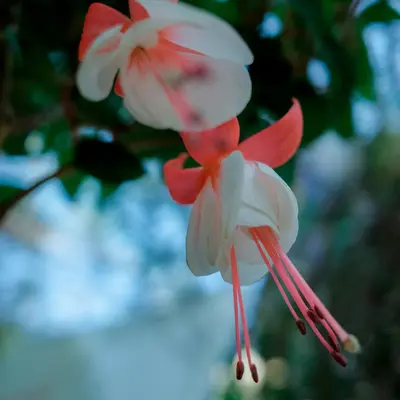
Ballerina
Who wouldn't want a beautiful pale pink zinnia? In 2018, Johnny's Breeding Team began work selecting for the pastel color palette. Ballerina's 4-6" flowers are a blend of soft pink and pale peach, with a mix of both dahlia- and cactus-type blooms. Produces a high percentage of double blooms. May contain a few off-types of ivory, dark pink, or yellow.
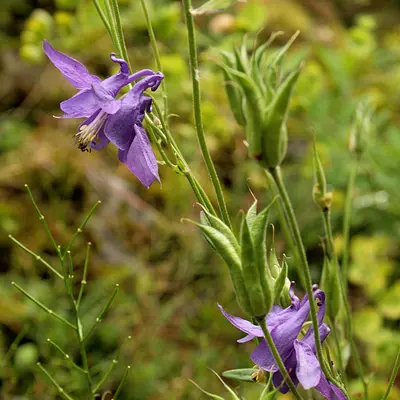
Barlow Mix
Fluffy, star-shaped blooms with pointed, overlapping petals resemble petite clematis flowers. Fully double 1 1/2" upward-facing and nodding, spurless flowers. Blooms late spring of the second year from a spring sowing. An excellent cut flower, it has strong, straight stems and fills the gap between early spring and summer bouquets. Produces multiple blooms per stem. Mix includes Victorian shades in a complementary color palette: Aline Fairweather (rose), Black Barlow (almost black), Blue Barlow (violet), Bordeaux Barlow (deep wine red), Miss M.I. Huish (dark purple), Nora Barlow (rose centers fading to white with green tips), White Barlow (white), and Christa (purple-edged white). Attracts hummingbirds. Perennial in Zones 3-9.
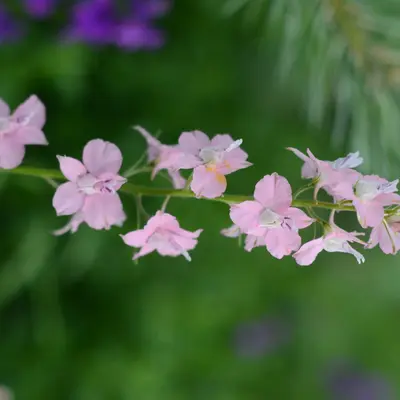
Belladonna Mix
First-year flowering perennial. Well-branched plants produce spikes in dark blue, turquoise, or white. Tall plants may benefit from support - stems can lodge or topple in heavy rain or wind. Attracts bees and butterflies. Often grown as an annual. Perennial in Zones 3-7.
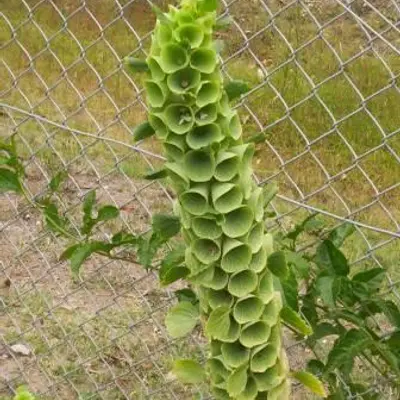
Bells of Ireland
Add fresh, bright-green color and texture to mixed bouquets. Long stems covered with bright apple-green, bell-shaped, 2" calyxes centered with tiny, white blooms. Use as a spike or filler flower. Excellent in dried arrangements too. Blooms have a lovely, sour-apple scent. Also known as bells-of-Ireland and shellflower.
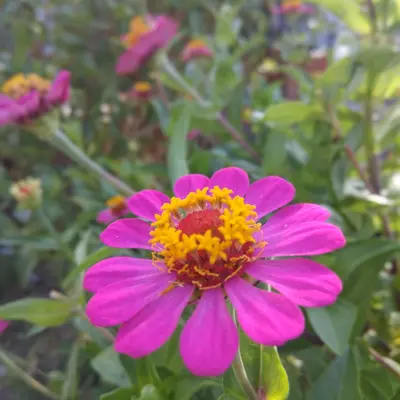
Benary's Giant Bright Pink
Benary's Giant Bright Pink is a vigorous heirloom zinnia cultivar prized for its large, double-petaled blooms in vibrant hot pink. Reaching mature height of 24-36 inches, it flowers prolifically in 75-90 days from seed. The substantial 4-5 inch flower heads are excellent for cut arrangements and garden display. This variety thrives in full sun and well-draining soil, offering reliable performance for both beginner and experienced gardeners seeking bold color impact in beds and borders.
Benary's Giant Carmine Rose
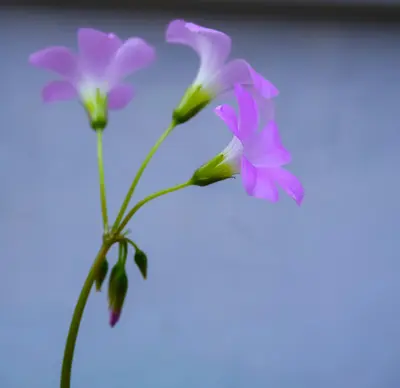
Benary's Giant Carmine Rose is a stunning heirloom zinnia prized for its large, fully double flowers in rich carmine-rose tones. The robust plants mature in 75-90 days and reach substantial height, producing abundant blooms on sturdy stems ideal for cutting. This variety is renowned for its vigorous growth in full sun and well-drained soil, delivering prolific flowering with minimal fuss, making it a standout choice for borders and arrangements.
Benary's Giant Coral
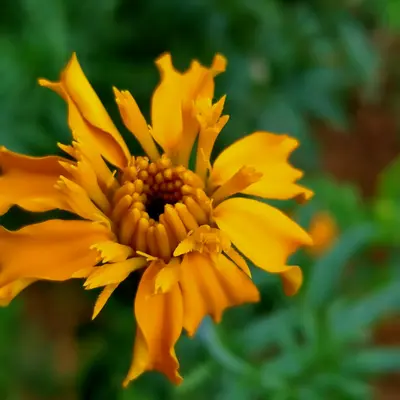
Benary's Giant Coral is a stunning heirloom celosia with large, velvety coral-red plumes that command attention in gardens and arrangements. This easy-to-grow annual reaches its vibrant peak in 75-90 days, thriving in full sun. The densely packed flower heads tower above foliage, making it a dramatic focal point. Prized by florists and gardeners alike for its bold color and exceptional longevity in fresh and dried arrangements, this variety reliably performs in warm-season gardens.
Benary's Giant Deep Red
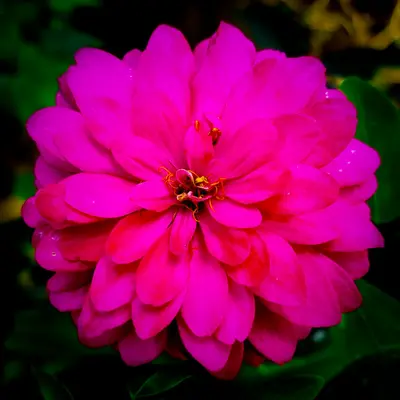
Benary's Giant Deep Red is a spectacular heirloom celosia (cockscomb) featuring velvety, deep crimson flower heads that can reach 6-8 inches across. The densely ruffled plumes emerge on sturdy, branching plants reaching 24-30 inches tall. Blooming within 75-90 days, it's prized for its rich color intensity and dramatic garden impact. An excellent cut flower and landscape focal point for full-sun borders.
Benary's Giant Golden Yellow
Benary's Giant Golden Yellow is a vibrant heirloom flower variety prized for its large, double blooms in rich golden yellow. Reaching maturity in 75-90 days, this ornamental produces abundant flowers ideal for cutting and garden displays. The generous, fully double petals create full, pompom-like blooms that stand out among standard varieties. Best grown in full sun with well-draining soil enriched with organic matter, this easy-to-grow heirloom thrives in warm conditions and attracts pollinators while resisting common pests effectively.
Benary's Giant Lime
Benary's Giant Lime is a vibrant lime-green flowering variety prized for its large, fully double blooms that create stunning visual impact in gardens. Reaching maturity in 75-90 days, this heirloom cultivar produces abundant flowers with a striking chartreuse hue, setting it apart from traditional flower colors. The massive flower heads make it an exceptional choice for bold landscape displays and cut flower arrangements. Best grown in full sun with well-draining, fertile soil for optimal blooming.
Benary's Giant Mix
Benary's Giant Mix is a heirloom zinnia variety producing large, densely double flowers in vibrant mixed colors including pink, red, orange, purple, and white. Plants reach full maturity in 75-90 days and thrive in full sun with well-drained soil. Known for its impressive 4-5 inch blooms and robust growth habit, this variety is a standout choice for cutting gardens and continuous summer color. Easy to grow, making it ideal for both novice and experienced gardeners.
Benary's Giant Orange
Benary's Giant Orange is a classic heirloom zinnia producing oversized, densely-petaled pompom blooms in vibrant orange. Plants reach full maturity in 75-90 days, thriving in full sun with well-drained, moderately fertile soil. This variety is prized for its dramatic flower size and intense color, making it an exceptional choice for cut flowers and garden displays. Its easy cultivation and heirloom status have made it a gardening favorite for generations.
Benary's Giant Purple
Benary's Giant Purple is a stunning heirloom flower variety renowned for its large, vibrant deep purple blooms. Reaching maturity in 75-90 days, this vigorous cultivar produces oversized flowers that stand out in gardens and cut-flower arrangements. A key differentiator is its exceptional flower size and rich color saturation. The blooms are ideal for ornamental display and floristry work, valued for their dramatic visual impact.
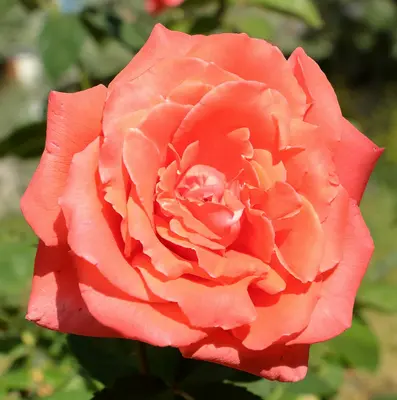
Benary's Giant Salmon Rose
Benary's Giant Salmon Rose is a stunning heirloom zinnia prized for its enormous double flowers in a warm salmon-rose shade. Plants reach maturity in 75-90 days and produce blooms up to 4 inches across, with full, ruffled petals that create a cabbage-like appearance. This vigorous grower thrives in full sun and well-draining soil, making it an excellent choice for cutting gardens and floral arrangements due to its long stems and exceptional vase life.
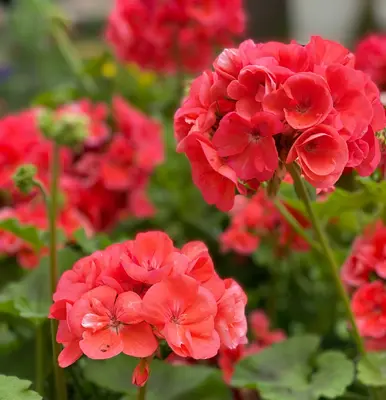
Benary's Giant Scarlet
Benary's Giant Scarlet is a stunning heirloom zinnia cultivar prized for its large, vibrant scarlet-red double flowers that bloom prolifically in 75-90 days. This easy-to-grow variety reaches 24-30 inches tall and produces abundant cut flowers throughout the season. Its bold, fully-double petals and exceptional color saturation make it a standout in garden displays and floral arrangements. An excellent choice for cutting gardens and ornamental beds.
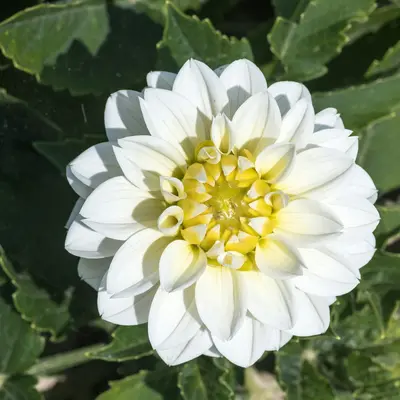
Benary's Giant White
Benary's Giant White is a heirloom flower variety prized for its impressive large white blooms. Plants mature in 75-90 days and thrive in full sun with rich, well-draining soil. This variety is renowned for producing oversized flowers that make striking cut arrangements and garden displays. The abundant white petals create a dramatic focal point in any floral composition. An easy-to-grow heirloom that performs reliably in most conditions.
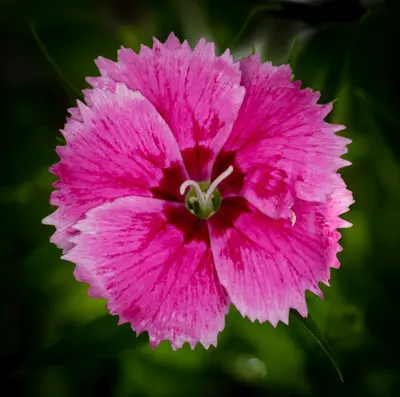
Benary's Giant Wine
Benary's Giant Wine is a heirloom flower variety producing deep wine-red blooms on vigorous plants. Reaching maturity in 75-90 days, this ornamental excels in full sun with well-drained, fertile soil. The large, vibrant flowers are the defining feature, making it a striking addition to cut-flower gardens and borders. Easy to grow and reliable, it's prized by gardeners for its dramatic coloring and generous bloom production.
Big Smile
Attractive in small beds, containers, and 4-6" pots. 3-6" blooms are bright golden-yellow with a black center. Day neutral. Branching. Bears pollen.

Black Button
Upright plants produce abundant double and semidouble 1-1 1/2" blooms. Prefers cool temperatures. Also known as cornflower, garden cornflower, and bachelor's buttons. Edible Flowers: The petals are used to decorate desserts. Centaurea is also a popular choice for brightening up salad mix. Flavor is bland and mildly floral.
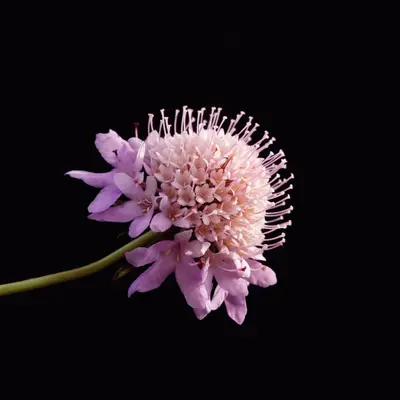
Black Knight
Almost black, 1 1/2-2 1/2" blooms stand tall on strong, slender stems. A dramatic addition to any bouquet or garden. Also known as mourningbride.

Black-Eyed Susan
Black-Eyed Susan is a vibrant perennial flower featuring bright golden-yellow petals surrounding a distinctive dark brown or black central disk. It reaches maturity in 100-120 days from seed and produces abundant blooms throughout summer and fall. This heirloom variety is exceptionally low-maintenance and thrives in full sun to partial shade (4-6+ hours), adapting well to most soil types. The defining characteristic is its cheerful two-tone appearance and prolific, long-lasting flowers ideal for gardens, borders, and fresh cut arrangements.
Bloody Mary
Dramatic 2" flowers in shades of dark red, coral red, cream, and unique bicolors. This mix is generally compact, but contains both mounding and trailing types. Foliage ranges from dark blue-green to medium-green. 2019 Fleuroselect Novelty winner.
Blossom Pearl
1-2" wide pale pink blooms. Silvery-gray foliage and long stems. Prefers cool growing conditions.
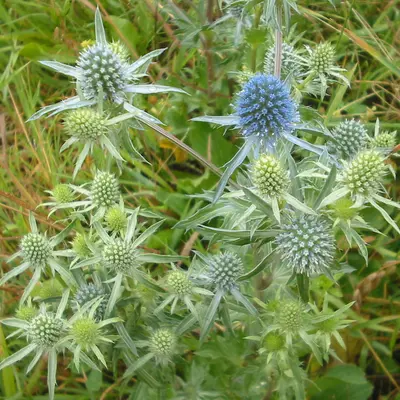
Blue Glitter
Attractive blooms with a metallic shine. Eryngium is a hardy perennial with long, sturdy stems. Tolerates hot, sunny locations. Plants produce flowers during the second year of growth and in subsequent years. Attracts bees, beneficial flies and wasps. Also known as plains eryngo and flat sea holly. Perennial in Zones 3-8. FleuroSelect Gold Award Winner.
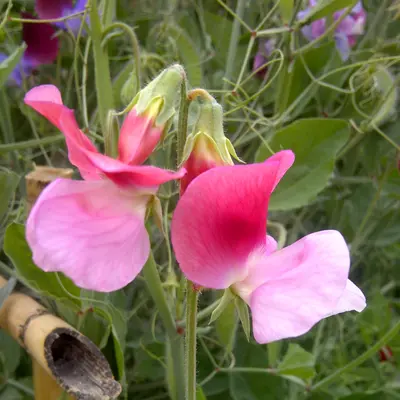
Blue Ripple
From the Spencer series. Lavender blue streaks and flecks throughout and lining the slightly ruffled petal edge. Reminiscent of sea glass. Plants produce 3-4 blooms per 9-12" stem. Mildly fragrant. NOTE: Spencer series sweet peas are known as late-flowering because they require at least 12 hours of daylight, unlike more modern sweet pea varieties bred for winter production, which may require only 10-11 hours of daylight. Attracts hummingbirds.
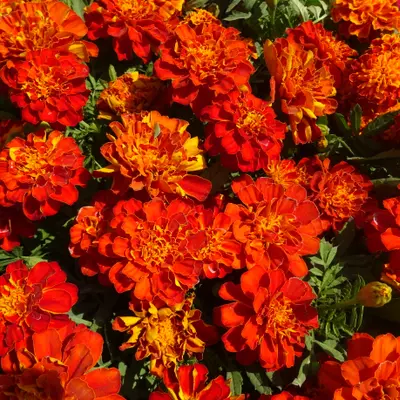
Bonanza™ Bee
1 1/2-2 1/2" refined crested blooms. Highly uniform plants are more compact than the Durango series. An easy-to-grow addition to garden beds, containers, and small spaces. Vibrant red and gold blooms.
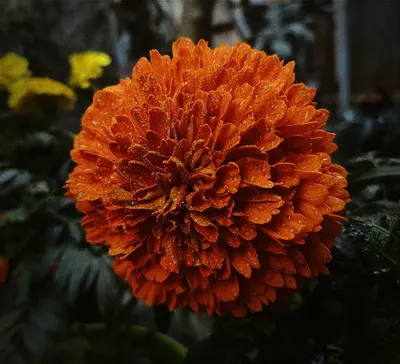
Bonanza™ Deep Orange
1 1/2-2 1/2" refined crested blooms. Highly uniform plants are more compact than the Durango series. An easy-to-grow addition to garden beds, containers, and small spaces. Classic marigold-orange bloom color.
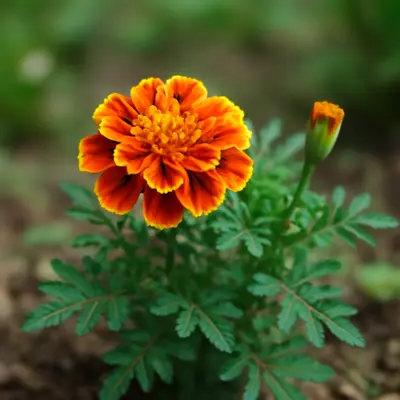
Bonanza™ Harmony
1 1/2-2 1/2" refined crested blooms. Highly uniform plants are more compact than the Durango series. An easy-to-grow addition to garden beds, containers, and small spaces. Vibrant red and orange blooms.
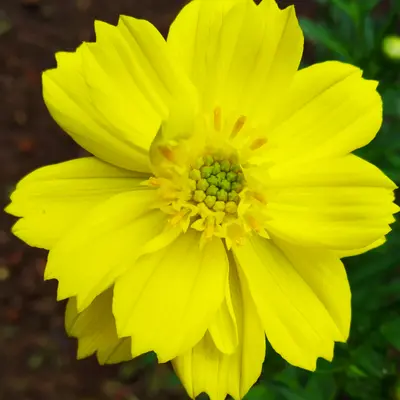
Bright Lights
Vigorous plants flower over a long season, creating rich color in the garden and a vibrant food source for bees, butterflies, and other pollinators. Plant architecture is tall but open and airy, so plants are less prone to lodging or falling over than Cosmos bipinnatus types. Excellent choice for color in summer gardens. 1 1/2-2" wide, double and semidouble blooms in shades of orange and gold. Sometimes used as cut flowers, though they do not last long in the vase, dropping petals after 5 days. Flowers are also used to create natural dyes for fiber and fabrics. Plants readily self-seed. Also known commonly as Dyer's cosmos and sulfur cosmos. Native to the Americas and Mexico. For mass plantings, sow at 5 oz./1,000 sq.ft. or 14 lb./acre.
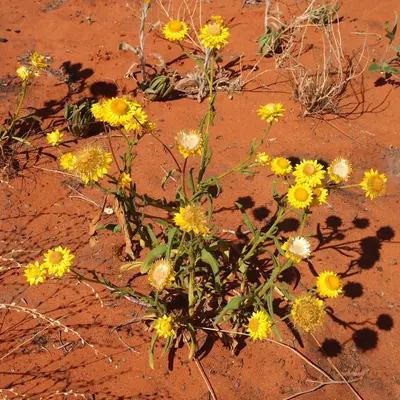
Bright Rose
Tall, well-branched plants produce double flowers 2-2 1/2" across. Blooms are shades of hot pink and rose at the petal tips. Also known as bracted strawflower.
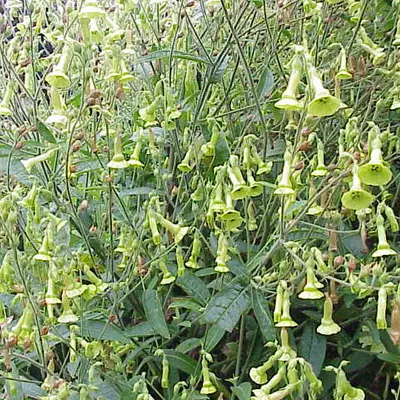
Bronze Queen
Bell-shaped, chocolate-purple blooms dance on contrasting bright green stems. Long stems add movement and interest to arrangements. Nicotiana flowers continuously for most of the season when cut back regularly. Blooms are relatively fragile and have a short vase life (5-7 days), making them best for casual bouquets, design work (not requiring a long vase life) and home cutting gardens. A favorite of pollinators and hummingbirds. Also known as flowering tobacco.
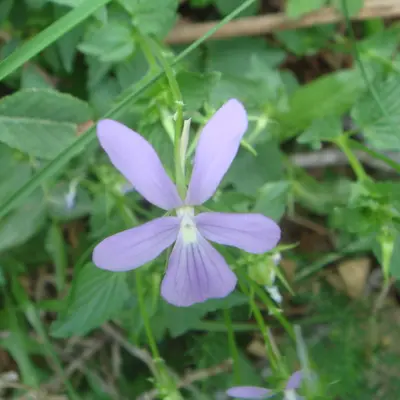
Brush Strokes
Cheerful faces sparkle in shades of apricot, gold, peach, lavender, plum, purple, and cream. You could spend hours gazing at the intricate patterning of the petals and their varied splashes, flecks, and stripes of color. Each plant seems to produce a unique color combination. Not selected for a short, mounding plant habit like most modern cultivars, this mix yields taller, more vigorous plants in a range of heights. Sweetly fragrant. Bloom size: 1 1/2-2 1/2".Overwinters well in our (Zone 5) unheated tunnel, yielding 12-18" stems that are perfect for mixing into early spring bouquets.Also known as pansy, Johnny jump-up, European field pansy, and horned violet. Edible Flowers: Decorative and edible garnish for salads and desserts with slight wintergreen flavor. While a popular choice for brightening up salad mix, the flowers are also good for candying.
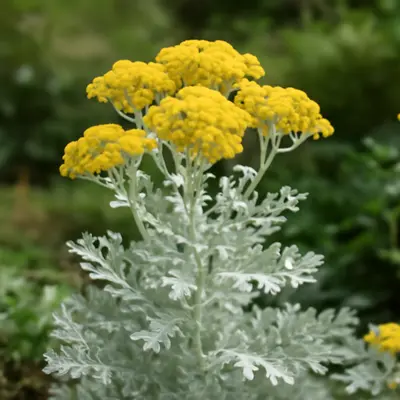
Candicans
Candicans is taller and more productive than other dusty miller varieties in our trials, making it a good choice for cut-flower production. Compared to Silverdust, Candicans is taller, more vigorous, a bit more variable in plant architecture, and its leaves are not as deeply lobed. Otherwise, overall appearance is very similar. Dusty Miller's silvery foliage is a very popular cut-flower foliage for elegant bouquets. 3-7" long, velvety leaves with a snowflake appearance. Plants produce yellow flowers the second year from seeding, primarily in the southern states. Flowers are commonly removed to encourage foliage growth. Tender perennial in Zones 8-10.
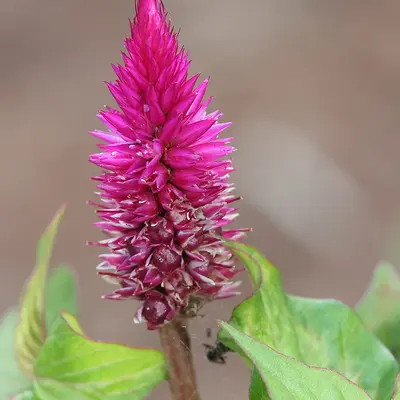
Celway™ Purple
Productive plants produce sturdy stems with 2-4" clusters of flower spikes. Blooms tuck neatly into bouquets and add a touch of sparkle. Plants flower slightly earlier and are slightly shorter than some of the other colors in the Celway series. Similar to Ruby Parfait in bloom color and size, though Celway Purple flowers later on taller plants and sturdier stems. To encourage increased stem production and branching, pinching is recommended at seedling stage, when about 6" in height. Raw seeds, not film-coated.
Celway™ Red
Productive plants produce sturdy stems with 2-4" clusters of flower spikes. Blooms tuck neatly into bouquets and add a touch of sparkle. Dark red stems and leaves. Plants are slightly shorter than the other colors in the Celway™ series. Pinching recommended at seedling stage, when about 6" in height. Raw seeds, not film-coated.

Celway™ Terracotta
Celway™ Terracotta is a striking heirloom flower variety prized for its distinctive warm terracotta-colored blooms. Reaching maturity in 90-100 days, this easy-to-grow ornamental thrives in full sun and well-drained, fertile soil. The defining characteristic is its rich, warm peachy-orange hue that evokes traditional terracotta pottery, making it an excellent choice for cottage gardens, mixed borders, and cut flower arrangements. A reliable performer for gardeners of all skill levels.
Celway™ White
Celway® White is an heirloom ornamental flower variety that matures in 90-100 days under full sun conditions. It produces pristine white blooms and is prized for its clean, elegant appearance in gardens and floral arrangements. This easy-to-grow variety is valued primarily as a decorative flower rather than for culinary or medicinal purposes.
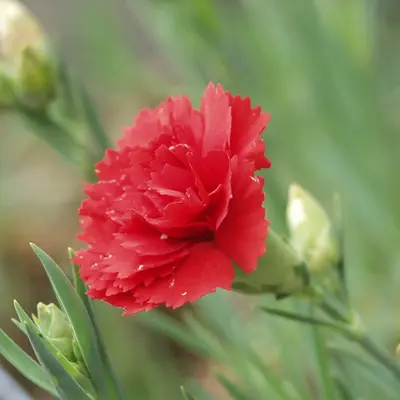
Chabaud Orange Sherbet
Vintage carnations present the sweet and spicy fragrance of clove. Frilly, 1 1/2-2" double blooms with a small percentage of singles. Orange creamsicle-colored petals striped and flaked with tangerine. Grass-like, gray or blue-green foliage. Blooms late July through August in our trials and is best grown as an annual for cut-flower production. Chabaud is an old-fashioned type dating back to as early as 1904. D. caryophyllus is native to the Mediterranean, where emotional attachment to this flower first took root. Also known as annual carnation. Pronounced shab-o, with a long "o." Tender perennial in Zones 6-8. Edible Flowers: Use the flower petals to garnish salads, desserts, soups, icing, and cold drinks. Flavor is of mild clove. Remove the petals from the flower base before consuming as the base can be quite bitter.
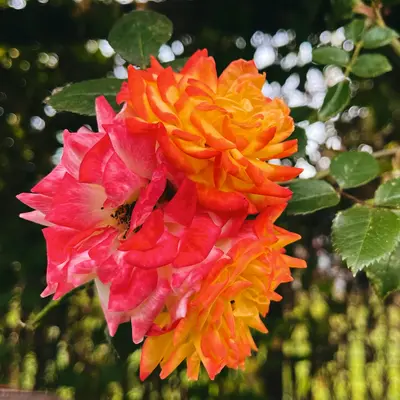
Chabaud Picotee Double Mix
Vintage carnations present the sweet and spicy fragrance of clove. Frilly 1 1/2-2" double blooms with a small percentage of singles. Striped, flaked, and picotee types in shades of rose, pink, wine, salmon, cream, and white. Grass-like, gray or blue-green foliage. Blooms late July through August in our trials and is best grown as an annual for cut-flower production. Chabaud is an old-fashioned type dating back to as early as 1904. D. caryophyllus is native to the Mediterranean, where emotional attachment to this flower first took root. Also known as annual carnation. Pronounced shab-o, with a long "o." Tender perennial in Zones 6-8. Edible Flowers: Use the flower petals to garnish salads, desserts, soups, icing, and cold drinks. Flavor is of mild clove. Remove the petals from the flower base before consuming as the base can be quite bitter.
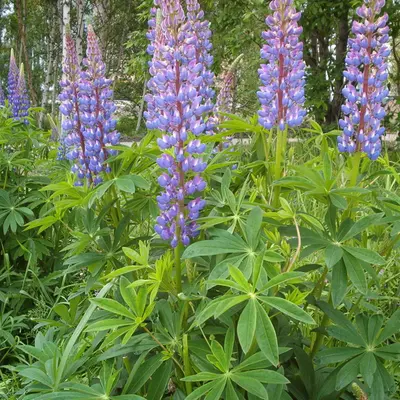
Chandelier
Part of the Russell Hybrids 'Band of Nobles' series. Chandelier has sweetly scented, soft, buttery yellow blooms. Plants produce multiple blooms with stiff, straight stems. In our trials, these first-year flowering plants bloomed in early July in the first year and about a month earlier (early June) from well-established plants in the second season of growing. Bloom quality and productivity were better in the second season, although all plants did produce flowers in the first season. Performs best where summers are cool. Attracts and provides a food source for bees and hummingbirds. 1-2' blooms/spikes are densely covered with ½" pea-like flowers. Lupine is typically resistant to deer and rabbits. Perennial in Zones 4-8.
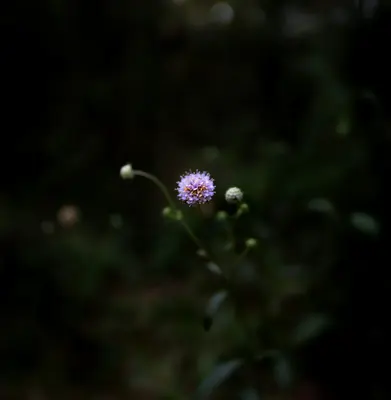
Chatelaine
Part of the Russell Hybrids 'Band of Nobles' series. Chatelaine has sweetly scented bicolor blooms in shades of pink with white. Plants produce multiple blooms with stiff, straight stems. In our trials, these first-year flowering plants bloomed in early July in the first year and about a month earlier (early June) from well-established plants in the second season of growing. Bloom quality and productivity were better in the second season, although all plants did produce flowers in the first season. Performs best where summers are cool. Attracts and provides a food source for bees and hummingbirds. 1-2' blooms/spikes are densely covered with ½" pea-like flowers. Lupine is typically resistant to deer and rabbits. Perennial in Zones 4-8.
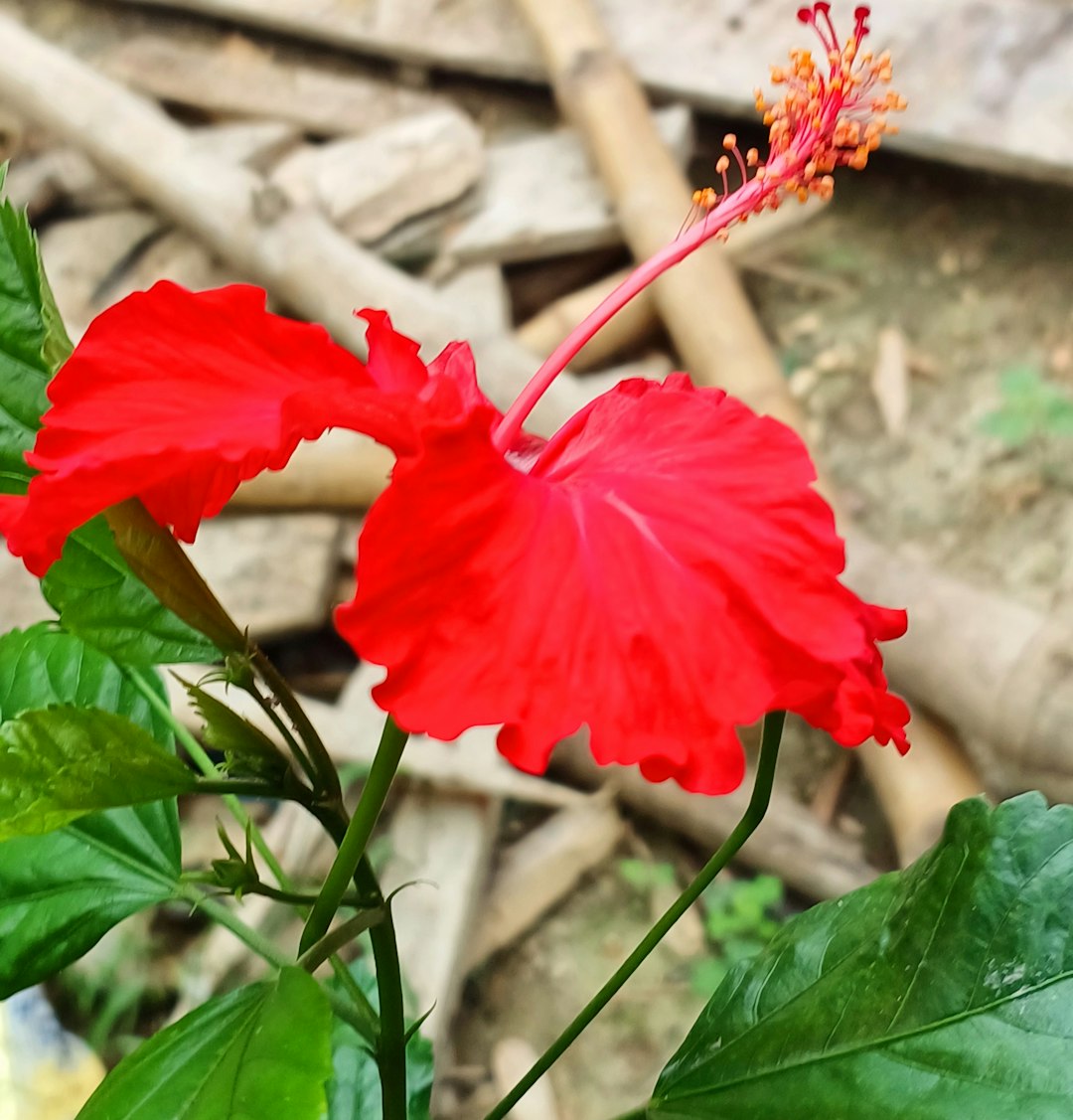
Chief Carmine
Bright carmine red, 2-7" blooms make useful fresh or dried cut flowers. Also known as cockscomb and crested cock's comb.
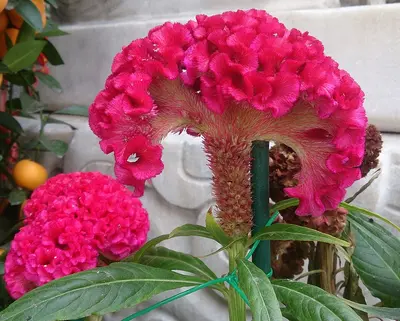
Chief Gold
Sunny golden-yellow, 2-7" blooms make useful fresh or dried cut flowers. Also known as cockscomb and crested cock's comb.
Chief Mix
Sturdy plants with strong stems. Colors include: gold, rose, persimmon, and red shades. Great fresh or dried. Also known as cockscomb and crested cock's comb. Also available in individual colors.
Chief Persimmon
Deep apricot, 2-7" blooms make useful fresh or dried cut flowers. Also known as cockscomb and crested cock's comb.

Chocolate
Chocolate is an ornamental flower variety prized for its deep burgundy to near-black petals and distinctive cocoa-like fragrance. Reaching maturity in 65-75 days, this heirloom cultivar produces velvety blooms that emit a subtle chocolate scent, making it a unique sensory addition to gardens. It thrives in full sun with well-draining loam soil and is notably easy to grow, ideal for both novice and experienced gardeners seeking unusual, richly-colored flowers.
Choice Mix
Choice Mix is an easy-to-grow heirloom flower variety ready for harvest in 65-75 days. This blend produces delicate blooms that thrive in full sun to partial shade with well-drained, moderately fertile soil. The flowers offer a subtle, mildly floral taste with delicate, slightly sweet notes, making them ideal for culinary garnishing and edible flower arrangements. Choice Mix flowers are prized by home gardeners for their hardiness and low maintenance requirements. Watch for common pests including aphids, spider mites, and leafhoppers to maintain plant health throughout the growing season.
Classic Magic
Abundant 1-1 1/2" flowers on upright plants. Double and semidouble bicolor blooms in black & plum, black & white, and purple. Attractive frosty appearance. Elegant addition to salads and desserts.
Classic Romantic
Abundant 1-1 1/2" flowers on upright plants. Double and semidouble, bicolor blooms in pink and white. Attractive, frosted appearance. Elegant addition to salads and desserts. Edible Flowers: Use the petals of this great edible flower for decorating desserts. Centaurea is also a popular choice for brightening up salad mix. Flavor is bland and mildly floral.
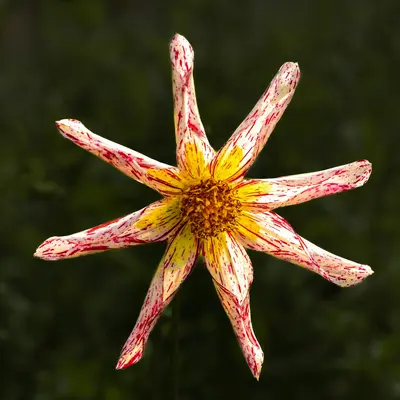
Clematis Jackmanii
The most popular and reliable clematis variety, famous for its prolific display of rich purple flowers that bloom from mid-summer through early fall. This vigorous climbing vine can transform any vertical space with its abundant 4-6 inch blooms, making it perfect for trellises, arbors, and fences. Jackmanii is incredibly hardy and forgiving, making it the ideal choice for gardeners new to clematis growing.

Cliveden Beauty
First-year flowering perennial. Well-branched plants produce long, slender stems and lacy sky-blue blooms. Popular color and airy, delicate appearance for bouquets and design work. Tall plants may benefit from support, as stems can lodge or topple in heavy rain or wind. Attracts bees and butterflies. Often grown as an annual. Perennial in Zones 3-7.
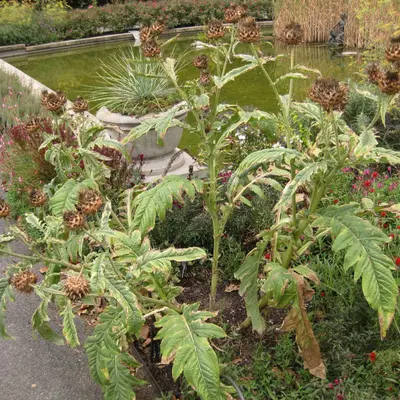
Colorado Star
A very early artichoke specifically bred for annual production from seed. The 1-3' tall plants vary from upright to prostrate, but all produce high yields of purple to greenish-purple buds. Typically 1-3 primary buds are produced that are 2 1/2-3 1/2" in diameter followed by 5-7 secondary buds ranging from 2-2 1/2" in diameter. Developed by Keith Mayberry, who also bred Imperial Star. Plants are spiny. Perennial in Zone 7 and warmer; otherwise treat as an annual. NOTE: Amount of purpling may vary from plant to plant; some buds will be all purple, while others only show purple-tinged bracts.
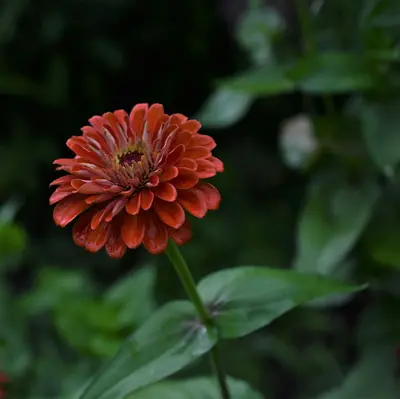
Copper Red
Tall, well-branched plants produce vibrant copper, double blooms 2-2 1/2" across. Also known as bracted strawflower.
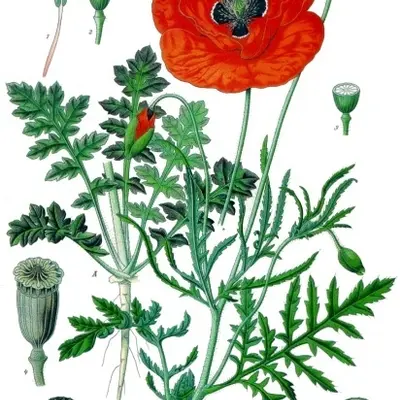
Corn Poppy
Large, 3-4" blooms provide cheerful color to any garden spot. Long-blooming.

Cosmos Sensation Mix
An old-fashioned favorite that epitomizes cottage garden charm with its delicate, papery petals in soft pastels and feathery foliage. This easy-care annual self-sows readily and blooms continuously until frost, attracting beneficial insects and providing armloads of cut flowers. The tall, graceful stems sway beautifully in the breeze, adding movement and romance to any garden space.
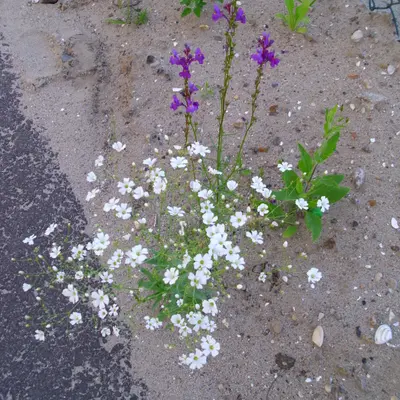
Covent Garden Market
Small, 1/2- 3/4", white flowers make an airy cut-flower filler for bouquets. Multi stems per plant. Succession plant for continuous harvest through the summer. Also known as baby's breath, "gyp," and showy baby's-breath.
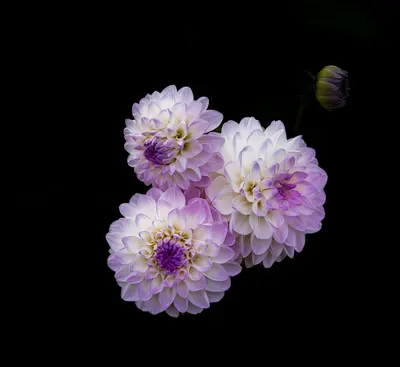
Cramer's Burgundy
Cramer's Burgundy is an heirloom flower variety prized for its deep burgundy blooms and reliable performance in full sun conditions. This cultivar matures in 90-120 days and thrives in well-drained soil with average fertility, making it accessible to gardeners of all skill levels. The defining characteristic is its rich, dark coloration that adds dramatic contrast to garden compositions. A pest-resistant choice despite susceptibility to spider mites, whiteflies, and thrips with proper management.
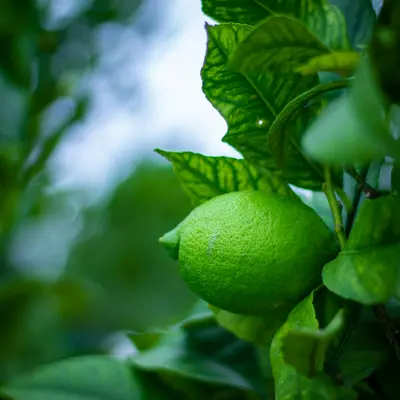
Cramer's Lemon Lime
Cramer's Lemon Lime is a decorative heirloom flower variety that reaches maturity in 90-120 days under full sun conditions. This ornamental cultivar is prized for its distinctive bicolor blooms featuring vibrant yellow and green tones that evoke its namesake citrus fruits. The variety thrives in well-drained, fertile soil and is notably easy to grow, making it accessible for gardeners of all skill levels. Its unique color combination and long bloom season make it a striking addition to flower gardens and landscape arrangements.
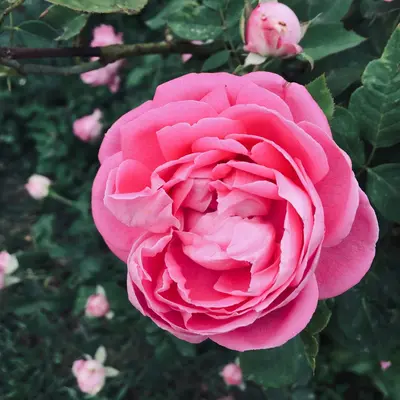
Cramer's Rose
Cramer's Rose is a classic heirloom flower variety prized for its full, layered blooms and rich coloring. Reaching maturity in 90-120 days, this rose develops abundant flowers throughout the growing season under full sun conditions. The variety is distinguished by its exceptional hardiness and disease resistance, thriving in well-draining loam with minimal fertility requirements. Its vigorous growth habit and prolific flowering make it an ideal choice for both garden displays and cut flower arrangements.
Cranberry Rose
Tall, well-branched plants produce double flowers 2-2 1/2" across. This variety is also known as Pomegranate or Bright Rose. Also known as bracted strawflower.
Creamy White
Tall, well-branched plants produce double flowers 2-2 1/2" across. Blooms are pale lemon-yellow. Fresh blooms: silvery buds take on a lemon hue as blooms mature and petals unfold. Fresh flowers open in shades of creamy white and lemon. Dried flowers: blooms turn fully lemon-colored once dried. Also known as bracted strawflower.

Crystal Beauty
Bloom size ranges from 1 1/2-4" wide. Uniform, upright plants and stems. Shimmering, fan-shaped combs are peach-colored with hints of pink and gold. Upright, clean stems are easy to harvest. Branching plants produce multiple stems. Compared to the Chief series, combs are slightly smaller. Otherwise, overall performance is very comparable. Unauthorized reproduction and sale of seeds is prohibited by the breeder.
Cupcakes Blush
Cupcakes Blush is as showy as Double Click with lighter-weight blooms held upright on strong stems. The light-colored, finely pleated blooms float above the foliage, reminding us of Degas' paintings of ballerinas. A small percentage of flowers have lovely tufted centers.
Cupcakes White
Cupcakes White is as showy as Double Click with lighter-weight blooms held upright on strong stems. The finely pleated blooms with scalloped edges float above the foliage. A small percentage of flowers have lovely tufted centers.
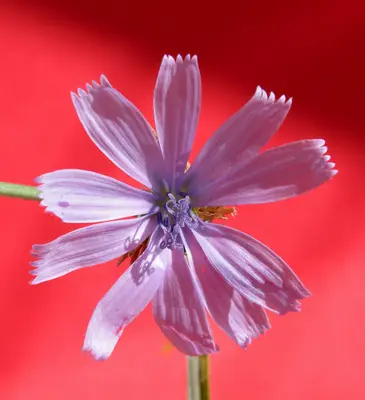
Dahlia Bishop of Llandaff
An award-winning heirloom dahlia that combines stunning scarlet-red single flowers with dramatic dark bronze-purple foliage for an absolutely striking garden presence. This compact variety has been beloved by gardeners since 1924, offering both exceptional flower power for cutting and foliage that rivals the most exotic coleus for dramatic garden impact.
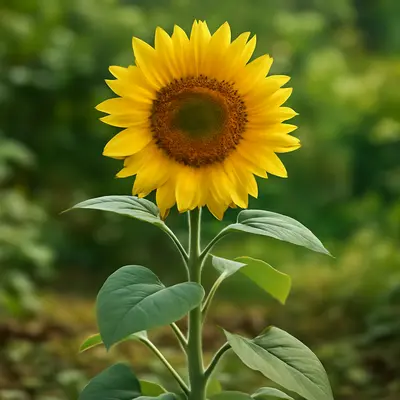
Darjeeling
Unique and adorable 3-6" Teddy Bear-type flowers. Excellent choice for late summer or fall gardens and arrangements that call for "brown," "rust," or "burnt sienna" hues. Plants are tall and productive enough for cutting but tidy and not overly vigorous. 12-20" stems. Produces minimal pollen. Branching. Unauthorized reproduction and sale of seeds is prohibited by the breeder.
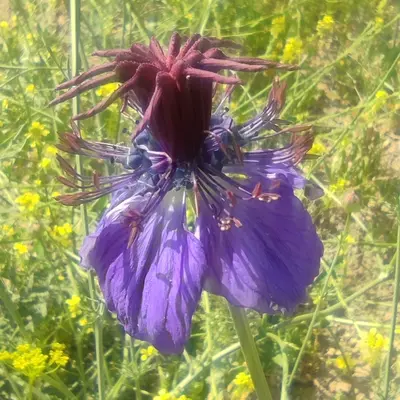
Delft Blue
Named for the famous Dutch Delft blue pottery. Blue splashes on flower petals in varying shades of blue and gray, and intricate deep-purple centers. Produces unusual seed pods that can be used in fresh or dried arrangements.
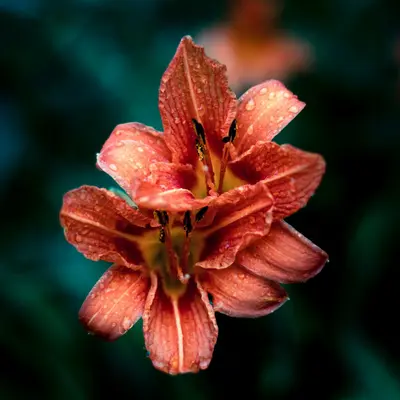
Dianthus Barbatus Sweet William
2-4" clusters of single-petaled, coral-pink blooms on long, strong stems. Compared to the Sweet™ series, blooms are wider, flatter, less globe-shaped, and have more of an umbel form. Plant vernalization is not required to initiate flowering. Fragrant blooms. Plants are high-yielding, producing long-lasting blooms, up to 14 days. Tender perennial in Zones 6-8. Raw, uncoated seed.
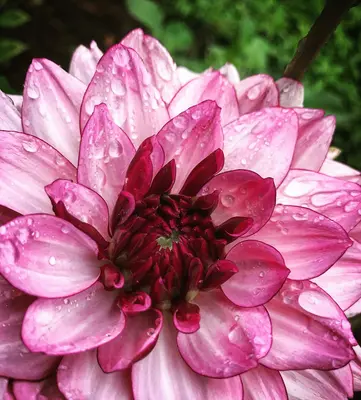
Double Click Bicolor Pink
2-3" fully double and semidouble bicolor flowers on strong stems for cutting. They are highly variable in the proportion of pink to white, creating the pleasant effect of a bicolor mix. Flower colors range from a contrasting, dark pink edge on a bright white flower to soft, creamy white with blush of pink. Cosmos are also known as garden cosmos.
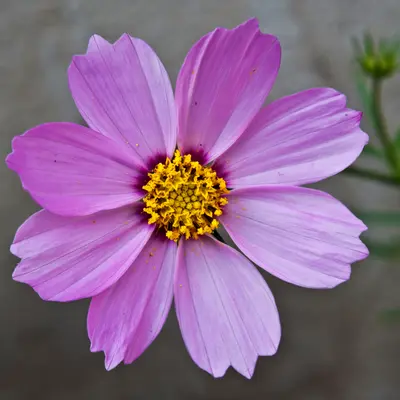
Double Click Bicolor Violet
2-3" fully double and semidouble bicolor flowers on strong stems for cutting. Blooms vary in their proportion of purple to white, creating the pleasant effect of a bicolor mix. Flower colors range from eggplant-purple with a contrasting bright-white background to soft-and-creamy white with a blush of lavender.
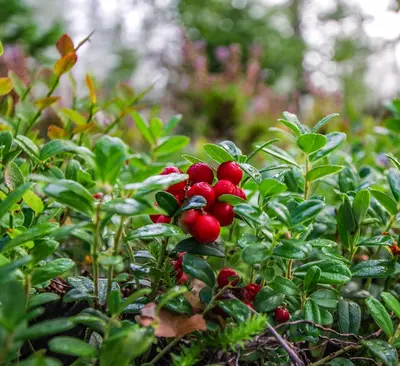
Double Click Cranberries
Tall plants with strong stems support fully double and semidouble blooms 2-3" across. The deep color adds richness to cut-flower arrangements. Cosmos are also known as garden cosmos.
Double Click Mix
Tall plants with large fully double and semidouble blooms. Shades of carmine, pink, and white make this a great cut flower and garden addition. Cosmos are also known as garden cosmos.
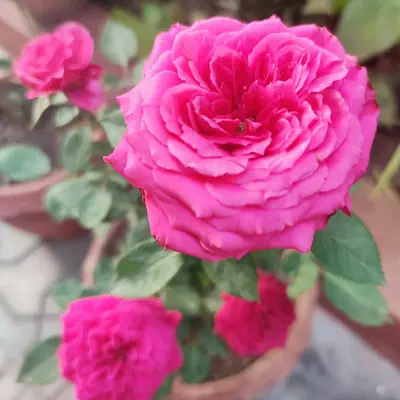
Double Click Rose Bon Bon
Tall plants with large fully double and semidouble, fluffy blooms. Cheerful, 2-3" rose-colored blooms make this a great cut flower and garden addition.
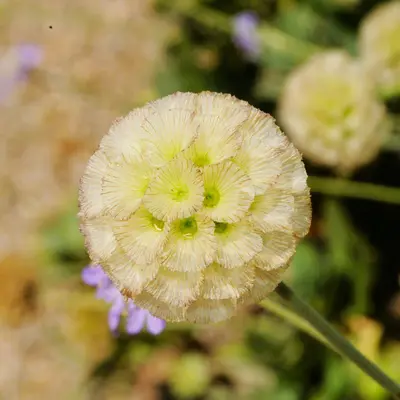
Double Click Snow Puff
Tall plants with large fully double and semidouble blooms. Pure white flowers with a small percentage displaying a soft blush of pink. Cosmos are also known as garden cosmos.
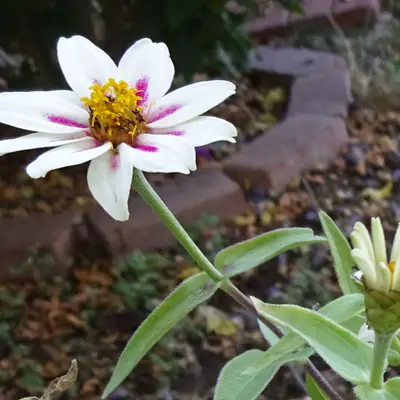
Double Zahara™ Bright Orange
An easy-to-grow choice for cheerful color in the garden or pots. Highly uniform plants with a low-growing, mounding habit that flower continuously, providing weeks of color. Abundant, bright golden-orange, fully double blooms average 1 1/2-2 1/2" wide. Zahara dwarf zinnias were bred for powdery mildew resistance and long-lasting color for landscapes and garden beds.
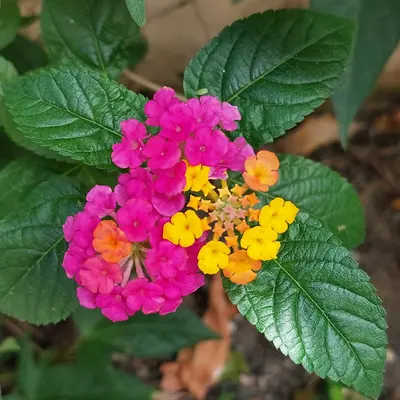
Double Zahara™ Brilliant Mixture
An easy-to-grow choice for cheerful color in the garden or pots. Bright and happy mix of hues in cherry, salmon, yellow, crimson, and white. Highly uniform plants with a low-growing, mounding habit that flower continuously, providing weeks of color. Abundant fully double blooms average 1 1/2-2 1/2" wide. Zahara dwarf zinnias were bred for powdery mildew resistance and long-lasting color for landscapes and garden beds.
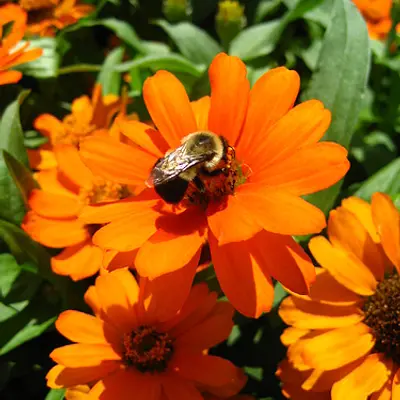
Double Zahara™ Cherry
An easy-to-grow choice for cheerful color in the garden or pots. Highly uniform plants with a low-growing, mounding habit that flower continuously, providing weeks of color. Abundant, cherry-red, fully double blooms average 1 1/2-2 1/2" wide. Zahara dwarf zinnias were bred for powdery mildew resistance and long-lasting color for landscapes and garden beds. AAS Winner.
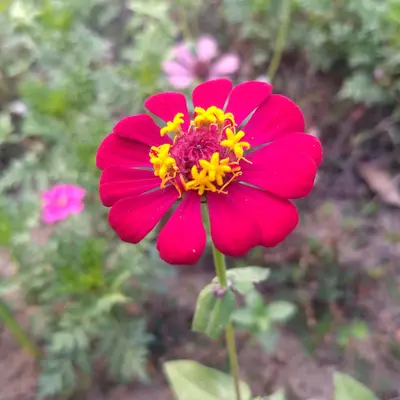
Double Zahara™ Fire
An easy-to-grow choice for cheerful color in the garden or pots. Highly uniform plants with a low-growing, mounding habit that flower continuously, providing weeks of color. Abundant, fiery, deep orange-red, fully double blooms average 1 1/2-2 1/2" wide. Zahara dwarf zinnias were bred for powdery mildew resistance and long-lasting color for landscapes and garden beds. AAS Winner.
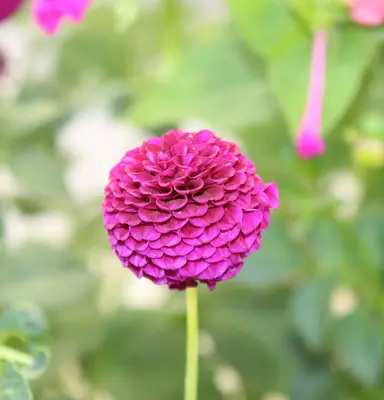
Double Zahara™ Raspberry Ripple
An easy-to-grow choice for cheerful color in the garden or pots. Highly uniform plants with a low-growing, mounding habit that flower continuously, providing weeks of color. Abundant, fully double, bicolor blooms average 1 1/2-2 1/2" wide. Rose shades can vary under different environmental conditions: cooler temperatures accentuate the rose coloration, whereas when flowers age and experience more heat, the white comes out more. Zahara dwarf zinnias were bred for powdery mildew resistance and long-lasting color for landscapes and garden beds.
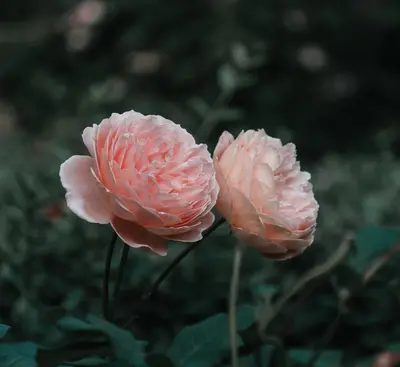
Double Zahara™ Salmon
An easy-to-grow choice for cheerful color in the garden or pots. Highly uniform plants with a low-growing, mounding habit that flower continuously, providing weeks of color. Abundant, salmon-colored, fully double blooms average 1 1/2-2 1/2" wide. Zahara dwarf zinnias were bred for powdery mildew resistance and long-lasting color for landscapes and garden beds.
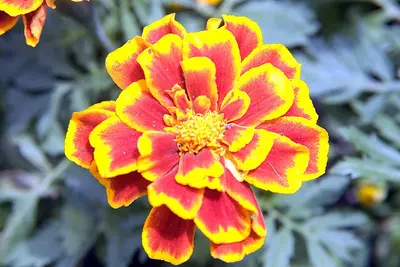
Durango Flame
Highly branching, uniform, robust plants. A great choice for garden beds and pots for its compact habit. Abundant 2-2 1/2" blooms. Bright red and orange bicolor flowers are beautiful in late summer and fall gardens. Attracts beneficial insects such as hoverflies. Also known as French marigold. Edible Flowers: Use the flowers to dress up salads and desserts or cooked in egg or rice dishes. Flavor is floral with hints of citrus and spice, and slightly bitter. Remove the petals from the flower base before consuming as the base can be quite bitter.
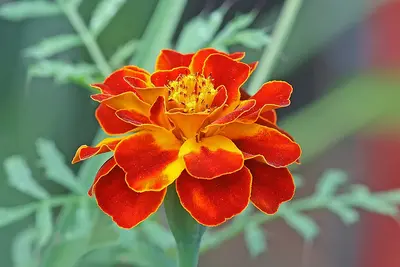
Durango Outback Mix
Highly branching plants. A good choice for packs, pots, and garden planting. Bloom size is 2-2 1/2". Attracts beneficial insects such as hoverflies. Also known as French marigold. Edible Flowers: Use the flowers to dress up salads and desserts or cooked in egg or rice dishes. Flavor is floral with hints of citrus and spice, and slightly bitter. Remove the petals from the flower base before consuming as the base can be quite bitter.
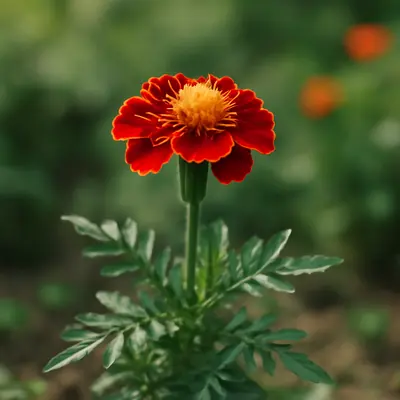
Durango Red
Highly branching, uniform, robust plants. A great choice for garden beds and pots for its compact habit. Abundant 2-2 1/2" blooms. Bright red flowers are beautiful in late summer and fall gardens. Attracts beneficial insects such as hoverflies. Also known as French marigold. Edible Flowers: Use the flowers to dress up salads and desserts or cooked in egg or rice dishes. Flavor is floral with hints of citrus and spice, and slightly bitter. Remove the petals from the flower base before consuming as the base can be quite bitter.
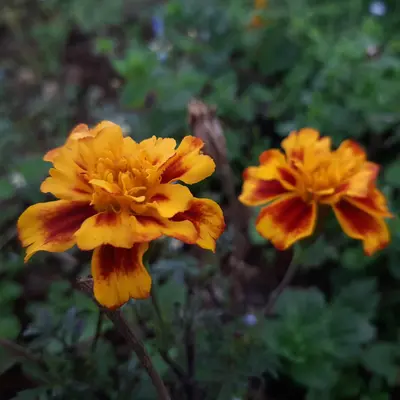
Durango Tangerine
Highly branching, uniform, robust plants. A great choice for garden beds and pots for its compact habit. Abundant 2-2 1/2" bright orange blooms. A classic addition to any garden. Attracts beneficial insects such as hoverflies. Also known as French marigold. Edible Flowers: Use the flowers to dress up salads and desserts or cooked in egg or rice dishes. Flavor is floral with hints of citrus and spice, and slightly bitter. Remove the petals from the flower base before consuming as the base can be quite bitter.
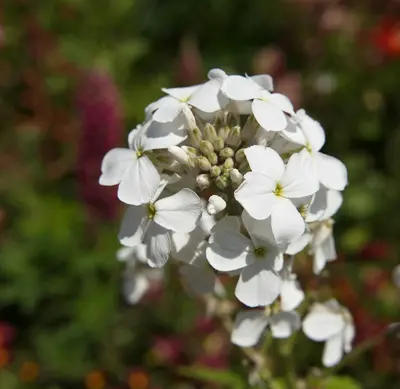
Early Arrow White
"Hi-double" plants produce 90% or more double-flowering plants. From the same breeder as the Iron series, Early Arrow is very similar to Iron in overall performance with very straight, strong stems and highly uniform plants. Long stems with 1 1/2-2", pure white blooms. One-cut series. Performed well in our spring, early summer, and fall trials. Seedling selection for double flowers is not necessary; plants will yield at least 90% double blooms without selection. NOTE: This variety produces one flowering stem per plant. Pinching is not advisable as it will terminate flowering. Edible Flowers: The peppery, clove-like flavor of the flowers lends itself well to use as a garnish on salads, desserts, and drinks.
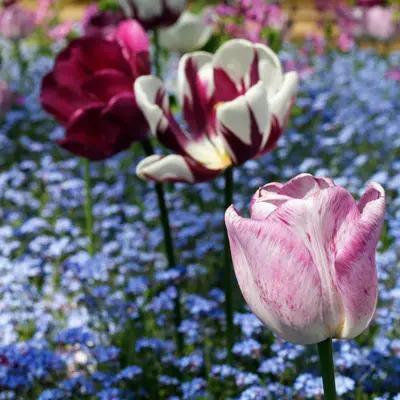
Elegance Formula Mix
First and most abundant to bloom in our trials. Developed for flowering under short days, low light conditions, and in cool greenhouses. Also produces abundant flowers in the long days of early summer. Suitable for spring or midwinter production. Long stems bear 3-5 blooms in seven shades of red, four shades of pink, two shades of purple, as well as blue and white. Formerly called Winter Elegance. Can be spelled either as sweet pea or sweetpea. Attracts hummingbirds.
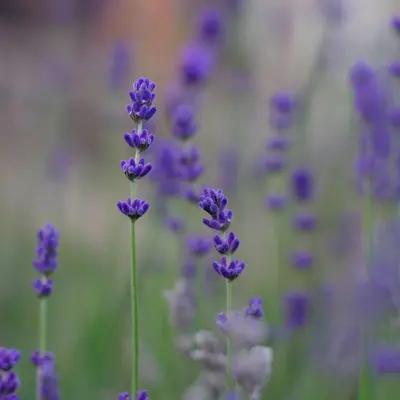
Elegance Lavender
Light lilac colored blooms. In our trials, Elegance Lavender is typically a few days later than other colors in the series. Developed for flowering under short days, low light conditions, and in cool greenhouses. Suitable for spring or midwinter production. Long stems bear 3-5 blooms. Formerly called Winter Elegance. Can be spelled either as sweet pea or sweetpea. Attracts hummingbirds.
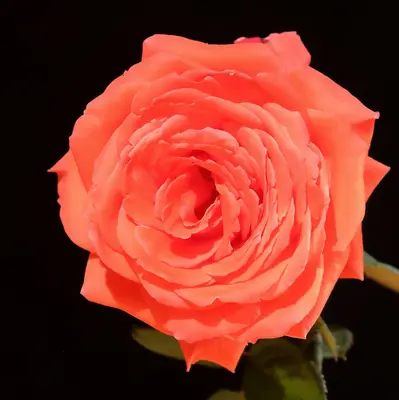
Elegance Salmon Rose
Coral-colored blooms. First and most abundant to bloom in our trials. Developed for flowering under short days, low light conditions, and in cool greenhouses. Suitable for spring or midwinter production. Long stems bear 3-5 blooms. Formerly called Winter Elegance. Can be spelled either as sweet pea or sweetpea. Attracts hummingbirds.
Elegance Watermelon
Compared to Elegance Salmon Rose, Elegance Watermelon's blooms are a shade darker. Elegance series is the first and most abundant to bloom in our trials. Developed for flowering under short days, low light conditions, and in cool greenhouses. Suitable for spring or midwinter production. Long stems bear 3-5 blooms. Formerly called Winter Elegance. Can be spelled either as sweet pea or sweetpea. Attracts hummingbirds.
Elegant Salmon
Beautiful salmon blooms strung along purple-red stems. Flowers bloom from the lower portion of the stem and continue to open up the stem. Mostly double, semidouble, and single blooms. Easy to harvest, as the hard (almost woody) stems are nearly free of foliage. Basal-branching plants. Native to the Western US. Also known as elegant clarkia and mountain garland.
Emerald Tassels
Fantastic color and texture for fresh bouquets or large containers. When dried, the blooms turn from green to a light tan color that works well in fall arrangements. Common names include amaranth and tassel flower.
Fama Deep Blue
Elegant 2 1/2-3 1/2" blooms with long, clean, wiry stems and good vase life. Perfect for cutting. Seed pods can be used to add whimsy and interest to mixed bouquets. Produces all summer long. Also known as sweet scabious, Caucasian pincushion flower, and perennial Scabiosa. Perennial in Zones 3-7.
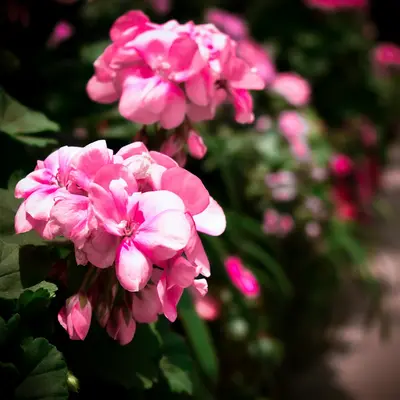
Fama White
Elegant 2½-3½" blooms with long, clean, wiry stems and good vase life. Perfect for cutting. Seed pods can be used to add whimsy and interest to mixed bouquets. Produces all summer long. Also known as sweet scabious, Caucasian pincushion flower, and perennial Scabiosa. Perennial in Zones 3-7.
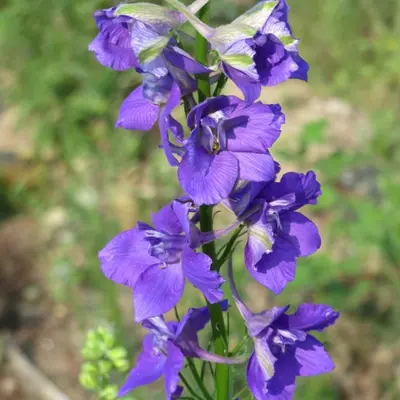
Fancy Smokey Eyes
Features tall spires of dense florets. Unique, silvery white blooms with lavender centers and subtle lavender blush. Produces mostly double blooms with a small percentage of singles. 1 1/2-1 3/4" florets on 9-12" flower spikes. Attracts hummingbirds.
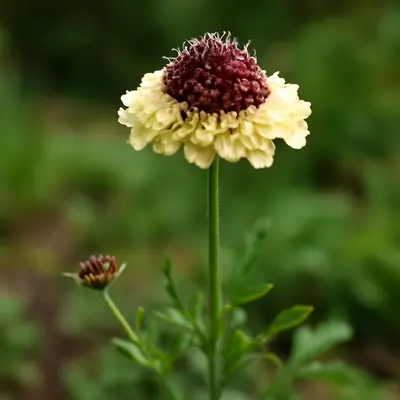
Fata Morgana
Fata Morgana produces 1 1/2-2 1/2", soft creamy apricot blooms atop tall, strong, and slender stems. The color adds a vintage look to mixed bouquets. In the garden, it serves as an attractant for bees and butterflies. Also known as mourning bride.
Fire King
1 1/2-2 1/2", deep scarlet flowers stand tall on strong, slender stems. A dramatic addition to any bouquet or garden. Also known as mourningbride.
Firmament
Tall, uniform plants produce a strong first cut of long, sturdy stems, followed by an abundance of branching side stems. Attracts bees. Also known as Chinese hound's tongue. AAS Winner 1935.
Fizzy White
Large 2 1/2-4" pure white blooms. A semidouble or double flower appearance is achieved by Fizzy White's overlapping petals and tufted centers. The petals have lovely, fine pleats and zigzag edges, reminiscent of crisply pressed and pinked linens.
Flamingo Feather
Uniform, upright plants produce tall, straight, sturdy stems with few leaves to strip away, making this an easy celosia to grow and harvest. Pale pink and rose spikes have a silvery shimmer. Comparable timing and form to Ruby Parfait but with taller, more upright plants and longer stems. Also available in organic seed.
Flamingo Purple
Dense, shrub-like plants produce a bounty of dramatic, dark burgundy-and-green foliage with 2-5" magenta flower spikes. Plants are upright and highly uniform, and stems are dark red, thick, and sturdy. As a cut flower, it adds a tropical flair. NOTE: Despite the name, this is a very different plant than Pink Flamingo celosia. Purple Flamingo blooms late and produces an abundance of foliage with comparatively few flowers on very dense plants. Pink Flamingo is the opposite in many ways, blooming early with lots of flowers and few leaves.
Flashback Mix
The undersides of the petals are a muted burgundy giving the 1 1/2-3" flowers a unique, flashy appearance. An excellent mix of colors; high percentage of double and semidouble flowers on long, strong stems. Also known as pot marigold, common marigold, and Scotch marigold. Edible Flowers: Petals of the flowers can be used fresh or dried in "flower confetti," soups, soufflés, rice dishes, baked goods, and to garnish desserts. Calendula is a popular choice for brightening up salad mix. Flavor is tangy and slightly bitter. Remove the petals from the flower base before consuming as the base can be quite bitter.

Florenza
Unique color combination and mild chocolate fragrance. No drooping flower heads; strong, straight 15-32" stems provide firm support. Plants have relatively small, and few, leaves, making them more manageable, neater, and easier to harvest. Produces pollen. Branching.
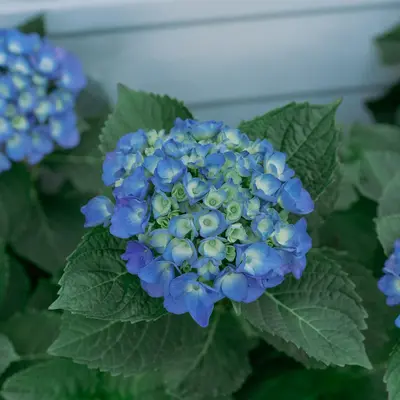
Florist Blue Boy
Florist Blue Boy is a charming heirloom flower variety prized for its striking deep blue blooms and ornamental appeal. The plants mature in 65-75 days, producing abundant flowers ideal for fresh arrangements and garden display. This easy-to-grow variety thrives in full sun to partial shade with well-drained, adaptable soil. Its defining characteristic is its rich blue coloring, which makes it a standout in bouquets and floral designs. While possessing a bland, mildly floral taste, it is best suited for decorative culinary applications rather than flavor-forward dishes.
Forever Blue
1 1/2-3" dark blue flower clusters. Robust plants produce strong stems in the field and greenhouse. Like many blue statice varieties, Forever Blue tends to bloom a bit later than other colors. Compared to Seeker Blue, Forever Blue is very similar in overall performance. Also known as annual statice and wavyleaf sea lavender.
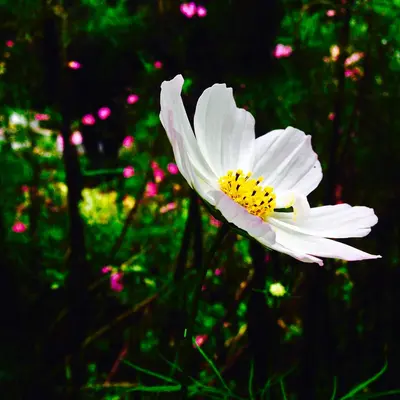
Forever Happy
A playful color contrast of light rose-lavender bracts and sunny-yellow flowers when used as a fresh cut flower. This uncommon color combination is useful for bridging multiple colors in an arrangement. Only the rose-lavender bract color will persist when dried. First cuts are a bit short, but stems lengthen with successive harvests. Highly uniform plants. 1 1/2-3" flower clusters on strong stems. Statice is long-lasting for both fresh and dried bouquets. One of the best choices for a dried floral as it holds its color well and is easy to dry. Also known as wavyleaf sea lavender.
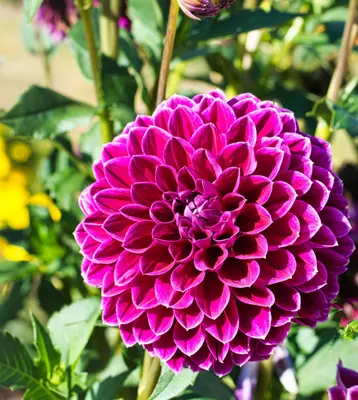
Giant Dahlia Flowered Mix
Similar to Benary's Giant zinnias in color and plant habit, but produces 4-6" single, semidouble, and double flowers. By comparison, Benary's Giant produces consistently larger blooms that are fully double, on plants that are more robust. Cut-and-come-again flower, yielding multiple cuts over the season. Mix includes yellow shades, rose shades, scarlet, green, orange, pink, red, purple, and coral.
Giant Hybrid Mix
Get started with dahlias by growing from seed, an easy and economical alternative to tubers. Under normal to optimal conditions, seeds germinate readily, and plants grow quickly. In our trials, plants bloom mid-July through to the first hard frost. Giant Hybrid Mix produces 3-5" double, semidouble, and single blooms. Mix includes solid and bicolor blooms in shades of salmon, coral, white, light yellow, red, and lavender. NOTE: Double blooms in varieties produced from seed are generally not as fully double as those of named varieties maintained and propagated by tubers, which have been specially selected for numerous and dense petals, among other desirable traits. Edible Flowers: The mild-flavored flowers are a colorful garnish for use in salads, desserts, and drinks. Tubers are also edible.
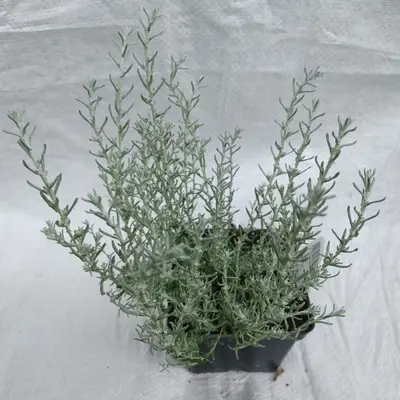
Golden Yellow
Golden Yellow is an heirloom flower variety prized for its vibrant golden-yellow blooms that mature in 75-85 days. This ornamental thrives in full sun and tolerates poor soils with minimal fertility requirements, making it an excellent choice for challenging garden spaces. The variety is notably easy to grow, requiring minimal maintenance while delivering cheerful color throughout the season.
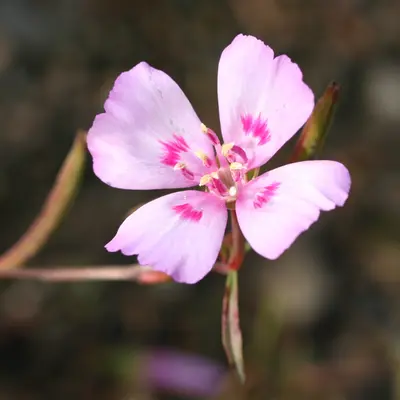
Grace Mix
Each stem produces clusters of cup-shaped blooms in shades of pink, magenta, salmon, and white. Sturdy stems and upward-facing bloom clusters work well as cut flowers. Blooms add a cheerful and almost tropical vibe to mixed bouquets and arrangements. Also known as farewell-to-spring and satin flower.
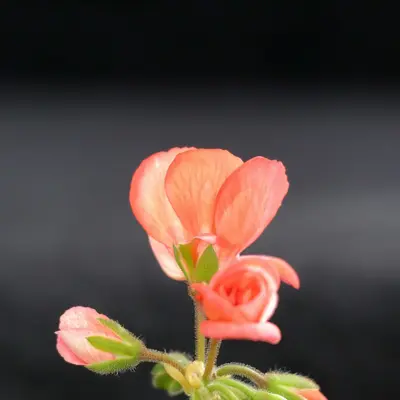
Grace Salmon
Each stem produces clusters of 1 1/2-3" wide, cup-shaped blooms. Sturdy stems and upward-facing bloom clusters work well as cut flowers. Bright, salmon-colored blooms add a cheerful and almost tropical vibe to mixed bouquets and arrangements. Supporting plants for straight stems is recommended. Also known as farewell-to-spring and satin flower.
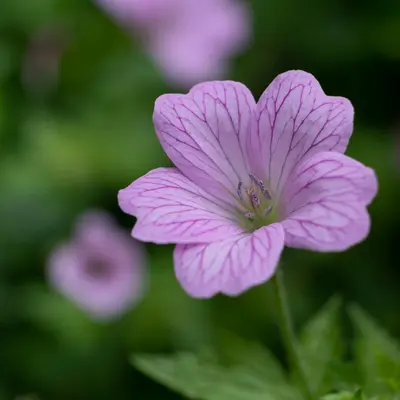
Grace Shell Pink
Each stem produces clusters of 1 1/2-3" wide, cup-shaped blooms. Sturdy stems and upward-facing bloom clusters work well as cut flowers. White with blushy, shell-pink petals. Blooms add a cheerful and almost tropical vibe to mixed bouquets and arrangements. Supporting plants for straight stems is recommended. Also known as farewell-to-spring and satin flower.
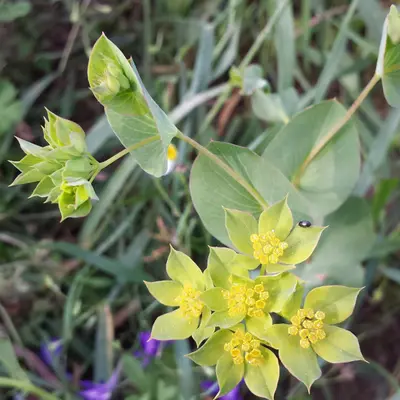
Green Gold
Upright plants produce 2 1/2" yellow-lime green flowers atop long, wiry stems. Excellent for mixed bouquets and makes a unique dried flower. Also known as thoroughwax and hare's ear. Also available in organic seed.
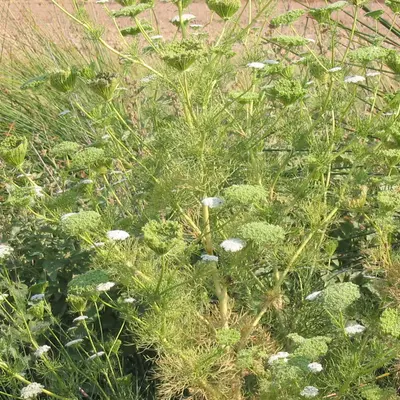
Green Mist
A greener, fuller ammi for cutting. Complements any color scheme. Stems are long and sturdy with dense flower heads 3-5" across. Foliage is full with blue-green, finely dissected leaves and has a feathery appearance. Also known as false Queen Anne's lace, lace flower, false bishop's weed, toothpickweed, and bishop's weed. Attracts and supports beneficial insects such as lacewings, lady beetles, minute pirate bugs, syrphid flies, and parasitic wasps.
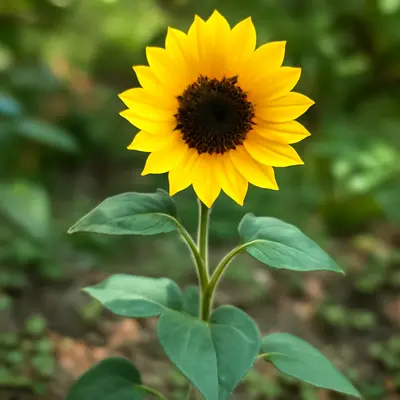
Gummy Bear
Uniform, branching variety produces 3-5" fully double, fluffy blooms. Great for garden beds, container plantings, and short-stemmed cut flowers. Compared to Teddy Bear, Gummy Bear has lighter yellow coloring, is a bit taller, and is several days later to bloom. Flower form and habit are comparable. Blooms produce minimal pollen.
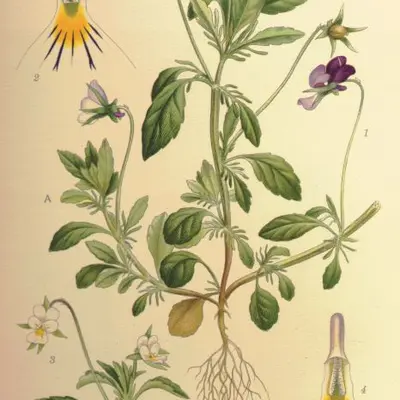
Helen Mount
1-2" tricolor flowers in purple, yellow, and white. May reseed. Also known as pansy, heart's ease, Johnny jump-up, and European field pansy. Perennial in Zones 4-9. Edible Flowers: Abundant blooms make dainty garnishes for salads and desserts with slight wintergreen flavor. While a popular choice for brightening up salad mix, the flowers are also good for candying.
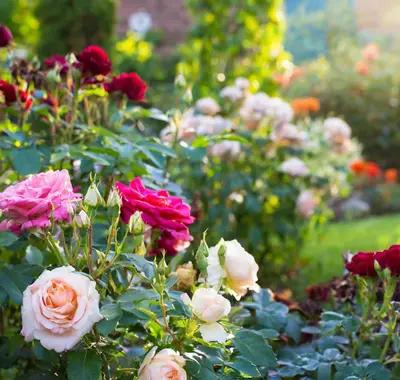
High Scent
Sturdy stems, abundant blooms, vigorous and healthy foliage. Flowers open to cream with lavender blush on petal edges. Color and plant habit is very comparable to Old Times, although flower color is more lavender than blue. Highly fragrant. Attracts hummingbirds.
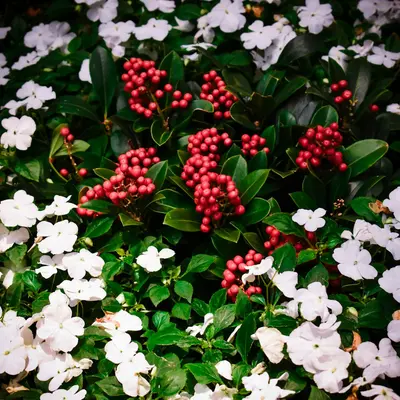
Holiday
Traditional, golden-yellow rays with dark brown disks. Bears armfuls of 3-5" blooms on 12-20" stems. Bears pollen; good for bee forage. Branching.Edible Flowers: Flower buds can be fried and the petals used as a garnish in salads and desserts; the flavor is bittersweet.
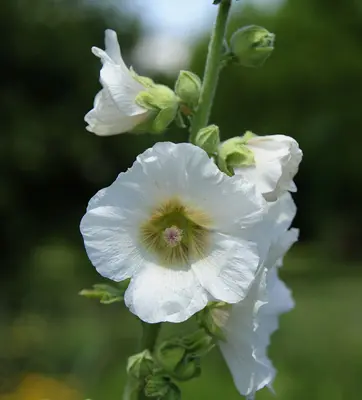
Hollyhock Chater's Double Mix
Towering cottage garden favorites that create dramatic vertical accents with their impressive 6-8 foot spikes covered in fully double, ruffled flowers resembling peonies in shades of pink, red, white, yellow, and purple. These old-fashioned beauties are perfect for creating privacy screens, backdrop plantings, or adding height to perennial borders while attracting beneficial insects and hummingbirds. Self-seeding readily to create naturalized colonies over time.
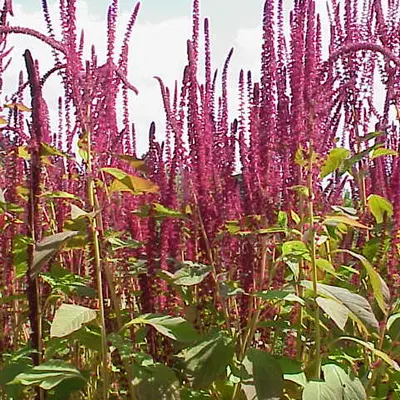
Hot Biscuits
Hot Biscuits is an heirloom ornamental flower variety that matures in 65-75 days, thriving in full sun and well-drained soil despite its tolerance for poor growing conditions. This easy-to-grow variety is prized for its vibrant, biscuit-colored blooms that add warmth and texture to garden displays. Its hardy nature and forgiving growth requirements make it ideal for beginner gardeners seeking reliable, low-maintenance ornamental interest.
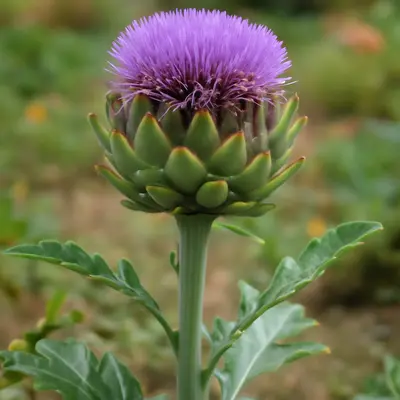
Imperial Star
A green artichoke specifically bred for annual production, Imperial Star will produce well-developed artichokes the first year from seed. Plants become 1 1/2-3' tall and have an open growth habit. Each typically produces 1-2 primary buds, which average 3-4" in diameter, and 5-7 smaller secondary buds. Perennial in Zone 7 and warmer; otherwise treat as an annual.
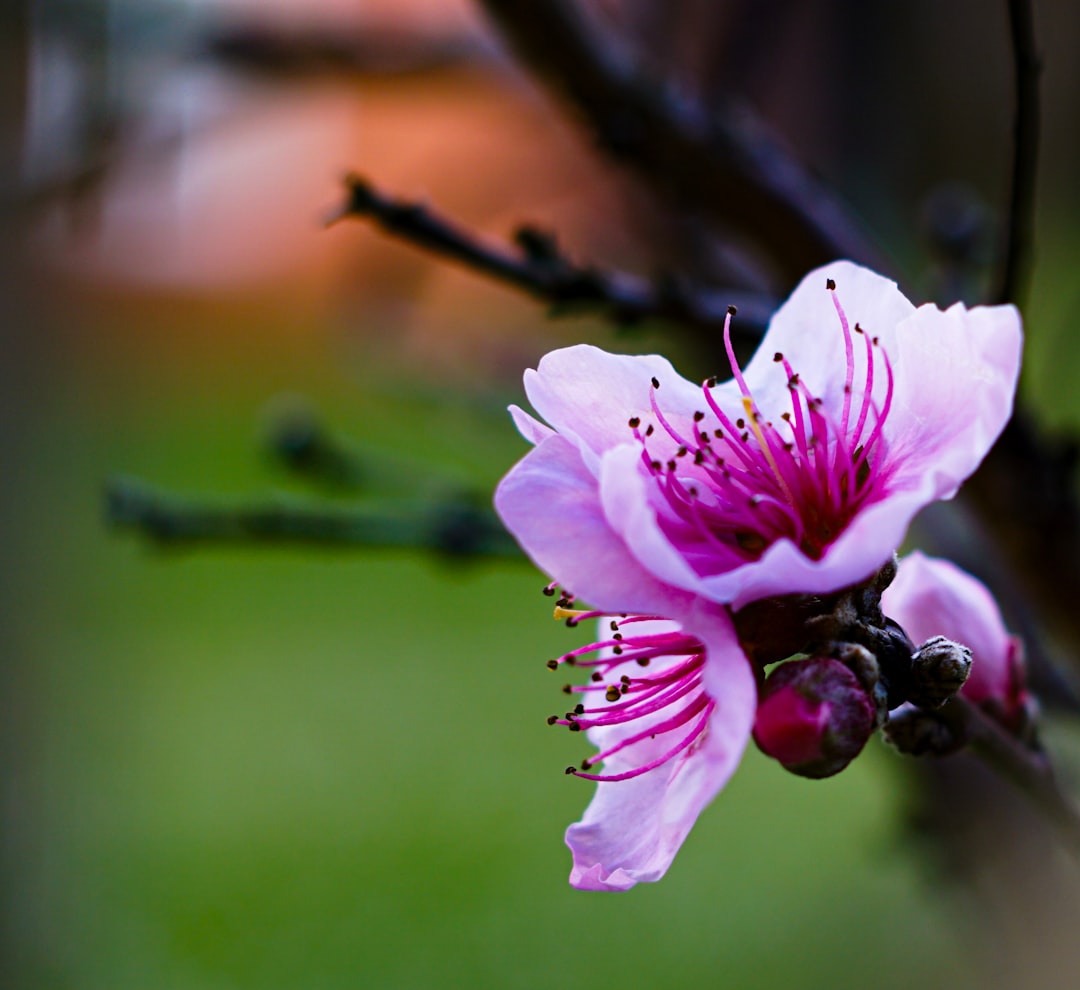
Iron Apricot
Early single-stem, or column-type stock in a highly uniform series for one-cut harvest. Aptly named for strong, straight, rigid stems. Iron performed well in our spring, early summer, and fall trials. Selectable for doubles and 55% double without selection. Compared to Katz, Iron is slightly later to flower, and has somewhat shorter and thicker stems. Tightly spaced florets on the flower spike make for compact 1 1/2-2", creamy peach-colored blooms with a full appearance. NOTE: This variety produces one flowering stem per plant. Pinching is not advisable as it will terminate flowering. Edible Flowers: The peppery, clove-like flavor of the flowers lends itself well to use as a garnish on salads, desserts, and drinks.
Iron Blue
Early single-stem, or column-type stock in a highly uniform series for one-cut harvest. Aptly named for strong, straight, rigid stems. Iron performed well in our spring, early summer, and fall trials. Selectable for doubles and 55% double without selection. Compared to Katz, Iron is slightly later to flower, and has somewhat shorter and thicker stems. Tightly spaced florets on the flower spike make for compact 1 1/2-2", blue blooms with a full appearance. NOTE: This variety produces one flowering stem per plant. Pinching is not advisable as it will terminate flowering. Edible Flowers: The peppery, clove-like flavor of the flowers lends itself well to use as a garnish on salads, desserts, and drinks.
Iron Cherry
Early single-stem, or column-type stock in a highly uniform series for one-cut harvest. Aptly named for strong, straight, rigid stems. Iron performed well in our spring, early summer, and fall trials. Selectable for doubles and 55% double without selection. Compared to Katz, Iron is slightly later to flower, and has somewhat shorter and thicker stems. Tightly spaced florets on the flower spike make for compact 1 1/2-2", soft blush/rose pink blooms with a full appearance. NOTE: This variety produces one flowering stem per plant. Pinching is not advisable as it will terminate flowering. Edible Flowers: The peppery, clove-like flavor of the flowers lends itself well to use as a garnish on salads, desserts, and drinks.
Iron Marine
Early single-stem, or column-type stock in a highly uniform series for one-cut harvest. Aptly named for strong, straight, rigid stems. Iron performed well in our spring, early summer, and fall trials. Selectable for doubles and 55% double without selection. Compared to Katz, Iron is slightly later to flower, and has somewhat shorter and thicker stems. Tightly spaced florets on the flower spike make for compact 1 1/2-2", pale lavender-blue blooms with a full appearance. NOTE: This variety produces one flowering stem per plant. Pinching is not advisable as it will terminate flowering. Edible Flowers: The peppery, clove-like flavor of the flowers lends itself well to use as a garnish on salads, desserts, and drinks.
Iron Pastel Mix
Our soft pastel blend is reminiscent of pastel-colored candies and marshmallows. Early single-stem, or column-type stock in a highly uniform series for one-cut harvest. Aptly named for strong, straight, rigid stems. Iron performed well in our spring, early summer, and fall trials. Selectable for doubles and 55% double without selection. Compared to Katz, Iron is slightly later to flower, and has somewhat shorter and thicker stems. Tightly spaced florets on the flower spike make for compact 1 1/2-2" blooms. NOTE: This variety produces one flowering stem per plant. Pinching is not advisable as it will terminate flowering. Edible Flowers: The peppery, clove-like flavor of the flowers lends itself well to use as a garnish on salads, desserts, and drinks.
Iron Pink
Early single-stem, or column-type stock in a highly uniform series for one-cut harvest. Aptly named for strong, straight, rigid stems. Iron performed well in our spring, early summer, and fall trials. Selectable for doubles and 55% double without selection. Compared to Katz, Iron is slightly later to flower, and has somewhat shorter and thicker stems. Tightly spaced florets on the flower spike make for compact 1 1/2-2", medium-light pink blooms with a full appearance. Flowers are a lighter shade than those of Iron Rose Pink. NOTE: This variety produces one flowering stem per plant. Pinching is not advisable as it will terminate flowering. Edible Flowers: The peppery, clove-like flavor of the flowers lends itself well to use as a garnish on salads, desserts, and drinks.
Iron Purple
Early single-stem, or column-type stock in a highly uniform series for one-cut harvest. Aptly named for strong, straight, rigid stems. Iron performed well in our spring, early summer, and fall trials. Selectable for doubles and 55% double without selection. Compared to Katz, Iron is slightly later to flower, and has somewhat shorter and thicker stems. Tightly spaced florets on the flower spike make for compact 1 1/2-2", deep plum-colored blooms with a full appearance. NOTE: This variety produces one flowering stem per plant. Pinching is not advisable as it will terminate flowering.Edible Flowers: The peppery, clove-like flavor of the flowers lends itself well to use as a garnish on salads, desserts, and drinks.
Iron Rose
Early single-stem, or column-type stock in a highly uniform series for one-cut harvest. Aptly named for strong, straight, rigid stems. Iron performed well in our spring, early summer, and fall trials. Selectable for doubles and 55% double without selection. Compared to Katz, Iron is slightly later to flower, and has somewhat shorter and thicker stems. Tightly spaced florets on the flower spike make for compact 1 1/2-2", dark rose-red blooms with a full appearance. NOTE: This variety produces one flowering stem per plant. Pinching is not advisable as it will terminate flowering. Edible Flowers: The peppery, clove-like flavor of the flowers lends itself well to use as a garnish on salads, desserts, and drinks.
Iron Rose Pink
Early single-stem, or column-type stock in a highly uniform series for one-cut harvest. Aptly named for strong, straight, rigid stems. Iron performed well in our spring, early summer, and fall trials. Selectable for doubles and 55% double without selection. Compared to Katz, Iron is slightly later to flower, and has somewhat shorter and thicker stems. Tightly spaced florets on the flower spike make for compact 1 1/2-2", deep rose-pink blooms with a full appearance. NOTE: This variety produces one flowering stem per plant. Pinching is not advisable as it will terminate flowering. Edible Flowers: The peppery, clove-like flavor of the flowers lends itself well to use as a garnish on salads, desserts, and drinks.
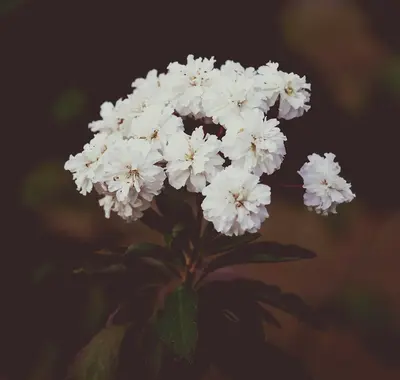
Iron White
Early single-stem, or column-type stock in a highly uniform series for one-cut harvest. Aptly named for strong, straight, rigid stems. Iron performed well in our spring, early summer, and fall trials. Selectable for doubles and 55% double without selection. Compared to Katz, Iron is slightly later to flower, and has somewhat shorter and thicker stems. Tightly spaced florets on the flower spike make for compact 1 1/2-2", pure white blooms with a full appearance. NOTE: This variety produces one flowering stem per plant. Pinching is not advisable as it will terminate flowering. Edible Flowers: The peppery, clove-like flavor of the flowers lends itself well to use as a garnish on salads, desserts, and drinks.
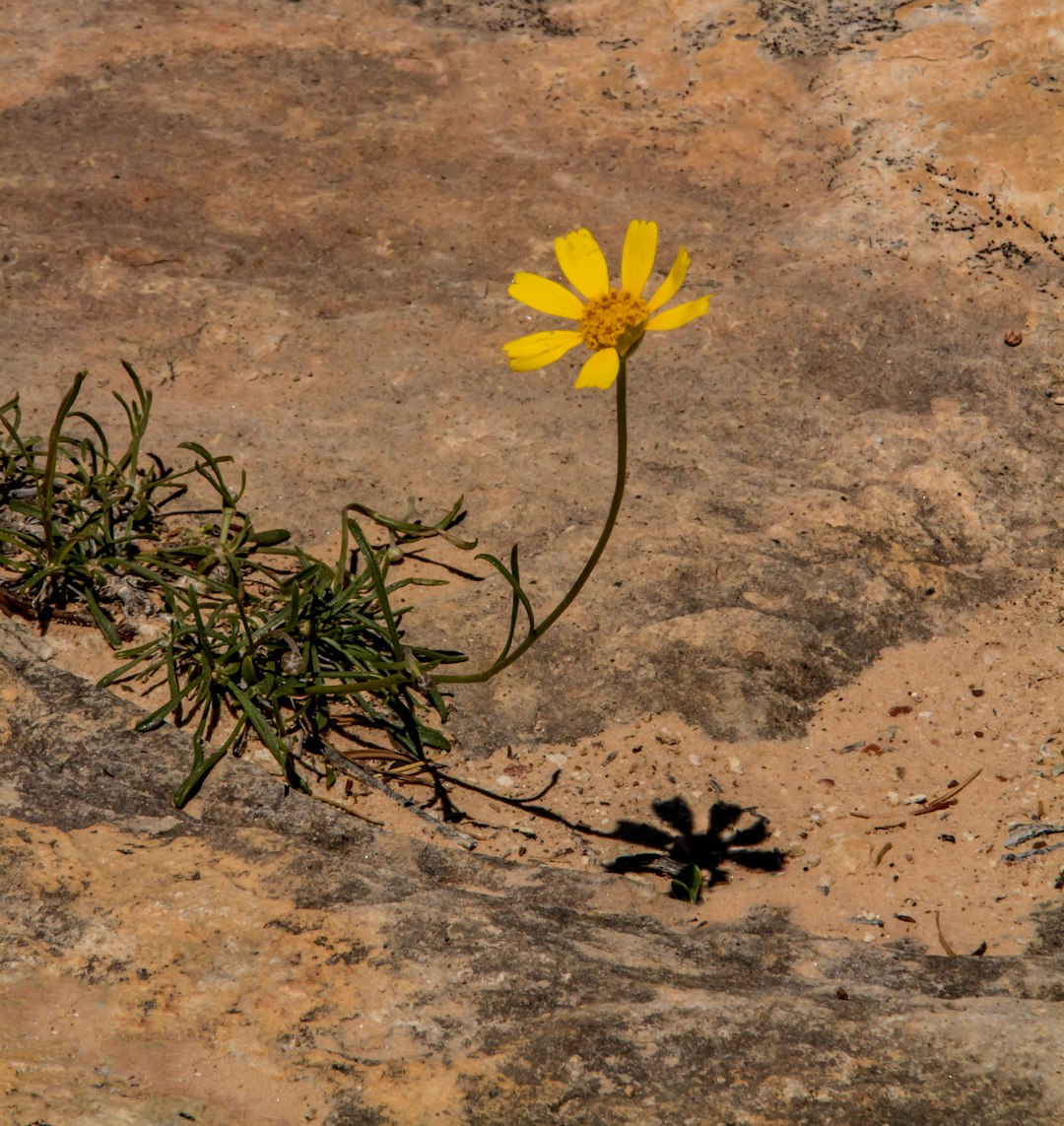
Iron Yellow
Early single-stem, or column-type stock in a highly uniform series for one-cut harvest. Aptly named for strong, straight, rigid stems. Iron performed well in our spring, early summer, and fall trials. Selectable for doubles and 55% double without selection. Compared to Katz, Iron is slightly later to flower, and has somewhat shorter and thicker stems. Tightly spaced florets on the flower spike make for compact 1 1/2-2", buttercream yellow blooms with a full appearance. NOTE: This variety produces one flowering stem per plant. Pinching is not advisable as it will terminate flowering. Edible Flowers: The peppery, clove-like flavor of the flowers lends itself well to use as a garnish on salads, desserts, and drinks.
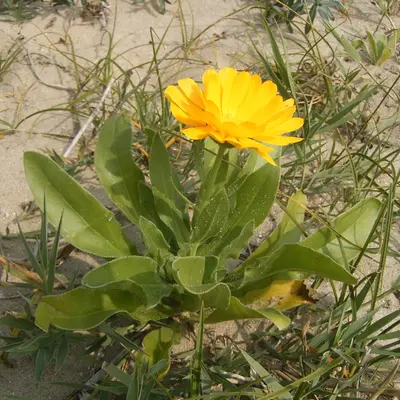
Ivory Princess
2-3" wide double and semidouble blooms. Creamy petals with hints of gold contrast beautifully with a dark center disk. Tall, vigorous, healthy plants yield sturdy stems. Also known as pot marigold, common marigold, and Scotch marigold. Edible Flowers: Petals of the flowers can be used fresh or dried in "flower confetti," soups, soufflés, rice dishes, baked goods, and to garnish desserts. Calendula is a popular choice for brightening up salad mix. Flavor is tangy and slightly bitter. Remove the petals from the flower base before consuming as the base can be quite bitter.
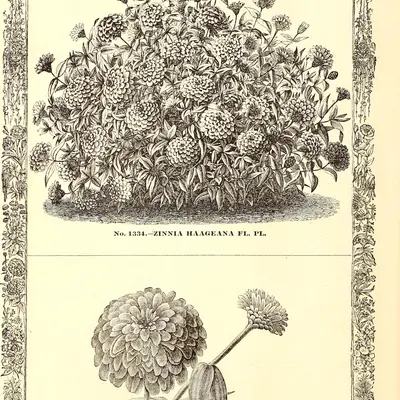
Jazzy Mix
Attractive fully double and semidouble blooms are 1-2" in size. Bright and earthy shades of burgundy red, red, yellow, and orange with cream, red, or yellow tips. Plants are compact but highly productive. Cut-and-come-again flower, yielding multiple cuts over the season.
Jewel Mix
These bright, 2" blooms of red, pink, orange, and yellow are held above light green foliage. Mounded plant habit. Also known as garden nasturtium and Indian cress. Edible Flower: Use the flowers as garnishes, or stuff with soft cheese. The flowers can be minced and added to butters and the immature seed heads can be pickled. Nasturtiums are a popular choice for adding color to salad mix. Peppery-flavored foliage is also edible.
Katz Apricot
Long stems with 1 1/2-2", light peach blooms. Early blooming one-cut series. Performed well in our spring, early summer, and fall trials. Good uniformity in bloom time and stem length. 55-60% double-flowering without selection; some selection possible. NOTE: This variety produces one flowering stem per plant. Pinching is not advisable as it will terminate flowering. Edible Flowers: The peppery, clove-like flavor of the flowers lends itself well to use as a garnish on salads, desserts, and drinks.
Katz Bright Rose
Long stems with 1 1/2-2", bright pink blooms. Early blooming one-cut series. Performed well in our spring, early summer, and fall trials. Good uniformity in bloom time and stem length. 55-60% double-flowering without selection; some selection possible. NOTE: This variety produces one flowering stem per plant. Pinching is not advisable as it will terminate flowering. Edible Flowers: The peppery, clove-like flavor of the flowers lends itself well to use as a garnish on salads, desserts, and drinks.
Katz Cherry Blossom
Long stems with 1 1/2-2", pale pink blooms. Early blooming one-cut series. Performed well in our spring, early summer, and fall trials. Good uniformity in bloom time and stem length. 55-60% double-flowering without selection; some selection possible. NOTE: This variety produces one flowering stem per plant. Pinching is not advisable as it will terminate flowering. Edible Flowers: The peppery, clove-like flavor of the flowers lends itself well to use as a garnish on salads, desserts, and drinks.
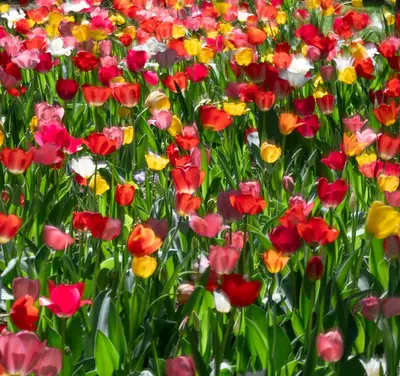
Katz Formula Mix
Long stems with 1 1/2-2" blooms in apricot, bright pink, wine red, pale purple, creamy yellow, dark purple, pale pink, and pure white. Early blooming one-cut series. Performed well in our spring, early summer, and fall trials. Good uniformity in bloom time and stem length. 55-60% double-flowering without selection; some selection possible. NOTE: This variety produces one flowering stem per plant. Pinching is not advisable as it will terminate flowering. Edible Flowers: The peppery, clove-like flavor of the flowers lends itself well to use as a garnish on salads, desserts, and drinks.
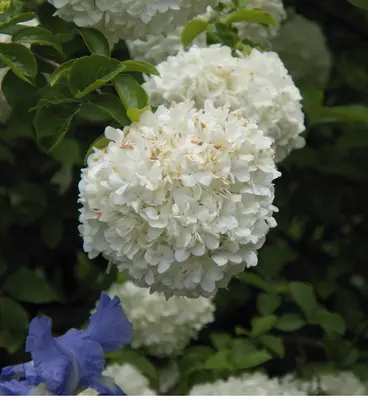
Katz Hi Double White
The same overall performance of the standard Katz series varieties, but now selected to produce 90% double-flowering plants. Long stems with 1 1/2-2", pure white blooms. Early blooming one-cut series. Performed well in our spring, early summer, and fall trials. Good uniformity in bloom time and stem length. Seedling selection for double flowers is not necessary; plants will yield 90% double blooms without selection. NOTE: This variety produces one flowering stem per plant. Pinching is not advisable as it will terminate flowering. Edible Flowers: The peppery, clove-like flavor of the flowers lends itself well to use as a garnish on salads, desserts, and drinks.
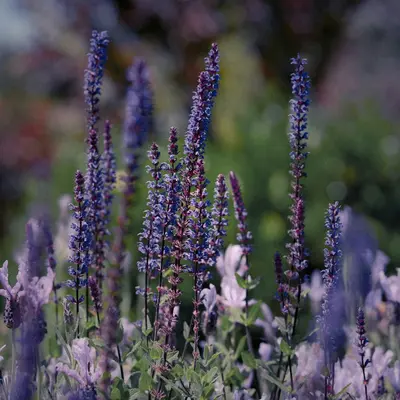
Katz Lavender Blue
Long stems with 1 1/2-2", pale purple blooms. Early blooming one-cut series. Performed well in our spring, early summer, and fall trials. Good uniformity in bloom time and stem length. 55-60% double-flowering without selection; some selection possible. NOTE: This variety produces one flowering stem per plant. Pinching is not advisable as it will terminate flowering. Edible Flowers: The peppery, clove-like flavor of the flowers lends itself well to use as a garnish on salads, desserts, and drinks.
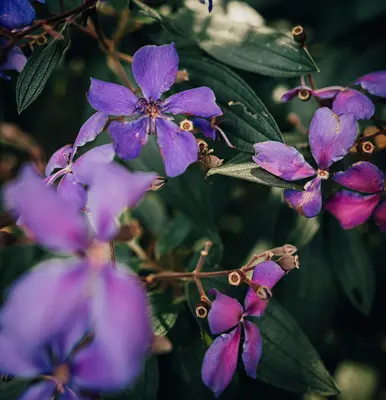
Katz Purple
Long stems with 1 1/2-2", dark purple blooms. Early blooming one-cut series. Performed well in our spring, early summer, and fall trials. Good uniformity in bloom time and stem length. 55-60% double-flowering without selection; some selection possible. NOTE: This variety produces one flowering stem per plant. Pinching is not advisable as it will terminate flowering. Edible Flowers: The peppery, clove-like flavor of the flowers lends itself well to use as a garnish on salads, desserts, and drinks.
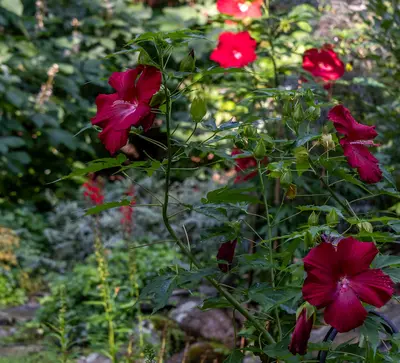
Katz Ruby
Long stems with 1 1/2-2", wine-red colored blooms. Early blooming one-cut series. Performed well in our spring, early summer, and fall trials. Good uniformity in bloom time and stem length. 55-60% double-flowering without selection; some selection possible. Plant Variety Protected. NOTE: This variety produces one flowering stem per plant. Pinching is not advisable as it will terminate flowering. Edible Flowers: The peppery, clove-like flavor of the flowers lends itself well to use as a garnish on salads, desserts, and drinks.

Katz White
Long stems with 1 1/2-2", pure white blooms. Early blooming one-cut series. Performed well in our spring, early summer, and fall trials. Good uniformity in bloom time and stem length. 55-60% double-flowering without selection; some selection possible. NOTE: This variety produces one flowering stem per plant. Pinching is not advisable as it will terminate flowering. Edible Flowers: The peppery, clove-like flavor of the flowers lends itself well to use as a garnish on salads, desserts, and drinks.
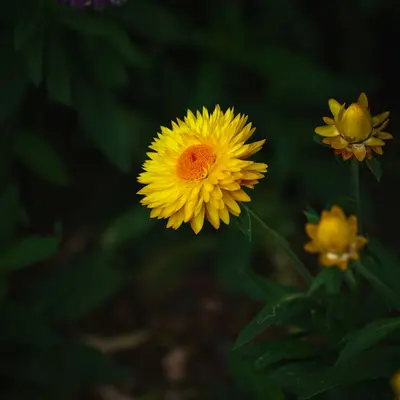
Katz Yellow
Long stems with 1 1/2-2", creamy yellow blooms. Early blooming one-cut series. Performed well in our spring, early summer, and fall trials. Good uniformity in bloom time and stem length. 55-60% double-flowering without selection; some selection possible. NOTE: This variety produces one flowering stem per plant. Pinching is not advisable as it will terminate flowering. Edible Flowers: The peppery, clove-like flavor of the flowers lends itself well to use as a garnish on salads, desserts, and drinks.
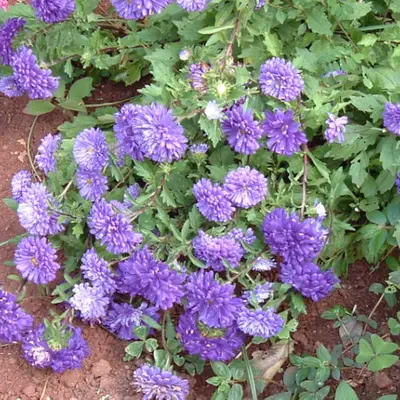
King Size Apricot
2 1/2-3" double and semidouble, light apricot-colored flowers. Compared to Tower Chamois, King Size Apricot plants are taller and equally as productive, blooms are similar in size and a shade lighter with a warmer (creamier yellow) tone, and petals are only slightly curled (whereas Tower Chamois' petals are heavily curled inward toward the center of the bloom).

King Size Gold
King Size Gold is a heirloom flower variety prized for its large, vibrant golden-yellow blooms that reach full maturity in 75-85 days. This easy-to-grow cultivar thrives in full sun with minimal soil requirements, tolerating poor conditions while avoiding heavy clay. The flowers develop substantial size, making it a striking ornamental choice for garden displays and arrangements. Notable for its resilience against common pests including aphids and occasional thrips.
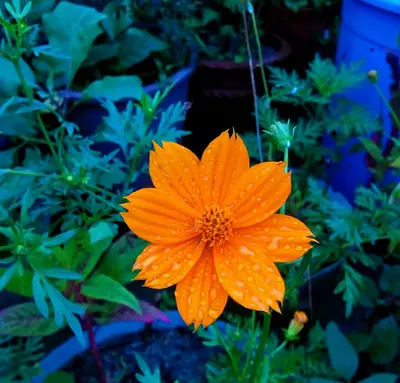
King Size Orange
Tall, well-branched plants produce double flowers 2-2 1/2" across. Blooms are fiery orange with hints of red and gold. Also known as bracted strawflower.
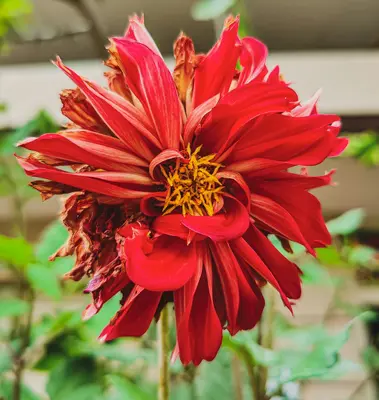
King Size Red
Tall, well-branched plants produce double flowers 2-2 1/2" across. Blooms are dark maroon red. Also known as bracted strawflower.
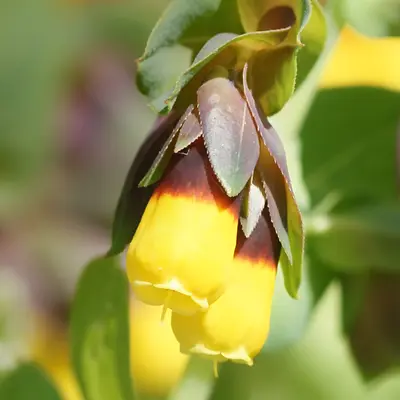
Kiwi Blue
The drooping habit of the flowers makes an elegant addition to bouquets. The brilliant-blue flowers are complemented by the gray-green foliage. Attracts bees and hummingbirds. Also known as honeywort.
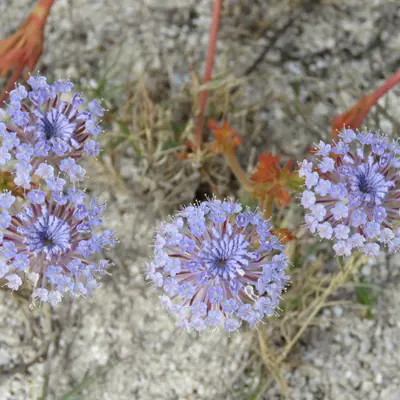
Lacy Lavender Blue
Pale blue, 2-2 1/2" blooms are held aloft on stiff stems. Flowers have a mild, clean fragrance and delicate appearance. Plant habit is branching and upright with few leaves. Plants produce blooms for up to two months in our trials. Also available in organic seed.
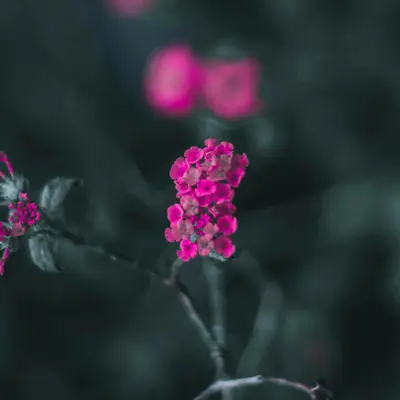
Lacy Pink
Pale pink, 2-2 1/2" blooms are held aloft on stiff stems. Flowers have a mild, clean fragrance and delicate appearance. Plant habit is branching and upright with few leaves. Plants produce blooms for up to two months in our trials.

Lacy White
Pure white, 2-2 1/2" blooms are held aloft on stiff stems. Flowers have a mild, clean fragrance and delicate appearance. Plant habit is branching and upright with few leaves. Plants produce blooms for up to two months in our trials.
Lady Coral Lavender
The unique, captivating color of Lady Coral Lavender is simply indescribable - you have to see it to believe it. A favorite in our trials and reminiscent of the silvery full moon, her lilac-taupe petals are tightly packed into 2 1/2-3 1/2" blooms. A bit later to bloom than our other China asters.
Lavender Hidcote
A compact English lavender variety beloved for its intensely fragrant, deep purple flower spikes and silvery-gray foliage that creates perfect low hedges or border plantings. This hardy perennial blooms repeatedly throughout summer, attracting beneficial pollinators while providing endless harvests for culinary and craft uses. Exceptionally drought-tolerant once established, making it perfect for water-wise gardens.
Lemon Gem
Hundreds of petite, citrus-scented flowers cover neat, low mounds of lacy foliage. Long-blooming for beds, borders and containers where it attracts beneficial insects such as hoverflies. Leaves of the plant are edible and are used as flavorful salad greens and garnish. Also known as signet marigold.Edible Flowers: Use the flowers to dress up salads and desserts or cooked in egg or rice dishes. Flavor is floral with hints of citrus and spice, and slightly bitter. Remove the petals from the flower base before consuming as the base can be quite bitter.
Lemonade
Very similar to Goldy Double in plant habit and timing. Branching plants have 18-24" long stems and produce blooms 5-7" across. Compared to Starburst Lemon Aura, its blooms are larger and brighter in color. The plants are also more vigorous, taller, and later to flower. Produces minimal pollen. Branching.
Linen
From the same lineage as Ballerina, Linen offers refinements in bloom form, color, and overall uniformity. Like Ballerina, Linen produces a high percentage of double blooms, but its slightly smaller 4-5" blooms are more consistently dahlia-shaped. The color range consists of warm, flaxen tones. Developed by Johnny's Breeding Team and named 'Linen' for its clean, almost neutral color palette. Fresh-cut blooms are oatmeal in color with a pale pink or pale peach cast. As the blooms age, they display more pink and peach hues. Expect some variation in bloom form and color: a small percentage of cactus-shaped flowers and about 5% of plants will produce ivory blooms.

Love-In-A-Mist
Blue, mauve, pink, purple, and white blooms clothed in a lacy netting of greenery. Heirloom favorite for fresh or dried flowers. Balloon-shaped seed pods. Also known as devil in a bush.
Love-Lies-Bleeding
A reminder of things Victorian and a graceful accent in arrangements. Common names include amaranth and tassel flower.
Macaroon White
In our trials, Macaroon White was 7-10 days earlier to flower than the Bonita series. Appearance and plant architecture are both very comparable to the Bonita series, although plants are earlier to flower and slightly shorter. 1 1/2-2 1/2", bright white, double blooms with creamy yellow centers. Uniform and productive plants.

Magic Fountains Cherry Blossom
Pastel blooms with white centers (bees). Soft lilac-pink color works especially well for spring bouquets and design work. Dwarf Pacific type with full florets and tight internodes. Magic Fountains' sturdy, compact plants will tolerate windy locations. Attracts bees and butterflies. This species of delphinium is also known as candle larkspur. Perennial in Zones 3-7.

Magic Fountains Lilac Pink White Bee
Pastel blooms with white centers (bees) in a plum shade that complements a wide range of colors. Dwarf Pacific type with full florets and tight internodes. Magic Fountains' sturdy, compact plants will tolerate windy locations. Attracts bees and butterflies. This species of delphinium is also known as candle larkspur. Perennial in Zones 3-7.
Magic Fountains Mid Blue White Bee
Striking, true-blue blooms with white centers (bees). Dwarf Pacific type with full florets and tight internodes. Magic Fountains' sturdy, compact plants will tolerate windy locations. Attracts bees and butterflies. This species of delphinium is also known as candle larkspur. Perennial in Zones 3-7.
Magic Fountains Mix
Full florets and tight internodes. White and dark centers (bees) on cherry, lilac, lavender, dark blue, sky blue, and white. Magic Fountains' sturdy, compact plants will tolerate windy locations. Attracts bees and butterflies. This species of delphinium is also known as candle larkspur. Perennial in Zones 3-7.

Magic Fountains Pure White
Elegant, clean-white blooms with white centers (bees). Excellent for wedding design. Dwarf Pacific type with full florets and tight internodes. Magic Fountains' sturdy, compact plants will tolerate windy locations. Attracts bees and butterflies. This species of delphinium is also known as candle larkspur. Perennial in Zones 3-7.

Magic Fountains Sky Blue White Bee
Pale blue blooms with white centers (bees). Dwarf Pacific type with full florets and tight internodes. Magic Fountains' sturdy, compact plants will tolerate windy locations. Attracts bees and butterflies. This species of delphinium is also known as candle larkspur. Perennial in Zones 3-7.

Mammoth Choice Mix
This early flowering variety can withstand heat and drought unusually well. Mix of deep rose, rose pink, salmon, scarlet, white, lavender, medium blue, and deep burgundy produces well into the summer. Can be spelled either as sweet pea or sweetpea. Attracts hummingbirds.
Marie Chabaud
Vintage carnations present the sweet and spicy fragrance of clove. Frilly, pale lemon yellow, 1 1/2-2" double blooms with a small percentage of singles. Grass-like, gray or blue-green foliage. Blooms late July through August in our trials and is best grown as an annual for cut-flower production. Chabaud is an old-fashioned type dating back to as early as 1904. D. caryophyllus is native to the Mediterranean, where emotional attachment to this flower first took root. Also known as annual carnation. Pronounced shab-o, with a long "o." Tender perennial in Zones 6-8. Edible Flowers: Use the flower petals to garnish salads, desserts, soups, icing, and cold drinks. Flavor is of mild clove. Remove the petals from the flower base before consuming as the base can be quite bitter.
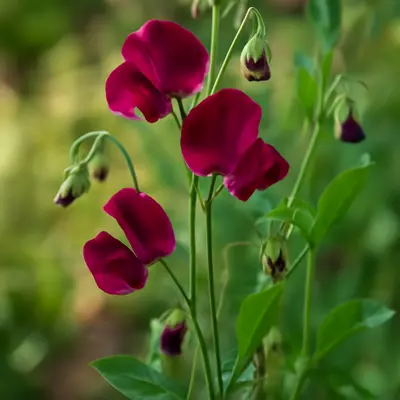
Mars
From the Spencer series. Brilliant crimson streaks throughout and lining the petal edge. Plants produce 3-4 blooms per 9-12" stem. Highly fragrant. NOTE: Spencer series sweet peas are known as late-flowering because they require at least 12 hours of daylight, unlike more modern sweet pea varieties bred for winter production, which may require only 10-11 hours of daylight. Attracts hummingbirds.
Maximilian
As tough as it is beautiful, Maximilian blooms from August to frost. Masses of 3" yellow-gold blooms. This native wild flower is excellent for back borders and bouquets. Perennial in Zones 3-9. Attracts bees and beneficial insects such as lacewings, lady beetles, syrphid flies and parasitic wasps. Known as perennial sunflower.
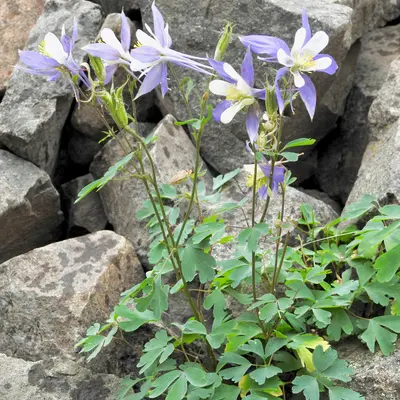
McKana Giants Mix
Well-branched plants produce 3-3 1/2" blooms with long spurs. A great cut to fill the gap between early spring and summer bouquets. Blooms in spring of second year from a spring sowing. Attracts hummingbirds. 1955 All-America Selections Winner and originally introduced by W. Atlee Burpee & Co. Perennial in Zones 3-9.
Merlot Red
Elegant and whimsical cut flower. Productive plants. 1 1/2-2 1/2" dark wine-colored blooms stand tall on strong, slender stems. A dramatic addition to any bouquet or garden. Also known as mourning bride.
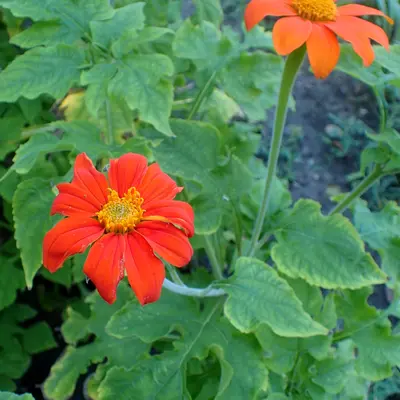
Mexican Sunflower
Blooms midsummer until first hard freeze, providing bright 3-3 1/2" flowers well into fall. Most plants produce orange, with a small percentage producing red or yellow blooms. Vigorous and full plant habit. Performs well in hot, dry climates. Native to Central America and Mexico. Attracts Beneficial Insects: Nectar plant and habitat for bees and butterflies.
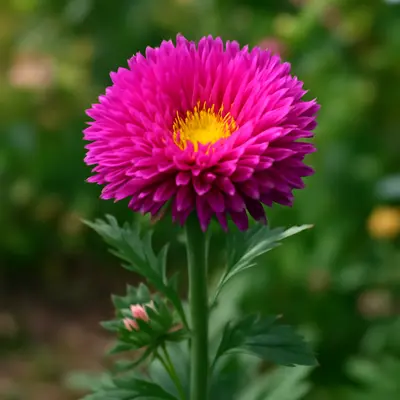
Miss Europe Resist
Start the aster harvest with these ruffled, 2-3" wide light pink double blooms on sturdy stems and vigorous plants. Similar color to Tower Salmon but earlier to mature and plants are more uniform. Miss Europe Resist bloomed 5-7 days earlier than the Tower series in our trials. Bloom form is similar to the Tower series, although blooms are slightly looser and more ruffled. Peony-type blooms looks similar to heirloom garden mums. Also known as summer aster.

Misty Lavender
Features tall spires of 1 1/2-1 3/4", dense florets on 9-12" flower spikes. Plants produce double blooms with a small percentage of singles. In our trials, Misty Lavender is identical to the heirloom variety known as 'Earl Grey.' Attracts hummingbirds.
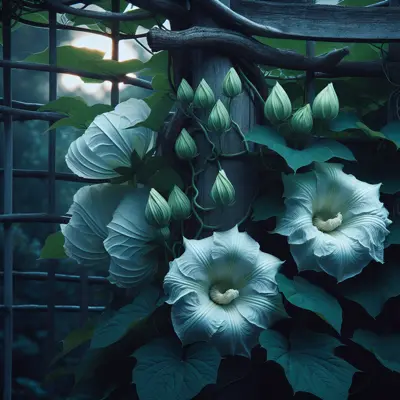
Moonflower
An enchanting night-blooming vine that opens massive white flowers at dusk, filling the evening air with intoxicating fragrance. These dinner-plate sized blooms unfurl in minutes as you watch, creating magical twilight moments in the garden. A fast-growing climber that can reach 15 feet in a season, perfect for covering fences, arbors, or creating a romantic evening garden backdrop.
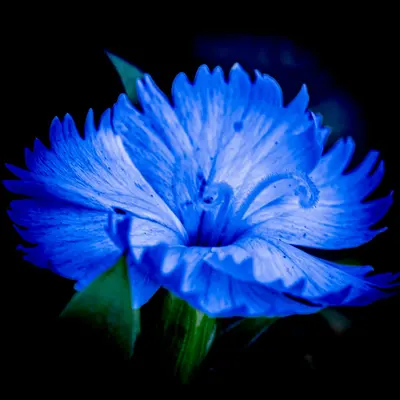
Morning Glory Heavenly Blue
This vigorous climbing vine produces stunning sky-blue trumpet-shaped flowers with white throats that open fresh each morning, creating a spectacular living curtain of color. The heart-shaped leaves provide excellent coverage for fences, trellises, or arbors, while the 4-5 inch blooms attract hummingbirds and butterflies throughout the summer. This All-America Selections winner has been beloved by gardeners since 1966 for its reliable performance and breathtaking color.
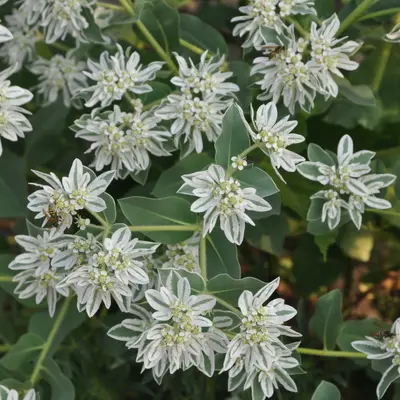
Mountain Snow
Pure white bracts contrast well with green foliage. Foliage variegation occurs when days begin to shorten. Strong stems. Long vase life.

My Castle
Part of the Russell Hybrids 'Band of Nobles' series. My Castle has sweetly scented, rich red blooms that are a standout in bouquets and garden beds. Plants are especially productive for us and produce multiple blooms with stiff, straight stems. In our trials, these first-year flowering plants bloomed in early July in the first year and about a month earlier (early June) from well-established plants in the second season of growing. Bloom quality and productivity were better in the second season, although all plants did produce flowers in the first season. Performs best where summers are cool. Attracts and provides a food source for bees and hummingbirds. 1-2' blooms/spikes are densely covered with ½" pea-like flowers. Lupine is typically resistant to deer and rabbits. Perennial in Zones 4-8.
Nasturtium Alaska Mix
This stunning variety combines the classic peppery-flavored edible flowers of nasturtiums with uniquely variegated cream and green foliage that's as ornamental as the blooms. The compact, bushy plants produce abundant flowers in jewel tones while serving as a living mulch and natural pest deterrent.
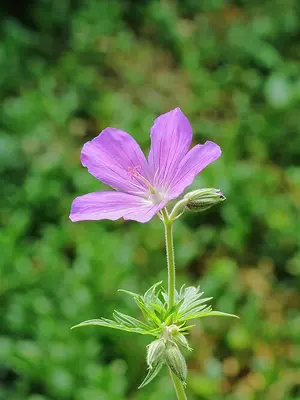
Nimbus
From the Spencer series. Gray-white petals with inky, blue-black streaks throughout and lining the petal edge. Plants produce 3-4, slightly ruffled blooms per 9-12" stem. Lightly fragrant. NOTE: Spencer series sweet peas are known as late-flowering because they require at least 12 hours of daylight, unlike more modern sweet pea varieties bred for winter production, which may require only 10-11 daylight hours. Attracts hummingbirds.
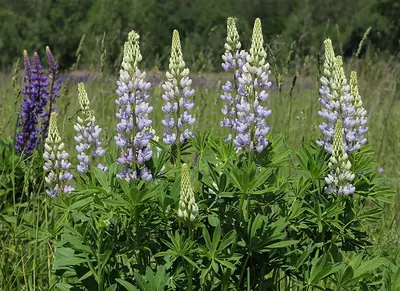
Noble Maiden
Part of the Russell Hybrids 'Band of Nobles' series. Noble Maiden has sweetly scented, bright white blooms. Plants produce multiple blooms with stiff, straight stems. In our trials, these first-year flowering plants bloomed in early July in the first year and about a month earlier (early June) from well-established plants in the second season of growing. Bloom quality and productivity were better in the second season, although all plants did produce flowers in the first season. Performs best where summers are cool. Attracts and provides a food source for bees and hummingbirds. 1-2' blooms/spikes are densely covered with ½" pea-like flowers. Lupine is typically resistant to deer and rabbits. Perennial in Zones 4-8.
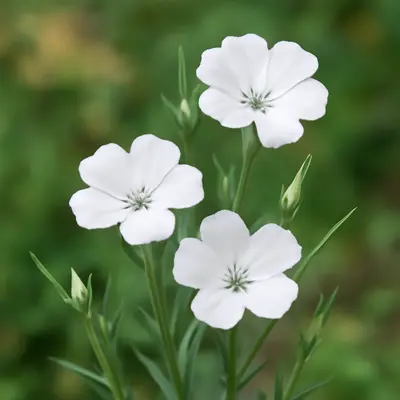
Ocean Pearls
1-2" blooms grow in sprays on willowy gray stems. Prefers cool growing conditions. FleuroSelect Gold Award Winner.
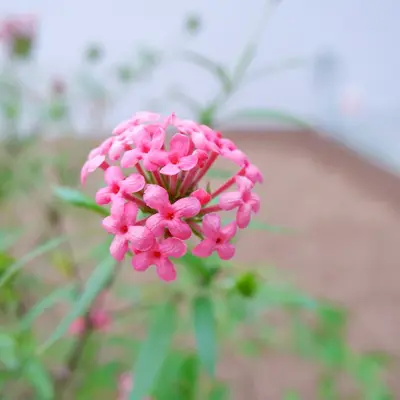
Oklahoma Carmine
Prolific 1 1/2-2 1/2" double and semidouble petite, yet sturdy violet-colored blooms. Excellent, reliable accent flowers for market bouquets, wedding flowers, and event work. Cut-and-come-again flower, yielding multiple cuts over the season.
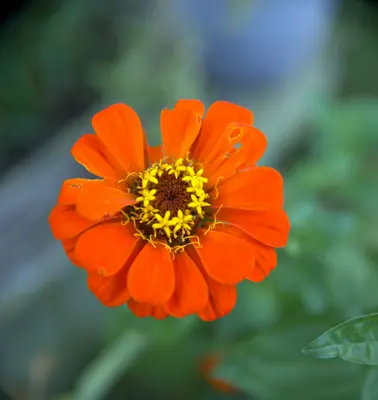
Oklahoma Formula Mix Improved
This improved mix is an essential component of any cut-flower offering. Prolific double and semidouble blooms are easy to use in bouquets due to their smaller size. The 1 1/2-2 1/2" blooms hold up well to handling compared to larger blooms which can snap at the stem due to the weight of the larger flower heads. Cut-and-come-again flower, yielding multiple cuts over the season.
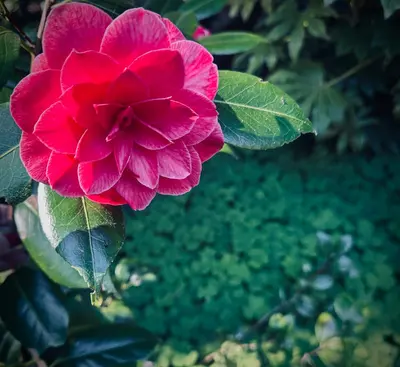
Oklahoma Golden Yellow
Prolific 1 1/2-2 1/2" double and semidouble petite, yet sturdy, flowers. Blooms are a rich, golden yellow with red-to-yellow centers. Excellent, reliable accent flowers for market bouquets, wedding flowers, and event work. Cut-and-come-again flower, yielding multiple cuts over the season.
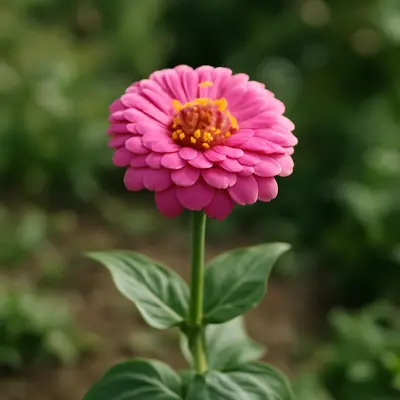
Oklahoma Pink
Prolific 1 1/2-2 1/2" double and semidouble petite, yet sturdy, bright pink blooms. Excellent, reliable accent flowers for market bouquets, wedding flowers, and event work. Cut-and-come-again flower, yielding multiple cuts over the season.
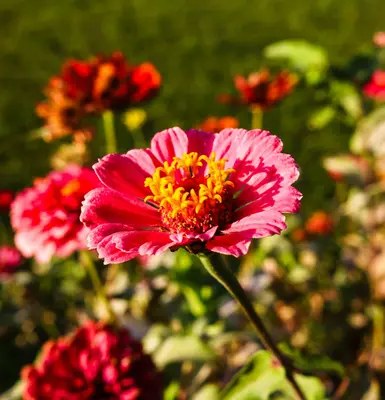
Oklahoma Salmon
Blooms are 1 1/2-2 1/2", double and semidouble. These petite, yet sturdy, blooms make excellent, reliable accent flowers for market bouquets, wedding flowers, and event work. Cut-and-come-again flower, yielding multiple cuts over the season.
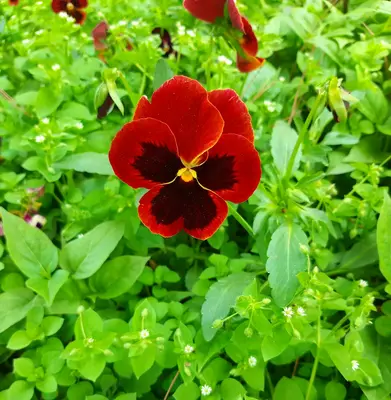
Oklahoma Scarlet
Prolific 1 1/2-2 1/2" double and semidouble petite, yet sturdy, scarlet red blooms. Excellent, reliable accent flowers for market bouquets, wedding flowers, and event work. Cut-and-come-again flower, yielding multiple cuts over the season.

Old Times
From the Spencer series. Dreamy, cream-colored blooms with lavender-blue blush and veins. Plants produce 3-4, slightly ruffled blooms per 9-12" stem. Highly fragrant. NOTE: Spencer series sweet peas are known as late-flowering because they require at least 12 hours of daylight, unlike more modern sweet pea varieties bred for winter production, which may require only 10-11 hours of daylight. Attracts hummingbirds.
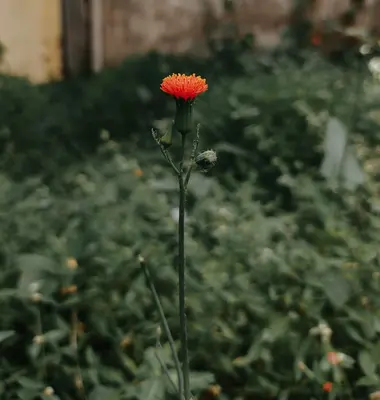
Orange Button
2-2 1/2" double blooms. A favorite in our trials for its vibrant color. Blooms have brilliant, dark orange petals and a contrasting dark, almost purple center. Also known as pot marigold, common marigold, and Scotch marigold. Edible Flowers: Petals of the flowers can be used fresh or dried in "flower confetti," soups, soufflés, rice dishes, baked goods, and to garnish desserts. Calendula is a popular choice for brightening up salad mix. Flavor is tangy and slightly bitter. Remove the petals from the flower base before consuming as the base can be quite bitter.
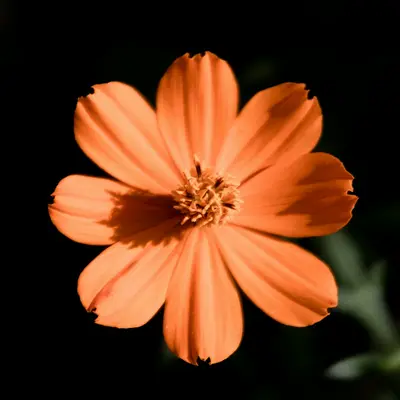
Orange Flash
1 1/2-3" blooms have a bronze center with some hints of peach and cream. Uniform plants. Timing, color, and performance are very comparable to Triangle Flashback. Edible Flowers: Petals of the flowers can be used fresh or dried in "flower confetti," soups, soufflés, rice dishes, baked goods, and to garnish desserts. Calendula is a popular choice for brightening up salad mix. Flavor is tangy and slightly bitter. Remove the petals from the flower base before consuming as the base can be quite bitter.
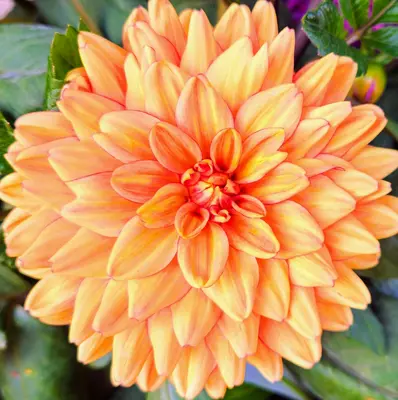
Orange Queen Improved
2-7" densely folded orange combs make useful fresh or dried cut flowers. Very similar to the Chief series in days to maturity, plant growth habit, and bloom size. Also known as cockscomb and crested cock's comb. Unauthorized reproduction and sale of seeds is prohibited by the breeder.
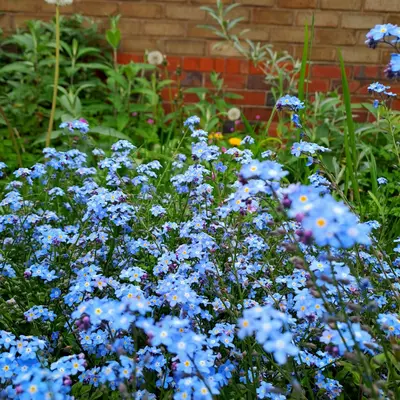
Oxford Blue
1 1/2-2 1/2", lavender blue flowers stand tall on strong, slender stems. A dramatic addition to any bouquet or garden. Also known as mourningbride.
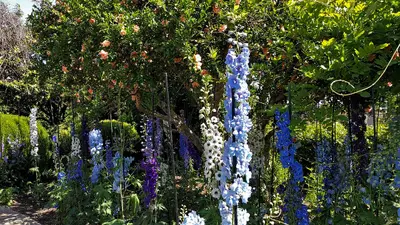
Pacific Apricot Beauty
2-3" wide fully double blooms. Tall, vigorous, healthy plants with sturdy stems. More uniform plant habit and flower size than other calendulas in our trials within this color range. Cream-colored ray petals darken to apricot at the petal edges. Also known as pot marigold, common marigold, and Scotch marigold. Edible Flowers: Petals of the flowers can be used fresh or dried in "flower confetti," soups, soufflés, rice dishes, baked goods, and to garnish desserts. Calendula is a popular choice for brightening up salad mix. Flavor is tangy and slightly bitter. Remove the petals from the flower base before consuming as the base can be quite bitter.
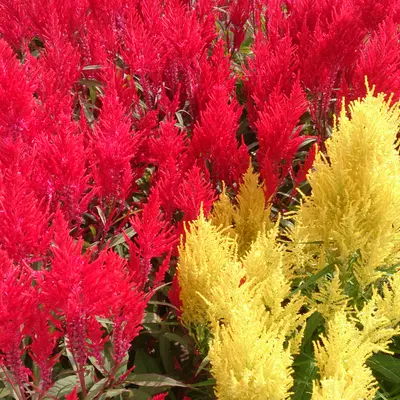
Pampas Plume
Masses of soft, feathery, 2-6" long plumes in scarlet, orange, bright yellow, pink, cream. Multi-branching plants produce 10-14 stems each. Also known as cockscomb, Prince of Wales feather, and prince feather.
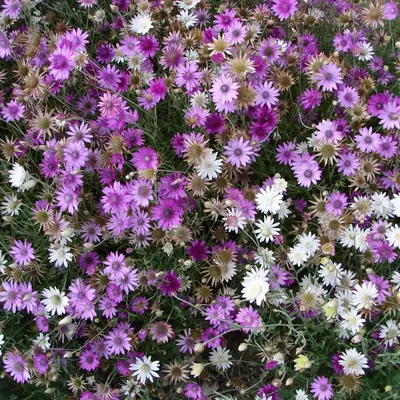
Paper Flower Double Mixture
Adorable, 1-1 1/2" papery blooms with silvery gray foliage and stems add an airy element to bouquets. Suitable for fresh and dried use. Mix of silvery-white and lavender blooms supported by sturdy, yet thin and flexible stems. Plants are well-contained, upright, and densely branched. Also known as annual daisy everlasting, paper flower, or immortelle.

Pastel Shades™
Very similar to Johnny's Pastel Mix but does not contain the same ratio of apricot and pink hues represented in that mix. This mix contains white and multiple shades of lavender, purple, pink, and rose. Productive plants produce 1½-3" flower clusters on strong stems in the field and greenhouse. Statice is long-lasting for both fresh and dried bouquets. One of the best choices for a dried floral as it holds its color well and is easy to dry. Also known as wavyleaf sea lavender.
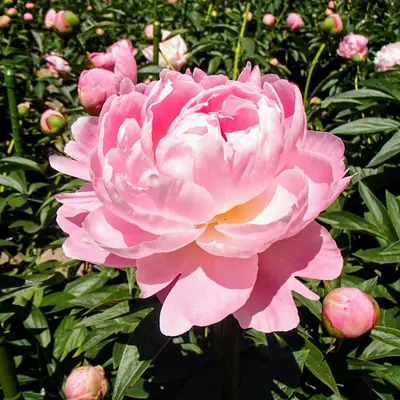
Peony Sarah Bernhardt
A legendary herbaceous peony that has been the gold standard for over 100 years, producing enormous double blooms in the most perfect shade of soft pink. The fragrant flowers can reach 8 inches across and are beloved by florists and gardeners alike for their romantic, ruffled petals and incredible longevity in both the garden and vase. This reliable bloomer returns year after year, becoming more spectacular with age.
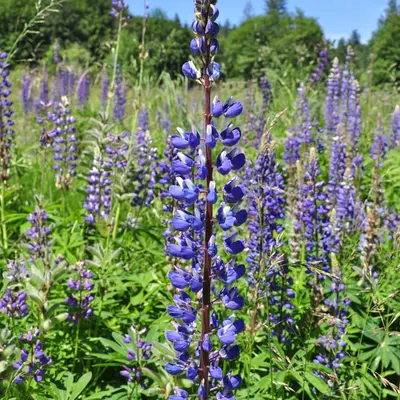
Perennial Lupine
These hardy perennials are long-lived and require very little maintenance. The flowers look great in a meadow or garden, as well as bouquets. Attracts and provides a food source for bees. Stems are stiff, erect 1-2' spikes densely covered with ½" pea-like flowers. Perennial in Zones 4-8.

Persian Carpet
Charming addition to country bouquets and gardens. Fully double and semidouble 2" bicolors in red, orange, pale yellow, gold, chocolate, and cream. Vigorous, healthy, upright plants are slightly taller than Jazzy Mix. AAS Winner. Also known as Mexican zinnia.
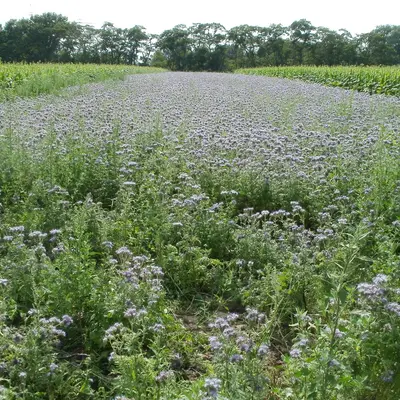
Phacelia
Most commonly seeded in mass plantings, or as an annual cover crop with nectar-rich blooms to attract and support beneficial and pollinator insects. An excellent, fast-growing, easy-to-grow source of nectar for honeybee forage. Tolerant of low water conditions and poor soils. Used as a cover crop, will winterkill at 18°F (-8°C) - residue breaks down relatively quickly. Furled, lavender-colored flowers with tall, sturdy stems are sometimes used as a cut flower, adding a casual, wildflower look to bouquets. Also commonly known as bee's friend, lacy phacelia, blue tansy, purple tansy, and lacy scorpion-weed. Relative of borage and native to the United States and Mexico. For mass plantings or cover crop, sow at 3 oz./1,000 sq.ft. or 7 lb./acre.
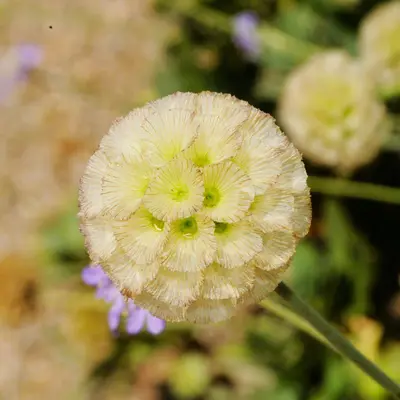
Phlox Drummond Mix
Cherry Caramel's unique color combination makes it popular with designers and gardeners alike. From our trials, we've selected phlox varieties with the tallest stems and most desirable colors. Annual phlox produces charming and abundant blooms on branched stems.
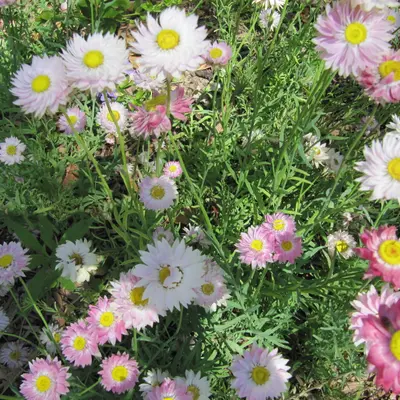
Pierrot Red
Productive plants produce relatively small, 1-2" upward-facing, daisy-like flowers with papery petals. Most blooms have a dramatic, contrasting black center while a small percentage have golden centers. The flowers have a long vase life and also make excellent dried flowers. The plant stature is a bit short for cutting (approximately 18-24"). Plants are basal branching, which makes the thin, wiry stems easy to cut and strip. Very comparable plant habit and performance to Pierrot White. Helipterum is also known as Acroclinium, immortelle, paper daisy, Australian everlasting, and everlasting daisy.
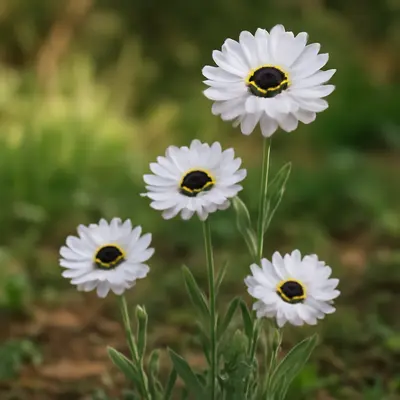
Pierrot White
Pierrot White provides a distinctive, moody look for both cut and dried florals, though the plant stature is a bit short for cutting (approximately 18-24"). Productive plants produce relatively small, 1-2" upward-facing, daisy-like flowers with papery petals. The flowers have a long vase life and also make excellent dried flowers. Plants are basal branching, which makes the thin, wiry stems easy to cut and strip. Helipterum is also known as Acroclinium, immortelle, paper daisy, Australian everlasting, and everlasting daisy.
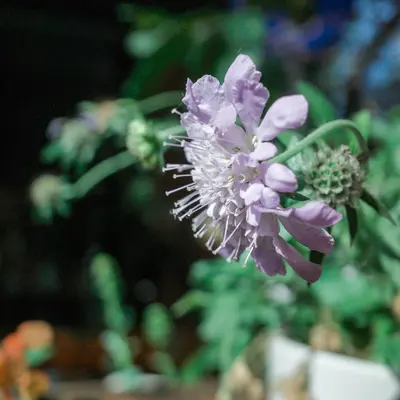
Pincushion Formula Mix
Sturdy, uniform, annual Scabiosa mix in a wide range of colors. 1 1/2-2 1/2" blooms. Formula mix of black, blue, creamy yellow, pink, bright red, deep blue, salmon rose, and pure white. Also known as mourningbride.
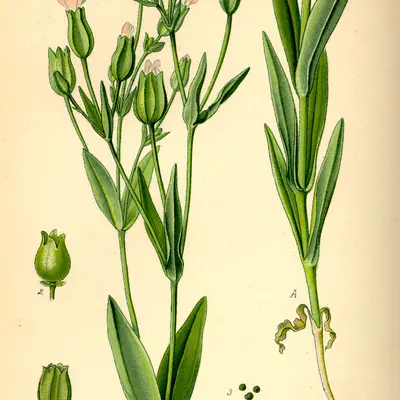
Pink Beauty
Sturdy and easy to grow. Stems are thicker, stronger, taller, and easier to manage than those of annual gypsophila, an otherwise similar flower. 3/4 to 1" dusty pink blooms float above gray-blue, waxy foliage. Branching plant habit. Also known as soapwort or cow soapwort.
Pink Gin
Second-year flowering. Delicately colored shell-pink bells with lightly freckled throats. Bells form on one side of the stem. In our trials, Pink Gin produced 4-7 tall stems and 2-3 shorter, secondary stems per plant. Can be fall or spring-planted. NOTE: Flowering occurs in late spring in the second season of growth.
Pink Pokers
Whimsical and wild statice looks to be a thing of fairytales or a sea-dwelling creature. Compared to L. sinuatum types, this statice has a very different look but is also earlier and easier to harvest. Plants have mostly basal leaves, which makes the stems easy to locate for cutting, and there are almost no leaves to strip away. Low-growing plants produced 2-3 flushes of harvestable stems in our trials. Excellent for dried flowers or fresh cuts. Flowers dry beautifully, holding their color well. Early statice. Also commonly known as Russian statice and rat tail statice.
Pink Queen
Features tall spires of dense florets. Flowers bloom in shades of light pink with hints of pale green. Plants produce double blooms with a small percentage of singles. 1 1/2-1 3/4" florets on 9-12" flower spikes. Very similar to the QIS™ series in plant height and bloom time. Attracts hummingbirds.
Pink Sundae
Easy-to-grow plants for casual cut flowers, pollinator plantings, and displays of color in the garden. Productive, densely branched plants produce abundant stems and multiple cuts of this versatile crop. Suitable for fresh or dried flowers. Colored bracts of vibrant rose-pink decorate the tops of 30-40" branches. Tolerant of frost. Also commonly known as annual clary sage.
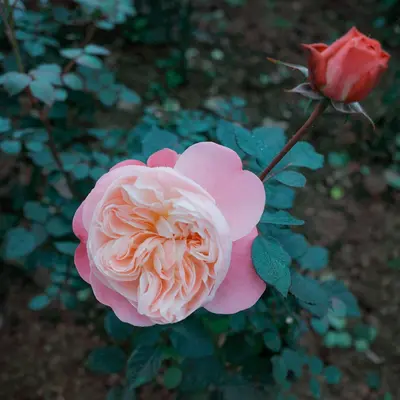
Prince Rose
Vivid red combs with attractive purple foliage and rose-colored stems. 2-4" wide dark magenta combs on sturdy 18-24" long stems are useful for fresh or dried cut flowers. Similar overall performance to the Chief series but earlier to bloom. In our trials, Prince Rose is ready for harvest 5-7 days earlier than the Chief series. Uniform bloom time, plant habit, and height. We recommend pinching seedlings for optimal branching and productivity. Crested-type celosia, also known as cockscomb and crested cock's comb. Unauthorized reproduction and sale of seeds is prohibited by the breeder.
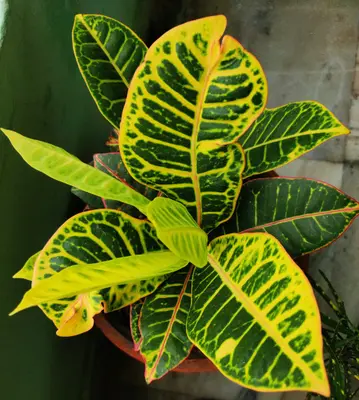
Pulsar
From the Spencer series. Lavender streaks throughout and lining the petal edge. Plants produce 3-4 blooms per 9-12" stem. Highly fragrant. NOTE: Spencer series sweet peas are known as late-flowering because they require at least 12 hours of daylight, unlike more modern sweet pea varieties bred for winter production, which may require only 10-11 hours of daylight. Attracts hummingbirds.

Purple Kisses
Purple Kisses is very similar to Dara, with 3-5" lacy umbels atop strong, sturdy, upright stems. Flowers in shades of dark purple, pink, and approximately 15% white. Highly productive with 7-15 stems per plant. Long lasting in bouquets. Also known as Queen Anne's lace, ornamental carrot, and wild carrot.
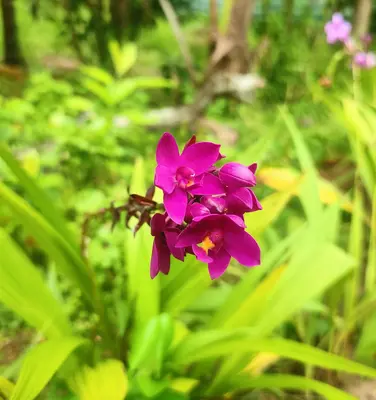
Purple Queen
Silky, speckled, 1-2" blooms grow in sprays on willowy gray stems. Easy-to-grow plants prefer cool growing conditions.
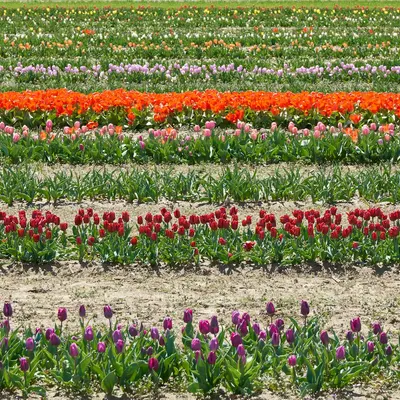
Purple Red
Tall, well-branched plants produce dark wine (almost black) flowers 2-2 1/2" across. Fully open blooms reveal contrasting fiery-orange center. Also known as bracted strawflower.
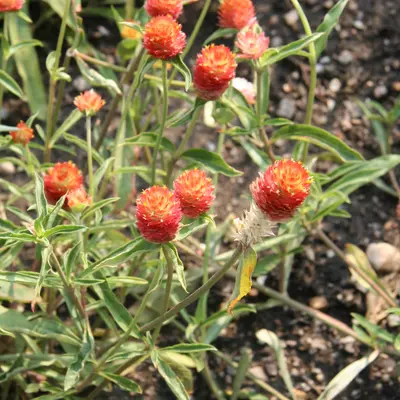
QIS™ Carmine
Glowing, 1 1/2" carmine blooms on long stems. This uncommon color is unique to the QIS™ (Quality in Seed) Series. Also known as globe amaranth and Rio Grande globe amaranth.

QIS™ Dark Blue
Features tall spires of dense florets. Plants produce indigo-blue double blooms with a small percentage of singles. 1 1/2-1 3/4" florets on 9-12" flower spikes. Very similar to the Sublime series, which QIS™ replaced. Attracts hummingbirds.

QIS™ Light Blue
Features tall spires of dense florets. Plants produce silvery lavender-colored, double blooms with a small percentage of singles. 1 1/2-1 3/4" florets on 9-12" flower spikes. Very similar to the Sublime series, which QIS™ replaced. Attracts hummingbirds.
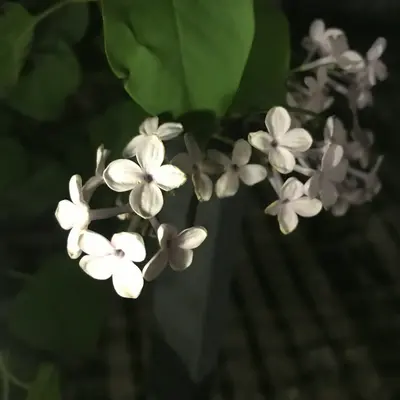
QIS™ Lilac
Features tall spires of dense florets. Plants produce lavender-colored, double blooms with a small percentage of singles. 1 1/2-1 3/4" florets on 9-12" flower spikes. Very similar to the Sublime series, which QIS™ replaced. Attracts hummingbirds.
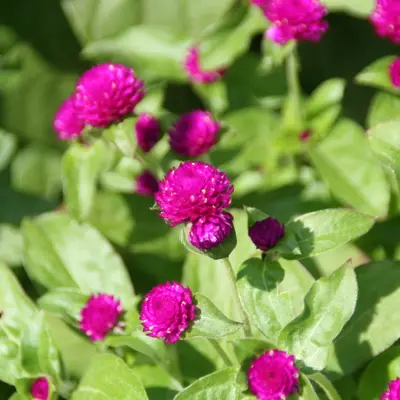
QIS™ Pink
Frosty pink, 1 1/2" blooms on long stems. We have found the QIS™ (Quality in Seed) Series to be a good choice for cut-flower production for its stem quality, length, and uniformity. Also known as globe amaranth and common globe amaranth.

QIS™ Purple
1 1/2" blooms on long stems. We have found the QIS™ (Quality in Seed) Series to be a good choice for cut-flower production for its stem quality, length, and uniformity. Also known as globe amaranth and common globe amaranth.
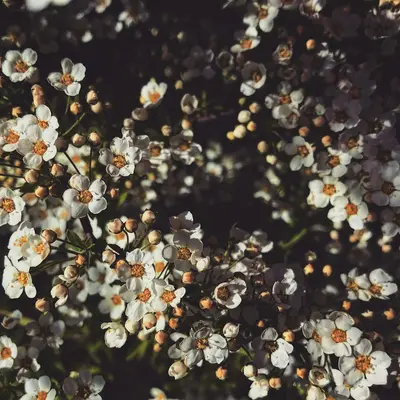
QIS™ White
Features tall spires of dense florets. Plants produce snow white double blooms with a small percentage of singles. 1 1/2-1 3/4" florets on 9-12" flower spikes. Very similar to the Sublime series, which QIS™ replaced. Attracts hummingbirds.
Queeny Formula Mix
Sturdy plants produce blooms in shades of rose, orange, peach, lemon, and lime. Mostly double and semidouble 2-3 1/2" blooms with a small percentage of singles. Cut-and-come-again flower, yielding multiple cuts over the season. Previously and widely known as "Queen Series" and "Queen Mix." Over the years, as the breeder has developed new colors in the series, he has transitioned the series name from "Queen" to "Queeny." To respect his wishes, we have updated the product names accordingly.
Queeny Lemon Peach
Yet another brilliant addition to the Queeny series. Dreamy 2-3 1/2" blooms. A rosy center disk contrasts beautifully with creamy-lime petals which gradually darken to soft peach outer petals. Plants seem a bit more vigorous than the other Queeny series varieties. A mix of fully double, semidouble, and a small percentage of single flowers. Cut-and-come-again flower, yielding multiple cuts over the season. Previously and widely known as 'Queen Lime Peach.' Over the years, as the breeder has developed new colors in the series, he has transitioned the series name from "Queen" to "Queeny." To respect his wishes, we have updated the product names accordingly. AAS Regional (Northeast, West/Northwest) Winner.
Queeny Lime Orange
Innovative addition to the Queeny series. Glowing, apricot blooms with a blush of lime and bright rose centers. A popular color combination suitable for market flowers and sophisticated design work. Mostly double and semidouble, 2-3 1/2" blooms with a small percentage of singles. Cut-and-come-again flower, yielding multiple cuts over the season. Compared to Benary's Giant Salmon Rose, blooms are smaller with a lighter, more subtle coloring. Color gradient gives a unique three-dimensional appearance. Previously and widely known as 'Queen Lime Orange.' Over the years, as the breeder has developed new colors in the series, he has transitioned the series name from "Queen" to "Queeny." To respect his wishes, we have updated the product names accordingly. AAS Winner.
Queeny Lime with Blush
Innovative and elegant. Mostly double and semidouble 2-3 1/2" blooms with a small percentage of singles. Cut-and-come-again flower, yielding multiple cuts over the season. Previously and widely known as 'Queen Lime Blush' or 'Queen Lime Blotch.' Over the years, as the breeder has developed new colors in the series, he has transitioned the series name from "Queen" to "Queeny." To respect his wishes, we have updated the product names accordingly.
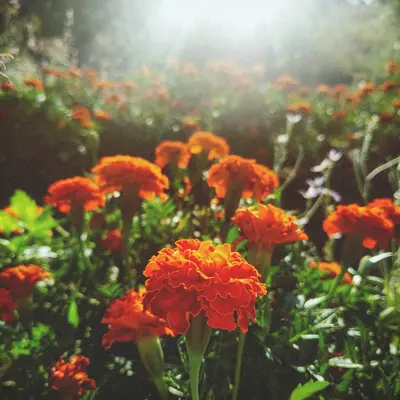
Queeny Pure Orange
Vigorous plants produce 1 1/2-2 1/2" wide, double and semidouble blooms. The only orange zinnia we've found that produces mid-sized blooms and is tall enough for cutting. While from the same breeder as the beloved Queen/Queeny series, Queeny Pure Orange stands apart. Its blooms are smaller than others in the series, and instead of antique hues, it produces simple, pure shades of orange. Most similar to the Oklahoma series in bloom size and timing. Cut-and-come-again flower, yielding multiple cuts over the season.
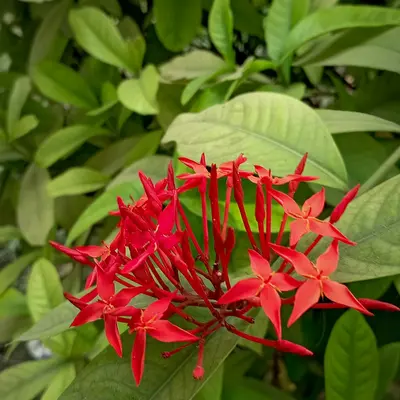
Queeny Red Lime
These 2-3½" blooms have soft burgundy outer petals that gradually lighten to creamy lime centers. A mix of fully double and semidouble flowers with a small percentage of singles. Cut-and-come-again flower, yielding multiple cuts over the season. Previously and widely known as 'Queen Red Lime.' Over the years, as the breeder has developed new colors in the series, he has transitioned the series name from "Queen" to "Queeny." To respect his wishes, we have updated the product names accordingly.
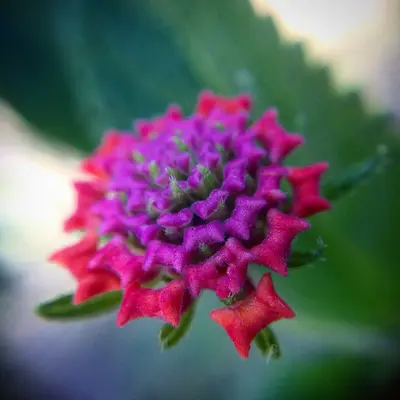
Raspberry Cream
Uniform, productive plants. Very similar to QIS™ Pink but with a darker, richer color. 1 1/2" blooms. Also known as globe amaranth and common globe amaranth.
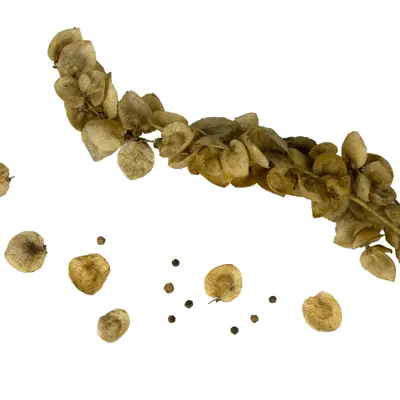
Red Plume
12-24", wine-red plumes on long, strong stems feature small, paper-thin seed pods. Easy-to-grow plants provide an interesting, textural element to design work. Earthy red combines easily with other colors in bouquets. Foliage is edible. Also known as orach and orache.
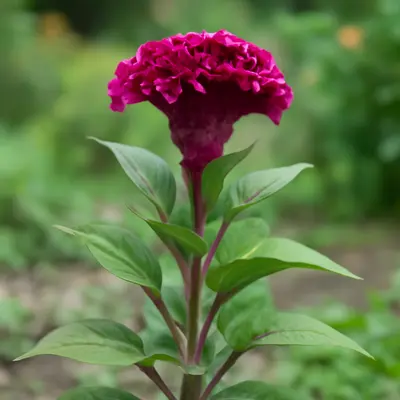
Reien
Vivid red combs with attractive, dark red foliage and stems. 2-4" wide scarlet combs on sturdy, 18-24" long stems are useful for fresh or dried cut flowers. Similar overall performance to the Chief series but earlier to bloom. In our trials, Reien is ready for harvest 5-7 days earlier than the Chief series. Uniform bloom time, plant habit, and height. Also known as cockscomb and crested cock's comb. Unauthorized reproduction and sale of seeds is prohibited by the breeder.
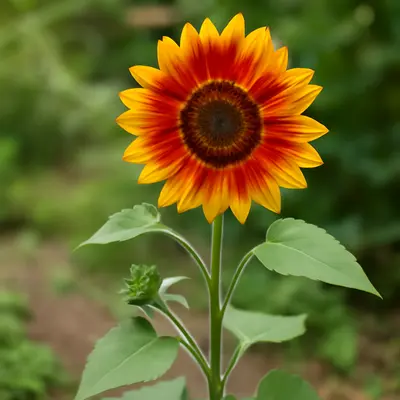
Ring of Fire
Unique bicolor flower pattern sets this beauty ablaze with autumn colors. Blooms average 5-6" across, but with tight spacing will be slightly smaller. Stem length is 16-34". Day-length neutral. Minimal pollen. Branching. AAS Winner.Edible Flowers: Flower buds can be fried and the petals used as a garnish in salads and desserts; the flavor is bittersweet.
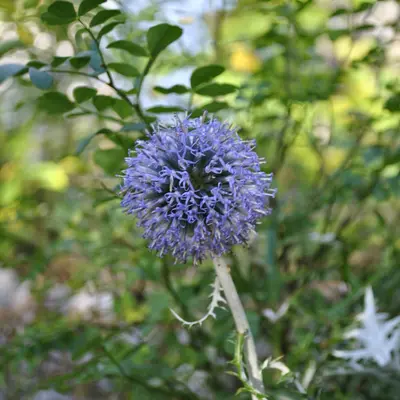
Ritro
1-3" wide globes take on a steel-blue hue as they mature. Dries well. Globes add texture and color to fresh and dried arrangements. Spines are minimal compared to similar types, but gloves are recommended for harvesting as the leaves and stems are a bit prickly. Begins blooming mid-summer in the second year after planting. Tolerant of hot, dry growing conditions, once established. Also commonly known as southern globethistle. Perennial in zones 3-8.
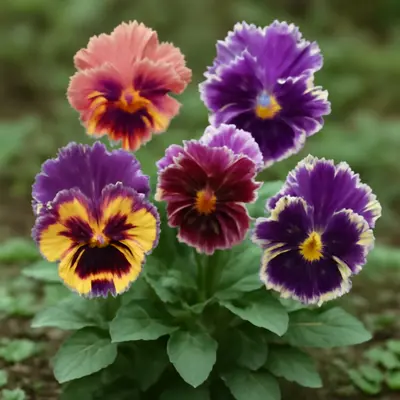
Rococo Frilled Mix
2-3" deeply ruffled flowers in multicolor combinations of purple, burgundy, plum, gold, lavender, mauve, and ivory. Some variability in bloom size, degree of frill, and plant height across the mix. Mildly fragrant blooms. Overwinters well in our unheated tunnel (Zone 5), yielding 12-14" long stems that are perfect for mixing with tulips and daffodils in early spring bouquets. Also known as pansy, Johnny jump-up, European field pansy, heart's ease, and hybrid violet. Edible Flowers: Decorative and edible garnish for salads and desserts with slight wintergreen flavor. While a popular choice for brightening up salad mix, the flowers are also good for candying.
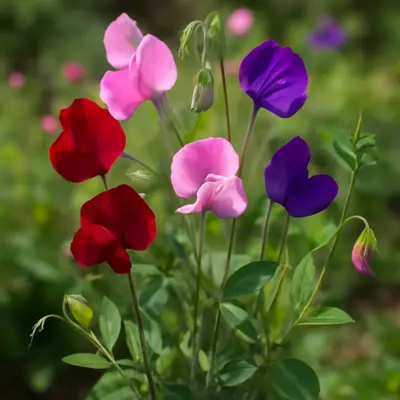
Royal Mix
Royal Mix is a classic heirloom flower variety prized for its vibrant, mixed-color blooms that mature within 90 days. This easy-to-grow cultivar thrives in full sun and produces abundant flowers ideal for cutting and garden displays. The diverse color palette and long flowering season make it a standout choice for gardeners seeking reliable, showy blooms throughout the season.
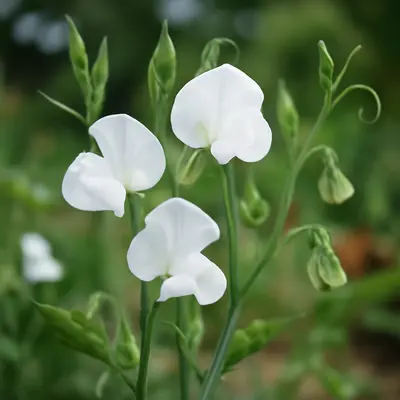
Royal Wedding
From the Spencer series. Slightly ruffled, pure white blooms with a hint of cream color. NOTE: Spencer series sweet peas are known as late-flowering because they require at least 12 hours of daylight, unlike more modern sweet pea varieties bred for winter production, which may require only 10-11 hours of daylight. Attracts hummingbirds.
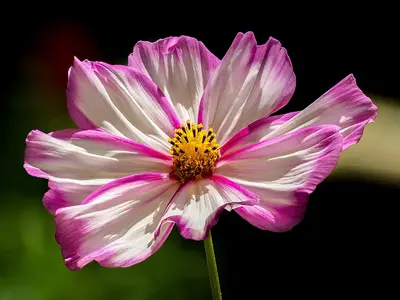
Rubenza
As blooms mature, petals fade from a deep cranberry to an antique rose with hints of amber. The medium-height plants are very productive, flowering early and continuing to bloom for several weeks if cut or deadheaded. 2 1/2-3 1/2" blooms. Fleuroselect Novelty 2008.
Ruby Parfait
Dark rose, arrow-shaped plumes. 2-3" textural flower spikes on full, branching plants can stand alone in a bouquet, be used as filler, or make a grand statement in the flower garden. A sweet and sturdy addition to boutonnières. Excellent vase life. Also known as wheat celosia, and red fox. Unauthorized reproduction and sale of seeds is prohibited by the breeder.
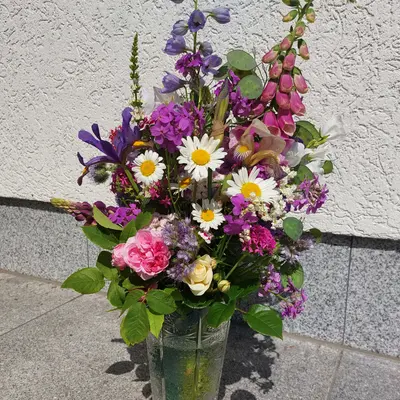
Russell's Formula Mix
Includes white, pink, violet-blue, red, yellow, peach, and bicolors. Sweetly scented blooms. Plants produce multiple blooms with stiff and straight stems. In our trials, these first-year flowering plants bloomed in early July in the first year and about a month earlier, (early June) from well-established plants in the second year. Bloom quality and productivity were better in the second season, although all plants did produce flowers in the first season. Performs best where summers are cool. Attracts and provides a food source for bees and hummingbirds. 1-2' blooms/spikes are densely covered with ½" pea-like flowers. Lupin is typically resistant to deer and rabbits. Perennial in Zones 4-8.
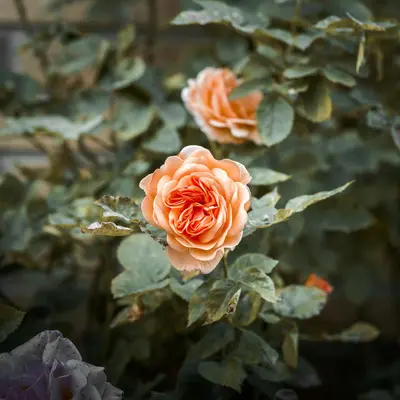
Salmon Rose
1 1/2-2 1/2", coral-colored flowers stand tall on strong, slender stems. A dramatic addition to any bouquet or garden. Also known as mourningbride.
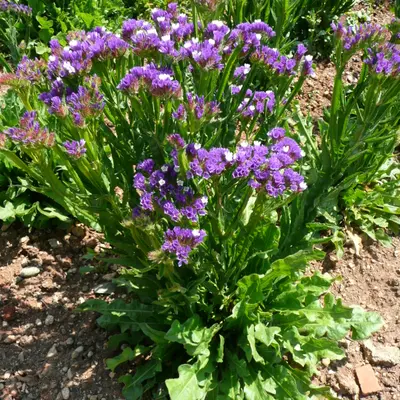
Seeker Rose Shades
1 1/2-3" flower clusters are produced on strong stems in the field and greenhouse. Blooms in varying shades of rose pink. Also known as annual statice and wavyleaf sea lavender.
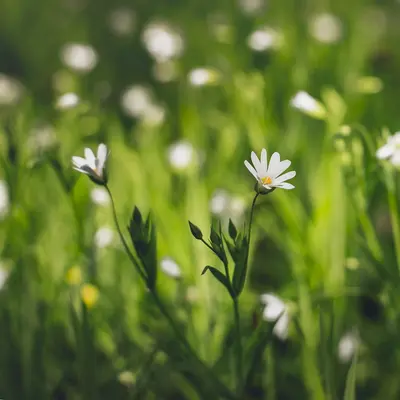
Seeker White
1 1/2-3" flower clusters are produced on strong stems in the field and greenhouse. Blooms are pure white, with some showing a slight blush of pink. Also known as annual statice and wavyleaf sea lavender.
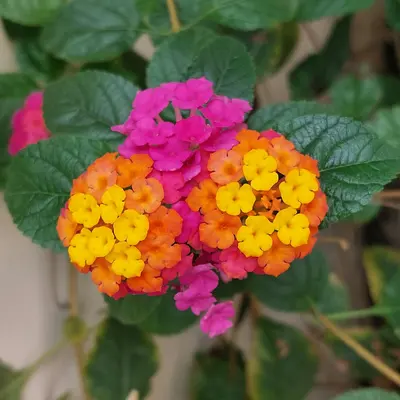
Sensation Mix
Single flowers, 3-4" across, in lavender, pink, magenta, and white. AAS Winner. Cosmos are also known as garden cosmos.
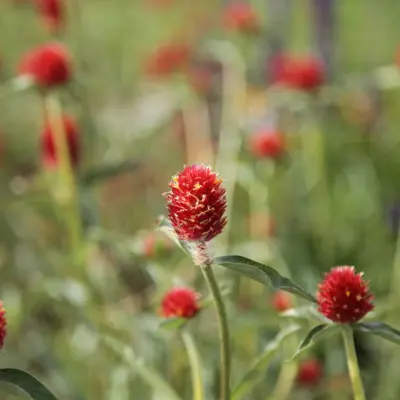
Sequin
Unique color in gomphrena developed by Johnny's Breeding Team. Rose bracts surround a creamy, glowing center - creating a luminous, dusky-rose bloom. Opalescent color shifts in the petals make us think of sparkling sequins. When comparing the bloom colors of Sequin (G. haageana) and Raspberry Cream (G. globosa), Sequin's flower color is lighter and warmer. Sequin's uniform plant is consistent with other G. haageana types: open plants branch from the base and contain few leaves; stems are tall and slender; and blooms are 1 1/2" in diameter. A perfect accent flower for tying together cool or warm color palettes. As a dried flower, Sequin's color holds well; petals lighten only slightly, and the bloom center deepens into light rose. PVP pending.
Silvery Rose
Tall, well-branched plants produce double flowers 2-2 1/2" across. Blooms are pure to creamy white and frosted with rose at the petal tips. Rose coloring is subtler on young blooms and darkens as they mature and open. Also known as bracted strawflower.
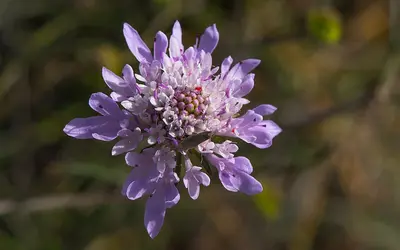
Snowmaiden
1 1/2-2 1/2", pure white flowers stand tall on strong, slender stems. A dramatic addition to any bouquet or garden. Also known as mourningbride.
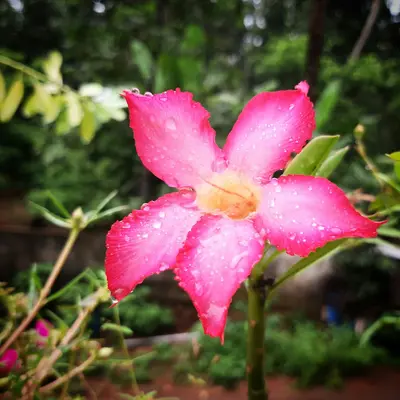
Sonja
Tangerine petals with dark centers. Sprays of 8 or more side branches on strong 17-28" stems bear 4" blooms. Long vase life. Bears pollen; good for bee forage. Day-length neutral. Branching.
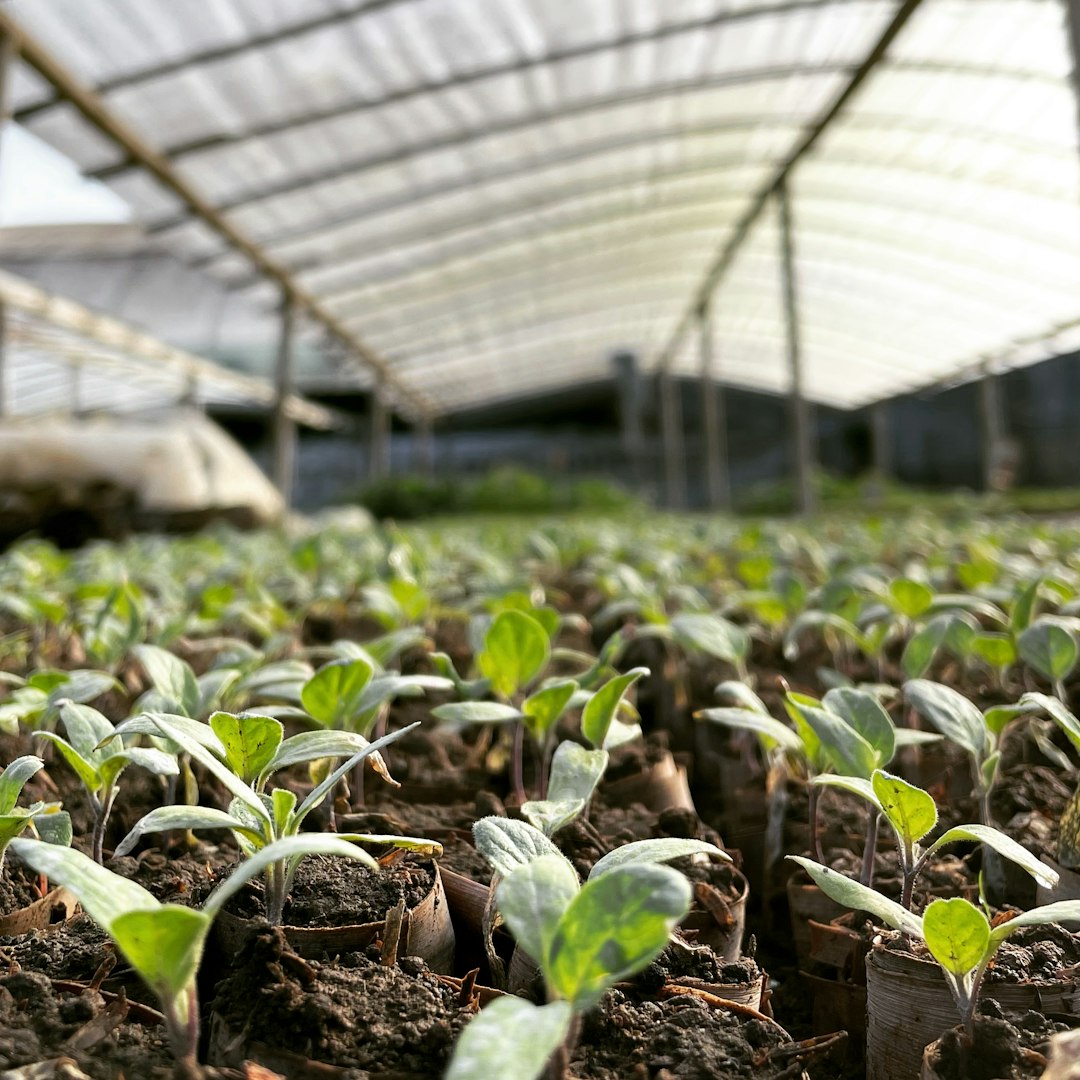
Soraya
Soraya is a striking heirloom flower variety that matures in 85-95 days and thrives in full sun with well-draining loam. This ornamental cultivar produces vibrant blooms with distinctive appearance characteristics typical of its type. Easy to grow, Soraya is prized by gardeners for its reliable performance and aesthetic appeal in gardens and cut flower arrangements.
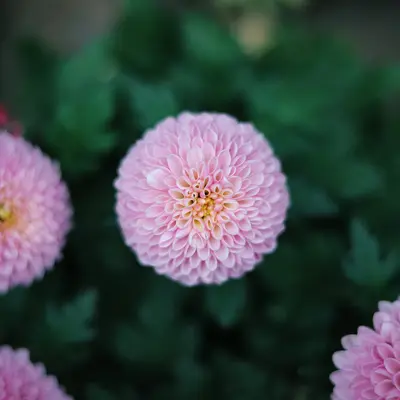
Soufflé Light Pink
2 1/2-3 1/2" double blooms of excellent quality. Plants are highly uniform and have been consistently healthy and sturdy in our trials. Compared to the Tower series, Soufflé Light Pink blooms earlier and has similar peony-style flowers.
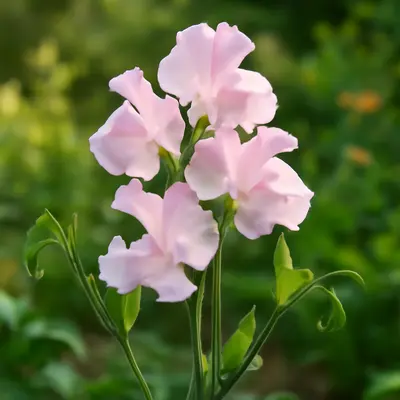
Spencer Ice Cream
Like vanilla ice cream, this aptly named variety produces blooms that are sweetly scented and creamy in color. Abundant, ivory blooms on healthy plants. Highly fragrant. Stems are shorter than those of other Spencer series varieties, but since the plants are vigorous and productive, foliage and tendrils can be cut with the flowers, providing the extra stem length and greenery needed to fill out bouquets or design work. NOTE: Spencer series sweet peas are known as late-flowering because they require at least 12 hours of daylight, unlike more modern sweet pea varieties bred for winter production, which may require only 10-11 hours of daylight. Attracts hummingbirds.
Spencer Ripple Formula Mix
These flowers look as good as they smell with their uniquely ruffled, bicolor petals. Displayed alone or mixed with solid color varieties in bouquets, they are simply gorgeous. One of the most fragrant sweet pea varieties. Very popular in England. Can be spelled either as sweet pea or sweetpea. Attracts hummingbirds.
Starflower
Small pale blue blossoms on wiry stems transform into highly decorative bronze-colored geometric and globe-shaped seed heads. Plants are grown primarily for the papery seed pods, which are useful for both fresh and dried bouquets. Also known as drumstick flower.
Starlight Dancer
Star-shaped bells are lime and cream-colored on the outside throat, opening to 1" wide ivory flowers. Grows easily from seed and is quick to flower in the field. Nicotiana flowers continuously for most of the season when cut back regularly. Blooms are relatively fragile and have a short vase life (5-7 days), making them best for casual bouquets, design work (not requiring a long vase life) and home cutting gardens. A favorite of pollinators and hummingbirds. Also known as flowering tobacco.
StoX® Antique Rose
Light, dusty-rosy color is similar to Vintage Brown, although a few shades lighter. Single-stem/column-type stock for one-cut harvest. Sturdy, upright stems are comparable to the Iron series. Double-flowering plant selection: Plants are selectable for double-flowering blooms. Without selection your plants will produce approximately 55% double-flowering plants and 45% single-flowering plants. Double-flowering plants will display a lighter leaf color at the seedling stage after a cold treatment. You might notice that some seedlings will present the lighter color leaves, even without a prescribed cold treatment. NOTE: This variety produces one flowering stem per plant. Pinching is not advisable as it will terminate flowering. Edible Flowers: The peppery, clove-like flavor of the flowers lends itself well to use as a garnish on salads, desserts, and drinks.
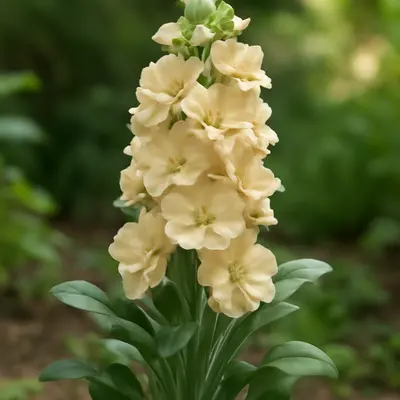
StoX® Champagne
Completely unique, soft peachy-pink color - a standout in our trials. Single-stem/column-type stock for one-cut harvest. Sturdy, upright stems are comparable to the Iron series. Double-flowering plant selection: Plants are selectable for double-flowering blooms. Without selection your plants will produce approximately 55% double-flowering plants and 45% single-flowering plants. Double-flowering plants will display a lighter leaf color at the seedling stage after a cold treatment. You might notice that some seedlings will present the lighter color leaves, even without a prescribed cold treatment. NOTE: This variety produces one flowering stem per plant. Pinching is not advisable as it will terminate flowering. Edible Flowers: The peppery, clove-like flavor of the flowers lends itself well to use as a garnish on salads, desserts, and drinks.

StoX® Deep Rose
Sturdy, upright stems are comparable in quality to the Iron series. The StoX series was bred for easier selection of double-flowering plants. Double-flowering plants will display a lighter leaf color at the seedling stage after exposure to cool temperatures. Without selection your plants will produce approximately 55% double-flowering plants and 45% single-flowering plants. You might notice that some seedlings will present the lighter color leaves, even without a cold treatment. Single-stem/column-type stock for one-cut harvest. NOTE: This variety produces one flowering stem per plant. Pinching is not advisable as it will terminate flowering. Blooms are a brilliant deep rose color. Edible Flowers: The peppery, clove-like flavor of the flowers lends itself well to use as a garnish on salads, desserts, and drinks.
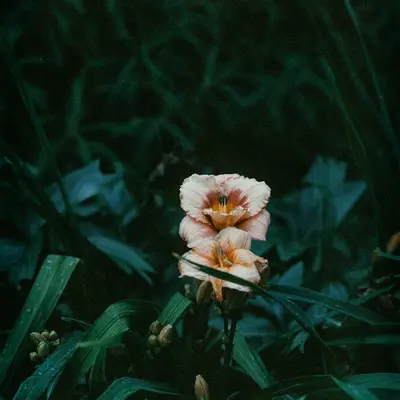
StoX® Rose Pink
Medium-light rose color is more subtle and muted compared to many other rose-colored varieties. Single-stem/column-type stock for one-cut harvest. Sturdy, upright stems are comparable to the Iron series. Double-flowering plant selection: Plants are selectable for double-flowering blooms. Without selection your plants will produce approximately 55% double-flowering plants and 45% single-flowering plants. Double-flowering plants will display a lighter leaf color at the seedling stage after a cold treatment. You might notice that some seedlings will present the lighter color leaves, even without a prescribed cold treatment. NOTE: This variety produces one flowering stem per plant. Pinching is not advisable as it will terminate flowering. Edible Flowers: The peppery, clove-like flavor of the flowers lends itself well to use as a garnish on salads, desserts, and drinks.
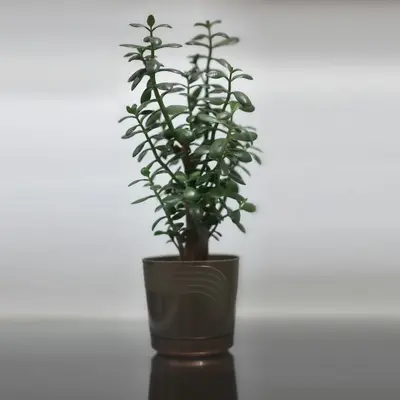
StoX® Silver
Sturdy, upright stems are comparable in quality to the Iron series. The StoX series was bred for easier selection of double-flowering plants. Double-flowering plants will display a lighter leaf color at the seedling stage after exposure to cool temperatures. Without selection your plants will produce approximately 55% double-flowering plants and 45% single-flowering plants. You might notice that some seedlings will present the lighter color leaves, even without a cold treatment. Single-stem/column-type stock for one-cut harvest. NOTE: This variety produces one flowering stem per plant. Pinching is not advisable as it will terminate flowering. Blooms are pale pink in color. Edible Flowers: The peppery, clove-like flavor of the flowers lends itself well to use as a garnish on salads, desserts, and drinks.
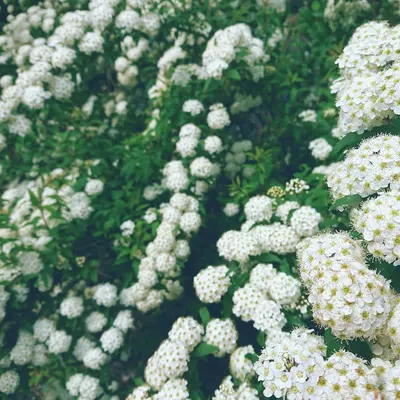
StoX® White
Sturdy, upright stems are comparable in quality to the Iron series. The StoX series was bred for easier selection of double-flowering plants. Double-flowering plants will display a lighter leaf color at the seedling stage after exposure to cool temperatures. Without selection your plants will produce approximately 55% double-flowering plants and 45% single-flowering plants. You might notice that some seedlings will present the lighter color leaves, even without a cold treatment. Single-stem/column-type stock for one-cut harvest. NOTE: This variety produces one flowering stem per plant. Pinching is not advisable as it will terminate flowering. Blooms are pure white in color. Edible Flowers: The peppery, clove-like flavor of the flowers lends itself well to use as a garnish on salads, desserts, and drinks.
StoX® Yellow
Sturdy, upright stems are comparable in quality to the Iron series. The StoX series was bred for easier selection of double-flowering plants. Double-flowering plants will display a lighter leaf color at the seedling stage after exposure to cool temperatures. Without selection your plants will produce approximately 55% double-flowering plants and 45% single-flowering plants. You might notice that some seedlings will present the lighter color leaves, even without a cold treatment. Single-stem/column-type stock for one-cut harvest. NOTE: This variety produces one flowering stem per plant. Pinching is not advisable as it will terminate flowering. Creamy yellow blooms are similar in color to Iron Yellow and Katz Yellow. Edible Flowers: The peppery, clove-like flavor of the flowers lends itself well to use as a garnish on salads, desserts, and drinks.
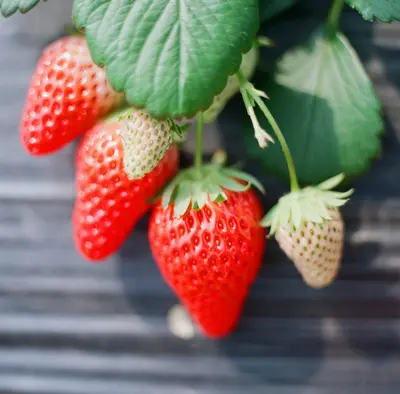
Strawberry Fields
Brilliant flowers, 1 1/2" across, atop strong stems. Plants are very productive, and an excellent complement to the QIS™ series. Holds color exceptionally well when dried. Also known as globe amaranth and Rio Grande globe amaranth.

Summer™ Pastels
Shades of sunny pastel blooms make excellent cut flowers and reliable perennial garden plants with decorative, fern-like foliage. As cut flowers, the 2-4" flat-topped flower heads on 24" stems add bulk, durability, and beauty to bouquets. Long vase life. Summer Pastels F2 population. Flowers first year from seed. Low maintenance. Tolerates drought once established. Perennial in Zones 2-9. AAS Winner. Attracts and supports beneficial insects such as damsel bugs, lacewings, lady beetles, and parasitic wasps.
Sun Ball
1" globes on long, stiff stems are easy to harvest and use as cut flowers. Grass-like, silvery green foliage. As a cut flower, it has a long vase life and as a dried flower, it retains its color. Tolerates heat. Craspedia is also known as drumsticks. Tender perennial in Zones 8-11.
Sunday™ Bright Orange
Taller plant habit with longer stems for cutting and slightly later maturity date when compared to the rest of the Sunday™ series. Highly uniform plant habit. Upright, vigorous branching plants produce 3-5" tall plumes that are a few shades lighter in color than Sunday Orange. Matures 7-10 days later than Sunday Orange. Raw, uncoated seed.
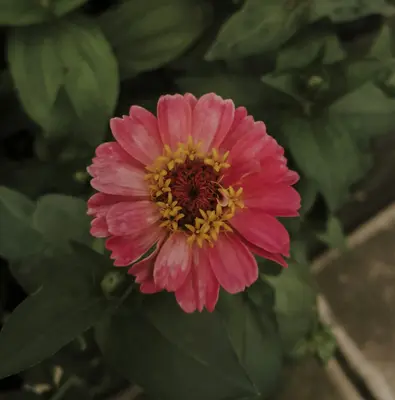
Sunday™ Bright Pink
Uniform, productive plants. 3-5" long, bright pink, feathery spikes on long stems. Plants are slightly taller and later to mature compared to others in the Sunday series. Pale green stems and light green foliage. Raw, uncoated seed.
Sunday™ Cherry
Uniform, productive plants. 3-5" long, bright, cherry-colored, feathery spikes on long stems. Stems are pink to red-toned with light green leaves. Raw, uncoated seed.
Sunday™ Gold
Uniform, productive plants. 4-8" long, bright golden-yellow, feathery spikes on long stems. Rich color complements high-summer and autumn arrangements. Raw, uncoated seed.
Sunday™ Mix
Productive plants produce vivid blooms that are useful for multicolor bunches, bouquet fillers, or a celebration of color for garden beds. 3-5" long plumes. Raw, uncoated seed.
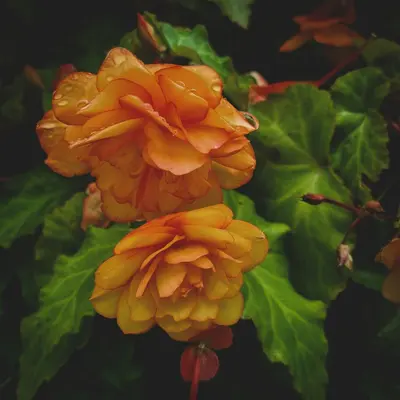
Sunday™ Orange
Uniform, productive plants. 3-5" long, bright orange, feathery spikes. Stems are yellow and orange-hued with light green leaves. Rich color complements high-summer and autumn arrangements. Raw, uncoated seed.
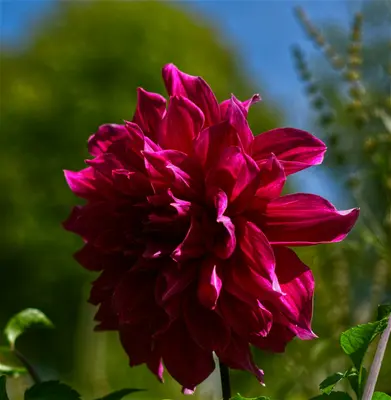
Sunday™ Wine Red
Uniform, productive plants. 3-5" long, deep red, feathery spikes on attractive, dark red stems and leaves. Plants are slightly more compact compared to others in the Sunday series. Raw, uncoated seed.
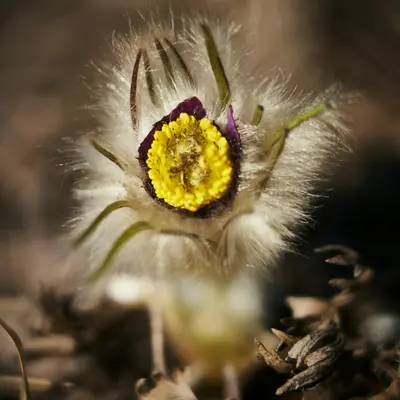
Sunflower Mammoth
The classic giant sunflower that creates stunning 12-inch flower heads on towering 12-foot stalks, making it perfect for creating natural privacy screens or dramatic garden backdrops. Children and adults alike are amazed by these impressive blooms that follow the sun throughout the day and produce abundant seeds for wildlife or roasting. This heirloom variety has been delighting gardeners since the 1800s with its reliable performance and impressive size.

Sunflower Russian Mammoth
The giant of the sunflower world, this heirloom variety produces enormous flower heads up to 12 inches across on towering 10-foot stalks. Not only spectacular for garden displays and cut flowers, but also produces abundant large seeds perfect for snacking or feeding birds. A true showstopper that creates instant impact in any garden space.
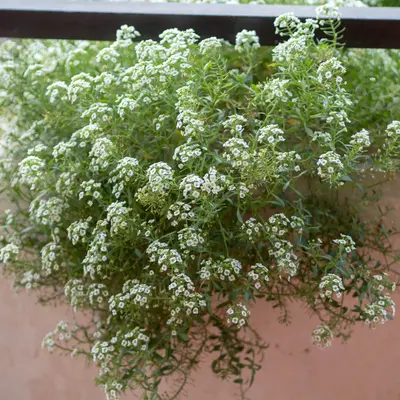
Sweet Alyssum
Sweet Alyssum is a delicate, low-growing flowering plant prized for its tiny, fragrant clustered blooms in white, pink, purple, or bicolor varieties. Reaching maturity in 50-60 days, it produces abundant flowers throughout the season. The defining characteristic is its sweet honey-like fragrance, which makes it exceptional for borders, containers, and pollinator gardens. Easy to grow and tolerant of poor soil, it thrives in full sun to partial shade and becomes a cheerful ground cover or edging plant. Heirloom varieties offer reliable performance and self-seeding capability.
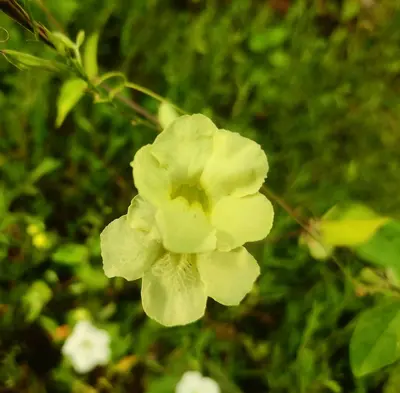
Sweet Pea Cupani
The original wild sweet pea discovered in Sicily in 1695, prized for its intensely sweet fragrance that modern hybrids can't match. These vigorous climbing vines produce smaller but incredibly aromatic flowers in deep purple and maroon, filling the entire garden with their heavenly scent. A must-have heirloom for cutting gardens and romantic cottage garden settings.
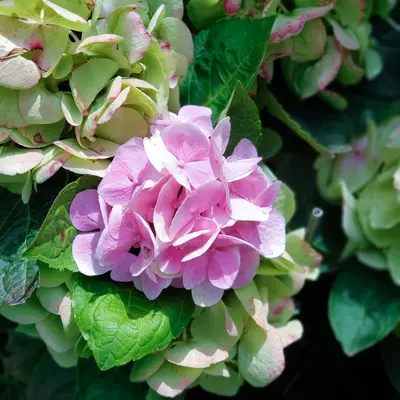
Sweet Pea Royal Mix
The epitome of old-fashioned garden romance, these climbing beauties produce intensely fragrant ruffled flowers that perfume the entire garden on cool mornings. Their sweet scent and pastel colors make them irresistible for cutting gardens and cottage garden schemes.
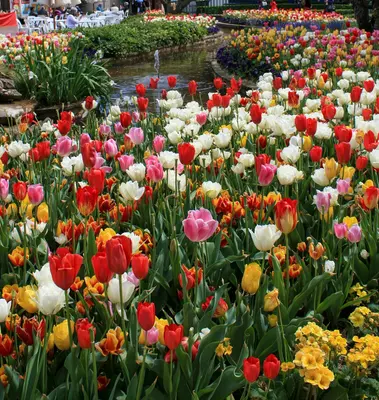
Sylphid
Highly uniform plants produce lemon-lime colored plumes that complement any color combination. Feathery plumes sit on tall, straight stems. Also known as cockscomb, Prince of Wales feather, and prince feather. Unauthorized reproduction and sale of seeds is prohibited by the breeder.
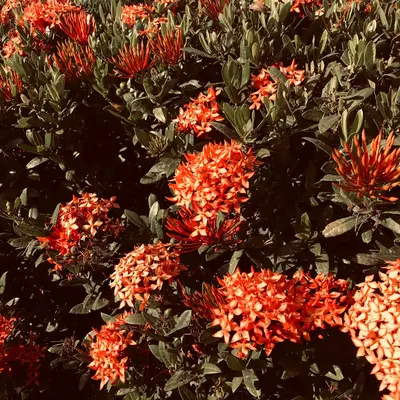
Tangerine Gem
Hundreds of petite flowers cover neat, low mounds of lacy foliage with a citrusy scent. Long-blooming for beds, borders and containers where it attracts beneficial insects, such as ladybugs, hoverflies, butterflies, predatory bugs, and parasitic wasps. Leaves of the plant are edible and are used as flavorful salad greens and garnish. Also known as signet marigold.Edible Flowers: Use the flowers to dress up salads and desserts or cooked in egg or rice dishes. Flavor is floral with hints of citrus and spice, and slightly bitter. Remove the petals from the flower base before consuming as the base can be quite bitter.
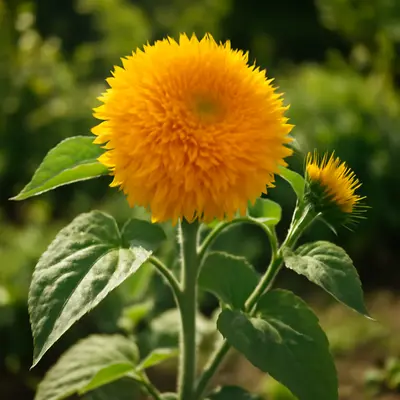
Teddy Bear
Like our other dwarfs, the final height depends on the size of the container. Expect 8-12" plants from seeds directly sown in a 4" pot. 35-42" in the garden; 14-25" long stems. Earliest of the teddy types in trial, this branching variety will host 3-5" sunny, shaggy blooms. Popular with children. Minimal pollen.
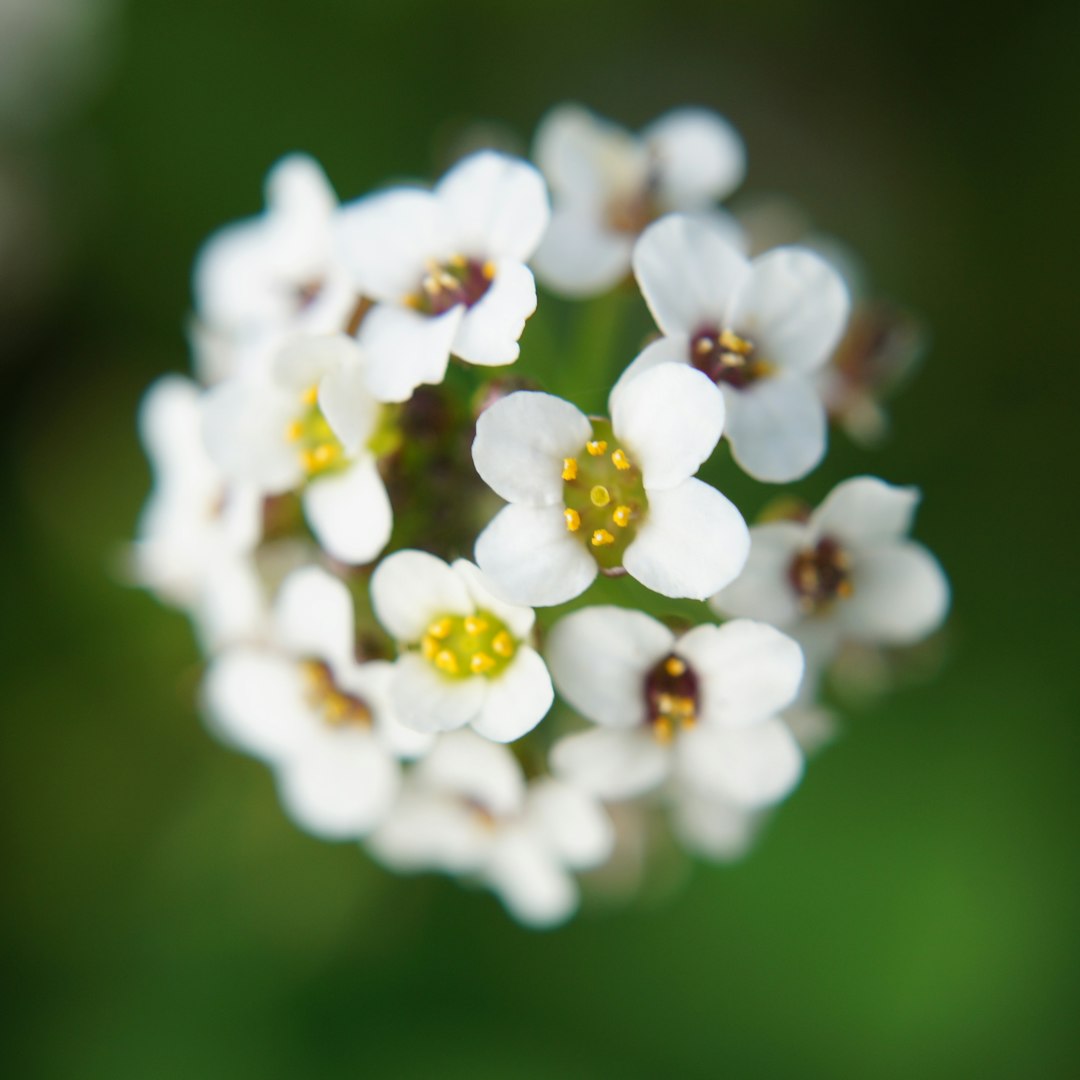
Tetra White
Fully double 3/4-1" blooms uniformly fill the top of the plant, making it a very productive cut flower. Blooms are pure white with citrus-yellow to lime-green centers. Tender or short-lived perennial in Zones 5-9. Also known as feverfew.

The Governor
Part of the Russell Hybrids 'Band of Nobles' series. The Governor has sweetly scented bicolor blooms in blue-purple with white. Plants produce multiple blooms with stiff, straight stems. In our trials, these first-year flowering plants bloomed in early July in the first year and about a month earlier (early June) from well-established plants in the second season of growing. Bloom quality and productivity were better in the second season, although all plants did produce flowers in the first season. Performs best where summers are cool. Attracts and provides a food source for bees and hummingbirds. 1-2' blooms/spikes are densely covered with ½" pea-like flowers. Lupine is typically resistant to deer and rabbits. Perennial in Zones 4-8.
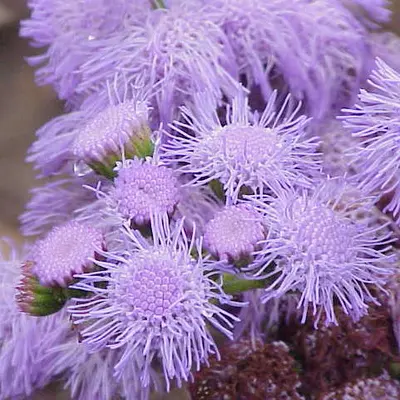
Timeless Mix
Long-lasting 1-2" flower clusters add texture and interest to mixed bouquets. Mix includes lovely shades of red, pink, blue, and white, which complement any color scheme. Attracts bees and butterflies to the garden. Ideal for beds, containers, and cutting. For continuous blooms from early summer until frost, make 2-3 successive plantings. Ageratum is also known as flossflower.
Tower Blue
All the elegance and beauty of peonies and garden mums in an easy-to-grow annual. Deep silvery violet-colored blooms avg. 2-3" with 13-20 stems per plant. Tower features uniform bloom time and plant height across the series and mix. Also known as summer aster.
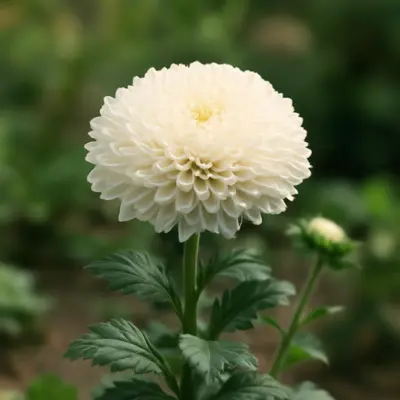
Tower Chamois
All the elegance and beauty of peonies and garden mums in an easy-to-grow annual. Creamy salmon-colored blooms avg. 2-3" with 13-20 stems per plant. Tower features uniform bloom time and plant height across the series and mix. Also known as summer aster.

Tower Custom Mix
All the elegance and beauty of peonies and garden mums in an easy-to-grow annual. Bloom size avg. 2-3" with 13-20 stems per plant. Tower features uniform bloom time and plant height across the series and mix. Colors include yellow, chamois, white, red, violet, silver, blue, cherry rose, dusty pink, light blue, and salmon. Colors are subject to slight variance due to seed availability. Also known as summer aster.
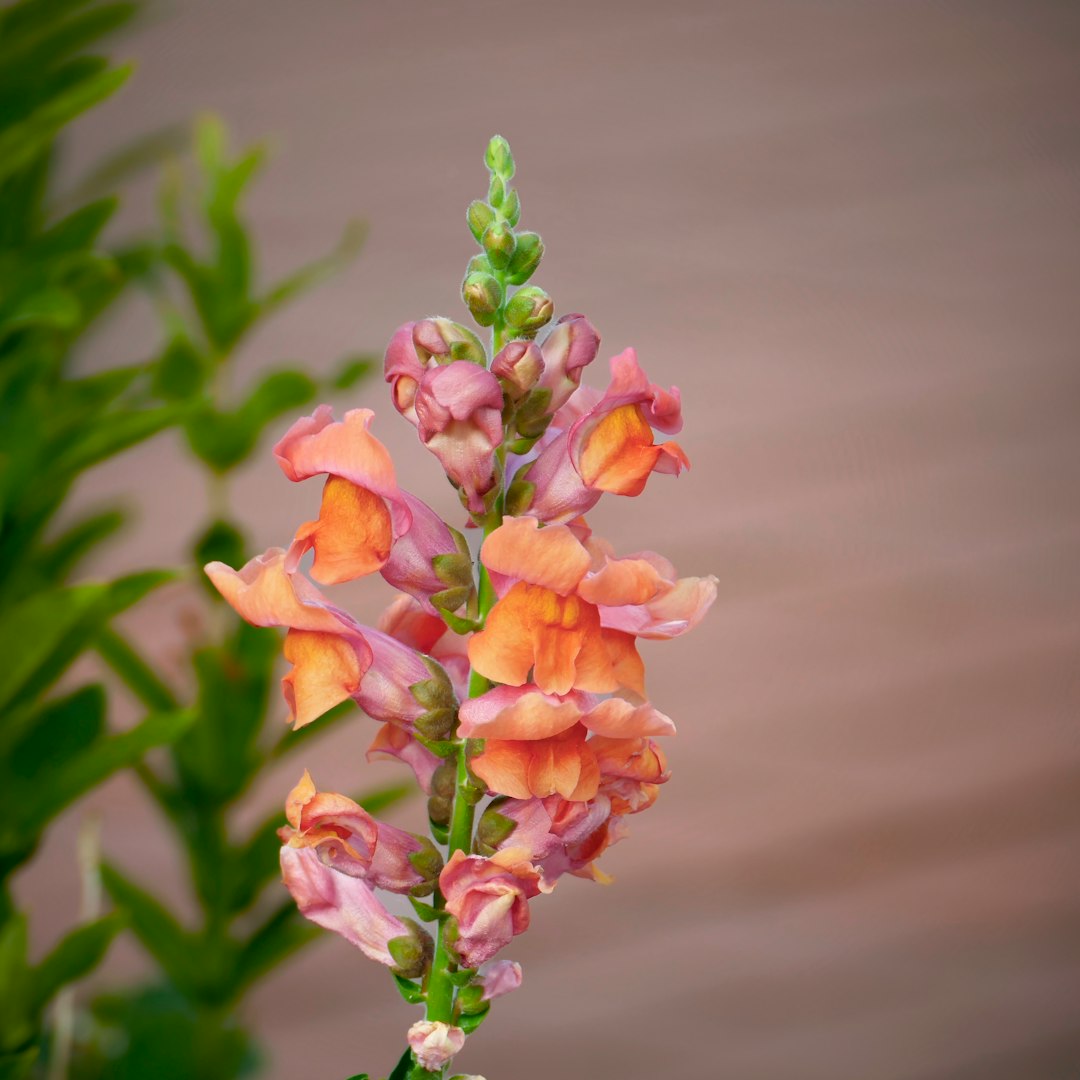
Tower Salmon
All the elegance and beauty of peonies and garden mums in an easy-to-grow annual. Salmon-pink colored blooms avg. 2-3" with 13-20 stems per plant. Tower features uniform bloom time and plant height across the series and mix. Also known as summer aster.
Tower Silver
All the elegance and beauty of peonies and garden mums in an easy-to-grow annual. Bicolor blooms in frosted white with lavender avg. 2-3" with 13-20 stems per plant. Tower features uniform bloom time and plant height across the series and mix. Also known as summer aster.
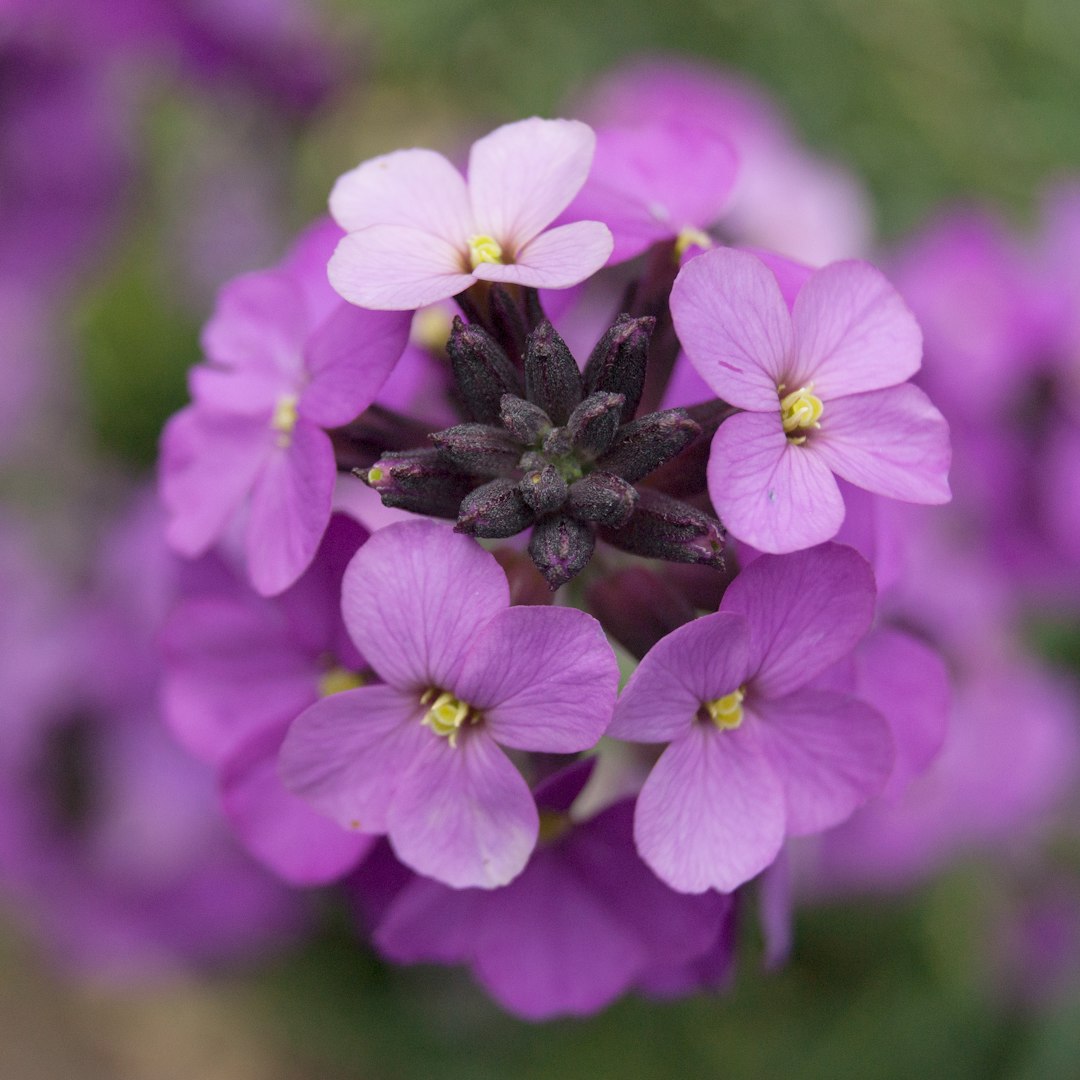
Tower Violet
All the elegance and beauty of peonies and garden mums in an easy-to-grow annual. Rich plum-colored blooms avg. 2-3" with 13-20 stems per plant. Tower features uniform bloom time and plant height across the series and mix. Also known as summer aster.
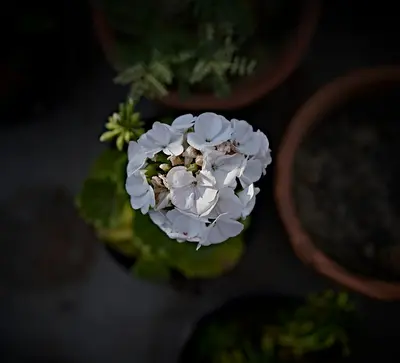
Tower White
All the elegance and beauty of peonies and garden mums in an easy-to-grow annual. Bright white blooms avg. 2-3" with 13-20 stems per plant. Tower features uniform bloom time and plant height across the series and mix. Also known as summer aster.

Tower Yellow
All the elegance and beauty of peonies and garden mums in an easy-to-grow annual. Buttercream-yellow blooms avg. 2-3" with 13-20 stems per plant. Tower features uniform bloom time and plant height across the series and mix. Also known as summer aster.
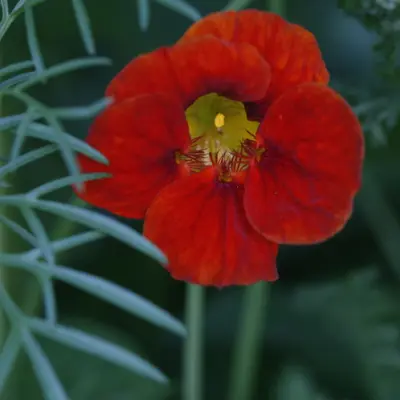
Trailing Nasturtium Mix
Flowers in red, rose, orange, and yellow. Perfect for hanging baskets and containers, or even as a ground cover. Will "climb" if tied to upright supports. Also known as garden nasturtium and Indian cress.Edible Flower: Use the flowers as garnishes, or stuff with soft cheese. The flowers can be minced and added to butters and the immature seed heads can be pickled. Nasturtiums are a popular choice for adding color to salad mix. Peppery-flavored foliage is also edible.
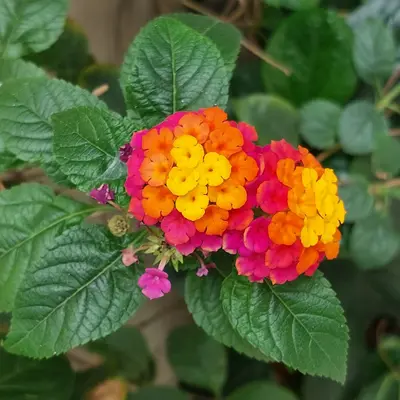
Triple Berry Mix
We've formulated this mix for the delicious, fruity color palette but also for improved uniformity and ease of harvest. While beautiful, some of the lighter colors (not included here) which are included in the full-color mixes can have a rangy or weak plant habit, making those mixes trickier to harvest. 1 1/2-2 1/2" blooms. Also known as pincushion flower or mourningbride.
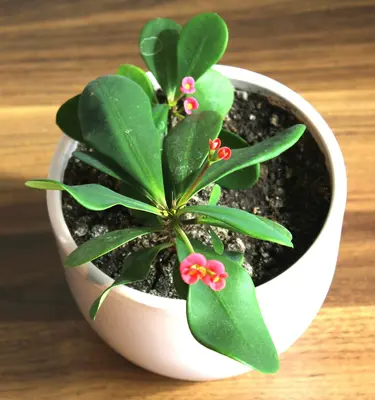
Valentine
Sturdy stems with 3-4" blooms. Valentine blooms later than Buttercream by approximately 10 days, making it a good choice for sowing at the same time for succession harvest of light yellow blooms. Valentine's stems are stronger, and petals are shorter, rounder, and more lemon-yellow in color than Buttercream's very pale blooms. Stem length is 25-45". Day neutral. Bears pollen; good for bee forage. Branching. FleuroSelect Quality Award Winner.
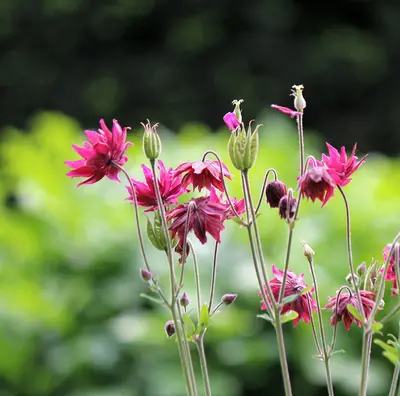
Valkyrie Brunhilde Chamois
Needle- or quilled-type blooms atop long, sturdy stems add a delicate appearance to arrangements. 3 1/2-5 1/2" flowers bloom in pastel apricot - a shade lighter than Tower Chamois. Easy to harvest due to the well-branched plants' open, airy habit. Long vase life. Also known as summer aster.
Valkyrie Mix
Needle- or quilled-type blooms atop long sturdy stems. Large, brightly colored, 3½ - 5½" flowers bloom in white, light yellow, pink, crimson, rose, and dark and light purple. Easy to harvest due to the well-branched plant's open airy habit. Long vase life. Also known as summer aster.
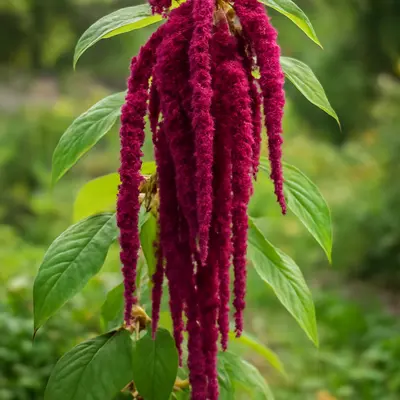
Velvet Curtains
Feathery plumes are slightly lighter in color when compared to Red Spike. Lovely color and form for late summer and fall arrangements. When plants are young and leaves are tender, the foliage makes a nice edible green. Also known simply as amaranth.
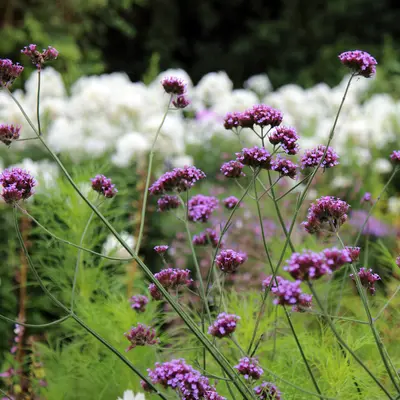
Verbena bonariensis
Multiple long, thin stems topped with clusters of 2" heads packed with tiny flowers. Blooms July to frost. Attracts bees and butterflies. Also known as purple top verbena, tall verbena, South American vervain, and purple-top verbena. Perennial in Zones 7-10 but can be grown as an annual.
Versailles Flush
Blooms are 2 1/2" across and the palest, blush pink. Strong, straight stems can withstand considerable handling. Produces under short days.
Versailles Mix
Early blooming and vigorous. Produces under short days and is also suitable for greenhouse culture during the winter. Strong stems can withstand considerable handling. Blooms are 2 1/2" across in shades of blush pink, pure white, carmine red, and pink with a deep pink eye. Cosmos are also known as garden cosmos.
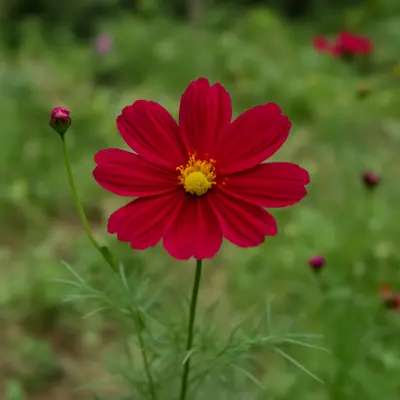
Versailles Red
Blooms are 2 1/2" across and are a beautiful, dark burgundy/magenta red color. Strong, straight stems can withstand considerable handling. Produces under short days.
Victoria Blue
A bit shorter, a week later to flower, and a deeper blue than Gruppenblau. Uniform plants tolerate heat, humidity, and poor soils. Well-suited for mass plantings. Strong, thin stems are harvested fresh or dried when bottom 3-4 flowers open. Also known as mealycup sage and mealy-cup sage. Tender perennial in Zones 8-10.
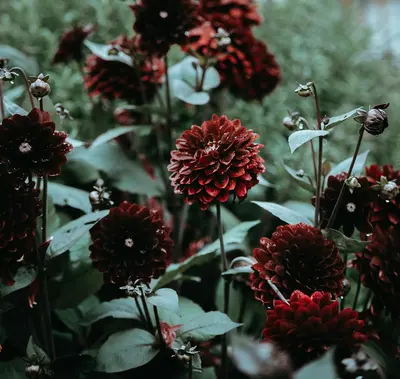
Vintage Brown
Tightly spaced florets on thick, strong, straight stems. Single-stem/column-type stock for one-cut harvest. Vintage Brown is not brown but rose-taupe in color. This variety (updated in 2023) is the newest version of Vintage Brown and has a slightly warmer color palette and a touch of light gold at the flower center, as opposed to the original Vintage Brown, which was fully rose in color.Produces about 55% double-flowering plants. Overall, very similar to the Iron series in performance. NOTE: This variety produces one flowering stem per plant. Pinching is not advisable as it will terminate flowering. Edible Flowers: The peppery, clove-like flavor of the flowers lends itself well to use as a garnish on salads, desserts, and drinks.

Vintage White
Tall, well-branched plants produce pure white, double flowers 2-2 1/2" across. Also known as bracted strawflower.
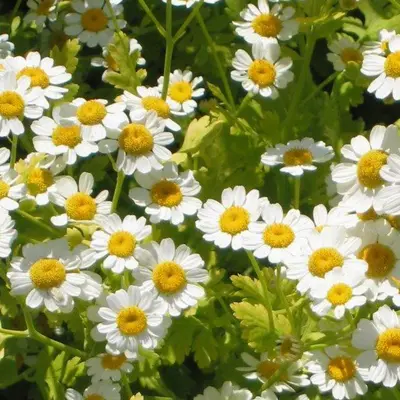
Virgo
Productive, uniform, and upright plants produce 1/2", round flowers. Before fully developed, blooms have ivory centers which turn pure white at maturity.
Wandering Mixture
Highly fragrant mix of soft pastel flowers in shades of white, lavender, purple, and pale yellow. Densely mounding plant habit. Plants are less vigorous, more compact, and have a more contained habit compared to our white Sweet Alyssum (#1932). Sweet alyssum is fast and low growing, trouble free, and low cost, making it a popular choice for use as beneficial insect habitat in vegetable and fruit production. Because of its very manageable plant habit, sweet alyssum is a good choice for beneficial planting in greenhouses and containers, in addition to outdoor production. Field-grown mixture. Tender perennial in Zones 9-11. Attracts and provides a food source for beneficial insects such as lacewings, parasitic wasps, syrphid flies, and tachinid flies.

White Beauty
Sturdy and easy to grow. Stems are thicker, stronger, taller, and easier to manage than those of annual gypsophila, an otherwise similar flower. 3/4 to 1" pure white blooms float above gray-blue, waxy foliage. Branching plant habit. Also known as soapwort or cow soapwort.
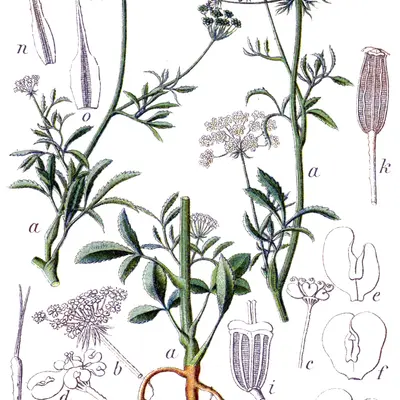
White Dill
Free-flowering plants bear a multitude of lacy flower heads 5-6" across. Flowers can be dyed in an assortment of colors. Also known as false Queen Anne's lace, lace flower, false bishop's weed, large bullwort, and bishop's weed. Attracts and supports beneficial insects such as lacewings, lady beetles, minute pirate bugs, syrphid flies, and parasitic wasps.
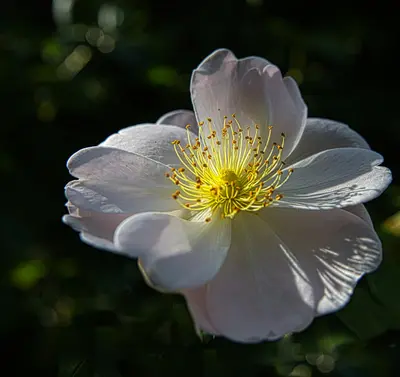
White Glitter
Attractive blooms with a metallic shine. Eryngium is a hardy perennial with long, sturdy stems. Tolerates hot, sunny locations. Plants produce flowers during the second year of growth and in subsequent years. Attracts bees, beneficial flies and wasps. Also known as plains eryngo and flat sea holly. Perennial in Zones 3-8.
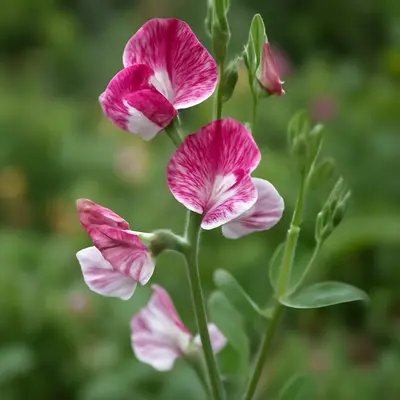
Wiltshire Ripple
From the Spencer series. Chocolate to cranberry streaks throughout and lining the petal edge. Plants produce 3-4 blooms per 9-12" stem. Highly fragrant. NOTE: Spencer series sweet peas are known as late-flowering because they require at least 12 hours of daylight, unlike more modern sweet pea varieties bred for winter production, which may require only 10-11 hours of daylight. Attracts hummingbirds.
Winged Everlasting
The prolific 1/2- 3/4" silvery-white blooms on stiff stems are typically grown for dried-flower production but are also useful as fresh cuts for flower arrangements. The tiny blooms make an elegant addition to boutonnieres and floral crowns. As flowers mature, the papery white petals open to reveal bright-yellow centers. Flowers are typically harvested when half open, before the center is exposed. Winged Everlasting gets its name from ribbed, or winged stems the plant produces. Tender perennial in Zones 9-10 but most often grown as an annual. Once the flowers were fully open at our trial farm, we noticed lots of flying friends visiting the flowers, including hoverflies and wasps.
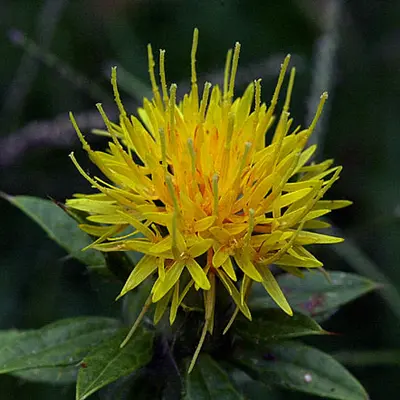
Zanzibar
Sturdy, straight stems and branching flower clusters store well and can be used fresh or dried. Stems are easily air-dried for arrangements. Fresh, dark green foliage and geometric buds add structure to mixed bouquets. Great in combination with sunflowers. This strain is nearly thornless for easy harvest. Tufted thistle-like flowers with oval leaves. Fiery orange-and-gold petals are edible and sometimes used as a substitute for saffron. Also known as safflower.

Zinderella Peach
2-2 1/2" fully double, semidouble, and approximately 20% single flowers. Unique salmon color with cream-to-rose petals and a distinct dark eye. Cut-and-come-again flower, yielding multiple cuts over the season.
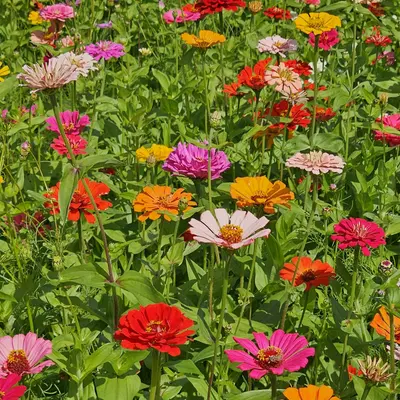
Zinnia Elegans Giant Dahlia Flowered Mix
A classic heirloom zinnia variety that produces enormous 5-6 inch blooms resembling dahlias in a spectacular range of colors including pink, red, orange, yellow, and white. These tall, sturdy plants are beloved by both gardeners and pollinators, creating impressive cut flower gardens and stunning backdrops in borders. The long-lasting blooms get better with heat and continue producing until the first hard frost.
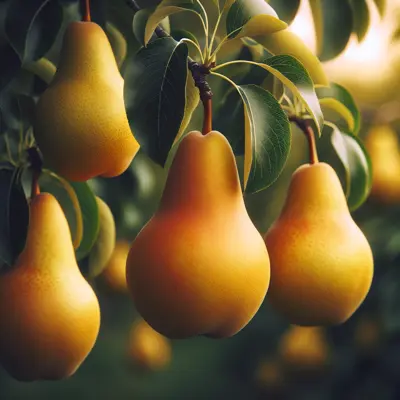
Bartlett Pear
America's most popular pear variety, known for its classic bell shape and incredibly juicy, buttery flesh that melts in your mouth. Also called Williams pear in Europe, Bartlett transforms from green to golden yellow when ripe and fills the air with an intoxicating sweet fragrance. This reliable producer has been the standard for fresh eating and canning for over 200 years.
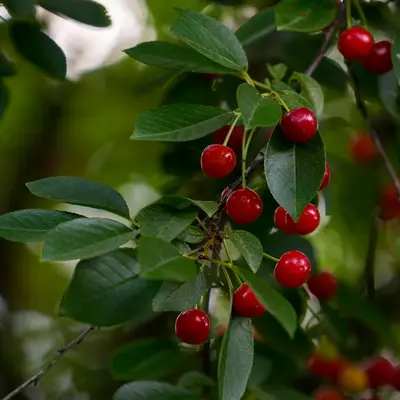
Bing Cherry
The king of sweet cherries with large, heart-shaped fruits that showcase a deep mahogany color and firm, juicy flesh bursting with rich sweetness. Developed in Oregon in the 1870s, Bing cherries are the gold standard for fresh eating and represent everything people love about summer stone fruit. These premium cherries command top prices at farmers markets and grocery stores alike.
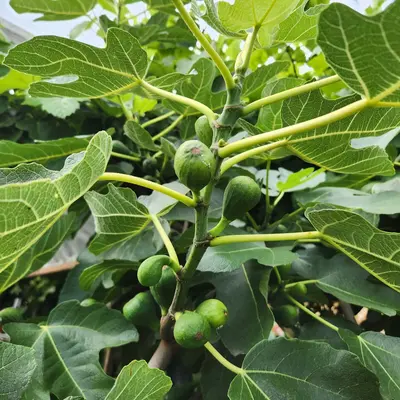
Black Mission Fig
The quintessential California fig that's been beloved for over 200 years, brought by Spanish missionaries. Black Mission produces two crops per year of deep purple, intensely sweet figs with strawberry-red flesh. This vigorous, easy-to-grow variety is incredibly productive and more cold-hardy than most fig varieties.
Brown Turkey Fig
A cold-hardy fig variety that brings Mediterranean flavors to temperate gardens with remarkable reliability. This vigorous grower produces two crops per year of medium-sized, brownish-purple figs with sweet pink flesh that tastes like honey and jam combined. Brown Turkey is incredibly productive and one of the most adaptable figs for home gardeners, even surviving winters in zone 7 with protection.
Early Harvest Apple
One of the earliest ripening apples, this historic American heirloom delivers crisp, tart apples perfect for cooking and fresh eating when you're craving that first taste of apple season. Dating back to the 1600s, this reliable variety thrives in hot, humid climates where many other apples struggle and doesn't require a pollination partner. Its pale yellow fruits have a distinctly refreshing tartness that makes exceptional pies, sauce, and cider.
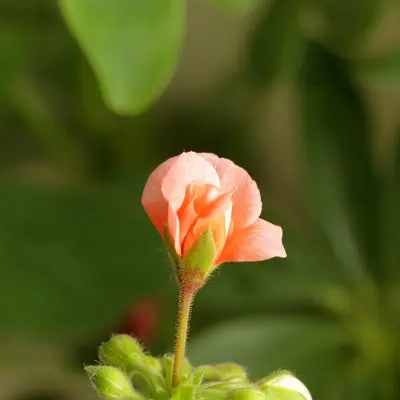
Elberta Peach
The classic American peach that defined what a perfect peach should taste like for over a century. This freestone variety produces large, fuzzy peaches with golden skin blushed with red and incredibly juicy, sweet flesh that epitomizes summer. Elberta remains the gold standard for home peach growing due to its exceptional flavor and reliable production.
Golden Delicious Apple
One of America's most beloved apple varieties, originating from West Virginia in the early 1900s. This self-pollinating tree produces sweet, crisp apples with distinctive golden-yellow skin that's perfect for fresh eating, baking, and sauce making. Known for its reliable production and excellent storage qualities, making it a top choice for home orchards.
Granny Smith Apple
The iconic tart green apple that's a staple in kitchens worldwide, prized for its crisp texture and bright acidic flavor that holds up beautifully in baking. This Australian heirloom produces heavy crops of large, bright green apples that store exceptionally well for months. A reliable performer that's perfect for gardeners who want a classic apple variety that excels in both fresh eating and culinary applications.
Italian Prune Plum
Also known as Fellenberg, this European plum variety is the gold standard for drying into prunes, but fresh fruits are equally delicious with their sweet, rich flavor and firm texture. The oval, purple-blue fruits have golden flesh that's perfect for fresh eating, baking, or preserving. This productive tree is self-fertile and cold-hardy, making it an excellent choice for home orchards seeking a reliable, multipurpose plum variety.
Kieffer Pear
A remarkably hardy and productive hybrid pear that thrives where other pears fail, combining European and Asian pear genetics for superior disease resistance. This vigorous tree produces large, golden-yellow pears with a crisp texture that are excellent for canning, baking, and preserves. Kieffer pears are beloved by home orchardists for their reliability, long storage life, and ability to produce heavy crops even in challenging climates.
Montmorency Sour Cherry
The quintessential pie cherry that produces abundant crops of bright red, tart cherries perfect for baking, preserves, and classic American desserts. This self-fertile variety is incredibly hardy and reliable, thriving in northern climates where sweet cherries struggle. Montmorency cherries are prized by bakers for their ability to hold their shape when cooked and their perfect balance of tartness and subtle sweetness.
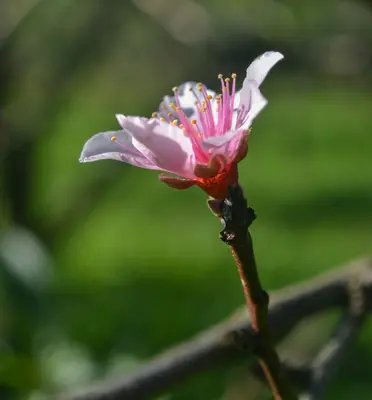
Santa Rosa Plum
Luther Burbank's masterpiece, this Japanese plum variety produces gorgeous deep purple-red fruits with sweet, juicy yellow flesh that epitomizes summer stone fruit perfection. Santa Rosa is one of the most widely planted plum varieties due to its reliable production, excellent flavor, and beautiful appearance that makes it irresistible both in the garden and on the table. This vigorous tree blooms early with showy white flowers and typically produces heavy crops that benefit from thinning.
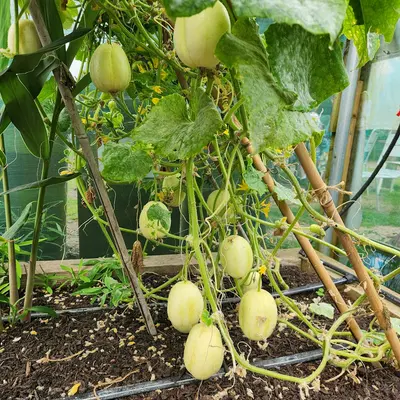
Seckel Pear
Known as the 'Sugar Pear' and 'Wine Pear,' this small American heirloom pear packs incredible sweetness and spicy flavor into a tiny package. Discovered in Pennsylvania in the 1760s, Seckel pears are considered by many to have the finest flavor of all pear varieties, with firm, fine-textured flesh and a distinctive wine-like aroma. Perfect for fresh eating, these petite pears are also exceptional for canning whole and making preserves.
Annual Ryegrass
Ryegrass is a great nitrogen scavenger and can assimilate as much as 200 lb./acre/year of nitrogen. Most of that nitrogen then becomes available to subsequent crops, thus saving on fertilizer input. Annual ryegrass is a very competitive winter annual, with good seedling vigor, fast germination (with adequate moisture) and rapid establishment. Annual ryegrass is a bunch grass, yellowish-green at the base, with long glossy green leaves up to 12" each. It will overwinter in certain years. When used as a cover crop, annual ryegrass is killed in the spring before it reaches seed formation stage. Sow from early spring through late summer. As winter cover, ryegrass will winter kill, but still help protect the soil. Sow, then rake to lightly cover.
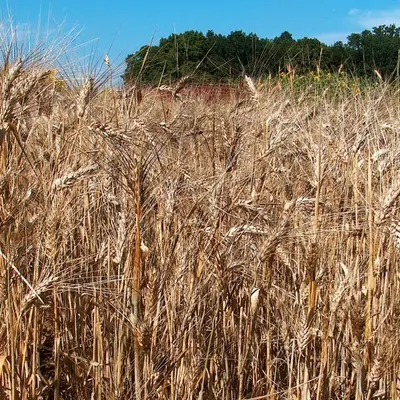
Black Tip Wheat
Very fancy white glumes (kernels) offset by long black awns. Easy textural element for fresh and dried bouquets. Also known as durum wheat.
Feathertop
Masses of white, woolly, nodding, 6" plumes on graceful plants forming 12" clumps. Showy accent in any landscape. Tender perennial in Zones 9-10, but grow as hardy annual.
Frosted Explosion
The airy flower plumes add sparkle to bouquets and landscapes. A productive filler for bouquets, and a carefree bedding plant. For cut-flower production, keep harvested for second and subsequent flushes of stems.
Greater Quaking Grass
1/2-1" long seedheads turn from light green to a beautiful, golden straw color when dried or left on the plants. Stems of these nodding, dancing beauties are a must-have for adding bits of sparkle and detail to design work. Productive plants produce abundant 12-20" long stems useful for fresh or dried cut flowers. The thin stems of this clump-forming grass are best suited for design work and not recommended for when something sturdy is needed. Beautiful addition to containers or garden beds. Might self-sow if seedheads are left on the plants. Tolerant to dry growing conditions once established. Also commonly known as big quaking grass, rattlesnake grass, and large quaking grass.
Green Drops
Stems can be harvested early when bead-like tassels are sparkling bright green. Or for a more autumnal look, harvest a bit later when seed heads have developed hues of purple and gold, and a deeper, graceful arch. Uniform plants can be used fresh or dried. Plumes are approx. 4-7" long, depending on stage of harvest. Similar in appearance to broom corn, but the plants are faster growing, and the plant height and habit are much more manageable.
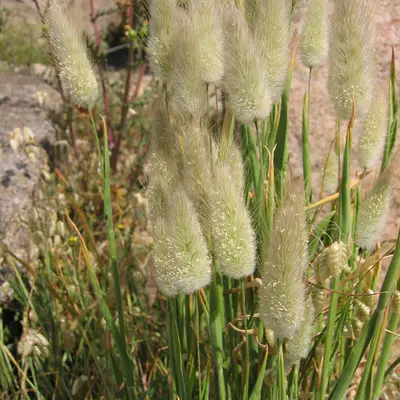
Hare's Tail Grass
Charming, annual ornamental grass grown for its fuzzy, "bunny tail" blooms. 1 1/2-2" long oval, woolly blooms resemble a rabbit's tail. Flowers sit well above a clump of compact, light green grass. Very easy to dry. Holds well when dried; accepts dye readily. Developing flower heads are light green, maturing creamy white to soft wheat in color. Also known as bunny tail grass and rabbit tail grass.
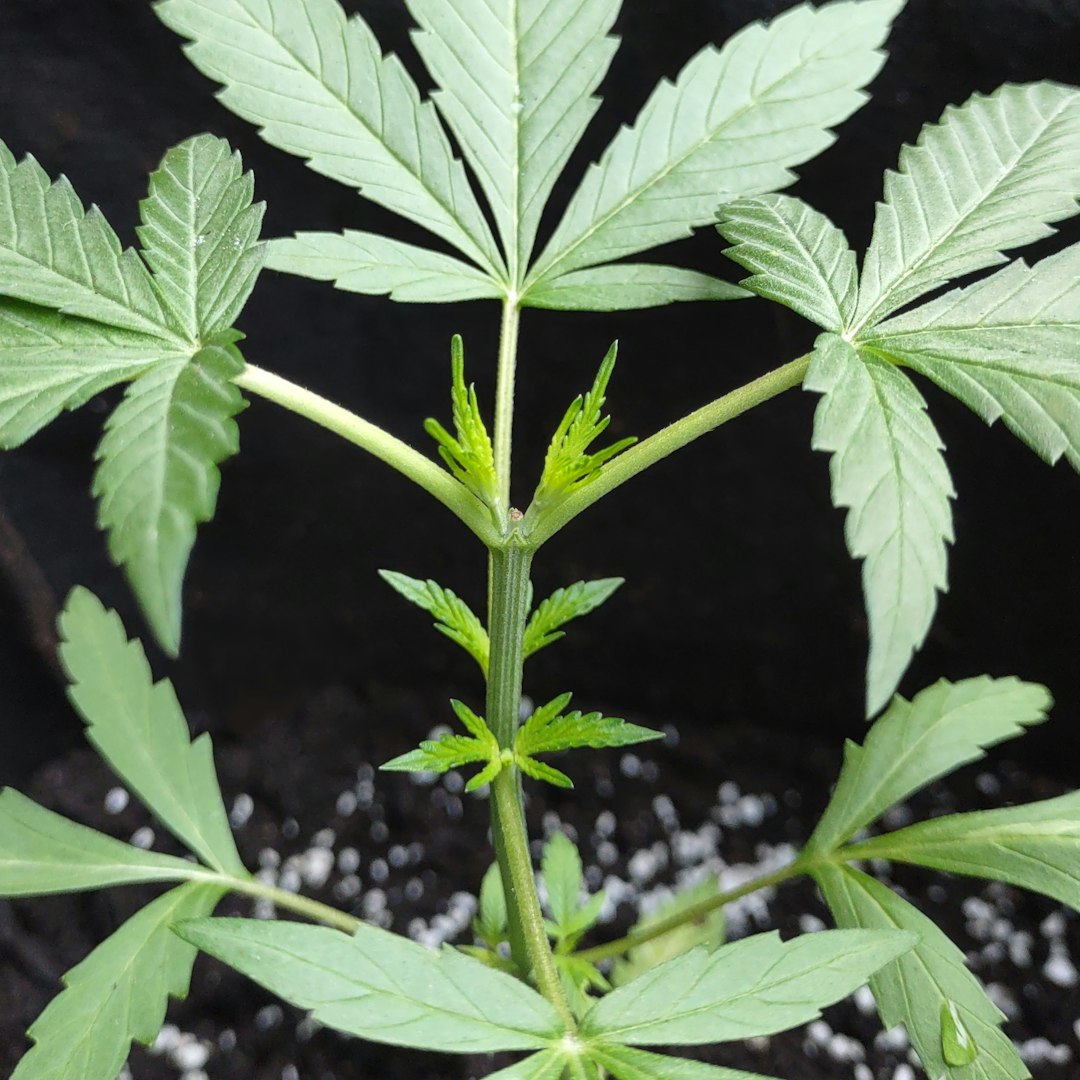
Highlander
3-6" pendulous heads give tapestry-like effect to arrangements.
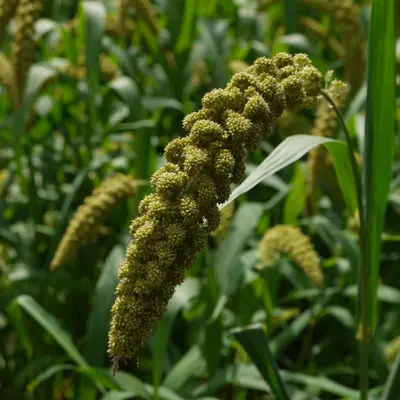
Lime Light Spray Millet
The vibrant lime color is enough to make this variety a keeper but it is also fantastically uniform in height, bloom size and bloom time. The stand is lush and self-supporting, remaining upright.
Lowlander
Easy cut-flower grass that is useful both fresh and dried. Soft, 3-6" pendulous heads.
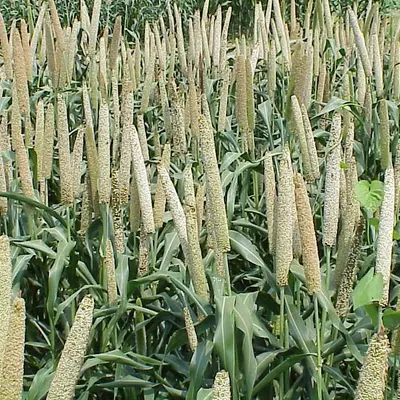
Purple Majesty
Add architecture and color to floral arrangements or containers. Deep purple foliage, stems, and cattail-like spikes. 1-3 main stems and 12-14" secondary plumes. Suited to 4" pots up to gallon containers. Also known as pearl millet. FleuroSelect Gold Award Winner. AAS Winner.
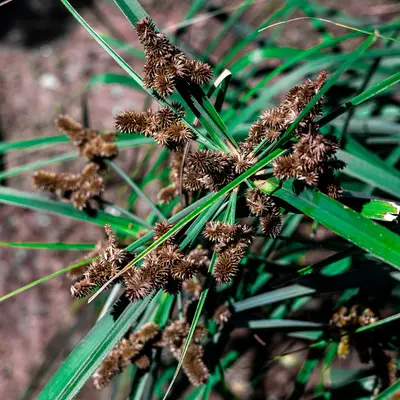
Purple Top Timothy
A premium cool-season grass variety prized for its distinctive purple-tinged seed heads and excellent performance in northern climates. This hardy perennial forms dense, uniform stands that provide excellent ground cover and erosion control. Timothy grass is beloved by wildlife and creates a naturalistic meadow appearance that's perfect for eco-friendly landscaping.
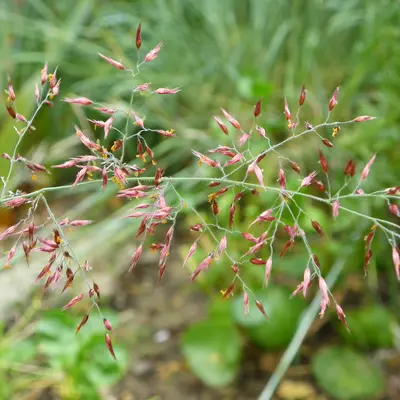
Savannah Grass
This late-season grass is the perfect color for late summer and fall arrangements, containers, and garden beds. 3-6" long, gracefully arched, rose gold to dusty rose plumes can be used as fresh or dried cut flowers. Panicles lighten in color when dried but maintain a rosy hue. 18-24" stems float above the compact, mounded grass clumps, making them easy to pluck from the plants. The thin stems are best suited for design work and are not recommended for when something sturdy is needed. Very attractive in the garden or in containers with sage-green, compact plants and rosy, sparkling plumes that dance in the light. Tender perennial in Zones 9-10, but typically grown as an annual. Also known as ruby grass, pink bubble grass, mountain red top, bristle-leaved red top.
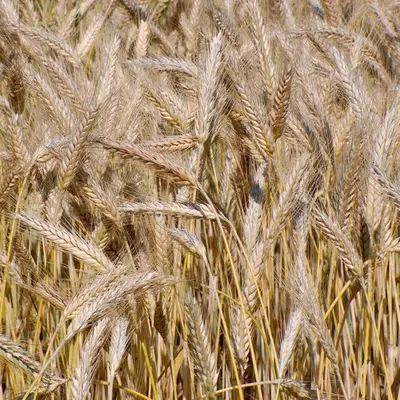
Silver Tip
Green-to-white glumes and awns. 4" heads (not counting the awns). Easy textural element for fresh and dried bouquets. Vigorous wheat/rye cross.
Creeping Thyme
Creeping Thyme is a low-growing ground cover herb that forms dense, spreading mats ideal for rock gardens, pathways, and borders. This heirloom variety matures in 90-95 days and reaches just 6-12 inches tall with delicate, fine-textured foliage. Unlike culinary thyme varieties, it offers a milder, more subtle thyme flavor, making it better suited for ornamental use and gentle seasoning. Hardy and drought-tolerant, it thrives in full sun with well-drained, sandy or rocky soils, even tolerating poor soil conditions. Its prostrate growth habit and ease of care make it an excellent low-maintenance ground cover for gardeners of all skill levels.
Sweet Woodruff
A charming woodland perennial that forms dense mats of star-shaped whorled leaves topped with delicate white flowers in late spring. When dried, the leaves release a sweet vanilla-hay fragrance that has been treasured for centuries in potpourri and traditional May wine. This well-behaved spreader is perfect for naturalizing in shade gardens and won't overwhelm neighboring plants like some ground covers.
Angelica
Large, lobed leaves and thick, hollow stems. Leaves and stalks have sweet flavor. Because Angelica is a biennial, flowering begins early spring of the second year. Large, numerous blooms. Seeds are cold-stored to ensure viability. Blooms make a lovely addition to fresh or dried bouquets. Attracts and feeds beneficial insects and pollinators, including bees, parasitic wasps, lady beetles, minute pirate bugs, syrphid flies, and tachinid flies.

Anise Hyssop
Very aromatic with a sweet, licorice-mint flavor. Vigorous plants produce abundant blooms, attracting bees and other pollinators. Anise hyssop is also known as giant hyssop, blue giant hyssop, fennel giant hyssop, and fragrant giant hyssop.Edible Flowers: Leaves and flowers can be used fresh or dried to flavor drinks, salads, soups, pasta, and desserts.
Arat
Enjoy the flavor of fresh parsley for soups, salads, and stews throughout the winter. Keeps several months when stored in cool conditions. Once roots are established, tops can be used for cooking, with stronger flavor and tougher texture than traditional leaf parsley. Roots are 5-8" long.
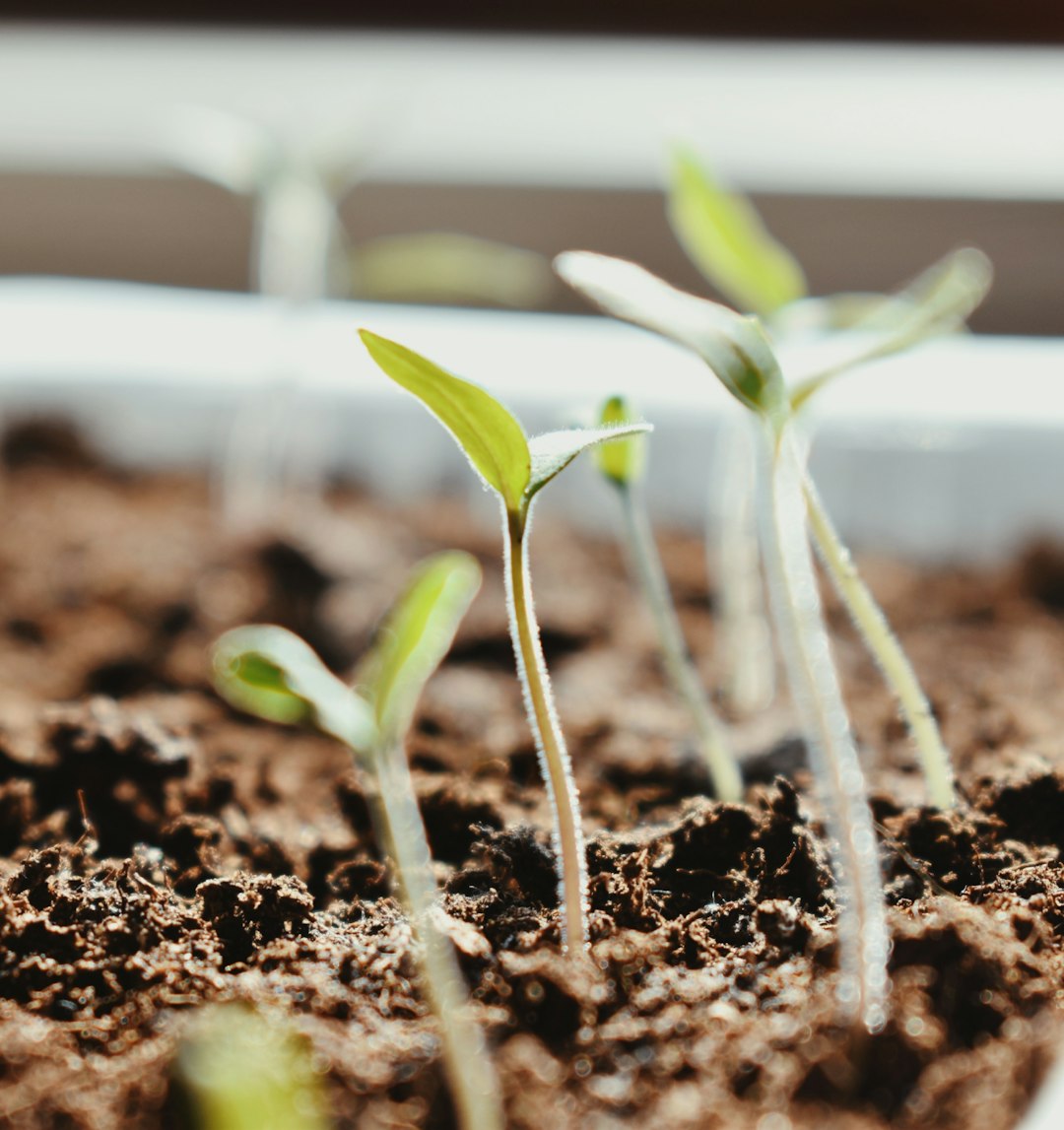
Arterner
Easy to grow once established. White umbel flowers form in spring of second year, attracting beneficial insects, such as hover flies. Harvest seed heads when plump and light brown, hang to dry. Thresh to remove seeds. One plant produces approx. 5 Tbs. of seed. Used in breads and savory dishes to lend an earthy, mild anise flavor.
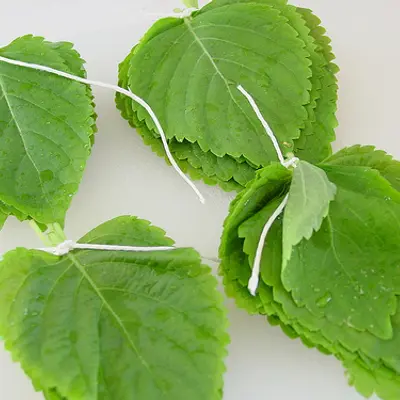
Asia Ip
Leaves are similar to Britton type in shape and size, but are medium green with pink tinge on undersides. Stronger flavor than standard green shiso with uniform, full habit. Edible Flowers: The flowers are a flavorful addition to salads and Asian dishes. Pairs well with fish, rice, noodles, and cucumbers. The minty, basil-like flavor has hints of clove and cumin.
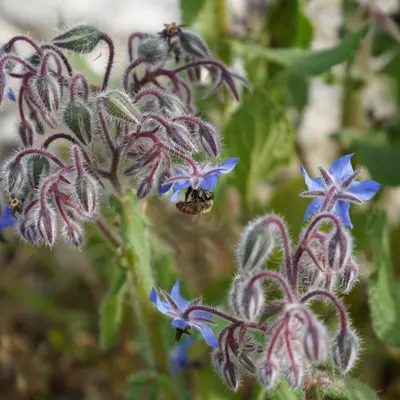
Borage
Large plants bear hundreds of small edible flowers, mostly blue and some pink. Long harvest period. Borage flowers attract bees and butterflies. Also available in organic seed.Edible Flowers: Add the flowers to salads or use to garnish cold drinks and desserts. Freeze as ice cubes. Mild cucumber flavor.
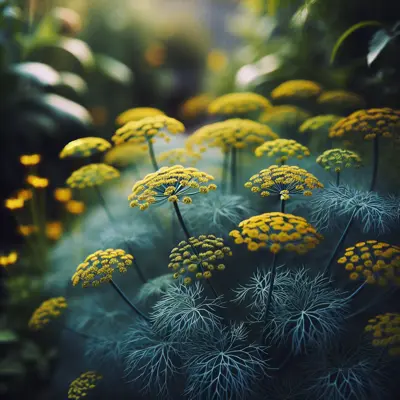
Bouquet Dill
Early flowering plants produce large blooms, seed umbels, and foliage on long stems, making Bouquet the preferred dill for cut-flower use and pickling. Also an economical, fast-growing choice for baby-leaf production. Edible seeds, flowers, and greens flavor many foods. Popular addition to sauces, salads, and soup. Foliage known as dill weed. Edible Flowers: The flowers are used to garnish potato salad, green salads, and pickles. When broken into florets, they can be mixed into a cheese spread or omelet.Also available in organic seed.
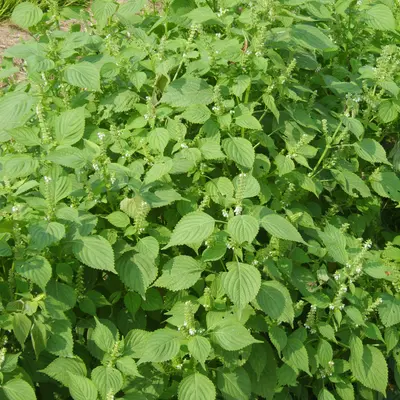
Britton
Good salad mix item, or use larger leaves as sushi wraps or garnishes. Larger leaf and plant than our 'Red' and 'Green' shiso. Mild mint/basil aroma. Also good for ornamental use. Leaves show best color contrast when grown in temperatures below 85°F (29°C). Also known as perilla. Edible Flowers:The flowers are a flavorful addition to salads and Asian dishes. Pairs well with fish, rice, noodles, and cucumbers. The minty, basil-like flavor has hints of clove and cumin.
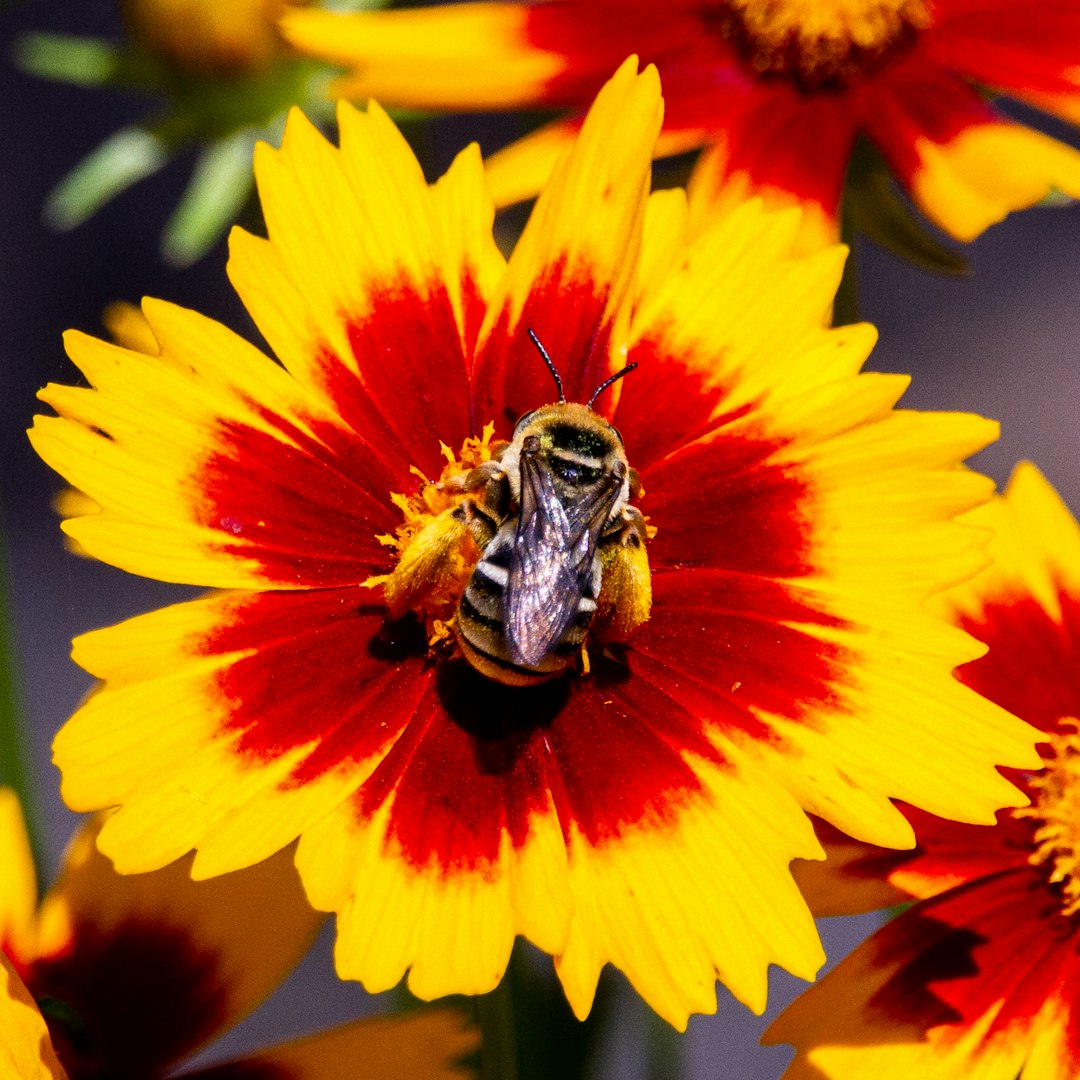
Bronze
Bronze is an heirloom fennel variety prized for its distinctive copper-bronze foliage that sets it apart from traditional green fennel. This productive herb reaches maturity in 50-60 days and develops a sweet anise flavor that evolves from mild in young plants to rich and intensely fragrant when fully mature. The bronze coloring becomes more pronounced as the plant matures, making it visually striking in gardens. Bronze fennel is valued both as a culinary herb for its superior flavor depth and as an ornamental addition to herb and perennial gardens, thriving in full sun with well-drained soil.
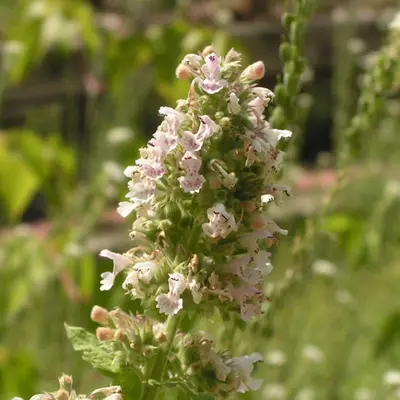
Catnip
Cat-attracting perennial with gray-green leaves and white flowers. Markets for catnip include cat toy crafters, herbal tea companies, and retail plant sales. Flowers are very attractive to bees.
Chocolate Basil
Chocolate Basil is a heirloom herb variety known for its distinctive dark purple-tinged leaves and rich, complex flavor profile. Maturing in 65-75 days, this basil combines traditional sweet basil character with pronounced chocolate, cinnamon, and warm spice notes that become more pronounced as the plant matures. The foliage is dense and aromatic, ideal for culinary applications where its unique flavor complexity elevates dishes, teas, and infusions. Best grown in full sun with rich, well-drained soil, this easy-to-grow variety is prized by gardeners seeking distinctive flavor experiences beyond standard basil varieties.
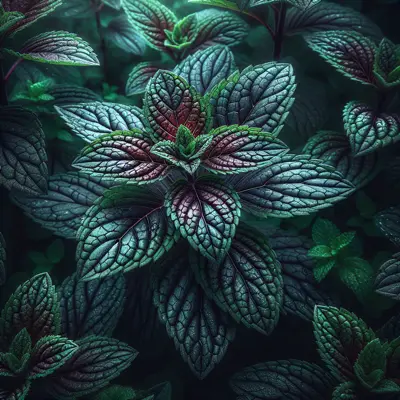
Chocolate Mint
Chocolate Mint is a distinctive heirloom herb variety that matures in 65-75 days, featuring aromatic green foliage with soft, velvety texture. This unique mint hybrid stands out for its exceptional flavor profile: a refreshing cool mint taste with prominent chocolate undertones and a subtle sweet finish, making it ideal for both culinary applications and specialty beverages. Despite its rich flavor complexity, Chocolate Mint remains easy to grow, thriving in full sun with well-drained, moist soil. The plant tolerates heavy clay conditions well, making it adaptable to various garden settings.
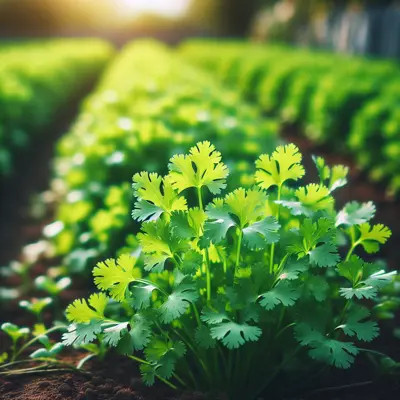
Cilantro
Cilantro is a delicate leafy herb with feathery, triangular green foliage that reaches harvest maturity in 16-25 days. The plant produces thin, lacy stems bearing distinctive serrated leaves with a bright, citrusy flavor profile that carries subtle soapy notes and fresh herbal undertones. Cilantro thrives in full sun to partial shade and prefers well-drained, fertile soil. As a quick-maturing heirloom variety, it's ideal for succession planting throughout the growing season. Widely used in Latin American, Asian, and Mediterranean cuisines as a fresh garnish and flavor component in salsas, curries, and chutneys.
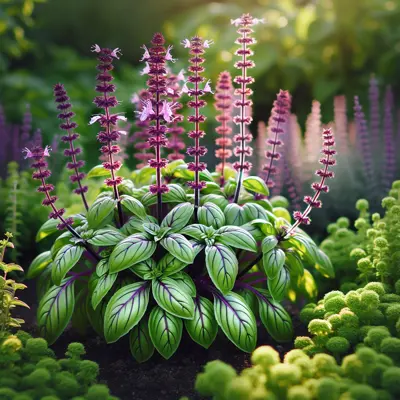
Cinnamon Basil
Tall, fast-growing plants have distinctive violet stems, veining, and flower bracts with lavender blooms and 2" long leaves. Beautiful in casual flower bouquets. Ht. 26-30".Edible Flowers: Use the flowers in any recipe that calls for basil, or to garnish drinks, salads, soups, pasta, and desserts. Flavor is of intense basil with a note of mint, anise, and cinnamon.
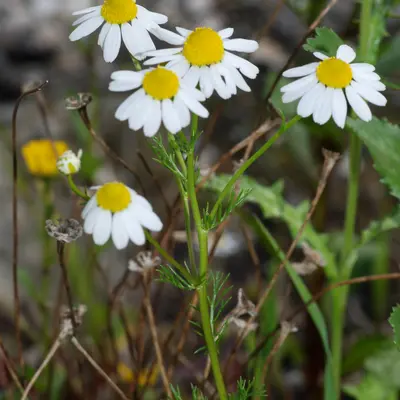
Common Chamomile
Good yields of small, sweet-smelling, daisy-like flowers. Tea made from the flowers aids digestion and acts as a gentle sleep inducer. Harvest using the Chamomile Rake. Also known as German chamomile and Hungarian chamomile.Edible Flowers: The flowers can be used to garnish salads, desserts, and drinks. Flavor is slightly sweet and of chamomile.
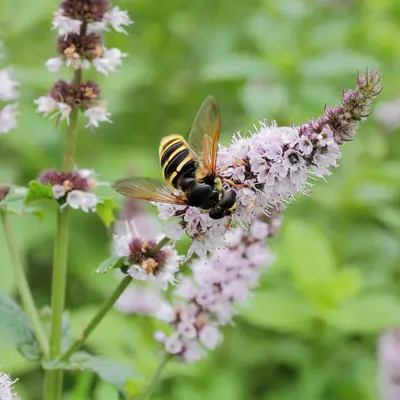
Common Mint
Use to flavor salad mix, main dishes, ice cream, and drinks. Variety not stated since mint does not grow true-to-type from seed. Edible Flowers: The flowers add a minty flavor to salads, soups, desserts, and drinks.
Common Thyme
Common Thyme is a compact, woody perennial herb with tiny, narrow green leaves and delicate pink or purple flowers. Reaching maturity in 90-95 days, it becomes a robust ground cover perfect for edging and containers. This Mediterranean native thrives in poor, well-drained soil and is remarkably cold-hardy. Its earthy, minty flavor with warm, pungent undertones makes it essential for cooking—particularly valued in French cuisine and Mediterranean dishes. More cold-tolerant than most culinary herbs, Common Thyme delivers consistent flavor year-round and rarely suffers from serious pest issues.
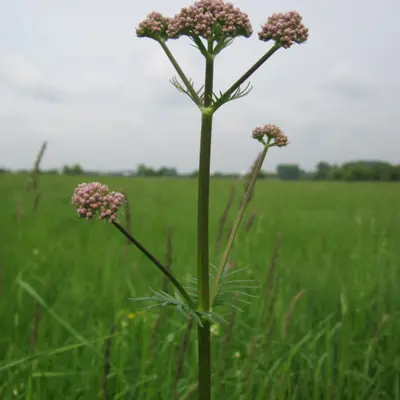
Common Valerian
Common variety, naturalized in some areas. Root used for anxiety, insomnia, and pain relief. Also known as garden heliotrope, cat's valerian, setwell, and St. George's herb.
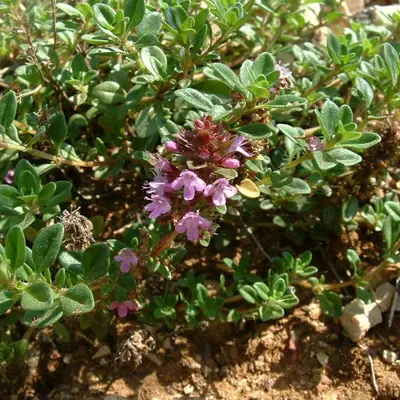
Creeping
Creeping is an heirloom herb variety characterized by its low-growing, spreading growth habit that makes it ideal for ground cover or container cultivation. Reaching maturity in 90-95 days, this easy-to-grow herb thrives in full sun and well-drained soil while tolerating poor soil conditions remarkably well. The creeping form sets it apart from upright varieties, offering both ornamental appeal and practical utility in herb gardens.
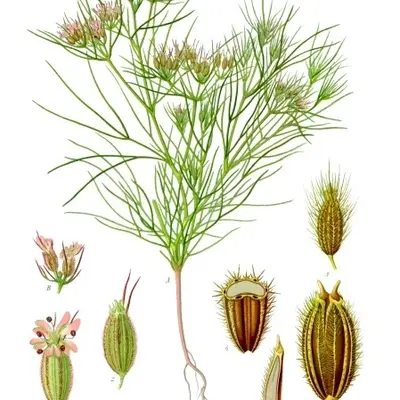
Cumin
Fragrant, ferny foliage is similar to dill. Young leaves make a nice addition to salad mixes. Grows best in warmer climates, but will produce seeds in northern areas if started early. Medicinal: Seed aids digestion.
Cutting Celery
Easier to grow than standard celery. A versatile ingredient for salads, soups, stews, and vegetable medleys. Can be marketed in bunches or salad mixes. Also known as leaf celery. Also available in organic seed.
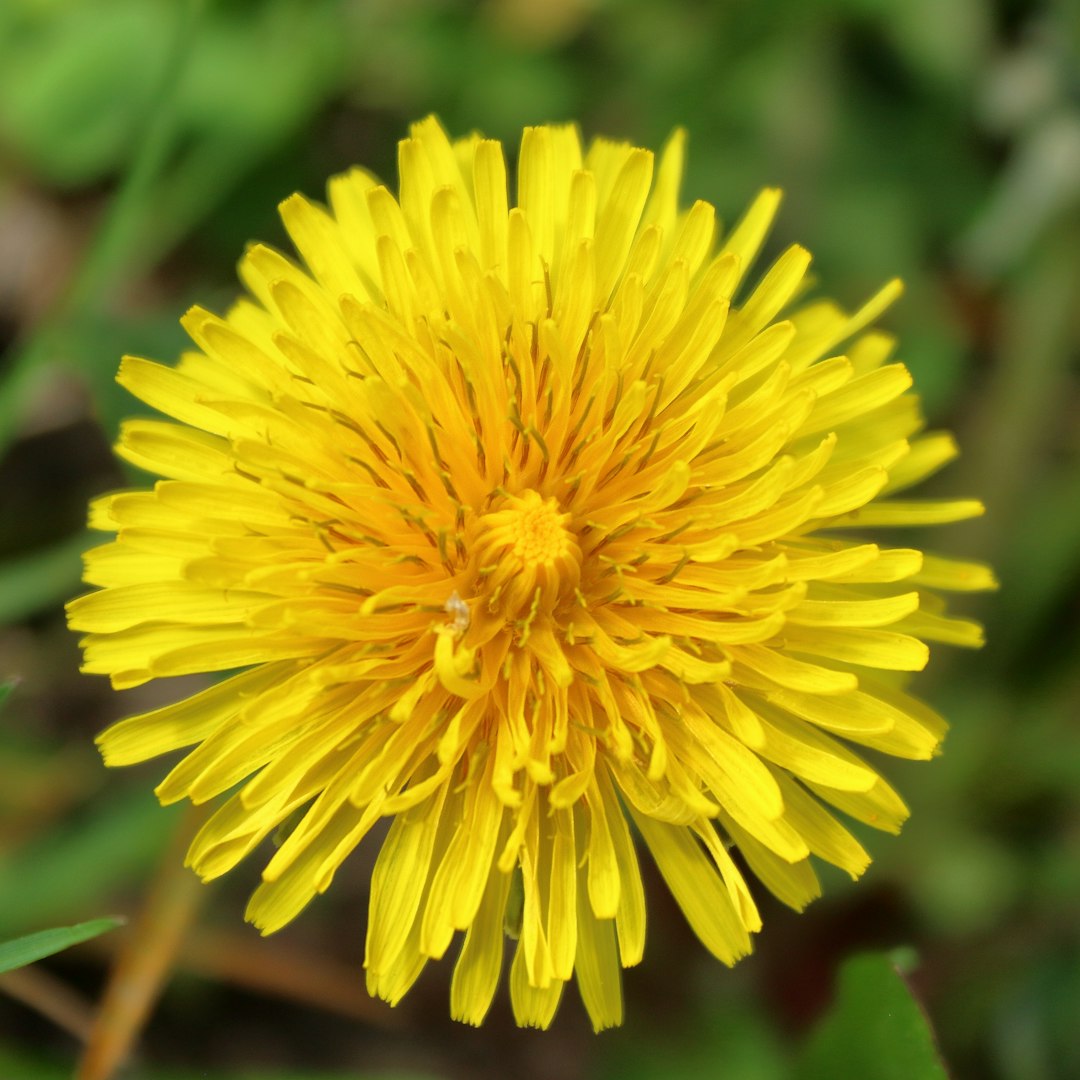
Dandelion
Young leaves are used in salads. Roots are roasted for a coffee substitute.
Darki Green
A very dark green selection of the Moss Curled type. Use it for garnishes, salads, and cooking. It performs well in containers and the field, allowing for multiple cuttings per season from one planting. Upright leaves make harvesting easy. Tolerates light frost. Curled-leaf type. Ht. 12-16".
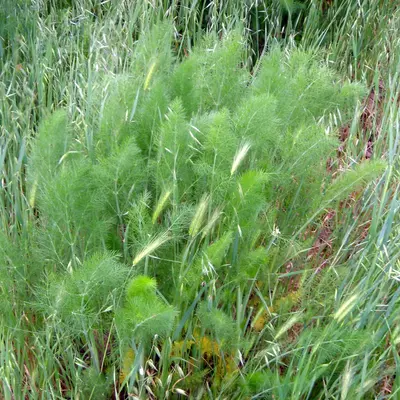
Dragon
Well-known for its beautiful magenta-purple skin and broad, Chantenay-type shoulders. Slicing reveals a surprise of orange or yellow interior, sometimes both. Very thin, smooth skin makes Dragon easier to wash and serve unpeeled than other purples. Roots hold well in the field. Tops are strong and vigorous in early growth to compete with weeds. Internal color will vary. Avg. 5-7" long. Originally bred by the late Dr. John Navazio. Kuroda x Chantenay type. Also available with NOP-compliant pelleting.
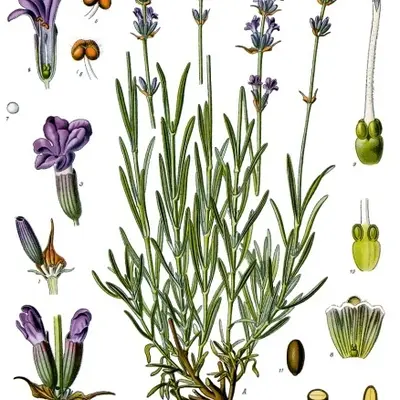
Ellagance Purple
Deep purple flowers bloom the first year on large dense spikes. Plants are bushy, uniform, and well-branched. An alternative to vegetative varieties. Winter hardy in Zones 5-7. FleuroSelect Gold Award Winner. Edible Flowers: The flowers can be used to garnish desserts and as a distinct flavor element in baked goods. Flavor is sweet and floral and pairs well with citrus, berries, nuts, mint, and cinnamon.
English Lavender
A compact, hardy lavender variety that's perfect for beginners and produces fragrant purple flower spikes beloved by bees and butterflies. This drought-tolerant perennial offers the classic lavender fragrance that's perfect for sachets, cooking, and aromatherapy while forming neat, silvery-green mounds in the garden. Munstead is one of the most cold-hardy lavender varieties, making it suitable for northern climates.

Fennel Bronze
Bronze-colored leaves and stems. Add sweet, fennel flavor to desserts, and color to light-colored fish. NOTE: Fennel flavor develops and intensifies as plants mature. Fennel at the micro stage can be quite mild in flavor. Adding a few days to crop time (after the first true leaf appears) can intensify the flavor.
Fernleaf Dill
Abundant dark blue-green foliage. Great in containers or in small spaces. AAS Winner. Ht. 6-8".
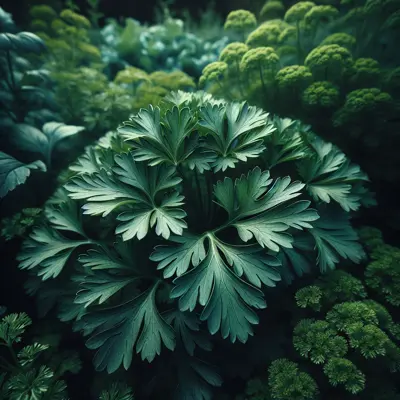
Flat-Leaf Parsley
Also known as Italian parsley, this variety offers superior flavor compared to curly parsley with its clean, bright taste that doesn't overpower dishes. The flat, deeply-cut leaves are easier to chop and provide a fresh, grassy flavor that's essential in Mediterranean cooking. This hardy biennial is incredibly productive and continues growing through light frosts, making it a kitchen garden staple.
French Tarragon
The aristocrat of culinary herbs, true French tarragon is essential for classic French cuisine with its distinctive anise-like flavor and sophisticated aroma. Unlike Russian tarragon, this sterile variety must be grown from cuttings and offers incomparably superior flavor. A must-have for serious cooks who want to create authentic béarnaise sauce and fine herb blends.
Garden Sage
High essential oil content of 1.5-2.0%. Robust, uniform plant. Also known as garden sage. Edible flowers: Use as garnish, or as an ingredient in rice, egg, or cheese dishes.
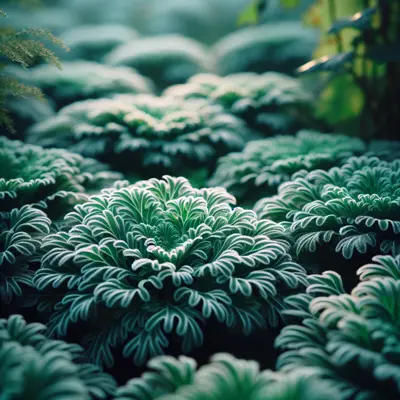
Garland Chrysanthemum
Garland Chrysanthemum is a tender, leafy herb with finely divided, feathery foliage that reaches maturity in 30-50 days. Also known as shungiku or edible chrysanthemum, this heirloom variety produces delicate, deeply lobed leaves with a distinctive mild, slightly bitter flavor. The fresh, herbal notes carry subtle hints of chrysanthemum flowers, making it prized in East Asian cuisines for both raw salads and cooked applications. This versatile herb thrives in cool seasons and is remarkably easy to grow, tolerating partial shade while preferring rich, well-draining soil enriched with organic matter.
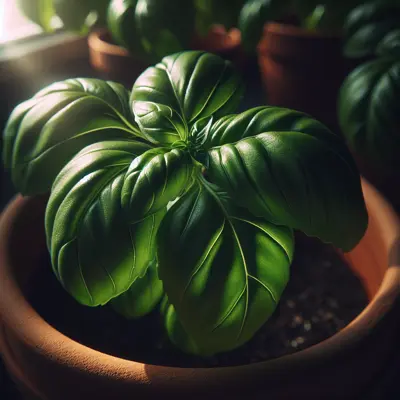
Genovese Basil
Authentic flavor and appearance. Tall and relatively slow to bolt with large dark green leaves about 3" long. This common strain of Genovese basil can present some variability in leaf shape and plant size. While quite suitable for field and garden, we recommend using a more modern and more uniform variety for greenhouse, container, or hydroponic production, such as Genovese Compact Improved, Aroma 2, Nufar, Dolly, or the Prospera® series. Ht. 24-30".Edible Flowers: Use the flowers in any recipe that calls for basil, or to garnish drinks, salads, soups, pasta, and desserts. Flavor is of intense basil.Also available in organic raw and pelleted seed.

German Chamomile
The classic tea herb beloved for its apple-scented flowers and gentle, soothing properties that have been treasured for centuries. This delicate annual produces masses of small, daisy-like flowers with white petals and bright yellow centers that can be harvested continuously throughout the growing season. Easy to grow and self-seeds readily, creating a charming cottage garden atmosphere while providing homegrown herbal tea.
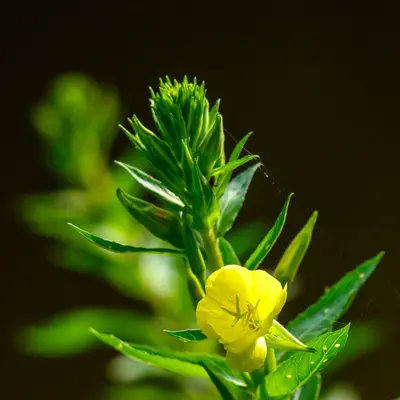
German Thyme
German Thyme is a classic heirloom herb variety prized for its robust, earthy flavor profile with subtle hints of mint, clove, and camphor. This hardy perennial produces fine, needle-like foliage on compact woody stems and reaches maturity in 90-95 days. A defining characteristic is its exceptional cold hardiness and ability to thrive in poor, sandy, or rocky soils with minimal care. Its strong, complex flavor makes it particularly valuable for culinary applications in soups, stews, roasted vegetables, and herbal tea blends. Generally pest-resistant, though spider mites may appear in intense heat.
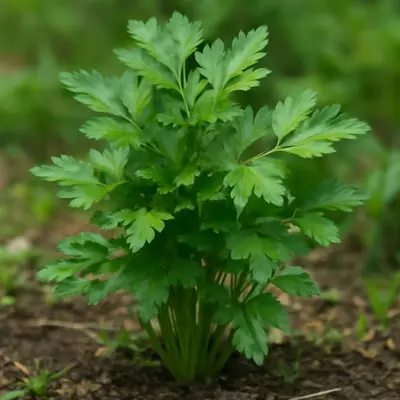
Giant of Italy
Huge dark green leaves with great flavor. Strong, upright stems make Giant of Italy one of the best parsley varieties for fresh-market sales. Very high-yielding flat-leaf type. Ht. 18-20".
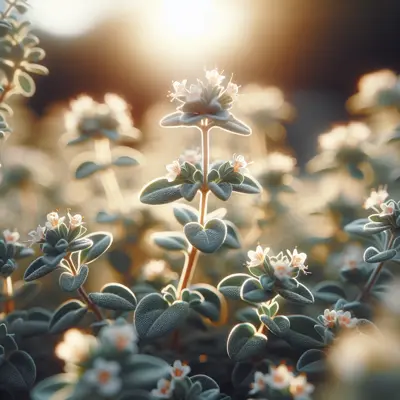
Greek Oregano
Strong oregano aroma and flavor - great for pizza and Italian cooking. Characteristic dark green leaves with white flowers. Attracts Beneficial Insects: provides pollen and nectar for beneficial insects such as bees, hoverflies, lacewing larva, parasitic wasps, and tachinid flies. Edible Flowers: The flowers have an oregano flavor and can be used in the same manner as the herb. They are especially good in pasta salads, green salads, and as a fresh pizza topping.
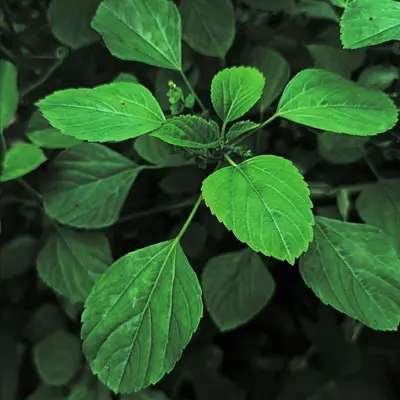
Green Shiso
Distinct cinnamon/clove flavor and aroma with the spiciness of cumin. Used in Asian cooking, sushi, and salad mix. Also known as perilla. Edible Flowers: The flowers are a flavorful addition to salads and Asian dishes. Pairs well with fish, rice, noodles, and cucumbers. The minty, basil-like flavor has hints of clove and cumin.
Grosfruchtiger
Nonbulbing type. We found Grosfruchtiger to be the most flavorful fennel in our trials. Leaves are a nice addition to salads, coleslaw, and dressings.Flavor in fennel develops and intensifies as plants mature. Very young plants (baby-leaf stage) will have a mild fennel flavor, while mature plants (8-12" tall) will have a fuller fennel flavor. Edible Flowers: The florets are used to garnish savory dishes, and pair well with fish, potato, tomato, and beef dishes. Flavor is of sweet anise.
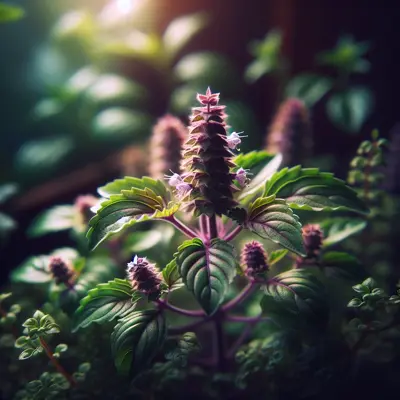
Holy Basil
1 1/2" long green leaves, with purple stems. Known for its use in Hindu culture and Ayurveda. Also known as Tulsi. A common ingredient in Thai cuisine and in teas. Used medicinally for digestion and immune system support. Ht. 16-22".
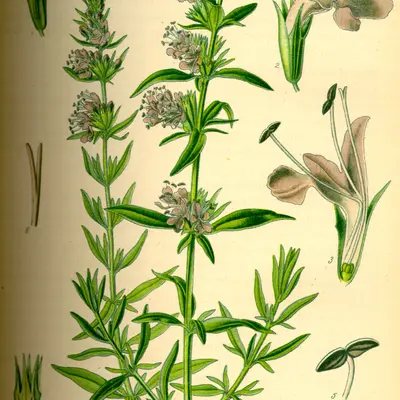
Hyssop
Mint family plant has bright blue-violet flowers. Popular ornamental for the perennial bed. Tea has a soothing quality.
Italian Large Leaf Basil
Italian Large Leaf Basil is a classic heirloom herb prized for its broad, tender leaves and intensely aromatic, sweet basil flavor with subtle hints of anise and pepper. Reaching maturity in approximately 74 days, this variety produces robust plants suited for full sun to partial shade conditions. The large leaves make it exceptionally practical for culinary applications—ideal for fresh use in pesto, Italian dishes, and salads. Unlike compact basil varieties, its generous leaf size reduces preparation time while delivering the authentic, complex flavor profile that defines traditional Italian cooking.

Italian Large Leaf Oregano
Italian Large Leaf Oregano is a heirloom herb prized for its substantial, broad foliage and intense aromatic quality. Reaching harvest maturity in approximately 74 days, this variety thrives in full sun to partial shade with minimal soil requirements. Its defining characteristic is the larger leaf size compared to common oregano varieties, making harvesting easier. The flavor profile is intensely aromatic with warm, slightly bitter notes and distinctive pine undertones, making it ideal for Mediterranean cooking, especially Italian cuisine. Hardy and easy to grow, it's equally suited to herb gardens and containers.
Japanese Shiso Green
An essential Asian herb with distinctive serrated leaves that provide a unique flavor combining mint, basil, and anise notes with a slight cinnamon finish. Widely used in Japanese, Korean, and Vietnamese cuisines, this fast-growing annual is prized for wrapping sushi, pickling, and adding aromatic complexity to Asian dishes. Both the leaves and flower spikes are edible and highly flavorful.

Japanese Shiso Purple
An exotic and stunning herb that's essential in Japanese cuisine, featuring deeply serrated purple leaves with a complex flavor profile. This beautiful annual combines the appearance of an ornamental plant with incredible culinary versatility. Shiso adds both visual drama and unique taste to gardens and dishes alike.
Kapoor Tulsi (Holy Basil)
Compact but very full, attractive plants. Mild spicy aroma with hints of sweetness. Faster growing than green holy basil, and its purple flowers also make it a nice beneficial and/or ornamental. For teas, culinary, and medicinal use. Appears to have some resistance to downy mildew in our trials. Also known as "Spice Basil" and often referred to as Ocimum sanctum, although sanctum is not botanically correct. Ht. 12-18".
Katinka
Upright, tall plants make Katinka easy to harvest. Dark green curled leaves with a uniform canopy. Suitable for field or container production. Mild and pleasant parsley flavor. Katinka is very similar to Wega with the primary difference being that Katinka is taller for optimal bunch harvest and productivity in the field. Curled-leaf type. Ht. 14-20".
Lemon Balm
Lemon Balm is a vigorous perennial herb with soft, crinkled green leaves and small white or pale pink flowers. Reaching full maturity in 70 days, this heirloom variety thrives in full sun to partial shade and adapts well to most soil types. Distinguished by its intensely aromatic foliage releasing a powerful lemon scent when brushed, Lemon Balm delivers a refreshing citrus flavor with subtle minty undertones. Its strong essential oils naturally repel common pests like aphids and spider mites, making it exceptionally pest-resistant. Ideal for teas, cocktails, desserts, and fresh culinary applications.

Lemon Grass
Our seeds have been carefully cleaned to remove the chaff (seed coat material), resulting in a higher germination rate. A delicious addition to soups, curries, teas, and any other dish calling for lemon grass. Essential oil distilled from this variety contains large amounts of citral and geraniol and can be used for flavorings, perfumes, and insect repellent. 6-12 stalks per plant, depending on growing climate.
Lemon Thyme
Lemon Thyme is a fragrant heirloom herb variety that grows as a low, spreading perennial with fine, narrow green leaves and delicate pink flowers. Reaching maturity in approximately 65 days, it produces harvestable foliage suitable for continuous picking. This variety distinguishes itself through its distinctive bright citrus aroma and flavor—a harmonious blend of classic thyme earthiness with zesty lemon notes. The herb thrives in full sun with excellent drainage and performs best in sandy or rocky soil. Its unique flavor profile makes it ideal for culinary applications in fish dishes, beverages, desserts, and Mediterranean cooking, while also serving ornamental and medicinal purposes.
Lemon Verbena
No herb delivers a more intense, pure lemon fragrance than Lemon Verbena, making it indispensable for teas, desserts, and potpourri. This South American native produces narrow, lance-shaped leaves that release their incredible citrus scent at the slightest touch. While it requires protection from frost, its unmatched lemon flavor and aroma make it worth the extra care for any serious herb gardener.
Lime Basil
Adds a unique flair to cocktails, fish, and salads. Compact plant has 2" long bright-green leaves. Ht. 16-20".Edible Flowers: Use the flowers in any recipe that calls for basil, or to garnish drinks, salads, soups, pasta, and desserts. Flavor is of intense basil and citrus.
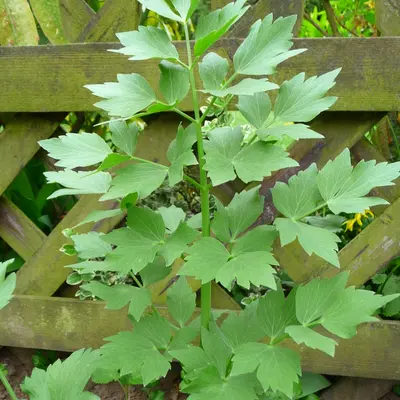
Lovage
Young leaves taste like celery with a hint of anise, and are used in spring tonic salads and with potato, rice, soups, and poultry dishes. Roots and young stems are also edible. Young stems can be cut, peeled, and used in salads. Stems are smooth, hollow, and thick. Also available in organic seed. Attracts Beneficial Insects: If allowed to flower, provides pollen and nectar for beneficial insects such as bees, hoverflies, lacewing larvae, lady beetles, parasitic wasps, and tachinid flies.

Mammoth Dill
Mammoth Dill is a vigorous heirloom herb variety known for its tall, robust growth and abundant foliage. Plants reach full maturity in approximately 90 days, producing large, feathery fronds that tower above standard dill varieties. The distinctive flavor combines fresh, tangy notes with subtle caraway undertones and a hint of sweetness, making it exceptional for pickling, dill weed, and culinary applications. Mammoth Dill thrives in full sun with rich, well-drained soil and is remarkably easy to grow, making it ideal for both experienced and novice gardeners seeking impressive yields.
Menuette
The deeply incised, feathery, narrow leaflets are easy to chop during kitchen prep and make an elegant garnish or bunch. Delicate in appearance but firm enough to stand up to handling, packing, and plating. Standard parsley flavor. Suitable for field or pot production. Has shown some resistance to tipburn in our trials. Ht. 12-18".
Mexican Mint Marigold
Mexican Mint Marigold is a tender perennial herb with delicate, feathery foliage and small golden-yellow flowers. Reaching maturity in 80-90 days, this heirloom variety is prized for its distinctive sweet anise-tarragon flavor with licorice notes that intensify when flowers bloom. The taste makes it an excellent fresh herb for desserts, beverages, and culinary garnishes. Extremely easy to grow, it thrives in full sun with well-draining soil and tolerates poor soil conditions. Naturally pest-resistant and low-maintenance, it's ideal for both novice and experienced gardeners seeking a unique, flavorful herb with ornamental appeal.
Mexican Tarragon
Mexican Tarragon is an easy-to-grow heirloom herb that reaches maturity in 80-90 days. This tender perennial features delicate, feathery foliage with small yellow flowers and grows well in full sun with well-draining soil, tolerating poor soils and clay. Unlike French tarragon, Mexican Tarragon offers a distinctive sweet anise flavor complemented by subtle marigold notes, making it ideal for culinary applications requiring tarragon's licorice character with added complexity. The plant is notably pest-resistant and deer-proof, requiring minimal maintenance once established.
Moroccan Mint
The traditional mint of North African tea culture, prized for its intensely sweet flavor and exceptional fragrance. This spearmint variety produces vibrant green leaves with a refreshing, clean taste that's less aggressive than peppermint. Perfect for the classic Moroccan mint tea and a beautiful, aromatic addition to any herb garden.
Mrs. Burns' Lemon
Very bright green, 2 1/2" long leaves with white blooms make this basil both attractive and intensely flavorful. Ht. 20-24".Edible Flowers: Use the flowers in any recipe that calls for basil, or to garnish drinks, salads, soups, pasta, and desserts. Flavor is of intense basil and citrus.

Munstead-Type
A strain of English lavender with a compact, bushy habit. Nice range of bloom colors, from pale blue to dark violet. Usually begins flowering in the second year. Hardy in Zones 5-8, but can survive Zone 4 winters when mulched or grown in a well-drained, south-facing location. Also available in organic seed. Edible Flowers: The flowers can be used to garnish desserts and as a distinct flavor element in baked goods. Flavor is sweet and floral and pairs well with citrus, berries, nuts, mint, and cinnamon.
Orange Mint
Orange Mint is a vibrant heirloom herb variety that matures in 85-95 days, producing lush green foliage with aromatic leaves. This distinctive mint variety stands apart with its unique flavor profile—fresh mint paired with bright citrus notes reminiscent of orange and subtle bergamot undertones, making it exceptional for teas, cocktails, and culinary garnishes. Best grown in full sun (6+ hours daily) with rich, moist, well-drained soil, it thrives easily in most conditions. Watch for common mint pests including aphids, spider mites, and flea beetles.
Orange Thyme
Upright, branching plants produce gray-green leaves. The aroma is sharp and citrus-like. Orange Thyme is distinctly sweeter and less pungent than German Winter and Summer thyme. Growth habit and winter hardiness are similar to Summer thyme. Tender perennial in Zones 6-8. Also known as Orangelo thyme.
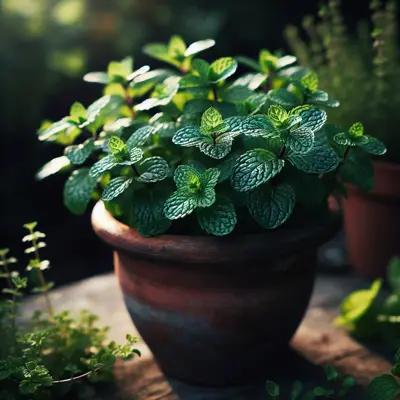
Peppermint
Peppermint is a vigorous herbaceous perennial reaching 24-36 inches tall with dark green, lance-shaped leaves and purple-tinged stems. Mature leaves are ready to harvest at 60-90 days, though plants produce continuously through the growing season. The defining characteristic is its intense, cooling menthol profile with pronounced sweet undertones, making it ideal for tea, culinary applications, and medicinal preparations. More potent than spearmint, peppermint thrives in moist, rich soil and tolerates partial shade, though it prefers 4-6 hours of sun daily. This heirloom variety is notably easy to grow and propagate.
Pineapple Sage
A spectacular perennial herb with heart-shaped leaves that smell exactly like fresh pineapple when crushed, followed by brilliant red tubular flowers that hummingbirds absolutely adore. This fast-growing sage variety brings tropical fragrance to temperate gardens and offers a unique fruity flavor unlike any other herb. The stunning late-season blooms make it a standout in both herb and ornamental gardens.
Porto Spineless
The midrib and leaf stalks of cardoon have a similar flavor to artichoke when boiled (not for eating raw). Both portions are commonly used as a side vegetable, addition to stuffing, or in soups and stews. Cardoon must be blanched before it can be eaten. To blanch, tie the stalks up firmly and wrap with black plastic or black-and-white newspaper. If left unharvested, the 3-4' tall plants will produce large purple thistle-like flowers. The sharply lobed and serrated silver-green leaves are a unique addition to flower arrangements. Significantly reduced spines. Perennial in Zones 6-10.
Red Shiso
Distinct cinnamon/clove flavor and aroma with the spiciness of cumin. Used in Asian cooking, sushi, and salad mix. Red shiso adds brilliant color to radish pickles and umeboshi plums. Also known as perilla. Edible Flowers: The flowers are a flavorful addition to salads and Asian dishes. Pairs well with fish, rice, noodles, and cucumbers. The minty, basil-like flavor has hints of clove and cumin.
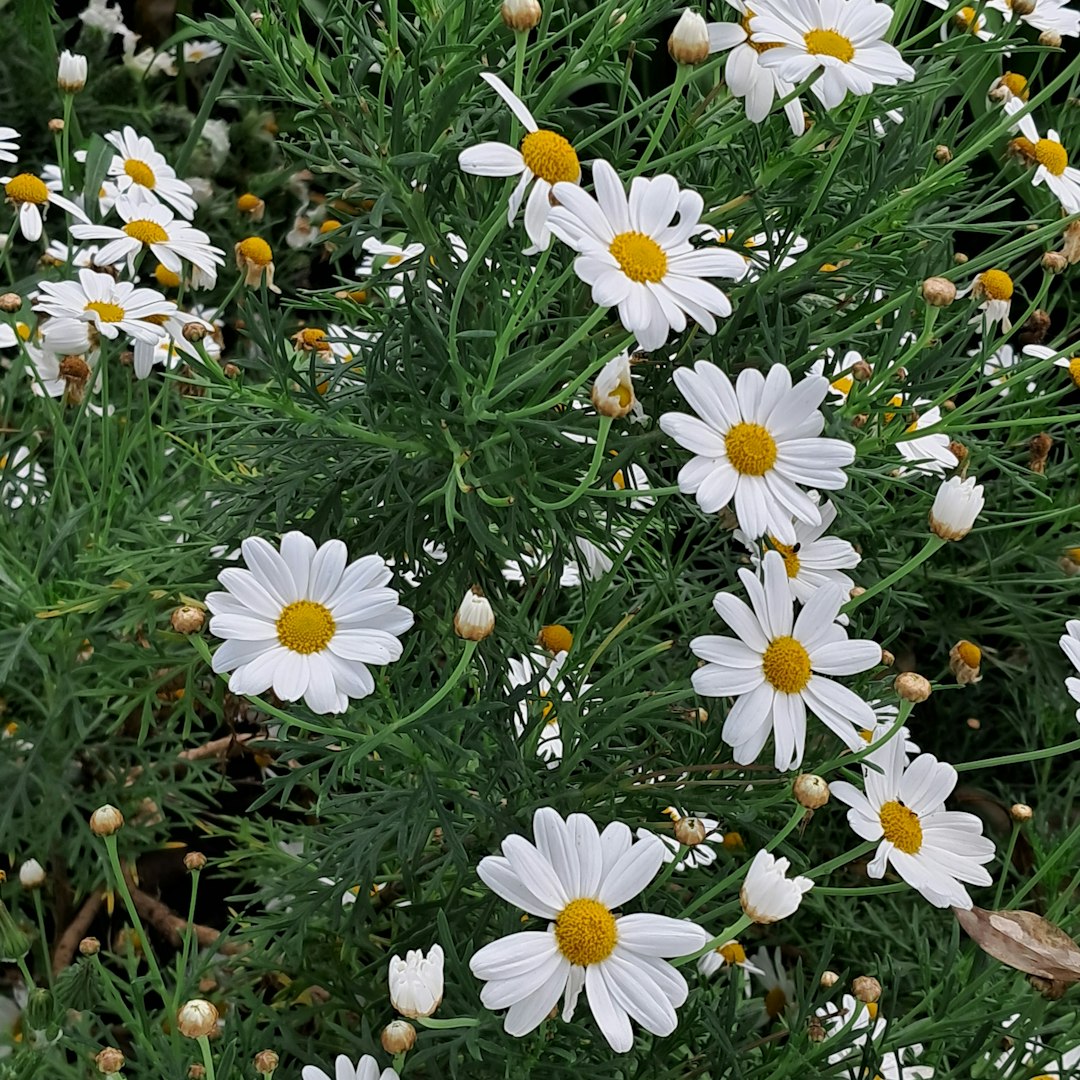
Roman Chamomile
Low-growing, spreading plant with creeping rhizomes. Has similar uses for teas and medicine as annual chamomile varieties, but produces fewer blossoms.
Rosemary
Native to the Mediterranean region, rosemary has silvery needle-like foliage and delicate flowers. Popular for potted plant sales and with chefs. NOTE: Germination is naturally low and variable. Edible Flowers: Although the flowers are small, they have a bold rosemary flavor. They should be used fresh as a garnish for savory dishes and salads, and pairs well with roasted vegetables, fruits, or whipped cream.
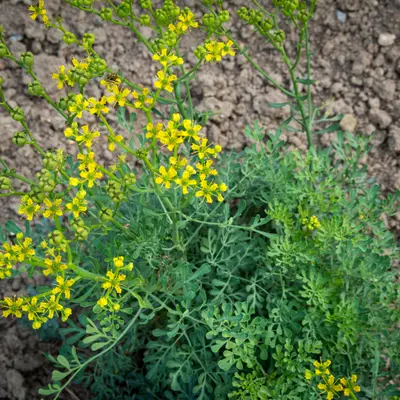
Rue
Bushy habit is ideal for short hedges or borders. Unique and attractive foliage makes a useful cut flower filler, lasting for up to three weeks in a vase. Pungent aroma. Limited culinary use due to strong bitter flavor. Medicinal: Warming herb primarily used as an antispasmodic. Perennial in Zones 4-9.
Russian Tarragon
A hardy perennial herb that thrives in cold climates where French Tarragon struggles, though with a milder anise flavor. Russian Tarragon is incredibly easy to grow from seed and forms robust clumps that return year after year, making it perfect for beginning herb gardeners seeking a reliable tarragon experience.

Silver Thyme
Silver Thyme is a classic heirloom herb prized for its distinctive silvery-green foliage and aromatic intensity. This easy-to-grow perennial reaches maturity in 120-150 days, producing delicate flowers that attract pollinators. The leaves deliver authentic thyme flavor—earthy, minty, and subtly floral—making it ideal for culinary applications, particularly Mediterranean dishes and herbal infusions. Hardy and drought-tolerant, Silver Thyme thrives in well-drained, sandy, or rocky soil with minimal care, distinguishing it through superior flavor complexity compared to common thyme varieties.
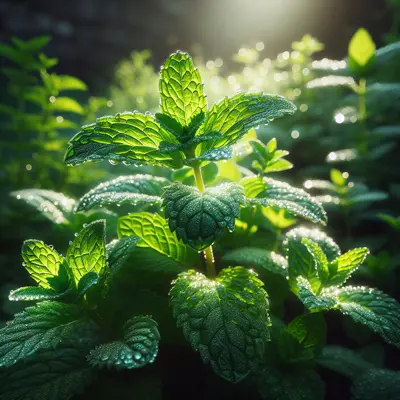
Spearmint
The classic mint variety beloved for its bright, refreshing flavor and vigorous spreading habit that makes it perfect for beginning gardeners. Unlike peppermint, spearmint has a sweeter, less intense flavor that's perfect for teas, cocktails, and Middle Eastern cuisine. This hardy perennial spreads rapidly through underground runners, making it ideal for contained growing or naturalizing in moist areas.
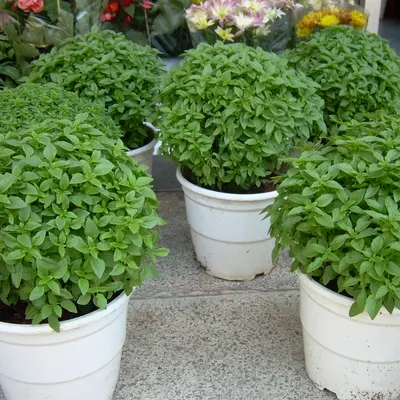
Spicy Bush
Spicy/sweet basil flavor packed into 1" long leaves. Decorative plants are great for growing in small spaces, pots, or garden beds. Plants are about twice the size of Pluto. Ht. 8-14".
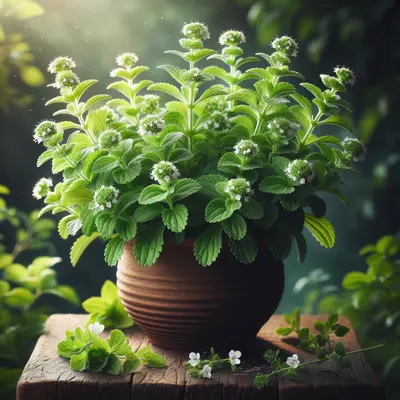
Stevia
Use fresh, dried, powdered, or as a liquid to sweeten a variety of foods and beverages. Bushy, high-yielding plants. Perennial in Zones 9-11.
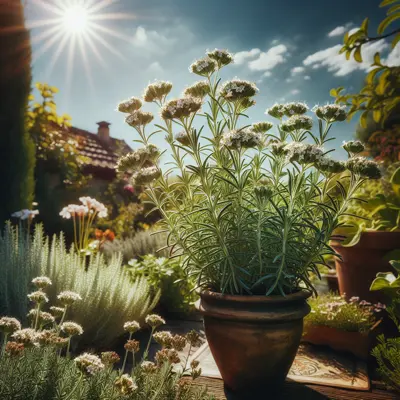
Summer Savory
Pepper flavor adds spice to dishes. For flavoring fresh and dry beans, cabbage, and sauerkraut. Long internodes create a tall, somewhat lanky plant.
Sweet Annie
Tall plants with fern-like dark green foliage dotted with tiny cream-yellow colored flowers. Use foliage for wreaths and as filler for mixed bouquets. Also known as sweet sagewort, sweet wormwood, and Chinese wormwood.
Sweet Basil
Sweet Basil is a tender annual herb prized for its vibrant green leaves and distinctive aromatic flavor. This heirloom variety reaches harvest maturity in approximately 74 days, producing compact, bushy plants ideal for containers or garden beds. Its sweet, clove-forward taste with subtle anise undertones makes it the quintessential choice for Italian cuisine, fresh pestos, and culinary applications. Unlike spicier basil varieties, Sweet Basil's delicate, complex flavor profile and ease of cultivation have made it a kitchen garden staple for centuries.
Sweet Marjoram
Aroma is similar to oregano, but sweeter and more balsam-like. Compact plant. Edible Flowers: Use the flowers, which have a mild and marjoram-like flavor, as you would the herb to garnish salads, soups, stews, sauces, and stuffing. Also pairs well with citrus, mushrooms, and fish.
Thai Basil
Thai Basil is a distinctive Southeast Asian herb prized for its striking purple-tinged stems and narrow, dark green leaves. Reaching maturity in approximately 74 days, this heirloom variety delivers an intensely aromatic profile—a bold combination of anise-licorice sweetness with spicy, clove-like undertones that sets it apart from sweet basil. Essential in Thai and Vietnamese cuisines, it adds authentic depth to curries, stir-fries, and aromatic broths. The plant thrives in full sun to partial shade with rich, well-drained soil enriched with organic matter. Easy to moderate difficulty makes it accessible for most gardeners, though watch for common pests like aphids and Japanese beetles.
Topit
High leaf mass on thick, upright stems for easier harvest. Compared to the standard parsley Giant of Italy, Topit has larger and darker green leaves, a more uniform plant habit, and sweeter flavor. Very similar to, and from the same breeder as, Pieone. Flat-leaf type. Ht. 18-20".
Vertissimo
Excellent performance in our trials. Slow-bolting, vigorous plants. Mild, sweet, anise flavor. Popular for salads, microgreens, and garnishing. Edible Flowers: Chervil's flowers are edible, and used to garnish salads. Flavor is of mild licorice.
Wega
Wega's upright habit makes it easy to harvest the dark green leaves. Suitable for field or container production. Curled-leaf type. Plant Variety Protected. Ht. 12-18".
Wild Marjoram
Use leaves fresh or dried for culinary purposes. Blooms in shades of pink to purple from midsummer through fall. For cut-flower use, harvest flowers in bud stage for best color. Attracts Beneficial Insects: Provides pollen and nectar for beneficial insects such as bees, hoverflies, lacewing larva, parasitic wasps, and tachinid flies. Edible Flowers: Use the flowers, which have a mild and marjoram-like flavor, as you would the herb to garnish salads, soups, stews, sauces, and stuffing. Also pairs well with citrus, mushrooms, and fish.

Winter Savory
A hardy Mediterranean perennial with needle-like leaves that provide intense, peppery flavor reminiscent of thyme and oregano combined. This drought-tolerant herb forms attractive low mounds of evergreen foliage topped with delicate white or pink flowers that attract beneficial insects. Known as the 'bean herb' for its traditional pairing with legumes, winter savory is more potent and longer-lasting than its summer cousin.
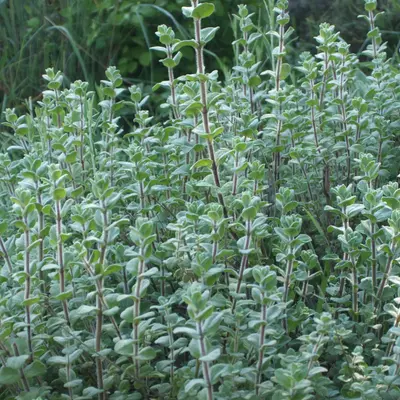
Zaatar
Native to the Mediterranean, where it has flavored meals for thousands of years. Soft gray-green leaves on plants with a semi-upright habit. Flavor combines those of sweet marjoram, thyme and oregano. Not to be confused with Za'atar, an herbal blend of several ingredients. Grow as a tender perennial - start indoors and keep out of freezing temperatures. Harvest stems when they reach at least 4-6".
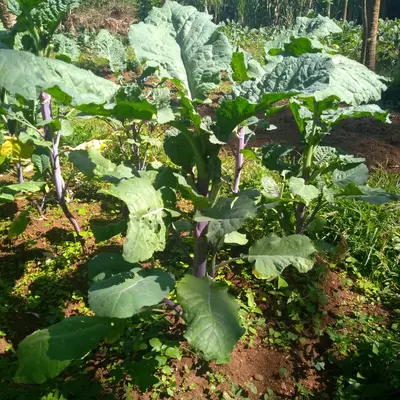
Amara
The attractive dark green leaves are gently savoyed with a scalloped margin; tender and succulent; and have a rich, savory flavor. Good in salads or as a cooked green. While technically a mustard, Amara is known as Ethiopian kale, Highland kale, Abyssinian mustard, and Texsel greens. Plant Variety Protected.
Arugula
Arugula is a fast-growing leafy green with slender, deeply lobed leaves that mature in just 10-15 days. This heirloom variety thrives in cool seasons and prefers full sun to partial shade. The distinctive peppery, nutty flavor with a slight bitterness and pungent kick makes it ideal for fresh salads, garnishes, and cooked dishes. Arugula's rapid maturity and ease of cultivation—combined with its bold, complex taste—distinguish it from milder lettuce varieties. It tolerates cool weather well and can be succession-planted for continuous harvests throughout the growing season.
Australian Yellow Leaf
A rare and striking heirloom from Australia featuring unique golden-yellow leaves that create a stunning contrast in the garden and on the plate. This heat-tolerant loose-leaf variety produces tender, mild-flavored leaves that maintain their distinctive color throughout the growing season. The unusual coloration comes from natural breeding, not genetic modification, making this a conversation-starting addition to any heirloom garden.
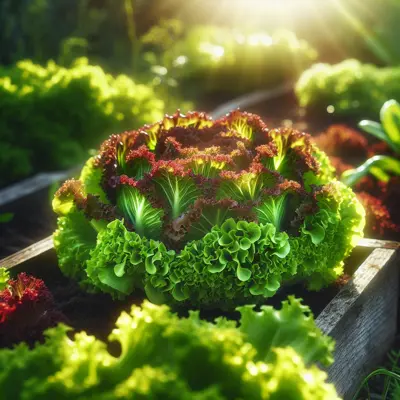
Batavia
Batavia is a crinkled-leaf heirloom lettuce with a distinctive ruffled appearance and tender, frilly foliage that ranges from light to medium green. Maturing in approximately 47 days, this variety bridges butterhead and leaf lettuce characteristics, forming a loose head while maintaining the delicate texture of loose-leaf types. Its crisp, sweet flavor with nutty undertones and subtle mineral complexity makes it ideal for fresh salads and gourmet presentations. The crinkled leaves add visual appeal and pleasant texture contrast. Batavia thrives in cool-season gardens with full sun to partial shade and prefers rich, well-drained loam, making it accessible for both novice and experienced growers.
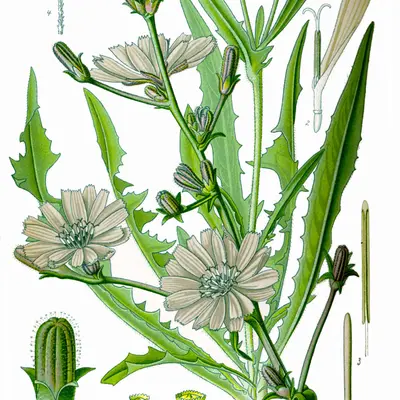
Bel Fiore
This Variegato di Lusia strain shows improved heading and consistent external and internal speckling in our trials. Although some heads will form very early, others will continue maturing over a long, 2-3 week period. Harvest when full but loose, like butterhead lettuce. Bel fiore, or "beautiful flower" in Italian, refers to how the heads can be displayed with centers opened to resemble a flower. Mild radicchio flavor in all seasons.
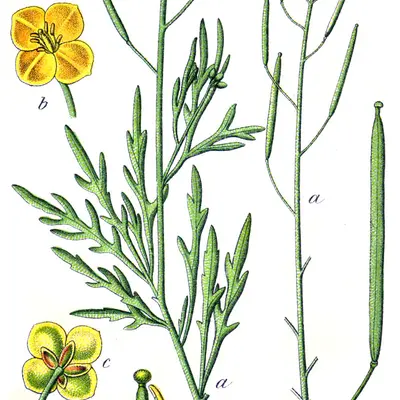
Bellezia
Leaves of Bellezia are darker green and more deeply lobed than Sylvetta, with a similar pungent flavor. In addition, the plant is more upright allowing for easier harvest. Organic seed is also available. Utility Patent granted.Edible Flowers: Harvest the yellow flowers as they appear. Sprinkle them over salads or add to vegetable stir-fries. Flavor is spicy and nutty. Popular choice for brightening up salad mixes.
Bibb
A classic American butterhead lettuce developed in Kentucky, prized for its exceptionally tender leaves and sweet, delicate flavor. The small, compact heads form perfect individual serving sizes with butter-soft texture that melts in your mouth. This gourmet variety is favored by chefs and home gardeners who appreciate premium salad quality.
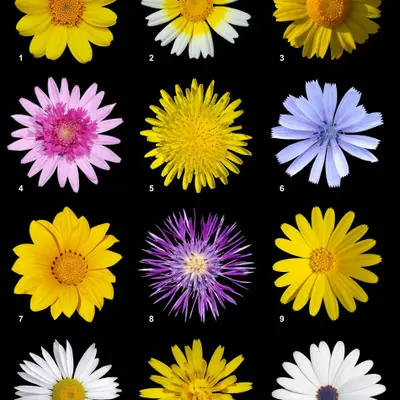
Bingo
Belgian endive, or witloof, has a 2-stage production system to achieve the blanched heads (or "chicon") which are a venerated European delicacy and welcome off-season leafy vegetable. Bingo is a vast improvement over Totem, which it replaced, for its superior performance; more uniform root size across a wider range of soil types; improved strength against internal browning of the root core; and improved foliage health against powdery mildew. Early to intermediate forcing period. Bingo is ready shortly after a fall harvest in October/November and continues to store and force well into March.
Black Seeded Simpson
An early producer of light green, curled, tender leaves. MT0-30.
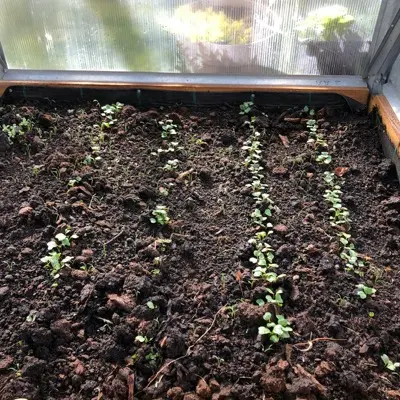
Buttercrunch
Johnny's produces Buttercrunch lettuce using the original stock seed from Cornell University. Forms a small, open but tightly bunched, 6" rosette that is fan-shaped rather than round. Dark green leaves and small compact hearts that blanch to an appetizing yellow color. Crisp and sweet. MT0-30.
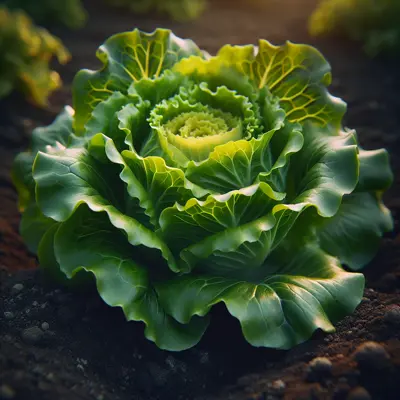
Buttercrunch Bibb
A premium butterhead lettuce that's been delighting gardeners for decades with its exceptional tenderness and sweet, buttery flavor. This variety forms perfect, compact heads with thick, succulent leaves that practically melt in your mouth. Heat-tolerant and bolt-resistant, Buttercrunch is ideal for gardeners who want restaurant-quality lettuce from their own backyard.
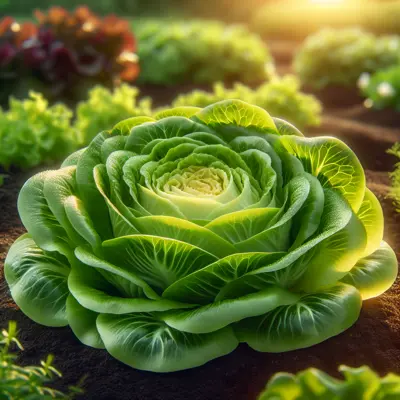
Butterhead Boston
A classic butterhead lettuce prized for its tender, buttery leaves and compact rosette formation. This reliable variety produces beautiful heads with soft, pale green outer leaves and a creamy yellow heart that's perfect for elegant salads. Boston lettuce is incredibly versatile and forgiving, making it an excellent choice for gardeners of all skill levels.
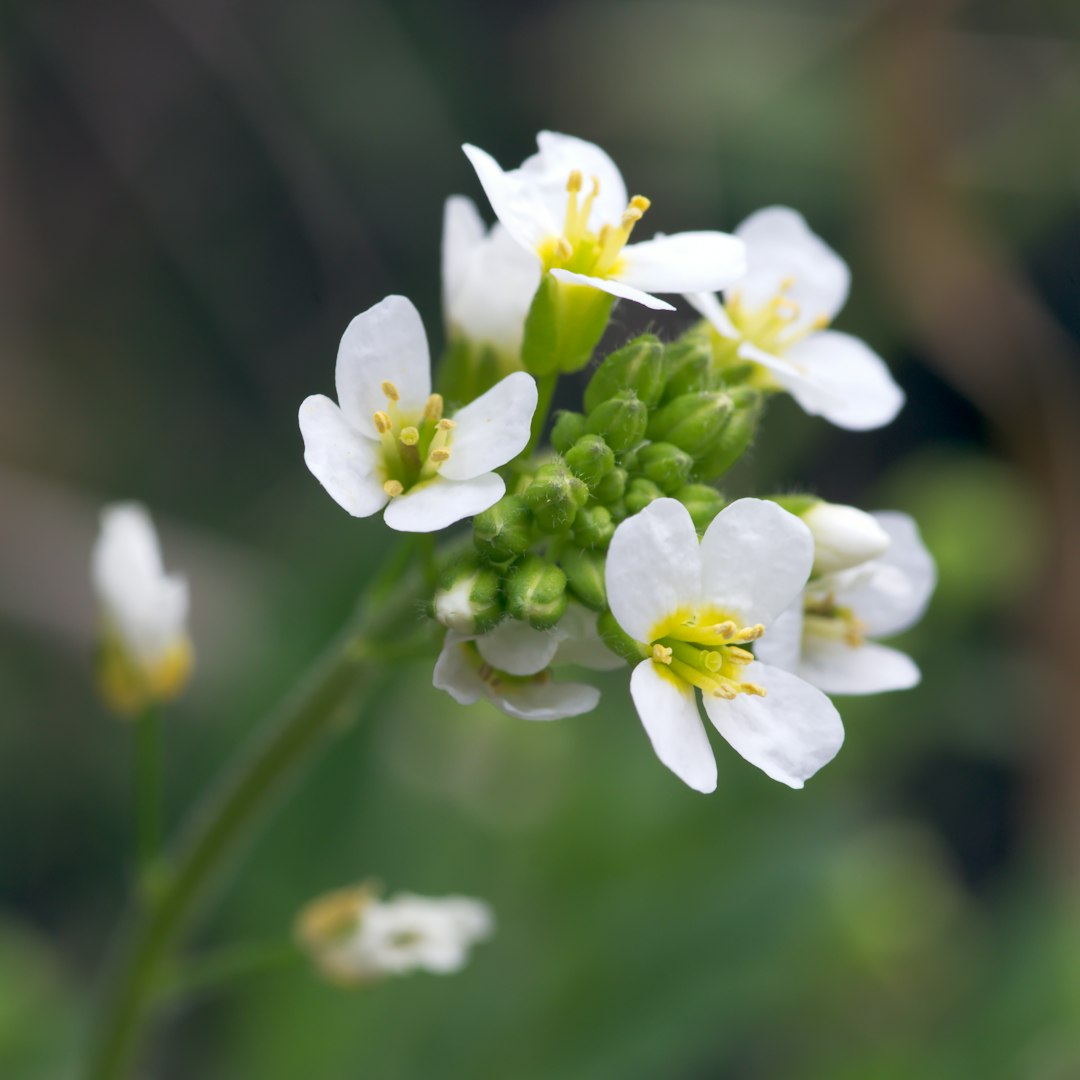
Catalogna Special
Uniform strain. At baby-leaf stage, leaves are narrow with subtle spikes along the margins and a thin petiole. At full size, leaves are long, deep green, slender, and deeply cut with white midribs.
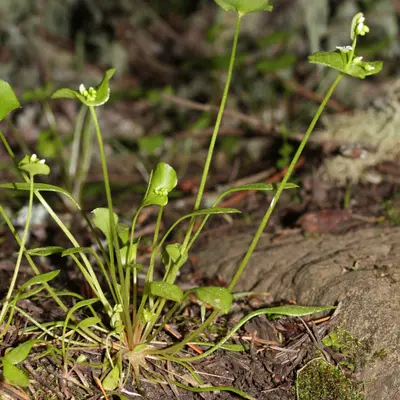
Claytonia
Quantities of heart-shaped leaf pairs, each "wrapped" around a white-flowered stem. Can tolerate moderate frost and can be grown all winter in mild regions or in cold greenhouses. The taste of the young leaves is wild and fresh. Suitable for multiple cuttings. Also known as miner's lettuce.
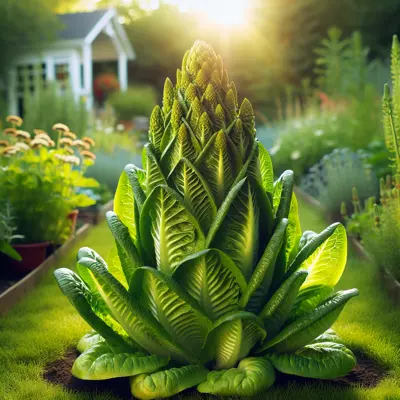
Coastal Star
The large, heavy heads are dark green. Heat tolerant. Suitable for marketing as full heads or romaine hearts. Good, sweet flavor. MT0-30. Also available with NOP-compliant pelleting.
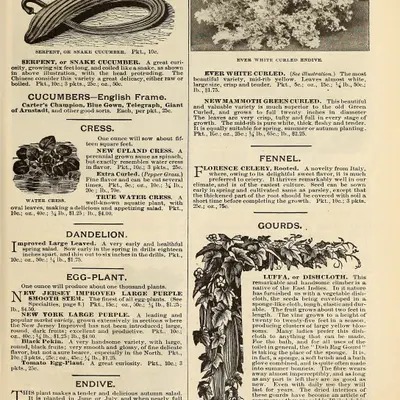
Curlesi
Strong tipburn and bolt tolerance with a self-blanching, upright growth habit. Most adaptable to spring/summer planting but suitable year-round. High-yielding and easy to harvest. Also available in organic seed or with NOP-compliant pelleting.
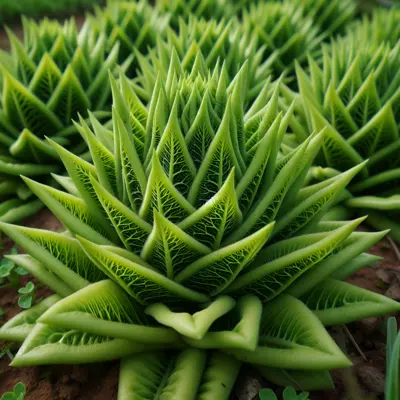
Deer Tongue
An heirloom with unique, narrow, tongue-shaped leaves. Pointed, buttery leaves have a crunchy rib and excellent flavor. Slow to bolt. MT0-30.

Elegance Greens Mix
Colors range from dark- and bronze-red to shades of green. The combination of flavors and textures makes this a beautiful salad. This mix includes pac choi, red mustard, and mizuna. Varieties are subject to change depending upon availability.
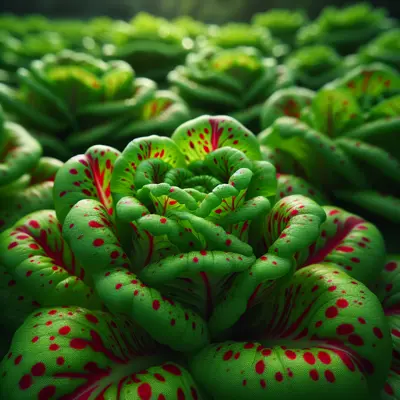
Freckles
An eye-catching Austrian heirloom romaine lettuce adorned with distinctive red speckles scattered across bright green leaves like freckles on skin. This unique variety combines stunning visual appeal with excellent bolt resistance and sweet, tender flavor. A conversation starter that performs beautifully in both spring and fall gardens.
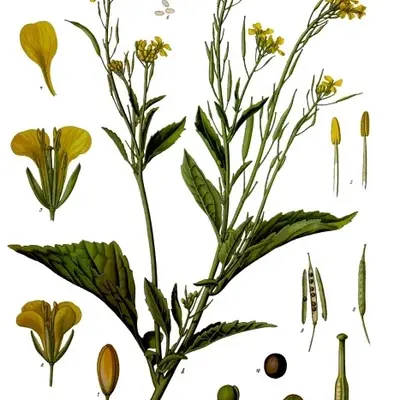
Garnet Giant
Broad purple leaves with gently scalloped margins. Color appears early on young leaves, especially in spring and fall. Mild flavor. Somewhat quick to bolt. Plant densely so leaves remain a proper size for baby leaf and petioles elongate for easy harvest. Also available in organic seed.
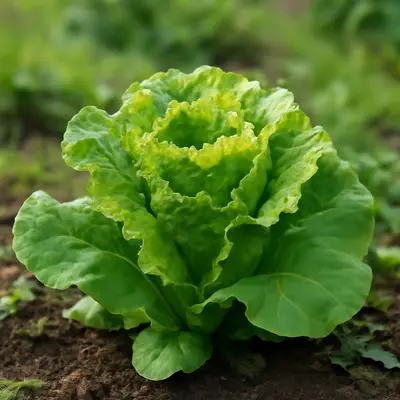
Giorgione
Dense, compact Castelfranco type. Attractive internal speckling intensifies in fall and is sometimes visible on wrapper leaves. Speckling and leaf shape can be variable, but Giorgione is reliably early and holds well in the field. Unlike the milder Bel Fiore, Giorgione balances classic chicory bitterness with pleasant sweetness, especially in fall.
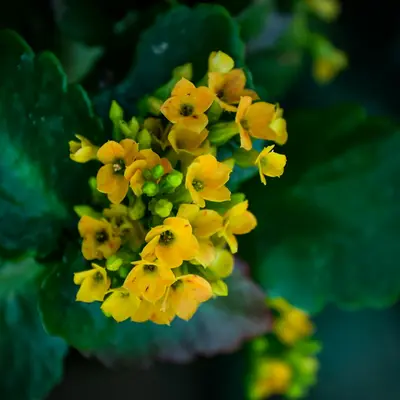
Golden Frills
The finely lobed, ruffled leaves offer a unique look for adding loft and flavor to salads. Delicious, pungently sweet and spicy flavor. Also available in organic seed.
Grand Rapids
A time-tested heirloom loose-leaf lettuce that has been feeding families since 1888 and remains one of the most reliable varieties for beginning gardeners. Its deeply curled, bright green leaves are incredibly easy to grow and harvest, producing continuously when cut properly. This variety thrives in almost any condition and rarely bolts, making it perfect for hot climates and extended harvests.
Great Lakes
A classic crisphead lettuce that delivers the satisfying crunch of iceberg but with better heat tolerance and garden performance. This reliable variety forms dense, well-blanched heads with crisp, sweet leaves that stay fresh longer than most lettuce types. Perfect for gardeners who want that classic lettuce experience without the challenges of growing true iceberg varieties.

Green 70 D Improved
Very similar to Gunsho, just a few days later to mature. Choi sums are among the most popular vegetables in Hong Kong, Taiwan, and China. The stems are a vibrant bright green, very sweet and tender, and are usually harvested just before, or as the first few buds are opening. The stems regrow for cut-and-come-again harvest. Excellent in stir-fries, steamed, or in soups.
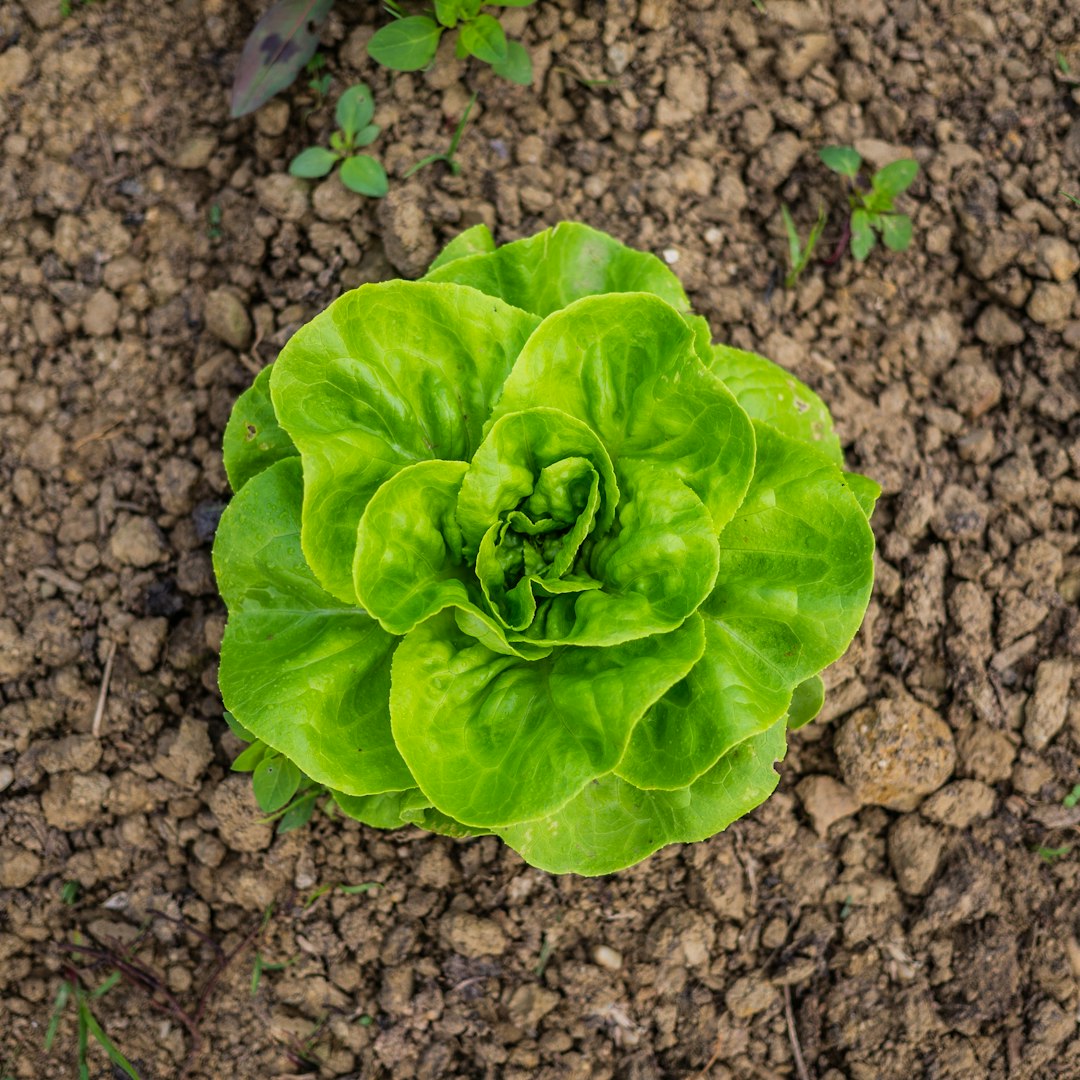
Hon Tsai Tai
Hon Tsai Tai is an heirloom Asian mustard green with tender, dark green leaves and delicate stems that form loose bunches. Ready to harvest in approximately 37 days, this versatile variety thrives in full sun to part shade conditions. Hon Tsai Tai stands out for its mild, pleasant mustard flavor balanced with a surprisingly tender texture, making it equally suitable for raw salads or cooked applications like stir-fries and braising. The thin stems and leaves remain tender even at maturity, distinguishing it from tougher mustard varieties and appealing to growers seeking a more approachable Asian green.
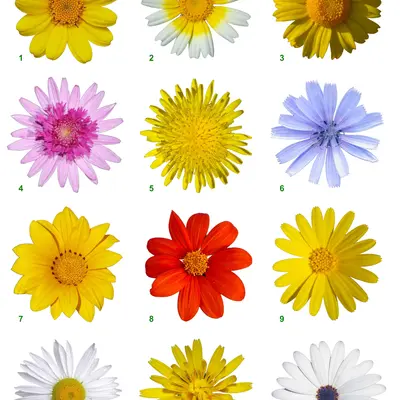
Italiko Red
This Italian dandelion has bold red stems and midribs for vibrant contrast. Deeply lobed leaves with classic bitter flavor. Good cold tolerance. Shows some variation in plant habit, leaf shape, and color.
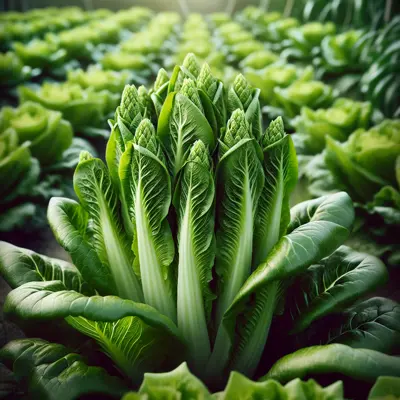
Jericho
Attractive, fast-growing, bright green lettuce for baby leaf. Seed densely for narrower petioles and leaves. Sometimes grown as a full-size head. Tolerant to both heat and tipburn. MT0-30.
Little Gem
A uniform strain of an old French variety renowned for its buttery texture and sweet flavor. Exceptionally quick to close and blanch internal leaves. Heavily savoyed leaf. Pairs well with Rosaine and Cegolaine. Does not hold in the field as long as Newham. MT0-30. Also available with NOP-compliant pelleting.
Lolla Rossa
A stunning Italian heirloom loose-leaf lettuce that transforms any garden into a work of art with its deeply frilled, burgundy-red edges fading to bright green centers. This heat-tolerant beauty maintains excellent flavor even in warm weather, making it perfect for extended harvests. The dramatic color and texture make it as valuable for ornamental plantings as it is for the salad bowl.
Lollo Rosso
An Italian heirloom that brings European flair to the home garden with its spectacular burgundy-red frilly leaves and compact growth habit. This loose-leaf variety is prized by chefs worldwide for its beautiful appearance and slightly bitter, sophisticated flavor that adds complexity to salad mixes. The deeply curled leaves create an almost flower-like appearance, making it as ornamental as it is edible.
Loose Leaf Green Grand Rapids
A classic loose-leaf variety that's been a garden favorite since the 1800s, prized for its reliability and heat tolerance. This fast-growing lettuce produces abundant, frilly green leaves with excellent flavor and crisp texture. Perfect for continuous harvest and ideal for beginners who want guaranteed success.
Luna Rossa
Improved Costarossa type with better color expression, more uniform plants, and less susceptibility to tipburn. Unique rib color ranges from pink to dark red. In the North, slot for late fall harvest. In the South, grow during winter or overwinter. Not suitable for spring planting.

Mâche (Corn Salad)
This versatile, vigorous, mildew-resistant variety is excellent at a time of year when greens become scarce. Long, oval, glossy green leaves form tight rosettes. Mild, slightly nutty flavor also reminiscent of roses. Also known as mâche, lamb's lettuce, and corn salad. Unsized seed.
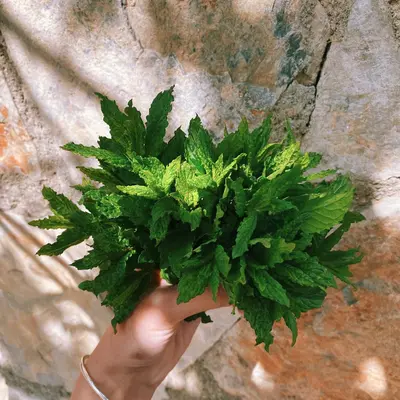
Mizuna
Mizuna is a delicate Japanese mustard green with feathery, finely dissected fronds that create an elegant, frilly appearance. It matures quickly in just 18 days, making it ideal for fast-growing spring and fall crops. Unlike heavier lettuce varieties, mizuna's defining characteristic is its mild, slightly peppery bite paired with a tender, refined texture. The wispy leaves add visual interest and sophisticated flavor complexity to salads, stir-fries, and Asian dishes. Its heirloom status reflects generations of cultivation for its unique aesthetic and palate appeal.
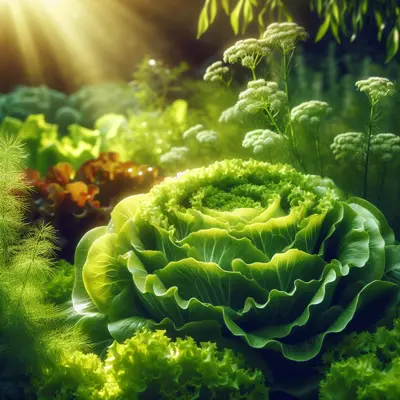
Muir
The slowest to bolt in our summer trials. Technically a Batavian type, the light green extra-wavy leaves form dense heads at a small size and can be harvested as a mini or left to bulk up into large, heavy, full-size heads. The leaves are crisp and have excellent flavor. Suitable for hydroponic systems. Utility Patent granted. MT0-30. Also available with NOP-compliant pelleting.
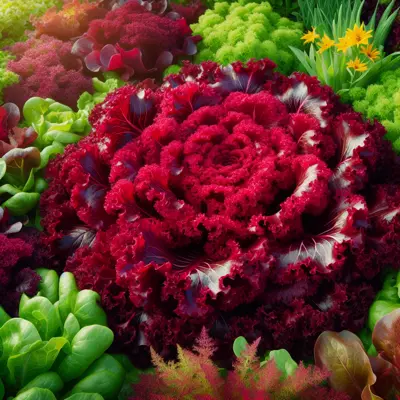
New Red Fire
New Red Fire is relatively slow, but produces uniform, heavy heads of brightly colored, frilly leaves. MT0-30. Also available with NOP-compliant pelleting.
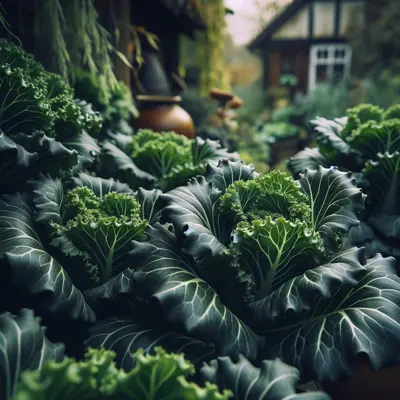
Oak Leaf
An elegant loose-leaf lettuce with distinctive deeply-lobed leaves that resemble oak tree foliage, adding visual interest to both garden and salad bowl. This heat-tolerant variety offers exceptional flavor with tender, buttery leaves that never become bitter, making it perfect for continuous harvest throughout the growing season. The unique leaf shape and reliable performance make it a favorite among both novice and experienced gardeners.
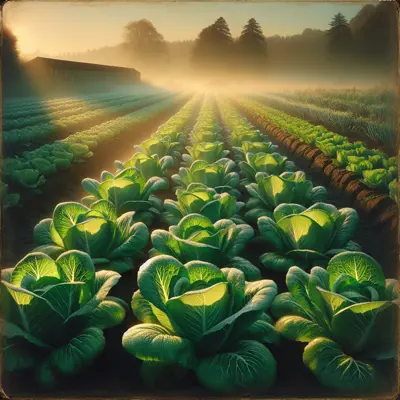
Paris Island Cos
The gold standard for romaine lettuce, this heat-tolerant variety produces tall, upright heads with crisp, dark green outer leaves and sweet, crunchy hearts. Developed for reliability in challenging conditions, Paris Island Cos consistently delivers the classic romaine experience that Caesar salad lovers crave. Its exceptional bolt resistance makes it perfect for extending the growing season into warmer months.
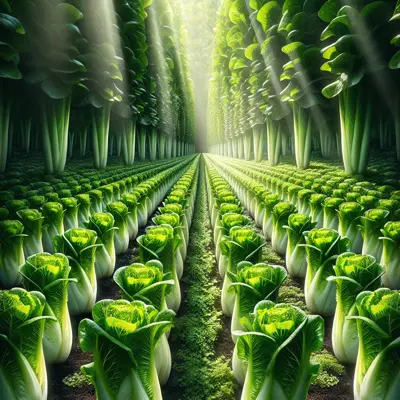
Parris Island Cos
The gold standard romaine lettuce that has been the backbone of American Caesar salads since 1952, developed specifically for hot, humid Southern growing conditions. This heat-tolerant variety produces tall, upright heads with thick, crunchy ribs and dark green outer leaves that blanch to creamy yellow hearts. Known for exceptional bolt resistance and reliable performance, it's the romaine that succeeds where others fail in challenging climates.
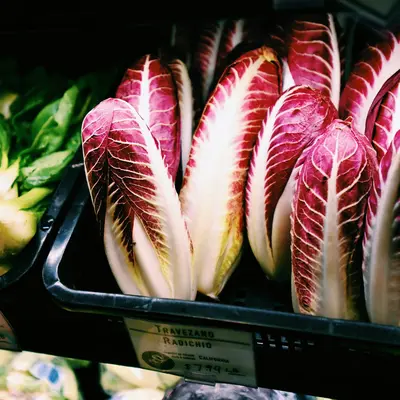
Perseo
Smaller heads, 3-4", allow for planting at higher densities. Uniform size and maturity.
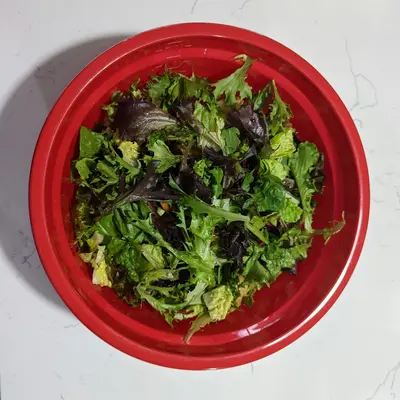
Premium Greens Mix
An amazing palette of greens and reds in an array of leaf shapes and textures. The flavors are equally diverse - spicy to mild to slightly sweet. Includes red mustard, red mizuna, green mustard, Chinese cabbage, and tatsoi. Varieties are subject to change depending upon availability.
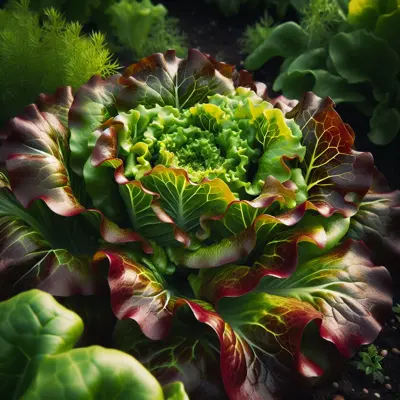
Prizehead
A stunning loose-leaf heirloom that's as beautiful as it is delicious, featuring large bronze-red tinged leaves that create a dramatic display in any garden. Dating back to the 1880s, this heat-tolerant variety produces abundantly in warm weather when other lettuces fail, making it indispensable for summer growing. The tender leaves have a mild flavor with just a hint of sweetness, perfect for adding color and nutrition to salads.
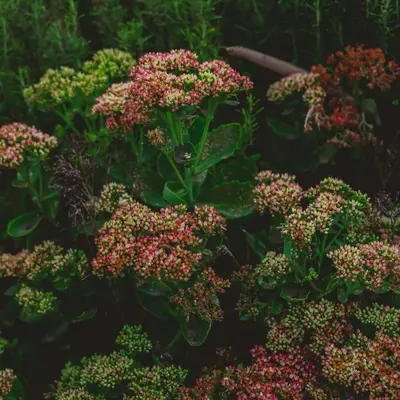
Red Giant
Red Giant is a striking heirloom lettuce variety prized for its deep burgundy leaves with tender texture. Reaching maturity in just 21 days, it thrives in full sun to partial shade and adapts well to various growing conditions. This variety's defining characteristic is its distinctive peppery, mustard-like flavor that sets it apart from conventional lettuces. The tender leaves make it excellent for fresh salads, where the bold color and spicy notes create both visual appeal and complex taste. Red Giant is exceptionally easy to grow, making it ideal for gardeners of all skill levels.
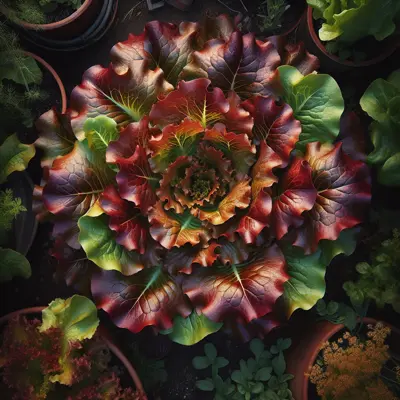
Red Leaf Lettuce
Red Leaf Lettuce is a visually striking heirloom variety with deeply ruffled, burgundy-tinged leaves that add color and texture to salads and plates. Reaching maturity in approximately 50 days, this loose-leaf variety forms open rosettes rather than tight heads, allowing for cut-and-come-again harvesting. Its tender leaves deliver a mild, sweet flavor with no bitterness, making it ideal for fresh eating and culinary applications where delicate texture matters. The distinctive red coloring intensifies in cool weather, and the frilly leaf margins provide appealing visual contrast in mixed greens preparations.
Red Malabar Spinach
Vigorous climbing vines grow through summer into fall. Glossy, thick, savoyed leaves resemble spinach. Dark green leaves and deep red/purple stems. Mild Swiss chard taste. Use leaves and young stems sparingly in salads or stir-fries.
Red Sails
Attractive, ruffled, fringed leaves of deep burgundy red over green. AAS Winner. MT0-30.
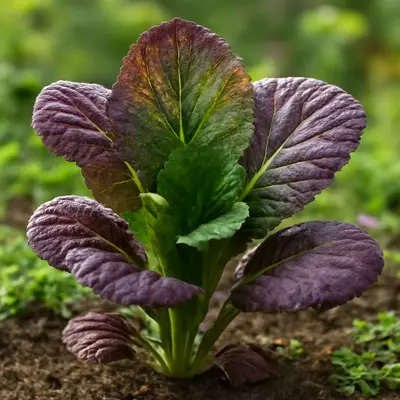
Red Splendor
Very slow-bolting plants hold their color in hot weather, making this variety a good choice for summer production. Hot, mustardy flavor. Plant at high density to keep from becoming oversized.
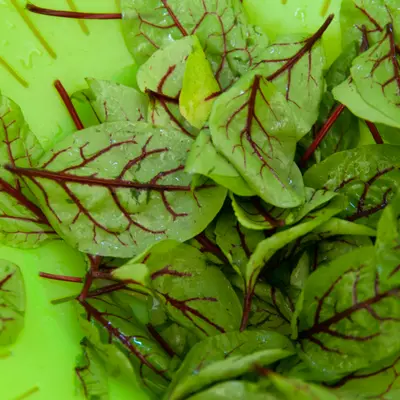
Red Veined Sorrel
Bright green leaves with contrasting, dark maroon stems and veins. Same sharp, tangy flavor as regular sorrel. Best variety for indoor production. Best when harvested young for salad mix as large leaves are tough. Also available in organic seed.
Romaine Cos
The classic upright lettuce that forms tall, sturdy heads of dark green leaves with prominent white ribs and exceptional crunch. This traditional variety has been cultivated for over 2,000 years and remains the gold standard for Caesar salads and Mediterranean cuisine. Its robust structure and intense flavor make it indispensable for gardeners who want restaurant-quality lettuce at home.
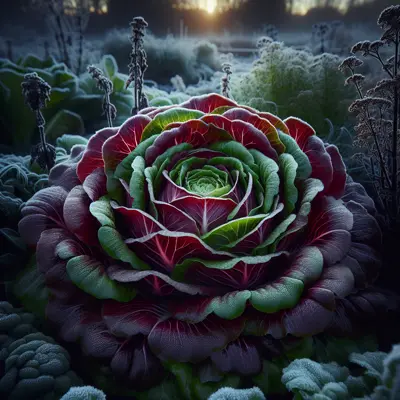
Rouge d'Hiver
An old French romaine variety with medium-red tinted leaves and excellent flavor. Good regrowth. Tolerant to cold, but avoid hot weather. MT0-30.
Ruby Red Orach
Leaves are deep purple and have a spinach-like flavor. NOTE: Expect a small percentage of all-green plants.
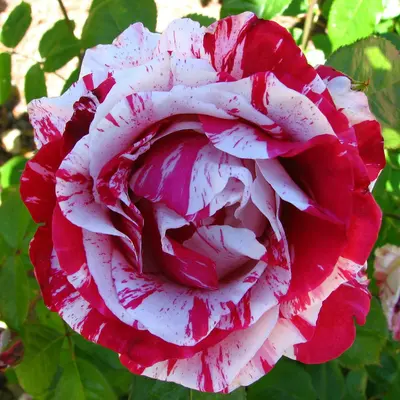
Ruby Streaks
Fine, deeply incised leaves. The color ranges from dark green with red veins to dark maroon, with the maroon color darker when grown without row cover and in cooler weather. The flavor is mild and slightly pungent.
Scarlet Frills
Spicy green and red, intricately lobed and ruffled leaves add flavor and loft to your salad mix. Slow bolting. Darker red in cooler weather.
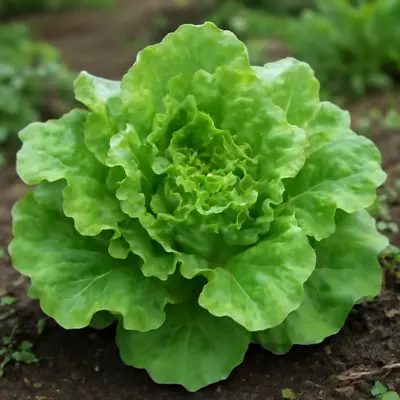
Sempre Bianca
Soft, mildly flavored leaves provide excellent loft and color contrast to mixes. Narrow petioles for a long harvest window. Fast growing and upright.
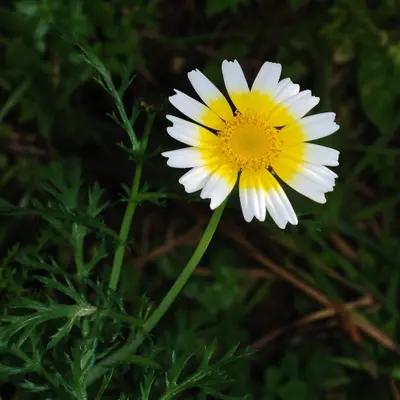
Shungiku
Shungiku, also known as Japanese chrysanthemum greens, is a tender leafy green with delicate, feathery foliage and slender stems. This heirloom variety reaches harvest maturity in approximately 30 days. The leaves are bright green and aromatic, with a distinctive peppery flavor complemented by subtle anise and chrysanthemum floral notes. Shungiku is prized in Japanese and East Asian cuisines for both its unique taste and nutritional value, commonly used in soups, stir-fries, and salads. The tender texture and herb-like character make it a standout addition to fresh dishes.
Skyphos
Skyphos is a heirloom romaine lettuce variety prized for its exceptionally sweet, crisp, and tender leaves with the classic satisfying crunch of traditional romaines. This Greek variety matures in approximately 47 days, producing upright heads with a distinctive appearance. The name references the ancient Greek drinking cup, reflecting its heritage. Skyphos thrives in full sun to partial shade and prefers well-drained, fertile soil with consistent moisture. Its superior flavor profile and reliability make it an excellent choice for fresh salads where quality and taste are paramount. Relatively easy to grow despite susceptibility to common lettuce pests.
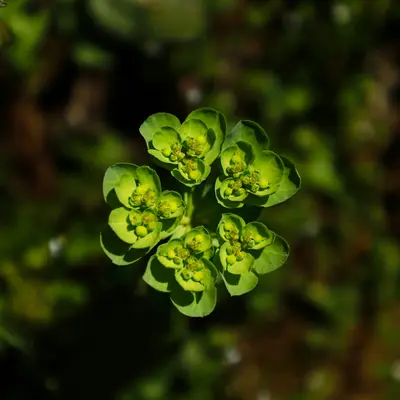
Sorrel
Sorrel is a leafy heirloom green with slender, arrow-shaped leaves that mature in about 40 days. This cool-season crop develops an intensely tangy, lemony flavor that becomes more pronounced as leaves mature. The bright, citrusy taste makes it ideal for finishing delicate fish dishes, enriching soups, or adding complexity to fresh salads. Sorrel thrives in well-drained, fertile soil under full sun and is remarkably easy to grow, though it requires vigilance against slugs, snails, and aphids. Harvest outer leaves regularly to encourage continuous production.
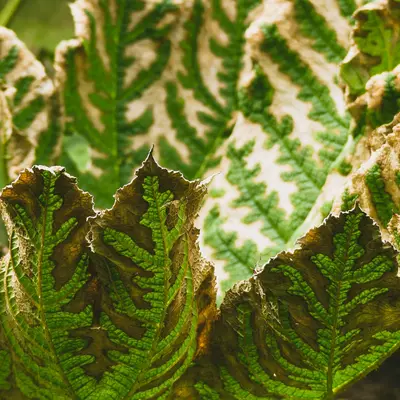
Stella Rosa
Gorgeous range of pink shades with distinct white ribs. An improved pink variety: more marketable heads; thicker leaves with heavier savoy; brighter pink colors; enhanced tipburn and bolting tolerance. Great paired with Luna Rossa. Notes: Expose plants to short days/cold weather to achieve pink color expression. Planting too early risks loose, non-pink heads. Transplant in early/mid August in Maine, later in mild eastern regions.
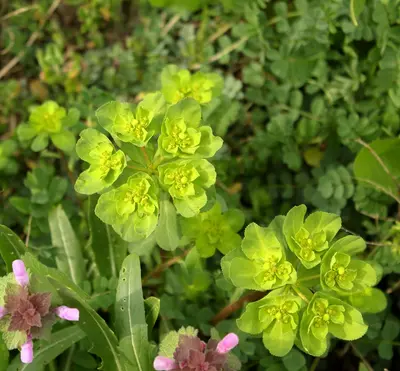
Sylvetta
More compact than Bellezia, with deeply lobed leaves and a pungent flavor. Popular with chefs. Edible Flowers: Harvest the yellow flowers as they appear. Sprinkle them over salads or add to vegetable stir-fries. Flavor is spicy and nutty. Popular choice for brightening up salad mix.
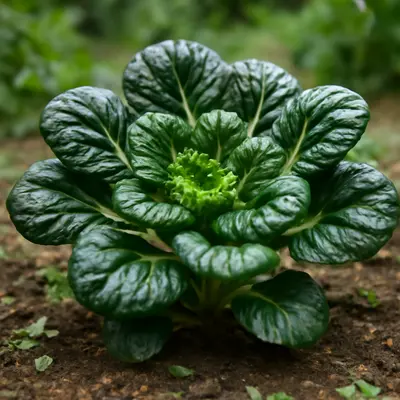
Tatsoi
Tatsoi is a compact, dark green Asian leafy green with distinctive spoon-shaped leaves that form a rosette cluster. This heirloom variety reaches full maturity in just 25 days, making it ideal for quick succession plantings. Its defining characteristic is the tender, crunchy stems with a mild, slightly sweet flavor and juicy texture that adds dimension to salads and stir-fries. The whole plant—leaves and stems—is edible and versatile, offering both nutritional value and culinary appeal for gardeners seeking fast-growing greens.
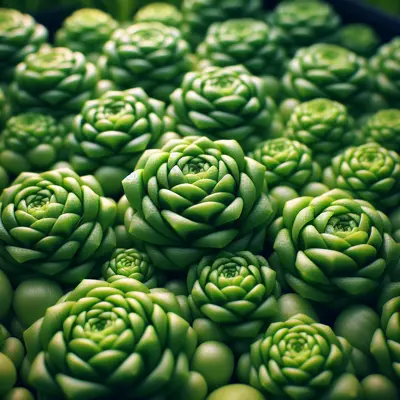
Tom Thumb
This adorable miniature butterhead forms perfect tennis ball-sized heads that are ideal for small spaces and single servings. Despite its tiny stature, Tom Thumb delivers full-sized flavor with tender, sweet leaves and excellent heat tolerance. A charming heirloom that's perfect for container gardens, kids' gardens, and anyone who loves perfectly portioned individual salads.
Tropicana
Plants produce full heads with heavy leaves. Tolerant to tipburn. MT0-30. Also available in organic seed or seed with NOP-compliant pelleting.
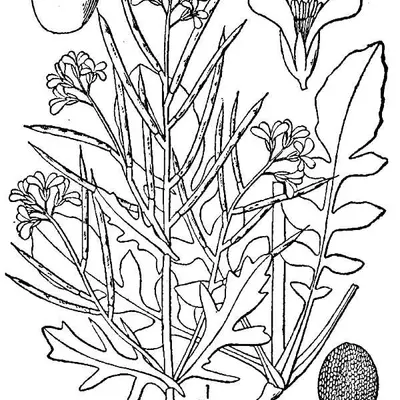
Upland Cress
Slow to start but, once established, easy to grow. Long standing and slow bolting. 6-8" rosettes of dark green, glossy, rounded leaves. Similar to watercress but much easier to grow. Sometimes called "creasy greens" in the South.
Waldmann's Green
A legendary loose-leaf lettuce variety developed specifically for winter greenhouse growing but equally excellent in outdoor gardens. Known for its exceptional cold tolerance and ability to produce tender, dark green leaves even in challenging conditions. This reliable variety has been a favorite among both commercial and home growers for decades.

Wasabina
Broad bright green leaves with deeply scalloped margins are soft and tender with great loft. Slow bolting. Sweet and mildly spicy flavor. Plant densely so leaves remain a proper size for baby leaf and petioles elongate for easy harvest.
Watercress
Watercress is a leafy green vegetable with small, rounded, delicate leaves that grow in dense clusters. This fast-growing heirloom variety matures in 60 days and thrives in cool, moist conditions with partial sun exposure. Its most distinctive feature is its peppery, spicy flavor with a subtle mustard-like bite, delivering a crisp texture that sets it apart from milder lettuce varieties. Watercress is highly nutritious and commonly used fresh in salads, soups, and sandwiches. Its vibrant taste makes it an excellent choice for culinary applications where bold, peppery greens are desired.
Ali Baba Watermelon
An remarkable Iraqi heirloom watermelon that produces enormous fruits weighing up to 100 pounds with incredibly sweet, crisp flesh that stays fresh for weeks after harvest. Ali Baba features distinctive pale green skin with dark stripes and develops exceptional sweetness while maintaining excellent texture even in its massive size. This conversation-starting variety is perfect for gardeners who want to grow something truly spectacular and have the space for its vigorous vines.
Banana Melon
An unusual heirloom melon that looks exactly like a giant banana with its elongated yellow shape and smooth skin. This conversation-starting variety produces sweet, salmon-pink flesh with a delicate flavor reminiscent of both cantaloupe and honeydew. The novelty appearance combined with excellent taste makes it a hit at farmers markets and a unique addition to any home garden.
Blacktail Mountain Watermelon
Developed in Idaho for short-season growing, this remarkable heirloom produces full-sized, incredibly sweet watermelons in just 75 days even in cool climates. The round, dark green fruits with subtle stripes contain bright red flesh that rivals any long-season variety for flavor and sweetness. Perfect for northern gardeners who thought they couldn't grow watermelons.
Boule d'Or Charentais
An authentic French Charentais melon that represents the pinnacle of melon flavor with its incredibly aromatic, orange flesh that's intensely sweet and perfumed. Boule d'Or produces small, personal-sized fruits with smooth, pale skin that turns golden when ripe, each one delivering the authentic taste of French summer markets. This heirloom variety requires patience but rewards gardeners with unparalleled flavor that commercial melons simply cannot match.
Cantaloup Charentais
The original French cantaloupe that inspired countless imitations, prized for its incredibly aromatic orange flesh and perfect balance of sweetness and musky flavor. These small, perfectly portioned melons develop deep suture lines when ripe and fill the garden with their intoxicating fragrance. A true gourmet experience that puts grocery store cantaloupes to shame.
Cantaloupe Hales Best
A time-tested heirloom cantaloupe that has been the benchmark for home garden success since 1924. Developed in California's Imperial Valley, this variety combines excellent disease tolerance with outstanding flavor and reliable production. The thick, sweet, salmon-colored flesh and perfect netting make it the cantaloupe that many gardeners grow year after year.
Cantaloupe Minnesota Midget
A compact cantaloupe perfect for northern gardens and small spaces, developed at the University of Minnesota. This early-maturing variety produces sweet, orange-fleshed fruits on short vines that can even be grown in containers. Despite its small size, the flavor rivals full-sized cantaloupes with excellent sweetness and aroma.
Casaba Golden Beauty
An heirloom winter melon with bright yellow, wrinkled rind and sweet, creamy white flesh that stores exceptionally well. This unique variety ripens late in the season and actually improves in flavor during storage, making it perfect for extending the melon season into fall and winter. The distinctive appearance and honey-sweet flavor make it a conversation starter in any garden.
Charleston Gray Watermelon
A classic heirloom watermelon that has been delighting gardeners since the 1950s with its distinctive gray-green skin and exceptional disease resistance. Charleston Gray produces large, oblong fruits with sweet, crisp red flesh that's perfect for summer gatherings and has excellent keeping quality. This vigorous variety consistently delivers reliable harvests even in challenging growing conditions.
Collective Farm Woman Melon
A treasured Ukrainian heirloom honeydew-type melon with an unforgettable name and exceptional flavor that has won over gardeners worldwide. This reliable variety produces smooth, cream-colored melons with incredibly sweet, white flesh that stores well into winter. Originally grown on Soviet collective farms, it's perfectly adapted to shorter seasons and variable weather conditions.
Crenshaw Melon
An heirloom treasure that's considered the 'Cadillac of melons' for its incredibly sweet, spicy-floral flavor and smooth, creamy texture. This large, teardrop-shaped melon starts green and ripens to golden-yellow with pink-orange flesh that's almost perfumed in its intensity. Crenshaw melons are prized by gourmet cooks and melon enthusiasts for their unparalleled eating quality.
Crimson Sweet Watermelon
Dark and light yellow-green striped, 10" x 12" blocky oval fruits weigh in at 15-25 lb. Crisp, sweet pink flesh and vigorous vines. Avg. 1-2 fruits/plant.
Delicious 51 Cantaloupe
A proven heirloom cantaloupe variety that has been delighting gardeners since the 1950s with its exceptional flavor and reliable production. This open-pollinated variety produces medium-sized melons with intensely sweet, aromatic flesh that embodies everything a perfect cantaloupe should be. Delicious 51 is particularly prized by seed savers and those who want to experience authentic, old-fashioned cantaloupe taste.
Hale's Best Cantaloupe
A time-tested heirloom cantaloupe that has been America's favorite since the 1920s, prized for its exceptional sweetness and aromatic fragrance. The heavily netted fruits develop deep orange flesh that practically melts in your mouth with perfect melon flavor. This reliable variety thrives in hot climates and consistently produces premium-quality melons that rival anything from the grocery store.

Hearts of Gold Cantaloupe
A treasured heirloom variety from the 1890s that earned its name from the heart-shaped cavity filled with golden-orange flesh of exceptional quality. This compact variety is perfect for smaller gardens and shorter seasons, producing consistently sweet melons with that old-fashioned cantaloupe flavor gardeners remember from childhood. Its reliability and disease resistance have kept it popular for over a century.
Honey Rock Cantaloupe
An exceptional heirloom cantaloupe from 1933 that earned All-America Selections honors for its outstanding sweetness and reliability. This variety produces perfectly round, heavily netted fruits with thick, orange flesh that's incredibly sweet and aromatic. Honey Rock is treasured by gardeners for its consistent production, excellent storage quality, and flavor that intensifies as the fruit ripens.
Jenny Lind Melon
A charming 1840s heirloom cantaloupe named after the famous Swedish opera singer, featuring distinctive turban-shaped fruits with a pronounced button end. This early-maturing variety produces small, intensely flavored melons with pale orange flesh and fine netting that were once sold by street vendors in Philadelphia. The compact size and exceptional flavor make it perfect for small gardens and fresh eating.
Minnesota Midget Cantaloupe
A compact cantaloupe variety developed by the University of Minnesota for short growing seasons and small spaces. This prolific heirloom produces sweet, orange-fleshed melons weighing just 1-2 pounds each on compact vines perfect for northern gardens. Despite its small size, it delivers full cantaloupe flavor and is ready to harvest in just 70 days.
Moon and Stars Watermelon
A spectacular heirloom watermelon famous for its mystical dark green rind decorated with yellow 'stars' and larger yellow 'moons' that make each fruit a work of art. Nearly lost to extinction until the 1980s, this Cherokee heirloom produces large, sweet melons with pink-red flesh and the same celestial markings on its foliage. Moon and Stars is as much a conversation piece as it is a delicious watermelon, perfect for gardeners who love growing living history.
Sugar Baby Watermelon
Round fruits, 6-8" in diameter, averaging 8-10 lb. Ripe melons are almost black. Good flavor. Tough rinds resist cracking. The standard of "icebox" melons for many years. Avg. 1-2 fruits/plant.
Watermelon Charleston Gray
A legendary heirloom watermelon from 1954 that produces massive, elongated fruits perfect for feeding crowds at summer gatherings. This variety is prized for its exceptional disease resistance, long storage life, and sweet red flesh that stays crisp even in hot weather. Charleston Gray's distinctive gray-green color and reliable 25+ pound fruits make it a favorite for serious watermelon growers.
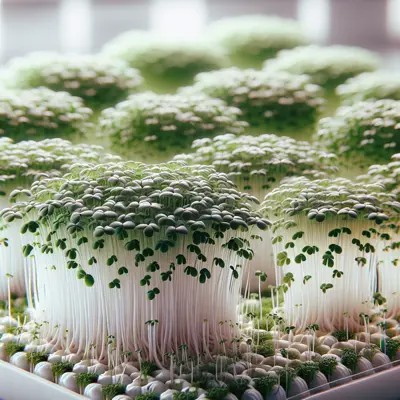
Alfalfa Microgreens
Commonly used to add flavor and texture to salads and sandwiches. One tablespoon of seed yields approx. 2-3 cups of sprouts. All of Johnny's high-germination sprouting seeds have tested negative for the presence of E. coli 0157 and Salmonella.

Amaranth Microgreens
Amaranth microgreens are delicate, tender shoots with small rounded cotyledons and fine stems that reach full harvest in 50 days. They display vibrant green coloring with a slightly purplish tinge. These microgreens are prized for their mild, earthy flavor profile with subtle sweetness and mineral undertones, making them ideal for salads, smoothies, and garnishes. Amaranth microgreens pack a nutritional punch with high levels of protein, vitamins, and minerals. Their defining characteristic is their exceptional tenderness and visual appeal, combined with easy cultivation and minimal pest pressure, making them perfect for both novice and experienced microgreen growers.
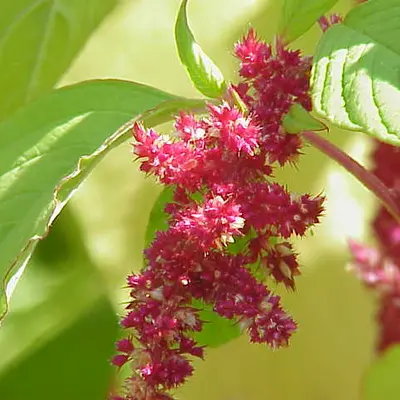
Amaranth, Glitter Mix
A beautiful combination of delicate leaves featuring glowing pink and purple stems and leaves blended with a range of copper, orange, and green tones. Even maturity and mild, earthy flavor. Varieties are subject to change depending upon availability.
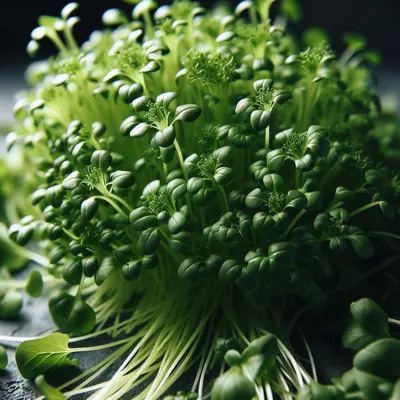
Arugula Microgreens
Arugula microgreens are delicate, tender seedlings featuring deeply lobed, emerald-green leaves with a distinctive peppery bite. Ready to harvest in 10-15 days, they develop their signature intensely spicy, nutty flavor profile while remaining at the microgreen stage. These heirloom varieties offer a concentrated version of mature arugula's peppery notes, making them ideal for garnishing salads, sandwiches, and upscale dishes. The microgreen format provides nutrient density and visual appeal in minimal space, thriving under moderate light or grow lights. Easy to cultivate in seed starting mix or coconut coir, they're an excellent choice for home growers seeking quick, flavorful greens with minimal pest concerns.
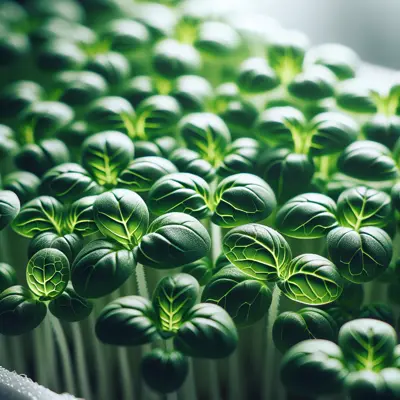
Basil Microgreens
Basil Microgreens are tender young shoots harvested at 10-14 days of growth, featuring delicate green cotyledons and emerging true leaves. These heirloom microgreens mature in 10-14 days under controlled conditions (faster than the listed 74-day timeline for mature plants). Their defining characteristic is the intense basil aroma with complex sweet, peppery notes and subtle anise undertones—delivering concentrated basil flavor in miniature form. Ideal for garnishing salads, soups, pasta, and Mediterranean dishes, they add visual appeal and aromatic depth without the cooking time required for mature basil. Best grown in well-draining potting mix under full sun to partial shade (4-6+ hours daily).
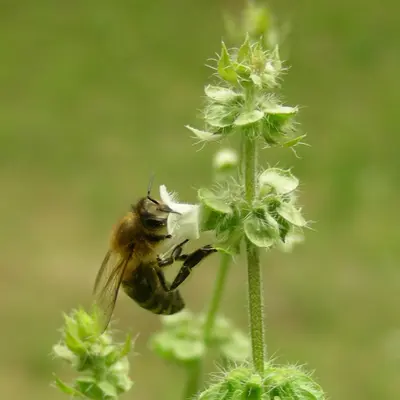
Basil, Lemon
Uniform, medium-green leaves with medium texture. Use lemon basil in dishes that call for both basil flavor and a touch of zest. Also an elegant cocktail and dessert garnish. A critical ingredient in many Asian dishes, including those of Thailand, Laos, Indonesia, and the Philippines. Based on our yield trial, we recommend seeding 6.5 gm per tray at approx. 5 flats per oz of seed. Avg. days to maturity was 19 days when harvested at the first true leaf (as opposed to cotyledon) stage.
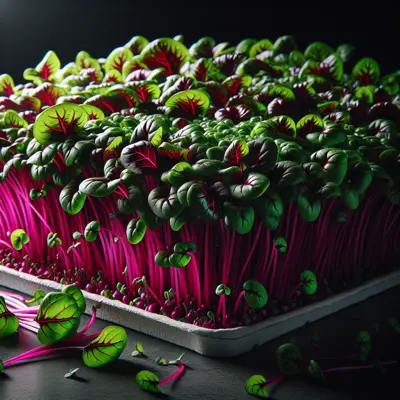
Beet Microgreens
Beet microgreens are delicate seedlings featuring vibrant deep red or burgundy stems with small green cotyledon leaves, typically ready to harvest in 10-14 days of growth. These tender shoots offer a distinctive sweet and earthy flavor with mild beetroot notes, making them an excellent nutritional addition to salads, smoothie bowls, and plated dishes. The microgreens are prized for their visual appeal and subtle beet flavor that adds complexity without overwhelming delicate dishes. Easy to cultivate under grow lights or bright indirect light, they thrive in rich growing mediums and represent an efficient way to access beet's nutritional benefits in concentrated, tender form.
Broccoli Microgreens
Mildly spicy broccoli flavor. One tablespoon of seed yields approx. 1-1 1/2 cups of sprouts. All of Johnny's high-germination sprouting seeds have tested negative for the presence of E. coli 0157 and Salmonella.
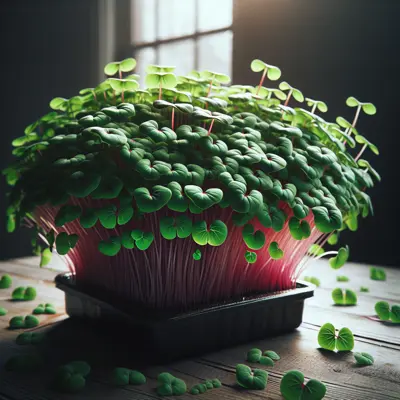
Buckwheat Microgreens
Buckwheat is widely grown as a grain crop, bee pasture, soil improving cover crop and as wildlife cover. It is a warm season grain which grows rapidly during the summer and several crops per year may be had with proper management. This rapid and dense growth chokes out weeds and is used in crop-free fields in rotation with vegetables. Buckwheat is often grown to attract beneficial insects and as pasture for honey bees. Sow in late May through July and till in about a month later, when flowering has begun. For grain harvest, sow 3 months before fall frost. Harvest after killing frost.
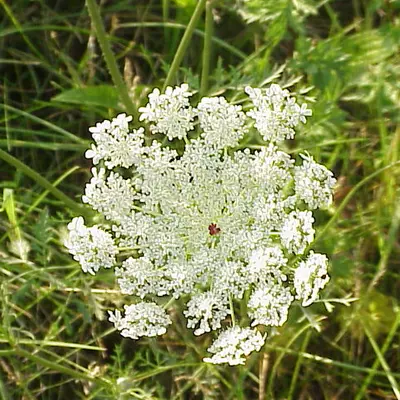
Carrot
Carrot microgreens are delicate, tender shoots harvested at 16-25 days with mild, naturally sweet carrot flavor minus earthiness. These heirloom varieties feature crisp texture and fresh taste in a compact form ideal for garnishes and salads. Fast-growing and easy to cultivate, carrot microgreens offer concentrated nutrition and distinctive flavor in just 2-3 weeks, making them perfect for home growers seeking quick harvests.
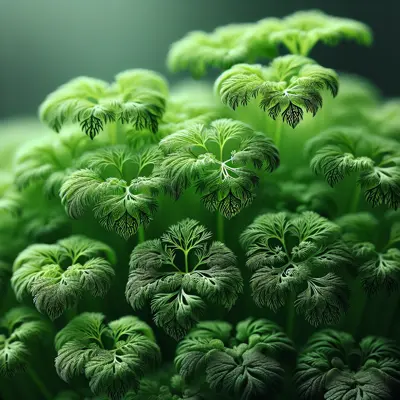
Carrot Microgreens
Carrot Microgreens are delicate, feathery seedlings harvested at 16-25 days, showcasing fine, fern-like green foliage with pale root stems. This heirloom variety offers a distinctive sweet carrot taste balanced by earthy, slightly bitter herbal notes uncommon in typical microgreens. Best grown in fine, well-draining seed starting mix under full sun to partial shade (4-6+ hours), they present a moderate to challenging cultivation difficulty but reward growers with vibrant, nutrient-dense greens perfect for garnishing and flavor complexity in dishes.
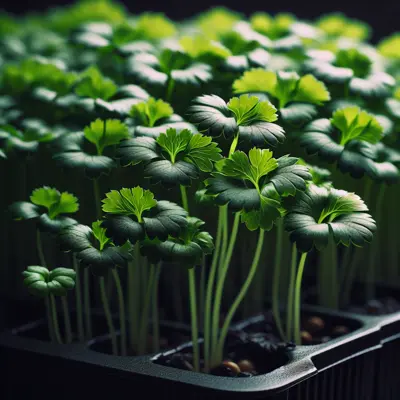
Celery Microgreens
Medium-large, relatively smooth round roots with buff-colored skin. Interiors are white and flavorful and resist pithiness and hollow heart. Also available with NOP-compliant pelleting.
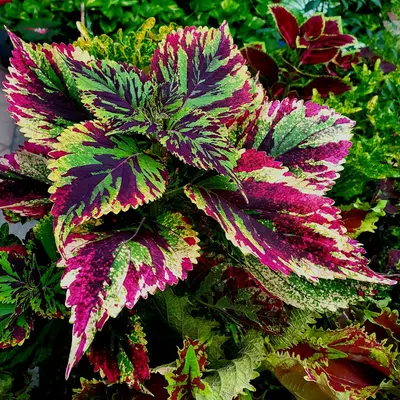
Celosia
Bright green leaves with pink, orange, and yellow veins and stems.
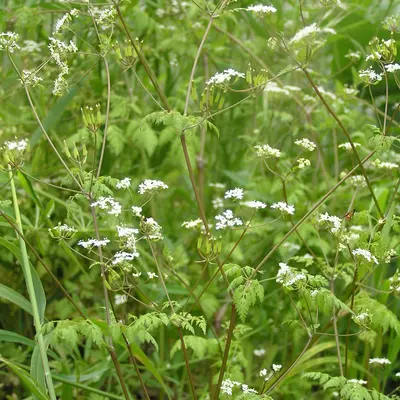
Chervil
Intricate green leaves and stems. A traditional French herb used to flavor egg, potato, fish, and poultry dishes.
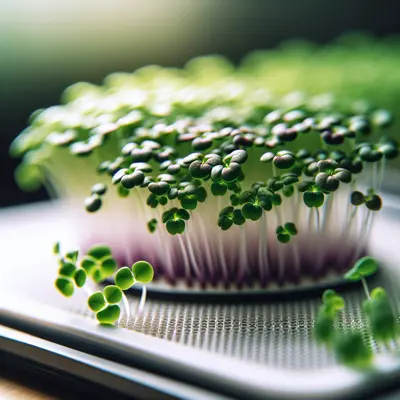
Chia Microgreens
These nutrient-dense microgreens offer a unique growing experience as the seeds become gelatinous when wet, creating their own natural growing medium. Chia microgreens have delicate, tender leaves with a mild, slightly tangy flavor that's completely different from the crunchy seeds. They're packed with omega-3 fatty acids and provide a gourmet touch to salads and smoothies.
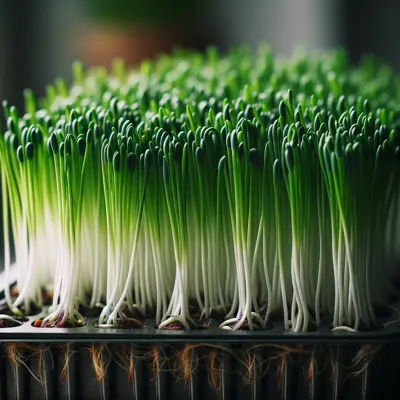
Chives Microgreens
Chives microgreens are tender, slender green shoots with a mild onion flavor and fresh, aromatic profile. These delicate microgreens mature in 75-85 days and are ideal for culinary applications requiring a subtle allium taste without pungency. They thrive in fine seed starting mix or soilless medium under full sun to partial shade (4-6+ hours daily). The heirloom variety offers a distinctly fresh character perfect for garnishing, salads, and dishes where gentle onion notes enhance rather than dominate. Moderate difficulty indoor growing requires vigilance against fungus gnats and thrips, making proper ventilation essential for success.
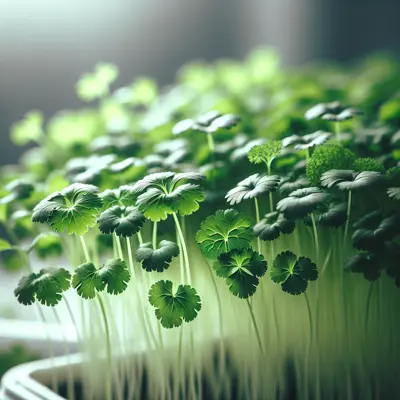
Cilantro Microgreens
Cilantro Microgreens are delicate, tender seedlings harvested at 16-25 days, featuring thin stems topped with vibrant green, feathery leaves that resemble mature cilantro foliage. These heirloom microgreens deliver an intensely concentrated cilantro flavor—bright, citrusy, and distinctly herbaceous—making them a potent garnish and flavoring agent. Ideal for fresh applications like salsas, Asian cuisines, and contemporary plating, they add sophisticated herb character to dishes without bulk. Their moderate difficulty and preference for well-draining medium make them suitable for home cultivation under full sun to partial shade conditions.

Clover Microgreens
Once established, white clover can handle foot and tractor traffic better than other clovers. The fibrous root system typically is in the top 8" of soil, although it does have up to a 40" tap root in the first year which dies each fall, leaving a passage for water to percolate through. More heat tolerant than some of the larger clovers, this is a low-growing (to 12") perennial that can be sown into long-season row crops during the season to provide a "living mulch." Sow after first cultivation and rake or cultivate to cover. Also used for green manure, hay, and pasture. Inoculate with Alfalfa/True Clover Inoculant (#7535) for best performance.
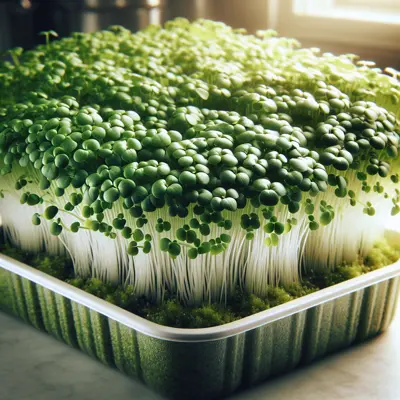
Cress Microgreens
Also known as "Curly Cress" or "Peppergrass." Try adding cress to a sandwich or when an extra-spicy bite is needed. Based on our yield trial, we recommend seeding 10.5 gm per tray at approx. 3 flats per oz of seed. Avg. days to maturity was 13 days when harvested at the first true leaf (as opposed to cotyledon) stage. Also available in organic seed.
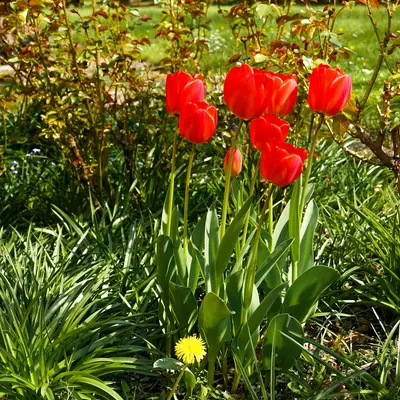
Dandelion, Red
Mildly bitter flavor. Based on our yield trial, we recommend seeding 4 gm per tray at approx. 7 flats per oz of seed. Avg. days to maturity was 18 days when harvested at the first true leaf (as opposed to cotyledon) stage.
Dill Microgreens
Finely textured, medium-green leaves. Combine micro dill with fish, egg, and potato dishes for delicate, sweet citrusy notes.
Fennel Microgreens
Fennel microgreens are delicate, feathery greens with fine, thread-like leaves that develop a soft yellow-green hue as they mature. Ready to harvest in 50-60 days, these heirloom microgreens deliver an intense anise-licorice flavor that is remarkably aromatic and concentrated. The strong, distinctive taste makes them a specialty garnish for gourmet cuisines, particularly suited for seafood dishes, Mediterranean preparations, and culinary applications where bold licorice notes are desired. Grown indoors under full sun conditions with well-draining seed-starting mix, fennel microgreens require moderate cultivation skill and careful monitoring for aphids and fungus gnats.
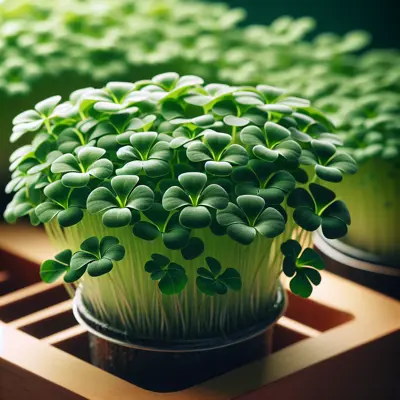
Fenugreek Microgreens
Rich, herbal, slightly bitter flavor. One tablespoon of seed yields approx. 1 1/2 cups of sprouts. All of Johnny's high-germination sprouting seeds have tested negative for the presence of E. coli 0157 and Salmonella.
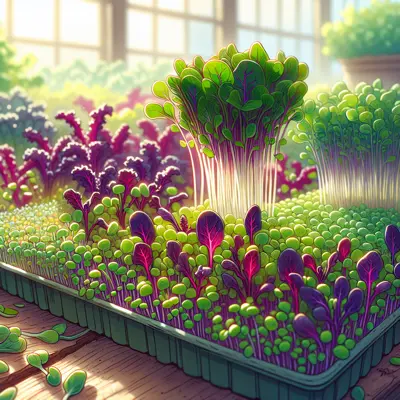
Kale Microgreens
Kale microgreens are delicate, tender seedlings harvested at 10-14 days, featuring small green leaves with a mild, fresh flavor distinctly softer than mature kale. These nutrient-dense microgreens offer a subtle cabbage note with natural sweetness, making them ideal for salads, sandwiches, and smoothie bowls. Easy to grow indoors under lights or in bright windowsills, they mature quickly compared to their full-size counterparts while maintaining the nutritional benefits kale is known for. Perfect for beginners seeking a simple, rewarding crop.
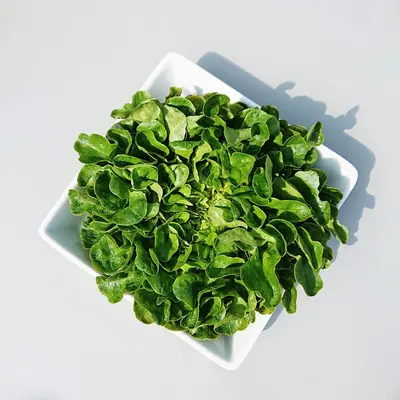
Leek
Green thread-like leaves. Slower to emerge than scallion or onion microgreens, but otherwise very similar.
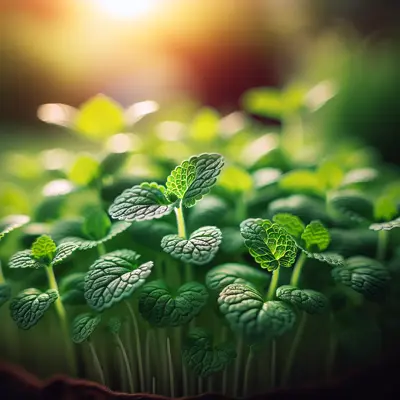
Lemon Balm Microgreens
Lemon Balm Microgreens are delicate, tender shoots harvested at 10-14 days for optimal flavor. These heirloom microgreens feature vibrant green cotyledons with a distinctive intense lemon scent and bright, citrusy flavor with subtle minty undertones. They mature quickly in well-draining growing mediums under 4-6+ hours of light daily. The defining characteristic is their potent lemon aromatics that intensify with age, making them ideal for finishing salads, beverages, and desserts. Moderate to advanced difficulty level due to moisture management requirements and susceptibility to aphids and spider mites in dry conditions.
Lettuce Microgreens
Lettuce microgreens are tender seedlings harvested at 1-2 inches tall, typically ready within 7-10 days of sprouting. These delicate greens feature soft, pale green leaves with a mild, slightly sweet flavor and buttery texture—distinctly different from mature lettuce. Unlike full-sized lettuce, microgreens are consumed whole, including the stem, delivering concentrated nutrients in a compact form. They excel as salad toppings, sandwich garnishes, and plate decorations, adding visual appeal and gentle flavor without bitterness. Their quick growth cycle and minimal space requirements make them ideal for indoor cultivation and home gardening beginners.
Mizuna Microgreens
Mizuna microgreens are delicate, feathery seedlings with fine, fern-like foliage that ranges from bright to pale green depending on light exposure. Ready to harvest in 7-14 days, these tender shoots offer a mild peppery bite with subtle mustard undertones and a slightly sweet finish. Their distinctive appearance and complex flavor make them ideal for garnishing salads, Asian dishes, and contemporary plating. Grown on soilless media under indirect light, mizuna microgreens require minimal maintenance and are resistant to pest problems, making them an excellent choice for indoor cultivation.

Mung Bean Microgreens
Popular in Asian cuisine, often stir-fried to accompany meals. 1/4 cup of seed yields approx. 2-3 cups of sprouts. Mung Bean can also be grown in open-flat trays as shoots; harvest as soon as first true leaves open for optimal taste and texture. Very fast maturing with attractive green leaves and pink stems. All of Johnny's high-germination sprouting seeds have tested negative for the presence of E. coli 0157 and Salmonella.
Mustard Microgreens
Mustard Microgreens are tender, 1-2 inch seedlings with cotyledons (seed leaves) ranging from pale to bright green depending on variety, featuring fine, hair-like roots. Ready to harvest in just 6-8 days, they deliver an exceptionally sharp, peppery flavor with intense mustard heat and lingering bitterness. These heirloom microgreens stand out for their concentrated pungency—far bolder than mature mustard greens—making them a potent garnish for salads, sandwiches, Asian dishes, and grain bowls where a small amount adds significant spicy bite. Their quick turnaround and minimal space requirements make them ideal for indoor growing.
Pac Choi, Red Choi
Leaves are mostly red with some green. Mild pac choi flavor. Based on our yield trial, we recommend seeding 10.5 gm per tray at approx. 3 flats per oz. of seed. Avg. days to maturity was 13 days when harvested at the first true leaf (as opposed to cotyledon) stage.
Pea Shoots
Yellow peas are a great non-GMO protein source and are becoming more prevalent in feed rations with protein percentages ranging from 21-25. They contain high levels of carbohydrates, are low in fiber, and contain 86-87% total digestible nutrients, making them an excellent livestock feed. In spring or fall, sow alone or mixed with vetch and/or oats, winter rye, or ryegrass. Harvest for grain at 16-18% moisture or when the seeds are hardened and fully mature. Inoculate with Garden Combination Inoculant (#7531) or Pea, Vetch, and Lentil Inoculant (#7534) for best performance.
Radish Microgreens
Radish microgreens are young radish plants harvested at 10-14 days of growth, featuring delicate green shoots with characteristic pink or reddish cotyledons (seed leaves). Ready to harvest in approximately 30 days from planting, they deliver an intense, peppery spice that ranges from mild to fiercely hot depending on variety and growing conditions. These heirloom microgreens add vibrant color and bold peppery crunch to salads, sandwiches, soups, and garnishes. Their spicy profile makes them ideal for Asian cuisine and adds complexity to bland dishes. Easy to grow under moderate to bright light with minimal pest pressure, radish microgreens are popular among home and commercial growers seeking quick harvests with maximum flavor impact.
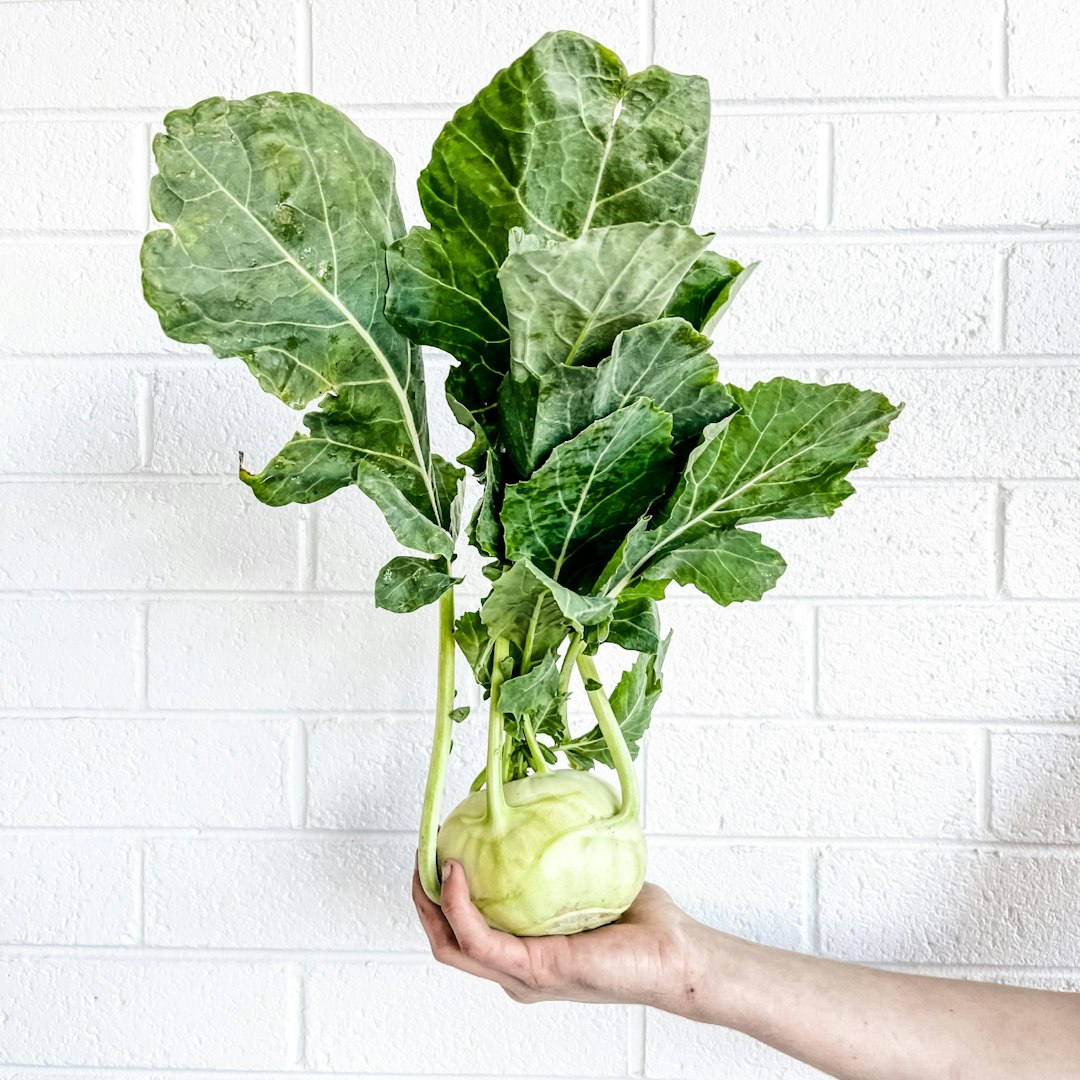
Radish, Daikon
Mild radish flavor. One tablespoon of seed yields approx. 1-2 cups of sprouts. All of Johnny's high-germination sprouting seeds have tested negative for the presence of E. coli 0157 and Salmonella.
Red Amaranth Microgreens
Red Amaranth Microgreens are vibrant, ruby-red seedlings with delicate cotyledons and slender stems, ready to harvest in 10-14 days under optimal indoor conditions. These tender microgreens feature a mild, earthy flavor with subtle sweetness and a delicate texture that adds visual appeal and nutritional value to salads, sandwiches, and grain bowls. Red amaranth microgreens are prized for their striking color contrast and high nutrient density, including vitamins A and C, calcium, and iron. They thrive in soilless or fine potting mix under grow lights with 12-16 hours of daily illumination, making them ideal for year-round indoor cultivation with minimal pest pressure.
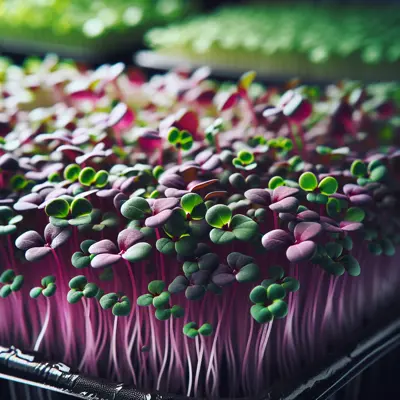
Red Clover Microgreens
A tall (2-3'), quick-growing clover. Sow in spring, summer, or fall, alone or with grain/grass. Will grow in more acidic soil (pH 5.0-6.0) than other clovers if lime is applied at seeding time. Widely grown biennial used for Nitrogen addition and hay crops. Large plant with big leaves makes it an ideal grazing crop. Red clover may be the best choice for frost seeding; it is extremely cold hardy and does well in most soils and growing conditions. it does, like most clovers, perform poorly in hot weather unless seeded into a crop canopy. Incorporate fully for best results. Mammoth Red clover will fix between 70-110 lb. nitrogen per acre. The long taproots loosen soils and mine phosphorus and other nutrients from deep in the soil. It should be seeded with 48-64 lb. or 1.5-2 bushels/acre of oats to "nurse" the clover. Inoculate with Alfalfa/True Clover Inoculant (#7535) for best performance. Edible Flowers: The flowers of red clover may be used to garnish drinks, salads, soups, and desserts; the flavor is sweet and mild.
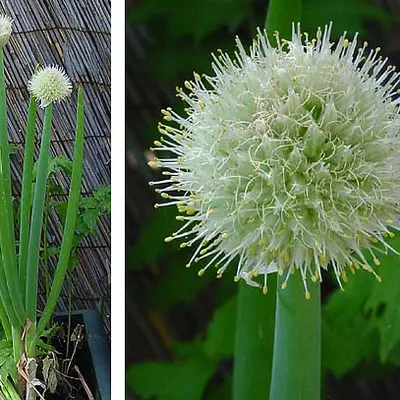
Scallion, Evergreen Hardy White
Green thread-like leaves. Adds delicate pungency where a mild onion flavor is needed.
Sorrel
Sorrel microgreens are delicate, tender shoots harvested at 10 days with bright green cotyledons and thin stems. These heirloom varieties deliver an intense lemony flavor with pronounced acidic tartness, making them ideal for elevating salads, soups, and gourmet plating. Quick-growing and easy to cultivate, they add a distinctive bright, tangy note that distinguishes them from common microgreens.
Sorrel, Red Veined
Add color and flavor contrast to microgreen blends. Same sharp, tangy flavor as regular sorrel. An elegant dessert garnish. Based on our yield trial, we recommend seeding 3.5 gm per tray at approx. 8 flats per oz of seed, for very small leaves.
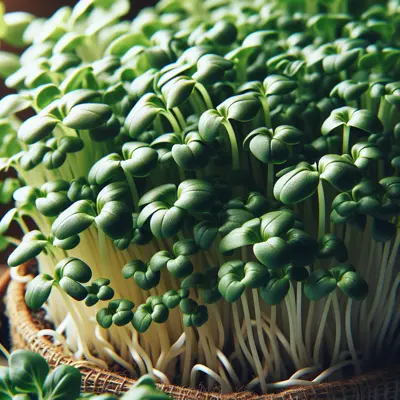
Sunflower Microgreens
Sunflower Microgreens are young sunflower seedlings harvested at 10-14 days, featuring bright green cotyledons with pale yellow stems. These easy-to-grow microgreens reach maturity quickly and are notably more tender than their sprout counterparts. They deliver a distinctive nutty, slightly sweet flavor with a satisfying crunch that works well in salads, sandwiches, and grain bowls. Rich in vitamins, minerals, and antioxidants, sunflower microgreens are a popular choice for health-conscious growers seeking nutritious homegrown greens with minimal effort.
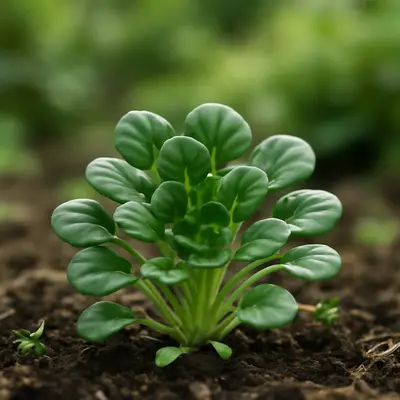
Tatsoi
Tatsoi is a delicate Asian microgreen variety with distinctive spoon-shaped leaves and tender stems. Ready to harvest in just 10 days, it offers a mild, delicate flavor with a satisfying crunch. The juicy stems and elegant appearance make it a versatile garnish for salads, stir-fries, and Asian dishes. Easy to grow, this heirloom variety thrives in full sun to partial shade, making it ideal for both home gardeners and commercial microgreen production.
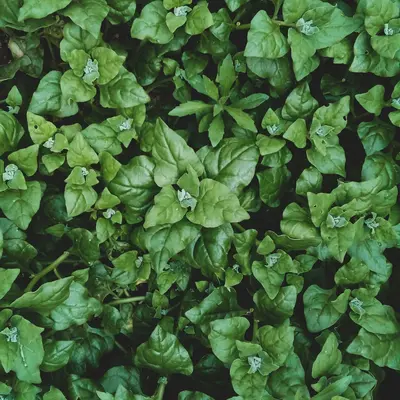
Watercress
Watercress microgreens are delicate, tender sprouts with small rounded cotyledons and thin stems, harvested at 10-14 days for optimal flavor. These heirloom microgreens mature quickly in moist indoor conditions, delivering an intensely peppery, slightly spicy bite characteristic of full-sized watercress. Rich in vitamins and minerals, watercress microgreens add a distinctive sharp, fresh zing to salads, sandwiches, and Asian dishes. Their vibrant green color and peppery punch make them a favorite among chefs seeking bold flavor from a compact, nutrient-dense green.
Wheatgrass Microgreens
Wheat sprouts with a sweet flavor. 1/2 cup of seed yields approx. 2-3 cups of sprouts. All of Johnny's high-germination sprouting seeds have tested negative for the presence of E. coli 0157 and Salmonella.
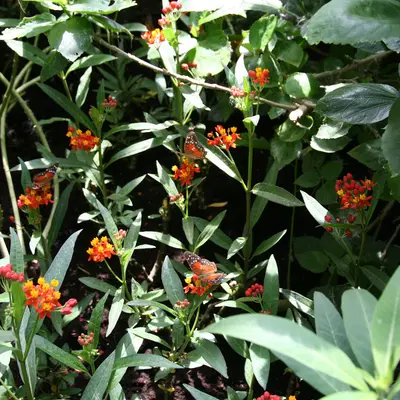
Apollo Orange
Tall, vigorous plants do best in warm, relatively dry conditions. Vivid orange blooms with attractive, slender foliage. Best used for cut flowers. Asclepias curassavica is attractive to butterflies and pollinators but we recommend planting a native species for best supporting butterflies. Also known as milkweed, butterfly weed, blood flower, and sunset flower. Tender perennial in Zones 7-10.
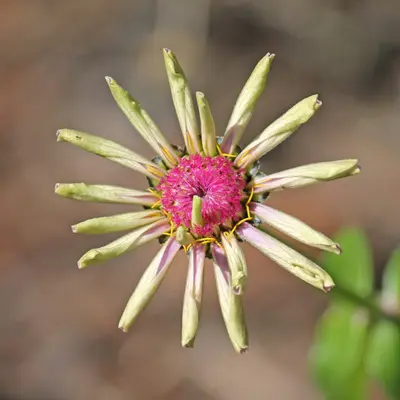
Bee Balm
Semidouble blooms in shades of lavender, salmon, magenta, and pale to bright pinks are useful as cut and edible flowers. Additionally, monarda attracts bees, butterflies, and hummingbirds to the garden. Also known as beebalm, Oswego tea, and scarlet beebalm. Medicinal: Aerial parts in infusions to improve digestion. Leaves and blooms contain thymol-related antibiotic-antiseptic compounds. Perennial in Zones 4-9. Edible Flowers: Add petals to salads, sprinkle over mild fish, use in fruit salads, or to garnish desserts and drinks. Flavor is minty and spicy.
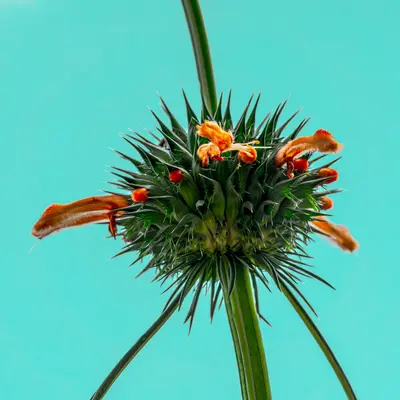
Black-Eyed Susan
Black-Eyed Susan is a cheerful native wildflower featuring bright golden-yellow petals radiating from a dark brown or black central cone. This heirloom variety matures in 100-120 days and thrives in full sun to partial shade with minimal care requirements. Highly adaptable to various soil types, it prefers well-drained conditions and tolerates poor soils where many plants struggle. The flowers bloom prolifically throughout summer and fall, making it excellent for pollinator gardens, naturalized plantings, and cut arrangements. Though occasionally browsed by deer, it resists most pests effectively. Primarily grown for ornamental and ecological value rather than culinary use.
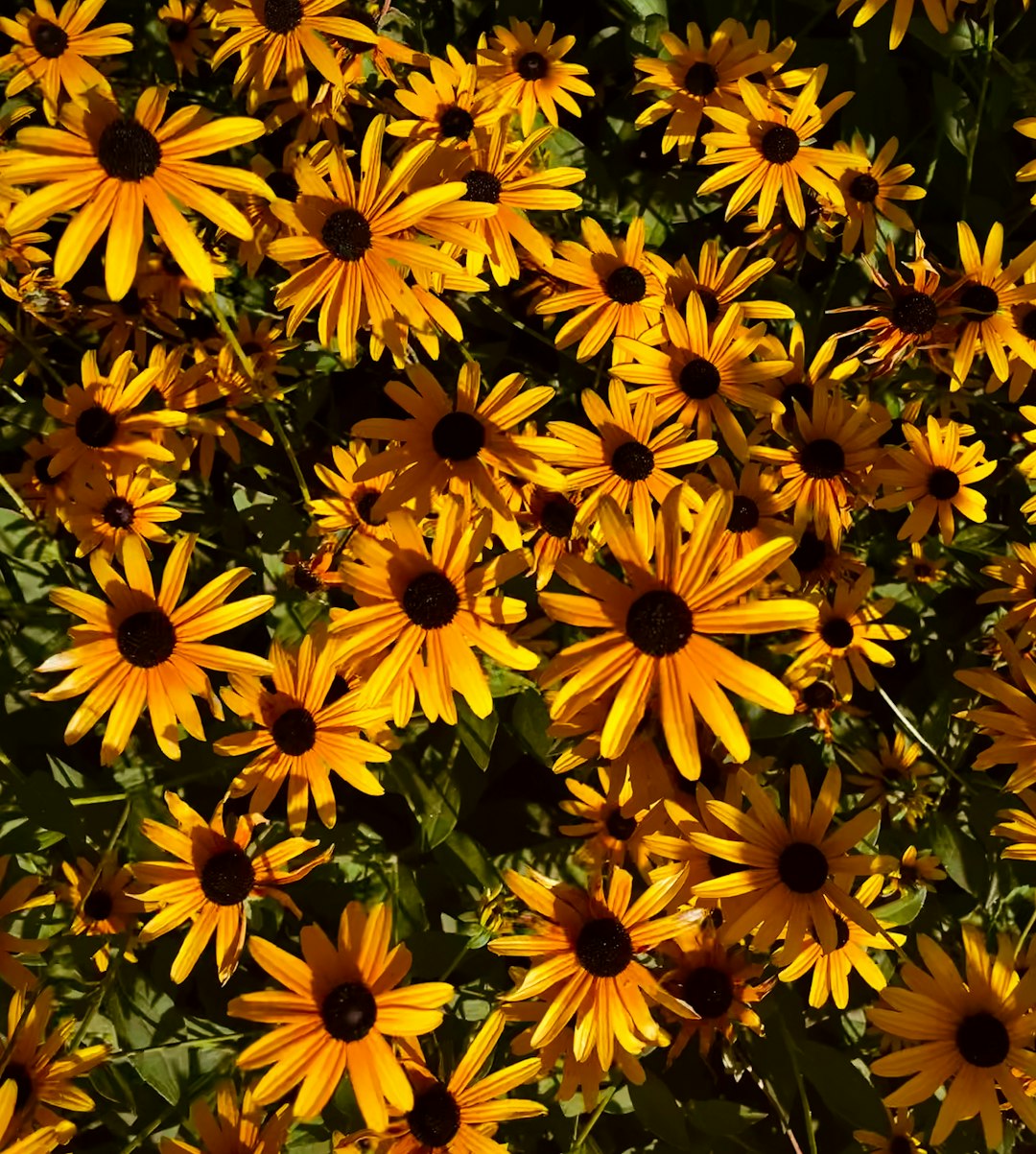
Brown-Eyed Susan
Profuse blooms of adorable, 1 1/2- 2 1/2", bright yellow flowers with small, black/brown centers. Wiry, well-branched stems have few leaves, making this an excellent cut flower. Also serves as a filler or accent flower in bouquets. This native US wildflower tolerates most conditions, including drought, once established. Short-lived perennial in Zones 3-9; typically flowers in the first year but may not bloom until second year if heavily crowded. Stems are reddish in color and have fine hairs. Leaves at the base of the plant are three-lobed, as indicated by the plant's Latin name species: triloba. Also known as brown-eyed Susan and browneyed Susan.
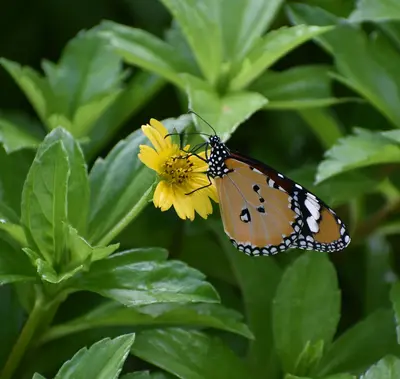
Butterfly Weed
Attracts butterflies and bees. Grows well in arid soils. Also known as milkweed, butterfly weed, butterfly milkweed, and butterfly-weed. Medicinal: Roots are a respiratory expectorant and diaphoretic. Perennial in Zones 4-9.

California Poppy
California Poppy is a vibrant native wildflower with silky, cup-shaped petals in golden-orange hues that close at night and on cloudy days. This easy-to-grow heirloom matures in 55-60 days and thrives in poor, sandy soils with minimal care—ideal for xeriscaping and cottage gardens. The delicate petals are edible with a mild, lettuce-like flavor, adding color and subtle taste to salads. Its self-seeding nature and drought tolerance distinguish it from ornamental annuals, making it a low-maintenance native choice for sunny landscapes with good drainage.
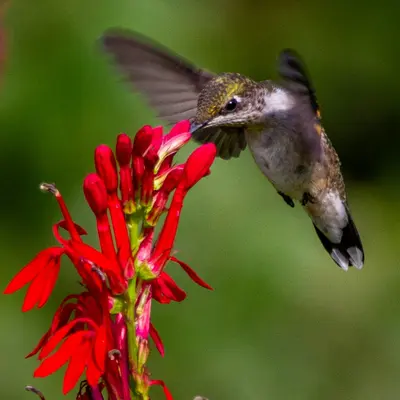
Cardinal Flower
Nature's most brilliant red wildflower creates an unforgettable display with its intense scarlet blooms that seem to glow in shade gardens. This native beauty is a hummingbird magnet, drawing ruby-throated hummingbirds from miles around with its tubular flowers perfectly designed for their long beaks. Thriving in moist soils where many plants struggle, it brings vibrant color to pond edges, rain gardens, and woodland borders.
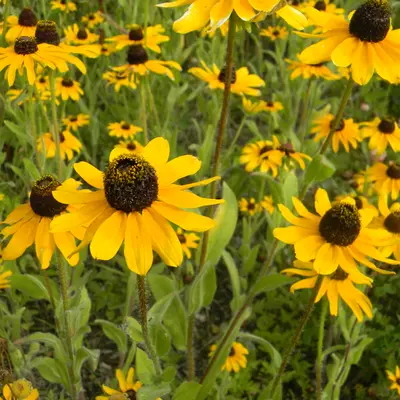
Cheyenne Spirit
Bred for improved branching and a higher percentage of 3-4" flowers per plant. The vivid red, orange, purple, scarlet, cream, yellow, and white blooms can be used as cuts or as high-impact landscaping or container plants. Attracts and is a food source for bees. Perennial in Zones 3-8. FleuroSelect Gold Award Winner. AAS Winner.
Coral Bells
Native coral bells offer delicate clouds of tiny white or pink flowers dancing above beautiful mounds of scalloped leaves that change colors with the seasons. This versatile perennial bridges the gap between wildflower and cultivated garden, equally at home in formal borders or naturalized woodland settings. Its long-lasting foliage provides four-season interest while the airy flower stems attract bees and other beneficial pollinators.
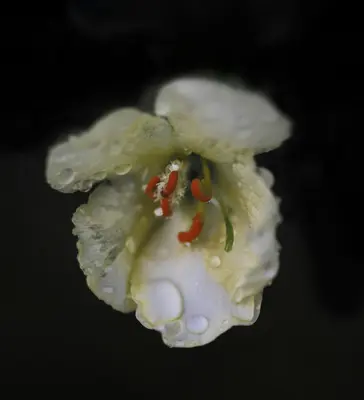
Lanceleaf Coreopsis
This cheerful native perennial produces masses of bright yellow daisy-like flowers with distinctive notched petals from spring through fall. Lanceleaf coreopsis is incredibly easy to grow and drought tolerant, making it perfect for beginner gardeners and low-maintenance landscapes. Its long blooming period and excellent cut flower qualities have made it a staple in cottage gardens and prairie restorations.
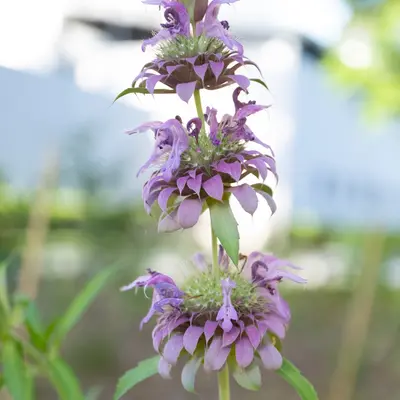
Lemon Mint
Towers of bright lavender 1 1/2-2" blooms on straight and thin, yet sturdy stems. An unusual and easy-to-use cut flower. The blooms and leaves are edible, though the leaves are intensely spicy. Native to the US. Also known as lemon bee balm, purple horsemint, and lemon mint. Edible Flowers: Add petals to salads, sprinkle over mild fish, use in fruit salads, or to garnish desserts and drinks. Flavor is minty and spicy. Leaves are used to flavor salads, cooked foods, and tea. Attracts Beneficial Insects: Nectar plant for bees, butterflies, and hummingbirds.
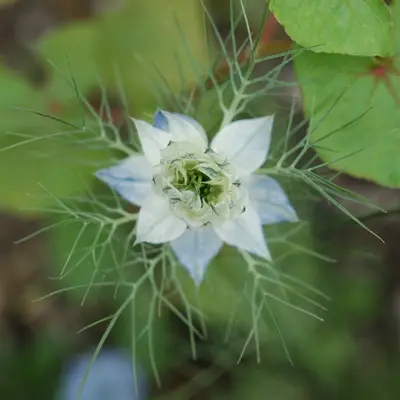
New England Aster
The crown jewel of fall-blooming wildflowers, this spectacular native transforms into clouds of tiny purple flowers just when most gardens are winding down. Essential for monarch butterfly migration and beloved by over 100 native bee species, it provides crucial late-season nectar when little else is blooming. The impressive 3-6 foot tall plants create dramatic backdrops and naturalize beautifully in wildflower meadows.
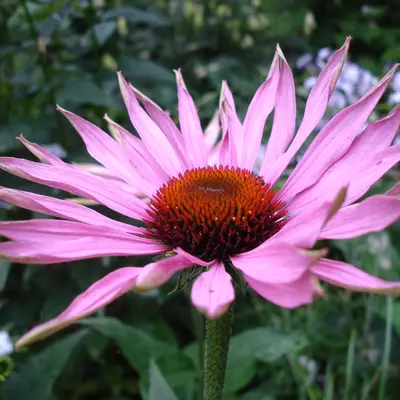
Paradiso Tall Mix
3-4" wide blooms in shades of magenta, cream, yellow, white, and orange can be used as casual cut-flowers, high-impact landscaping, or for perennial beds. Compared to Cheyenne Spirit, Paradiso Tall Mix has taller plants and a wider color range, including some softer hues such as white and cream. Attracts and is a food source for bees and other pollinators. Perennial in Zones 3-8.
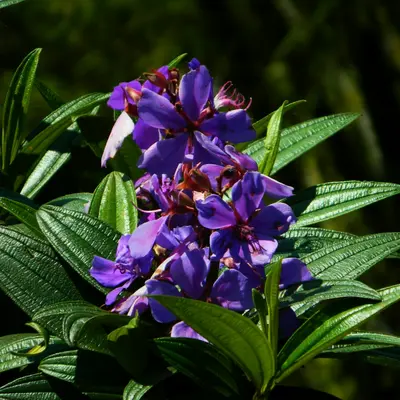
Purple Coneflower
Easy-to-grow echinacea. Vigorous plants with large, purple-petaled flowers. Fibrous roots are easy to harvest (other species have taproots). Attracts and is a food source for bees. Also known as purple coneflower and eastern purple coneflower. Normally grown for 3-4 years for harvest of sizeable roots. Perennial in Zones 3-10.
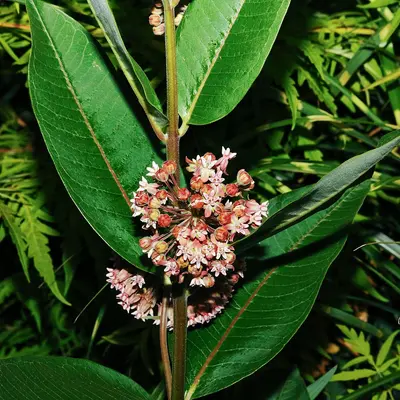
Swamp Milkweed
Blooms summer through frost. Clusters of rose to mauve florets on sturdy stems. In our trials the species is nearly identical to the variety Soulmate. Attractive lance-shaped leaves. Use for cut flowers and garden beds. Attracts butterflies and hummingbirds. Larval host for monarch butterflies. Native to North America. Also known as pink milkweed and rose milkweed. Perennial in Zones 3-8.
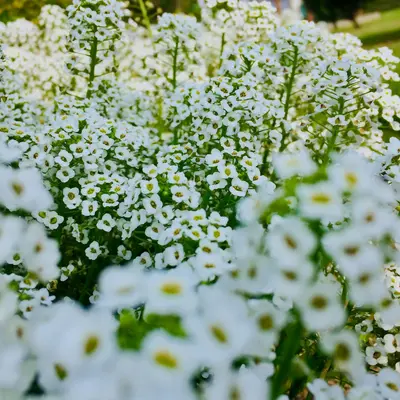
Sweet Alyssum
Sweet Alyssum is a delicate, low-growing annual wildflower featuring clusters of tiny, fragrant flowers in white, pink, or purple. Reaching just 3-9 inches tall, it matures in 50-60 days and spreads gracefully across borders and containers. This heirloom variety thrives in full sun to partial shade and tolerates poor, well-drained soil exceptionally well, making it ideal for challenging garden spots. While not typically eaten, Sweet Alyssum's defining characteristic is its intensely sweet, honey-like fragrance that attracts pollinators and fills gardens with subtle fragrance. Its vigorous self-seeding habit ensures prolific blooms throughout the season.
Wild Bergamot
A fragrant native wildflower that attracts butterflies, bees, and hummingbirds with its clusters of tubular lavender-pink blooms. This hardy perennial spreads naturally to form beautiful colonies and has been used traditionally for tea and medicinal purposes. Its minty fragrance and long blooming period make it a favorite for pollinator gardens and prairie restorations.
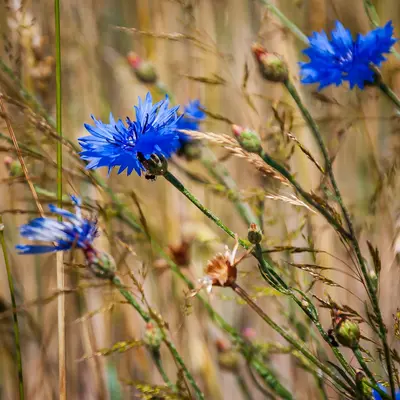
Wild Blue Indigo
A stunning prairie native that produces dramatic spikes of deep blue lupine-like flowers in late spring, followed by attractive seed pods that rattle in the wind. This long-lived perennial forms impressive clumps over time and is virtually maintenance-free once established, making it a cornerstone plant for naturalized gardens.
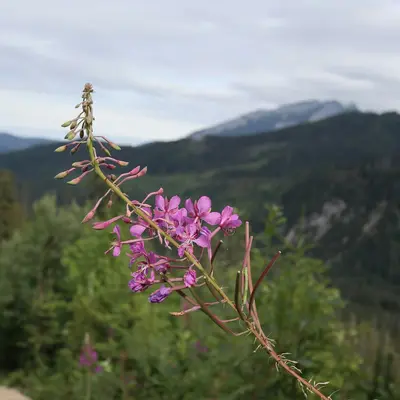
Wild Columbine
This delicate woodland native produces unique red and yellow flowers with distinctive spurs that nod gracefully above blue-green compound foliage. Wild columbine is a hummingbird magnet and thrives in partial shade where many wildflowers struggle. Its ability to self-seed in rocky crevices and woodland edges makes it perfect for naturalizing in shade gardens.
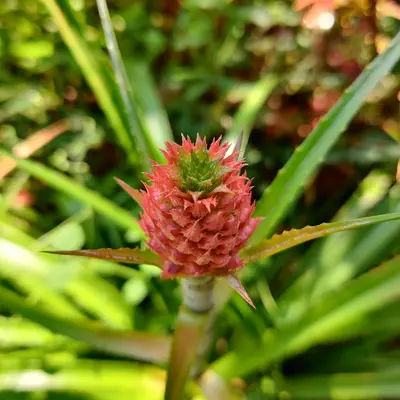
Wild Ginger
A charming woodland groundcover with heart-shaped leaves that forms lush carpets in shaded gardens. This native wildflower produces curious burgundy bell-shaped flowers hidden beneath the foliage in spring, pollinated by ground-dwelling beetles and ants. Its aromatic rhizomes were historically used as a ginger substitute by early settlers.
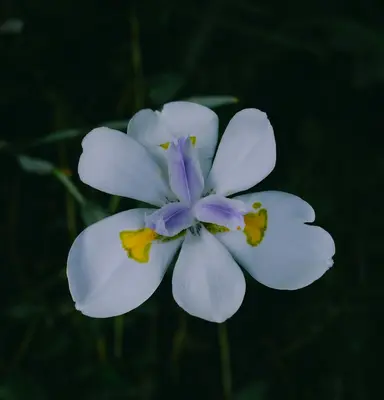
Wild Lupine
This stunning native perennial produces tall spikes of blue-purple pea-like flowers above distinctive palmate leaves. Wild lupine is the sole host plant for the endangered Karner blue butterfly and an important nitrogen-fixer that improves soil health. Its deep taproot makes it extremely drought tolerant once established, perfect for naturalizing in sandy soils.

Black Walnut
America's native nut tree that produces intensely flavored nuts prized by gourmet cooks and wildlife alike. Black walnut combines valuable timber potential with unique culinary nuts that have a bold, distinctive taste unlike any other nut. This impressive native tree creates its own ecosystem space through natural allelopathy while providing generations of harvestable nuts and potential lumber value.
Carpathian Walnut
The ultimate cold-hardy walnut that brings nut production to northern climates previously too harsh for English walnuts. Originally from the Carpathian Mountains of Eastern Europe, these hardy trees can withstand temperatures down to -25°F while still producing quality nuts. Each tree grown from seed develops unique characteristics, making every Carpathian walnut tree a one-of-a-kind addition to cold-climate homesteads.
Chestnut (Chinese)
The Chinese chestnut offers hope for restoring chestnut production in North America with its natural resistance to chestnut blight that devastated American chestnuts. These fast-growing trees produce sweet, starchy nuts perfect for roasting and have become increasingly popular among homesteaders and permaculture enthusiasts. The trees are also valued for their beautiful fall color and relatively compact size compared to their American cousins.
Franquette Walnut
A treasured French heirloom variety that combines exceptional nut quality with impressive cold tolerance and late leafing that avoids spring frosts. Franquette produces elongated nuts with rich, flavorful meats that store exceptionally well through winter months. This variety serves double duty as an excellent pollinator for other walnut varieties while producing its own premium crop.
Hazel (American)
A native North American shrub that produces clusters of small, sweet nuts beloved by both wildlife and gardeners. This hardy, cold-tolerant species thrives in a wide range of conditions and makes an excellent choice for naturalistic landscapes or permaculture designs. The nuts have a rich, buttery flavor and the plant provides beautiful fall color and early spring catkins.

Hickory (Lakota)
A superior shagbark hickory selection known for producing exceptionally large, thin-shelled nuts with outstanding flavor that rivals any native nut tree. Lakota was selected from wild trees for its consistent production, easy cracking, and rich, buttery kernel quality that makes the effort of growing hickories worthwhile. This variety represents the best of America's native nut trees for the patient home orchardist.
Hickory (Shellbark)
The king of hickory nuts, Shellbark hickory produces the largest and sweetest nuts in the hickory family, with meat that rivals pecans in flavor and quality. These impressive native trees are prized by foragers and nut enthusiasts for their thick-shelled nuts that crack open to reveal plump, rich kernels with exceptional flavor. While slow to establish, mature Shellbark hickories become magnificent shade trees that provide decades of premium nut harvests.
Pecan (Stuart)
One of the most reliable and widely planted pecan varieties, Stuart has been a Southern favorite since the early 1900s. This self-fertile variety produces large, plump nuts with excellent flavor and good cracking quality, making it perfect for both commercial and home orchard use. The tree is known for its consistent annual production and relatively early bearing age.
Ginkgo Biloba Autumn Gold
A stunning male cultivar of the ancient Ginkgo tree, prized for its brilliant golden-yellow fall color that creates a spectacular autumn display. This living fossil is incredibly hardy and pollution-tolerant, making it perfect for urban landscapes while bringing prehistoric beauty to modern gardens.

Norway Spruce
A majestic evergreen giant that serves as the classic Christmas tree silhouette, featuring gracefully drooping branches and dense, dark green needles that create dramatic winter interest. This fast-growing conifer develops into an impressive specimen with distinctive pendulous branchlets that sway beautifully in the wind, while producing large decorative cones that add architectural appeal. Its reliability in cold climates and ability to serve as an effective windbreak make it a cornerstone tree for northern landscapes.
Star Magnolia
An early-blooming magnolia that signals spring's arrival with masses of fragrant, star-shaped white flowers that appear before the leaves emerge. This compact magnolia is perfect for smaller gardens and consistently ranks as one of the most reliable and beautiful spring-flowering trees for home landscapes.
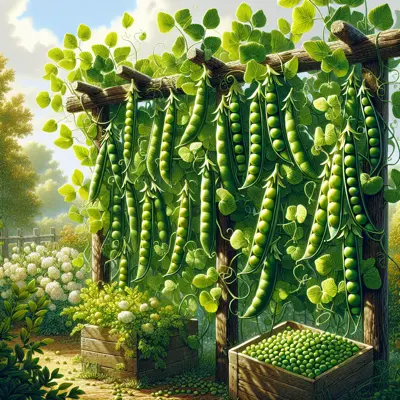
Alderman
Also known as Tall Telephone, this vigorous heirloom climbing pea from 1891 produces some of the largest and most flavorful shelling peas available. The impressive 6-foot vines yield massive pods packed with 8-10 sweet, large peas perfect for fresh eating or preserving. This variety is ideal for gardeners who want maximum production from minimal space.
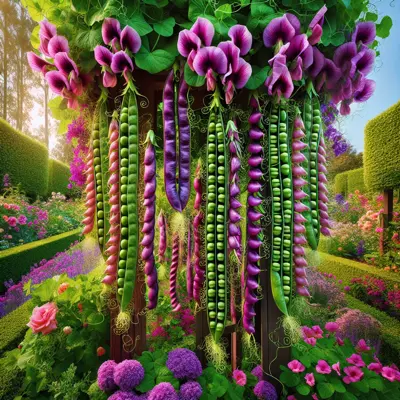
Blue Podded Blauwschokker
A stunning Dutch heirloom that produces vibrant purple pods and bright magenta flowers, making it as ornamental as it is edible. This unique variety has been treasured since the 1800s for its striking appearance and excellent flavor as both a snow pea and dried pea. The purple pods turn green when cooked, creating a delightful culinary surprise.
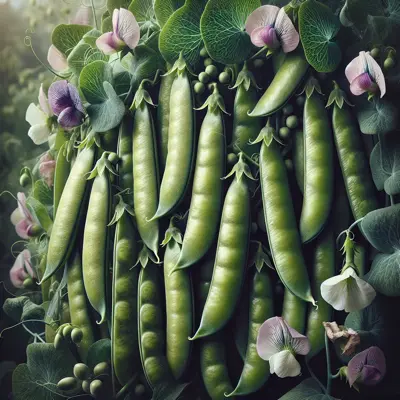
Carouby de Maussane
A spectacular French heirloom snow pea that produces enormous purple-flowered vines and the largest edible pods of any pea variety. These impressive 4-5 inch wide, flat pods are incredibly tender and sweet when harvested young, making them a gourmet delight. The vigorous climbing plants create an edible privacy screen while producing abundant harvests throughout the cool season.
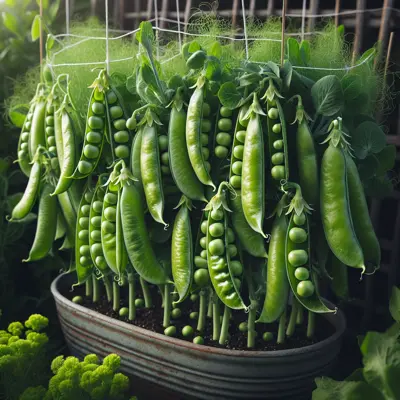
Cascadia
Cascadia boasts high yields of 2 1/2-3" pods on 18-20" vines. Similar in maturity to PLS 141, but with slightly smaller pod size. 2 pods per node on upright plants. Remove string from pods before cooking.
Dwarf Grey Sugar
An attractive addition to salad mixes, Dwarf Grey Sugar is the preferred variety for both taste and tenderness. A great choice for restaurant sales. 28" vines. Edible Flowers: The flowers, with their mild and pea-like flavor, are a popular choice for brightening up salad mix. They can also be used in micro mix salads, as a garnish for desserts, or for candying to place on cakes.
Kelvedon Wonder
A British favorite since 1925 that combines early maturity with exceptional productivity in a compact plant. This reliable variety produces abundant crops of well-filled pods containing 7-9 sweet, tender peas that have made it a mainstay in European gardens for nearly a century. Kelvedon Wonder's dependable performance and superior flavor make it perfect for gardeners seeking a proven, space-efficient shelling pea.
Knight
Knight is a classic heirloom pea variety prized for its sweet, tender pods and excellent fresh flavor. Maturing in 90-100 days, it produces vigorous plants that thrive in full sun and well-drained soil. The variety is valued by home gardeners for its outstanding taste straight from the garden and reliability across various soil types. Knight peas are highly susceptible to common pests including aphids, thrips, and pea leaf weevils, requiring attentive monitoring during the growing season. This easy-to-grow heirloom remains a favorite for fresh eating and traditional pea production.
Laxton's Progress No. 1
A classic English heirloom shelling pea dating back to the 1920s, beloved for its exceptional productivity and sweet flavor. This dwarf variety produces plump pods filled with tender, bright green peas that are perfect for fresh eating or freezing. Despite its compact size, it delivers impressive yields and has been a home garden favorite for nearly a century.
Lincoln
A dependable All-America Selections winner from 1908 that remains one of the most popular shelling peas for home gardeners. This variety produces heavy yields of dark green pods filled with exceptionally sweet peas that freeze beautifully. Lincoln's consistent performance and excellent flavor have made it a garden staple for over a century.

Little Marvel
A compact heirloom shelling pea perfect for small gardens and beginning gardeners since 1908. Despite its dwarf stature, Little Marvel produces an abundant harvest of plump, sweet peas that mature all at once for easy picking. This reliable variety consistently delivers exceptional flavor and has been a garden favorite for over a century.
Mammoth Melting Sugar
An impressive heirloom snow pea variety dating back to the 1880s, producing enormous 4-5 inch edible pods on towering vines. The sweet, crisp pods literally melt in your mouth and are perfect for stir-fries and fresh eating. This vigorous climber is a conversation starter in any garden with its exceptional size and productivity.
Oregon Giant
Abundant yields of medium-green pods up to 4 1/2" long x 1" wide. The 30" tall, white-flowered vines produce 1 to 2 pods per node. Bred by the late Dr. James Baggett of Oregon State University.
Oregon Sugar Pod II
A great substitute for Oregon Giant, as it is very similar. Excellent emergence. Normal, 38" tall vines produce very high yields of stringless pods. 2 pods per node.
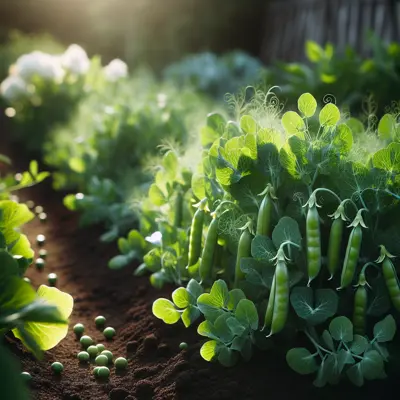
Progress No. 9
A dependable English shelling pea that has been a garden favorite since the 1930s, prized for its consistent production and excellent flavor. This compact, dwarf variety produces plump pods filled with 7-9 large, sweet peas that are perfect for fresh eating or preserving. Its reliable performance and disease resistance make it an ideal choice for beginning gardeners.
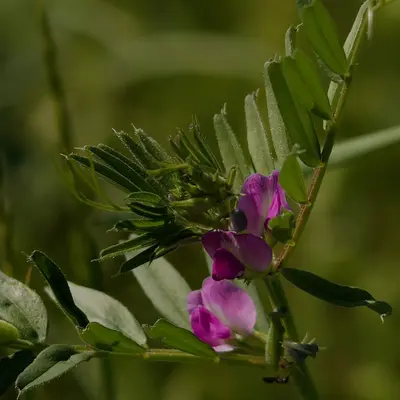
Provider
Provider is a classic heirloom snap pea variety that reaches maturity in approximately 50 days. This easy-to-grow cultivar produces tender, sweet peas with the authentic garden pea flavor that home gardeners prize. Provider peas are known for their reliable production and disease resistance, making them an excellent choice for beginners. The plants yield abundant crops of crisp, flavorful pods ideal for fresh eating, cooking, or freezing. This heirloom variety thrives in full sun with well-drained, fertile soil enriched with organic matter.
Purple Podded
A stunning ornamental edible that produces beautiful deep purple pods filled with bright green peas, creating a striking contrast in the garden. This heritage variety from the 1800s not only looks amazing but also delivers excellent flavor and productivity. The purple pods make harvesting easy since they stand out dramatically against the green foliage, though they turn green when cooked.
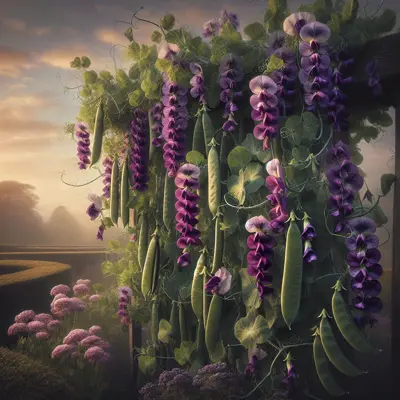
Purple Top
Purple Top is a heirloom pea variety known for its distinctive purple-tinged pod coloring that fades to green at maturity. This early maturing variety reaches harvest readiness in approximately 37 days, producing sweet, tender pods with a delicate, subtle pea flavor. The plants thrive in full sun and well-drained soil enriched with organic matter. Purple Top stands out among heirloom peas for its unique visual appeal and exceptional sweetness, making it a prized choice for both fresh eating and culinary use. The variety is moderately challenging to grow and requires attention to common pea pests including aphids, spider mites, and slugs.
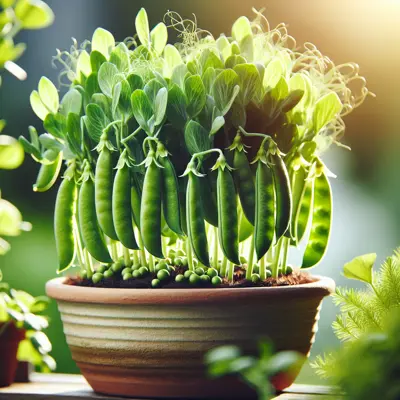
Sugar Ann
Consistently the sweetest bush type in our trials, Sugar Ann produces uniform crops of delicious 2-2 1/2" long peas that hold their flavor well. Matures exceptionally early, with a concentrated set on 20" dwarf vines with 1-2 pods per node. AAS Winner.
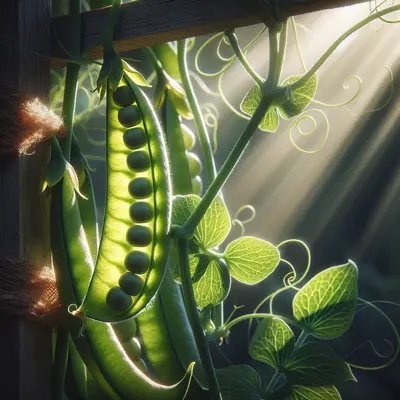
Sugar Snap
Johnny's superior strain. From an ongoing collaboration with the family of the late Dr. Calvin Lamborn, the breeder of Sugar Snap. A household name for its sweet, crisp pods, Sugar Snap germinates well in cold, wet soil, and the vigorous plants quickly produce a thick stand that requires support. Vines avg. 72" with 1 or 2 pods per node. Yields well over a long season in both hot and cold weather. Remove string from pods before cooking. Needs trellising. AAS Winner. Also available in organic seed.
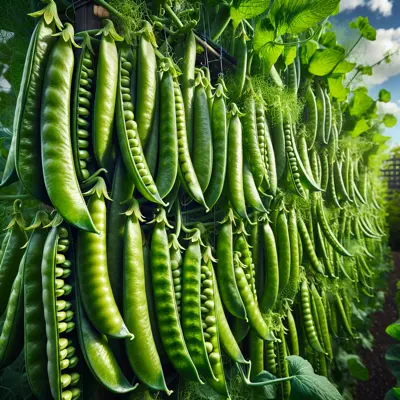
Super Sugar Snap
A disease-resistant version of the beloved Sugar Snap with more manageable 60" vines. Early yields are heavier over a shorter period. Not quite as sweet as the original. Pods avg. 3" long with 1 or 2 per node. Remove string from pods before cooking. Needs trellising.
Tall Telephone
A classic heirloom shelling pea from the 1880s that remains beloved for its exceptional productivity and sweet flavor. This tall-growing variety produces an abundance of large pods filled with 8-10 tender, sweet peas that are perfect for fresh eating or freezing. Tall Telephone is the variety that made generations of gardeners fall in love with homegrown peas.
Telephone
A treasured heirloom from the 1870s that remains one of the finest shelling peas ever developed. This tall, vigorous climber produces enormous pods packed with 8-10 large, exceptionally sweet peas that have satisfied gardeners for over 150 years. The impressive height and prolific production make Telephone a garden showstopper that delivers old-fashioned pea flavor at its absolute best.
Thomas Laxton
A prized English heirloom from 1900 renowned for producing some of the sweetest, most tender peas available to home gardeners. This early-season variety beats many modern peas to harvest while delivering superior flavor that's particularly sweet when picked young. Thomas Laxton has remained popular for over 120 years because it consistently produces restaurant-quality peas that make every gardener feel like a gourmet.
Tom Thumb
The ultimate space-saving pea variety, Tom Thumb grows just 8-10 inches tall yet produces a surprising abundance of sweet, tender peas. This Victorian-era heirloom is perfect for container gardens, small spaces, and children's gardens. Despite its tiny stature, it delivers full-sized flavor and requires no staking or trellising.
Aji Dulce 'Venezuelan Sweet'
A treasured sweet pepper from Venezuela that looks like a habanero but has no heat, offering pure fruity flavor without the fire. These small, colorful peppers are essential in Caribbean and South American cooking, providing the distinctive chinense aroma and taste that makes sofrito and other traditional dishes authentic. Home gardeners love this productive variety for its unique flavor profile and beautiful ornamental appeal.
Anaheim 'Hatch Big Jim'
The king of New Mexico chile peppers, this legendary heirloom produces enormous 8-12 inch peppers with the authentic Hatch flavor that's essential for true southwestern cuisine. Developed at New Mexico State University, Big Jim holds the Guinness World Record for largest chile pepper and delivers mild to moderate heat with complex, earthy flavors that become sweet and smoky when roasted. This is the pepper that puts Hatch, New Mexico on the culinary map every harvest season.
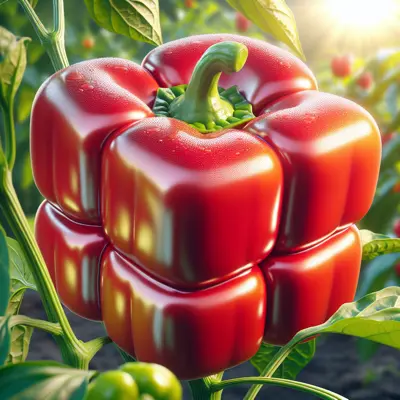
Bell Pepper 'California Wonder'
The gold standard for sweet bell peppers, California Wonder has been America's favorite home garden variety since the 1920s. These thick-walled, blocky peppers start green and can ripen to brilliant red, offering exceptional sweetness and crunch. Reliable, productive, and perfect for beginners, it's the pepper that built America's love affair with home-grown sweet peppers.
Bell Pepper 'King of the North'
A reliable early-maturing bell pepper bred specifically for cooler climates and short seasons. This compact variety produces thick-walled, blocky peppers that ripen from green to brilliant red even in challenging northern conditions. Perfect for gardeners who struggle with traditional bell peppers in cooler regions.

Bell Pepper 'Sweet Chocolate'
This stunning bell pepper ripens to a rich chocolate-brown color that's as beautiful as it is delicious. The thick-walled fruits offer exceptional sweetness with a complex flavor that sets them apart from ordinary bell peppers, making them a gourmet favorite for both gardeners and chefs.
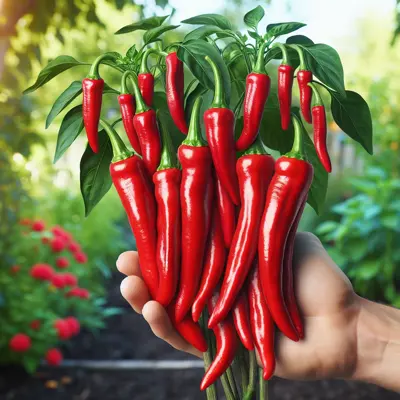
Cayenne 'Long Red Cayenne'
The classic hot pepper that's been setting kitchens on fire since the 1800s, Long Red Cayenne is the go-to variety for homemade hot sauce and dried pepper flakes. These slender, curved peppers pack substantial heat while remaining incredibly useful in the kitchen, drying beautifully and grinding into the perfect pizza-shaking spice. Extremely productive and reliable, it's an essential variety for any serious pepper grower.
Chipotle 'Morita'
The authentic jalapeño variety traditionally used to make premium chipotle peppers in Mexico, prized for its perfect balance of heat and smokiness when dried. These deep red jalapeños have thicker walls than typical varieties, making them ideal for smoking, while fresh peppers offer a more complex flavor than standard jalapeños. 'Morita' brings genuine Mexican cuisine authenticity to the home garden.
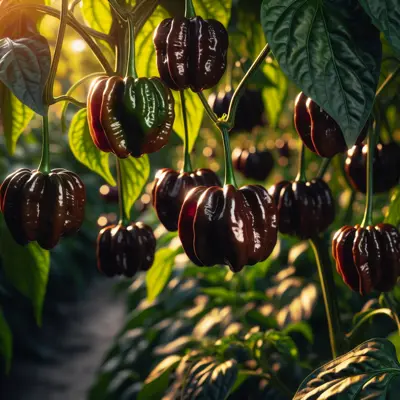
Chocolate Habanero
This exotic habanero variety produces beautiful chocolate-brown pods with an incredibly rich, smoky flavor that sets it apart from orange habaneros. The complex taste combines serious heat with notes of chocolate and tobacco, making it a favorite among gourmet cooks and hot sauce enthusiasts. The unusual color and exceptional flavor make this a must-grow for anyone wanting to explore beyond ordinary peppers.
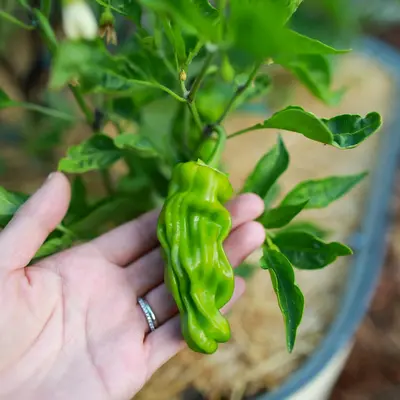
Ghost Pepper 'Bhut Jolokia'
Once the world's hottest pepper, this legendary superhot from Northeast India delivers an intense, building heat that made it famous worldwide. The wrinkled, lantern-shaped pods start green and ripen to orange-red, offering not just extreme heat but also a unique fruity, smoky flavor. Essential for hot sauce makers and thrill-seekers who want to grow their own legendary fire.
Habanero 'Caribbean Red'
An intensely hot heirloom habanero that brings serious heat along with a distinctive fruity, citrusy flavor that's prized by hot sauce makers and spicy food enthusiasts. The bright red, lantern-shaped pods pack a punch at 300,000-445,000 Scoville units while maintaining the complex flavor profile that makes habaneros so sought after. This productive variety thrives in hot climates and rewards patient growers with an abundant harvest of fiery perfection.
Habanero 'Chocolate Habanero'
An exotic and intensely flavorful habanero variety with stunning chocolate-brown color and fruity complexity that sets it apart from orange varieties. Despite its fierce heat, this pepper offers incredible depth with notes of tobacco, chocolate, and tropical fruit. Serious pepper enthusiasts prize this variety for hot sauces and Caribbean cuisine where its unique flavor profile truly shines.
Habanero 'Orange Habanero'
The classic superhot pepper that brings serious heat along with an incredible fruity, citrusy flavor that's become legendary among chili enthusiasts. These wrinkled, lantern-shaped peppers pack intense heat but reward brave gardeners with complex flavor notes of tropical fruit and floral undertones. A small amount goes a very long way in hot sauces, salsas, and Caribbean-inspired dishes.
Habanero 'Red Savina'
Once the world's hottest pepper, this fiery habanero delivers intense heat with surprising fruity flavor. The deep red, wrinkled pods pack serious punch at 200,000-350,000 Scoville units, making them perfect for hot sauce enthusiasts who want extreme heat with gourmet flavor.
Hot Pepper 'Aji Amarillo'
The cornerstone of Peruvian cuisine, this brilliant orange pepper delivers moderate heat with an incredibly complex, fruity flavor that's unlike any other variety. Aji Amarillo peppers are essential for authentic dishes like ají de gallina and papa a la huancaína, offering home gardeners a chance to grow this culinary treasure that's nearly impossible to find fresh in stores. Their unique C. baccatum species gives them a distinctive taste profile that combines tropical fruit notes with warming heat.
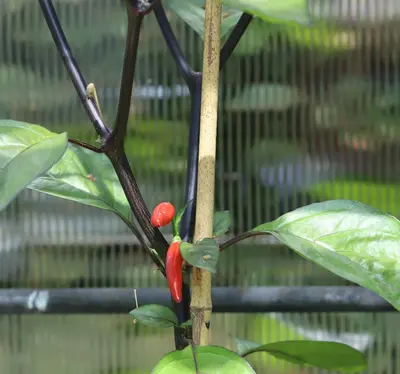
Hot Pepper 'Beaver Dam'
A rare Hungarian heirloom brought to Wisconsin by the Hussli family in 1912, saved from near extinction by the Seed Savers Exchange. These unique peppers start sweet when small and develop medium heat as they mature, offering incredible versatility in the kitchen. The large, productive plants bear distinctively shaped peppers that are perfect for fresh eating, frying, or drying into paprika.
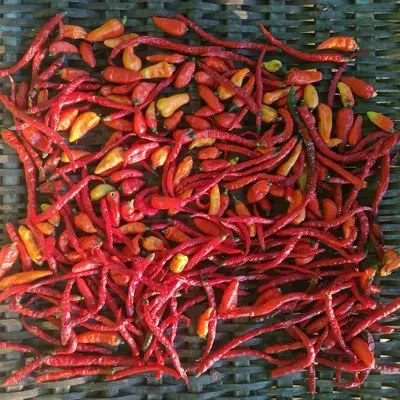
Hot Pepper 'Habanero Red'
The classic Caribbean fire-breather that delivers serious heat along with distinctive fruity flavor that sets it apart from other hot peppers. These wrinkled, lantern-shaped peppers pack intense heat (100,000-350,000 Scoville units) but also offer complex tropical fruit notes. A must-grow for hot sauce enthusiasts and anyone serious about adding authentic heat to their cooking.
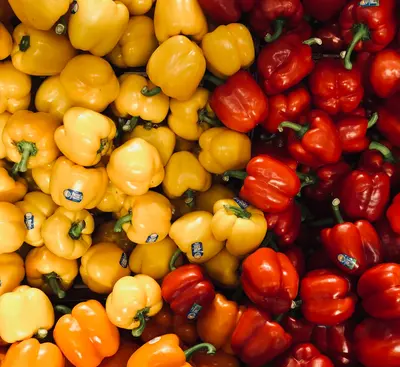
Hot Pepper 'Joe's Long Cayenne'
An exceptional heirloom cayenne variety that produces remarkably long, slender peppers up to 10 inches in length with intense heat and outstanding flavor. This Italian heirloom is incredibly productive and the peppers dry beautifully, making it perfect for creating homemade hot pepper flakes and powder. A favorite among serious hot pepper growers for its reliability and impressive yields.
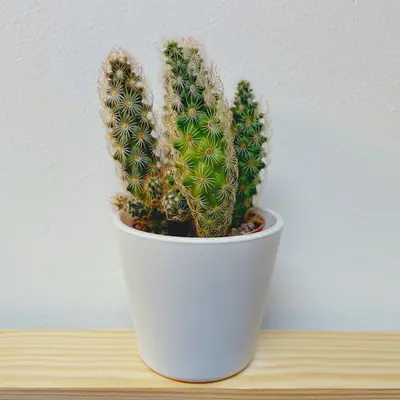
Hungarian Hot Wax
Growers in the Pacific Northwest and Northern Tier of the US rely on Hungarian Hot Wax because it matures very early in cool, wet weather. However, many commercial strains have been poorly maintained; plants grown from these lots are often floppy, and the fruits vary in size, shape, and heat level. In 2015, our breeding team began improving this variety through 3 cycles of selective plant breeding. Our newly selected strain features an upright plant and uniform fruits. The greatly improved plant architecture offers better fruit protection and faster/easier harvests with minimal fruit damage! Smooth, tapered, and moderately spicy fruits avg. 5 1/2" x 1 1/2" and mature from pale yellow to orange red, and finally, to a vibrant red. Excellent for frying, roasting, or pickling.
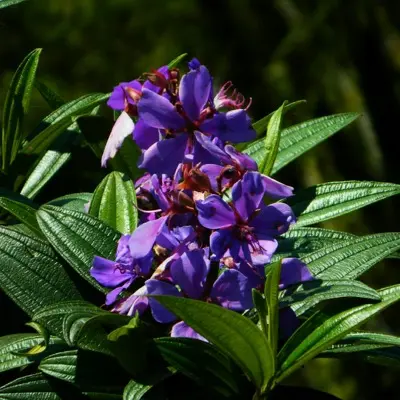
Jalapeño 'Purple Jalapeño'
A stunning ornamental and culinary pepper that produces deep purple fruits with dark purple stems and leaves, creating a dramatic garden display. The peppers pack the same heat and flavor as traditional jalapeños but add incredible visual appeal to both the garden and the plate. This unique variety turns from purple to red when fully mature, offering multiple harvest stages.
New Mexico Hatch Chile 'Sandia'
The authentic New Mexican chile that defines the cuisine of the Southwest, offering medium heat with incredible flavor depth perfect for roasting. Developed at New Mexico State University, Sandia produces large, thick-walled pods that blister beautifully and develop complex smoky-sweet flavors when roasted. This is the real deal for making traditional green chile dishes and ristras.
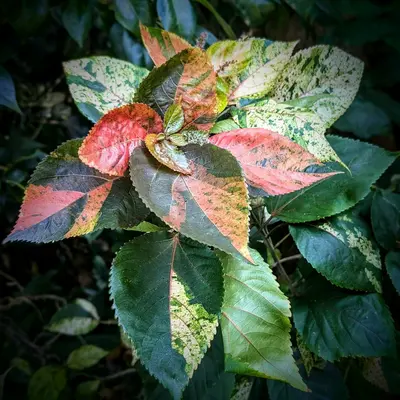
Padron Pepper
Named after the town where they originated. Harvest Padron peppers when they are 1-1 1/2" long. About 1 out of 20 fruits will be hot, and the rest mild. All the fruits become hot if allowed to grow 2-3" long. Typically sautéed in olive oil with a little sea salt and eaten as tapas (appetizers) in Spain.
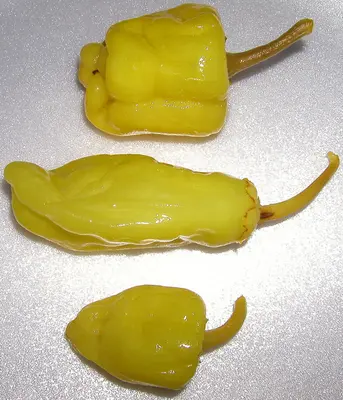
Pepperoncini 'Golden Greek'
The classic mild pepper that's essential for Greek salads, antipasto platters, and Mediterranean cuisine. These golden-yellow peppers offer a tangy, slightly sweet flavor with just a hint of heat, making them perfect for pickling or eating fresh. Incredibly productive plants will keep you supplied with these versatile peppers all season long.
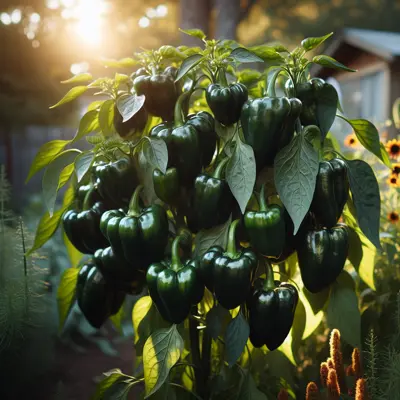
Poblano 'Ancho Poblano'
The backbone of Mexican cuisine, this mild to medium-heat pepper is perfect for stuffing, roasting, and making authentic chiles rellenos. When fresh, they're called poblanos; when dried, they become the coveted ancho chile that adds deep, smoky flavor to sauces and moles. Their large size and thick walls make them incredibly versatile for both fresh cooking and preservation.
Poblano 'Mulato Isleno'
An exceptional heirloom poblano variety prized for its large size, thick walls, and rich flavor perfect for chiles rellenos. When dried, these peppers become mulato chiles, adding deep chocolate and fruit notes to moles and sauces. This authentic Mexican variety produces consistently large, heart-shaped peppers with mild heat that won't overpower delicate dishes.
Poblano 'Mulato'
A traditional Mexican poblano variety that produces large, heart-shaped peppers perfect for chiles rellenos and authentic Mexican cooking. When fresh, these peppers offer mild heat and rich flavor, and when dried they become mulato chiles - one of the essential peppers for mole sauce. An absolute must for serious Mexican cuisine enthusiasts.
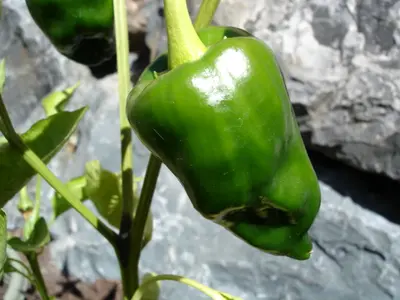
Poblano 'Poblano Pepper'
The essential mild chile for authentic Mexican cuisine, offering just enough heat to be interesting without overwhelming delicate palates. These large, heart-shaped peppers are perfect for stuffing to make chiles rellenos or roasting until charred for incredible smoky flavor. When dried, they become the beloved ancho chile that's fundamental to Mexican cooking.

Scotch Bonnet 'Scotch Bonnet Orange'
The fiery heart of Caribbean cuisine, this traditional hot pepper delivers intense heat paired with a distinctive fruity flavor that's essential for authentic jerk seasoning and hot sauces. Despite its small size, each wrinkled, bonnet-shaped pepper packs serious punch at 100,000-350,000 Scoville units. This variety is prized by chili enthusiasts for its perfect balance of heat and complex tropical fruit notes.
Serrano 'Tampiqueno'
A fiery favorite that packs serious heat into a small package, delivering 2-5 times the punch of a jalapeño with incredible productivity throughout the growing season. These slender peppers are essential for authentic Mexican salsas and hot sauces, offering a clean, bright heat that doesn't overpower the fresh pepper flavor. One plant produces hundreds of peppers, making it a must-have for hot pepper enthusiasts.
Shishito 'Japanese Shishito'
The darling of modern cuisine and gastropubs, these slender Japanese peppers offer addictive mild flavor with the thrilling surprise that about 1 in 10 packs a spicy punch. Perfect for blistering in a hot pan with just salt and olive oil, shishitos have become the go-to appetizer pepper for home cooks wanting to recreate restaurant favorites. Their prolific production and easy growing habit make them ideal for gardeners seeking something trendy yet reliable.
Sweet Italian Pepper 'Marconi Rosso'
An exceptional Italian heirloom frying pepper renowned for its incredible sweetness and tender flesh when cooked. These long, tapered peppers start green and ripen to a gorgeous deep red, developing an almost candy-like sweetness that makes them irresistible grilled, roasted, or sautéed. A favorite among Italian-American gardeners and chefs who prize authentic flavors in their cooking.

Sweet Pepper 'Bull's Horn'
This spectacular Italian heirloom produces enormous 8-inch peppers shaped like a bull's horn with incredibly sweet, tender flesh. The thin-skinned fruits are perfect for frying, roasting, or fresh eating, and their impressive size makes them a showstopper in any garden or kitchen.
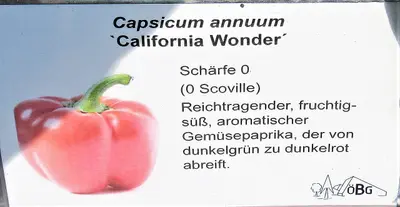
Sweet Pepper 'California Wonder'
The gold standard for home garden bell peppers since 1928, this reliable heirloom produces thick-walled, blocky peppers that are perfect for stuffing, grilling, or eating fresh. Known for consistent production and excellent disease resistance, it's the variety that taught generations of gardeners how to grow peppers successfully. The classic choice that never goes out of style.
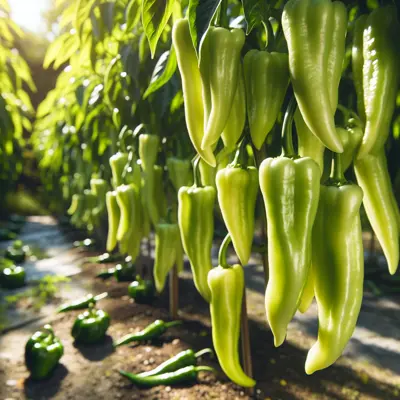
Sweet Pepper 'Cubanelle'
Often called the 'Italian Frying Pepper,' this sweet, thin-walled variety is prized for its exceptional flavor and tender texture that makes it perfect for quick cooking. Popular in Caribbean and Italian cuisine, Cubanelle peppers offer a mild, sweet taste with just a hint of heat that appeals to all palates. Their elongated shape and vibrant color make them as beautiful in the garden as they are delicious on the plate.
Sweet Pepper 'Jimmy Nardello's'
An extraordinary Italian heirloom sweet pepper brought to America in 1887 and saved from extinction by the Nardello family for over a century. These long, curved peppers are incredibly sweet and develop an almost candy-like flavor when cooked, making them absolutely irresistible in Italian dishes. The thin skin doesn't require peeling, and they're perfect for frying, where they become tender and intensely flavorful.
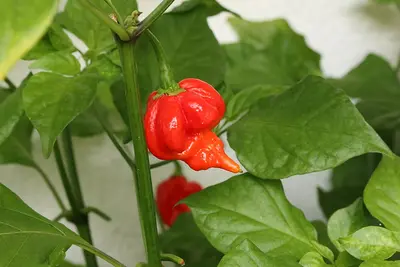
Trinidad Scorpion 'Butch T'
One of the world's hottest peppers, this Trinidad native delivers scorching heat that builds intensity like a venomous sting. The wrinkled, tail-like pods ripen to a brilliant red and pack serious firepower for hot sauce makers and extreme heat enthusiasts. Despite the intimidating heat, these peppers offer a fruity, almost floral flavor underneath the burn.
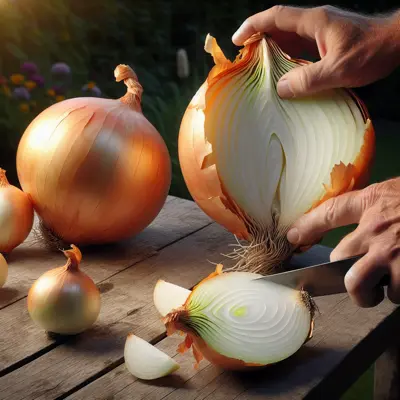
Ailsa Craig Onion
A distinct strain of the classic sweet and mild Ailsa Craig, this line has been specifically selected to perform in organic management systems. Mild onion with excellent size potential. Jumbo to colossal, round to teardrop-shaped bulbs with light yellow skins. Use fresh or for short-term storage. Adaptation: 38-60° latitude. Also available with NOP-compliant pelleting.
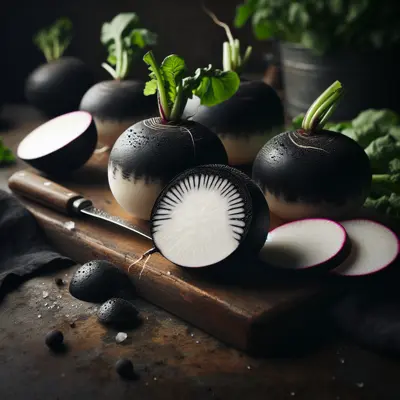
Black Spanish Round Radish
An ancient heirloom winter radish prized for its striking black skin and crisp white flesh that delivers a bold, peppery punch perfect for adding excitement to winter meals. This hardy storage radish can be kept for months in proper conditions, making it invaluable for extending the harvest season. With its unique appearance and intense flavor, it's a conversation starter that brings old-world character to modern gardens.
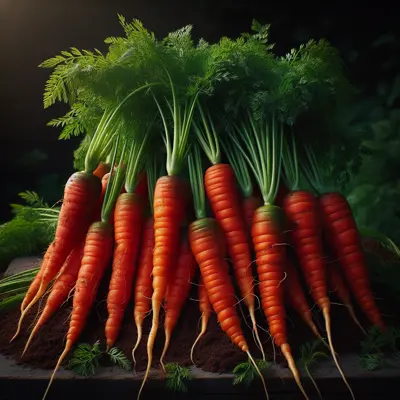
Chantenay Red Core Carrot
A robust French heirloom carrot perfect for heavy or shallow soils where longer varieties struggle. These broad-shouldered, conical carrots develop exceptional sweetness and a distinctive deep orange color throughout, making them ideal for fresh eating and storage. Their sturdy 5-6 inch length and excellent keeping quality have made them a favorite since the 1920s.
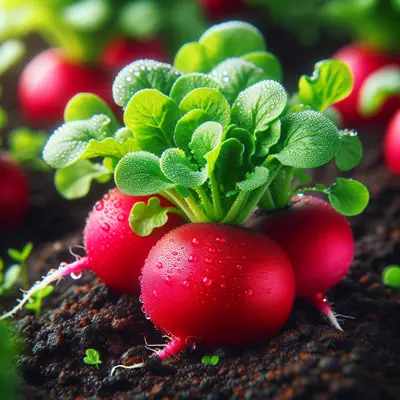
Cherry Belle Radish
America's most popular radish variety and an All-America Selections winner, Cherry Belle delivers reliable results for gardeners of all skill levels. These perfectly round, cherry-red radishes mature in just 22-30 days, making them ideal for quick satisfaction and succession planting throughout the growing season. Their mild, crisp bite and uniform shape make them a favorite for fresh eating and beautiful garnishes.
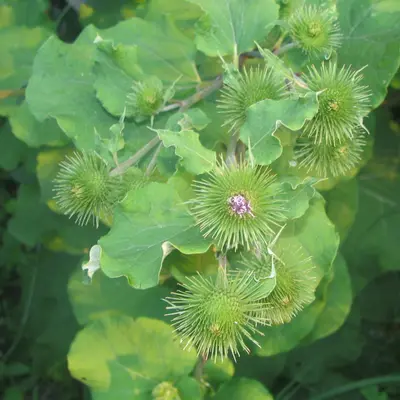
Chiko
A great season-extension offering. For fall, winter, and spring harvest and storage. Can be overwintered in soil, much the same as parsnips. Cook like carrots. Easier to grow than both carrots and parsnips, with faster germination and good weed competition. Delicious in hearty soups and bean stews. Uniform variety. Roots are long, slender, and light brown. Avg. 1-2' long x 1" thick.
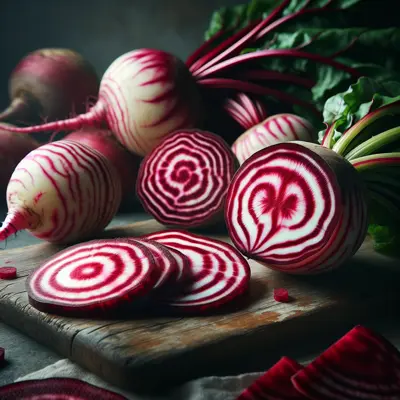
Chioggia Beet
Chioggia Beet is an Italian heirloom variety prized for its striking candy-striped interior of alternating red and white rings, revealed only when sliced. Maturing in approximately 55 days, these medium-sized round roots offer a distinctly sweeter, milder flavor profile with considerably less earthiness than standard beet varieties, making them excellent for both raw preparations and cooking. The vibrant, visually dramatic presentation makes Chioggia particularly popular in upscale culinary applications and farmers' markets. Plants thrive in full sun to partial shade with well-drained, organic-rich soil.
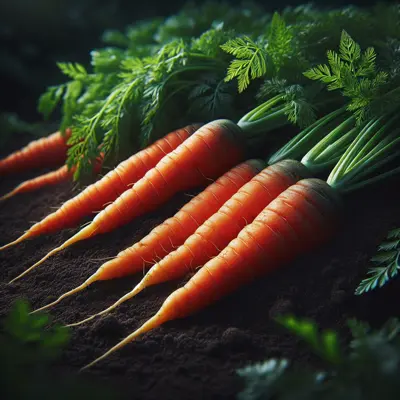
Danvers Half Long Carrot
A classic American heirloom carrot that has been a garden favorite since the 1870s. This reliable variety produces deep orange, broad-shouldered roots that taper to a blunt point, making them perfect for heavy or clay soils where longer carrots struggle. Known for exceptional sweetness and crisp texture that improves with cool weather.
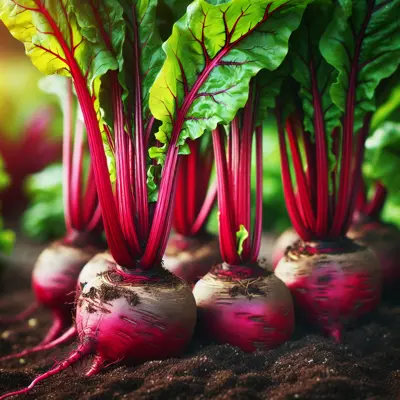
Early Wonder Tall Top Beet
Early Wonder is harvested in bunches with large, vigorous tops attached to the young beets. Tall, bright, glossy green, red-veined tops and slightly flattened red roots. Excellent foliar disease resistance for reliably clean bunches.
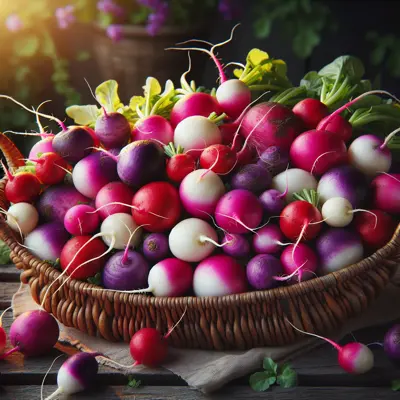
Easter Egg Radish
Easter Egg Radish is a vibrant heirloom variety producing multicolored roots with a stunning mix of white, pink, purple, and red striping. These small, round radishes mature in approximately 30 days, making them ideal for quick succession planting. Their defining characteristic is their mild, crisp, and exceptionally sweet flavor with significantly less peppery bite than traditional radishes, making them particularly appealing to those who prefer gentler radish varieties. The colorful appearance and pleasant taste make them both visually striking in gardens and excellent for fresh eating, salads, and garnishes.
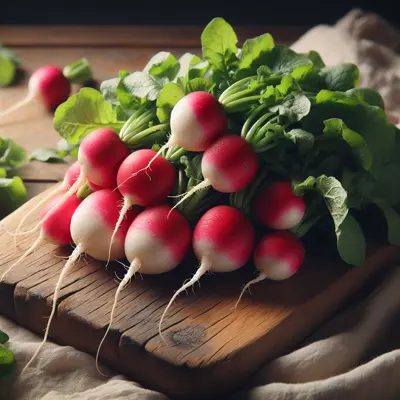
French Breakfast Radish
A well-maintained strain of this market staple. Longer than Nelson, with more white on the tip. Large healthy tops. After trying many strains we found this to be the best. NOTE: For longer, straighter roots, sow 15-20% more seeds per row 1/2 to 1 cm deeper, and do not irrigate unless absolutely necessary.
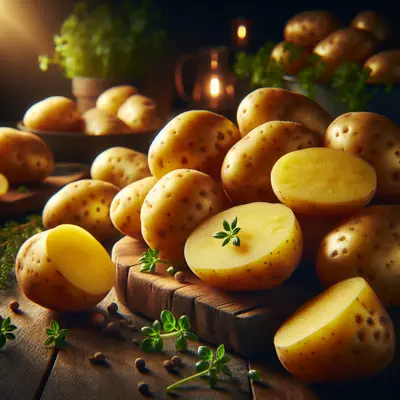
German Butterball Potato
An outstanding heirloom potato variety that delivers incredibly rich, buttery flavor in smooth-textured yellow flesh. This late-season variety produces excellent yields of medium-sized tubers with buff-colored skin and stores exceptionally well through winter. German Butterball is considered one of the best-tasting potatoes available to home gardeners.
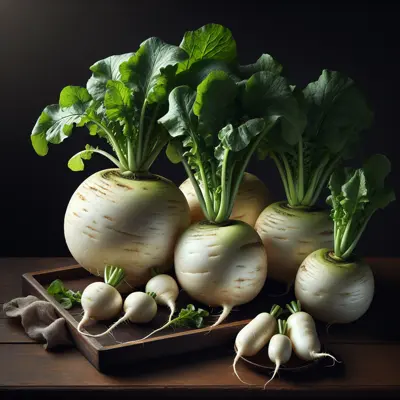
German Giant Radish
A massive white radish that can grow to impressive sizes while maintaining surprisingly mild flavor and crisp texture. Unlike typical small radishes, German Giant becomes milder and sweeter as it grows larger, making it perfect for cooking applications. This unique variety bridges the gap between European radishes and Asian daikon types.
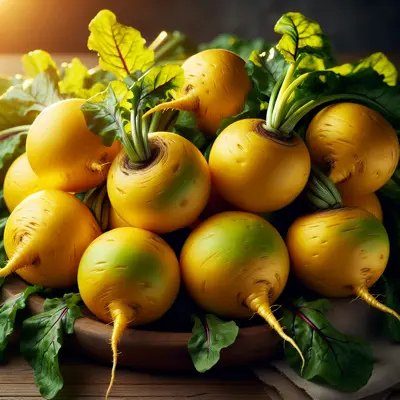
Golden Beet
Golden Beet is a vibrant heirloom root vegetable with brilliant yellow-gold skin and pale yellow flesh. Maturing in 75-90 days, it's prized for its distinctly sweet and mild flavor—far less earthy than red beets—with a tender, delicate texture. The golden hue alone sets it apart visually in the garden and kitchen. Golden Beets excel in fresh applications where their subtle sweetness shines: roasted as a side, thinly shaved into salads, or pickled. They're an excellent choice for gardeners seeking an easier-to-grow beet with broader culinary appeal and elegant presentation.
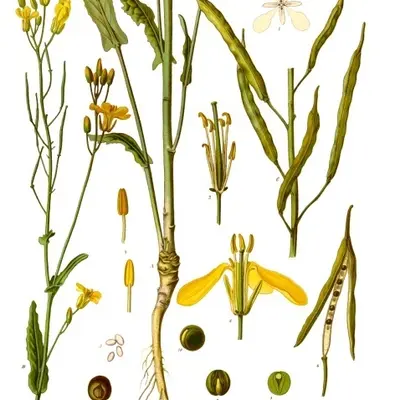
Helenor
Helenor is a heirloom root vegetable that matures in 90 days, featuring light orange flesh with a distinctive sweet flavor and mild taste profile. This variety thrives in full sun to partial shade conditions and prefers well-drained loam soil with neutral pH, making it ideal for gardeners of all skill levels. The defining characteristic of Helenor is its exceptional versatility—equally suited for fresh eating straight from the garden or for cooking applications. With an easy difficulty rating and reliable performance, Helenor represents a dependable choice for both novice and experienced growers seeking a flavorful, heirloom root vegetable.
Imperator 58 Carrot
The classic grocery store carrot that defined what most people expect from this beloved vegetable. These long, tapered carrots offer exceptional sweetness and crisp texture, making them perfect for both fresh eating and cooking. A reliable performer that produces uniform, beautiful roots even in challenging conditions.
Laurentian
Round, uniform roots with excellent taste and texture. Purple tops with pale yellow flesh.
Long Black Spanish Radish
This impressive heirloom winter radish dates back to the 1600s and offers a completely different experience from common spring radishes. Growing 8-10 inches long with distinctive black skin and pure white interior flesh, these storage radishes develop complex, pungent flavors that mellow beautifully when cooked. Perfect for gardeners seeking unusual varieties that provide fresh eating well into winter months.
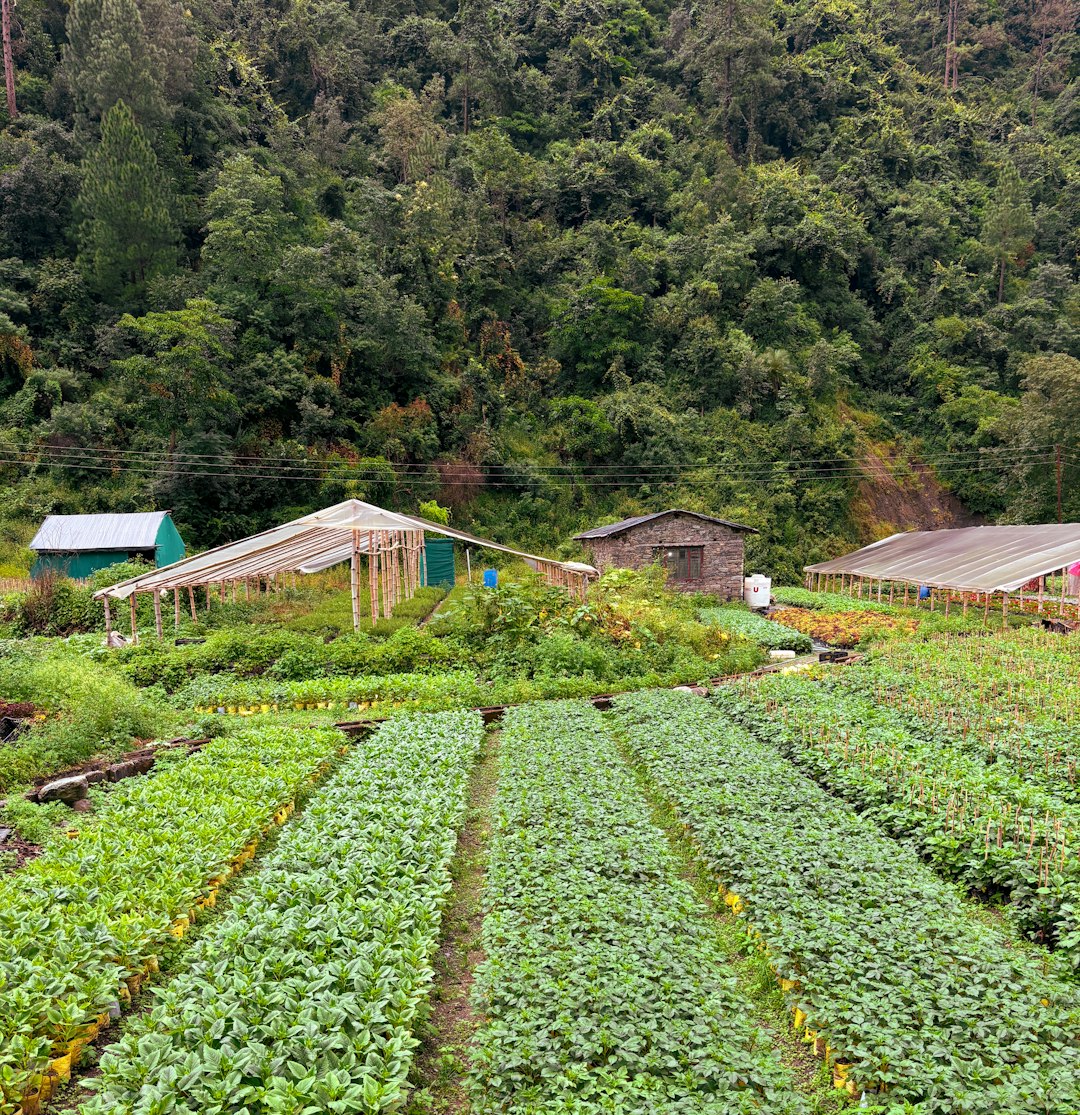
Miyashige
Crisp Japanese-type fall radish of highest quality. "Stump-rooted" cylindrical white roots are pale green near the crown and avg. 16-18" long x 2 1/2-3" wide. A crisp, tender variety for pickling and storage. For July and early August sowing.
Nelson Carrot
Straight candy-red roots resist pithiness better than other long French types. Compared to French Breakfast, roots are shorter, wider, and show less white on the tips. Responds better to tight spacing. Improved top strength. NOTE: For longer, straighter roots, sow 15-20% more seeds per row 1/2 to 1 cm deeper, and do not irrigate unless absolutely necessary.
Nero Tondo Black Spanish Round Radish
An eye-catching heirloom winter radish from Spain that produces striking black-skinned roots with pure white flesh and a surprisingly mild flavor. This unique variety stores exceptionally well and actually improves in flavor after a few frosts, making it perfect for extending the harvest season into winter. The dramatic color contrast when sliced creates stunning visual appeal in dishes while delivering the crisp, clean taste that makes winter radishes so prized.
Paris Market Carrot
A charming French heirloom perfect for containers and heavy soils where longer carrots struggle. These golf ball-sized roots are incredibly sweet and tender, making them ideal for gourmet cooking and an excellent choice for children's gardens due to their unique round shape.
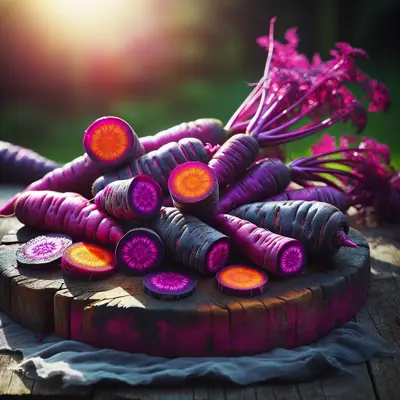
Purple Carrot Cosmic Purple
A stunning heirloom carrot that brings vibrant color to your garden and plate with its deep purple exterior and bright orange core. This eye-catching variety delivers excellent sweet flavor while providing powerful antioxidants from its rich purple pigmentation. Perfect for gardeners who want to grow something truly unique that will amaze friends and family.
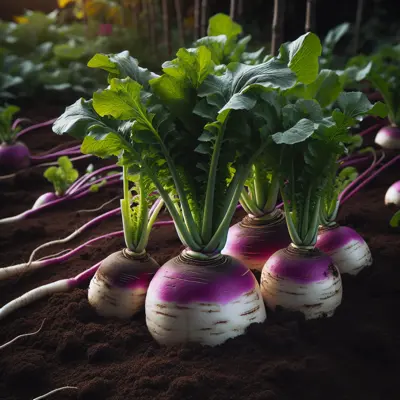
Purple Daikon Radish
A stunning Asian variety that combines the mild, sweet flavor of traditional daikon with eye-catching purple and white coloring. These large radishes are perfect for both raw applications and cooking, offering gardeners something truly unique for their fall harvest.
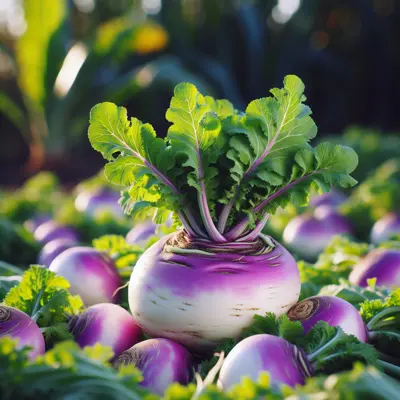
Purple Top White Globe Turnip
Selected strain of this popular Southern US variety. Smooth, round roots average 3-4" in diameter and are white below the soil line and bright purple above. Large lobed greens are suitable for cooking.
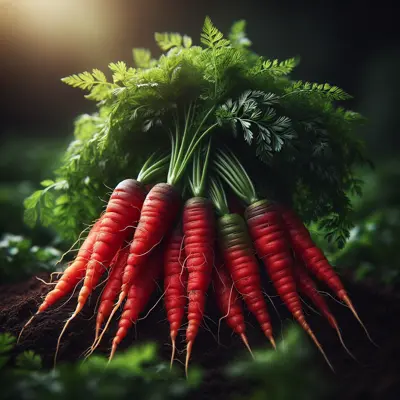
Scarlet Nantes Carrot
A classic French heirloom carrot prized for its sweet flavor and crisp texture. These cylindrical orange roots grow 6-7 inches long with smooth skin and virtually no core, making them perfect for fresh eating and cooking. Their exceptional sweetness and tender flesh have made them the gold standard for home garden carrots worldwide.
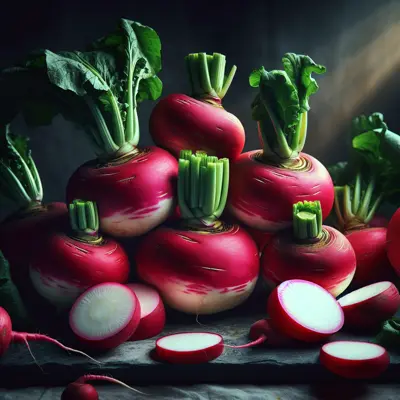
Scarlet Queen Turnip
Scarlet Queen is a heirloom turnip variety prized for its stunning deep red to crimson skin that stands out in the garden and kitchen. Maturing in just 37 days, this quick-growing root vegetable produces tender, globe-shaped roots with crisp white flesh. Unlike many turnips, Scarlet Queen delivers a distinctly sweet, mild flavor without bitter notes, making it excellent for both raw consumption in salads and cooked preparations. The vibrant skin color provides visual appeal while the tender texture remains consistent even when harvested at larger sizes. An easy-to-grow heirloom suitable for gardeners of all skill levels.
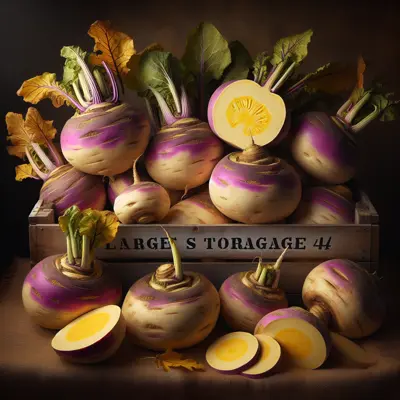
Storage #4 Rutabaga
The ultimate winter keeper rutabaga that actually improves in flavor during months of cold storage, developing incredible sweetness and creamy texture. This reliable variety produces large, uniform roots with classic purple shoulders and yellow flesh that becomes butter-smooth when cooked. A staple crop that can feed families through winter while providing exceptional nutrition and comfort-food satisfaction.
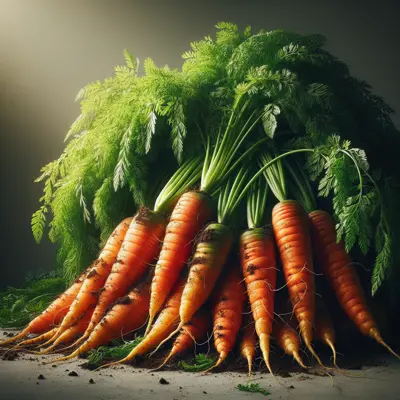
Touchon Carrot
A beloved French heirloom carrot renowned for its exceptional sweetness and crisp texture, often considered one of the best-tasting carrots available to home gardeners. This variety produces perfectly straight, smooth roots with little to no core, making every bite tender and flavorful. Touchon's reliable performance and gourmet quality have made it a favorite among gardeners who prioritize flavor over size.
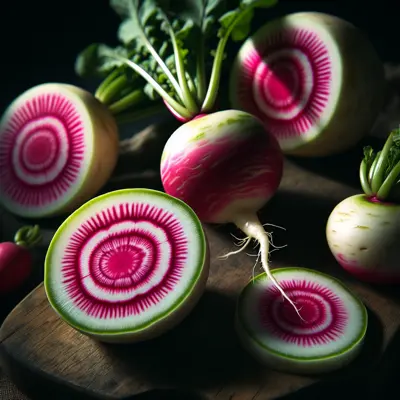
Watermelon Radish
Watermelon Radish is a visually striking heirloom root vegetable with a pale green exterior and distinctive pink-red flesh with white striations, resembling watermelon. Maturing in 90 days, this Japanese variety produces crisp, tender roots ideal for both fresh eating and cooking. The flesh offers a mild, sweet flavor with a subtle peppery finish and pleasant crispness that adds visual appeal and refreshing crunch to salads, slaws, and garnishes. This easy-to-grow variety thrives in deep, well-drained loam with full sun exposure.
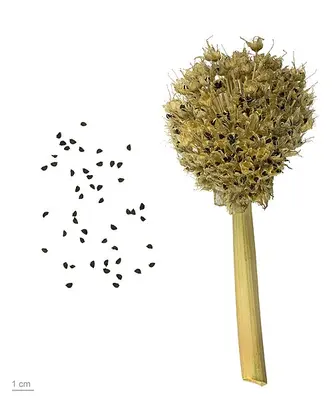
White Spear
White Spear is an heirloom leek variety prized for its tender, elongated white shanks and mild, slightly sweet flavor. Maturing in approximately 65 days, this easy-to-grow cultivar thrives in full sun to partial shade with well-drained, fertile loam. The defining characteristic is its pure white, slender stem that remains exceptionally tender and delicate, making it ideal for cooking whole or in refined culinary applications. Unlike coarser leek varieties, White Spear delivers a gentle onion-like sweetness without harshness, earning its place in both home and market gardens.
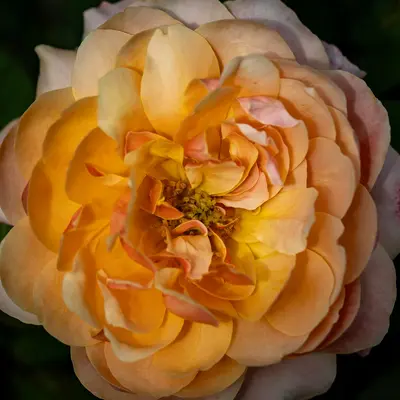
Black Beauty
Black Beauty is a classic heirloom rose prized for its deep crimson, nearly black petals and exceptional damask fragrance. This moderate-to-challenging variety reaches peak maturity at 90-100 days, producing full, quartered blooms with strong, rich notes characteristic of heritage roses. Its defining feature is the intense, complex scent—a signature damask profile—making it ideal for cutting and fragrance applications rather than consumption.
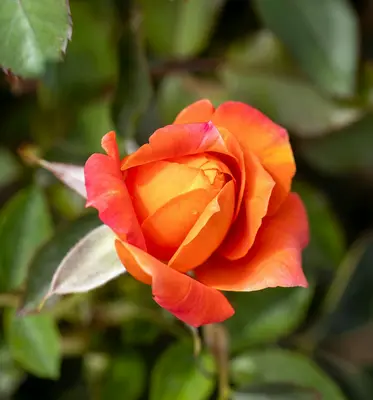
Blaze Climbing Rose
America's most popular climbing rose since the 1930s, beloved for its spectacular display of bright red blooms and incredible hardiness. This vigorous climber produces masses of semi-double flowers in spring with good repeat blooms throughout the season. Perfect for covering arbors, fences, or walls where you want dramatic color impact.
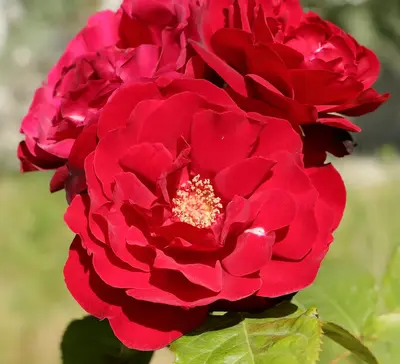
Chrysler Imperial
This classic American hybrid tea rose has been a garden favorite since 1952, beloved for its deep velvety red blooms and powerful damask fragrance. The rich crimson flowers hold their color exceptionally well and are produced on long, strong stems perfect for cutting. A true garden aristocrat, Chrysler Imperial represents the pinnacle of traditional red rose breeding with its perfect form and intoxicating scent.

Oklahoma
Oklahoma is a classic heirloom rose cultivar prized for its vigorous growth and outstanding disease resistance in challenging climates. This variety produces full, fragrant blooms with a strong, rich fragrance ideal for cut flowers and petal harvesting. Reaching 4-6 feet at maturity, Oklahoma thrives in hot, dry conditions where many roses struggle, making it an exceptional choice for Southern and Southwestern gardens seeking reliable, landscape-worthy roses with minimal intervention.
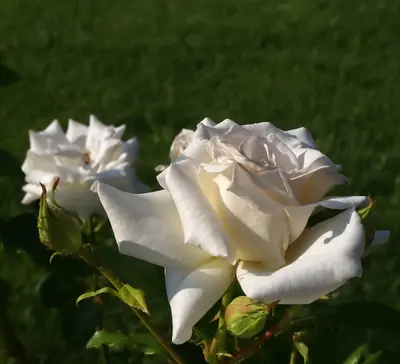
Peace Rose
The world's most famous rose, developed during WWII and symbolizing hope and peace with its stunning yellow petals edged in pink. This vigorous hybrid tea produces large, fragrant blooms that change color as they mature, creating a living masterpiece that has inspired gardeners for generations.
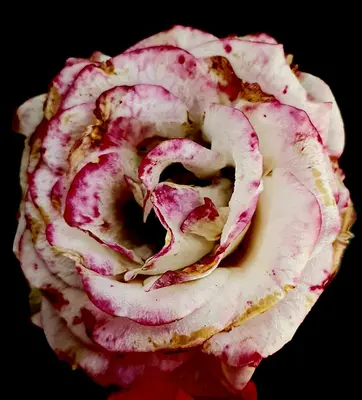
Shrub Rose - Rugosa Rose
An incredibly hardy and low-maintenance rose that thrives in challenging conditions while producing fragrant single flowers followed by large, ornamental rose hips. The distinctive wrinkled foliage turns golden-yellow in fall, and the thorny canes create an excellent barrier planting. This tough species rose is perfect for coastal gardens, naturalized areas, and anywhere you need a rose that practically grows itself.

Tropicana
Tropicana is a vibrant heirloom rose variety featuring warm orange-red blooms with a delicate, sweet fragrance. Reaching full maturity in approximately 52 days, this rose produces medium-sized flowers ideal for cutting and arrangement. Its defining characteristic is the perfect balance of moderate, sweet rose scent combined with exceptional vase life, making it a favorite among florists and home gardeners seeking reliable color and fragrance in one plant.
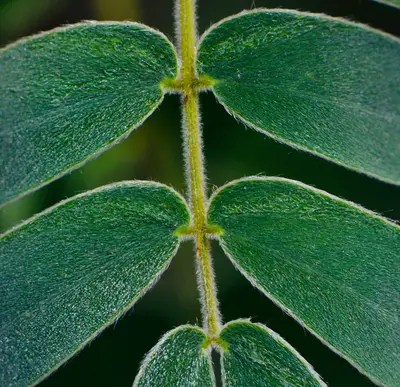
Zephirine Drouhin
Known as the 'thornless rose,' this beloved climbing Bourbon rose from 1868 produces masses of fragrant, cerise-pink blooms repeatedly throughout the season. Its smooth, thornless canes make it perfect for walkways and areas where people might brush against it, while its incredible fragrance fills the garden with old rose perfume.
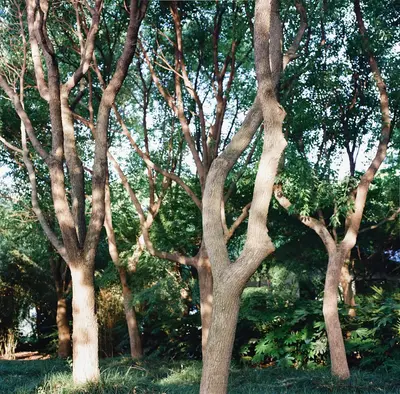
American Elm
The classic American street tree famous for its graceful vase-shaped canopy that once lined countless city streets. Modern disease-resistant cultivars have brought this beloved native back from near extinction caused by Dutch elm disease. Fast-growing and adaptable, American elms create cathedral-like canopies perfect for large properties and urban settings.
American Sycamore
A fast-growing native giant known for its distinctive mottled bark that exfoliates to reveal cream, green, and brown patches. This majestic tree provides exceptional shade with its broad, spreading canopy and is surprisingly adaptable to various soil conditions. Its unique bark pattern and massive size make it a standout specimen tree that creates a natural focal point in any landscape.
Hackberry
A tough, adaptable native tree that thrives where other shade trees struggle, making it perfect for challenging sites and urban environments. This undemanding tree grows quickly into a graceful, vase-shaped canopy that provides excellent filtered shade through its small, elm-like leaves. Wildlife enthusiasts love hackberry for its small berries that feed over 40 bird species throughout fall and winter.
Littleleaf Linden
A refined European shade tree beloved for its perfectly heart-shaped leaves and sweetly fragrant summer flowers that attract beneficial pollinators. This well-mannered tree maintains a neat, pyramidal shape without aggressive pruning and tolerates urban conditions exceptionally well. Its dense foliage provides excellent shade while the fragrant blooms create a delightful sensory experience in the garden.
Live Oak
The legendary evergreen oak of the American South, famous for its massive spreading branches draped in Spanish moss and centuries-long lifespan. Live oaks develop incredibly wide, horizontal canopies that can span over 100 feet, creating natural pavilions of dense shade. Their sculptural beauty and extreme longevity make them the ultimate legacy tree for large properties.
Red Oak
Red Oak is a large, deciduous shade tree valued for its rapid growth and stunning foliage. Mature trees reach 60-80 feet tall with a broad, rounded crown featuring deeply lobed leaves that turn vibrant red and crimson in fall. This hardy native species thrives in well-drained, acidic to neutral soil and adapts well to various growing conditions, making it an excellent choice for landscapes. Red Oak provides excellent shade within 4-6+ hours of sunlight. Its dense canopy and striking seasonal colors make it a preferred ornamental shade tree, though it requires monitoring for common pests like gypsy moths and oak borers.
Scarlet Oak
A stunning native oak prized for its brilliant scarlet fall foliage that rivals any maple for autumn color. This medium-sized oak grows faster than most oak species while maintaining the classic oak strength and longevity. Its deeply lobed leaves create beautiful filtered shade in summer before transforming into a spectacular red display that lasts for weeks.
Sugar Maple
The iconic maple tree that defines autumn in North America with its spectacular yellow, orange, and red fall display. Known for producing the finest maple syrup, sugar maples are slow-growing but long-lived trees that create dense, cooling shade. Their symmetrical oval shape and reliable fall color make them one of the most sought-after landscape trees.
Baby Blue Bouquet
Very similar to Baby Blue. Robust plants produce column-like, sturdy stems packed with waxy, silvery blue leaves. Round, 2" leaves. Also known as silverleaf mountain gum, gum, and euc. Tender perennial in Zones 9-11.
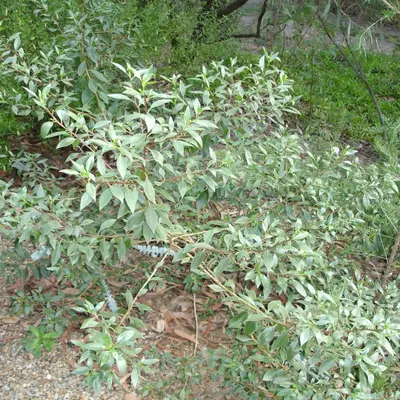
Book-Leaf Mallee
Upright plants are not as productive as our other eucalyptus, but the unique, adorable, gray-blue foliage is perfect for small design work and dried florals. 1/2" leaves. Also known as Kruse's Mallee.
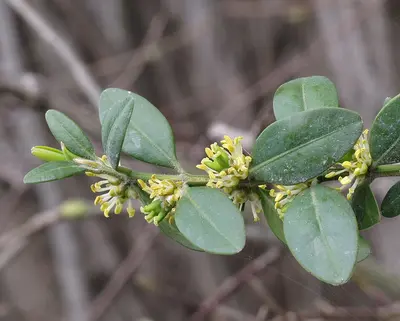
Boxwood Common
The classic evergreen shrub prized for its dense, fine-textured foliage and exceptional tolerance to pruning and shaping. Perfect for formal hedges, topiaries, and foundation plantings, boxwood provides year-round structure to the garden. This slow-growing shrub can be maintained at any desired height and is a cornerstone of traditional landscape design.
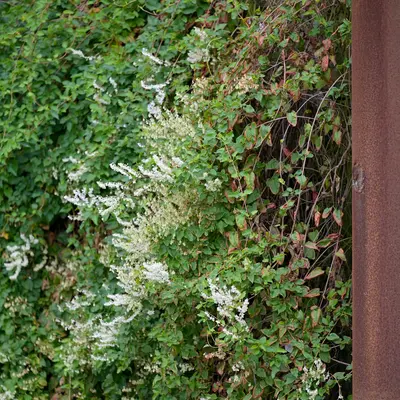
Bridal Wreath Spirea
A classic spring-blooming shrub that creates a stunning cascade of pure white double flowers along arching branches, resembling a bride's veil. This graceful, old-fashioned favorite provides reliable spring color and attractive orange-red fall foliage. Its elegant form and profuse blooms make it a timeless choice for foundation plantings and mixed borders.
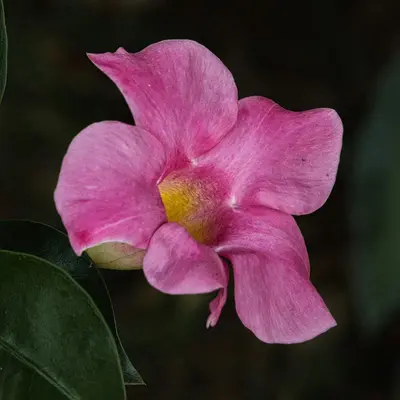
Camellia Japonica
An elegant evergreen that brings sophisticated beauty to winter gardens with its glossy dark green foliage and spectacular blooms. Flowers appear from late fall through early spring in shades of pink, red, or white, providing color when most other shrubs are dormant. This aristocratic shrub creates stunning focal points and works beautifully as a specimen plant or informal hedge.
Dwarf English Boxwood
The ultimate evergreen hedge plant prized for its dense, small leaves and ability to hold precise shapes through pruning. This slow-growing classic creates formal garden structure and year-round green interest, perfect for borders, topiaries, and parterre gardens. Its compact nature makes it ideal for small spaces and container growing.

E. tereticornis
Tall, upright, productive plants produce sturdy stems that are easy to process for cut foliage. 3-6" long, arrow-shaped leaves are primarily green to dark green, while new leaf growth displays a contrasting and attractive dark red leaf color which varies across plants and intensifies as temperatures cool in the fall. Dark green leaves contrast nicely with red stems. Elegant addition to arrangements and mixed eucalyptus bunches. Tender perennial in Zones 9-11.
French Lilac
The classic fragrant lilac that defines spring with its intoxicating perfume and abundant blooms. These old-fashioned shrubs produce dense clusters of tubular flowers in shades of purple, pink, white, or lavender that attract butterflies and hummingbirds. A must-have for creating nostalgic cottage gardens and cutting gardens.
Lemon Bush
Medium-green, 2-7", sword-shaped leaves that produce a strong citronella fragrance. Leaf and stem tips turn a lovely red color in late summer/fall. Less durable foliage than standard eucalyptus.
Lilac Common
A beloved deciduous shrub that heralds spring with its intensely fragrant flower clusters in shades of purple, pink, or white. This old-fashioned favorite can live for decades and becomes more beautiful with age, producing abundant blooms that are perfect for cutting. Few shrubs can match the nostalgic appeal and intoxicating fragrance of a mature lilac in full bloom.
Mock Orange
An old-fashioned favorite that perfumes the entire garden with intensely fragrant white flowers in late spring. This hardy, low-maintenance shrub produces masses of orange-blossom scented blooms that attract pollinators from far and wide. Perfect for creating a romantic, cottage garden atmosphere while requiring minimal care once established.

Mountain Laurel
A spectacular native evergreen shrub that produces clusters of cup-shaped flowers in late spring, resembling delicate porcelain with intricate pink and white patterns. The glossy dark green leaves provide year-round structure while the stunning blooms make this a showstopper in woodland gardens. This tough native thrives in acidic soil where many other shrubs struggle.
PeeGee Hydrangea
A classic Victorian-era hydrangea that produces enormous cone-shaped flower clusters that age from white to pink to bronze throughout the season. This reliable shrub is exceptionally cold hardy and blooms on new wood, ensuring flowers every year regardless of winter damage. The dramatic flower heads can reach 12 inches long and make stunning cut flowers for both fresh and dried arrangements.
Silver Dollar
The most popular foliage for fresh, dried, or preserved use for large bunches and decorating. Also known as gum and euc. Tender perennial in Zones 9-11.
Silver Drop
Silver Drop is a moderate-difficulty heirloom shrub thriving in full sun and well-drained loam soil. Maturing in 120-150 days, this ornamental variety is distinguished by its distinctive silvery foliage that creates a striking visual contrast in landscapes. The fine, delicate leaves provide year-round appeal and serve as an excellent backdrop for flowering plants. Silver Drop's elegant appearance and hardy nature make it a popular choice for Mediterranean and contemporary garden designs.
Silver Plate
A favorite in our trials. Silvery green leaves shimmer on tall stems. Upright plants produce sturdy stems that are easy to strip and clean. Large round leaves alternate on reddish-green stems. Some variability in plant height - in our trials, plants ranged from 30-60" tall, with most reaching at least 48". Also known as 'Silver Dollar', gum, and euc. Tender perennial in Zones 9-11.
Small-Leaved Gum
Shrub-like, compact habit in our annual trials, reaching 2-3' tall. Fine-leaf shape has a delicate appearance. Dark blue-green leaves contrast with red stems. Uniform plant habit.
Snowball Viburnum
A spectacular spring showstopper that produces large, perfectly round clusters of pristine white flowers that truly resemble snowballs. This old-fashioned favorite creates dramatic focal points in the landscape and the flowers are excellent for cutting arrangements. The maple-like leaves provide attractive summer foliage and often develop good fall color in cooler climates.
Witch Hazel
Nature's grand finale that saves its spectacular show for when all other shrubs have gone dormant. This native treasure produces clusters of fragrant, spidery yellow flowers in late fall and early winter, often while snow is on the ground. Beyond its unique blooming time, witch hazel offers excellent yellow fall color and interesting architectural branching that adds winter interest to the garden.
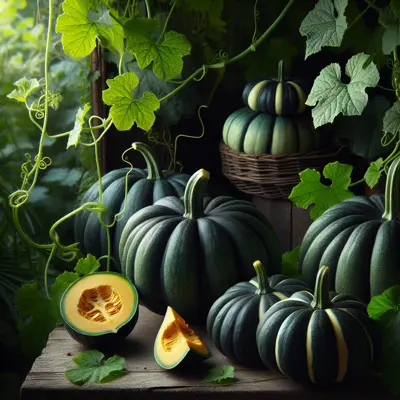
Acorn Squash (Table Queen)
A compact winter squash perfect for small gardens and new gardeners, producing reliable harvests of ribbed, acorn-shaped fruits. Its mild, slightly sweet flesh and convenient single-serving size make it ideal for stuffing and roasting. This dependable variety has been a American garden staple since the early 1900s.
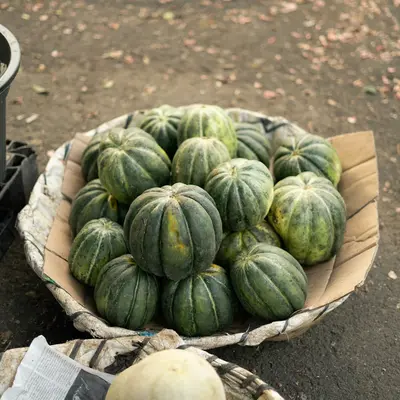
Benning's Green Tint Pattypan
A charming heirloom summer squash dating back to the 1800s, featuring distinctive scalloped edges and pale green skin that turns creamy white as it matures. This productive bush variety produces tender, buttery-flavored fruits that are perfect for stuffing when small or slicing when larger. The unique flying saucer shape and delicate flavor make it a conversation starter in any garden.
Black Beauty Zucchini
Black Beauty Zucchini is a classic heirloom squash variety prized for its deep, glossy dark green skin and tender, flavorful flesh. Reaching maturity in 90-100 days, this variety produces elongated fruits that are best harvested when young and tender, typically 6-8 inches long. The defining characteristic of Black Beauty is its mild, slightly sweet flavor with a delicate texture that makes it ideal for cooking, grilling, or eating raw in salads. This productive plant thrives in full sun and rich, well-drained soil, making it an excellent choice for home gardeners seeking reliable, quality harvests.
Blue Hubbard Squash
A beloved heirloom with a hard, bumpy, blue-green shell. A fall tradition at New England roadside stands. Medium-dry, medium-sweet yellow flesh. Avg. weight: 12-15 lb., with some larger.
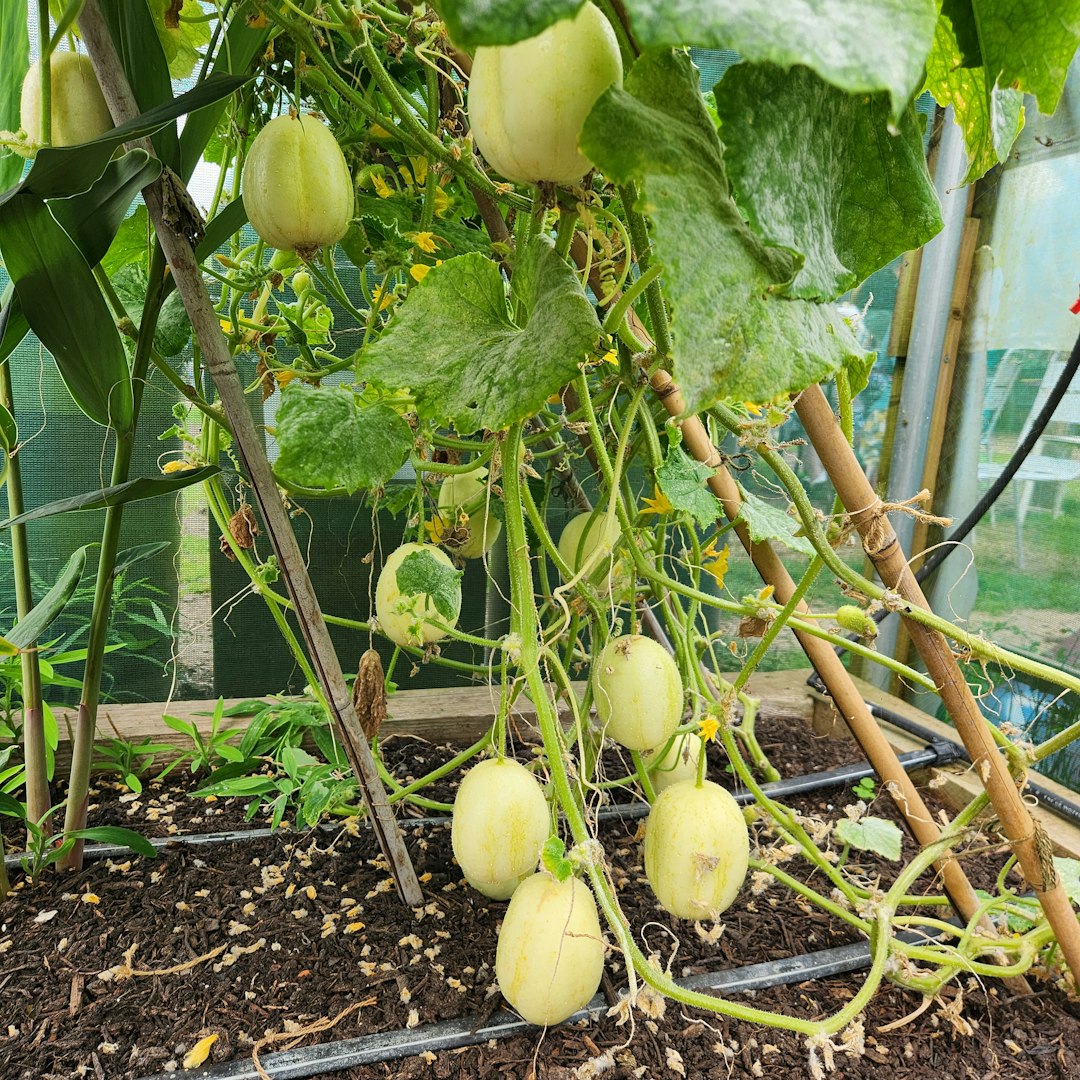
Bottle or Birdhouse
Bottle or Birdhouse squash is an heirloom decorative variety prized for its distinctive bulbous, bottle-shaped fruits with narrow necks resembling miniature gourds. Maturing in approximately 125 days, it produces tan or cream-colored gourds that are primarily ornamental, though the flesh is technically edible when young. The defining feature is its dramatic, whimsical form that makes it popular for fall decorations and dried arrangements rather than culinary use.
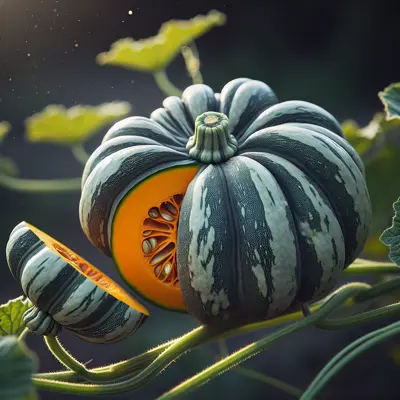
Burgess Buttercup Squash
A premium winter squash variety prized by gardeners for its exceptional sweet, nutty flavor and vibrant orange flesh that rivals the best sweet potatoes. This reliable heirloom produces dark green, turban-shaped fruits with distinctive gray "caps" that store beautifully through winter months. The dense, dry flesh and outstanding flavor make it the gold standard for pies, soups, and gourmet cooking.
Buttercup Squash
Buttercup Squash is a heirloom winter squash with distinctive dark green skin and a characteristic ridged button on the bottom end. It reaches maturity in approximately 115 days and produces medium-sized fruits weighing 2-4 pounds. The flesh is vibrant orange, sweet, and creamy with rich flavor notes reminiscent of sweet potato and honey. This variety excels in roasting, pies, and purees, delivering consistent, buttery results that make it a favorite for autumn cooking.
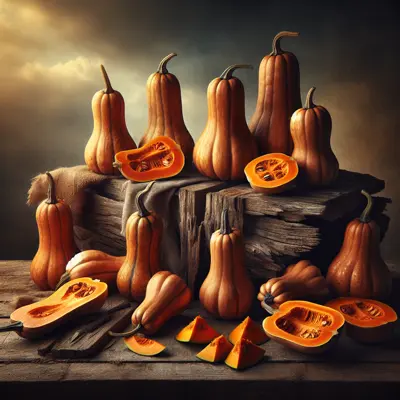
Butternut Squash
Butternut squash is a bell-shaped winter squash with tan, smooth skin and deep orange flesh. Reaching maturity in approximately 105 days, it develops a sweet, nutty flavor with creamy texture and subtle hints of brown butter. The thick rind makes it excellent for storage and ideal for both roasting and puréeing. This heirloom variety thrives in full sun and well-amended soil, making it accessible for gardeners of varying experience levels. Its natural sweetness and versatile culinary applications—from soups to side dishes—make it a popular choice for fall and winter cooking.
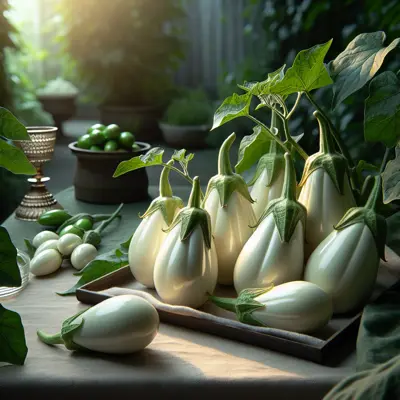
Casper
Casper is a distinctive heirloom squash variety prized for its pale, creamy-white skin and exceptional flavor profile. Maturing in approximately 95 days, this winter squash produces medium-sized fruits with a mild, exceptionally sweet taste and creamy, non-bitter flesh that sets it apart from other squash varieties. Its unique color and tender meat make it ideal for roasting, purees, and soups. The variety thrives in full sun with rich, well-drained soil amended with organic matter, though moderate cultivation skills are required. Despite its refined flavor, Casper requires vigilance against common squash pests including flea beetles, aphids, and hornworms.
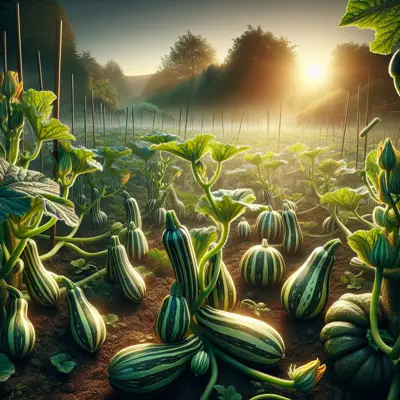
Cocozelle Italian Heirloom Zucchini
An Italian heirloom dating back to the 1890s, this distinctive zucchini stands out with its beautiful striped pattern and superior flavor that puts modern varieties to shame. The dark green fruits with light green stripes have incredibly tender skin when young and dense, flavorful flesh that holds up beautifully in cooking. This variety embodies the authentic taste of traditional Italian cooking.
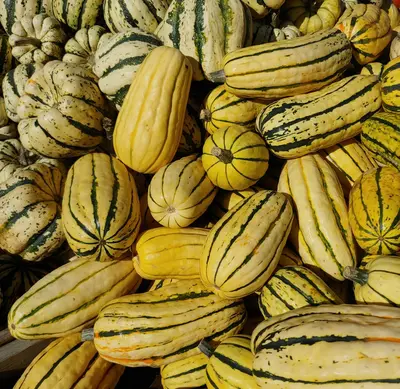
Connecticut Field Pumpkin
The classic American jack-o'-lantern pumpkin that has been grown since the 1700s, beloved for its perfect carving size and traditional orange color. This reliable heirloom produces large, ribbed pumpkins that are not only ideal for Halloween decorations but also excellent for pies and baking. Connecticut Field is the quintessential pumpkin variety that connects modern gardeners to centuries of American agricultural tradition.
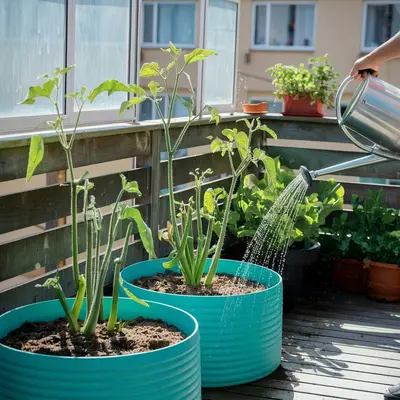
Costata Romanesco Zucchini
This distinctive zucchini is medium gray-green, with pale green flecks and prominent ribs. Big, large-leafed, semi-vining plants with only about half the yield of hybrids, but much better flavor; clearly better textured, nutty, and delicious, raw or cooked. Also a good producer of heavy male blossoms for cooking. Edible Flowers: Blossoms bear a mild, squash-like flavor and are great stuffed and fried, or sliced for used in soups, omelets, salads, and pasta dishes.
Cushaw Green Striped
An ancient heirloom winter squash with a distinctive curved neck and beautiful green and white striped skin that has been grown by Native Americans for centuries. This vigorous vine produces massive fruits that can weigh up to 20 pounds, with sweet, fine-textured orange flesh that's perfect for pies and baking. The curved shape and striking appearance make it as ornamental as it is delicious.
Delicata Squash
Delicata Squash is an heirloom winter squash known for its elegant, pale yellow-green oblong shape with thin, edible skin when mature. This variety reaches harvest readiness in approximately 95 days, producing small to medium-sized fruits (6-9 inches long) that develop golden-orange undertones as they ripen. The thin, tender rind distinguishes Delicata from other winter squashes and can be eaten when cooked. Its defining characteristic is its exceptionally sweet, creamy flesh with subtle corn and sweet potato notes, making it ideal for roasting, sautéing, or use in both savory and dessert applications. Despite its refined flavor profile, Delicata is surprisingly easy to grow in full sun conditions.
Dinosaur Gourd
Lustrous green skin with distinct ridges for a unique reptilian appearance. Impressive yields of large, 18-24" long fruits. Can be dried like a bottle gourd. Avg. weight: 3 1/2 lb.
Fordhook Acorn Squash
A superior acorn squash variety developed by Burpee in the 1890s, prized for its consistent acorn shape and exceptional sweet, nutty flavor. Fordhook produces thick-walled fruits with bright orange flesh that becomes incredibly tender and flavorful when roasted. This heirloom variety offers better eating quality than many modern acorn squashes and stores exceptionally well through winter.
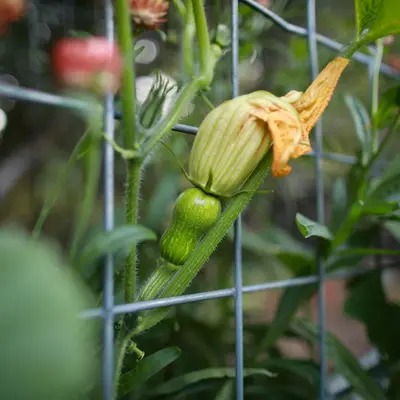
Gem Squash
A unique South African heirloom that produces small, round squashes perfect for individual servings and container growing. These charming little squashes start cream-colored and develop beautiful golden-yellow skin at maturity, with sweet, tender flesh that's delicious when simply steamed or roasted whole. Gem squash is prized for its compact size, attractive appearance, and excellent storage capabilities.
Honeynut Squash
This distinctive dark tan butternut has a loyal following among customers, who often ask for it by name. Honeynut is later-maturing, so plant early to achieve best tan coloration. If stored green, fruits will eventually ripen to tan in storage. Developed by the Vegetable Breeding Institute at Cornell University. Avg. weight: 1-2 lb.
Hubbard Blue Squash
A massive heirloom winter squash that can reach 40+ pounds, prized for its incredible storage life and sweet, fine-textured orange flesh. This impressive variety with its distinctive blue-gray bumpy skin has been a homestead favorite since the 1890s, providing months of nutritious meals from a single harvest. The ultimate storage squash that gets sweeter with time and can last 6-8 months when properly cured.
Kabocha Winter Squash
Often called Japanese pumpkin, this incredibly sweet winter squash has a texture like sweet potato and chestnut combined. The dense, bright orange flesh is naturally creamy and requires no butter or seasoning to be absolutely delicious. A favorite among chefs and health-conscious gardeners.
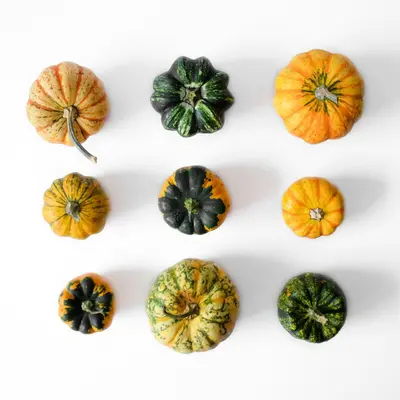
Lakota Winter Squash
A stunning heirloom winter squash with distinctive orange and green teardrop-shaped fruits that were traditionally grown by the Lakota Sioux tribe. The beautiful pear-shaped squash features sweet, fine-textured orange flesh that rivals butternut in flavor and cooking quality. These eye-catching squash store exceptionally well and make gorgeous autumn decorations before being transformed into delicious meals.
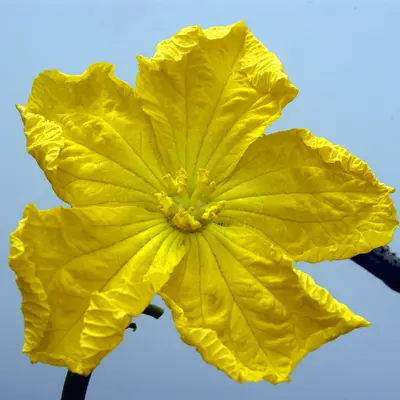
Luffa Gourd
Long vigorous vines with strong natural tolerance to many common cucurbit diseases and pests. Immature fruit can be eaten or allowed to mature on the vine to be cured and used as a sponge. Northern growers: for best success with this long-season crop, start as transplants and plant in a warm location. Space 36-48" apart. May require trellising or support. Avg. weight: 1-1 1/2 lb.
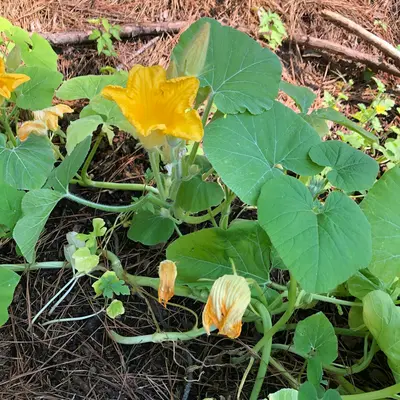
Marina di Chioggia Pumpkin
Avg. 6-12 lb. bumpy squashes make a wild, yet subdued ornamental statement for fall. Amy Goldman in her new book, The Compleat Squash, describes this Italian seaside specialty as deliziosa, especially for gnocchi and ravioli, and a culinary revelation.
Red Kuri Squash
Baby red hubbard with appealing color and shape. Flesh is smooth in texture and great for pies and purées because specks of skin (being red) will not show. Also known as Orange Hokkaido. Avg. weight: 3-5 lb.
Romanesco Zucchini
Romanesco zucchini is a striking heirloom variety distinguished by its pale green, ribbed exterior and compact, tapered shape. Maturing in approximately 95 days, it delivers superior flavor compared to conventional zucchini—nutty and sweet with a distinctly firm texture that holds up well in cooking. The plant thrives in full sun with rich, well-draining loam enriched with organic matter. Moderately easy to grow, this variety excels both as a fresh market crop and culinary ingredient, offering gardeners an heirloom option with genuinely enhanced taste and texture.
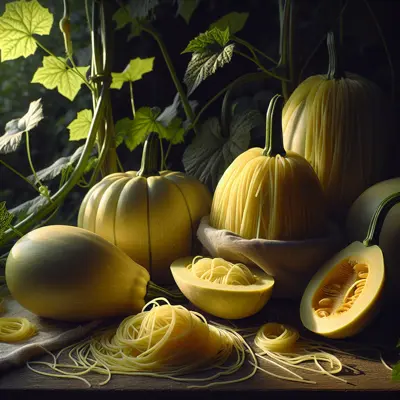
Spaghetti Squash
This excellent open-pollinated strain's flesh has the best noodle-like consistency in our trials. Slightly sweet, nutty flavor. Oblong in shape with ivory skin that changes to pale yellow at maturity. An excellent pasta alternative - bake or boil, fork out the flesh, and top the "spaghetti" with your favorite sauce. Short vines. Avg. weight: 3-5 lb.

Sugar Pie Pumpkin
The gold standard for homemade pumpkin pie and fall baking. These compact, sweet pumpkins produce thick, smooth flesh that's naturally creamy without being watery. Perfect size for small families and much more flavorful than store-bought canned pumpkin.
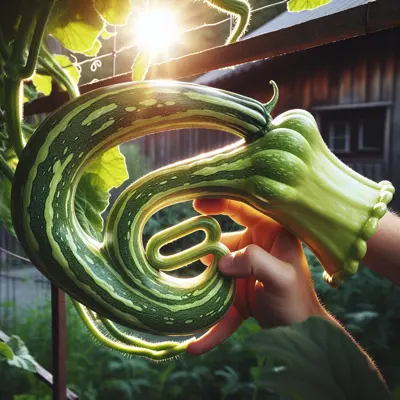
Tromboncino Squash
An Italian heirloom that's part sculpture, part vegetable with its incredible curved neck resembling a trombone. This vigorous climbing vine can be eaten young like zucchini or left to mature into a sweet winter squash. Its unique growth habit and dual-purpose nature make it a fascinating conversation starter in any garden.
Turban Squash
Turban Squash is a distinctive heirloom winter squash characterized by its unique turban-like cap on the blossom end. Maturing in approximately 115 days, it produces medium-sized, deeply ribbed fruits with a dark green to orange skin. The flesh is sweet, fine-textured, and nutty—reminiscent of buttercup squash—making it excellent for roasting, puréeing, and baking. This variety thrives in full sun with rich, well-drained soil and moderate growing difficulty. Its exceptional flavor and striking appearance make it a favorite among heirloom gardeners.
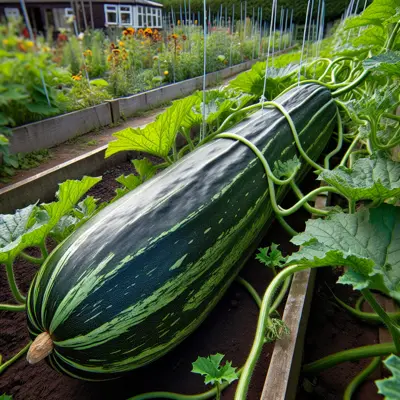
Vegetable Marrow (Long Green Trailing)
A traditional British heirloom that produces enormous, prize-winning fruits that can reach 2-3 feet long and provide abundant harvests for large families or competitive gardening. This vigorous trailing variety is perfect for gardeners who want to grow something truly impressive, with its ability to produce marrows weighing 10+ pounds from compact plants. The mild, versatile flesh is excellent stuffed, in soups, or as a potato substitute in traditional British cooking.
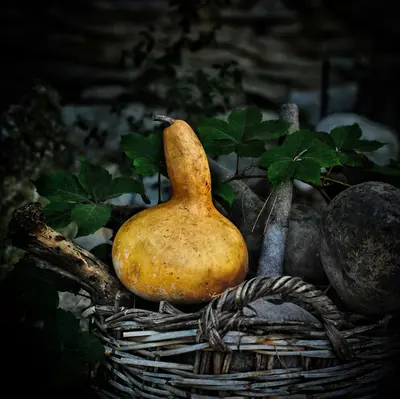
Waltham Butternut Squash
Waltham Butternut Squash is a classic heirloom winter squash prized for its distinctive bell-shaped form with a long, slender neck and tan-colored skin. Reaching maturity in approximately 105 days, this variety produces medium-sized fruits (2-3 lbs) ideal for cooking. Known for its exceptionally smooth, dense flesh, Waltham Butternut delivers a rich, complex flavor profile combining sweet, nutty notes with butterscotch undertones. The flesh is fine-grained and creamy when cooked, making it excellent for soups, roasting, and purees. A reliable, vigorous grower that stores well through winter.
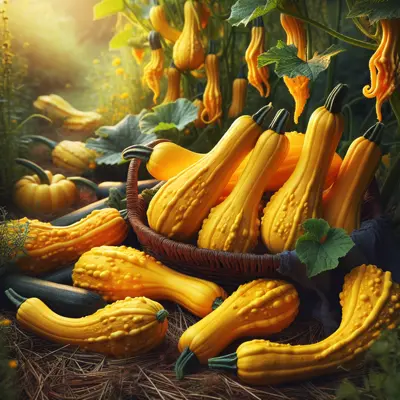
Yellow Crookneck Summer Squash
A prolific summer favorite that embodies the abundance of warm-weather gardening with its curved neck and bumpy, golden skin. This fast-growing bush variety produces tender, mild-flavored squash continuously throughout the season when harvested young. Its distinctive shape and reliable production have made it a garden staple for generations.

Yellow Scallop Pattypan
These charming sunshine-yellow summer squashes look like little flying saucers with their distinctive scalloped edges and flattened shape. Incredibly productive plants begin bearing early in the season and continue producing tender, mild-flavored fruits perfect for stuffing, grilling, or eating raw. Their unique appearance and sweet, delicate taste make them a favorite at farmers markets and dinner tables alike.
Zucchini Costata Romanesco
This stunning Italian heirloom zucchini features distinctive ribbed fruits with alternating dark and light green stripes that make it as beautiful as it is delicious. The tender, flavorful flesh has a nutty sweetness that's prized by chefs and home cooks alike. Both the fruits and large golden blossoms are edible, making this variety a true dual-purpose garden treasure.
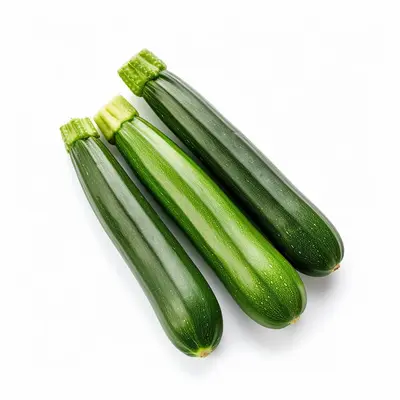
Zucchini Grey
A distinctive heirloom zucchini with beautiful mottled grey-green skin that stands out in any garden. This productive variety produces tender, flavorful fruits with creamy white flesh that's excellent for both fresh eating and cooking. The unique coloring and reliable production make it a favorite among gardeners who want something different from the typical green zucchini.
Zucchini Rampicante
An Italian heirloom climbing zucchini that produces long, curved fruits with distinctive ridged skin and exceptional flavor. This vigorous vining variety can be trellised to save space and produces continuously throughout the season when harvested regularly. The unique serpentine shape and ribbed texture make it as ornamental as it is delicious.
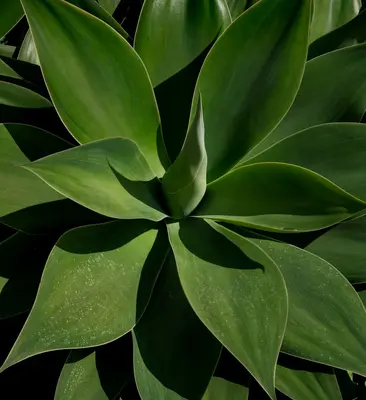
Agave Century Plant
This dramatic Mexican succulent creates a stunning architectural focal point with its massive blue-gray rosette of thick, sword-like leaves edged with fierce spines. True to its name, it grows for many years before producing a spectacular 20-foot flower spike, making it a once-in-a-lifetime garden event that's worth the wait.

Copper Rose
Copper Rose is an ornamental succulent prized for its stunning metallic copper-toned rosette foliage that deepens in color with increased sunlight exposure. Reaching full maturity in 75-85 days, this heirloom variety forms dense clusters of fleshy leaves arranged in classic rose-like formations. The plant thrives in bright indirect light with 4-6 hours of direct sun, making it ideal for windowsills and well-lit indoor spaces. Best grown in fast-draining succulent or cactus potting mix to prevent root rot. While purely ornamental with no culinary use, its distinctive copper coloring and compact growth habit make it a striking addition to succulent collections. Watch for common pests including mealybugs, aphids, and scale insects.
Crassula perforata 'String of Buttons'
A fascinating architectural succulent where triangular leaves are perfectly stacked and threaded along sturdy stems, creating the illusion of buttons on a string. The blue-green leaves develop striking red edges in bright light, and the plant forms dense, sculptural clusters that add incredible texture to any collection. Its geometric form and reliable growth make it a conversation starter that's surprisingly easy to care for.
Desert Rose
Desert Rose (Adenium obesum) is a striking succulent prized for its vibrant pink, red, or bicolor flowers and distinctive swollen stem base. Blooms emerge after 85-95 days of maturity, thriving in full sun conditions. The plant's thick, fleshy leaves and sculptural trunk create an eye-catching focal point in arid gardens or container displays. Highly toxic and not edible; primarily valued as an ornamental houseplant or landscape accent. Popular among collectors for its exotic appearance and relatively low maintenance requirements in well-draining cactus soil.
Haworthia cooperi
An extraordinary small succulent known for its translucent, bubble-like leaves that seem to glow when backlit. These fascinating 'windows' at the leaf tips allow light to penetrate deep into the plant, creating an almost magical appearance that captivates anyone who sees it. Compact and easy to grow, it's perfect for beginners wanting something truly unique in their collection.

Hen and Chicks
The ultimate beginner succulent, beloved for its ability to form charming colonies of rosettes that spread naturally through offsets or 'chicks'. This hardy European native produces stunning star-shaped pink flowers on tall stalks and can survive freezing temperatures, making it perfect for both indoor and outdoor gardens.
Hens and Chicks
This charming succulent lives up to its name by producing dozens of baby rosettes ('chicks') around the mother plant ('hen'), creating natural colonies that spread beautifully across rock gardens and containers. Incredibly cold-hardy and virtually indestructible, it's perfect for beginners and produces stunning pink or red flower spikes before the mother plant completes its lifecycle.
Jade Plant
Often called the 'money tree' or 'friendship plant,' this classic succulent features thick, glossy oval leaves and a tree-like growth habit that makes it a perfect houseplant. Known for bringing good luck and fortune according to feng shui traditions, it's incredibly easy to grow and can live for decades with minimal care. Its small white or pink star-shaped flowers appear in winter, adding unexpected beauty to this already charming plant.
Ponytail Palm
This whimsical Mexican native features a distinctive swollen trunk base that stores water, topped with cascading ribbons of narrow green leaves that give it its playful common name. Despite its tropical appearance, this slow-growing beauty is remarkably drought-tolerant and forgiving, developing character and charm over many years.
Sedum morganianum 'Donkey's Tail'
A charming trailing succulent featuring long, cascading stems densely packed with plump, blue-green leaves that overlap like braided rope. Perfect for hanging baskets or tall containers where its dramatic 2-3 foot trailing habit can be showcased. The thick, fleshy leaves store water efficiently, making this an exceptionally drought-tolerant and low-maintenance houseplant.
Snake Plant
The nearly indestructible snake plant is famous for its striking upright sword-like leaves with distinctive yellow margins and dark green cross-banding. This West African native thrives on neglect and low light, making it the perfect choice for busy gardeners or those with challenging indoor growing conditions.
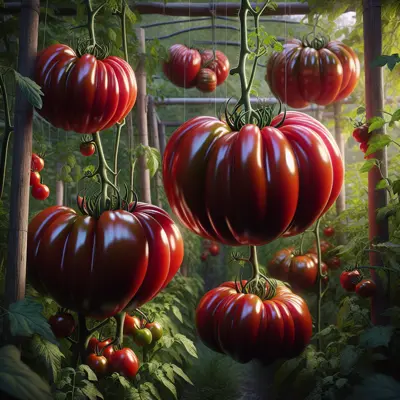
Amish Paste
Large for a sauce tomato, Amish Paste's slightly irregular plum to strawberry-shaped fruits avg. 8-12 oz. with excellent flavor. These meaty tomatoes are good in salads and great for processing. A Slow Food USA Ark of Taste variety. Indeterminate.

Arkansas Traveler
This tough Southern heirloom was specifically bred to handle hot, humid summers and still produce delicious tomatoes when other varieties give up. Developed at the University of Arkansas, it's famous for setting fruit even in extreme heat and humidity while maintaining excellent flavor and disease resistance. Perfect for gardeners in challenging climates who want reliable, flavorful tomatoes all season long.
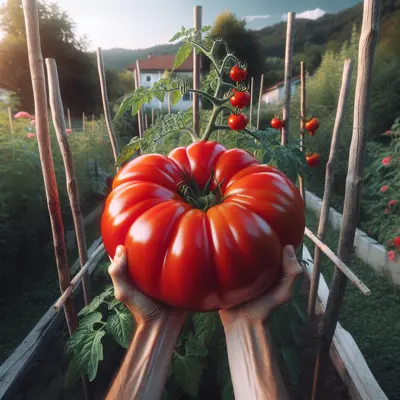
Beefsteak
The classic giant of the tomato world, producing massive fruits that can weigh over a pound each. These impressive slicing tomatoes have been a garden favorite for generations, offering substantial, meaty slices perfect for sandwiches and burgers. Their size and reliable production make them a must-have for gardeners who want to impress with truly spectacular harvests.

Black Beauty
Black Beauty is a striking heirloom tomato variety prized for its deep, dark mahogany-brown to purplish-black coloring. Reaching maturity in 90-100 days, these large beefsteak-type fruits feature a distinctive appearance that sets them apart from traditional red tomatoes. The defining characteristic is their complex, rich flavor profile combining sweet and smoky notes with well-balanced acidity, making them exceptional for slicing and fresh applications. Best suited for experienced gardeners seeking unique flavor and visual impact.
Black Cherry
Bred in Florida by the late Vince Sapp, the round, 20 gm. fruits are a pleasant purple-brown color. Regarded as one of the best-tasting tomatoes. High yielding. Try as we may, we haven't found a hybrid that can beat Black Cherry. Indeterminate.
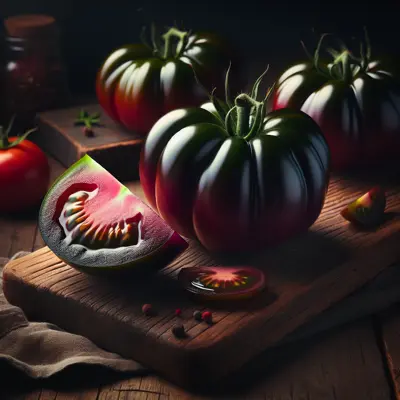
Black Krim
Black Krim combines bold, smoky flavor and good texture with an unusual appearance. Deep brown/red, 8-16 oz. tomatoes have brown/green shoulders that get darker with more heat and sunlight. High-yielding. Indeterminate.
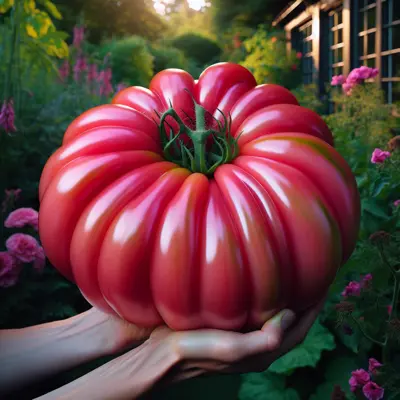
Brandywine
We describe Brandywine's luscious, heirloom flavor as "very rich, loud, and distinctively spicy." The large fruits, often over 1 lb., have a deep pink skin and smooth red flesh. The medium-tall, potato-leaf plant is best staked or caged. Our 'Quisenberry' strain is considered among the best. Indeterminate.
Brandywine Pink
Often called the 'king of heirloom tomatoes,' this Amish variety from the 1880s produces massive pink fruits with an incomparable old-fashioned tomato flavor. The large, ribbed beefsteaks can weigh over a pound each and deliver the rich, complex taste that modern hybrids often lack. A must-grow for any serious tomato lover seeking the ultimate slicing tomato.
Brandywine Red
The gold standard of heirloom beefsteak tomatoes, Brandywine Red has been captivating gardeners since the 1880s with its extraordinary flavor and massive size. These pink-red giants can weigh over a pound each and offer the perfect balance of sweet and acidic notes that define what a tomato should taste like. A true slice-and-serve variety that transforms any sandwich or salad into a gourmet experience.
Cherokee Purple
Famously rich flavor and texture make this a colorful favorite among heirloom enthusiasts. Medium-large, flattened globe, 8-12 oz. fruits. Color is dusky pink with dark shoulders. Multilocular interior ranges from purple to brown to green. Relatively short vines. Indeterminate.
Chocolate Cherry
An extraordinary cherry tomato that produces abundant clusters of small, mahogany-brown fruits with an incredibly complex flavor profile. The rich, wine-like taste with hints of smokiness makes these tiny treasures a gourmet favorite for fresh eating and elegant garnishes. Their unusual color and exceptional flavor make them a conversation starter in any garden.

Chocolate Stripes
A stunning heirloom that turns heads with its dramatic mahogany-red fruits adorned with distinctive dark green stripes that create an almost artistic appearance. Beyond its remarkable beauty, this variety delivers complex, rich flavors with wine-like depth that makes every bite memorable. Perfect for gardeners who want to grow something truly unique that performs as beautifully as it looks.
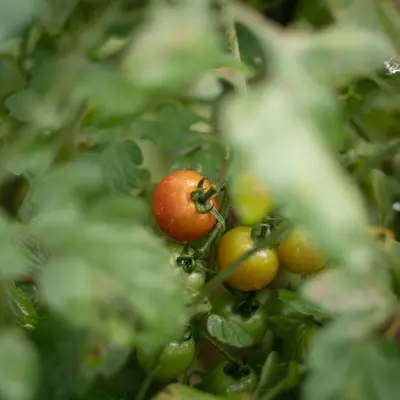
Costoluto Genovese
This striking Italian heirloom from the Genoa region produces deeply ribbed, flattened tomatoes that look like they're sculpted from red marble. The dramatically fluted fruits have intense, rich flavor perfect for authentic Italian cooking, and their unique appearance makes them a conversation starter in any garden.
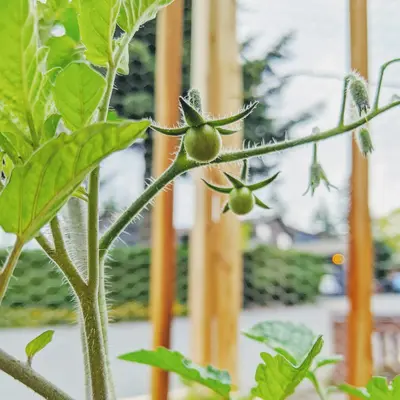
De Milpa
In Mexico, these tomatillos grow unattended in family corn fields and are harvested for home use and for selling in town on market day. High dry matter, small to medium-round fruits store fresh for several weeks, handy for fresh salsa. Portions of the fruits blush with purple, especially after harvest.
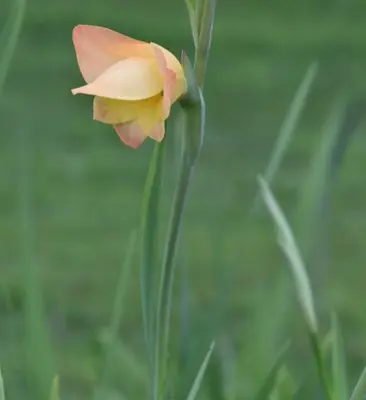
Garden Peach
An unusual heirloom novelty tomato that looks remarkably like a fuzzy peach with its pale yellow-pink skin and soft downy texture. Despite its appearance, it delivers a mild, sweet tomato flavor that's perfect for curious gardeners and conversation starters. This compact variety is excellent for containers and makes an interesting addition to any heirloom collection.
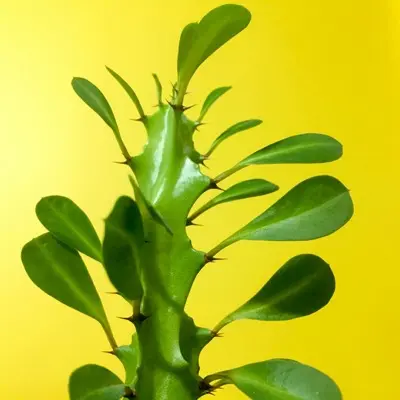
German Johnson
Recommended for higher productivity in a pink heirloom. Earlier, more uniform, and slightly smaller than Brandywine at 8-16 oz. Fruits have lots of deep, acidic tomato flavor and a rich, creamy texture. This is the regular-leaf strain, which is earlier and more productive than the potato-leaf strain. Indeterminate.
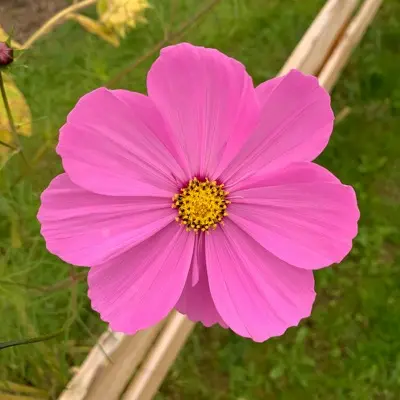
German Pink
This massive Bavarian heirloom produces some of the largest tomatoes you'll ever grow, with fruits regularly exceeding 2 pounds and bursting with old-fashioned tomato flavor. Also known as German Johnson Pink, these pink beefsteak giants have been treasured by gardeners for over a century for their incredible size and meaty, juicy flesh. One slice can cover an entire sandwich, making them the ultimate show-off variety for serious gardeners.
German Red Strawberry
A unique heirloom variety that produces heart-shaped, ribbed fruits resembling oversized strawberries with an unforgettable sweet, fruity flavor. This conversation-starting tomato has been treasured by seed savers for generations and delivers both visual appeal and exceptional taste that sets it apart from conventional varieties.
Green Zebra
A delicious, tangy salad tomato, ripe just as the green fruit develops a yellow blush, accentuating the darker green stripes. The 3-4 oz. fruits are the ideal size for slicing into wedges for salads. Productive over a long season. Developed by Tom Wagner. Indeterminate.
Heirloom Beefsteak Mix
A diverse collection of open-pollinated beefsteak varieties offering an array of colors, flavors, and sizes in one packet. Each plant produces massive, ribbed fruits perfect for slicing, with flavors ranging from sweet to complex and tangy. Save seeds to continue growing your favorites year after year.
Heirloom Black Cherry
These stunning dark purple-black cherry tomatoes are like edible jewels with an incredibly rich, complex flavor that's both sweet and savory. Developed by Vince Sapp of Florida, they're prolific producers that keep delivering these gourmet treats all season long. Perfect for gardeners who want something truly special that will impress at farmers markets or dinner parties.
Heirloom Marriage Cherokee Green
A stunning green-when-ripe heirloom that delivers exceptional flavor in an unexpected package. This Cherokee variety produces large, emerald-green beefsteak tomatoes with a sweet, tangy taste that rivals any red variety. Perfect for gardeners who want to grow something truly unique that will be the conversation starter of any garden.
Heirloom Marriage Genuwine
A stunning bicolor heirloom that produces large, ribbed fruits with yellow and red striping that creates a beautiful marbled appearance when sliced. This variety combines the best traits of multiple heirloom parents, delivering exceptional flavor complexity with fruity sweetness and balanced acidity. Perfect for gardeners who want to grow something truly unique that will be the centerpiece of any garden or dinner table.

Hillbilly
A stunning bicolor heirloom beefsteak with yellow skin beautifully streaked with red and pink, creating a marbled appearance that's as delicious as it is eye-catching. This West Virginia heirloom produces large, sweet fruits with a perfect balance of fruity flavor and low acidity that makes it irresistible fresh from the vine.
Homestead 24
A heat-tolerant determinate variety developed specifically for hot, humid climates where other tomatoes fail. This reliable producer sets fruit even in extreme heat and produces meaty, crack-resistant tomatoes perfect for canning and fresh eating. A true workhorse for Southern gardeners and hot climate growing.
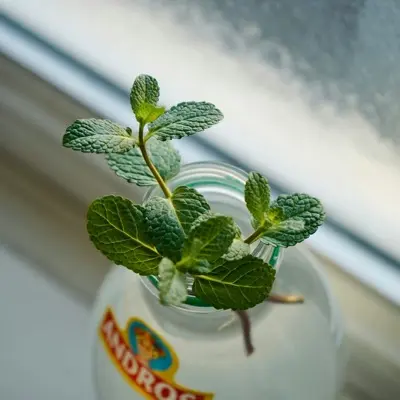
Kellogg's Breakfast
This stunning heirloom beefsteak produces massive orange fruits that can weigh up to 2 pounds, with incredibly sweet, low-acid flesh that's perfect for those who find red tomatoes too tart. Named after railroad worker Darrell Kellogg's family variety from Michigan, it's become a favorite among gardeners seeking unique color and exceptional flavor.
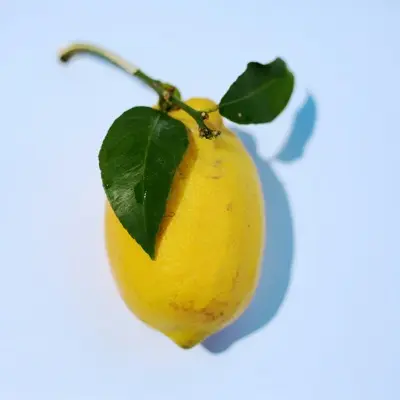
Lemon Drop
A prolific cherry tomato variety that produces bright yellow, teardrop-shaped fruits with an intensely sweet, citrusy flavor that's unlike any other tomato. These bite-sized gems are incredibly productive, with long clusters of 6-12 fruits that ripen throughout the season. A conversation starter that adds both visual appeal and gourmet flavor to any garden or plate.
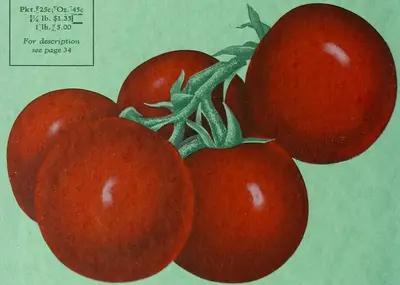
Marglobe
Developed by the USDA in the 1920s, this reliable determinate variety was bred specifically for disease resistance and consistent production. A favorite among home canners and gardeners who want dependable, crack-resistant red tomatoes with classic flavor and the convenience of concentrated harvest timing.
Matt's Wild Cherry
These small cherry tomatoes are deep-red, tender, smooth, and full-flavored with a high sugar content. Though the flavor is superior, it doesn't yield as well as modern varieties, and the fruits are soft. Fantastic in salsa and for fresh eating. Some resistance to early blight and late blight. The story of how we obtained 'Matt's Wild Cherry' seeds can be traced back to Teresa Arellanos de Mena, who brought them to Maine from her family's home state of Hidalgo in Eastern Mexico (the region where these tomatoes grow wild). Teresa gave the seeds to her friend Matt Leibman, a former Univ. of Maine AG faculty member, who then gave the seeds to us. Avg. fruit size 5 gm. Indeterminate.
Moneymaker
A British heirloom that lives up to its name with incredibly productive vines that produce abundant clusters of medium-sized red tomatoes. This reliable variety has been a staple in home gardens for generations thanks to its consistent performance and excellent flavor that works well for both fresh eating and cooking. The vigorous plants continue producing until frost, making every square foot of garden space profitable.
Mortgage Lifter
This legendary heirloom tomato earned its name when creator M.C. Byles paid off his mortgage by selling seedlings for $1 each during the Depression. These massive pink beefsteak tomatoes can weigh up to 4 pounds and offer exceptional flavor with meaty texture and few seeds. Perfect for gardeners who want to grow truly impressive conversation-starter tomatoes.
Mortgage Lifter Pink
The legendary giant that supposedly helped its creator pay off his mortgage by selling seedlings, this pink beefsteak produces enormous fruits that can weigh over 2 pounds each. Known for its incredibly meaty texture, sweet flavor, and impressive size that makes each tomato perfect for feeding the whole family. A true heirloom success story that continues to amaze gardeners decades later.
Moskvich
Fruits are early, deep red, and cold tolerant. Rich flavor. Smooth and globe-shaped. 4-6 oz. with a small stem scar. Indeterminate.
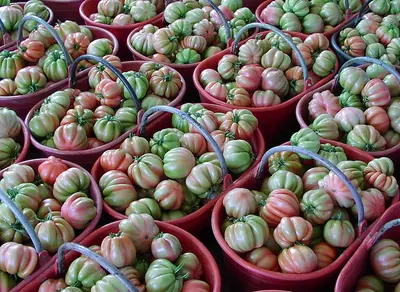
Oxheart
A massive heirloom beefsteak known for producing some of the largest tomatoes in the garden, often exceeding 2 pounds each. These heart-shaped giants have dense, meaty flesh with few seeds and exceptional flavor that makes every slice memorable. A showstopper variety that creates unforgettable sandwiches and impresses neighbors.
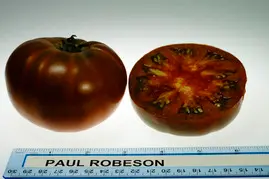
Paul Robeson
A stunning Russian heirloom named after the famous American singer and activist, prized for its extraordinary dark burgundy-black color and exceptional flavor. This large beefsteak variety delivers complex, wine-like taste with perfect balance of sweetness and acidity. A true gourmet tomato that stands out in any garden with its dramatic appearance.

Pineapple
This stunning bicolor heirloom creates a tropical sunset on your plate with yellow fruits streaked with red and pink, living up to its name with a sweet, fruity flavor that's absolutely unique among tomatoes. Originally from Kentucky, these massive beefsteak beauties are conversation starters that taste as exotic as they look. They're perfect for gardeners who want to grow something truly special that guests will remember long after the meal.
Roma
Roma is a classic heirloom paste tomato prized for its dense, meaty flesh and concentrated flavor. The plant produces elongated, plum-shaped fruits that mature in 60-65 days with minimal seeds and low acidity. Known for its mild, sweet taste, Roma excels in fresh sauces, pastes, and cooking applications where robust texture matters. This reliable, easy-to-grow variety tolerates less fertile soil and requires minimal maintenance. Its naturally rich flavor develops without excessive acidity, making it ideal for traditional Italian tomato preparations.
Rutgers
A legendary heirloom variety developed at Rutgers University in 1934 that became the standard for tomato flavor in America. This reliable producer delivers perfectly balanced, old-fashioned tomato taste in medium-sized fruits that are ideal for both fresh eating and processing. Rutgers represents the classic American tomato that many gardeners remember from their childhood.
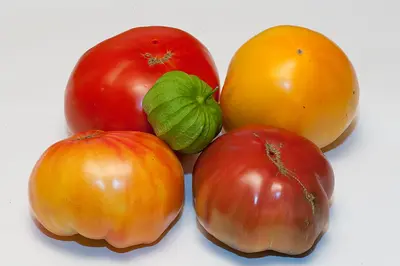
Striped German
The flat medium-to-large tomatoes with variable shoulder ribbing are shaded yellow and red. The marbled interior looks beautiful sliced. Complex, fruity flavor and smooth texture. Medium-tall vines bear 12+ oz. fruit. Indeterminate.

Stupice
This Czechoslovakian heirloom is prized as one of the earliest full-flavored tomatoes, often ripening weeks before other varieties. Despite its early maturity, it delivers complex, rich flavor that rivals the best season tomatoes. Perfect for short-season gardeners who don't want to sacrifice taste for earliness.

Tiny Tim
A miniature cherry tomato perfect for windowsills, small containers, and indoor growing. This compact determinate variety produces abundant clusters of tiny, flavorful red fruits on plants that rarely exceed 12 inches tall, making it ideal for apartment dwellers and beginning gardeners.
Toma Verde
Early maturing, large, flat-round green fruits. Use in salsa or Mexican cooking.

Valencia
Round, smooth fruits average 8-10 oz. Their meaty interiors have few seeds. This midseason tomato is among the best for flavor and texture. Our own selection of a Maine family heirloom with a Spanish accent. Indeterminate.
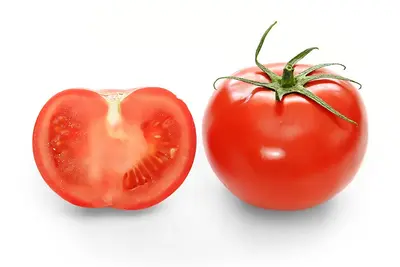
Wisconsin 55
Produces 6-8 oz. slicers that are great for fresh eating and popular for canning, particularly for stewed tomatoes. This long-popular workhorse variety was developed by the University of Wisconsin, Madison in the 1940's. While there are several strains of Wisconsin 55 on the market, their quality has degraded over time. That is why Johnny's identified this strain, which shows more consistent size, healthier plants, and fewer fruit defects than other commercially available Wisconsin 55 strains. We also believe ours to be closer to the original variety. We acquired it from University of Wisconsin, Madison plant geneticist Ted Bingham, who had frozen Wisconsin 55 seeds purchased in the 1960's. Demonstrates some field tolerance to early blight and Septoria diseases. Indeterminate.
Yellow Brandywine
A stunning golden yellow variant of the famous Brandywine that offers the same exceptional flavor profile with a beautiful sunny color and slightly milder taste. These large, creamy yellow beefsteaks create gorgeous contrast in fresh dishes and provide a conversation-starting addition to any heirloom collection. The sweet, low-acid flavor makes them perfect for those sensitive to high-acid tomatoes.
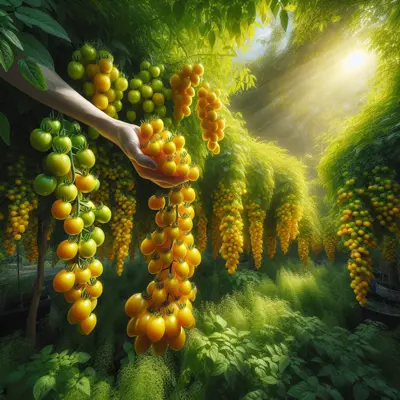
Yellow Pear
A charming heirloom cherry tomato dating back to the 1800s, producing abundant clusters of bright yellow, pear-shaped fruits that are as decorative as they are delicious. This prolific variety is beloved by children and adults alike for its sweet, mild flavor and unique teardrop shape that adds visual interest to any garden or salad.
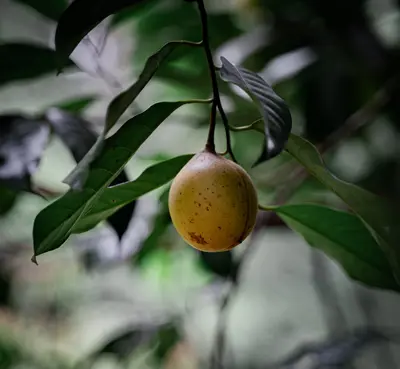
Alphonso Mango
Known as the 'King of Mangoes,' this legendary variety from India produces incredibly sweet, creamy fruits with virtually no fiber and an intoxicating floral aroma. Considered by many to be the world's finest mango, Alphonso commands premium prices in markets but can be grown successfully in containers in warm climates. The ultimate tropical fruit for discerning gardeners seeking exceptional flavor.
Breadfruit Ma'afala
A premium Polynesian breadfruit variety that produces enormous, starchy fruits perfect for roasting, baking, or frying as a potato substitute with incredible nutritional value. This seedless variety is prized for its smooth texture and mild, slightly sweet flavor that takes on the taste of whatever seasonings you use. A single mature tree can feed a family year-round with its prolific fruiting habit.

Caribbean Red Habanero
The ultimate heat lover's pepper, delivering intense fruity flavor alongside serious fire that registers 300,000-400,000 Scoville units. Unlike many superhot peppers that sacrifice flavor for heat, Caribbean Red maintains a delicious tropical fruit taste that complements its intense burn. This prolific producer thrives in hot climates and containers, rewarding brave gardeners with months of fiery harvests.

Dwarf Coconut Palm
A compact version of the classic coconut palm that brings tropical paradise to smaller spaces while still producing full-sized, delicious coconuts. These palms start fruiting much earlier than tall varieties and are perfect for patios, poolside plantings, or tropical landscape focal points. The authentic taste of fresh coconut water and meat makes the wait worthwhile.

Dwarf Nam Wah Banana
A compact Thai banana variety perfect for container growing and small spaces, producing sweet, creamy fruits that are excellent both fresh and cooked. This cold-hardy dwarf cultivar is incredibly productive and can fruit in as little as 9 months, making it ideal for impatient home gardeners.

Ginger Hawaiian
A superior ginger variety known for its exceptional flavor intensity and beautiful pink-tinged shoots that make it as ornamental as it is culinary. This variety produces thick, juicy rhizomes with less fiber than common ginger, making it perfect for fresh use in cooking and the spicy bite that ginger lovers crave. Easy to grow indoors or out, and you can harvest baby ginger in just 4 months.
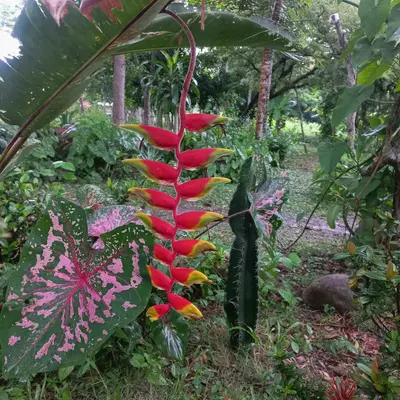
Gros Michel Banana
The legendary banana that dominated world markets until the 1950s, known for its incredibly sweet flavor and the classic 'banana' taste that inspired artificial banana flavoring. This historic variety is making a comeback among home growers who want to experience the banana that previous generations considered the gold standard. Perfect for container growing and produces impressive hands of large, flavorful fruit.
Ice Cream Bean
The Ice Cream Bean is a tropical heirloom tree producing elongated, pod-like fruits that ripen in approximately 90 days. The pods contain soft, creamy white pulp with a remarkable vanilla ice cream flavor and distinctive cotton candy texture that dissolves on the tongue. Native to Central and South America, this tree thrives in full sun with rich, well-draining soil. The defining characteristic is its unique taste profile—neither truly fruit nor dessert—making it a novelty choice for tropical gardens. Remarkably pest-resistant and easy to grow, it's prized by enthusiasts seeking unusual, conversation-starting tropical varieties.
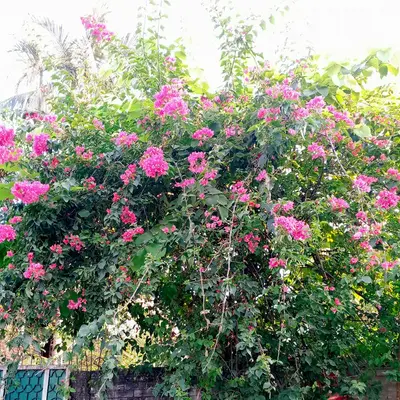
Pink Guava
This tropical fruit tree produces incredibly fragrant, sweet fruits with beautiful pink flesh that's rich in vitamin C and antioxidants. The smooth-skinned fruits have an intoxicating aroma that fills the air when ripe, with creamy texture and tropical flavor perfect for eating fresh or making into preserves. Fast-growing and prolific, a single tree can produce hundreds of fruits per season once established.
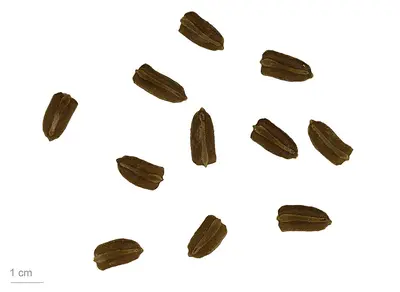
Birdhouse Gourd
Birdhouse Gourd is a charming heirloom vine variety that produces distinctive gourd-shaped fruits resembling small birdhouses, typically ready in 125 days. The hard-shelled gourds mature with ornamental light tan or cream-colored skin, ideal for drying and decoration. Young immature fruits can be eaten as summer squash, though the plant is primarily grown as an ornamental rather than for food production. Vigorous vines require full sun and rich, well-drained soil, making them excellent for trellising or sprawling along garden beds.
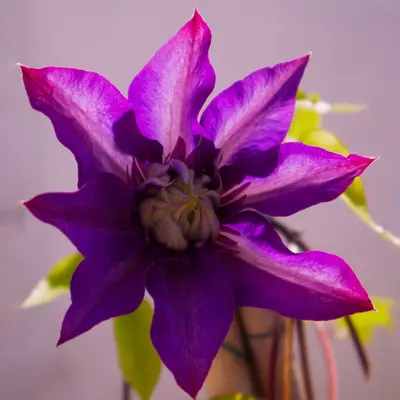
Clematis 'Jackmanii'
The most popular and reliable clematis variety, beloved for its profuse display of large, velvety purple flowers that bloom from midsummer through fall. This vigorous climber is perfect for covering arbors, fences, or trellises with its stunning 4-6 inch violet-purple blooms that have made it a garden classic for over 150 years.
Heavenly Blue
Fast-growing climber. 4-5" trumpet-shaped flowers are vibrant sky blue with creamy white throats. Lovely heart-shaped foliage and fast-growing vines are excellent for arbors, trellises, or as a ground cover. Easy-to-grow heirloom variety. Flowers open in the morning and close in the afternoon. Morning glory requires short days and long nights to trigger flowering. Vigorous plants put on lots of growth through the spring and summer and begin blooming in midsummer, producing continuously through early fall. NOTE: plants grow vigorously and have the potential to reseed.
Ruby Moon
Purple stems, lilac-rose blossoms, and shiny 2-3" magenta pods. While all parts of the plant are edible, we recommend boiling the mature seeds twice before eating. Used in Asian, Thai, and Indian cuisine. Blooms and pods are useful as cut flowers; pods may be dried. Also known as bonavist-bean, and lablab-bean. Tender perennial in Zones 9-10. Best grown as an annual elsewhere.Edible Flowers: Flowers can be eaten raw or steamed, and can be used as a garnish for salads and desserts. Flavor is mild, bean-like, and sweet. A favorite in our taste tests.