Straight Eight
Cucumis sativus 'Straight Eight'
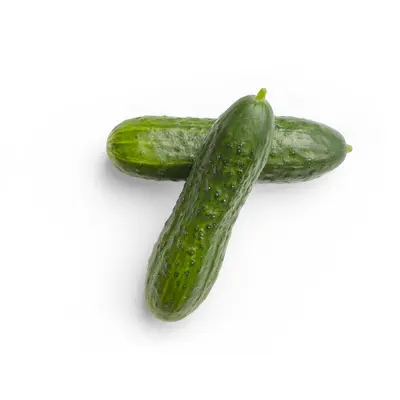
A classic American heirloom cucumber that has been a garden staple since 1935 and won the All-America Selections award. Famous for its perfectly straight, uniform 8-inch fruits with crisp texture and excellent flavor. This reliable variety produces consistently even in variable weather conditions, making it a favorite for both beginners and experienced gardeners.
Harvest
58-65d
Days to harvest
Sun
Full sun
Zones
2–11
USDA hardiness
Height
8-18 inches
Planting Timeline
Showing dates for Straight Eight in USDA Zone 7
All Zone 7 cucumber →Zone Map
Click a state to update dates
Straight Eight · Zones 2–11
Growing Details
Succession Planting
In zone 7, direct sow Straight Eight every 14 days starting May 1, and make your last sowing no later than July 1. That gives the final planting enough time to hit its 58-to-65-day harvest window before nights start cooling hard in late September. Each wave peaks for about 3 to 4 weeks before the vines fade — staggering them means you get a steady supply rather than a two-week avalanche followed by nothing.
If daytime highs are sitting above 90°F when you'd normally make a sowing, skip it. Seeds will germinate, but heat stress during early vine development is one of the main triggers for cucurbitacin buildup and bitter fruit. One well-timed planting will outperform two stressed ones.
Complete Growing Guide
Plant Straight Eight in full sun with consistently moist, well-draining soil enriched with compost, as this heirloom variety produces best with steady water availability rather than feast-famine cycles. The 58-65 day timeline is remarkably reliable, but resist starting seeds too early indoors since these vines stretch excessively when transplanted before the soil reaches 65°F—direct seeding after frost danger passes yields stockier, more productive plants. Watch for powdery mildew on the foliage during humid stretches, particularly if air circulation is poor; space plants adequately and avoid overhead watering. Unlike modern slicing varieties, Straight Eight shows minimal bolting tendency even in heat, but fruit quality declines if harvested past 8 inches, so pick regularly at peak size. Train vines vertically on sturdy trellises to maximize the characteristic straightness these cucumbers are prized for.
Light: Full sun (6 or more hours of direct sunlight a day). Soil: High Organic Matter. Soil pH: Neutral (6.0-8.0). Drainage: Good Drainage, Moist. Height: 0 ft. 8 in. - 1 ft. 6 in.. Spread: 3 ft. 0 in. - 8 ft. 0 in.. Spacing: 12 inches-3 feet. Growth rate: Rapid. Maintenance: Medium. Propagation: Seed. Regions: Coastal, Mountains, Piedmont.
Harvesting
Harvest Straight Eight cucumbers when they reach their signature 8-inch length with a deep green color and firm texture—they should feel crisp when gently squeezed and show no yellowing or soft spots. Pick fruits every two to three days once flowering begins, as continuous harvesting encourages more blooms and extends your season rather than waiting for a single large harvest. Check plants in the early morning when temperatures are coolest, as cucumbers picked before heat stress tastes crisper and stays fresher longer. Leaving mature fruits on the vine signals the plant to slow production, so removing them promptly maintains peak yields throughout the growing season.
The "vegetable" is botanically a fruit– it is a pepo, a berry with a hard rind. Long and cylindrical, starting out prickly when young and smoothing out to a bumpy surface as it matures. Length and girth can vary based on cultivar and culinary purpose but grow at least 3 in long. Some varieties are bred to be seedless.
Color: Green. Type: Berry. Length: > 3 inches. Width: 1-3 inches.
Garden value: Edible, Showy
Harvest time: Summer
Edibility: Fruits are commonly eaten raw or pickled. Fresh cucumbers last in the fridge for about a week.
Storage & Preservation
Fresh Straight Eight cucumbers keep best in the refrigerator's crisper drawer, wrapped loosely in plastic to maintain humidity while preventing moisture buildup that causes rot. They'll stay crisp for 7-10 days when stored at 50-55°F—avoid temperatures below 45°F which cause chilling injury and bitter flavors.
For short-term storage, keep unwashed cucumbers at room temperature for 2-3 days maximum. Their high water content makes them unsuitable for freezing fresh, but they excel in preservation methods that embrace their crisp texture.
Pickling is the traditional preservation method—their uniform shape makes them perfect for dill pickles, bread-and-butter pickles, or quick refrigerator pickles. You can also ferment them into half-sours using a simple salt brine. For long-term storage, slice and dehydrate into chips for a healthy snack, or incorporate into relishes and chutneys that can be water-bath canned safely.
History & Origin
The Straight Eight cucumber emerged from American horticultural development in the 1930s, introduced by the W. Atlee Burpee Company, a leading seed supplier that shaped American vegetable breeding during this era. The variety's origin within specific breeding lines remains somewhat obscure in documented records, though it reflects the mid-twentieth-century focus on uniform, slicing cucumbers suited to American home gardens and commercial markets. Its All-America Selections award validated its qualities among contemporary varieties. The cultivar likely descended from earlier American and European cucumber germplasm, refined for consistent fruit size and appearance. While detailed parentage documentation is limited, Straight Eight represents the golden age of American vegetable variety development, when seed companies actively selected for reliability and consumer appeal rather than disease resistance or novel traits.
Origin: Himalaya to Northern Thailand
Advantages
- +Classic heirloom with proven 90-year track record of reliable performance
- +Perfectly straight 8-inch fruits ideal for pickling and fresh eating
- +Matures in just 58-65 days, allowing multiple successive plantings
- +Excellent crisp texture and mild flavor with zero bitterness
- +Produces consistently well even during unpredictable weather conditions
Considerations
- -Highly susceptible to powdery mildew in humid or crowded growing conditions
- -Vulnerable to bacterial wilt transmitted by cucumber beetles requiring vigilant pest management
- -Shorter fruit length limits suitability for some slicing and presentation preferences
- -Requires regular harvesting to maintain productivity and prevent fruit oversizing
Companion Plants
Radishes are the most practical companion for Straight Eight — plant them around the bed's perimeter and they pull flea beetles and cucumber beetles toward themselves and away from your vines. Marigolds, specifically French marigolds (Tagetes patula), earn a spot for a different reason: their root secretions suppress root-knot nematodes over a full growing season. Around here in the southeast, where nematodes can quietly wreck a cucumber bed in sandy soil before you even know they're there, that's a more concrete payoff than most companion claims. Nasturtiums work as a trap crop for aphids — the aphids hit the nasturtiums first, giving you a concentrated target to deal with rather than picking colonies off cucumber stems one by one.
Potatoes should stay well away from Straight Eight — they share soil-borne disease pressure, and planting them in adjacent beds raises the pathogen load for both crops. Melons are a bad neighbor for similar reasons: cucumber beetles hit cucurbits indiscriminately, so putting melons and cucumbers side by side just concentrates pest pressure in one spot and splits your pollinator traffic during the same flowering window. Fennel specifically (among the aromatic herbs) releases compounds that can inhibit root development in young cucumber seedlings — that's allelopathy, and it's documented well enough that it's not worth testing.
Plant Together
Radishes
Break up soil for cucumber roots and repel cucumber beetles
Marigolds
Repel cucumber beetles, aphids, and other harmful insects
Nasturtiums
Act as trap crop for cucumber beetles and aphids
Beans
Fix nitrogen in soil and provide natural trellis support
Corn
Provides natural shade and wind protection for cucumber vines
Sunflowers
Attract beneficial insects and provide afternoon shade
Dill
Attracts beneficial insects like lacewings that control cucumber pests
Lettuce
Benefits from cucumber's shade while maximizing garden space
Keep Apart
Aromatic Herbs
Strong scents from sage, rosemary can inhibit cucumber growth
Potatoes
Compete for nutrients and may increase disease susceptibility
Melons
Cross-pollination concerns and increased competition for water and nutrients
Nutrition Facts
Per 100g serving. % Daily Value based on 2,000 calorie diet. Source: USDA FoodData Central (FDC #169225)
Pests & Disease Resistance
Resistance
Moderate resistance to cucumber mosaic virus and downy mildew
Common Pests
Cucumber beetles, aphids, spider mites, squash bugs
Diseases
Powdery mildew, bacterial wilt, angular leaf spot, anthracnose
Troubleshooting Straight Eight
What you'll see, why it happens, and what to do about it.
Plants wilting mid-season despite regular watering — lower leaves show large tan spots between veins and scorched edges
Likely Causes
- Bacterial wilt (Erwinia tracheiphila) — transmitted by cucumber beetles feeding on stems and leaves
- Root-knot nematodes — lumpy, distorted roots visible when you pull the plant; common in sandy Georgia soils
What to Do
- 1.Do the stem-thread test: cut a wilted stem near the base, press the two cut ends together, then slowly pull apart — thin, stretchy strands between the cuts means bacterial wilt; pull and bag the plant immediately
- 2.If roots look lumpy but stems are clean, suspect nematodes — pull the plant, inspect roots, and don't replant cucurbits in that bed for at least 2 seasons
- 3.Control striped and spotted cucumber beetles (Acalymma vittatum and Diabrotica undecimpunctata) with row cover until flowering, since they're the primary vector for bacterial wilt
White powdery coating on upper and lower leaf surfaces, usually appearing after fruit set
Likely Causes
- Powdery mildew (Podosphaera xanthii or Erysiphe cichoracearum) — thrives in warm days and cool nights with low moisture on leaf surfaces
- Poor airflow from overcrowded planting or tangled vines
What to Do
- 1.Remove heavily infected leaves and bin them — don't put them in the compost
- 2.Apply potassium bicarbonate or a dilute neem oil spray (2 tbsp per gallon) on a dry morning so leaves dry fully before dark
- 3.Space plants at least 18 inches apart and train vines up a trellis; better airflow cuts severity more reliably than any spray schedule
Small, water-soaked angular spots on leaves that turn brown and papery, sometimes with a yellow halo; spots follow the leaf veins closely
Likely Causes
- Angular leaf spot (Pseudomonas syringae pv. lachrymans) — a bacterial disease spread by overhead irrigation splash and rain
- Overhead watering that keeps foliage wet for extended periods
What to Do
- 1.Switch to drip irrigation or soaker hoses — NC State Extension points to overhead sprinklers as a consistent driver of bacterial leaf diseases in cucurbits
- 2.Stay out of the garden when plants are wet; the bacteria move easily from plant to plant on hands and tools
- 3.Rotate cucumbers out of the bed for 2 years and remove all plant debris at season's end
Fruit tastes bitter, especially near the stem end and in the skin
Likely Causes
- Cucurbitacin buildup triggered by environmental stress — inconsistent watering, heat above 90°F, low soil fertility, or pH below 6.0, per NC State Extension
- Overripe fruit left on the vine past 8 inches
- Poor pollination producing misshapen fruit, which tends to concentrate bitterness
What to Do
- 1.Keep soil moisture steady at 1 to 2 inches per week; Straight Eight does not bounce back well from dry spells followed by heavy irrigation
- 2.Test soil pH and keep it in the 6.0–7.0 range; if a soil test shows you're low, apply lime in the fall so it has time to work before the next season
- 3.Pick fruit at 8 inches or slightly under — leaving cucumbers on the vine past that stage increases bitterness and slows the plant's overall output
Frequently Asked Questions
How long does Straight Eight cucumber take to grow?▼
Can you grow Straight Eight cucumbers in containers?▼
Is Straight Eight good for beginners?▼
What does Straight Eight cucumber taste like?▼
When should I plant Straight Eight cucumber seeds?▼
Straight Eight vs Japanese Long cucumber - what's the difference?▼
Zone-by-Zone Planting Calendar
| Zone | Indoor Start | Transplant | Direct Sow | Harvest |
|---|---|---|---|---|
| Zone 1 | June – June | July – August | July – September | October – August |
| Zone 2 | May – June | July – July | July – August | September – September |
| Zone 11 | January – January | February – February | February – March | April – June |
| Zone 12 | January – January | February – February | February – March | April – June |
| Zone 13 | January – January | February – February | February – March | April – June |
| Zone 3 | May – May | June – July | June – August | September – October |
| Zone 4 | April – May | June – June | June – July | August – October |
| Zone 5 | April – April | May – June | May – July | August – September |
| Zone 6 | April – April | May – June | May – July | August – September |
| Zone 7 | March – April | May – May | May – June | July – September |
| Zone 8 | March – March | April – May | April – June | July – August |
| Zone 9 | February – February | March – April | March – May | June – July |
| Zone 10 | January – February | March – March | March – April | May – July |
Growing Guides from Wind River Greens
Sources & References
External authority sources used in compiling this guide.
See the Methodology page for how this data is sourced, what's AI-assisted, and known limitations.