Bing Cherry
Prunus avium 'Bing'
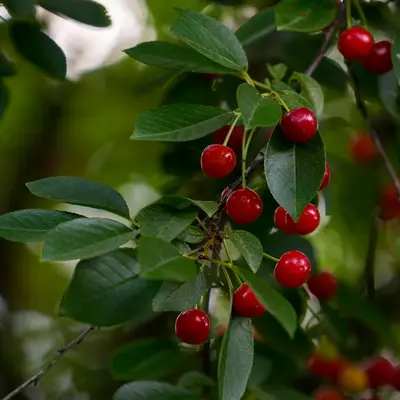
The king of sweet cherries with large, heart-shaped fruits that showcase a deep mahogany color and firm, juicy flesh bursting with rich sweetness. Developed in Oregon in the 1870s, Bing cherries are the gold standard for fresh eating and represent everything people love about summer stone fruit. These premium cherries command top prices at farmers markets and grocery stores alike.
Harvest
100-120d
Days to harvest
Sun
Full sun
Zones
3–8
USDA hardiness
Difficulty
Moderate to Difficult
Planting Timeline
Showing dates for Bing Cherry in USDA Zone 7
All Zone 7 fruit-tree →Zone Map
Click a state to update dates
Bing Cherry · Zones 3–8
Growing Details
Complete Growing Guide
Light: Full sun (6 or more hours of direct sunlight a day). Maintenance: High.
Harvesting
Fleshy, yellow to red to purple-red, with a large pit (stone) and long stem.
Color: Gold/Yellow, Purple/Lavender, Red/Burgundy. Type: Drupe. Length: < 1 inch. Width: < 1 inch.
Garden value: Edible
Edibility: Fruit edible raw or cooked.
Storage & Preservation
Store unwashed Bing cherries in the refrigerator at 32-35°F with high humidity for up to 2 weeks. Keep them in perforated plastic bags to maintain moisture while allowing air circulation. Never store at room temperature – they lose sweetness and develop off-flavors within 24 hours.
Freeze whole cherries with pits intact for best texture, spreading them on baking sheets before transferring to freezer bags. Pitted cherries work better for smoothies but become mushy when thawed. For preserves, Bing cherries' firm flesh holds up beautifully in jams and jellies, requiring less pectin than softer varieties. Dehydrate at 135°F for 18-24 hours to create intensely flavored dried cherries perfect for baking. Their high sugar content makes them excellent candidates for cherry wine or brandied fruit that improves with age.
History & Origin
Origin: Europe to Afghanistan, Northern Africa
Advantages
- +Attracts: Butterflies, Pollinators
- +Edible: Fruit edible raw or cooked.
Considerations
- -Toxic (Flowers, Fruits, Leaves, Seeds): Medium severity
- -High maintenance
Companion Plants
Chives and garlic planted around the drip line do real work — their sulfur compounds deter aphids, which cluster on new growth and can spread disease to already-stressed trees. Marigolds (Tagetes spp.) and nasturtiums draw in predatory insects like lacewings that keep aphid and scale populations in check. Comfrey is worth planting 2-3 feet from the trunk: its deep taproot mines calcium and potassium, and you can chop the leaves down as a nutrient mulch every 4-6 weeks. Black walnut (Juglans nigra) is a serious problem — Bing cherry is among the more sensitive species to juglone toxicity, and the damage accumulates slowly enough that you won't notice until the tree is already in decline.
Plant Together
Chives
Repels aphids and other soft-bodied insects that damage cherry trees
Marigolds
Deters nematodes and attracts beneficial insects for pollination
Nasturtiums
Acts as trap crop for aphids and cucumber beetles, protecting the cherry tree
Comfrey
Deep roots bring nutrients to surface and leaves make excellent mulch
Lavender
Repels moths and other pests while attracting pollinators
Clover
Fixes nitrogen in soil and provides ground cover to retain moisture
Tansy
Repels ants, mice, and flying insects that can harm cherry trees
Garlic
Natural fungicide properties help prevent bacterial canker and brown rot
Keep Apart
Black Walnut
Produces juglone, a toxic compound that inhibits cherry tree growth
Fennel
Allelopathic properties inhibit growth of most fruit trees including cherries
Tomatoes
Compete for similar nutrients and can harbor diseases that affect stone fruits
Nutrition Facts
Per 100g serving. % Daily Value based on 2,000 calorie diet. Source: USDA FoodData Central (FDC #171719)
Pests & Disease Resistance
Resistance
Susceptible to brown rot and bacterial canker
Common Pests
Cherry fruit fly, aphids, scale insects, birds
Diseases
Brown rot, bacterial canker, leaf spot, powdery mildew
Troubleshooting Bing Cherry
What you'll see, why it happens, and what to do about it.
Fruit developing soft brown patches that spread quickly, often with grayish spore tufts, just before or at harvest
Likely Causes
- Brown rot (Monilinia fructicola) — fungal, spreads fast in warm humid conditions, especially after rain
- Overhead irrigation or prolonged wet weather holding moisture on the fruit
What to Do
- 1.Pick affected fruit immediately and bag it in the trash — don't leave mummies on the tree or the ground
- 2.Apply a copper-based or captan fungicide starting at petal fall and again 2-3 weeks before harvest, per label rates
- 3.Avoid any overhead watering once fruit starts sizing up; drip or soaker hose at the root zone only
Sunken, elongated dark cankers on branches or the trunk, often with gummy amber sap oozing from the wound, most visible in spring
Likely Causes
- Bacterial canker (Pseudomonas syringae) — enters through pruning cuts, frost cracks, or insect wounds
- Pruning during wet weather, which spreads the bacteria between cuts
What to Do
- 1.Prune only during dry weather in late summer (July–August) when bacterial canker pressure is lowest — not in fall or winter
- 2.Cut at least 6 inches below any visible canker margin into clean wood; sterilize your pruning saw with 70% isopropyl between every cut
- 3.Paint fresh pruning cuts with a copper-based wound sealant to limit entry points
Frequently Asked Questions
How long does it take for Bing cherry trees to produce fruit?▼
Can you grow Bing cherry trees in containers?▼
What cherry varieties pollinate Bing cherries?▼
When should I plant Bing cherry trees?▼
Are Bing cherries good for beginners?▼
Why do my Bing cherries crack and split?▼
Zone-by-Zone Planting Calendar
Growing Guides from Wind River Greens
Sources & References
External authority sources used in compiling this guide.
See the Methodology page for how this data is sourced, what's AI-assisted, and known limitations.