Jenny Lind Melon
Cucumis melo var. reticulatus 'Jenny Lind'
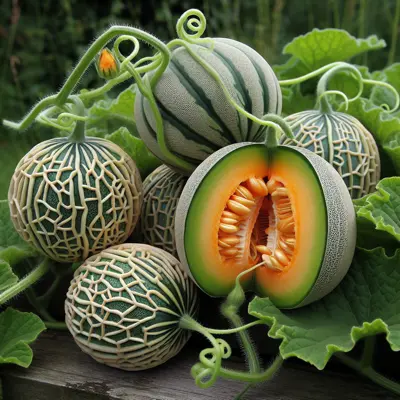
A charming 1840s heirloom cantaloupe named after the famous Swedish opera singer, featuring distinctive turban-shaped fruits with a pronounced button end. This early-maturing variety produces small, intensely flavored melons with pale orange flesh and fine netting that were once sold by street vendors in Philadelphia. The compact size and exceptional flavor make it perfect for small gardens and fresh eating.
Harvest
70-80d
Days to harvest
Sun
Full sun
Zones
2–11
USDA hardiness
Height
6-9 feet
Planting Timeline
Showing dates for Jenny Lind Melon in USDA Zone 7
All Zone 7 melon →Zone Map
Click a state to update dates
Jenny Lind Melon · Zones 2–11
Growing Details
Succession Planting
Jenny Lind doesn't suit succession planting the way radishes or lettuce do. Each vine needs 70–80 days from transplant and keeps setting fruit until frost or disease ends the season, so one well-timed planting is the standard move. In zone 7, start seeds indoors in March or April, transplant after last frost in May, and you're looking at an August–September harvest.
If you want to stretch that window by a couple of weeks, start a second small batch indoors 3 weeks after the first — but don't push the transplant date past mid-May, or the second planting won't reach maturity before fall temperatures drop below the 50°F threshold that stalls cucurbit growth.
Complete Growing Guide
Jenny Lind's exceptional early maturity at 70-80 days means you can succession plant every two weeks in cooler climates to extend the harvest season, unlike slower cantaloupe varieties. This heirloom thrives in warm soil (at least 70°F) and benefits from consistent moisture during fruit development, though it's less prone to powdery mildew than larger modern melons. The compact vine habit requires careful spacing of 2-3 feet apart to prevent overcrowding, which reduces air circulation and invites fungal issues; however, the small fruit size means fewer vines needed per garden. One practical advantage: Jenny Lind's modest size (3-5 pounds) produces ripe melons that develop their characteristic fragrant aroma predictably, making harvest timing easier than with larger varieties. Direct sow seeds after all frost danger passes, and provide consistent warmth for optimal sweetness development.
Light: Full sun (6 or more hours of direct sunlight a day). Soil: Clay, High Organic Matter, Loam (Silt). Soil pH: Acid (<6.0), Neutral (6.0-8.0). Drainage: Good Drainage, Moist. Height: 6 ft. 0 in. - 9 ft. 0 in.. Spread: 1 ft. 0 in. - 3 ft. 0 in.. Spacing: 12 inches-3 feet. Growth rate: Medium. Maintenance: Medium. Propagation: Seed. Regions: Coastal, Mountains, Piedmont.
Harvesting
Jenny Lind melons reach peak ripeness when the distinctive turban-shaped fruits develop a creamy beige undertone beneath their fine netting and the characteristic button end yields slightly to gentle pressure. At full maturity, these small heirlooms typically measure 3-4 inches in diameter and emit a sweet, musky aroma at the stem end. The flesh should separate cleanly from the rind when twisted gently. This variety produces continuously throughout the season rather than all at once, so harvest ripe melons every few days as they mature. Timing is critical: pick Jenny Linds in the early morning when temperatures are coolest, as this preserves their delicate flavor and aromatic qualities better than harvesting during afternoon heat.
Musky-scented, spherical to oblong berry with a rind (pepo), often furrowed with yellow, white or green flesh and many seeds. The rind may be green, yellow, tan, beige or white and the surface may be smooth, rough, warty, scaly, or netted. Seeds white, about 1/2 inch long, narrow. Seeds ripen in August and September.
Color: Gold/Yellow, Green, White. Type: Berry. Length: < 1 inch. Width: < 1 inch.
Garden value: Edible, Showy
Harvest time: Fall
Edibility: Eaten fresh, wrapped in prosciutto, in salads, or as a dessert. Watery, but delicate, flavor. Avoid the seeds as the sprouting seed produces a toxic substance in its embryo.
Storage & Preservation
Fresh Jenny Lind melons store best at room temperature for 2-3 days if harvested at proper slip stage, allowing flavors to fully develop. Once fully aromatic and slightly soft at the blossom end, refrigerate for up to one week at 36-40°F and 85-90% humidity. Avoid storing below 36°F, which causes chilling injury and off-flavors.
For longer preservation, cut ripe melons into cubes and freeze on parchment-lined trays before transferring to freezer bags—frozen melon works excellently in smoothies and maintains quality for 10-12 months. Their intensely sweet flesh also makes outstanding melon butter when cooked down with lemon juice and minimal sugar, processed in a water bath canner for 15 minutes. Dehydrate thin slices at 135°F for 12-18 hours to create concentrated melon 'leather' that captures the variety's distinctive aromatic qualities. The small fruit size makes Jenny Lind melons particularly suitable for individual preservation portions.
History & Origin
The Jenny Lind melon emerged as an American heirloom during the 1840s, named after the celebrated Swedish opera singer Jenny Lind, whose popularity in the United States inspired the variety's charming designation. While specific documentation of its breeder and exact origin region remains sparse, the variety belongs to the netted muskmelon lineage that American gardeners developed during the nineteenth century. Street vendors in Philadelphia became particularly associated with selling these distinctive small cantaloupes, suggesting the variety gained prominence in Mid-Atlantic markets. The melon's turban-shaped fruit and pronounced button end represent characteristic traits selected within cantaloupe breeding traditions of that era, though detailed records of its formal introduction or seed company origins have not been definitively established in horticultural archives.
Origin: Africa, Arabian Peninsula, India, Australia
Advantages
- +Early maturity in 70-80 days makes it ideal for short growing seasons
- +Small compact size perfect for containers and space-limited gardens
- +Intensely sweet aromatic flavor superior to modern commercial cantaloupe varieties
- +Historic heirloom variety with charming turban shape and button end
- +Low maintenance and easy growing difficulty for beginner gardeners
Considerations
- -Vulnerable to cucumber beetles, squash vine borers, and multiple aphid infestations
- -Susceptible to powdery mildew, bacterial wilt, and downy mildew diseases
- -Small fruit size means lower total yield per plant compared to modern hybrids
- -Requires consistent moisture and warm temperatures for best flavor development
Companion Plants
Marigolds — specifically French marigolds (Tagetes patula) — are worth giving up real estate for. Their root exudates suppress root-knot nematodes in the surrounding soil, and NC State Extension's IPM guidance specifically calls for a solid planting of French marigolds to knock back nematode populations before returning susceptible cucurbits to a bed. Nasturtiums pull their weight differently: planted at the bed edges, they draw aphids away from melon vines, acting as a sacrificial trap crop rather than a repellent. Basil fits neatly at 30–36 inch melon spacing without competing for water or root depth — it won't crowd anything out.
Cucumber is the companion to skip entirely. Planting cucumbers adjacent to Jenny Lind concentrates cucumber beetle pressure on one spot and dramatically raises the odds of bacterial wilt moving across both crops at once. Fennel is a flat-out allelopath — its root secretions inhibit germination and suppress growth in most neighboring vegetables — so keep it out of the bed, not just at arm's length.
Plant Together
Basil
Repels aphids, thrips, and hornworms while potentially improving melon flavor
Marigolds
Deters cucumber beetles, aphids, and nematodes that commonly attack melons
Nasturtiums
Acts as trap crop for cucumber beetles and aphids, draws pests away from melons
Radishes
Repels cucumber beetles and squash bugs while improving soil structure
Beans
Fixes nitrogen in soil to benefit heavy-feeding melons without competing for space
Corn
Provides natural windbreak and shade during hot afternoons, complementary root systems
Oregano
Repels cucumber beetles and provides ground cover to retain soil moisture
Sunflowers
Attracts beneficial insects and provides afternoon shade while offering vertical growing support
Keep Apart
Cucumber
Competes for same nutrients and attracts similar pests like cucumber beetles and squash bugs
Fennel
Produces allelopathic compounds that inhibit growth and germination of melons
Mint
Aggressive spreading nature competes for water and nutrients, can overwhelm melon root system
Nutrition Facts
Per 100g serving. % Daily Value based on 2,000 calorie diet. Source: USDA FoodData Central (FDC #167765)
Pests & Disease Resistance
Resistance
Typical heirloom disease resistance, adapted to eastern climates
Common Pests
Cucumber beetles, squash vine borers, aphids
Diseases
Powdery mildew, bacterial wilt, downy mildew
Troubleshooting Jenny Lind Melon
What you'll see, why it happens, and what to do about it.
Dark, sunken, leathery spot on the blossom end of the fruit, sometimes with a moldy secondary growth
Likely Causes
- Blossom-end rot — calcium deficiency in the developing fruit, driven by inconsistent soil moisture
- Overfertilization with high-nitrogen fertilizer, which interferes with calcium uptake
- Soil pH outside the 6.5–6.8 range, limiting calcium availability
What to Do
- 1.Mulch heavily and water on a consistent schedule — 1 to 1.5 inches per week — to prevent the moisture swings that trigger this
- 2.Pull back on nitrogen-heavy fertilizers once vines are established and fruiting begins
- 3.Test your soil and lime to bring pH up to 6.5–6.8 if needed; NC State Extension recommends this as the primary corrective step before anything else
Vines wilting suddenly and collapsing despite adequate water, with no recovery overnight
Likely Causes
- Bacterial wilt (Erwinia tracheiphila) — transmitted by cucumber beetles feeding on leaves
- Squash vine borer (Melittia cucurbitae) larvae tunneling inside the main stem
What to Do
- 1.Check the stem: cut it near the base and press the two cut ends together — if you pull them apart slowly and see thin, thread-like bacterial ooze, that's Erwinia tracheiphila; remove and dispose of the plant immediately
- 2.If no ooze, split the stem lengthwise near the soil line and look for pale caterpillars — squash vine borers; you can dig them out with a knife and mound soil over the wound, though success is limited once they're large
- 3.Get ahead of both problems next season by draping row cover over transplants for the first 4–5 weeks, removing it only when flowers need pollination
Frequently Asked Questions
How long does Jenny Lind melon take to grow from seed?▼
Can you grow Jenny Lind melon in containers?▼
What does Jenny Lind melon taste like compared to regular cantaloupe?▼
Is Jenny Lind melon good for beginners to grow?▼
When should I plant Jenny Lind melon seeds?▼
How can you tell when Jenny Lind melons are ripe?▼
Zone-by-Zone Planting Calendar
| Zone | Indoor Start | Transplant | Direct Sow | Harvest |
|---|---|---|---|---|
| Zone 3 | May – May | June – July | June – August | September – October |
| Zone 4 | April – May | June – June | June – July | September – October |
| Zone 5 | April – April | May – June | May – July | August – October |
| Zone 6 | April – April | May – June | May – July | August – October |
| Zone 7 | March – April | May – May | May – June | August – September |
| Zone 8 | March – March | April – May | April – June | July – September |
| Zone 9 | February – February | March – April | March – May | June – August |
| Zone 10 | January – February | March – March | March – April | June – July |
| Zone 1 | June – June | July – August | July – September | October – August |
| Zone 2 | May – June | July – July | July – August | October – September |
| Zone 11 | January – January | February – February | February – March | May – June |
| Zone 12 | January – January | February – February | February – March | May – June |
| Zone 13 | January – January | February – February | February – March | May – June |
Growing Guides from Wind River Greens
Sources & References
External authority sources used in compiling this guide.
See the Methodology page for how this data is sourced, what's AI-assisted, and known limitations.
More Melons
Charleston Gray Watermelon
Ali Baba Watermelon
Cantaloup Charentais
Watermelon Charleston Gray
Hale's Best Cantaloupe
Cantaloupe Iroquois
Sugar Baby Watermelon
Tiger Baby Watermelon