Durango Flame
Tagetes patula
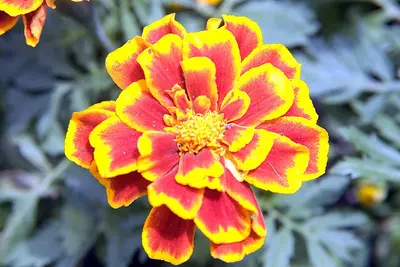
Highly branching, uniform, robust plants. A great choice for garden beds and pots for its compact habit. Abundant 2-2 1/2" blooms. Bright red and orange bicolor flowers are beautiful in late summer and fall gardens. Attracts beneficial insects such as hoverflies. Also known as French marigold. Edible Flowers: Use the flowers to dress up salads and desserts or cooked in egg or rice dishes. Flavor is floral with hints of citrus and spice, and slightly bitter. Remove the petals from the flower base before consuming as the base can be quite bitter.
Harvest
50d
Days to harvest
Sun
Full sun to partial shade
Zones
1–11
USDA hardiness
Height
6-12 inches
Planting Timeline
Showing dates for Durango Flame in USDA Zone 7
All Zone 7 flower →Zone Map
Click a state to update dates
Durango Flame · Zones 1–11
Growing Details
Succession Planting
Durango Flame blooms continuously once it gets going, so you don't need to succession sow the way you would with lettuce or cilantro. One planting — indoor-started in February–March or direct-sown after last frost in April — will carry through fall frost. Deadheading spent blooms every 7–10 days does more for continuous color than planting in waves.
That said, if you're growing for a market table or a steady cut-flower supply, start a second tray 6 weeks after your first transplant date. The first planting tends to slow down when daytime temps push past 90°F for more than a week; the second flush picks up right as the first is flagging.
Complete Growing Guide
Durango Flame is one of the easier marigolds to grow, but a little upfront care makes the difference between a tidy mound covered in blooms and a leggy plant that fizzles by August.
Choose a site with full sun — at least 6 hours daily, though Durango Flame tolerates light afternoon shade in hot southern gardens (zones 8-10), where some midday relief actually extends bloom life. Marigolds aren't fussy about soil, but they perform best in moderately fertile, well-drained ground. Skip heavy compost amendments and high-nitrogen fertilizers; rich soil produces lush foliage at the expense of flowers. A light raking-in of aged compost is plenty. If your soil is heavy clay, work in a few inches of coarse organic matter to improve drainage, since marigolds resent wet feet.
You can start seeds indoors 4-6 weeks before your last frost in shallow trays of moist seed-starting mix, barely covering the seeds — they need warmth (70-75°F) and germinate in 5-10 days. Direct sowing also works well once soil has warmed to at least 60°F and frost danger has passed. Thin or transplant seedlings to 8-12 inches apart for the cleanest, most uniform mounds. In containers, plant one Durango Flame per gallon of soil, or space three in a 12-inch pot for a fuller display.
Water consistently while plants are establishing, then back off — Durango Flame is moderately drought tolerant and overwatering invites root rot and powdery mildew. Water at the base in the morning rather than overhead. A single light feeding of balanced fertilizer at transplant is usually all they need; avoid feeding mid-season unless plants look genuinely pale.
Because Durango Flame is naturally compact and self-branching, no staking or pinching is required, but a quick pinch of the first flower bud when plants are 4-5 inches tall encourages even more lateral branching. Deadhead spent blooms regularly — this is the single most important thing you can do to maximize flower production. Snap or snip off faded heads at the first leaf node below the bloom, and the plant will respond with a fresh flush within a week.
Common mistakes: planting too early in cold, wet soil (seedlings sulk and rot), overcrowding (leads to mildew), and overfeeding. Also avoid mulching directly against the stems, which traps moisture and invites stem rot. In zones 9-11, Durango Flame may self-sow modestly; elsewhere, treat it as a warm-season annual. For containers, refresh potting mix yearly and ensure drainage holes are clear before replanting.
Harvesting
Harvest Durango Flame blooms once they are fully open and showing their characteristic red-and-orange bicolor pattern, with firm, vibrant petals and no browning at the edges. The best time to pick is in the cool of the morning after the dew has dried, when essential oils are at their peak and petals are most turgid — afternoon-picked flowers wilt faster and have a more bitter edge.
Use clean, sharp scissors or simply pinch the stem just above the next set of leaves. This double-duties as deadheading and encourages branching. For culinary use, pick only flowers that haven't been treated with any pesticide. Pluck the colorful petals from the green base before eating or storing — the base is noticeably bitter and can ruin a dish. For seed saving, leave a few late-season blooms on the plant until the heads dry brown and crispy, then collect the long, dark, needle-like seeds inside.
Storage & Preservation
Fresh-picked Durango Flame blooms keep best when used the same day. For short-term storage, lay whole flowers in a single layer on a paper-towel-lined container with a loose lid and refrigerate at 35-40°F for up to 3-4 days. Loose petals can be stored similarly for 1-2 days. Avoid washing until just before use, as moisture accelerates browning.
For longer preservation, dry petals on a fine-mesh screen in a warm, dark, well-ventilated space for 5-7 days, or use a dehydrator at 95°F until brittle. Store dried petals in airtight glass jars away from light — they retain color and a faint floral note for up to a year and make a beautiful confetti for rice or baked goods. Petals can also be frozen into ice cubes for cocktails, or candied with egg white and superfine sugar for cake decoration.
History & Origin
French marigolds (Tagetes patula) are native to Mexico and Central America, despite the misleading common name, which dates to their early 16th-century introduction to Europe via French and Spanish trade routes. The Aztecs cultivated marigolds for ceremonial, medicinal, and culinary use centuries before European contact, and the genus name Tagetes honors Tages, an Etruscan deity of wisdom — a renaming applied by European botanists.
The Durango series was developed as a uniform, compact, double-flowered French marigold line bred for bedding-plant performance: tight habit, early bloom, weather tolerance, and a wide bicolor palette. Durango Flame is the fiery red-and-orange member of that series, selected for its especially vivid coloration and abundant flower count on dwarf, well-branched plants. While the Durango line itself is a modern selection, it carries the lineage of the same heirloom French marigolds that have been grown in cottage and kitchen gardens worldwide for nearly five hundred years.
Advantages
- +Naturally compact, self-branching habit means no pinching or staking required
- +Striking red-and-orange bicolor blooms that intensify as nights cool in fall
- +Edible petals with a citrusy-floral flavor — rare among bedding marigolds suited to culinary use
- +Attracts hoverflies and other beneficial insects that prey on aphids
- +Performs well in containers, window boxes, and tight border spaces
- +Long bloom window from early summer through first frost with regular deadheading
- +Tolerates heat and modest drought once established
Considerations
- -Susceptible to powdery mildew and spider mites in humid, crowded conditions
- -Blooms hold rainwater and can rot or 'ball' during prolonged wet spells
- -Strong foliage scent is off-putting to some gardeners (though it deters deer and rabbits)
- -Performance drops noticeably without consistent deadheading
- -Not frost tolerant — finishes the season abruptly with the first hard freeze
Companion Plants
Nasturtiums and Alyssum are the most practical companions for Durango Flame. Nasturtiums act as a trap crop, drawing aphids away from nearby vegetables. Sweet alyssum (Lobularia maritima) blooms long enough to keep parasitic wasps fed through the season, and those wasps do real work on aphid and thrips populations. Catnip (Nepeta cataria) is worth including if you have space; its volatile oils interfere with thrips and twospotted spider mites — both of which NC State Extension flags as common problems for French marigolds.
Fennel (Foeniculum vulgare) and black walnut (Juglans nigra) are the companions to exclude. Fennel is genuinely allelopathic to most annual flowers and suppresses neighbors within 18–24 inches — it doesn't play well with anything in this plant family. Black walnut is a different problem: roots and decomposing leaf litter release juglone at concentrations high enough to cause wilting and root dieback in marigolds. If you have a black walnut on the property, 30 feet of clearance is a reasonable minimum.
Plant Together
Marigolds
Repel nematodes and aphids while attracting beneficial insects
Alyssum
Attracts beneficial predatory insects and provides ground cover
Petunias
Repel aphids, tomato hornworms, and other garden pests
Nasturtiums
Act as trap crops for aphids and cucumber beetles
Zinnia
Attract beneficial pollinators and predatory insects
Salvia
Repel ants and carrot rust flies while attracting pollinators
Lavender
Repels moths, fleas, and mosquitoes with strong fragrance
Catnip
Repels mosquitoes, ants, and aphids more effectively than DEET
Keep Apart
Black Walnut
Produces juglone toxin that inhibits growth of many flowering plants
Fennel
Releases allelopathic compounds that stunt growth of nearby plants
Eucalyptus
Produces allelopathic chemicals that inhibit seed germination and growth
Pests & Disease Resistance
Common Pests
Spider mites, aphids, slugs, thrips
Diseases
Powdery mildew, botrytis (gray mold), root rot in poorly drained soil, damping off in seedlings
Troubleshooting Durango Flame
What you'll see, why it happens, and what to do about it.
White powdery coating on upper leaf surfaces, usually appearing mid-summer when nights cool down
Likely Causes
- Powdery mildew (Erysiphe cichoracearum) — fungal spores spread by wind, thrives when humidity swings between dry days and cool nights
- Crowded spacing below 8 inches that cuts airflow between plants
What to Do
- 1.Remove and trash the worst-affected leaves; don't compost them
- 2.Spray foliage with a diluted baking soda solution (1 tablespoon per gallon of water) every 7 days until new growth looks clean
- 3.Next planting, hold to the 10–12 inch end of the spacing range and avoid overhead watering in the evening
Seedlings collapsing at the soil line within the first 2 weeks after germination
Likely Causes
- Damping off — usually Pythium or Rhizoctonia fungi, both of which thrive in cold, wet growing media
- Overwatering before seedlings have developed a true root system
What to Do
- 1.Sow into fresh, sterile seed-starting mix — never reuse old potting soil for germination trays
- 2.Bottom-water only: set the tray in a shallow pan and let the mix wick up moisture rather than watering from above
- 3.Keep germination temps between 70–75°F; below 65°F slows drying and raises fungal pressure
Fine webbing on the undersides of leaves, foliage looking stippled or bronzed in hot, dry stretches
Likely Causes
- Twospotted spider mite (Tetranychus urticae) — populations explode when temps stay above 85°F and humidity drops
- Dusty conditions near paths or field edges, which mites prefer
What to Do
- 1.Knock mites off with a strong stream of water from a hose, hitting the undersides of leaves — do this in the morning so foliage dries quickly
- 2.Apply insecticidal soap or neem oil every 5–7 days for 2–3 cycles; mite eggs aren't killed by a single application
- 3.If the infestation is severe, pull and dispose of the worst plants rather than letting mites spread to neighbors
Frequently Asked Questions
How long does Durango Flame marigold take to grow from seed to bloom?▼
Is Durango Flame good for beginner gardeners?▼
Can you grow Durango Flame marigolds in pots or containers?▼
What do Durango Flame marigold petals taste like?▼
Do Durango Flame marigolds repel pests in the vegetable garden?▼
When should I plant Durango Flame marigolds?▼
Zone-by-Zone Planting Calendar
| Zone | Indoor Start | Transplant | Direct Sow | Harvest |
|---|---|---|---|---|
| Zone 1 | May – June | July – August | July – September | — |
| Zone 2 | April – May | June – July | June – August | — |
| Zone 11 | January – January | January – February | January – March | — |
| Zone 12 | January – January | January – February | January – March | — |
| Zone 13 | January – January | January – February | January – March | — |
| Zone 3 | April – May | June – July | June – August | — |
| Zone 4 | March – April | June – June | June – July | — |
| Zone 5 | March – April | May – June | May – July | — |
| Zone 6 | March – April | May – June | May – July | — |
| Zone 7 | February – March | April – May | April – June | — |
| Zone 8 | February – March | April – May | April – June | — |
| Zone 9 | January – February | March – April | March – May | — |
| Zone 10 | January – January | February – March | February – April | — |
Growing Guides from Wind River Greens
Sources & References
External authority sources used in compiling this guide.
- BreederJohnny's Selected Seeds
See the Methodology page for how this data is sourced, what's AI-assisted, and known limitations.