Purple Top Turnip
Brassica rapa
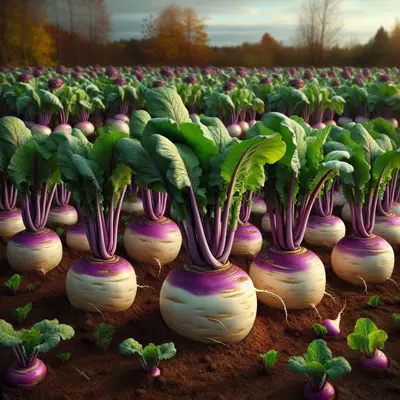
Purple Top Turnip is a classic heirloom variety featuring distinctive purple-tinged shoulders that fade to white at the base, creating an attractive two-tone appearance. These small to medium roots mature in just 37 days, making them quick from seed to harvest. The mild, sweet flesh develops additional complexity after frost, becoming noticeably sweeter. Young roots offer a subtle peppery bite, while mature roots are tender and suitable for roasting, mashing, or raw consumption. The purple coloring is both ornamental and traditional, making this an excellent choice for gardeners seeking reliable, flavorful turnips with minimal fuss.
Harvest
37d
Days to harvest
Sun
Full sun to partial shade
Zones
5–11
USDA hardiness
Height
3 feet
Planting Timeline
Showing dates for Purple Top Turnip in USDA Zone 7
All Zone 7 brassica →Zone Map
Click a state to update dates
Purple Top Turnip · Zones 5–11
Growing Details
Succession Planting
Purple Top Turnip hits harvest in about 37 days, so succession planting pays off. Direct sow every 14–21 days from late March through early May in zone 7, then stop when daytime highs are consistently hitting 80°F — above that, roots turn pithy and bitter before you can pull them. Start again in late August through September for a fall run that carries into November; turnips sweeten noticeably after the first light frost, so that second window often produces the better crop of the two.
Complete Growing Guide
Start preparing your turnip bed in early spring as soon as soil can be worked, or in late summer for fall harvest. Purple Top turnips prefer loose, well-draining soil with a pH between 6.0-7.0. Work compost or aged manure into the top 8 inches of soil — this prevents the roots from becoming woody and promotes the smooth, round shape this variety is known for.
Direct sow seeds ½ inch deep in rows spaced 12-15 inches apart. Unlike many root vegetables, Purple Top turnips can handle some crowding initially, so don't worry about perfect spacing at first. Plant in early spring 2-4 weeks before your last frost, or in late summer 10-12 weeks before your first hard freeze. The seeds germinate quickly in cool soil (45-65°F) and will emerge in 4-7 days.
Once seedlings reach 2-3 inches tall, thin them ruthlessly to 4-6 inches apart. Many gardeners skip this step and end up with small, crowded roots. Save the thinned greens for salads — they're surprisingly tender and flavorful at this stage.
Fertilize lightly with a balanced fertilizer (10-10-10) at planting, then side-dress with nitrogen when plants are 4 inches tall. Avoid heavy nitrogen feeding later in the season, as this promotes leaf growth at the expense of root development. The distinctive purple shoulders develop naturally when exposed to sunlight — no special care needed.
Maintain consistent moisture throughout the growing season. Inconsistent watering causes the roots to crack or become pithy. Apply 1 inch of water weekly, watering deeply but less frequently rather than daily light sprinklings.
Common mistakes include planting too late in spring (they bolt in hot weather), overcrowding, and harvesting too early. Purple Top turnips actually improve in flavor after light frosts, so don't rush the harvest. In warmer zones (8-9), focus on fall plantings for the best flavor development.
Harvesting
Purple Top turnips are ready when the roots reach 2-4 inches in diameter, typically 55-60 days from planting. The telltale purple shoulders should be vibrant and well-developed, with about one-third of the root visible above ground. Harvest before roots exceed 4 inches, as larger turnips become woody and lose their sweet flavor.
Test readiness by gently brushing soil away from the shoulder — the root should feel firm and smooth. Morning harvest is ideal when roots are crisp and full of moisture. Grasp the greens close to the root crown and pull straight up with a twisting motion. If greens break away, use a garden fork to loosen the soil around the root before lifting.
Don't forget the greens! Young leaves can be harvested continuously throughout the growing season. Cut outer leaves when they're 4-6 inches long, leaving the center growing point intact. After the first light frost, both roots and greens reach peak sweetness — the starches convert to sugars, creating the mild, sweet flavor this variety is prized for.
Storage & Preservation
Fresh Purple Top turnips store exceptionally well when properly handled. Remove greens immediately after harvest, leaving about an inch of stem to prevent moisture loss. Store unwashed roots in perforated plastic bags in the refrigerator crisper drawer, where they'll maintain quality for 4-6 weeks at 32-40°F with high humidity.
For longer storage, layer roots in damp sand or peat moss in a cool basement or root cellar. Properly stored turnips remain crisp and sweet through winter. The greens are highly perishable — store them separately in the refrigerator and use within 3-5 days.
For preservation, blanch diced turnips for 2-3 minutes before freezing — they maintain texture better than many root vegetables. Purple Top turnips also excel in fermented preparations like sauerkraut or kimchi, where their natural sugars support lacto-fermentation. Pickled turnips retain their crisp texture and develop complex flavors that complement the variety's natural peppery notes.
History & Origin
Purple Top turnip traces its lineage to the original European turnips brought to North America in the 1600s, making it one of our oldest continuously grown garden vegetables. This particular strain was standardized in the mid-1800s when American seed companies began selecting for the distinctive purple shoulders and improved sweet flavor that distinguished it from the sometimes bitter white varieties.
The variety gained prominence during the Civil War era when its dual-purpose nature — both nutritious roots and greens — made it invaluable for feeding families and livestock through harsh winters. Scottish and Irish immigrants particularly prized Purple Top turnips, as they reminded them of the 'neeps' from their homeland, though the American selections proved more heat-tolerant and sweeter.
By the early 1900s, Purple Top had become the standard turnip variety in American seed catalogs. Its reliability across diverse growing conditions and exceptional storage qualities made it a staple in victory gardens during both World Wars. Today's Purple Top turnips remain essentially unchanged from those grown by our great-grandparents — a testament to the variety's inherent excellence and the careful seed-saving practices of generations of gardeners.
Advantages
- +Exceptional cold tolerance — sweetens significantly after light frosts while maintaining crisp texture
- +Dual-purpose harvest provides both sweet roots and nutritious greens from the same plant
- +Outstanding storage life of 4-6 weeks fresh, much longer in proper root cellar conditions
- +Reliable germination in cool soil conditions when many vegetables struggle
- +Good natural resistance to clubroot and downy mildew without chemical treatments
- +Fast 55-60 day maturity allows two crops per season in most climates
- +Tolerates partial shade better than most root vegetables
Considerations
- -Prone to flea beetle damage on young leaves, requiring row covers in some regions
- -Bolts quickly in hot weather — challenging for late spring plantings in warm climates
- -Develops woody texture if left in ground too long or grown in compacted soil
- -Greens turn bitter and tough once plants bolt to seed
- -Susceptible to cabbage root maggots in areas with heavy infestations
Companion Plants
Nasturtiums pull aphids off your turnip tops — they're a genuine trap crop, not just pretty — and French marigolds (Tagetes patula) have solid documentation for suppressing soil nematodes when planted densely for a full season. Onions and garlic nearby make life harder for cabbage root maggot (Delia radicum): the sulfur compounds those alliums release interfere with the fly's ability to locate brassica roots in the first place. Radishes and lettuce sit at 6–8 inches without competing for the same root depth, filling space without fighting over water. Tomatoes and strawberries are both hungry enough that they'll drain moisture from a turnip planting, and tomatoes in particular tend to carry clubroot-favorable soil conditions you'd rather not concentrate in one bed.
Plant Together
Nasturtiums
Acts as trap crop for flea beetles and aphids, protecting turnip leaves
Onions
Repels root maggots and cabbage worms that commonly attack brassicas
Garlic
Deters aphids, cabbage loopers, and other brassica pests with strong scent
Marigolds
Repels flea beetles and nematodes while attracting beneficial insects
Radishes
Quick-growing companion that loosens soil and may deter root flies
Lettuce
Provides ground cover, conserves moisture, and has similar growing requirements
Dill
Attracts beneficial wasps that prey on cabbage worms and aphids
Carrots
Different root depths prevent competition and carrots may improve soil structure
Keep Apart
Tomatoes
May stunt turnip growth and compete for nutrients, different pH preferences
Strawberries
Both are heavy feeders competing for nutrients, may inhibit turnip root development
Sunflowers
Allelopathic compounds can inhibit brassica growth and development
Nutrition Facts
Per 100g serving. % Daily Value based on 2,000 calorie diet. Source: USDA FoodData Central (FDC #170465)
Pests & Disease Resistance
Resistance
Good resistance to clubroot and downy mildew
Common Pests
Flea beetles, cabbage root maggots, aphids
Diseases
Clubroot, black rot, downy mildew
Troubleshooting Purple Top Turnip
What you'll see, why it happens, and what to do about it.
Tiny round holes shotgunned across young leaves, seedlings look ragged within a week of emergence
Likely Causes
- Flea beetles (Phyllotreta spp.) — worst on seedlings during warm, dry spells
- Thin, stressed transplants that can't outgrow the damage fast enough
What to Do
- 1.Cover the bed with row cover (Agribon-15 or similar) immediately after sowing — don't wait until you see damage
- 2.Side-dress with a balanced fertilizer to push fast early growth; a plant moving fast can tolerate more flea beetle pressure
- 3.If populations are heavy, spinosad-based sprays (OMRI-listed) applied in the evening will knock them back without hitting beneficial insects
Yellow V-shaped patches starting at leaf margins, then browning; dark streaks visible if you cut a stem near the base
Likely Causes
- Black rot (Xanthomonas campestris pv. campestris) — bacterial, spreads through infected seed, contaminated soil, and rain splash
- Overhead irrigation that keeps foliage wet for extended periods
What to Do
- 1.Pull and trash affected plants immediately — don't compost them
- 2.Switch to drip irrigation or water at the base; black rot spreads fast in standing moisture on leaves
- 3.Rotate out of all brassicas — turnips, kale, cabbage, broccoli — for at least 2 full seasons in that bed
White to gray fuzzy sporulation on the undersides of leaves; upper surface shows pale yellow patches in roughly matching spots
Likely Causes
- Downy mildew (Hyaloperonospora parasitica) — an oomycete, not a true fungus, thrives when nights cool to 50–60°F and humidity is high
- Crowded spacing under 4 inches that traps moisture between plants
What to Do
- 1.Thin to at least 4–6 inches apart to open airflow — this alone slows spread significantly
- 2.Strip the worst-affected leaves and trash them; don't leave infected material on the soil surface
- 3.If using overhead irrigation, run it early morning so foliage dries before temperatures drop at night
Frequently Asked Questions
How long does Purple Top turnip take to grow?▼
Can you grow Purple Top turnips in containers?▼
What does Purple Top turnip taste like?▼
When should I plant Purple Top turnip seeds?▼
Are Purple Top turnips good for beginners?▼
Purple Top turnip vs rutabaga — what's the difference?▼
Zone-by-Zone Planting Calendar
| Zone | Indoor Start | Transplant | Direct Sow | Harvest |
|---|---|---|---|---|
| Zone 3 | March – April | May – June | May – June | June – October |
| Zone 4 | March – April | May – June | April – June | June – October |
| Zone 5 | February – March | April – May | April – May | May – November |
| Zone 6 | February – March | April – May | April – May | May – November |
| Zone 7 | February – March | April – May | March – May | April – November |
| Zone 8 | January – February | March – April | March – April | April – December |
| Zone 9 | January – January | February – March | February – March | March – December |
| Zone 10 | January – January | February – March | January – March | February – December |
| Zone 1 | April – May | June – July | June – July | July – September |
| Zone 2 | April – May | June – July | May – July | June – September |
| Zone 11 | January – January | January – February | January – February | January – December |
| Zone 12 | January – January | January – February | January – February | January – December |
| Zone 13 | January – January | January – February | January – February | January – December |
Growing Guides from Wind River Greens
Sources & References
External authority sources used in compiling this guide.
See the Methodology page for how this data is sourced, what's AI-assisted, and known limitations.