White Dill
Ammi majus
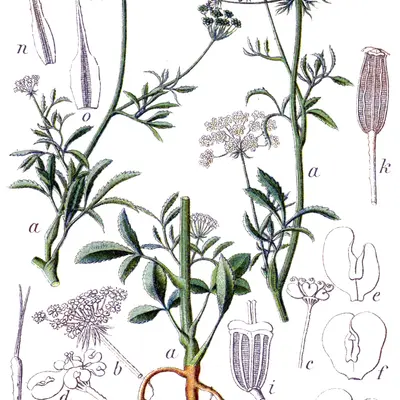
Free-flowering plants bear a multitude of lacy flower heads 5-6" across. Flowers can be dyed in an assortment of colors. Also known as false Queen Anne's lace, lace flower, false bishop's weed, large bullwort, and bishop's weed. Attracts and supports beneficial insects such as lacewings, lady beetles, minute pirate bugs, syrphid flies, and parasitic wasps.
Harvest
65-75d
Days to harvest
Sun
Full sun to partial shade
Zones
1–11
USDA hardiness
Height
3-6 feet
Planting Timeline
Showing dates for White Dill in USDA Zone 7
All Zone 7 flower →Zone Map
Click a state to update dates
White Dill · Zones 1–11
Growing Details
Succession Planting
Ammi majus has a short bloom window — roughly 2 to 3 weeks per plant before it goes hard to seed — so staggered sowing is the only way to keep a steady supply of stems. In zone 7, direct sow every 3 weeks from April through early June, stopping before daytime highs lock in above 85°F. That cadence should give you 2 or 3 overlapping flushes through early summer without a gap.
If you're growing for a specific event, count back 70 days (the midpoint of the 65–75 day range) from when you need stems. A second indoor sow in March, transplanted out in late April, can bridge the window between your earliest direct-sown plants and the next round coming up behind them.
Complete Growing Guide
Light: Full sun (6 or more hours of direct sunlight a day), Partial Shade (Direct sunlight only part of the day, 2-6 hours). Soil: Clay, Loam (Silt), Sand. Soil pH: Acid (<6.0), Alkaline (>8.0), Neutral (6.0-8.0). Drainage: Good Drainage. Height: 3 ft. 0 in. - 6 ft. 0 in.. Spread: 1 ft. 3 in. - 1 ft. 6 in.. Spacing: 12 inches-3 feet. Growth rate: Medium. Maintenance: Low. Propagation: Seed.
Harvesting
White Dill reaches harvest at 65 - 75 days from sowing per Johnny's Selected Seeds. Expect 5-6" at peak. As an annual, harvest continues until frost ends the season.
Type: Achene.
Storage & Preservation
For fresh White Dill flowers, store in a cool location away from direct sunlight at 65-70°F with moderate humidity, or refrigerate in a water-filled vase at 35-40°F for extended freshness (up to 2 weeks). Preservation methods: (1) Dry by hanging upside-down in a warm, well-ventilated area for 1-2 weeks, then store in airtight containers; (2) Freeze whole flower heads in airtight freezer bags for 3-4 months; (3) Press flowers between wax paper under heavy books for 2-3 weeks, ideal for floral arrangements and crafts.
History & Origin
Origin: Macaronesia, Medit. to Iran and Arabian Peninsula
Advantages
- +Attracts: Bees, Butterflies, Songbirds
- +Low maintenance
Considerations
- -Toxic (Leaves, Seeds): Low severity
Companion Plants
Ammi majus pulls its weight near tomatoes, cabbage, broccoli, and cucumbers because of what its flowers attract. The flat, open umbels are landing pads for parasitic wasps like Trichogramma spp. and hoverflies, both of which go after aphids and caterpillars on neighboring vegetable crops. At 3–6 feet tall, Ammi adds a vertical layer that shorter companions like marigolds and nasturtiums don't cover — so the combination builds habitat across more than one canopy level. Lettuce and onions are practical neighbors rather than pest-management ones; they don't compete for the same root depth and won't shade Ammi out.
Carrots and cilantro are the ones to separate out. All three are Apiaceae, which means shared disease pressure and overlapping pest attraction — including carrot rust fly (Psila rosae). Concentrating three members of the same family in a small bed is just asking for a problem to move fast. Fennel is a different issue entirely: it releases allelopathic compounds from its roots that suppress nearby plants, and Ammi is not immune to that.
Plant Together
Tomatoes
Dill repels tomato hornworms and aphids while improving tomato flavor
Cabbage
Dill deters cabbage worms and other brassica pests
Cucumbers
Dill attracts beneficial insects that control cucumber beetles and improves growth
Lettuce
Provides beneficial shade and attracts predatory insects that protect lettuce
Onions
Both plants repel common garden pests and complement each other's pest control
Marigolds
Both attract beneficial insects and create a strong pest-deterrent combination
Nasturtiums
Work together to trap pests and attract pollinators and predatory insects
Broccoli
Dill repels cabbage loopers and imported cabbage worms that damage broccoli
Keep Apart
Carrots
Can stunt carrot growth and may cross-pollinate with wild carrots
Fennel
Inhibits dill growth through allelopathy and competes for similar resources
Cilantro
Can cross-pollinate and hybridize, reducing seed quality of both plants
Troubleshooting White Dill
What you'll see, why it happens, and what to do about it.
Seedlings damping off at soil level — stems pinch thin and collapse within the first 2 weeks after germination
Likely Causes
- Pythium or Fusarium damping-off fungi, encouraged by overwatering and poor drainage
- Sowing too thickly so air can't move through the seedling tray
What to Do
- 1.Water only when the top inch of mix is dry; bottom-watering helps a lot here
- 2.Thin seedlings to at least 1 inch apart as soon as they're up — crowding is the main accelerant
- 3.If it keeps happening, switch to a sterile seed-starting mix and don't reuse last year's trays without washing them with diluted bleach (1 part bleach to 9 parts water)
Powdery white coating on leaves and stems, usually showing up mid-summer when plants are 18–24 inches tall
Likely Causes
- Powdery mildew (Erysiphe spp.) — common on Apiaceae family members in humid or stagnant-air conditions
- Spacing below the 12-inch minimum, which kills airflow between stems
What to Do
- 1.Give plants their full 12–18 inches at transplant time — skimping here is almost always what starts it
- 2.Remove heavily affected stems and dispose of them in the trash, not the compost pile
- 3.A spray of diluted potassium bicarbonate (1 tablespoon per gallon of water) can slow spread on stems that aren't yet severe
Plants flower, then go to seed fast — usable stem window feels like less than a week
Likely Causes
- Heat above 85°F accelerating the bloom-to-seed transition in this annual
- Delayed harvesting — Ammi majus peaks when the outer florets of an umbel just open; waiting for the whole head costs you 3–5 days of vase life
What to Do
- 1.Cut stems when 30–50% of the florets on an umbel are open, not when the whole head is fully out
- 2.Plan succession sows so plants are blooming before daytime highs consistently exceed 85°F
- 3.Harvest in the early morning and get cut stems into cool water within 30 minutes — Ammi wilts fast if left sitting in heat
Frequently Asked Questions
How long does it take White Dill flowers to bloom?▼
Is White Dill good for beginners?▼
Can you grow White Dill in containers?▼
What are the lacy flower heads good for?▼
When should I plant White Dill seeds?▼
How much sunlight does White Dill need?▼
Zone-by-Zone Planting Calendar
| Zone | Indoor Start | Transplant | Direct Sow | Harvest |
|---|---|---|---|---|
| Zone 3 | April – May | June – July | June – August | — |
| Zone 4 | March – April | June – June | June – July | — |
| Zone 5 | March – April | May – June | May – July | — |
| Zone 6 | March – April | May – June | May – July | — |
| Zone 7 | February – March | April – May | April – June | — |
| Zone 8 | February – March | April – May | April – June | — |
| Zone 9 | January – February | March – April | March – May | — |
| Zone 10 | January – January | February – March | February – April | — |
| Zone 1 | May – June | July – August | July – September | — |
| Zone 2 | April – May | June – July | June – August | — |
| Zone 11 | January – January | January – February | January – March | — |
| Zone 12 | January – January | January – February | January – March | — |
| Zone 13 | January – January | January – February | January – March | — |
Growing Guides from Wind River Greens
Sources & References
External authority sources used in compiling this guide.
- ExtensionNC State Extension
- BreederJohnny's Selected Seeds
See the Methodology page for how this data is sourced, what's AI-assisted, and known limitations.