Cress Microgreens
Lepidium sativum
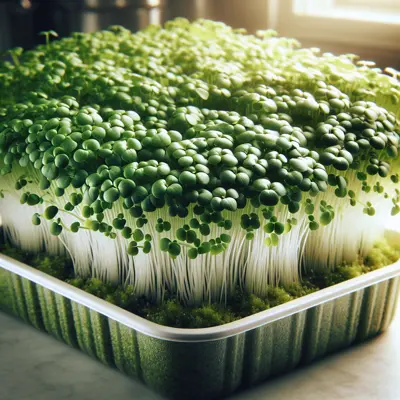
Also known as "Curly Cress" or "Peppergrass." Try adding cress to a sandwich or when an extra-spicy bite is needed. Based on our yield trial, we recommend seeding 10.5 gm per tray at approx. 3 flats per oz of seed. Avg. days to maturity was 13 days when harvested at the first true leaf (as opposed to cotyledon) stage. Also available in organic seed.
Harvest
10-15d
Days to harvest
Sun
Indirect light
Zones
2–11
USDA hardiness
Height
1-2 inches
Planting Timeline
Showing dates for Cress Microgreens in USDA Zone 7
All Zone 7 microgreen →Zone Map
Click a state to update dates
Cress Microgreens · Zones 2–11
Growing Details
Succession Planting
Cress microgreens are cut once and done — no regrowth after harvest — so a staggered sow schedule is the only way to keep steady supply. Start a new tray every 5–7 days; at a 10–15 day harvest window, a 3-tray rotation (sow day 1, sow day 6, sow day 11) gives you a near-continuous cut without a glut. Because cress grows under lights year-round, there's no seasonal cutoff. Adjust tray count to your actual use rate — two trays a week is a reasonable starting point for a family or a small CSA add-on.
Complete Growing Guide
Growing cress microgreens is one of the most rewarding projects for beginners, delivering a spicy harvest in just over a week. You'll need a shallow tray with drainage holes, a soilless growing medium like coconut coir or specialized microgreen mats, and either a bright windowsill or grow lights.
Start by soaking your growing medium until thoroughly moist but not waterlogged. Cress seeds don't require pre-soaking, which saves you time compared to other microgreens. Scatter seeds densely across the surface—aim for about 1-2 tablespoons per 10x20 inch tray. The seeds should nearly touch but not pile on top of each other. Lightly press them into the medium and cover with a thin layer of growing substrate or use a blackout dome for the first 2-3 days.
Maintain consistent moisture by misting 2-3 times daily with a fine spray bottle. Never let the growing medium dry out completely, as cress seeds are particularly sensitive to moisture fluctuations during germination. After germination (usually 24-48 hours), remove any blackout covering and provide 12-16 hours of indirect light daily. Direct sunlight will cause bolting and bitter flavors.
Temperature control is crucial—keep your growing area between 65-75°F. Higher temperatures accelerate growth but can trigger early flowering, making leaves tough and overly pungent. Lower temperatures slow growth but often intensify the desirable peppery bite.
Avoid overwatering, which leads to damping-off disease—cress microgreens' biggest threat. Water from the bottom once roots establish by placing your tray in a shallow water bath for 10-15 minutes. Watch for fuzzy white mold at the soil line, which indicates excessive moisture and poor air circulation.
Maximize yield by succession planting new trays every 3-4 days for continuous harvests. Some growers achieve a second, smaller cutting from the same roots, though the flavor becomes more intense and slightly bitter.
Harvesting
Harvest cress microgreens when they reach 1-2 inches tall with their first set of true leaves fully developed, typically 7-10 days after sowing. Look for bright green cotyledons (seed leaves) and emerging true leaves that show the characteristic serrated edges of mature cress. The stems should be crisp and pale green to white.
Harvest in the morning when plants are most hydrated and flavors are at their peak intensity. Use clean kitchen scissors or a sharp knife to cut just above the growing medium, leaving about 1/4 inch of stem. Cut in small sections rather than attempting to harvest the entire tray at once—this prevents wilting of unharvested portions.
Test readiness by tasting a few microgreens—they should have a sharp, peppery bite without any bitter aftertaste. If they taste mild, wait another day. Avoid harvesting if you notice any yellowing leaves or elongated stems, which indicates the plants are past their prime.
Storage & Preservation
Store fresh-cut cress microgreens immediately in the refrigerator between 35-40°F in a loosely covered container lined with paper towels. They'll maintain peak quality for 5-7 days when properly stored. Avoid washing before storage, as excess moisture accelerates spoilage.
For best flavor and texture, harvest only what you need for immediate use. Unlike many vegetables, cress microgreens don't preserve well through traditional methods—freezing destroys their delicate texture, and they're too tender for canning. However, you can blend them into herb butters or pesto and freeze these preparations for up to three months.
Dehydrating is possible but eliminates much of the signature crunch. If you must preserve surplus harvests, consider making cress salt by blending dried microgreens with sea salt, which captures much of their peppery essence for seasoning.
History & Origin
Garden cress (Lepidium sativum) originated in southwestern Asia and the Middle East, where it has been cultivated for over 3,000 years. Ancient Egyptians, Greeks, and Romans prized cress for both culinary and medicinal purposes, believing it enhanced mental clarity and physical strength. Persian texts from the 6th century describe cress as one of the essential herbs for maintaining health.
The microgreen cultivation method, however, is relatively modern, emerging in the 1980s in San Francisco's upscale restaurants. Chefs began growing young seedlings to capture intense flavors in delicate, visually appealing forms. Cress quickly became a microgreen favorite because of its rapid growth and reliable germination.
Today's cress microgreens maintain the same genetic characteristics as their ancient ancestors, though modern cultivation focuses on maximizing the tender cotyledon stage rather than growing plants to full maturity. The variety has remained largely unchanged through centuries, testament to its naturally perfect balance of flavor, nutrition, and growing ease.
Advantages
- +Fastest microgreen to harvest at just 7-10 days from seed to plate
- +Requires no pre-soaking, unlike many microgreen varieties
- +Exceptional germination rate of 85-95% even in suboptimal conditions
- +Tolerates cooler growing temperatures better than most microgreens
- +Intense peppery flavor that doesn't diminish with quick cooking
- +Self-supporting stems rarely require additional structural support
- +Naturally pest-resistant due to compounds that deter insects
Considerations
- -Extremely sensitive to overwatering and poor drainage
- -Shelf life of only 5-7 days even with proper refrigerated storage
- -Cannot tolerate direct sunlight without becoming bitter and tough
- -Strong flavor may overpower delicate dishes if used excessively
- -Difficult to achieve second harvest from same root system
Companion Plants
Cress microgreens live in trays indoors, so in-ground companion logic doesn't translate directly — but shelf neighbors and shared humidity environments matter more than people expect. In our zone 7 Georgia grow space, cress stacks well alongside lettuce, spinach, and arugula: all three want the same 12–16 hours of low-wattage grow light and similar misting frequency, so one timer and one spray bottle covers the shelf. Keep fennel off the same rack — its volatile oils (primarily trans-anethole) have documented allelopathic effects even in enclosed spaces, and cress seedlings at days 2–5 are about as delicate as they get.
Plant Together
Chives
Repels aphids and other small insects that can damage tender microgreens
Lettuce
Similar growing conditions and shallow roots, doesn't compete for space
Radish
Fast-growing companion that can be harvested alongside, breaks up soil
Spinach
Compatible growing requirements and harvest timing for succession planting
Parsley
Attracts beneficial insects and has similar moisture and light needs
Cilantro
Complementary growing conditions and can be grown in same containers
Mint
Natural pest deterrent that repels ants and rodents near growing areas
Arugula
Same family as cress with similar growing requirements and harvest period
Keep Apart
Sunflowers
Release allelopathic compounds that inhibit germination of small seeds
Black Walnut
Produces juglone toxin that severely stunts growth of brassica family plants
Fennel
Strong allelopathic effects that inhibit germination and growth of most microgreens
Nutrition Facts
Per 100g serving. % Daily Value based on 2,000 calorie diet. Source: USDA FoodData Central (FDC #167782)
Pests & Disease Resistance
Resistance
Generally disease-free due to quick harvest cycle
Common Pests
Aphids (rare), fungus gnats
Diseases
Damping off if overwatered
Troubleshooting Cress Microgreens
What you'll see, why it happens, and what to do about it.
Seedlings collapsing at the soil line, stems pinching to a thread, usually days 3–6 after germination
Likely Causes
- Damping off (Pythium or Rhizoctonia spp.) — triggered by overwatering and poor airflow
- Trays left sitting in standing water
What to Do
- 1.Back off misting to twice a day and let the surface dry slightly between sessions — the medium should be moist, not wet
- 2.Run a small fan on low nearby to keep air moving across the tray
- 3.Toss the affected tray; damping off spreads fast and there's no saving a flat once it's hit
Tiny flying insects around the tray, seedlings stunted or yellowing near the roots, days 7–15
Likely Causes
- Fungus gnats (Bradysia spp.) — larvae feed on roots and organic matter in the growing medium
- Overwatered medium creating the wet conditions fungus gnats need to breed
What to Do
- 1.Let the top 1/4 inch of medium dry out between mistings — fungus gnat eggs don't survive dry surfaces
- 2.Lay a yellow sticky trap flat near the tray to monitor and catch adults
- 3.Switch to a sterile soilless medium (coconut coir or hemp mats) rather than a soil mix, which carries far fewer gnat eggs
Leggy, pale yellow stems reaching toward the light, harvest weight low, days 8–12
Likely Causes
- Insufficient light — grow lights positioned too far above the tray, or a window with too little direct exposure
- Light duration under 12 hours per day
What to Do
- 1.Drop grow lights to 2–3 inches above the tray canopy — cress doesn't need distance, it needs intensity
- 2.Set a timer for 14–16 hours of light per day; cress sizes up fast when the schedule is consistent
- 3.A south-facing windowsill carries enough light from May through August in most of Georgia; the rest of the year, supplement with a full-spectrum bulb
White fuzzy growth on the surface of the growing medium or on seed hulls, days 3–7
Likely Causes
- Excess moisture with no airflow — common when a humidity dome stays on past germination
- Seeds sown so densely that moisture gets trapped between them as they sprout
What to Do
- 1.Pull any humidity dome as soon as sprouts break the surface — for cress that's typically day 2 or 3
- 2.Point a small fan across the tray surface to move air without blasting the seedlings directly
- 3.Before treating for mold, check the growth with a loupe: white fuzz on roots is often root hairs, not mycelium — the two look nearly identical at a glance
Frequently Asked Questions
How long do cress microgreens take to grow?▼
Can you grow cress microgreens without soil?▼
What do cress microgreens taste like?▼
Do cress microgreens need special lighting?▼
Can you regrow cress microgreens after cutting?▼
Are cress microgreens good for beginners?▼
Zone-by-Zone Planting Calendar
| Zone | Indoor Start | Transplant | Direct Sow | Harvest |
|---|---|---|---|---|
| Zone 1 | January – December | — | — | January – December |
| Zone 3 | January – December | — | — | January – December |
| Zone 4 | January – December | — | — | January – December |
| Zone 5 | January – December | — | — | January – December |
| Zone 6 | January – December | — | — | January – December |
| Zone 7 | January – December | — | — | January – December |
| Zone 8 | January – December | — | — | January – December |
| Zone 9 | January – December | — | — | January – December |
| Zone 10 | January – December | — | — | January – December |
| Zone 2 | January – December | — | — | January – December |
| Zone 11 | January – December | — | — | January – December |
| Zone 12 | January – December | — | — | January – December |
| Zone 13 | January – December | — | — | January – December |
Growing Guides from Wind River Greens
Sources & References
External authority sources used in compiling this guide.
See the Methodology page for how this data is sourced, what's AI-assisted, and known limitations.