Crenshaw Melon
Cucumis melo var. inodorus 'Crenshaw'
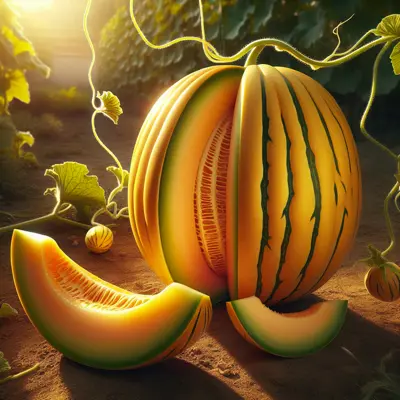
An heirloom treasure that's considered the 'Cadillac of melons' for its incredibly sweet, spicy-floral flavor and smooth, creamy texture. This large, teardrop-shaped melon starts green and ripens to golden-yellow with pink-orange flesh that's almost perfumed in its intensity. Crenshaw melons are prized by gourmet cooks and melon enthusiasts for their unparalleled eating quality.
Harvest
110-130d
Days to harvest
Sun
Full sun
Zones
2–11
USDA hardiness
Height
6-9 feet
Planting Timeline
Showing dates for Crenshaw Melon in USDA Zone 7
All Zone 7 melon →Zone Map
Click a state to update dates
Crenshaw Melon · Zones 2–11
Growing Details
Complete Growing Guide
Crenshaw melons demand patience and warmth, requiring 110–130 days of consistent heat that makes them unsuitable for short-season climates without season extension. Plant only after soil reaches 70°F and all frost danger passes, as seeds planted too early will rot rather than germinate. These vines sprawl 6–9 feet and need rich, well-draining soil amended with compost to support their large fruit development. Crenshaws are particularly susceptible to powdery mildew and fusarium wilt, so ensure excellent air circulation, avoid overhead watering, and rotate planting locations yearly. Unlike hardier melon varieties, Crenshaws need consistent moisture during fruit set and development—irregular watering causes the flesh to become grainy rather than creamy. A practical approach: hand-pollinate flowers with a small brush during early morning hours to guarantee fruit set, since poor pollination results in misshapen melons that lack the signature sweet, floral character these heirlooms are prized for.
Light: Full sun (6 or more hours of direct sunlight a day). Soil: Clay, High Organic Matter, Loam (Silt). Soil pH: Acid (<6.0), Neutral (6.0-8.0). Drainage: Good Drainage, Moist. Height: 6 ft. 0 in. - 9 ft. 0 in.. Spread: 1 ft. 0 in. - 3 ft. 0 in.. Spacing: 12 inches-3 feet. Growth rate: Medium. Maintenance: Medium. Propagation: Seed. Regions: Coastal, Mountains, Piedmont.
Harvesting
Crenshaw melons reach peak harvest when the skin transitions from green to a distinctive golden-yellow hue, the fruit feels heavy for its size, and a sweet, perfumed aroma emanates from the blossom end. Gently press the area opposite the stem—it should yield slightly to pressure without feeling mushy. Unlike watermelons, Crenshaws produce fruit continuously throughout the season rather than a single harvest, so check plants every 2-3 days once flowering begins. The critical timing tip is to harvest in early morning when the melon naturally separates from the vine with minimal pressure; attempting to twist or pull a melon before full ripeness will result in poor flavor and texture, so patience is essential with this demanding but rewarding variety.
Musky-scented, spherical to oblong berry with a rind (pepo), often furrowed with yellow, white or green flesh and many seeds. The rind may be green, yellow, tan, beige or white and the surface may be smooth, rough, warty, scaly, or netted. Seeds white, about 1/2 inch long, narrow. Seeds ripen in August and September.
Color: Gold/Yellow, Green, White. Type: Berry. Length: < 1 inch. Width: < 1 inch.
Garden value: Edible, Showy
Harvest time: Fall
Edibility: Eaten fresh, wrapped in prosciutto, in salads, or as a dessert. Watery, but delicate, flavor. Avoid the seeds as the sprouting seed produces a toxic substance in its embryo.
Storage & Preservation
Freshly harvested Crenshaws should sit at room temperature for 2-4 days to reach peak ripeness—the flesh will become more aromatic and creamy. Once fully ripe, refrigerate whole melons for up to one week, storing at 36-40°F with high humidity.
Cut melon should be wrapped tightly and consumed within 3-4 days, as the delicate flesh deteriorates quickly. For preservation, the high water content makes freezing challenging, but you can successfully freeze pureed flesh for sorbets and smoothies—add lemon juice to prevent browning.
Dehydrating works well for the sweetest specimens—cut into thin strips and dry until leathery. The intense flavor concentrates beautifully. For an elegant preserve, make Crenshaw melon jam with added pectin, or create a sophisticated melon wine that captures the variety's unique floral notes.
History & Origin
The Crenshaw melon emerged from mid-twentieth century American breeding efforts, though its precise origins remain somewhat obscured by time. It likely descended from crosses between the Cantaloupe and Persian melon varieties, combining their best aromatic and flavor characteristics. The variety gained prominence through commercial seed companies in the 1950s-1960s, becoming particularly associated with California's Central Valley growing regions. While definitive breeder documentation is limited, the Crenshaw's development reflects deliberate breeding work aimed at creating a superior dessert melon with exceptional sweetness and refined flavor complexity that distinguished it from more common muskmelon varieties of its era.
Origin: Africa, Arabian Peninsula, India, Australia
Advantages
- +Exceptional sweet flavor with unique spicy-floral notes unlike other melons
- +Creamy, melting texture provides luxurious eating experience for melon connoisseurs
- +Large fruits yield substantial harvests from single productive plants
- +Beautiful golden-yellow skin with pink-orange flesh creates impressive presentation
- +Heirloom status offers gardening satisfaction and culinary prestige
Considerations
- -Long 110-130 day season requires warm climates and patience
- -Highly susceptible to multiple fungal diseases including powdery and downy mildew
- -Difficult cultivation demands experienced growers with proper spacing and watering
- -Vulnerable to multiple pest species requiring careful integrated pest management
Companion Plants
French marigolds (Tagetes patula) are the most defensible companion here: they suppress root-knot nematodes in the soil, and NC State Extension specifically recommends a solid planting of them in beds with nematode history before returning cucurbits to that ground. Nasturtiums work as a trap crop for aphids — they draw colonies off the melon vines onto plants you can cut and trash before the infestation jumps back. Basil fills gaps between hills without competing for deep water. Keep cucumbers out entirely: they share cucumber beetle pressure, overlap on powdery and downy mildew, and there's nothing gained by stacking those problems in one bed. Fennel is allelopathic to most vegetables and slows growth in nearby plants — it has no place near a 110-day crop you've already invested a full season in.
Plant Together
Basil
Repels aphids, thrips, and flies while potentially improving melon flavor
Marigolds
Deter nematodes, aphids, and cucumber beetles that attack melons
Nasturtiums
Act as trap crops for cucumber beetles and aphids, protecting melons
Radishes
Repel cucumber beetles and squash bugs, harvest before melons spread
Sunflowers
Provide beneficial habitat for pollinators and natural pest predators
Bush Beans
Fix nitrogen in soil to benefit heavy-feeding melons
Oregano
Repels ants, aphids, and cucumber beetles with strong aromatic oils
Corn
Provides natural windbreak and vertical structure without competing for ground space
Keep Apart
Cucumber
Attracts same pests like cucumber beetles and competes for similar nutrients
Fennel
Releases allelopathic compounds that inhibit growth of most garden plants
Aromatic Herbs (Sage)
Strong essential oils can inhibit melon seed germination and growth
Nutrition Facts
Per 100g serving. % Daily Value based on 2,000 calorie diet. Source: USDA FoodData Central (FDC #167765)
Pests & Disease Resistance
Resistance
Limited disease resistance, susceptible to most common melon diseases
Common Pests
Aphids, cucumber beetles, spider mites, thrips
Diseases
Powdery mildew, downy mildew, fusarium wilt, bacterial wilt
Troubleshooting Crenshaw Melon
What you'll see, why it happens, and what to do about it.
White powdery coating on upper leaf surfaces, spreading fast in late summer heat
Likely Causes
- Powdery mildew (Podosphaera xanthii) — thrives in warm, dry days with cool nights and poor airflow
- Crowded vines blocking air circulation between plants
What to Do
- 1.Remove the worst-affected leaves and dispose of them in the trash, not the compost pile
- 2.Apply a potassium bicarbonate or neem-based spray every 7 days once you see the first signs — don't wait until it's widespread
- 3.Give vines their full 48–60 inches of spacing at planting; cramming them does not pay off at harvest
Plant wilts suddenly and completely — first in the heat of the day, then permanently — with no root rot visible
Likely Causes
- Bacterial wilt (Erwinia tracheiphila), transmitted by cucumber beetles (Acalymma vittatum and Diabrotica undecimpunctata)
- Fusarium wilt (Fusarium oxysporum f. sp. melonis) — soil-borne, persists for years in the same bed
What to Do
- 1.Cut a wilted stem near the base, touch both cut ends together, and pull slowly apart — a stringy bacterial thread confirms bacterial wilt; pull and discard the entire plant
- 2.Use row cover from transplant until vines start flowering to limit cucumber beetle feeding; remove it at bloom so pollinators can reach the flowers
- 3.If fusarium is the culprit, rotate that bed out of all cucurbits for at least 3 years — the pathogen doesn't go away on its own
Dark, sunken, dry patch on the blossom end of the fruit — sometimes with mold growing on the rotted area
Likely Causes
- Blossom-end rot from calcium deficiency in the developing fruit — caused by uneven soil moisture, not a shortage of calcium in the soil itself
- Excess nitrogen fertilizer driving rapid vegetative growth that outpaces calcium uptake
- Soil pH outside the 6.5–7.5 range limiting calcium availability
What to Do
- 1.Mulch heavily with straw and water consistently — 1.5 to 2 inches per week — to prevent the moisture swings that trigger the problem; NC State Extension identifies irregular watering as the primary driver
- 2.Back off high-nitrogen fertilizers once the plant starts setting fruit
- 3.Test your soil and lime to bring pH into the 6.5–6.8 range if it's running acidic
Frequently Asked Questions
How long does Crenshaw melon take to grow?▼
Can you grow Crenshaw melon in containers?▼
What does Crenshaw melon taste like?▼
Is Crenshaw melon good for beginners?▼
When should I plant Crenshaw melon seeds?▼
How do I know when Crenshaw melon is ripe?▼
Zone-by-Zone Planting Calendar
| Zone | Indoor Start | Transplant | Direct Sow | Harvest |
|---|---|---|---|---|
| Zone 3 | May – May | June – July | June – August | November – October |
| Zone 4 | April – May | June – June | June – July | October – October |
| Zone 5 | April – April | May – June | May – July | October – October |
| Zone 6 | April – April | May – June | May – July | October – November |
| Zone 7 | March – April | May – May | May – June | September – November |
| Zone 8 | March – March | April – May | April – June | September – October |
| Zone 9 | February – February | March – April | March – May | August – September |
| Zone 10 | January – February | March – March | March – April | July – September |
| Zone 1 | June – June | July – August | July – September | December – August |
| Zone 2 | May – June | July – July | July – August | November – September |
| Zone 11 | January – January | February – February | February – March | June – August |
| Zone 12 | January – January | February – February | February – March | June – August |
| Zone 13 | January – January | February – February | February – March | June – August |
Growing Guides from Wind River Greens
Sources & References
External authority sources used in compiling this guide.
See the Methodology page for how this data is sourced, what's AI-assisted, and known limitations.
More Melons
Charleston Gray Watermelon
Ali Baba Watermelon
Cantaloup Charentais
Watermelon Charleston Gray
Hale's Best Cantaloupe
Cantaloupe Iroquois
Sugar Baby Watermelon
Tiger Baby Watermelon