Bonanza™ Harmony
Tagetes patula
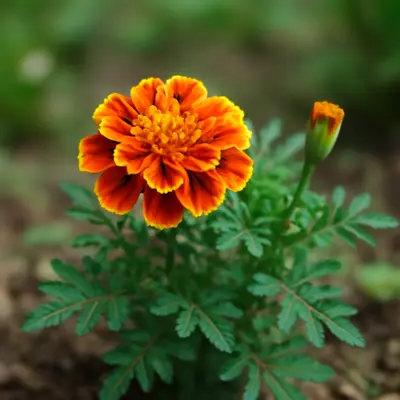
1 1/2-2 1/2" refined crested blooms. Highly uniform plants are more compact than the Durango series. An easy-to-grow addition to garden beds, containers, and small spaces. Vibrant red and orange blooms.
Harvest
50d
Days to harvest
Sun
Full sun to partial shade
Zones
1–11
USDA hardiness
Height
6-12 inches
Planting Timeline
Showing dates for Bonanza™ Harmony in USDA Zone 7
All Zone 7 flower →Zone Map
Click a state to update dates
Bonanza™ Harmony · Zones 1–11
Growing Details
Complete Growing Guide
1 1/2-2 1/2" refined crested blooms. Highly uniform plants are more compact than the Durango series. An easy-to-grow addition to garden beds, containers, and small spaces. Vibrant red and orange blooms. According to Johnny's Selected Seeds, Bonanza™ Harmony is 50 days to maturity, annual, open pollinated. Notable features: Grows Well in Containers, Edible Flowers.
Light: Full sun (6 or more hours of direct sunlight a day), Partial Shade (Direct sunlight only part of the day, 2-6 hours). Soil: Clay, Loam (Silt), Sand. Soil pH: Acid (<6.0), Neutral (6.0-8.0). Drainage: Good Drainage, Occasionally Dry. Height: 0 ft. 6 in. - 1 ft. 0 in.. Spread: 0 ft. 6 in. - 1 ft. 6 in.. Spacing: Less than 12 inches. Growth rate: Medium. Maintenance: Low. Regions: Coastal, Mountains, Piedmont.
Harvesting
Bonanza™ Harmony reaches harvest at 50 days from sowing per Johnny's Selected Seeds. Expect 1 1/2-2 1/2" at peak. As an annual, harvest continues until frost ends the season.
Edibility: Flowers are used to make refreshing drinks and the leaves are used for flavoring.
Storage & Preservation
Fresh Bonanza® Harmony zinnias last 7–10 days in a cool vase with regular water changes and flower food. For extended display without water, stand cut stems in a tall vase and change water every 2–3 days, trimming 1/4 inch from the base.
To dry blooms for long-term arrangements, harvest at peak color and hang upside-down in small bundles (3–4 stems) in a warm, dark, well-ventilated space. Air-dry for 2–3 weeks until petals feel papery. Dried Bonanza® Harmony flowers retain vibrant color for 6–12 months in a dry location.
Alternatively, use silica gel drying for faster results (5–7 days) and superior petal shape retention, ideal for pressed flower crafts. Press fresh blooms between absorbent paper in a heavy book for 3–4 weeks for a vintage, two-dimensional effect suitable for scrapbooking or herbarium display.
Store dried flowers in airtight containers with desiccant packs away from direct sunlight to prevent fading.
History & Origin
Bonanza™ Harmony is open-pollinated, meaning seed saved from healthy plants will produce true-to-type offspring. Listed in the Johnny's Selected Seeds catalog.
Origin: Mexico, Guatamala
Advantages
- +Refined crested blooms offer elegant appearance compared to standard marigold varieties.
- +Highly uniform plants ensure consistent garden design and predictable landscape results.
- +Compact growth habit makes them ideal for small spaces and containers.
- +Quick 50-day maturity allows gardeners to enjoy blooms in mid-summer.
- +Vibrant red and orange colors provide bold visual impact in beds.
Considerations
- -Refined petals may be more susceptible to rain damage and spotting.
- -Compact size produces fewer blooms per plant than standard marigold varieties.
- -Crested flowers require deadheading to maintain appearance and encourage reblooming.
Companion Plants
Bonanza Harmony pulls real pest-suppression work through its roots: Tagetes patula produces alpha-terthienyl, a compound that suppresses soil-dwelling nematodes, so plant it close to the crop you're protecting — 9 to 12 inches out, not across the bed. Sweet alyssum and borage both attract hoverflies and parasitic wasps that keep aphid pressure down on neighboring plants. Fennel belongs nowhere near it; the allelopathic compounds fennel releases through its roots stunt most annuals, and Tagetes is no exception. Black walnut is the harder wall — juglone saturates the soil inside the drip line and marigolds planted there simply collapse.
Plant Together
Marigolds
Repel nematodes and aphids while attracting beneficial insects
Sweet Alyssum
Attracts beneficial predatory insects and provides ground cover
Nasturtiums
Act as trap crops for aphids and cucumber beetles
Zinnia
Attracts pollinators and beneficial predatory insects
Cosmos
Attracts beneficial insects and provides structural support
Borage
Repels hornworms and attracts pollinators
Catnip
Repels aphids, ants, and flea beetles
Petunias
Repel aphids, tomato hornworms, and squash bugs
Keep Apart
Black Walnut
Produces juglone which is toxic to many flowering plants
Eucalyptus
Releases allelopathic compounds that inhibit nearby plant growth
Fennel
Inhibits growth of most garden plants through allelopathy
Pests & Disease Resistance
Common Pests
Spider mites, thrips
Diseases
Powdery mildew, root rot in poorly drained soil
Troubleshooting Bonanza™ Harmony
What you'll see, why it happens, and what to do about it.
Fine webbing on leaf undersides, leaves look stippled or bronzed, especially in hot dry spells
Likely Causes
- Two-spotted spider mite (Tetranychus urticae) — populations explode when temps stay above 85°F and humidity drops
- Dusty conditions that stress the plant and attract mites
What to Do
- 1.Blast the undersides of leaves with a strong stream of water every 2-3 days to knock mite populations down
- 2.Apply insecticidal soap or neem oil in the early morning — full coverage on leaf undersides is what matters
- 3.Keep the area around plants weeded and mulched to reduce dust and moderate soil temperature
Silvery streaking or flecking on petals and upper leaves, sometimes with tiny dark specks (frass) visible
Likely Causes
- Western flower thrips (Frankliniella occidentalis) — they rasp the surface tissue and feed on cell contents
- Nearby weedy or grassy areas acting as thrips reservoirs
What to Do
- 1.Remove and bag heavily infested flowers — don't compost them
- 2.Apply spinosad-based spray (follow label timing, typically every 7 days for 2-3 applications) to break the life cycle
- 3.Set out blue sticky traps at plant height to monitor pressure and catch adults
White powdery coating on leaves and stems, starting on older growth, worse in late summer
Likely Causes
- Powdery mildew (Erysiphe cichoracearum or related species) — thrives when days are warm and nights cool, often late July through September
- Crowded spacing that restricts airflow between plants
What to Do
- 1.Space plants at least 9-12 inches apart at transplant time — don't skip this step just because they look small
- 2.Spray affected foliage with a diluted potassium bicarbonate solution or a baking soda mix (1 tbsp per gallon of water with a drop of dish soap) at first sign
- 3.Trim out the worst-affected stems and dispose of them in the trash, not the compost pile
Frequently Asked Questions
How long does Bonanza® Harmony take to flower from seed?▼
Can you grow Bonanza® Harmony in containers?▼
Is Bonanza® Harmony good for beginners?▼
What's the difference between Bonanza® Harmony and Durango series zinnias?▼
How often should you deadhead Bonanza® Harmony zinnias?▼
Are Bonanza® Harmony zinnias good for cut flowers?▼
Zone-by-Zone Planting Calendar
| Zone | Indoor Start | Transplant | Direct Sow | Harvest |
|---|---|---|---|---|
| Zone 1 | May – June | July – August | July – September | — |
| Zone 2 | April – May | June – July | June – August | — |
| Zone 11 | January – January | January – February | January – March | — |
| Zone 12 | January – January | January – February | January – March | — |
| Zone 13 | January – January | January – February | January – March | — |
| Zone 3 | April – May | June – July | June – August | — |
| Zone 4 | March – April | June – June | June – July | — |
| Zone 5 | March – April | May – June | May – July | — |
| Zone 6 | March – April | May – June | May – July | — |
| Zone 7 | February – March | April – May | April – June | — |
| Zone 8 | February – March | April – May | April – June | — |
| Zone 9 | January – February | March – April | March – May | — |
| Zone 10 | January – January | February – March | February – April | — |
Growing Guides from Wind River Greens
Sources & References
External authority sources used in compiling this guide.
- BreederJohnny's Selected Seeds
See the Methodology page for how this data is sourced, what's AI-assisted, and known limitations.