Pierrot Red
Rhodanthe chlorocephala
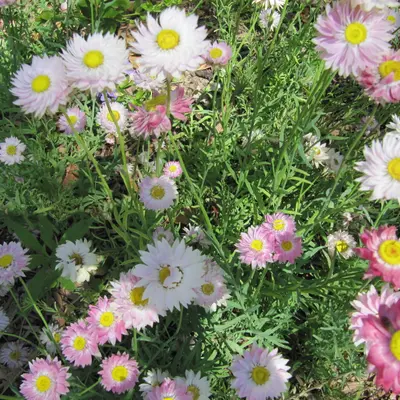
Productive plants produce relatively small, 1-2" upward-facing, daisy-like flowers with papery petals. Most blooms have a dramatic, contrasting black center while a small percentage have golden centers. The flowers have a long vase life and also make excellent dried flowers. The plant stature is a bit short for cutting (approximately 18-24"). Plants are basal branching, which makes the thin, wiry stems easy to cut and strip. Very comparable plant habit and performance to Pierrot White. Helipterum is also known as Acroclinium, immortelle, paper daisy, Australian everlasting, and everlasting daisy.
Harvest
55-65d
Days to harvest
Sun
Full sun
Zones
1–11
USDA hardiness
Height
18-24 inches
Planting Timeline
Showing dates for Pierrot Red in USDA Zone 7
All Zone 7 flower →Zone Map
Click a state to update dates
Pierrot Red · Zones 1–11
Growing Details
Succession Planting
Pierrot Red keeps producing if you cut it consistently — but it has a hard ceiling. Once daytime temperatures hold above 85–90°F for more than a few days, plants shift energy toward seed set and flower output drops sharply. To stretch your cutting window, start a first round indoors in February–March and transplant out in April, then direct sow a second round in late April to early May. That second planting blooms just as the first starts to fade, giving you a 6–8 week extended harvest rather than one concentrated flush.
A third succession rarely pays off — by midsummer the heat is working against you regardless of sowing date. Fall flowers are theoretically possible if you time a late sowing so that 55–65 days of maturation lands in the cooler shoulder of the season, but that window is narrow and unreliable unless your autumns run long and mild.
Complete Growing Guide
Growing Pierrot Red (Rhodanthe chlorocephala) flower. Light: Full sun. Hardy in USDA zones 1 to 11. Days to maturity: 55. Difficulty: Easy.
Harvesting
Pierrot Red reaches harvest at 55 - 65 days from sowing per Johnny's Selected Seeds. Expect 1-2" at peak. As an annual, harvest continues until frost ends the season.
This is an ornamental variety — not grown for harvest. Enjoy in the garden landscape.
Storage & Preservation
Fresh Pierrot Red flowers last 10-14 days in a clean vase with flower food and cool water (65-70°F), kept out of direct sunlight. Change water every 2-3 days and re-cut stems at an angle to maximize water uptake. Do not refrigerate fresh arrangements, as cold damage the delicate petals.
For drying, hang bundles upside-down in a warm (50-70°F), dark, well-ventilated space away from humidity. Once fully dry (1-2 weeks), store in airtight containers with silica gel packets to maintain moisture-free conditions. Properly dried flowers retain color and structure for years—even 12+ months—making them ideal for permanent arrangements, wreaths, and craft projects.
Alternative: Press individual flowers between parchment and a heavy book for 2-3 weeks to create flat, bookmarkable specimens for pressed-flower crafts or art projects. Though less dimensional than dried bundles, pressed Pierrot Red retains surprising color vibrancy.
Avoid humid storage, which rehydrates petals and causes mold. Keep dried flowers away from direct sunlight to minimize fading over extended storage.
History & Origin
Pierrot Red is open-pollinated, meaning seed saved from healthy plants will produce true-to-type offspring. Listed in the Johnny's Selected Seeds catalog.
Rhodanthe chlorocephala commonly known as pink and white everlasting, is a flowering plant in the family Asteraceae. It is a small, tufted plant with blue-green leaves, white, pink or yellow flowers and grows in Western Australia and South Australia.
Advantages
- +Dramatic black centers create striking visual contrast with red petals
- +Excellent dried flower quality extends usability beyond fresh arrangements
- +Productive plants yield abundant 1-2 inch blooms over season
- +Easy basal branching produces thin, wiry stems simple to strip
- +Long vase life maximizes value of cut flower arrangements
Considerations
- -Short 18-24 inch plant stature limits suitability for tall arrangements
- -Small percentage of flowers develop less desirable golden centers
- -Thin, wiry stems may require support in windy conditions
Companion Plants
Zinnias and marigolds are the most practical neighbors here. Zinnias draw in pollinators that also visit Pierrot Red, and at similar heights — 12 to 30 inches depending on variety — neither plant shades the other out. Marigolds produce alpha-terthienyl in their roots, which suppresses certain soil nematodes; it's not a silver bullet, but it's a documented chemical mechanism worth putting to use. Sweet alyssum planted at the border pulls in parasitic wasps that prey on aphids, which cluster on young strawflower stems in spring. Nasturtiums act as a trap crop for those same aphids, drawing them toward stems you're not trying to harvest.
Black walnut produces juglone, a root-zone toxin that affects a wide range of plants — give Pierrot Red at least 50 feet of clearance from any established tree. Sunflowers are allelopathic through both root leachates and decomposing leaf litter, and at 5 to 6 feet tall they'll shade out a plant that needs full sun to open properly. Eucalyptus produces volatile terpene oils that inhibit germination in nearby beds; treat it like a no-go zone for any annual flower.
Plant Together
Zinnia
Attracts butterflies and beneficial insects while sharing similar sun requirements
Catnip
Repels mosquitoes, ants, and aphids effectively
Marigolds
Repel aphids, whiteflies, and nematodes while attracting beneficial insects
Sweet Alyssum
Attracts beneficial insects like lacewings and provides ground cover
Nasturtiums
Act as trap crops for aphids and cucumber beetles, deterring pests from petunias
Lobelia
Complements growth habit and provides continuous bloom with similar care requirements
Bacopa
Shares similar watering needs and provides cascading texture contrast
Parsley
Attracts beneficial insects and doesn't compete for nutrients
Keep Apart
Black Walnut
Produces juglone toxin that inhibits growth and can kill petunias
Sunflowers
Release allelopathic compounds and compete aggressively for nutrients and water
Eucalyptus
Produces allelopathic oils that inhibit germination and growth of nearby plants
Troubleshooting Pierrot Red
What you'll see, why it happens, and what to do about it.
Seedlings damping off at soil level — stems pinch thin and collapse within the first 2 weeks after germination
Likely Causes
- Pythium or Rhizoctonia damping-off fungi, thriving in waterlogged, poorly drained germination mix
- Overwatering or trays left sitting in standing water
What to Do
- 1.Switch to a well-draining seed-starting mix and water from the bottom only, letting the surface dry slightly between waterings
- 2.Run a small fan over the tray to keep air moving — Rhodanthe chlorocephala is native to dry Australian conditions and stagnant humidity is its enemy at the seedling stage
- 3.If damping-off has already started, pull affected seedlings immediately and dust the remaining soil surface lightly with a copper-based fungicide
Buds forming but flowers failing to open fully — petals stay curled or papery and dull by day 60
Likely Causes
- Insufficient direct sun: Pierrot Red needs at least 6 full hours; even partial shade stunts the papery bracts from opening
- Harvesting too late — strawflowers are best cut when the outer ring of petals has just begun to unfurl, not when fully open
What to Do
- 1.Move or transplant to the sunniest spot available; shade from nearby tall crops is the most common culprit
- 2.Cut stems at the half-open stage — outer 2–3 rows of petals open, center still tight — they'll keep opening in the vase and hold color far longer when dried
- 3.Check spacing: plants crowded below 12 inches apart shade each other and restrict airflow, which compounds the problem
Frequently Asked Questions
How long does Pierrot Red take to grow from seed to flower?▼
Is Pierrot Red good for beginners?▼
Can you grow Pierrot Red in containers?▼
What's the difference between Pierrot Red and Pierrot White?▼
How do you preserve Pierrot Red flowers for long-term use?▼
When should I plant Pierrot Red seeds?▼
Zone-by-Zone Planting Calendar
| Zone | Indoor Start | Transplant | Direct Sow | Harvest |
|---|---|---|---|---|
| Zone 1 | May – June | July – August | July – September | — |
| Zone 2 | April – May | June – July | June – August | — |
| Zone 11 | January – January | January – February | January – March | — |
| Zone 12 | January – January | January – February | January – March | — |
| Zone 13 | January – January | January – February | January – March | — |
| Zone 3 | April – May | June – July | June – August | — |
| Zone 4 | March – April | June – June | June – July | — |
| Zone 5 | March – April | May – June | May – July | — |
| Zone 6 | March – April | May – June | May – July | — |
| Zone 7 | February – March | April – May | April – June | — |
| Zone 8 | February – March | April – May | April – June | — |
| Zone 9 | January – February | March – April | March – May | — |
| Zone 10 | January – January | February – March | February – April | — |
Growing Guides from Wind River Greens
Sources & References
External authority sources used in compiling this guide.
- BreederJohnny's Selected Seeds
See the Methodology page for how this data is sourced, what's AI-assisted, and known limitations.