Savannah Grass
Melinis nerviglumis
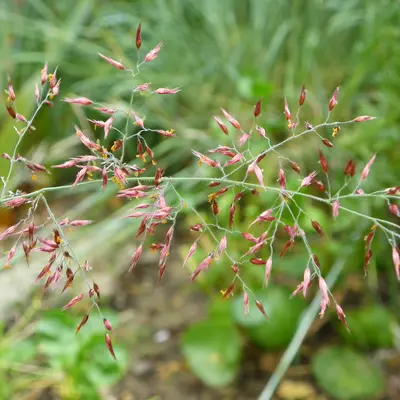
This late-season grass is the perfect color for late summer and fall arrangements, containers, and garden beds. 3-6" long, gracefully arched, rose gold to dusty rose plumes can be used as fresh or dried cut flowers. Panicles lighten in color when dried but maintain a rosy hue. 18-24" stems float above the compact, mounded grass clumps, making them easy to pluck from the plants. The thin stems are best suited for design work and are not recommended for when something sturdy is needed. Very attractive in the garden or in containers with sage-green, compact plants and rosy, sparkling plumes that dance in the light. Tender perennial in Zones 9-10, but typically grown as an annual. Also known as ruby grass, pink bubble grass, mountain red top, bristle-leaved red top.
Harvest
100-120d
Days to harvest
Sun
Full sun
Zones
3–11
USDA hardiness
Height
18-24 inches
Planting Timeline
Showing dates for Savannah Grass in USDA Zone 7
All Zone 7 grass →Zone Map
Click a state to update dates
Savannah Grass · Zones 3–11
Growing Details
Complete Growing Guide
Growing Savannah Grass (Melinis nerviglumis) grass. Light: Full sun. Days to maturity: 100. Difficulty: Moderate.
Harvesting
Savannah Grass reaches harvest at 100 - 120 days from sowing per Johnny's Selected Seeds. Expect 3-6" at peak.
This is an ornamental variety — not grown for harvest. Enjoy in the garden landscape.
Storage & Preservation
For fresh arrangement storage, keep Savannah Grass stems in a cool location (65-70°F) away from direct sunlight and ripening fruit. Use a vase with 2-3 inches of water and replace water every 2-3 days; fresh arrangements last 7-10 days. For dried preservation, hang bundles upside-down in a warm, dry, well-ventilated area for 2-3 weeks until fully dried. Store dried stems in a cool, dark place in airtight containers with silica gel to maintain color and prevent moisture absorption. Alternatively, preserve by pressing stems between newspaper under weights, or glycerin-treat for flexibility and longevity in arrangements.
History & Origin
Melinis nerviglumis is a species of grass known by the common names mountain red top or bristle-leaved red top. The Latin name refers to the veined glume. It is native from tropical to southern Africa, the western Indian Ocean islands, and Indochina. It is cultivated as a garden ornamental due to its colourful purple flowers. The flowers are produced in summer and fade to white as they mature. By this time the seeds can be harvested for new plantings.
Advantages
- +Stunning rose-gold plumes perfect for late summer and fall arrangements.
- +Works beautifully as both fresh and dried cut flowers without fading.
- +Long, graceful stems float above compact clumps for easy harvesting.
- +Attractive mounding form complements sage-green plants and container gardens.
- +Moderate difficulty makes it accessible for intermediate gardeners.
Considerations
- -Thin, delicate stems unsuitable for sturdy floral design work.
- -Tender perennial requiring replanting annually in most climates.
- -100-120 day growing season limits use in short-season regions.
Companion Plants
Leguminous shrubs and clover fix atmospheric nitrogen into the soil, giving Melinis nerviglumis a slow fertility trickle without any added fertilizer — a natural match for a grass that evolved in nutrient-lean savannah conditions. Native wildflowers and prairie sage share its preference for well-drained, low-input sites and won't muscle it out once everyone's established. Skip Kikuyu grass (Pennisetum clandestinum) and Lantana — both spread aggressively enough to collapse a clump within a single growing season — and keep Eucalyptus well away, since its leaf litter contains allelopathic compounds that suppress understory root development in ornamental grasses.
Plant Together
Leguminous shrubs
Fix nitrogen in soil, improving grass nutrition and growth
Acacia trees
Provide partial shade and wind protection while allowing grass growth underneath
Native wildflowers
Attract beneficial insects and pollinators, support ecosystem diversity
Clover
Fixes nitrogen naturally and creates beneficial plant community
Prairie sage
Complements grass in natural ecosystem, helps with soil stability
Native sedges
Similar growing conditions, creates diverse grassland habitat
Baobab trees
Deep taproot doesn't compete with grass, provides wildlife habitat
Indigenous herbs
Natural companions in savannah ecosystem, support soil health
Keep Apart
Pine trees
Acidifies soil and creates dense shade unsuitable for savannah grass
Kikuyu grass
Aggressive invasive species that outcompetes native savannah grasses
Lantana
Invasive shrub that forms dense thickets, crowding out native grasses
Eucalyptus
Allelopathic compounds inhibit grass germination and growth
Troubleshooting Savannah Grass
What you'll see, why it happens, and what to do about it.
Clumps thinning out or dying back in patches after the first winter, even in zone 7 or warmer
Likely Causes
- Prolonged wet, waterlogged soil through winter — Melinis nerviglumis tolerates drought but is sensitive to standing moisture at the crown
- Planting in heavy clay that holds water at the root crown through freeze-thaw cycles
What to Do
- 1.Cut the clump back to 4-6 inches in late winter and check whether the crown is mushy — if it is, dig it out and improve drainage before replanting
- 2.Amend planting beds with coarse sand or fine gravel to open up clay soils before the next round goes in
- 3.In zones 3-6, treat it as an annual or bring divisions inside before first frost
Seedlings germinating unevenly — sparse patches 14+ days after direct sowing, even with adequate water
Likely Causes
- Soil temperature below 65°F at sowing time — Melinis nerviglumis needs warm soil to germinate reliably
- Seed buried too deep; this grass wants surface contact or no more than 1/8 inch of cover
What to Do
- 1.Check soil temp with a probe thermometer before sowing — wait until it reads at least 65°F consistently
- 2.Press seed lightly into the surface and mist rather than watering heavily, which washes seed into uneven low spots
- 3.If spring is running cool, start seed indoors 6-8 weeks early at 70-75°F and transplant out in May once nights stay above 50°F
Frequently Asked Questions
How long do fresh Savannah Grass arrangements last?▼
Can you grow Savannah Grass in containers?▼
When should I plant Savannah Grass?▼
How do you dry Savannah Grass for long-term use?▼
Is Savannah Grass good for beginners?▼
What's the difference between fresh and dried Savannah Grass plumes?▼
Zone-by-Zone Planting Calendar
| Zone | Indoor Start | Transplant | Direct Sow | Harvest |
|---|---|---|---|---|
| Zone 3 | — | June – August | May – July | — |
| Zone 4 | — | June – July | April – June | — |
| Zone 5 | — | May – July | April – June | — |
| Zone 6 | — | May – July | April – June | — |
| Zone 7 | — | May – June | March – May | — |
| Zone 8 | — | April – June | March – May | — |
| Zone 9 | — | March – May | February – April | — |
| Zone 10 | — | March – April | January – March | — |
| Zone 11 | — | February – March | January – February | — |
Growing Guides from Wind River Greens
Sources & References
External authority sources used in compiling this guide.
- BreederJohnny's Selected Seeds
See the Methodology page for how this data is sourced, what's AI-assisted, and known limitations.