Connecticut Field Pumpkin
Cucurbita pepo 'Connecticut Field'
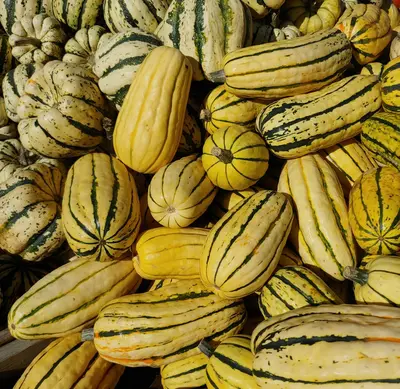
The classic American jack-o'-lantern pumpkin that has been grown since the 1700s, beloved for its perfect carving size and traditional orange color. This reliable heirloom produces large, ribbed pumpkins that are not only ideal for Halloween decorations but also excellent for pies and baking. Connecticut Field is the quintessential pumpkin variety that connects modern gardeners to centuries of American agricultural tradition.
Harvest
100-120d
Days to harvest
Sun
Full sun
Zones
3–11
USDA hardiness
Height
1-3 feet
Planting Timeline
Showing dates for Connecticut Field Pumpkin in USDA Zone 7
All Zone 7 squash →Zone Map
Click a state to update dates
Connecticut Field Pumpkin · Zones 3–11
Growing Details
Succession Planting
Connecticut Field runs 100–120 days to harvest and produces one fruit set per season — you're curing those pumpkins in October and you're done. There's no staggered harvest to manage the way there is with beans or salad greens, so succession planting doesn't apply here. Plant once, time it right.
In zone 7, direct sow from late April through early June so harvest lands in September–October before hard frost. The more consequential timing decision is at the front end: NC State Extension recommends getting squash in the ground as early as soil conditions allow, specifically to put vulnerable young vines past their weakest stage before squash vine borers begin laying eggs in July. A seed started on warm soil in late April gives you a vine that's past 60 days old by the time borer pressure peaks.
Complete Growing Guide
Connecticut Field pumpkins require 100–120 days of warm, uninterrupted growth, so direct seed after all frost danger passes and soil reaches 70°F to ensure vigorous germination and mature fruit by fall. This heirloom variety thrives in full sun with rich, well-draining soil amended with compost, though it tolerates slightly less-fertile conditions than modern hybrids. Unlike many squash varieties, Connecticut Field produces long vines (plan 4–6 feet of space per plant) and benefits from consistent moisture during fruit set, though excessive water invites powdery mildew and fruit rot. Pests targeting this cultivar include squash vine borers and cucumber beetles, which can devastate young plants. A practical strategy is to plant succession crops 2–3 weeks apart or grow under row covers until flowering begins, protecting vulnerable seedlings while allowing pollinators access later. Remove all fruit except 2–3 per plant once they reach softball size to direct energy toward trophy-sized jack-o'-lanterns.
Light: Full sun (6 or more hours of direct sunlight a day). Soil: High Organic Matter, Loam (Silt). Soil pH: Neutral (6.0-8.0). Drainage: Good Drainage, Moist. Height: 1 ft. 0 in. - 3 ft. 0 in.. Spread: 2 ft. 0 in. - 25 ft. 0 in.. Spacing: 12 inches-3 feet. Growth rate: Rapid. Maintenance: High. Propagation: Seed. Regions: Coastal, Mountains, Piedmont.
Harvesting
Connecticut Field pumpkins reach peak harvest readiness when they develop a deep, uniform orange color across the entire rind, typically weighing 10-15 pounds with a hard, woody stem that resists fingernail punctures. These pumpkins mature as a single harvest rather than continuous picking, so timing is critical—wait until the vines begin drying and yellowing, usually around day 100-120 after planting, as premature harvesting results in pale color and inferior storage. A key indicator specific to this heirloom is the appearance of a waxy coating on the skin, which signals proper sugar development and curing readiness; harvest just before the first frost by cutting the stem with a sharp knife rather than twisting to avoid damage.
A type of berry called a pepo that has a hard rind. Fruits may be long or round, large or small, smooth or warty– some have edible flesh and some are too hard or insipid to eat, though the seeds of all are edible. Has a harder, thicker stem compared to other species.
Color: Black, Cream/Tan, Gold/Yellow, Green, Orange, Pink, Red/Burgundy, Variegated, White. Type: Berry. Length: > 3 inches. Width: > 3 inches.
Garden value: Edible, Showy
Harvest time: Fall
Storage & Preservation
Store cured Connecticut Field pumpkins in a cool, dry location (50-55°F) with good air circulation—never on concrete floors which can cause bottom rot. A basement shelf, garage rack, or unheated room works perfectly. Properly stored whole pumpkins keep 3-6 months, making them excellent for both Halloween carving and Thanksgiving pies.
For preservation, cut pumpkins into chunks and steam until tender, then freeze the cooked flesh in portions for pies and baking. Connecticut Field's smooth texture makes excellent puree that freezes for up to a year. You can also dice and dehydrate raw pumpkin pieces for long-term storage, or preserve as pickled pumpkin chunks using traditional canning methods. Don't forget to roast and salt the seeds—they're a delicious bonus harvest.
History & Origin
The exact origins of Connecticut Field Pumpkin remain somewhat obscure, though the variety became established and widely grown throughout New England by the 18th century, particularly in Connecticut where it earned its regional name. The variety emerged as part of broader North American pumpkin cultivation traditions influenced by indigenous squash genetics and European selection practices. Rather than tracing to a specific breeder or documented introduction date, Connecticut Field represents a heritage variety refined through generations of farmer selection for reliable size, orange color, and dual-purpose utility—equally suited for jack-o'-lanterns and culinary use. Its 100+ day maturation and consistent performance made it a standard among American gardeners by the 1800s, cementing its status as an iconic heirloom pumpkin.
Origin: North America
Advantages
- +Perfect carving size makes Connecticut Field ideal for Halloween decorations.
- +Sweet mild flavor produces excellent pies and baking compared to ornamental varieties.
- +Heirloom status connects modern gardeners to 300 years of American tradition.
- +Reliable producer with consistent ribbed shape and traditional orange coloring.
- +100-120 day maturity fits most growing seasons without extended waiting.
Considerations
- -Highly susceptible to squash vine borers that tunnel through vines and kill plants.
- -Powdery mildew and downy mildew commonly develop in humid growing conditions.
- -Requires significant garden space for sprawling vines to spread and grow properly.
- -Vulnerable to bacterial wilt transmitted by cucumber beetles throughout the growing season.
Companion Plants
Corn, beans, and pumpkins are the Three Sisters combination that pre-Columbian farmers worked out long before anyone wrote it down: corn gives the sprawling vines a rough windbreak, beans fix nitrogen in the top 6–8 inches of soil where pumpkin feeder roots are most active, and the pumpkin's big leaves shade out weeds that would otherwise compete with all three. French marigolds (Tagetes patula) at the bed edges pull double duty — NC State Extension's IPM guidance specifically recommends a solid planting of French marigolds to knock back root-knot nematode populations before returning to cucurbit crops, and they deter cucumber beetles above ground at the same time. Nasturtiums are worth tucking in as a trap crop: aphids and cucumber beetles tend to hit them before the pumpkins, which at least gives you a few days' warning.
Potatoes are worth keeping on the opposite end of the garden entirely. They share soilborne pathogens with cucurbits — black rot being the most practical concern — and cycling both crops through the same soil speeds up inoculum buildup. Brassicas compete for similar nutrients and tend to slow pumpkin establishment when planted within a few feet; they're not going to kill the vines, but you won't get much benefit from the proximity either.
Plant Together
Corn
Provides natural trellis support and shade, part of traditional Three Sisters planting
Beans
Fixes nitrogen in soil to benefit heavy-feeding pumpkins, completes Three Sisters guild
Marigolds
Repel cucumber beetles, squash bugs, and other pests that attack pumpkins
Nasturtiums
Act as trap crop for squash bugs and cucumber beetles, repel aphids
Radishes
Deter squash vine borers and cucumber beetles, mature quickly before pumpkins spread
Sunflowers
Attract beneficial insects and pollinators, provide windbreak protection
Oregano
Repels cucumber beetles and improves overall garden pest management
Catnip
Strongly repels cucumber beetles, squash bugs, and flea beetles
Keep Apart
Potatoes
Compete for nutrients and space, both are heavy feeders requiring similar soil resources
Brassicas
Cabbage family plants inhibit pumpkin growth and compete for nutrients
Aromatic herbs
Strong herbs like sage can inhibit pumpkin growth and vine development
Nutrition Facts
Per 100g serving. % Daily Value based on 2,000 calorie diet. Source: USDA FoodData Central (FDC #168448)
Pests & Disease Resistance
Resistance
Moderate resistance typical of heirloom varieties
Common Pests
Squash bugs, cucumber beetles, squash vine borers
Diseases
Powdery mildew, bacterial wilt, black rot, downy mildew
Troubleshooting Connecticut Field Pumpkin
What you'll see, why it happens, and what to do about it.
Vine wilts suddenly and collapses, even with adequate water — often mid-July or later
Likely Causes
- Bacterial wilt (Erwinia tracheiphila), spread by cucumber beetles feeding on leaves
- Squash vine borer (Melittia cucurbitae) larvae tunneling inside the main stem
What to Do
- 1.Check the stem first: slice it near the base and look for sawdust-like frass or hollow tunneling — that's vine borer; a milky, thread-pulling sap when you touch cut ends together points to bacterial wilt
- 2.For vine borer: slit the stem lengthwise, extract the larva, mound moist soil over the wound to encourage re-rooting — works best if caught before day 90
- 3.For bacterial wilt: pull and bag the plant; there's no cure, so next season plant seeds as early as soil allows (NC State Extension notes that early plantings avoid the July peak when cucumber beetles are most active and spreading wilt)
White powdery coating on upper leaf surfaces, starting late summer, usually after vines are well established
Likely Causes
- Powdery mildew (Podosphaera xanthii or Erysiphe cichoracearum) — dry air on leaf surfaces combined with warm days and cool nights
- Dense canopy with poor airflow
What to Do
- 1.Remove the most heavily infected leaves and dispose of them in the trash, not the compost pile
- 2.Apply a diluted neem oil or potassium bicarbonate spray every 7 days; coverage on the upper leaf surface matters more than volume
- 3.Connecticut Field has no notable resistance to powdery mildew — if it hits hard every year, rotate the bed out of cucurbits for at least 3 seasons
Clusters of gray-brown, shield-shaped insects on stems and leaf undersides; leaves bronzing or wilting by late summer
Likely Causes
- Squash bugs (Anasa tristis) — egg masses laid in neat rows on leaf undersides, usually July onward
- Missed early scouting; nymphs are much easier to kill than adults
What to Do
- 1.Check leaf undersides weekly starting in June — scrape off the bronze, barrel-shaped egg clusters into a bucket of soapy water
- 2.Lay a board near the base of plants overnight; squash bugs congregate under it and you can collect and kill them in the morning
- 3.Clear all vine debris immediately after harvest — NC State Extension notes that removing plant material disrupts overwintering sites for both squash bugs and cucumber beetles
Frequently Asked Questions
How big do Connecticut Field pumpkins get?▼
Can you eat Connecticut Field pumpkins or are they just for carving?▼
When should I plant Connecticut Field pumpkin seeds?▼
How much space does Connecticut Field pumpkin need?▼
Is Connecticut Field pumpkin good for beginners?▼
Connecticut Field vs Sugar Pie pumpkin - what's the difference?▼
Zone-by-Zone Planting Calendar
| Zone | Indoor Start | Transplant | Direct Sow | Harvest |
|---|---|---|---|---|
| Zone 1 | — | — | July – August | November – August |
| Zone 2 | — | — | June – August | November – September |
| Zone 11 | — | — | January – March | June – July |
| Zone 12 | — | — | January – March | June – July |
| Zone 13 | — | — | January – March | June – July |
| Zone 3 | — | — | June – July | October – October |
| Zone 4 | — | — | June – July | October – October |
| Zone 5 | — | — | May – June | October – October |
| Zone 6 | — | — | May – June | September – November |
| Zone 7 | — | — | April – June | September – October |
| Zone 8 | — | — | April – May | August – October |
| Zone 9 | — | — | March – April | July – September |
| Zone 10 | — | — | February – April | July – August |
Growing Guides from Wind River Greens
Sources & References
External authority sources used in compiling this guide.
See the Methodology page for how this data is sourced, what's AI-assisted, and known limitations.