Tromboncino Squash
Cucurbita moschata 'Tromboncino'
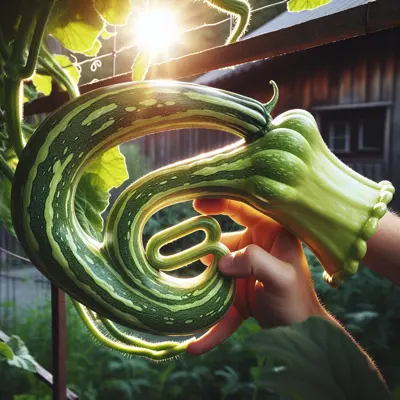
An Italian heirloom that's part sculpture, part vegetable with its incredible curved neck resembling a trombone. This vigorous climbing vine can be eaten young like zucchini or left to mature into a sweet winter squash. Its unique growth habit and dual-purpose nature make it a fascinating conversation starter in any garden.
Harvest
60d
Days to harvest
Sun
Full sun
Zones
3–11
USDA hardiness
Height
4-10 feet
Planting Timeline
Showing dates for Tromboncino Squash in USDA Zone 7
All Zone 7 squash →Zone Map
Click a state to update dates
Tromboncino Squash · Zones 3–11
Growing Details
Succession Planting
Tromboncino keeps setting fruit on the same vine for weeks, so there's no need to stagger plantings the way you would with lettuce or beans. One or two plants sown in late April or May will carry a harvest through September. If you want a second flush of younger, more tender fruits, sow a follow-up round in mid-June — just know that NC State Extension IPM guidance flags July as when squash vine borers (Melittia cucurbitae) start laying eggs, so those later plants will face more stem pressure before they're fully established.
Complete Growing Guide
This Italian heirloom requires sturdy vertical support or trellising to manage its vigorous 4-10 foot vines, distinguishing it from bush squash varieties that need minimal infrastructure. Plant after all frost danger passes and provide consistent warmth, as Tromboncino is sensitive to cool temperatures and may bolt prematurely if exposed to prolonged cold snaps. Unlike standard summer squash, this cultivar develops its signature curved neck shape as it matures, so resist harvesting too early if you want that trombone silhouette. Watch closely for powdery mildew on the dense foliage, especially in humid conditions—ensure good air circulation around the vines by strategic pruning. One practical advantage: the distinctive curved fruits are less prone to slug damage than tender young zucchini, and mature specimens store exceptionally well, making this dual-purpose squash ideal for gardeners wanting both fresh summer harvests and winter storage potential.
Light: Full sun (6 or more hours of direct sunlight a day). Soil: High Organic Matter, Loam (Silt). Soil pH: Neutral (6.0-8.0). Drainage: Good Drainage, Moist. Height: 4 ft. 0 in. - 10 ft. 0 in.. Spread: 3 ft. 0 in. - 25 ft. 0 in.. Spacing: 12 inches-3 feet, 3 feet-6 feet, 6-feet-12 feet. Growth rate: Rapid. Maintenance: High. Propagation: Seed. Regions: Coastal, Mountains, Piedmont.
Harvesting
Harvest Tromboncino squash when the distinctive curved neck develops a deep tan or golden-brown color and the skin hardens enough to resist thumbnail puncture, typically around 60 days for summer use or 80-90 days for winter storage. Young fruits can be picked continuously at 6-8 inches long for tender, zucchini-like preparation, while mature squashes should remain on the vine until the entire fruit turns uniformly tan and the stem begins drying. For optimal storage potential, wait to harvest mature fruits until after the first light frost, which concentrates sugars and triggers the skin to fully harden, ensuring they'll keep for several months in cool conditions.
A type of berry called a pepo that has a hard rind. Fruits may be long or round, large or small, smooth or warty. Comes in a variety of colors, shapes, and sizes. Fruits and seeds are both edible.
Color: Blue, Cream/Tan, Gold/Yellow, Gray/Silver, Green, Orange, Variegated. Type: Berry. Length: > 3 inches. Width: > 3 inches.
Garden value: Edible, Long-lasting, Showy
Harvest time: Fall
Storage & Preservation
# Storage and Preservation
Store freshly harvested Tromboncino squash in a cool, well-ventilated location between 50–55°F with moderate humidity, ideally in single layers on shelves or in open crates. Avoid plastic bags, which trap moisture and encourage rot. Young, tender fruits keep for 1–2 weeks at room temperature, while mature specimens with hardened skin will store 2–3 months in proper cool conditions.
For preservation, mature squash freezes well when cubed and blanched, or roasted before freezing for soups and purees. Drying works excellently—slice thin, dehydrate at 135°F until brittle, then store in airtight containers. The distinctive curved neck makes this variety particularly prone to bruising at the bend point; handle gently and support the neck when harvesting to extend storage life.
History & Origin
Tromboncino squash originated in Italy as part of the Cucurbita moschata species, which was domesticated in Mesoamerica but developed into distinct regional varieties through European cultivation. Documentation of its specific breeder or introduction date remains limited, though it represents a traditional Italian heirloom preserved through generations of seed-saving gardeners. The variety's distinctive curved-neck morphology likely arose from natural selection and intentional breeding within Italian agricultural communities, particularly in southern regions where winter squash cultivation was prominent. Its inclusion in modern seed catalogs reflects the broader revival of heirloom varieties, though detailed historical records of its formal development or initial commercial introduction are scarce in contemporary horticultural literature.
Origin: Central and South America
Advantages
- +Unique curved trombone shape makes it an eye-catching ornamental garden feature.
- +Versatile harvesting: eat young as zucchini or mature as winter squash.
- +Vigorous climbing vine maximizes garden space with vertical growing potential.
- +Sweet, nutty flavor when mature rivals traditional winter squash varieties.
Considerations
- -Highly susceptible to powdery mildew, bacterial wilt, and downy mildew.
- -Attracts cucumber beetles, aphids, and squash bugs requiring constant pest management.
- -Requires sturdy trellising and consistent care for optimal curved neck development.
Companion Plants
Nasturtiums and marigolds do real work at the bed edges — nasturtiums act as a sacrificial draw for aphids, pulling them off the squash foliage, while marigold scent disrupts cucumber beetles enough to reduce feeding pressure. Corn, beans, and Tromboncino slot together naturally: the long vines cover ground under the corn stalks, beans fix nitrogen that a heavy-feeding Cucurbita moschata will pull from the soil by August, and the whole system crowds out weeds without much effort. Keep brassicas and potatoes on the far side of the garden — they compete at similar root depths, and potatoes can carry fungal soil problems that will follow squash into the same bed.
Plant Together
Nasturtiums
Repel squash bugs, cucumber beetles, and aphids while attracting beneficial predatory insects
Marigolds
Deter cucumber beetles and squash bugs with their strong scent
Radishes
Repel squash vine borers and cucumber beetles, break up soil for squash roots
Corn
Provides natural trellis support for vining tromboncino squash
Beans
Fix nitrogen in soil to benefit heavy-feeding squash, part of Three Sisters planting
Catnip
Repels squash bugs, cucumber beetles, and flea beetles more effectively than DEET
Oregano
Repels cucumber beetles and provides ground cover to retain soil moisture
Sunflowers
Attract beneficial insects and provide structure for climbing tromboncino vines
Keep Apart
Brassicas
Heavy nitrogen feeders that compete with squash, may stunt growth and reduce yields
Potatoes
Compete for similar nutrients and space, both are heavy feeders that deplete soil
Fennel
Inhibits growth of squash through allelopathic compounds released by roots
Nutrition Facts
Per 100g serving. % Daily Value based on 2,000 calorie diet. Source: USDA FoodData Central (FDC #168040)
Pests & Disease Resistance
Resistance
Excellent resistance to squash vine borer, good disease tolerance
Common Pests
Cucumber beetles, aphids, squash bugs
Diseases
Powdery mildew, bacterial wilt, downy mildew
Troubleshooting Tromboncino Squash
What you'll see, why it happens, and what to do about it.
Wilting vines that don't recover overnight, sometimes with yellowing foliage — even when soil moisture is fine
Likely Causes
- Bacterial wilt (Erwinia tracheiphila), transmitted by cucumber beetles feeding on stems and leaves
- Squash vine borer (Melittia cucurbitae) tunneling inside the main stem — look for a small entry hole with sawdust-like frass near the base
What to Do
- 1.Cut a wilted stem near the base and touch the cut ends together — if you pull them apart slowly and see fine stringy ooze, it's bacterial wilt; dig out and dispose of the entire plant, roots included
- 2.For vine borer: slit the stem lengthwise where you see frass, extract the caterpillar, bury the wounded section under moist soil so it can re-root — success rate is maybe 50/50, but it beats losing the whole plant
- 3.NC State Extension IPM guidance recommends getting squash seeds in the ground as early as possible so vines are well established before borers begin laying eggs in July
White powdery coating spreading across the upper leaf surface, usually showing up mid-summer on older foliage first
Likely Causes
- Powdery mildew (Podosphaera xanthii or Erysiphe cichoracearum) — wind-dispersed spores, favored by warm days and cool nights with low surface wetness
- Dense canopy from vines piling on the ground rather than climbing, which traps humidity around the foliage
What to Do
- 1.Tromboncino carries better field tolerance to powdery mildew than most summer squash — strip the worst-affected leaves and keep watching before reaching for a spray
- 2.Run the vines up a sturdy vertical trellis; a single plant can push 10 feet and the foliage volume is significant — getting leaves off the ground cuts ambient humidity and slows mildew spread more than any spray will
- 3.If the infection is advancing quickly, apply potassium bicarbonate or dilute neem oil in early morning before air temperatures climb above 90°F
Frequently Asked Questions
How long does tromboncino squash take to grow?▼
Can you grow tromboncino squash in containers?▼
Is tromboncino squash good for beginners?▼
What does tromboncino squash taste like?▼
Tromboncino vs zucchini—what's the difference?▼
When should I plant tromboncino squash?▼
Zone-by-Zone Planting Calendar
| Zone | Indoor Start | Transplant | Direct Sow | Harvest |
|---|---|---|---|---|
| Zone 3 | — | — | June – July | September – October |
| Zone 4 | — | — | June – July | August – October |
| Zone 5 | — | — | May – June | August – September |
| Zone 6 | — | — | May – June | August – September |
| Zone 7 | — | — | April – June | July – September |
| Zone 8 | — | — | April – May | July – August |
| Zone 9 | — | — | March – April | June – July |
| Zone 10 | — | — | February – April | May – July |
| Zone 1 | — | — | July – August | October – August |
| Zone 2 | — | — | June – August | September – September |
| Zone 11 | — | — | January – March | April – June |
| Zone 12 | — | — | January – March | April – June |
| Zone 13 | — | — | January – March | April – June |
Growing Guides from Wind River Greens
Sources & References
External authority sources used in compiling this guide.
See the Methodology page for how this data is sourced, what's AI-assisted, and known limitations.