Verbena bonariensis
Verbena bonariensis
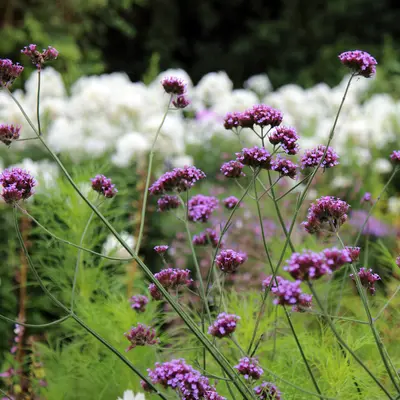
Multiple long, thin stems topped with clusters of 2" heads packed with tiny flowers. Blooms July to frost. Attracts bees and butterflies. Also known as purple top verbena, tall verbena, South American vervain, and purple-top verbena. Perennial in Zones 7-10 but can be grown as an annual.
Harvest
90d
Days to harvest
Sun
Full sun to partial shade
Zones
7–11
USDA hardiness
Height
2-5 feet
Planting Timeline
Showing dates for Verbena bonariensis in USDA Zone 7
All Zone 7 flower →Zone Map
Click a state to update dates
Verbena bonariensis · Zones 7–11
Growing Details
Complete Growing Guide
Light: Full sun (6 or more hours of direct sunlight a day), Partial Shade (Direct sunlight only part of the day, 2-6 hours). Soil: Clay, Loam (Silt), Sand, Shallow Rocky. Soil pH: Acid (<6.0), Alkaline (>8.0), Neutral (6.0-8.0). Drainage: Good Drainage, Moist, Occasionally Dry. Height: 2 ft. 0 in. - 5 ft. 0 in.. Spread: 2 ft. 0 in. - 3 ft. 0 in.. Spacing: 12 inches-3 feet. Growth rate: Rapid. Maintenance: High. Propagation: Root Cutting, Seed. Regions: Coastal, Mountains, Piedmont.
Harvesting
Brown seed capsules
Color: Brown/Copper. Type: Capsule. Length: < 1 inch. Width: < 1 inch.
Storage & Preservation
Fresh verbena flowers are best displayed in water immediately after cutting and kept at room temperature (65-72°F) with moderate humidity. Blooms typically last 5-7 days in a vase. For preservation: (1) Air-drying—bundle stems and hang upside down in a warm, dark space for 2-3 weeks to create long-lasting dried arrangements; (2) Pressing—place individual flower clusters between parchment paper under weights for 2-3 weeks for botanical crafts; (3) Freezing in ice cubes—place flowers in water-filled ice cube trays for decorative use in beverages or crafts over several months.
History & Origin
Verbena bonariensis is open-pollinated, meaning seed saved from healthy plants will produce true-to-type offspring. Listed in the Johnny's Selected Seeds catalog.
Origin: South America
Advantages
- +Attracts: Bees, Butterflies, Hummingbirds, Pollinators
- +Fast-growing
Considerations
- -High maintenance
Companion Plants
Lavender, salvia, and catmint are the strongest companions here, and the reason is pretty direct: all three attract the same wave of pollinators — bumblebees, skippers, and small native bees — that Verbena bonariensis pulls in, so you end up with a dense, overlapping bloom cycle that keeps beneficial insects on-site from May through first frost. In our zone 7 Georgia garden, that pollinator overlap matters because it also draws in parasitic wasps (Braconidae family) that work whitefly and aphid populations without any intervention on your part. Ornamental grasses planted nearby fill a structural gap — they cover the lower 18–24 inches of height that V. bonariensis skips entirely with its airy, branching stems, so you're not staring at bare legs all season.
Marigolds and cosmos round out a solid combination. Tagetes patula specifically has a documented suppressive effect on root-knot nematodes, and cosmos attract hoverflies whose larvae are aggressive aphid predators. The height layering also works: cosmos and V. bonariensis both reach 3–5 feet, so they read as a loose, informal screen planted together.
Black walnut is a hard no — juglone leaches from the root zone across a wide radius and, while Verbena isn't the most sensitive plant around, there's no reason to put it in a spot where you're already fighting soil toxicity. Hostas fail for a completely different reason: they want part to full shade and steady moisture, conditions that will stunt V. bonariensis, which wants 6 or more hours of direct sun and handles dry stretches once it's established. They're not a pest problem — they're just incompatible enough that one of them will lose.
Plant Together
Lavender
Both attract pollinators and have similar drought tolerance and sun requirements
Salvia
Complementary flowering periods and both attract beneficial insects while deterring pests
Echinacea
Creates pollinator-friendly combinations and provides structural contrast with sturdy stems
Ornamental Grasses
Provides wind protection and textural contrast while sharing similar growing conditions
Roses
Verbena's pest-repelling properties help protect roses from aphids and other insects
Marigolds
Both repel harmful insects and attract beneficial pollinators and predatory insects
Cosmos
Similar height and airy growth habit creates natural partnerships for pollinator gardens
Catmint
Shared drought tolerance and both plants repel mosquitoes and other pests
Keep Apart
Black Walnut Trees
Produces juglone toxin that inhibits growth and can kill sensitive plants like verbena
Impatiens
Requires consistently moist soil and shade, opposite of verbena's drought-tolerant sun requirements
Hostas
Shade-loving plants that compete poorly with verbena's sun requirements and growth habit
Pests & Disease Resistance
Common Pests
Spider mites, whiteflies, aphids
Diseases
Powdery mildew, root rot in poorly drained soil
Troubleshooting Verbena bonariensis
What you'll see, why it happens, and what to do about it.
Fine webbing on stems and undersides of leaves, with stippled or bronzed foliage, usually during hot dry spells
Likely Causes
- Two-spotted spider mite (Tetranychus urticae) — populations explode when temperatures stay above 85°F and humidity drops
- Dusty conditions, especially along gravel paths or unpaved beds
What to Do
- 1.Blast the undersides of leaves hard with a hose for 3–4 consecutive mornings — it physically disrupts colonies and the eggs
- 2.If the infestation is heavy, apply insecticidal soap or neem oil at dusk (not midday — you'll burn the foliage)
- 3.Keep mulch in place around the base to hold soil moisture and moderate air temperature near the plant
White powdery coating on leaves and upper stems, typically appearing mid-summer when nights cool down but days stay warm
Likely Causes
- Powdery mildew (Erysiphe cichoracearum or related species) — favored by the 70–80°F range with low daytime humidity and dew at night
- Overcrowded planting that restricts airflow between stems
What to Do
- 1.Cut affected stems back by a third and bin them — don't compost them
- 2.Thin planting to maintain at least 18 inches between plants so air can move through
- 3.Apply a diluted baking soda spray (1 tablespoon per gallon of water with a few drops of liquid soap) as a low-input preventive if you've had mildew in previous years
Sticky residue on leaves and stems, with clusters of small soft-bodied insects crowded onto new growth and flower buds
Likely Causes
- Aphids (commonly Myzus persicae or Aphis gossypii) — they target tender new growth and can arrive in large numbers fast in spring
- Absence of nearby beneficial insect habitat to keep populations in check
What to Do
- 1.Knock them off with a firm water spray — repeat every 2–3 days until populations drop
- 2.Back off any high-nitrogen fertilizer mid-season; it produces the soft, sappy growth aphids prefer
- 3.Catmint or marigolds planted within 2–3 feet will pull in ladybugs and parasitic wasps that work aphid colonies without you doing much at all
Plants wilting despite adequate soil moisture, with dark brown or black discoloration at the crown and roots
Likely Causes
- Root rot caused by Phytophthora or Pythium species — nearly always triggered by consistently waterlogged soil, not the pathogen alone
- Planting in a low spot that holds water after rain, or in heavy clay without amendment
What to Do
- 1.Dig the plant and check the roots — if they're black and mushy past the crown, it won't recover; pull it and don't replant Verbena bonariensis in that spot for at least one season
- 2.If caught early with only a few roots affected, move the plant to a raised bed or a spot with at least 12 inches of well-draining amended soil
- 3.Drop the fixed watering schedule — check 2 inches down with your finger and only water if it's dry there
Frequently Asked Questions
How long does Verbena bonariensis bloom?▼
Is Verbena bonariensis good for beginner gardeners?▼
Can you grow Verbena bonariensis in containers?▼
When should I plant Verbena bonariensis?▼
What attracts so many pollinators to Verbena bonariensis?▼
Does Verbena bonariensis need special soil preparation?▼
Zone-by-Zone Planting Calendar
| Zone | Indoor Start | Transplant | Direct Sow | Harvest |
|---|---|---|---|---|
| Zone 3 | April – May | June – July | June – August | — |
| Zone 4 | March – April | June – June | June – July | — |
| Zone 5 | March – April | May – June | May – July | — |
| Zone 6 | March – April | May – June | May – July | — |
| Zone 7 | February – March | April – May | April – June | — |
| Zone 8 | February – March | April – May | April – June | — |
| Zone 9 | January – February | March – April | March – May | — |
| Zone 10 | January – January | February – March | February – April | — |
| Zone 1 | May – June | July – August | July – September | — |
| Zone 2 | April – May | June – July | June – August | — |
| Zone 11 | January – January | January – February | January – March | — |
| Zone 12 | January – January | January – February | January – March | — |
| Zone 13 | January – January | January – February | January – March | — |
Growing Guides from Wind River Greens
Sources & References
External authority sources used in compiling this guide.
- ExtensionNC State Extension
- BreederJohnny's Selected Seeds
See the Methodology page for how this data is sourced, what's AI-assisted, and known limitations.