Common Valerian
Valeriana officinalis
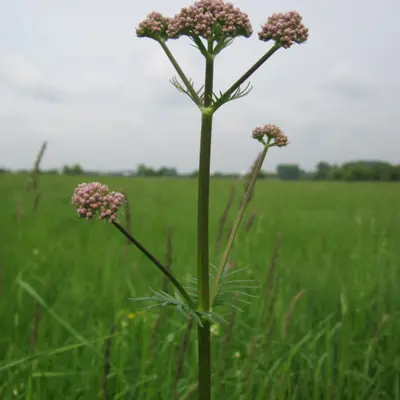
Common variety, naturalized in some areas. Root used for anxiety, insomnia, and pain relief. Also known as garden heliotrope, cat's valerian, setwell, and St. George's herb.
Harvest
500-550d
Days to harvest
Sun
Full sun
Zones
4–7
USDA hardiness
Height
3-5 feet
Planting Timeline
Showing dates for Common Valerian in USDA Zone 7
All Zone 7 herb →Zone Map
Click a state to update dates
Common Valerian · Zones 4–7
Growing Details
Complete Growing Guide
Light: Full sun (6 or more hours of direct sunlight a day). Soil: Clay, Loam (Silt), Sand. Soil pH: Acid (<6.0), Alkaline (>8.0), Neutral (6.0-8.0). Drainage: Good Drainage, Occasionally Dry, Occasionally Wet. Height: 3 ft. 0 in. - 5 ft. 0 in.. Spread: 2 ft. 0 in. - 4 ft. 0 in.. Spacing: 12 inches-3 feet, 3 feet-6 feet. Growth rate: Rapid. Maintenance: Medium. Propagation: Division, Seed. Regions: Mountains, Piedmont.
Harvesting
Winged seeds are spread by the wind
Edibility: Roots for flavoring and as a tranquilizing herbal medicine
Storage & Preservation
# Storage and Preservation
Freshly harvested valerian root keeps best in cool, humid conditions between 32–40°F in breathable containers lined with damp sand or peat moss; avoid plastic bags that encourage rot. Fresh roots maintain quality for 2–3 weeks under these conditions before declining. Drying is the preferred preservation method—wash, slice roots lengthwise, and air-dry in a warm, well-ventilated space or use a dehydrator set to 95–105°F until brittle, typically 2–3 weeks. Store dried root in airtight glass jars away from light and heat for up to two years. Freezing works adequately for whole roots placed in freezer bags, though texture deteriorates upon thawing. Valerian's pungent compounds intensify slightly during drying, making dried preparations more potent than fresh material—account for this when calculating herbal doses.
History & Origin
Common Valerian is open-pollinated, meaning seed saved from healthy plants will produce true-to-type offspring. Listed in the Johnny's Selected Seeds catalog.
Origin: Europe, Asia
Advantages
- +Attracts: Bees, Butterflies
- +Edible: Roots for flavoring and as a tranquilizing herbal medicine
- +Fast-growing
Companion Plants
Valerian's reputation as a broad garden ally is mostly earned. Its roots release phosphorus-rich exudates that benefit heavy feeders like tomatoes and cabbage planted nearby, and its flower stalks — which reach 3–5 feet by the second year — pull in predatory wasps and hoverflies that work through aphid populations across the surrounding beds. That pairs well with a principle NC State Extension's IPM guidelines make explicit: mixing plant families dilutes the chemical cues that crop-specific pests follow, slowing their spread and giving you time to act. In zone 7 Georgia, where pest pressure from spring and summer buildups peaks hard in August and September, that kind of buffering matters more than people expect.
Skip planting valerian near onions, garlic, or radishes. Alliums produce sulfur compounds that appear to suppress valerian's root development — and since the root is the whole point of growing this plant (you're looking at 500–550 days before harvest), that's not a trade-off worth making. Radishes are a different problem: they're aggressive competitors in the top 6–8 inches of soil, which is exactly where valerian spends its slow first-season establishment.
Plant Together
Tomatoes
Valerian improves tomato growth and enhances fruit flavor through root secretions
Carrots
Valerian enhances carrot growth and improves soil structure with its deep taproot
Lettuce
Provides beneficial shade for cool-season lettuce while attracting beneficial insects
Cabbage
Attracts beneficial insects that help control cabbage pests like cabbage worms
Beans
Valerian attracts pollinators and beneficial insects while beans fix nitrogen in soil
Strawberries
Enhances strawberry growth and flavor while attracting beneficial predatory insects
Herbs
Works well with most culinary herbs, creating beneficial microclimate and pest control
Roses
Attracts beneficial insects and may help improve rose health and fragrance
Keep Apart
Radishes
May inhibit radish germination and growth through allelopathic compounds
Onions
Strong sulfur compounds from onions can interfere with valerian's growth
Garlic
Allelopathic effects from garlic can suppress valerian's delicate seedling development
Nutrition Facts
Per 100g serving. % Daily Value based on 2,000 calorie diet. Source: USDA FoodData Central (FDC #172232)
Pests & Disease Resistance
Common Pests
Rarely troubled; occasional spider mites in very dry conditions
Diseases
Fungal root rot in poorly drained soil; powdery mildew in humid, stagnant air
Troubleshooting Common Valerian
What you'll see, why it happens, and what to do about it.
Seedlings collapse at soil level — stems pinched, blackened, and shrunken — within the first 2 weeks of germination
Likely Causes
- Damping off (Pythium or Rhizoctonia spp.) — fungal pathogens that thrive in wet, poorly drained seed-starting mix
- Overwatering combined with low airflow around trays
What to Do
- 1.Pull and discard affected seedlings immediately — they won't recover
- 2.Water from the bottom only, and let the top inch of mix dry between waterings
- 3.Run a small fan near your seed trays for 30–60 minutes a day to keep air moving
Roots turn brown and slimy; plant wilts even when soil is wet; crown looks soft at the base
Likely Causes
- Fungal root rot (Pythium spp. or Phytophthora spp.) from chronically waterlogged soil
- Heavy clay soil or a low spot in the bed that holds standing water after rain
What to Do
- 1.Dig the plant and check the roots — if more than half are brown and mushy, discard the plant and amend the bed before replanting
- 2.Work 3–4 inches of compost into the planting area and consider raising the bed 6–8 inches to improve drainage
- 3.Relocate valerian to a spot with at least a 1–2% slope so water doesn't pool at the crown
White powdery coating on leaves and upper stems, typically appearing in late summer or early fall
Likely Causes
- Powdery mildew (Erysiphe spp.) — a fungal disease that spreads in humid, stagnant air, especially when nights cool but days stay warm
- Planting tighter than the recommended 18–24 inch spacing, which cuts airflow between plants
What to Do
- 1.Cut affected stems back to the basal rosette and put them in the trash, not the compost pile
- 2.NC State Extension's IPM guidelines point to improved air circulation as the most reliable fix — thin surrounding plants or move tall neighboring crops that are boxing in the area
- 3.A diluted neem oil spray (2 tsp per gallon of water) applied every 7 days can slow spread on plants that aren't yet heavily infected
Leaf edges browning and curling upward; fine webbing visible on the undersides of leaves during a dry stretch
Likely Causes
- Spider mites (Tetranychus urticae) — almost always show up during drought stress, particularly on plants that have gone more than 2 weeks without rain or irrigation
- Dusty, dry conditions near paths or field edges where predatory insects are scarce
What to Do
- 1.Hit the undersides of leaves with a strong stream of water from a hose — mites don't recover well from that
- 2.Keep soil consistently moist through the first full season; established valerian handles dry spells, but stressed first-year plants are much more vulnerable
- 3.If populations are heavy, apply insecticidal soap (follow label dilution) every 5–7 days for 2–3 applications
Frequently Asked Questions
How long does common valerian take to grow before I can harvest roots?▼
Can you grow common valerian in containers?▼
Is common valerian good for beginner gardeners?▼
Does common valerian self-seed, and is that a problem?▼
What's the difference between common valerian and red valerian?▼
When should I plant common valerian seeds?▼
Zone-by-Zone Planting Calendar
| Zone | Indoor Start | Transplant | Direct Sow | Harvest |
|---|---|---|---|---|
| Zone 3 | April – May | June – July | — | July – October |
| Zone 4 | March – April | June – July | — | July – October |
| Zone 5 | March – April | May – June | — | June – October |
| Zone 6 | March – April | May – June | — | June – November |
| Zone 7 | February – March | April – June | — | June – November |
| Zone 8 | February – March | April – May | — | May – December |
| Zone 9 | January – February | March – April | — | April – December |
| Zone 10 | January – January | February – April | — | April – December |
Growing Guides from Wind River Greens
Sources & References
External authority sources used in compiling this guide.
- ExtensionNC State Extension
- BreederJohnny's Selected Seeds
- USDAUSDA FoodData Central
See the Methodology page for how this data is sourced, what's AI-assisted, and known limitations.