Easter Egg Radish
Raphanus sativus
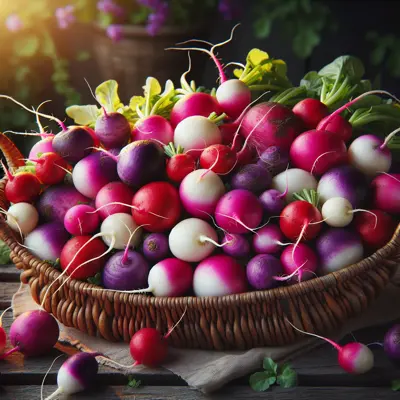
Easter Egg Radish is a vibrant heirloom variety producing multicolored roots with a stunning mix of white, pink, purple, and red striping. These small, round radishes mature in approximately 30 days, making them ideal for quick succession planting. Their defining characteristic is their mild, crisp, and exceptionally sweet flavor with significantly less peppery bite than traditional radishes, making them particularly appealing to those who prefer gentler radish varieties. The colorful appearance and pleasant taste make them both visually striking in gardens and excellent for fresh eating, salads, and garnishes.
Harvest
30d
Days to harvest
Sun
Full sun to partial shade
Zones
2–11
USDA hardiness
Height
0-3 feet
Planting Timeline
Showing dates for Easter Egg Radish in USDA Zone 7
All Zone 7 root-vegetable →Zone Map
Click a state to update dates
Easter Egg Radish · Zones 2–11
Growing Details
Succession Planting
Easter Egg radishes hit harvest in about 30 days, so succession sowing is almost mandatory if you want a steady supply rather than a single glut. In zone 7, direct sow every 10–14 days starting around March 1 and keep going through early May. Pick back up in late August and sow every 14 days through mid-October — radishes need soil temps between 50–65°F to size up well before they bolt or turn pithy and hollow.
Cut off the spring run once daytime highs are consistently above 80°F; heat pushes them to bolt before the roots develop. If a planting gets away from you and bolts anyway, pull it, scratch in some compost, and sow the next round — at 30 days to harvest, you're back in business fast.
Complete Growing Guide
Easter Egg radishes thrive in cool weather, making them perfect for early spring and fall plantings. Start preparing your garden site 2-3 weeks before your last frost date, choosing a location that receives full sun to partial shade. Work compost or well-aged manure into the top 6-8 inches of soil to create the loose, fertile environment these colorful roots need to develop properly.
Direct sow seeds ½ inch deep and ½ inch apart in rows spaced 4-6 inches apart. Never start radishes indoors – they hate transplanting and will bolt immediately. The key to perfectly round, colorful Easter Egg radishes is consistent moisture from germination through harvest. Water daily if rainfall is insufficient, keeping soil evenly moist but never waterlogged.
Thin seedlings to 1-2 inches apart once they reach 2 inches tall. This spacing allows each radish to develop its full color potential and prevents overcrowding that leads to all tops and no roots. Many gardeners skip thinning and wonder why their radishes are disappointing – don't make this mistake.
Fertilize lightly with a balanced 10-10-10 fertilizer at planting, then avoid high-nitrogen feeds which promote leafy growth at the expense of root development. A light side-dressing of compost halfway through the growing period is sufficient.
For continuous harvests, succession plant new seeds every 10-14 days until temperatures consistently exceed 70°F. In zones 7-9, resume planting in late August for fall crops. Easter Egg radishes actually develop better color intensity in cooler weather, with fall crops often showing more vibrant purples and deeper reds.
Watch for flea beetles on young seedlings – row covers during the first two weeks prevent most damage. Remove covers once plants are established, as radishes need good air circulation to prevent fungal issues. Harvest promptly at maturity to maintain the mild, sweet flavor this variety is known for.
Harvesting
Easter Egg radishes reach harvest size when roots are ¾ to 1¼ inches in diameter, typically 25-30 days from sowing. The shoulders of mature radishes will push slightly above the soil surface, revealing their colorful tops – look for vibrant purple, pink, red, or white crowns peeking through.
Test readiness by gently brushing soil away from one radish to check size. The roots should feel firm when pressed gently. Harvest in the morning when roots are fully hydrated and crisp. Pull radishes by grasping the base of the leaves close to the root and lifting straight up with a gentle twisting motion.
Don't delay harvest – Easter Egg radishes can turn pithy and lose their mild flavor within a week of peak maturity. If you notice any radish developing a spongy feel or the leaves beginning to yellow, harvest the entire row immediately. The different colored varieties in the mix may mature at slightly different rates, so check individual radishes rather than harvesting all at once.
Storage & Preservation
Fresh Easter Egg radishes store best with tops removed immediately after harvest, leaving about ½ inch of stem. Wash gently and store in perforated plastic bags in the refrigerator crisper drawer, where they'll maintain crisp texture for 2-3 weeks.
For preservation, these colorful radishes excel when quick-pickled, maintaining both their vibrant colors and crisp texture. Slice and pack in rice vinegar with a touch of sugar for stunning pink, purple, and white pickles ready in 24 hours. They also roast beautifully when harvested slightly larger – toss with olive oil and herbs for a mild, turnip-like vegetable that retains some color variation.
Freezing isn't recommended as radishes lose their characteristic crunch, becoming mushy when thawed. Instead, focus on multiple succession plantings for continuous fresh harvest rather than trying to preserve large quantities.
History & Origin
Easter Egg radishes represent a modern seed marketing innovation rather than a traditional heirloom variety. This colorful mix was developed in the 1990s by American seed companies who combined several existing European radish varieties known for their distinct colors – purple 'Plum Purple,' pink 'Pink Beauty,' traditional red varieties, and white 'Hailstone' types.
The concept capitalizes on the ancient diversity of radish colors that have existed for centuries across different growing regions. Purple radishes trace back to French varieties from the 1800s, while white radishes have Asian origins dating back over 1,000 years. By packaging these color variants together, seed companies created an appealing novelty product that particularly resonates with children and gardeners seeking visual interest.
The 'Easter Egg' name plays on the springtime planting schedule and the colorful surprise element – you never know which color you'll pull from the ground. This marketing approach has made radish growing more exciting for new gardeners while preserving genetic diversity through the cultivation of multiple radish varieties in a single packet.
Advantages
- +Exceptional visual appeal with four distinct colors from one seed packet
- +Remarkably mild, sweet flavor without the sharp bite of traditional radishes
- +Lightning-fast 25-30 day maturity perfect for impatient gardeners and children
- +Performs reliably in both spring and fall with better color development in cool weather
- +Naturally pest-resistant due to quick maturity cycle
- +Excellent container variety requiring only 4-6 inch depth
- +Superior fresh-eating quality that appeals to radish skeptics
Considerations
- -Very short harvest window before becoming pithy and losing flavor
- -Different colors may mature at slightly different rates causing uneven harvests
- -More expensive per seed than single-variety radish packets
- -Colors fade significantly when cooked, limiting culinary versatility
- -Cannot save seeds true-to-type due to mixed genetics
Companion Plants
Lettuce and spinach are the workhorses here — shallow-rooted, low-water competitors that fill gaps between radish rows without crowding the bulbing zone, and in our zone 7 Georgia garden that combination stretches the cool season by shading the soil just enough to slow warming. Chives and nasturtiums earn their spot by disrupting the approach of aphids and flea beetles (Phyllotreta spp.), which zero in on young brassica seedlings fast. Keep radishes away from turnips entirely — both are brassicas sharing the same clubroot (Plasmodiophora brassicae) and black rot pressure, and planting them together just doubles the disease load in one bed. Hyssop is a poor neighbor for a different reason: its root exudates are documented to inhibit germination in small-seeded crops, and at a 3–7 day germination window, radishes don't need any extra interference.
Plant Together
Lettuce
Shares space efficiently as lettuce grows above ground while radishes grow below
Spinach
Compatible growth habits and similar water requirements, can be interplanted
Carrots
Radishes break up soil for carrots and mature faster, allowing succession planting
Chives
Repels aphids and flea beetles that commonly attack radishes
Nasturtiums
Acts as trap crop for flea beetles and aphids, protecting radishes
Marigolds
Deters root maggots and other soil-dwelling pests that damage radish roots
Peas
Nitrogen fixation benefits radish growth, and peas provide light shade
Cucumber
Radishes may help deter cucumber beetles and striped cucumber beetles
Keep Apart
Hyssop
Inhibits growth of radishes and other brassicas through allelopathic compounds
Turnips
Competes for same soil nutrients and space, both being root brassicas
Grape vines
Radishes can stunt grape growth and affect root development
Nutrition Facts
Per 100g serving. % Daily Value based on 2,000 calorie diet. Source: USDA FoodData Central (FDC #169276)
Pests & Disease Resistance
Resistance
Generally disease resistant due to quick maturity
Common Pests
Flea beetles, root maggots, aphids
Diseases
Clubroot, black rot, downy mildew
Troubleshooting Easter Egg Radish
What you'll see, why it happens, and what to do about it.
Small, irregular holes punched through leaves starting within the first week or two after germination
Likely Causes
- Flea beetles (Phyllotreta spp.) — tiny, fast-jumping black beetles that feed heavily on young brassica leaves
- Seedlings are most vulnerable before they hit 3 inches tall
What to Do
- 1.Cover the bed with row cover (Agribon-15 or similar) at seeding and leave it on until plants are established — this is the single most effective control
- 2.If plants are already getting hammered, dust with kaolin clay to deter feeding
- 3.Delay your next sowing by a week or two if beetles are peaking; populations usually crash once heat arrives
Roots are small, distorted, or club-shaped with swollen, galled tissue — plant may wilt despite adequate water
Likely Causes
- Clubroot (Plasmodiophora brassicae) — a soil-borne pathogen that can persist in infected soil for 20 years or more
- Low soil pH (below 6.0) creates conditions where the pathogen thrives
What to Do
- 1.Test your soil pH and lime to bring it up to at least 6.8 — NC State Extension notes that raising pH significantly suppresses clubroot activity
- 2.Pull and bag affected plants immediately; do not compost them
- 3.Rotate out of all brassica-family crops (radish, turnip, kale, cabbage) for a minimum of 4 years in that bed
Yellow, angular patches on the upper leaf surface with grayish-purple fuzzy growth underneath, appearing during cool, wet stretches
Likely Causes
- Downy mildew (Peronospora parasitica) — favors temperatures between 50–65°F and high humidity, most common in spring and fall
- Dense stands with less than 1 inch between plants that trap moisture and cut off airflow
What to Do
- 1.Thin seedlings to at least 2 inches apart early — radishes sown thickly are far more prone to this
- 2.Water at the base in the morning so foliage dries before nightfall; skip overhead irrigation during cool, overcast weeks
- 3.At 30 days to harvest, the most practical move is usually to pull whatever is usable now, amend with a thin layer of compost, and direct-sow a fresh batch in a different spot
Frequently Asked Questions
How long do Easter Egg radishes take to grow?▼
Can you grow Easter Egg radishes in containers?▼
What do Easter Egg radishes taste like?▼
When should I plant Easter Egg radishes?▼
Why are my Easter Egg radishes all tops and no roots?▼
Are Easter Egg radishes good for beginners?▼
Zone-by-Zone Planting Calendar
| Zone | Indoor Start | Transplant | Direct Sow | Harvest |
|---|---|---|---|---|
| Zone 1 | — | — | June – July | July – September |
| Zone 2 | — | — | May – July | June – September |
| Zone 11 | — | — | January – February | January – December |
| Zone 12 | — | — | January – February | January – December |
| Zone 13 | — | — | January – February | January – December |
| Zone 3 | — | — | May – June | June – October |
| Zone 4 | — | — | April – June | May – October |
| Zone 5 | — | — | April – May | May – November |
| Zone 6 | — | — | April – May | May – November |
| Zone 7 | — | — | March – May | April – November |
| Zone 8 | — | — | March – April | April – December |
| Zone 9 | — | — | February – March | March – December |
| Zone 10 | — | — | January – March | February – December |
Growing Guides from Wind River Greens
Sources & References
External authority sources used in compiling this guide.
See the Methodology page for how this data is sourced, what's AI-assisted, and known limitations.