Blue Glitter
Eryngium planum
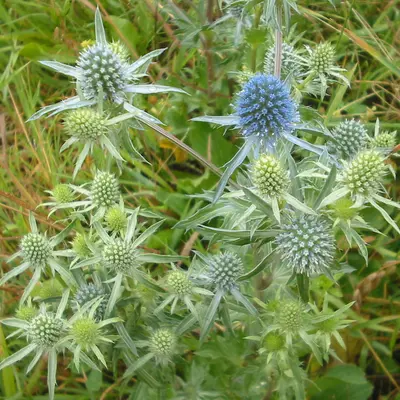
Attractive blooms with a metallic shine. Eryngium is a hardy perennial with long, sturdy stems. Tolerates hot, sunny locations. Plants produce flowers during the second year of growth and in subsequent years. Attracts bees, beneficial flies and wasps. Also known as plains eryngo and flat sea holly. Perennial in Zones 3-8. FleuroSelect Gold Award Winner.
Harvest
365d
Days to harvest
Sun
Full sun
Zones
5–9
USDA hardiness
Height
2-3 feet
Planting Timeline
Showing dates for Blue Glitter in USDA Zone 7
All Zone 7 flower →Zone Map
Click a state to update dates
Blue Glitter · Zones 5–9
Growing Details
Complete Growing Guide
Light: Full sun (6 or more hours of direct sunlight a day). Soil: Loam (Silt), Sand. Soil pH: Acid (<6.0), Alkaline (>8.0), Neutral (6.0-8.0). Drainage: Good Drainage, Occasionally Dry, Very Dry. Height: 2 ft. 0 in. - 3 ft. 0 in.. Spread: 1 ft. 0 in. - 2 ft. 0 in.. Spacing: 12 inches-3 feet. Maintenance: Low. Propagation: Division, Seed. Regions: Coastal, Mountains, Piedmont.
Harvesting
Type: Schizocarp.
Storage & Preservation
Blue Glitter flowers are best stored fresh in a cool location with indirect light. Cut stems should be placed immediately in cool water (40-50°F) to extend vase life to 2-3 weeks. Keep away from ripening fruit and direct sunlight to preserve the metallic sheen. For preservation, air-dry stems in bunches hung upside down in a dark, well-ventilated space for 2-3 weeks to create long-lasting dried arrangements. Alternatively, press individual flower heads between parchment paper under weight for 4-6 weeks for botanical crafts. Freeze-drying is also effective for preserving the structure and color.
History & Origin
Origin: E. Central Europe to Mongolia and W. Himalaya
Advantages
- +Attracts: Bees, Butterflies, Pollinators
- +Low maintenance
Companion Plants
The flowering neighbors in our database — Marigolds, Calendula, Zinnia, and Cosmos — pull their weight next to Blue Glitter by drawing parasitic wasps and hoverflies that knock back aphid and thrips pressure. Alyssum runs the same play at ground level, and in our zone 7 Georgia gardens it stays in bloom long enough to overlap with Eryngium's midsummer peak. Lavender pairs best structurally: both plants want the same dry, full-sun conditions and neither will crowd the other's roots or compete for water. Nasturtiums act as a trap crop, pulling aphids off the Eryngium and onto themselves.
Black Walnut is a hard no — the tree produces juglone from its root system, and even shallow-rooted plants 30–40 feet out can show dieback. Fennel is allelopathic to a wide range of species and is better given its own isolated corner entirely. Eucalyptus releases growth-inhibiting compounds as its leaf litter breaks down; not a plant most Georgia gardeners are dealing with, but if one's on your property, keep Blue Glitter well clear of the drip line.
Plant Together
Marigolds
Repel aphids, whiteflies, and nematodes while attracting beneficial insects
Alyssum
Attracts beneficial insects like lacewings and provides ground cover
Nasturtiums
Act as trap crops for aphids and cucumber beetles
Lavender
Repels moths, fleas, and mosquitoes with its strong fragrance
Petunias
Deter aphids, tomato hornworms, and other garden pests
Zinnia
Attract beneficial pollinators and predatory insects
Cosmos
Attract beneficial insects and provide structural support
Calendula
Repel aphids, whiteflies, and attract beneficial predatory insects
Keep Apart
Black Walnut
Produces juglone which is toxic to many flowering plants
Eucalyptus
Releases allelopathic compounds that inhibit growth of nearby plants
Fennel
Inhibits growth of most garden plants through allelopathy
Troubleshooting Blue Glitter
What you'll see, why it happens, and what to do about it.
Crown rotting at soil level, plant wilting and collapsing despite adequate water
Likely Causes
- Crown rot (Phytophthora or Pythium spp.) from poorly drained soil holding moisture against the base
- Heavy clay soil that stays waterlogged after rain
What to Do
- 1.Dig the plant, trim away blackened root tissue with a clean knife, and replant in a raised bed or berm with gritty, well-draining soil
- 2.Work coarse sand or pea gravel into the planting hole — Blue Glitter is native to dry, rocky European plains and genuinely does not want wet feet
- 3.Don't mulch right up against the crown; keep 2–3 inches clear
Leaves going pale green to yellow overall, plant growing slowly in its first season
Likely Causes
- Nitrogen deficiency in very lean or sandy soil — ironic, since Eryngium prefers poor soil, but 'poor' doesn't mean totally depleted
- Root disturbance from transplanting a taproot that doesn't appreciate being moved
What to Do
- 1.Side-dress with a thin layer of compost (not a heavy fertilizer — too much nitrogen produces floppy stems and fewer flowers)
- 2.If you direct-sowed in April and thinned to 12–18 inches apart, give it time; first-year Eryngium often just sits and builds roots before it does much above ground
- 3.Don't fertilize after July — you want it hardening off, not pushing tender growth into fall
Stems flopping over or failing to hold upright by midsummer
Likely Causes
- Overly rich or moist soil encouraging lush, weak stem growth
- Planting in partial shade rather than true full sun (6+ hours), which causes etiolation
What to Do
- 1.Relocate to your sunniest, driest bed — full sun and lean soil together produce the stiff, self-supporting stems this plant is bred for
- 2.Skip the compost amendment entirely next season and see if the plant firms up on its own
- 3.Stake with bamboo canes this year if the flowers are worth saving for cutting, but fix the site conditions before next season
Frequently Asked Questions
How long do Blue Glitter flowers last in a vase?▼
Is Blue Glitter eryngium good for beginning gardeners?▼
Can you grow Blue Glitter in containers?▼
When should I plant Blue Glitter seeds or seedlings?▼
What makes Blue Glitter flowers unique?▼
Do Blue Glitter flowers attract pollinators?▼
Zone-by-Zone Planting Calendar
| Zone | Indoor Start | Transplant | Direct Sow | Harvest |
|---|---|---|---|---|
| Zone 3 | April – May | June – July | June – August | — |
| Zone 4 | March – April | June – June | June – July | — |
| Zone 5 | March – April | May – June | May – July | — |
| Zone 6 | March – April | May – June | May – July | — |
| Zone 7 | February – March | April – May | April – June | — |
| Zone 8 | February – March | April – May | April – June | — |
| Zone 9 | January – February | March – April | March – May | — |
| Zone 10 | January – January | February – March | February – April | — |
| Zone 1 | May – June | July – August | July – September | — |
| Zone 2 | April – May | June – July | June – August | — |
| Zone 11 | January – January | January – February | January – March | — |
| Zone 12 | January – January | January – February | January – March | — |
| Zone 13 | January – January | January – February | January – March | — |
Growing Guides from Wind River Greens
Sources & References
External authority sources used in compiling this guide.
- ExtensionNC State Extension
- BreederJohnny's Selected Seeds
See the Methodology page for how this data is sourced, what's AI-assisted, and known limitations.