Chinese Long
Solanum melongena 'Chinese Long'
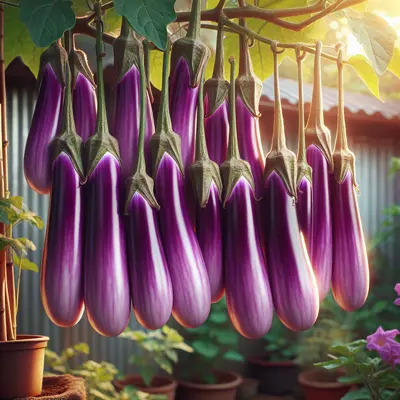
A slender Asian heirloom producing gorgeous lavender-purple fruits that can reach up to 20 inches in length. The tender, mild flesh has fewer seeds than globe varieties and never turns bitter, making it perfect for stir-fries and Asian cuisine. This productive variety is beloved by gardeners for its elegant appearance and exceptional eating quality.
Harvest
70-80d
Days to harvest
Sun
Full sun
Zones
9–12
USDA hardiness
Height
2-4 feet
Planting Timeline
Showing dates for Chinese Long in USDA Zone 7
All Zone 7 eggplant →Zone Map
Click a state to update dates
Chinese Long · Zones 9–12
Growing Details
Succession Planting
Chinese Long keeps setting fruit on the same plants all season — it's not a cut-and-come-again green that bolts on you, so there's no need to stagger plantings the way you would with lettuce or cilantro. Set transplants once in late April to May for zone 7 and they'll carry through to first frost, as long as you harvest at 8 to 10 inches before the skin dulls and the seeds harden inside.
If you want fruit at both ends of the season, start a second flat indoors in late June and set those transplants out in mid-August — they'll fruit into November in a mild year. That second round is worth the effort in the Southeast, where the first planting often sulks through July and August when daytime highs push past 95°F, then rebounds and starts setting fruit again in September anyway.
Complete Growing Guide
Chinese Long eggplants demand warm soil (at least 70°F) to germinate reliably and benefit from starting seeds 8-10 weeks before your last frost date, earlier than standard globe varieties. This cultivar thrives in full sun with consistently warm conditions and moderately fertile, well-draining soil enriched with compost. Unlike globe eggplants, Chinese Long varieties are prone to stretching and legginess when seedlings lack sufficient light, so provide bright grow lights positioned just 2-3 inches above sprouting plants. The slender fruits make these plants somewhat vulnerable to wind damage and require careful staking or caging for support, particularly in windy regions. Watch closely for spider mites during hot, dry spells—they're attracted to stressed plants and can quickly damage foliage. A practical tip: pinch out the growing tip when plants reach 12 inches tall to encourage branching and more abundant fruit production rather than a single tall stem.
Light: Full sun (6 or more hours of direct sunlight a day). Soil: Loam (Silt), Sand. Soil pH: Acid (<6.0). Drainage: Good Drainage, Moist. Height: 2 ft. 0 in. - 4 ft. 0 in.. Spread: 1 ft. 0 in. - 3 ft. 0 in.. Spacing: 3 feet-6 feet. Growth rate: Medium. Maintenance: Medium. Propagation: Seed.
Harvesting
Harvest Chinese Long eggplants when fruits reach 12-18 inches in length and display a deep, glossy lavender-purple color with a slight give when gently squeezed, indicating peak tenderness. The skin should feel smooth and firm rather than wrinkled or dull. This variety produces prolifically, so employ continuous harvesting by picking mature fruits every 2-3 days rather than waiting for a single large crop, which encourages the plant to produce additional flowers and extend your season. Begin harvesting in the morning when temperatures are coolest, as this preserves the fruit's delicate texture and mild flavor while reducing plant stress during peak summer heat.
The fruit is a berry that is egg-shaped, smooth and has glossy skin. The fruit may measure 4 to 8 inches long. It ranges in color from green to white, to purple-black when immature and when it should be eaten. As the fruit matures it gets stringy and bitter. Fruit contains numerous small, flat, pale yellow to brown seeds.
Color: Black, Gold/Yellow, Green, Purple/Lavender, White. Type: Berry. Length: > 3 inches.
Garden value: Edible, Showy
Harvest time: Fall, Summer
Edibility: The immature fruit is edible and best used in food preparation. As the fruit matures, it becomes stringy and bitter. The fruits are usually cooked and served as a vegetable. They may be prepared and eaten by frying, steaming, grilling, roasting, or stewing. They may also be stir-fried, pickled, stuffed, and fried with a light breading.
Storage & Preservation
Store fresh Chinese Long eggplants at room temperature for 2-3 days or refrigerate in the crisper drawer for up to one week. Unlike many vegetables, eggplants are sensitive to cold temperatures below 50°F, which causes pitting and faster deterioration.
For longer storage, slice and salt eggplant pieces, let drain for 30 minutes, then blanch for 3 minutes before freezing in airtight containers for up to 8 months. The tender flesh of Chinese Long makes it excellent for this method.
Dehydrate thin slices at 135°F for 8-12 hours to create eggplant chips, or preserve in oil after grilling. Chinese Long's mild flavor and low seed content also makes it ideal for pickling — slice into rounds and quick-pickle in rice vinegar with ginger and garlic for an authentic Asian condiment that keeps refrigerated for several weeks.
History & Origin
The Chinese Long eggplant belongs to the diverse Asian eggplant heritage tradition, where slender, elongated varieties have been cultivated for centuries across East and Southeast Asia. While comprehensive documentation of this specific cultivar's formal breeding origins remains limited, Chinese Long represents a continuation of landrace selection practices refined over generations by Asian gardeners and farmers who prioritized tender flesh, mild flavor, and productive plants suited to stir-fry preparation. The variety likely emerged through traditional seed-saving within Chinese agricultural communities before being formalized and introduced to Western gardeners through specialty seed companies in recent decades, joining the broader revival of heirloom Asian vegetables in contemporary home gardening.
Origin: China South-Central, Laos, Malaya, Myanmar, Thailand, Vietnam
Advantages
- +Exceptionally long fruits reach up to 20 inches for impressive visual appeal
- +Tender flesh with fewer seeds than globe varieties ensures superior eating quality
- +Mild, sweet flavor never turns bitter even when fully mature
- +Produces abundantly in 70-80 days, rewarding gardeners with consistent harvests
- +Perfect for Asian stir-fries and specialized cuisine applications
Considerations
- -Vulnerable to multiple diseases including verticillium wilt and bacterial wilt
- -Requires moderate growing difficulty with careful pest management needed
- -Susceptible to flea beetles, aphids, spider mites, and Colorado potato beetle damage
- -Long fruit shape may require extra support structures to prevent breaking
Companion Plants
Basil is the first thing I'd tuck alongside Chinese Long — the volatile oils genuinely disorient aphids and thrips at close range, and in our zone 7 Georgia climate both crops share the same late-April transplant window and thirst for consistent moisture. Marigolds — specifically French marigolds, Tagetes patula — pull double duty: they draw parasitic wasps that target hornworm egg masses and show documented suppression of root-knot nematodes (Meloidogyne spp.) with repeated planting in the same bed. Fennel is the one to keep on the far side of the property; it releases allelopathic compounds that set back most garden vegetables, and eggplant is no exception. Corn gets its own bed too — it pulls hard on soil moisture at the root zone and serves as a magnet for corn earworm (Helicoverpa zea), which will cross over to eggplant fruit without much encouragement.
Plant Together
Basil
Repels aphids, spider mites, and thrips while potentially improving eggplant flavor
Tomatoes
Share similar growing requirements and can help confuse pests that target nightshades
Peppers
Compatible nightshade family members with similar water and nutrient needs
Marigolds
Repel nematodes, aphids, and flea beetles while attracting beneficial insects
Nasturtiums
Act as trap crops for aphids and flea beetles, protecting eggplant
Oregano
Repels spider mites and provides ground cover to retain soil moisture
Catnip
Strong pest deterrent against flea beetles and aphids
Borage
Attracts pollinators and beneficial insects while reportedly improving growth
Keep Apart
Black Walnut
Produces juglone toxin that severely stunts or kills nightshade plants
Fennel
Releases allelopathic compounds that inhibit growth of most vegetables
Corn
Attracts corn borers and armyworms that also damage eggplant
Nutrition Facts
Per 100g serving. % Daily Value based on 2,000 calorie diet. Source: USDA FoodData Central (FDC #169228)
Pests & Disease Resistance
Resistance
Good general vigor, moderate disease tolerance
Common Pests
Flea beetles, aphids, spider mites, Colorado potato beetle
Diseases
Verticillium wilt, bacterial wilt, anthracnose, phomopsis blight
Troubleshooting Chinese Long
What you'll see, why it happens, and what to do about it.
Tiny, irregular shothole damage across leaves — especially on young transplants in the first 2-3 weeks after setting out
Likely Causes
- Flea beetles (Epitrix hirtipennis and related species) — they overwinter in soil and leaf litter and hit eggplant hard as soon as temperatures climb above 60°F
- Stressed or slow-establishing transplants, which can't outgrow the damage fast enough
What to Do
- 1.Cover transplants immediately with row cover (Agribon AG-19 or similar) at planting and leave it on until plants are well established — usually 3 to 4 weeks
- 2.Apply a thick straw mulch around the base; UGA Extension recommends mulching eggplant before dry spells hit, which keeps plants vigorous enough to tolerate feeding pressure
- 3.If damage covers more than 30% of leaf area on young plants, apply spinosad per label rates; remove row cover first to avoid heat buildup
Plant wilts suddenly during the day, doesn't recover overnight, and the stem shows brown discoloration when cut near the base
Likely Causes
- Bacterial wilt caused by Ralstonia solanacearum — NC State Extension notes this pathogen persists in the soil indefinitely once introduced
- Verticillium wilt (Verticillium dahliae) — a soil-borne fungus with a similar presentation, more common in beds that have grown nightshades in back-to-back seasons
What to Do
- 1.Pull and bag the entire plant including as much root mass as possible — do not compost it
- 2.Keep all nightshade family crops (tomatoes, peppers, potatoes, eggplant) out of that bed for at least 3 years; NC State Extension recommends cycling legumes through to naturally rebuild nitrogen in the meantime
- 3.If bacterial wilt has hit that spot before, grow Chinese Long in containers with fresh potting mix kept physically separated from native soil
Frequently Asked Questions
How long does Chinese Long eggplant take to grow from seed?▼
Can you grow Chinese Long eggplant in containers?▼
What does Chinese Long eggplant taste like compared to regular eggplant?▼
When should I plant Chinese Long eggplant seeds?▼
Is Chinese Long eggplant good for beginners?▼
How do you support Chinese Long eggplant plants?▼
Zone-by-Zone Planting Calendar
| Zone | Indoor Start | Transplant | Direct Sow | Harvest |
|---|---|---|---|---|
| Zone 1 | May – May | July – August | — | October – August |
| Zone 2 | April – May | June – July | — | September – September |
| Zone 11 | January – January | January – February | — | April – June |
| Zone 12 | January – January | January – February | — | April – June |
| Zone 13 | January – January | January – February | — | April – June |
| Zone 3 | April – April | June – July | — | September – October |
| Zone 4 | March – April | June – June | — | August – October |
| Zone 5 | March – March | May – June | — | August – October |
| Zone 6 | March – March | May – June | — | August – October |
| Zone 7 | February – March | April – May | — | July – September |
| Zone 8 | February – February | April – May | — | July – September |
| Zone 9 | January – January | March – April | — | June – August |
| Zone 10 | January – January | February – March | — | May – July |
Growing Guides from Wind River Greens
Sources & References
External authority sources used in compiling this guide.
See the Methodology page for how this data is sourced, what's AI-assisted, and known limitations.