Brandywine
Solanum lycopersicum
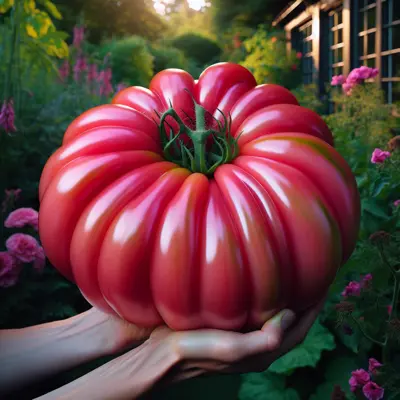
We describe Brandywine's luscious, heirloom flavor as "very rich, loud, and distinctively spicy." The large fruits, often over 1 lb., have a deep pink skin and smooth red flesh. The medium-tall, potato-leaf plant is best staked or caged. Our 'Quisenberry' strain is considered among the best. Indeterminate.
Harvest
78d
Days to harvest
Sun
Full sun
Zones
10–10
USDA hardiness
Height
1-10 feet
Planting Timeline
Showing dates for Brandywine in USDA Zone 7
All Zone 7 tomato →Zone Map
Click a state to update dates
Brandywine · Zones 10–10
Growing Details
Complete Growing Guide
We describe Brandywine's luscious, heirloom flavor as "very rich, loud, and distinctively spicy." The large fruits, often over 1 lb., have a deep pink skin and smooth red flesh. The medium-tall, potato-leaf plant is best staked or caged. Our 'Quisenberry' strain is considered among the best. Indeterminate. According to Johnny's Selected Seeds, Brandywine is 78 days to maturity, annual, open pollinated, indeterminate growth habit. Notable features: Heirloom, Organic Seeds, Plants, and Supplies.
Light: Full sun (6 or more hours of direct sunlight a day). Soil: Clay, High Organic Matter, Loam (Silt), Sand. Soil pH: Acid (<6.0), Neutral (6.0-8.0). Drainage: Good Drainage, Moist. Height: 1 ft. 0 in. - 10 ft. 0 in. Spread: 1 ft. 0 in. - 4 ft. 0 in. Spacing: 3 feet-6 feet. Growth rate: Rapid. Maintenance: High. Propagation: Seed. Regions: Coastal, Mountains, Piedmont.
Harvesting
Brandywine reaches harvest at 78 days from sowing per Johnny's Selected Seeds. Expect 1 lb. at peak. As an annual, harvest continues until frost ends the season.
The fruits are smooth, shiny, glossy, and are classified as berries. The size, shape, and color will vary depending on the variety or cultivar. The color of the fruits may be red, yellow, orange, green, purple, or pink. The fruits may contain over 100 yellow to light brown seeds.
Color: Gold/Yellow, Green, Orange, Pink, Purple/Lavender, Red/Burgundy, Variegated. Type: Berry. Length: > 3 inches. Width: > 3 inches.
Garden value: Edible, Showy
Harvest time: Fall, Summer
Edibility: The fruits or berries of the tomato are edible. They may be eaten raw, cooked, dried, or processed. They are a rich source of Vitamin A, Vitamin C, folic acid, and antioxidants. Lycopene is an antioxidant that gives the tomato its rich red color. Many plants will drop fruit when ripe or the fruit will come off easily. Tomatoes will continue to ripen once picked. Store them at room temperature.
Storage & Preservation
Store freshly harvested Brandywine tomatoes at room temperature (68–72°F) away from direct sunlight until fully ripe; refrigeration damages their complex flavor profile and should be avoided unless fruit is overripe. Keep them in a single layer on a clean cloth or cardboard to prevent bruising. Properly ripened tomatoes keep for 5–7 days at room temperature before quality declines.
Because their thin skin and high water content make them unsuitable for traditional canning, focus instead on freezing for cooked applications: core and quarter the fruit, then freeze whole on a tray before transferring to bags. You can also slow-dry them in a low oven (200°F, 6–8 hours) for concentrated flavor, though this diminishes their prime fresh-eating appeal.
Given this variety's reputation for unparalleled taste, prioritize eating them fresh within days of harvest rather than preserving. Their superior flavor is the whole point—don't compromise it by chasing shelf life.
History & Origin
Brandywine is an heirloom variety with documented breeding heritage. Brandywine is open-pollinated, meaning seed saved from healthy plants will produce true-to-type offspring. Listed in the Johnny's Selected Seeds catalog.
Origin: Peru
Advantages
- +Intensely rich, complex flavor with perfect acid balance that defines heirloom excellence
- +Large fruits often exceeding 1 lb provide substantial harvests per plant
- +Deep pink skin and smooth red flesh create visually stunning, appetizing tomatoes
- +Potato-leaf foliage and indeterminate growth allow flexible staking and season-long production
Considerations
- -Susceptible to late blight, early blight, and fusarium wilt requiring vigilant disease management
- -Prone to cracking and blossom end rot under inconsistent watering conditions
- -Difficult growing difficulty demands experienced gardeners and precise cultivation techniques
- -Long 78-day maturity requires extended growing season in short-season climates
Companion Plants
Basil pulls its weight next to Brandywine. The flavor-improvement claim is mostly word-of-mouth, but basil does draw predatory insects and its scent appears to disrupt aphids scouting for a landing spot on nearby foliage. Marigolds — French marigolds (Tagetes patula) specifically — do something more measurable: their roots secrete alpha-terthienyl, a compound that suppresses root-knot nematodes in the surrounding soil. Plant them as a dense border 12 to 18 inches from your tomato stems rather than scattering a few across the bed; a thin row won't build up enough root density to matter.
Fennel is the one to relocate entirely. Its roots release allelopathic compounds that stunt most vegetables, and tomatoes are among the more sensitive. Brassicas cause a different problem — they compete for similar soil nutrients and concentrate aphid populations, and you don't want an aphid reservoir sitting right next to a slow-maturing indeterminate like Brandywine. Keep brassicas in a separate bed, at least 10 feet away.
Plant Together
Basil
Repels aphids and whiteflies, may improve flavor
Marigold
Deters nematodes and aphids with natural compounds
Oregano
Repels spider mites and provides ground cover
Parsley
Attracts beneficial insects like hoverflies and parasitic wasps
Carrots
Help break up soil and don't compete for nutrients
Chives
Repel aphids and may reduce fungal diseases
Nasturtium
Acts as trap crop for aphids and cucumber beetles
Lettuce
Provides living mulch and utilizes different soil levels
Keep Apart
Black Walnut
Produces juglone toxin that causes tomato wilt and stunted growth
Fennel
Inhibits growth through allelopathic compounds
Brassicas
Compete for nutrients and may stunt tomato growth
Corn
Both attract corn earworm and compete for similar nutrients
Nutrition Facts
Per 100g serving. % Daily Value based on 2,000 calorie diet. Source: USDA FoodData Central (FDC #321360)
Pests & Disease Resistance
Resistance
Very limited disease resistance, requires preventive care
Common Pests
Tomato hornworm, aphids, spider mites, cutworms
Diseases
Late blight, early blight, fusarium wilt, cracking, blossom end rot
Troubleshooting Brandywine
What you'll see, why it happens, and what to do about it.
Large gray-green patches spreading across foliage fast — whole branches withering within a few days, sometimes with dark water-soaked spots on fruit
Likely Causes
- Late blight (Phytophthora infestans) — a water mold that moves aggressively in cool, wet conditions and can wipe out a planting in under a week
- Overcrowded canopy trapping humidity against leaves
What to Do
- 1.Pull and bag affected plants immediately — do not compost them; late blight spores spread by wind and water
- 2.Stop overhead watering; switch to drip or soaker hose at the base
- 3.NC State Extension recommends rotating tomatoes out of a bed for at least 3 to 4 years after a late blight occurrence — 5 to 7 years if fusarium wilt is also present in that soil
Dark, sunken leathery patch on the blossom end of fruit — shows up first on the earliest tomatoes of the season
Likely Causes
- Blossom end rot — calcium deficiency in the developing fruit, usually caused by inconsistent watering rather than a soil calcium shortage
- Root damage from deep cultivation too close to the plant
What to Do
- 1.Water deeply and consistently — Brandywine needs high, even moisture; letting the soil dry out between waterings is the most common trigger
- 2.Mulch 3 to 4 inches deep with straw to hold soil moisture steady
- 3.Get a soil test before adding calcium amendments — a pH between 6.2 and 6.8 already makes calcium available; adding lime to soil that doesn't need it creates new problems
Fat green caterpillars, 3 to 4 inches long, chewing large ragged holes in leaves and sometimes boring into fruit
Likely Causes
- Tomato hornworm (Manduca quinquemaculata) — eggs laid by a large sphinx moth; larvae can strip a branch in 48 hours
- Missed early scouting — hornworms blend in almost perfectly with green foliage
What to Do
- 1.Hand-pick by checking the undersides of stems and the top third of the plant where they feed first; drop them in soapy water
- 2.If you see white rice-shaped cocoons attached to a hornworm, leave it — those are braconid wasp pupae, and they'll kill the caterpillar and parasitize more in the area
- 3.Apply Bacillus thuringiensis (Bt) spray to foliage if populations are heavy; it works best on larvae under 1 inch long
Frequently Asked Questions
How long does Brandywine tomato take to grow?▼
Is Brandywine tomato good for beginners?▼
Can you grow Brandywine tomatoes in containers?▼
What does Brandywine tomato taste like?▼
When should I plant Brandywine tomato seeds?▼
Brandywine vs Cherokee Purple tomato - what's the difference?▼
Zone-by-Zone Planting Calendar
| Zone | Indoor Start | Transplant | Direct Sow | Harvest |
|---|---|---|---|---|
| Zone 1 | May – May | July – August | — | October – August |
| Zone 2 | April – May | June – July | — | September – September |
| Zone 11 | January – January | January – February | — | April – June |
| Zone 12 | January – January | January – February | — | April – June |
| Zone 13 | January – January | January – February | — | April – June |
| Zone 3 | April – April | June – July | — | September – October |
| Zone 4 | March – April | June – June | — | August – October |
| Zone 5 | March – March | May – June | — | August – October |
| Zone 6 | March – March | May – June | — | August – October |
| Zone 7 | February – March | April – May | — | July – September |
| Zone 8 | February – February | April – May | — | July – September |
| Zone 9 | January – January | March – April | — | June – August |
| Zone 10 | January – January | February – March | — | May – July |
Growing Guides from Wind River Greens
Sources & References
External authority sources used in compiling this guide.
- BreederJohnny's Selected Seeds
- USDAUSDA FoodData Central
See the Methodology page for how this data is sourced, what's AI-assisted, and known limitations.