Sugar Snap
Pisum sativum
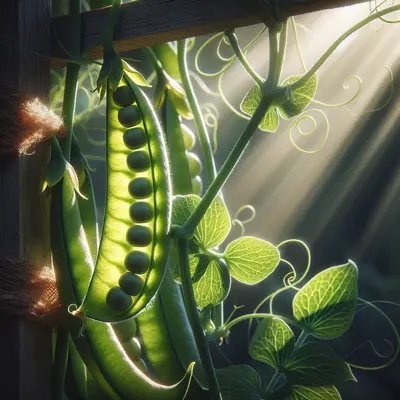
Johnny's superior strain. From an ongoing collaboration with the family of the late Dr. Calvin Lamborn, the breeder of Sugar Snap. A household name for its sweet, crisp pods, Sugar Snap germinates well in cold, wet soil, and the vigorous plants quickly produce a thick stand that requires support. Vines avg. 72" with 1 or 2 pods per node. Yields well over a long season in both hot and cold weather. Remove string from pods before cooking. Needs trellising. AAS Winner. Also available in organic seed.
Harvest
58d
Days to harvest
Sun
Full sun to partial shade
Zones
2–11
USDA hardiness
Height
12-18 inches
Planting Timeline
Showing dates for Sugar Snap in USDA Zone 7
All Zone 7 pea →Zone Map
Click a state to update dates
Sugar Snap · Zones 2–11
Growing Details
Succession Planting
Direct sow Sugar Snap every 14–21 days starting March 1 in zone 7, and cut yourself off by late April — once daytime highs hold steady at 80°F, germination gets unreliable and the plants that do establish will rush to pod before filling out. Two or three successions across March and early April is usually enough to keep a steady harvest running from May into early June.
For a fall run, sow again between late August and mid-September, timing the harvest window to land before your first hard frost (typically mid-November in zone 7). The UGA Vegetable Garden Calendar advises clearing spent early crops promptly and replanting for fall — Sugar Snap slots into that rhythm well. Fall-sown peas often outperform spring ones because pea aphid and thrips pressure tends to drop off considerably once September nights cool down.
Complete Growing Guide
Start your Sugar Snap peas by preparing the planting site in late winter. Choose a location with morning sun and some afternoon shade in hot climates, as these peas struggle once temperatures consistently exceed 70°F. Work compost into your soil to a depth of 8 inches, aiming for a pH between 6.0-7.0. If your soil tends to stay wet, create raised beds or mounded rows.
Direct sow seeds 2-4 weeks before your last frost date when soil temperature reaches 45°F. Plant seeds 1-2 inches deep and 2 inches apart in double rows spaced 6 inches apart. This spacing maximizes your harvest in limited space while ensuring good air circulation. Soak seeds overnight in lukewarm water before planting to improve germination, especially in cooler soil.
Install your trellis system before or immediately after planting. Sugar Snap peas reach 6-8 feet tall and produce heavy pods, so use sturdy materials like cattle panels, bamboo teepees, or a strong netting system. Flimsy supports will collapse under the weight of a mature crop.
Fertilize lightly at planting with a balanced fertilizer (10-10-10), then avoid nitrogen-heavy feeding since peas fix their own nitrogen through root nodules. Side-dress with compost midseason if plants appear pale, but over-fertilizing with nitrogen reduces pod production and creates excessive foliage.
Mulch around plants once they're 4 inches tall to keep roots cool and retain moisture. Sugar Snaps are particularly sensitive to heat stress, which causes flowering to stop and pods to become tough and fibrous.
The biggest mistake gardeners make is planting too late in spring. In zones 7-9, plant in February for a spring harvest before summer heat arrives. In zones 3-6, you can succession plant every 2 weeks through early spring, then again in late summer for a fall crop that often produces better than spring plantings.
Train young plants onto supports by gently wrapping tendrils around the structure. Once established, they'll climb readily on their own. Harvest regularly to keep plants producing – leaving mature pods on the vine signals the plant to stop flowering.
Harvesting
Begin harvesting Sugar Snap peas when pods are plump and rounded but still bright green and glossy. The pod should feel firm when gently squeezed, with peas inside clearly visible but not bulging against the pod walls. If the pod surface appears dull or whitish, you've waited too long and the sugars have converted to starch.
Perform the snap test: a perfectly ripe pod will break cleanly with a crisp snap when bent. Overripe pods bend without breaking and taste starchy rather than sweet. Harvest in early morning when pods are crisp and full of moisture – afternoon heat makes them limp and less flavorful.
Use both hands when harvesting to avoid damaging the vine. Hold the stem with one hand while gently twisting and pulling the pod with the other. The pod should release easily with a slight upward motion. Harvest every 2-3 days once production begins, as plants stop flowering if mature pods remain on the vine. Even slightly overripe pods should be removed to keep the plant productive, though you can shell these for the peas inside.
Storage & Preservation
Fresh Sugar Snap peas lose sweetness rapidly after harvest as sugars convert to starch. Store unwashed pods in perforated plastic bags in the refrigerator crisper drawer, where they'll maintain quality for 3-5 days. For maximum sweetness, eat within 24 hours of harvest.
For freezing, blanch whole pods in boiling water for 2 minutes, then immediately plunge into ice water. Drain thoroughly and freeze in single layers before transferring to freezer bags. Properly blanched Sugar Snaps maintain their crunch and sweetness for up to 8 months frozen.
Dehydrate tender young pods at 125°F until crisp for healthy snacks that store for months in airtight containers. You can also ferment Sugar Snap peas using a 2% salt brine, creating tangy pickled pods ready in 3-5 days at room temperature, then refrigerated for several weeks.
History & Origin
Sugar Snap peas were developed by Dr. Calvin Lamborn at Gallatin Valley Seed Company in Idaho during the 1960s. Lamborn crossed a snow pea variety with a shelling pea, initially creating what he called 'sugar pea' – a breakthrough that combined the edible pod trait of snow peas with the plump, sweet peas of shelling varieties.
The variety gained national attention when it won the All-America Selections award in 1979, becoming the first edible-pod pea to receive this honor. This recognition launched Sugar Snap peas into mainstream American gardens, where they quickly became beloved for their versatility and exceptional sweetness.
Before Sugar Snap peas, gardeners had to choose between flat, tender snow peas eaten for their pods or plump shelling peas grown for the seeds inside. Lamborn's innovation created a 'dual-purpose' pea that could be eaten whole when young or shelled when mature, revolutionizing how home gardeners approached pea cultivation. The variety's success sparked development of numerous similar edible-pod peas, but the original Sugar Snap remains the gold standard for sweetness and productivity.
Advantages
- +Exceptional dual-purpose harvest - eat pods whole when young or shell for peas when mature
- +Produces continuously for 4-6 weeks with regular harvesting
- +Thrives in cool weather when most vegetables struggle, extending garden season
- +Vigorous climbing habit maximizes yield in vertical space up to 8 feet tall
- +Superior sweetness that holds longer after harvest than other pea varieties
- +Strong disease resistance to powdery mildew and pea enation mosaic virus
- +All-America Selections winner with proven performance across diverse climates
Considerations
- -Production stops abruptly when temperatures exceed 70°F consistently
- -Requires substantial trellising due to 6-8 foot height and heavy pod load
- -Vulnerable to pea weevil damage that creates holes in pods and seeds
- -Seeds can rot in cold, wet soil below 45°F despite being frost-tolerant plants
- -Limited planting window in hot climates - must finish harvest before summer heat
Companion Plants
Carrots and radishes are the most practical neighbors here — they sit at different root depths (radishes at 6–12 inches, carrots deeper), so there's no real competition underground, and radishes pulled young actually loosen the soil around your pea roots as a side effect. Lettuce and spinach do well tucked at the base of the trellis; in our zone 7 Georgia garden, April afternoons can already push past 75°F, and those greens will take the partial shade the vines cast once things fill in. Keep onions and garlic well clear — alliums release sulfur compounds into shared soil that appear to stunt pea germination and early root development, and it's not worth finding out the hard way mid-March.
Plant Together
Carrots
Peas fix nitrogen in soil that carrots need, while carrots don't compete for space
Radishes
Break up soil for pea roots and mature quickly before peas need full space
Lettuce
Provides ground cover and benefits from nitrogen fixed by peas
Spinach
Cool season companion that utilizes nitrogen from pea roots
Marigolds
Repel aphids and other pests that commonly attack pea plants
Mint
Deters ants and aphids, though should be contained to prevent spreading
Chives
Repel aphids and improve overall garden pest management
Nasturtiums
Act as trap crop for aphids and cucumber beetles
Keep Apart
Onions
Can inhibit pea growth and nitrogen fixation by their root compounds
Garlic
May stunt pea growth through allelopathic effects
Gladiolus
Competes heavily for nutrients and can harbor thrips that damage peas
Nutrition Facts
Per 100g serving. % Daily Value based on 2,000 calorie diet. Source: USDA FoodData Central (FDC #170419)
Pests & Disease Resistance
Resistance
Good resistance to powdery mildew and pea enation mosaic virus
Common Pests
Pea aphids, thrips, pea weevil, cutworms
Diseases
Powdery mildew, downy mildew, fusarium wilt, root rot
Troubleshooting Sugar Snap
What you'll see, why it happens, and what to do about it.
White powdery coating on leaves and stems, usually showing up as the weather warms past 60°F in late spring
Likely Causes
- Powdery mildew (Erysiphe pisi) — a fungal disease that spreads through airborne spores and thrives in warm, dry days with cool nights
- Overcrowded planting at less than 2-inch spacing, restricting airflow between vines
What to Do
- 1.Strip and trash the worst-affected leaves — don't compost them
- 2.Thin plants to at least 2–4 inches apart and make sure your trellis isn't packed solid
- 3.Accept that Sugar Snap planted in March in zone 7 will likely hit mildew by late May; the real fix is timing — get them in early so you're harvesting before the worst heat and humidity arrive
Tiny clusters of soft green insects on new growth and flower buds, sometimes with sticky residue on lower leaves
Likely Causes
- Pea aphids (Acyrthosiphon pisum) — they colonize fast and can disrupt pollination by fouling the flowers
- Nearby weedy areas, which NC State Extension's IPM guidance flags as reservoirs for aphids and thrips that migrate into the crop
What to Do
- 1.Knock aphids off with a firm stream of water from a hose — do it in the morning so foliage dries before evening
- 2.Mow or clear any tall grass within a few feet of the bed before the peas emerge, not after
- 3.If populations persist, apply insecticidal soap directly to the colonies; coat the undersides of leaves, not just the tops
Frequently Asked Questions
How long do Sugar Snap peas take to grow from seed to harvest?▼
Can you grow Sugar Snap peas in containers?▼
What do Sugar Snap peas taste like compared to snow peas?▼
When should I plant Sugar Snap peas in spring?▼
Are Sugar Snap peas good for beginner gardeners?▼
Do Sugar Snap peas need to be blanched before freezing?▼
Zone-by-Zone Planting Calendar
| Zone | Indoor Start | Transplant | Direct Sow | Harvest |
|---|---|---|---|---|
| Zone 3 | — | — | May – June | June – October |
| Zone 4 | — | — | April – June | June – October |
| Zone 5 | — | — | April – May | June – November |
| Zone 6 | — | — | April – May | May – November |
| Zone 7 | — | — | March – May | May – November |
| Zone 8 | — | — | March – April | April – December |
| Zone 9 | — | — | February – March | March – December |
| Zone 10 | — | — | January – March | March – December |
| Zone 1 | — | — | June – July | July – September |
| Zone 2 | — | — | May – July | July – September |
| Zone 11 | — | — | January – February | February – December |
| Zone 12 | — | — | January – February | February – December |
| Zone 13 | — | — | January – February | February – December |
Growing Guides from Wind River Greens
Sources & References
External authority sources used in compiling this guide.
- BreederJohnny's Selected Seeds
- USDAUSDA FoodData Central
See the Methodology page for how this data is sourced, what's AI-assisted, and known limitations.