Grace Salmon
Clarkia amoena
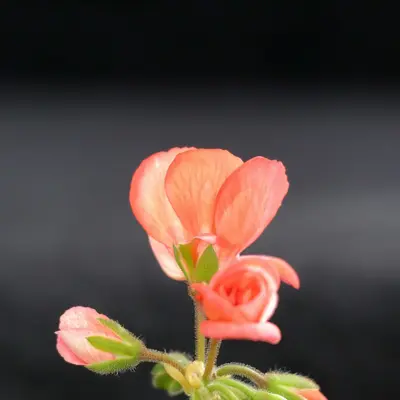
Each stem produces clusters of 1 1/2-3" wide, cup-shaped blooms. Sturdy stems and upward-facing bloom clusters work well as cut flowers. Bright, salmon-colored blooms add a cheerful and almost tropical vibe to mixed bouquets and arrangements. Supporting plants for straight stems is recommended. Also known as farewell-to-spring and satin flower.
Harvest
75-85d
Days to harvest
Sun
Full sun to partial shade
Zones
1–11
USDA hardiness
Difficulty
Easy
Planting Timeline
Showing dates for Grace Salmon in USDA Zone 7
All Zone 7 flower →Zone Map
Click a state to update dates
Grace Salmon · Zones 1–11
Growing Details
Succession Planting
Direct sow every 14–18 days starting April 1 through early May in zone 7, stopping once daytime highs are reliably above 80°F — Clarkia won't establish well in heat and will rush to seed. A February or March indoor sow gives you a first flush of bloom; follow that with one or two direct-sow rounds in early spring for a staggered display that carries from late April through June.
Don't bother with a fall succession in most zones. Clarkia amoena lacks the cold tolerance of a true hardy annual like larkspur (Consolida ajacis), which can overwinter as a seedling and bloom in spring. One well-timed spring run is what this plant is built for.
Complete Growing Guide
Each stem produces clusters of 1 1/2-3" wide, cup-shaped blooms. Sturdy stems and upward-facing bloom clusters work well as cut flowers. Bright, salmon-colored blooms add a cheerful and almost tropical vibe to mixed bouquets and arrangements. Supporting plants for straight stems is recommended. Also known as farewell-to-spring and satin flower. According to Johnny's Selected Seeds, Grace Salmon is 75 - 85 days to maturity, annual, open pollinated. Notable features: Use for Cut Flowers and Bouquets.
Light: Full sun (6 or more hours of direct sunlight a day), Partial Shade (Direct sunlight only part of the day, 2-6 hours). Soil: Sand. Drainage: Good Drainage. Spacing: Less than 12 inches. Growth rate: Rapid. Maintenance: Low. Propagation: Seed.
Harvesting
Grace Salmon reaches harvest at 75 - 85 days from sowing per Johnny's Selected Seeds. Expect 1 1/2-3" at peak. As an annual, harvest continues until frost ends the season.
Elongated, cylindrical pods, usually 4-grooved or 8-grooved, holding many tiny, cubical seeds.
Type: Capsule.
Storage & Preservation
Store cut Grace Salmon blooms in a cool location between 65-72°F with moderate humidity (50-65%). Keep stems in fresh, clean water and change water every 2-3 days. Refrigerate arrangements at night to extend vase life to 7-10 days. For preservation: air-dry by hanging bundles upside-down in a warm, dark, well-ventilated space for 2-3 weeks; press individual blooms between parchment paper under weight for floral crafts; or freeze in silicone ice cube trays with water for decorative purposes.
History & Origin
Grace Salmon is open-pollinated, meaning seed saved from healthy plants will produce true-to-type offspring. Listed in the Johnny's Selected Seeds catalog.
Origin: Western North America, Southern South America
Advantages
- +Stunning salmon blooms create tropical, cheerful mixed bouquets instantly
- +Sturdy stems and upward-facing clusters make exceptional, long-lasting cut flowers
- +Easy to grow variety perfect for novice and experienced gardeners
- +Produces abundant 1.5-3 inch cup-shaped blooms on each stem
- +Grows quickly with 75-85 day maturity from seed to harvest
Considerations
- -Requires plant support stakes to prevent stem sprawling or bending
- -Prefers well-draining soil and struggles in heavy clay conditions
- -Blooms fade quickly in extreme heat above 85 degrees
Companion Plants
Nasturtiums act as a trap crop, drawing aphids away from Clarkia's soft stems before they become your problem. Marigolds — specifically Tagetes patula — emit thiophenes from their roots that suppress soil nematodes nearby. Alyssum and catmint pull in parasitic wasps (Braconidae and Chalcididae families) that keep aphid pressure down over the season. Skip black walnut entirely: juglone leaches from roots and decomposing leaf litter far enough to stunt or kill Clarkia outright, and eucalyptus releases allelopathic compounds that interfere with germination of nearby annuals.
Plant Together
Nasturtiums
Act as trap crops for aphids and cucumber beetles
Marigolds
Repel aphids, whiteflies, and nematodes while attracting beneficial insects
Alyssum
Attracts beneficial insects like lacewings and provides ground cover
Lavender
Repels pests with strong fragrance and attracts pollinators
Petunias
Repel aphids, tomato hornworms, and squash bugs
Cosmos
Attract beneficial insects and provide visual contrast in flower beds
Zinnias
Attract butterflies and beneficial insects while providing color continuity
Catmint
Repels ants, aphids, and rodents while attracting pollinators
Keep Apart
Black Walnut
Produces juglone which is toxic to many flowering plants
Eucalyptus
Releases allelopathic compounds that inhibit growth of nearby plants
Sunflowers
Can inhibit growth of smaller flowers through allelopathy and resource competition
Troubleshooting Grace Salmon
What you'll see, why it happens, and what to do about it.
Seedlings collapse at soil level, stems pinched-looking and dark at the base
Likely Causes
- Damping off (Pythium or Rhizoctonia spp.) — fungal pathogens that thrive in cold, wet, poorly drained soil
- Overwatering or trays without drainage holes
What to Do
- 1.Ditch any affected seedlings immediately — they won't recover
- 2.Water only when the top half-inch of mix is dry, and always from below if using trays
- 3.Use a sterile seed-starting mix, not garden soil, and add a thin layer of perlite on top to keep the surface dry
Powdery white coating on leaves, usually showing up mid-summer when nights cool down
Likely Causes
- Powdery mildew (Erysiphe spp.) — spreads by airborne spores and favors humid nights with warm days
- Crowded planting with poor airflow between plants
What to Do
- 1.Space plants at least 9–12 inches apart from the start — thinning late doesn't help much
- 2.Spray affected foliage with a diluted solution of 1 tablespoon baking soda per gallon of water with a few drops of dish soap
- 3.Pull and bag heavily infected plants at season's end rather than composting them
Leaves stippled with tiny pale dots, undersides showing fine webbing
Likely Causes
- Two-spotted spider mite (Tetranychus urticae) — worst in hot, dry stretches above 85°F
- Dusty foliage conditions that discourage predatory mites like Phytoseiulus persimilis
What to Do
- 1.Hit the undersides of leaves with a strong stream of water for 3–4 days running to knock populations back
- 2.Apply insecticidal soap or neem oil in the evening to avoid burning foliage — repeat every 5–7 days
- 3.Keep plants consistently watered; drought-stressed Clarkia picks up mite infestations faster than healthy plants
Plants stop flowering and set seed aggressively by early summer, well before 85 days
Likely Causes
- Heat-induced decline — Clarkia amoena is a cool-season annual that shuts down quickly once daytime highs stay above 80–85°F
- Late direct sowing that pushes bloom time into peak summer heat
What to Do
- 1.Direct sow no later than early April in zone 7 (or equivalent) so bloom falls in the 65–75°F window
- 2.Deadhead spent flowers every 2–3 days to delay seed set and stretch bloom by a week or two
- 3.Pull it once it's done and replace with a heat-tolerant annual — Clarkia is a spring flower and doesn't pretend otherwise
Frequently Asked Questions
How long do Grace Salmon cut flowers last in a vase?▼
When should I plant Grace Salmon flowers?▼
Is Grace Salmon a good choice for beginner flower growers?▼
Can you grow Grace Salmon in containers?▼
What does Grace Salmon look like in an arrangement?▼
How tall do Grace Salmon plants grow?▼
Zone-by-Zone Planting Calendar
| Zone | Indoor Start | Transplant | Direct Sow | Harvest |
|---|---|---|---|---|
| Zone 1 | May – June | July – August | July – September | — |
| Zone 2 | April – May | June – July | June – August | — |
| Zone 11 | January – January | January – February | January – March | — |
| Zone 12 | January – January | January – February | January – March | — |
| Zone 13 | January – January | January – February | January – March | — |
| Zone 3 | April – May | June – July | June – August | — |
| Zone 4 | March – April | June – June | June – July | — |
| Zone 5 | March – April | May – June | May – July | — |
| Zone 6 | March – April | May – June | May – July | — |
| Zone 7 | February – March | April – May | April – June | — |
| Zone 8 | February – March | April – May | April – June | — |
| Zone 9 | January – February | March – April | March – May | — |
| Zone 10 | January – January | February – March | February – April | — |
Growing Guides from Wind River Greens
Sources & References
External authority sources used in compiling this guide.
- BreederJohnny's Selected Seeds
See the Methodology page for how this data is sourced, what's AI-assisted, and known limitations.