Firmament
Cynoglossum amabile
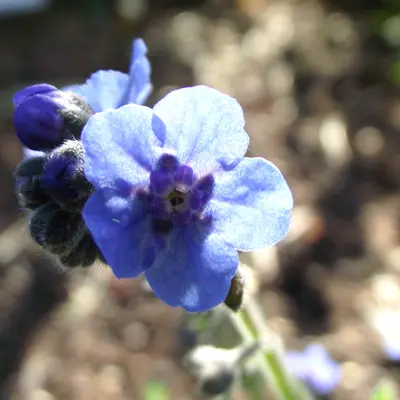
Tall, uniform plants produce a strong first cut of long, sturdy stems, followed by an abundance of branching side stems. Attracts bees. Also known as Chinese hound's tongue. AAS Winner 1935.
Harvest
80-85d
Days to harvest
Sun
Full sun to partial shade
Zones
6–9
USDA hardiness
Height
12-24 inches
Planting Timeline
Showing dates for Firmament in USDA Zone 7
All Zone 7 flower →Zone Map
Click a state to update dates
Firmament · Zones 6–9
Growing Details
Succession Planting
Direct sow every 3–4 weeks from April through early June in zone 7. Each planting runs about 80–85 days to peak bloom, so stagger accordingly if you want continuous color into fall. Stop by late June — seedlings started after that tend to hit sustained heat before they're settled in, and bloom quality drops noticeably once daytime highs stay above 85°F. In zones 8–9, a September direct sow can produce a solid late-fall flush before frost shuts things down.
Complete Growing Guide
Light: Full sun (6 or more hours of direct sunlight a day), Partial Shade (Direct sunlight only part of the day, 2-6 hours). Soil: High Organic Matter, Loam (Silt), Sand. Soil pH: Acid (<6.0), Alkaline (>8.0), Neutral (6.0-8.0). Drainage: Good Drainage, Moist. Height: 1 ft. 0 in. - 2 ft. 0 in.. Spread: 0 ft. 8 in. - 1 ft. 0 in.. Spacing: Less than 12 inches, 12 inches-3 feet. Growth rate: Medium. Maintenance: Medium. Propagation: Seed. Regions: Coastal, Mountains, Piedmont.
Harvesting
The seedpod has five large seeds with a surface that can attach to animals or birds, thereby spread into the surrounding areas.
Storage & Preservation
Firmament cut flowers are best stored in a cool location (65-72°F) with moderate humidity. Keep stems in fresh, cool water and change water every 2-3 days; they last 7-10 days as cut flowers. For long-term preservation, air-dry bunches by hanging upside-down in a dark, well-ventilated space for 2-3 weeks for dried arrangements. Alternatively, press individual flowers between parchment paper under weight for 1-2 weeks to create flat specimens for crafts or pressing books. Silica gel drying (3-5 days) preserves color and form best for dried floristry projects.
History & Origin
Origin: Central Nepal to Central China
Advantages
- +Attracts: Pollinators
Considerations
- -Toxic: Low severity
Companion Plants
Marigolds (Tagetes patula specifically) and Sweet Alyssum are the most useful neighbors — patula types deter aphids and whiteflies that occasionally land on Cynoglossum, while Alyssum pulls in hoverflies whose larvae clean up the same insects. Nasturtium works as a sacrificial trap crop, drawing aphid pressure away from nearby plantings. Yarrow and Cosmos fill comparable heights without competing hard for the same water. Give Firmament a wide berth from Black Walnut — juglone leaches from the roots and can stunt or kill annuals planted within a 50-foot radius — and from Fennel, which releases allelopathic compounds that suppress most of its neighbors regardless of distance.
Plant Together
Marigold
Repels nematodes and aphids while attracting beneficial insects
Lavender
Deters pests with fragrant oils and attracts pollinators
Nasturtium
Acts as trap crop for aphids and cucumber beetles
Sweet Alyssum
Attracts beneficial insects like lacewings and parasitic wasps
Calendula
Repels garden pests and attracts beneficial pollinators
Chives
Deters aphids and Japanese beetles with strong sulfur compounds
Yarrow
Improves soil health and attracts predatory insects
Cosmos
Attracts beneficial insects and provides natural pest control
Keep Apart
Black Walnut
Produces juglone which is toxic to many flowering plants
Eucalyptus
Releases allelopathic chemicals that inhibit nearby plant growth
Fennel
Inhibits growth of most garden plants through allelopathy
Troubleshooting Firmament
What you'll see, why it happens, and what to do about it.
Seedlings collapse at the soil line, stems pinched or rotted, first 2–3 weeks after germination
Likely Causes
- Damping-off (Pythium or Rhizoctonia spp.) — triggered by overwatering and poor airflow around seedlings
- Sowing too deep in cold, wet soil that stays saturated
What to Do
- 1.Water from below (tray-soak method) and let the top of the mix dry slightly between waterings
- 2.Run a small fan on low near your seedling trays to keep air moving
- 3.Start fresh — affected seedlings won't recover; sterilize trays with a 10% bleach solution before reusing
Leaves develop a grayish-white powdery coating, usually mid-season when nights cool and days stay warm
Likely Causes
- Powdery mildew (Erysiphe spp.) — common on Cynoglossum in humid conditions with poor air circulation
- Overcrowded planting that traps moisture on foliage
What to Do
- 1.Space plants at least 12 inches apart at transplant time — crowding is the main culprit
- 2.Spray affected leaves with diluted neem oil (2 tsp per quart of water with a few drops of dish soap) every 7–10 days
- 3.Pull the worst-affected leaves and bin them — don't compost
Bloom production stops and seed heads take over, foliage looks spent — typically around day 80–85
Likely Causes
- Natural senescence — Cynoglossum amabile is a short-lived annual that pivots hard to seed set once temperatures push past 85°F
- Letting spent flower clusters ripen signals the plant to stop producing new buds
What to Do
- 1.Deadhead every 5–7 days before seed heads harden to squeeze out 2–3 extra weeks of bloom
- 2.Keep soil consistently moist — drought stress accelerates the shift to seed set
- 3.Direct sow a second round in early summer so fresh plants are coming in as the first flush finishes
Frequently Asked Questions
How long do Firmament cut flowers last in a vase?▼
Is Firmament a good choice for beginner gardeners?▼
Can you grow Firmament flowers in containers?▼
When should I plant Firmament seeds?▼
Why is Firmament called Chinese hound's tongue?▼
What are the best ways to preserve Firmament flowers?▼
Zone-by-Zone Planting Calendar
| Zone | Indoor Start | Transplant | Direct Sow | Harvest |
|---|---|---|---|---|
| Zone 1 | May – June | July – August | July – September | — |
| Zone 2 | April – May | June – July | June – August | — |
| Zone 11 | January – January | January – February | January – March | — |
| Zone 12 | January – January | January – February | January – March | — |
| Zone 13 | January – January | January – February | January – March | — |
| Zone 3 | April – May | June – July | June – August | — |
| Zone 4 | March – April | June – June | June – July | — |
| Zone 5 | March – April | May – June | May – July | — |
| Zone 6 | March – April | May – June | May – July | — |
| Zone 7 | February – March | April – May | April – June | — |
| Zone 8 | February – March | April – May | April – June | — |
| Zone 9 | January – February | March – April | March – May | — |
| Zone 10 | January – January | February – March | February – April | — |
Growing Guides from Wind River Greens
Sources & References
External authority sources used in compiling this guide.
- ExtensionNC State Extension
- BreederJohnny's Selected Seeds
See the Methodology page for how this data is sourced, what's AI-assisted, and known limitations.