Black Magic Kale
Brassica oleracea
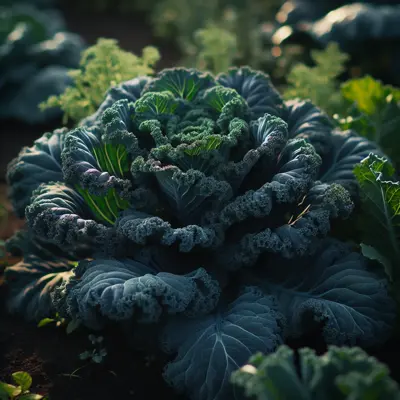
Black Magic is a well-maintained selection of Toscano kale with long, narrow leaves for attractive and tall, straight bunches. Dark blue-green leaves with beautiful savoy. Lacinato or "dinosaur" type kale.
Harvest
65d
Days to harvest
Sun
Full sun to partial shade
Zones
6–9
USDA hardiness
Height
10-24 inches
Planting Timeline
Showing dates for Black Magic Kale in USDA Zone 7
All Zone 7 brassica →Zone Map
Click a state to update dates
Black Magic Kale · Zones 6–9
Growing Details
Succession Planting
In zone 7, start Black Magic kale indoors in late February or early March and transplant out in April once nighttime temps are reliably above 28°F. From there, direct-sow a second round every 3–4 weeks through mid-May. That cadence gets you a continuous harvest from late May through November — kale sweetens noticeably after the first hard frost, so the fall flush is worth planning for rather than treating as a bonus.
Stop direct sowing by mid-May. Seeds germinated in June heat in Georgia tend to produce bitter, tough leaves by the time they hit 65 days, and bolting follows shortly after. For a strong fall crop, start seeds indoors again in late July and transplant in late August or early September, putting harvest right in the October–November window when the plants perform best.
Complete Growing Guide
Black Magic Kale thrives when planted for fall harvest, as cool temperatures intensify its sweet, mild flavor and tender texture. Direct seed in mid-summer for 65-day maturity before the first frost, or transplant seedlings 4-6 weeks prior. This Lacinato cultivar stretches easily in excessive heat, so avoid spring planting in warm climates where bolting accelerates. Position plants in full sun with rich, well-draining soil amended with compost to support the upright growth habit that reaches 10-24 inches. Monitor closely for cabbage moths and flea beetles, common Brassica pests that damage the narrow, decorative leaves; row covers during establishment provide effective organic protection. One key advantage: Black Magic's tall, straight bunches make single-stem harvesting practical—remove outer leaves progressively rather than cutting entire plants, extending productivity through winter in most regions.
Light: Full sun (6 or more hours of direct sunlight a day), Partial Shade (Direct sunlight only part of the day, 2-6 hours). Soil: Clay, Loam (Silt), Sand. Soil pH: Acid (<6.0), Neutral (6.0-8.0). Drainage: Good Drainage, Moist. Height: 0 ft. 10 in. - 2 ft. 0 in.. Spread: 1 ft. 0 in. - 2 ft. 0 in.. Spacing: 12 inches-3 feet. Growth rate: Medium. Maintenance: Medium. Propagation: Seed, Stem Cutting. Regions: Coastal, Mountains, Piedmont.
Harvesting
Black Magic kale reaches peak readiness when the dark blue-green leaves develop their characteristic savoy texture and measure 8 to 12 inches long, feeling tender yet sturdy to the touch. Harvest individual outer leaves once they achieve full color intensity and size, allowing the inner leaves to continue growing for a continuous supply throughout the season. For optimal flavor and texture, pick leaves in the morning after dew has dried but before afternoon heat intensifies the plant's peppery finish. This cultivar produces abundantly over many weeks, so avoid stripping the entire plant at once; instead, remove only the outermost mature leaves and allow the central crown to remain undisturbed. Regular harvesting encourages more productive growth and maintains the plant's attractive upright form.
The fruits dry and split when ripe.
Color: Brown/Copper, Green. Type: Siliqua. Length: > 3 inches.
Garden value: Edible
Harvest time: Fall, Summer
Edibility: The foliage is edible raw or cooked but when cooked can emit an unpleasant odor.
Storage & Preservation
Store freshly harvested Black Magic Kale in the refrigerator crisper drawer, unwashed, in perforated plastic bags to maintain humidity while preventing condensation. Properly stored leaves stay fresh for 7-10 days, though they're best used within 3-5 days for optimal flavor and nutrition.
For freezing, blanch clean leaves in boiling water for 2-3 minutes, shock in ice water, drain thoroughly, and freeze in airtight containers for up to 8 months. Black Magic Kale also dehydrates beautifully – massage leaves with olive oil and sea salt, then dehydrate at 115°F for 6-8 hours for homemade kale chips.
Fermentation works exceptionally well with this variety's sturdy leaves. Massage chopped kale with salt (3 tablespoons per 5 pounds) until it releases juices, then pack tightly in jars for lacto-fermented kale that keeps for months in the refrigerator.
History & Origin
Black Magic Kale is a modern selection of Lacinato kale, the Italian heirloom variety also known as Toscano or dinosaur kale, which has been cultivated in Tuscany for centuries. While the exact breeder and introduction date for this particular cultivar are not well-documented in readily available sources, Black Magic represents the continued refinement of traditional Lacinato genetics through contemporary seed company breeding programs. Like other named selections within this lineage, it was developed to enhance desirable traits including leaf texture, plant height, and visual appeal while maintaining the characteristically sweet and tender flavor profile that distinguishes Lacinato kales from curly varieties.
Origin: W. Europe
Advantages
- +Sweet, mild flavor with slight peppery finish appeals to diverse palates
- +Matures in just 65 days, allowing multiple harvests per season
- +Attractive dark blue-green savoy leaves create visually stunning bunches
- +Lacinato type produces long, narrow leaves perfect for bunch presentation
- +Easy difficulty rating makes it ideal for beginner gardeners
Considerations
- -Highly susceptible to cabbage worms, aphids, flea beetles, and loopers
- -Vulnerable to multiple diseases including clubroot, black leg, and downy mildew
- -Requires consistent pest and disease management for successful harvests
Companion Plants
Onions, garlic, and thyme are the companions worth prioritizing around Black Magic kale. All three are strongly aromatic, and while NC State Extension is honest that most repellant claims are unproven, the interplanting logic holds up on its own: mixing plant families breaks up large patches of brassica and slows both pest movement and disease spread by forcing insects to cross unrelated plants. Carrots and lettuce fill gaps well at 6–8 inches of spacing — shallow roots, low canopy, no competition at the 12–18-inch depth kale is working. Nasturtiums are worth tucking in at the row ends to draw aphids and cabbage loopers away from the crop itself.
Keep tomatoes well away. In our zone 7 Georgia garden both crops go in around the same April–May window, and they compete for the same water and nutrients while also carrying overlapping fungal pressure. Pole beans are the other one to skip: the nitrogen they fix tends to push kale toward soft, lush leaf growth that cabbage loopers and aphids find hard to resist. Strawberries just crowd each other out with the kale, with no payoff to either plant.
Plant Together
Nasturtiums
Trap crop for aphids and flea beetles, deters cabbage worms
Dill
Attracts beneficial wasps that parasitize cabbage worms and aphids
Onions
Repels cabbage maggots, aphids, and other brassica pests with strong scent
Garlic
Deters aphids, cabbage loopers, and flea beetles with sulfur compounds
Marigolds
Repel nematodes and various pests, may reduce whitefly populations
Lettuce
Grows well in kale's partial shade, efficient use of garden space
Carrots
Different root depths prevent competition, carrots loosen soil for kale
Thyme
Repels cabbage worms and flea beetles, attracts beneficial insects
Keep Apart
Tomatoes
Compete for similar nutrients, may stunt kale growth and reduce yields
Strawberries
Kale can inhibit strawberry growth and fruit production
Pole Beans
May shade kale excessively and compete for nitrogen in soil
Nutrition Facts
Per 100g serving. % Daily Value based on 2,000 calorie diet. Source: USDA FoodData Central (FDC #168421)
Pests & Disease Resistance
Resistance
Good resistance to downy mildew and black rot
Common Pests
Cabbage worms, aphids, flea beetles, cabbage loopers
Diseases
Clubroot, black leg, white rust, downy mildew
Troubleshooting Black Magic Kale
What you'll see, why it happens, and what to do about it.
Leaves riddled with small, irregular shotgun-pattern holes, especially on young transplants in spring
Likely Causes
- Flea beetles (Phyllotreta spp.) — tiny black jumping insects that feed aggressively on brassica seedlings
- Transplants set out before they've hardened off, making them more attractive targets
What to Do
- 1.Cover transplants immediately with row cover (Agribon-15 or similar) at planting and leave it on until plants are 8–10 inches tall and past the vulnerable stage
- 2.Direct-seed nasturtiums nearby — NC State Extension notes interplanting can interrupt pest spread by diluting the attractive odor of the preferred crop, which is a reasonable ask of a plant that costs you nothing
- 3.If damage is severe on established plants, apply spinosad-based spray in the evening to avoid harming pollinators
V-shaped yellow-to-brown lesions at leaf margins, with leaf veins darkening to black — appearing any time from transplant through midsummer
Likely Causes
- Black rot, caused by the bacterium Xanthomonas campestris — NC State Extension flags this as high destructive potential and notes the classic V-shaped lesions aren't always present, which makes early diagnosis tricky
- Contaminated seed or transplants, and overhead irrigation that splashes bacteria between plants
What to Do
- 1.Pull and bag affected leaves or entire plants — do not compost them
- 2.Switch to drip irrigation or water at the base; Xanthomonas campestris spreads readily through water splash
- 3.Rotate this bed out of all brassicas (cabbage, broccoli, collards) for at least 2 seasons — NC State Extension is explicit that crops in the same family should not follow each other in the same spot
Frequently Asked Questions
How long does Black Magic Kale take to grow?▼
Can you grow Black Magic Kale in containers?▼
Is Black Magic Kale good for beginners?▼
What does Black Magic Kale taste like compared to other kales?▼
When should I plant Black Magic Kale for fall harvest?▼
How do you prevent cabbage worms on Black Magic Kale?▼
Zone-by-Zone Planting Calendar
| Zone | Indoor Start | Transplant | Direct Sow | Harvest |
|---|---|---|---|---|
| Zone 1 | April – May | June – July | June – July | August – September |
| Zone 2 | April – May | June – July | May – July | July – September |
| Zone 11 | January – January | January – February | January – February | February – December |
| Zone 12 | January – January | January – February | January – February | February – December |
| Zone 13 | January – January | January – February | January – February | February – December |
| Zone 3 | March – April | May – June | May – June | July – October |
| Zone 4 | March – April | May – June | April – June | June – October |
| Zone 5 | February – March | April – May | April – May | June – November |
| Zone 6 | February – March | April – May | April – May | June – November |
| Zone 7 | February – March | April – May | March – May | May – November |
| Zone 8 | January – February | March – April | March – April | May – December |
| Zone 9 | January – January | February – March | February – March | April – December |
| Zone 10 | January – January | February – March | January – March | March – December |
Growing Guides from Wind River Greens
Sources & References
External authority sources used in compiling this guide.
See the Methodology page for how this data is sourced, what's AI-assisted, and known limitations.