Watermelon Charleston Gray
Citrullus lanatus 'Charleston Gray'
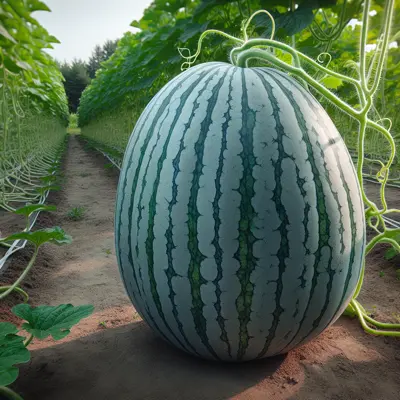
A legendary heirloom watermelon from 1954 that produces massive, elongated fruits perfect for feeding crowds at summer gatherings. This variety is prized for its exceptional disease resistance, long storage life, and sweet red flesh that stays crisp even in hot weather. Charleston Gray's distinctive gray-green color and reliable 25+ pound fruits make it a favorite for serious watermelon growers.
Harvest
85-95d
Days to harvest
Sun
Full sun
Zones
5–11
USDA hardiness
Height
4-8 inches
Planting Timeline
Showing dates for Watermelon Charleston Gray in USDA Zone 7
All Zone 7 melon →Zone Map
Click a state to update dates
Watermelon Charleston Gray · Zones 5–11
Growing Details
Complete Growing Guide
Charleston Gray demands warm soil (minimum 70°F, ideally 80°F+) and should be direct-seeded after all frost risk has passed, as transplants often struggle with this heirloom's vigorous root system. Unlike smaller melons, this variety requires 85-95 days of uninterrupted heat, making late spring planting essential in northern climates. Space plants generously—18-24 inches apart—since vines sprawl aggressively and crowding reduces air circulation, inviting powdery mildew and fusarium wilt despite the variety's reputation for disease resistance. Charleston Gray's exceptional longevity means fruits won't crack or split if left on the vine slightly too long, but monitor for anthracnose in humid conditions by removing lower leaves to improve airflow. A practical key to success: mulch heavily around plants to maintain consistent soil moisture while keeping the soil warm; this variety's massive fruit load demands reliable water without waterlogging. Full sun exposure is non-negotiable for developing the signature sweetness and firm texture this cultivar is known for.
Light: Full sun (6 or more hours of direct sunlight a day). Soil: Loam (Silt). Soil pH: Neutral (6.0-8.0). Drainage: Good Drainage, Moist. Height: 0 ft. 4 in. - 0 ft. 8 in.. Spread: 5 ft. 0 in. - 10 ft. 0 in.. Growth rate: Medium. Maintenance: Medium. Propagation: Seed. Regions: Coastal, Mountains, Piedmont.
Harvesting
Harvest Charleston Gray watermelons when the gray-green skin develops a creamy yellow spot where the fruit rests on the ground, and the melon reaches a firm, solid feel when thumped. Fruits typically mature at 25+ pounds and display a dull rather than glossy surface, indicating peak sweetness. This variety produces a single continuous harvest rather than multiple flushes, so monitor vines closely during the 85-95 day window and pick fruits as they ripen individually to encourage the plant to direct energy toward remaining developing melons. A practical timing tip: harvest in early morning when temperatures are coolest to preserve the crisp texture and maximize storage life, which is one of Charleston Gray's defining strengths.
The plant produces melons which are large modified berries called a pepo. They are rounded to oval mottled green with darker green rind. Black, cream or mottled colored elliptic seeds. Flesh general red or pink but can also be yellowish.
Color: Green. Type: Berry. Length: > 3 inches. Width: > 3 inches.
Garden value: Edible
Harvest time: Summer
Edibility: The fruit can be eaten raw or pickled. The rind is edible after cooking.
Storage & Preservation
Store freshly harvested Charleston Gray melons at 50–60°F with 85–90% humidity in a cool, well-ventilated space away from direct sunlight. Whole melons keep for 2–3 weeks under these conditions; once cut, refrigerate at 40°F and use within 3–5 days. For longer preservation, freeze cubed flesh in airtight containers or freezer bags for up to 10 months—ideal for smoothies and juicing. The firm flesh also cans well as juice or preserves using standard water-bath canning methods; process according to USDA guidelines. Dehydrating thin slices yields chewy strips suitable for snacking. This variety's dense flesh and high sugar content make it particularly suited to making melon jam, which sets reliably without excessive pectin additions.
History & Origin
Developed in 1954 by the U.S. Department of Agriculture and the University of South Carolina, Charleston Gray emerged from a deliberate breeding program seeking a disease-resistant watermelon suited to the humid southeastern climate. The variety was selected from crosses within American watermelon germplasm, prioritizing resistance to fusarium wilt and anthracnose while maintaining the large, oblong fruit type favored by commercial growers. Its introduction marked a significant advancement in heirloom watermelon breeding, establishing Charleston Gray as a cornerstone variety for both home gardeners and agricultural operations across the South. The cultivar's documented pedigree and official recognition distinguish it from many heirloom varieties with obscure origins.
Origin: Africa
Advantages
- +Produces massive 25+ pound fruits ideal for feeding large summer crowds
- +Exceptional disease resistance compared to many other watermelon varieties
- +Legendary heirloom variety with proven track record since 1954
- +Fruits store exceptionally well for extended periods after harvest
- +Sweet red flesh remains crisp and firm even in extreme heat
Considerations
- -Susceptible to bacterial fruit blotch which can devastate entire plantings
- -Requires moderate growing difficulty and experience for reliable success
- -Powdery mildew and gummy stem blight threaten plants in humid conditions
- -Long 85-95 day season limits growing in shorter climate zones
Companion Plants
Nasturtiums and French marigolds (Tagetes patula) are the two worth planting closest to your watermelon hills. Nasturtiums act as a trap crop for aphids — the bugs pile onto them instead of the melon vines, and you can pull and trash an infested plant in 30 seconds flat. French marigolds produce root exudates that suppress nematode populations in the soil over a full season, which matters on a long-season crop like Charleston Gray that sits in the ground 85–95 days. Radishes planted at the perimeter can deter cucumber beetles somewhat, and they're out of the ground long before the vines need the space.
Black walnut (Juglans nigra) is the one to keep far away — juglone leaches from the roots and decomposing hulls and is genuinely toxic to cucurbits. If you're gardening anywhere near an established walnut, test that soil before you plant. Fennel is allelopathic toward most vegetables and has no business in a melon patch. Potatoes share several of the same soil-borne disease pressures as watermelons — gummy stem blight being a shared concern — so keeping them in separate beds reduces the chance of passing pathogens back and forth.
Plant Together
Nasturtiums
Trap crop for cucumber beetles and squash bugs, deters aphids
Marigolds
Repel nematodes and cucumber beetles with strong scent
Radishes
Deter cucumber beetles and squash vine borers, loosen soil
Corn
Provides natural trellis and wind protection for sprawling vines
Bush Beans
Fix nitrogen in soil and don't compete for ground space
Catnip
Repels ants, aphids, and cucumber beetles effectively
Oregano
Deters pests and may enhance fruit flavor through companion effects
Sunflowers
Attract beneficial insects and provide shade during hottest part of day
Keep Apart
Black Walnut
Releases juglone toxin that inhibits melon growth and development
Fennel
Allelopathic properties inhibit growth of most cucurbits including watermelons
Potatoes
Compete for nutrients and may harbor similar pests like cucumber beetles
Nutrition Facts
Per 100g serving. % Daily Value based on 2,000 calorie diet. Source: USDA FoodData Central (FDC #167765)
Pests & Disease Resistance
Resistance
Excellent resistance to anthracnose and fusarium wilt
Common Pests
Cucumber beetles, squash vine borers, aphids
Diseases
Powdery mildew, bacterial fruit blotch, gummy stem blight
Troubleshooting Watermelon Charleston Gray
What you'll see, why it happens, and what to do about it.
Dark, sunken leathery spot on the blossom end of the fruit, appearing as the melon swells
Likely Causes
- Blossom-end rot — calcium deficiency in the developing fruit, usually triggered by uneven soil moisture rather than a true lack of calcium in the soil
- Overfertilization with high-nitrogen fertilizers pushing rapid early growth that the plant's calcium uptake can't keep pace with
- Soil pH outside the 6.5–6.8 range, which limits calcium availability regardless of what's already in the soil
What to Do
- 1.Mulch 3–4 inches deep with straw and water deeply and consistently — 1 to 2 inches per week — so moisture doesn't swing between wet and bone-dry
- 2.Back off nitrogen-heavy fertilizers once vines are running; side-dress with compost instead
- 3.Test your soil and lime if pH is below 6.5; NC State Extension recommends targeting 6.5 to 6.8 for this kind of crop
Wilting vines with frass (sawdust-like excrement) at the base of the stem, no obvious above-ground cause
Likely Causes
- Squash vine borer (Melittia cucurbitae) — larvae tunnel into the main stem near the crown and cut off water transport
- Cucumber beetle (Acalymma vittatum or Diabrotica undecimpunctata) feeding on roots, sometimes combined with a secondary bacterial wilt infection
What to Do
- 1.Split the stem lengthwise with a razor blade where you see frass, pull the larva out, and mound moist soil over the wound — vines can re-root if you catch it within a day or two
- 2.Cover transplants with row cover immediately after planting and leave it on until flowers open; remove at bloom so pollinators can reach the flowers
- 3.Scout for adult cucumber beetles daily once vines emerge; a rough treatment threshold for young transplants is 1 beetle per plant
Frequently Asked Questions
How long does Charleston Gray watermelon take to grow?▼
Can you grow Charleston Gray watermelon in containers?▼
Is Charleston Gray watermelon good for beginners?▼
What does Charleston Gray watermelon taste like?▼
Charleston Gray vs Crimson Sweet watermelon - what's the difference?▼
When should I plant Charleston Gray watermelon seeds?▼
Zone-by-Zone Planting Calendar
| Zone | Indoor Start | Transplant | Direct Sow | Harvest |
|---|---|---|---|---|
| Zone 3 | May – May | June – July | June – August | October – October |
| Zone 4 | April – May | June – June | June – July | September – October |
| Zone 5 | April – April | May – June | May – July | September – October |
| Zone 6 | April – April | May – June | May – July | September – October |
| Zone 7 | March – April | May – May | May – June | August – October |
| Zone 8 | March – March | April – May | April – June | August – September |
| Zone 9 | February – February | March – April | March – May | July – August |
| Zone 10 | January – February | March – March | March – April | June – August |
| Zone 1 | June – June | July – August | July – September | November – August |
| Zone 2 | May – June | July – July | July – August | October – September |
| Zone 11 | January – January | February – February | February – March | May – July |
| Zone 12 | January – January | February – February | February – March | May – July |
| Zone 13 | January – January | February – February | February – March | May – July |
Growing Guides from Wind River Greens
Sources & References
External authority sources used in compiling this guide.
See the Methodology page for how this data is sourced, what's AI-assisted, and known limitations.
More Melons
Charleston Gray Watermelon
Ali Baba Watermelon
Cantaloup Charentais
Hale's Best Cantaloupe
Cantaloupe Iroquois
Sugar Baby Watermelon
Tiger Baby Watermelon
Early Dew Honeydew