Sugar Baby Watermelon
Citrullus lanatus var. lanatus
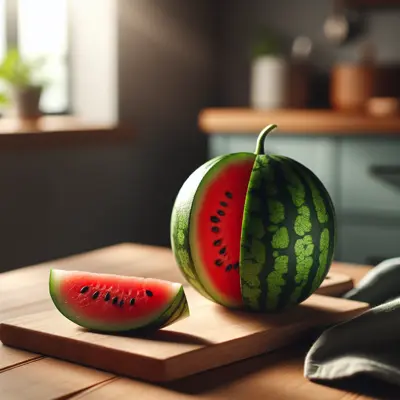
Round fruits, 6-8" in diameter, averaging 8-10 lb. Ripe melons are almost black. Good flavor. Tough rinds resist cracking. The standard of "icebox" melons for many years. Avg. 1-2 fruits/plant.
Harvest
76d
Days to harvest
Sun
Full sun
Zones
3–11
USDA hardiness
Height
4-8 inches
Planting Timeline
Showing dates for Sugar Baby Watermelon in USDA Zone 7
All Zone 7 melon →Zone Map
Click a state to update dates
Sugar Baby Watermelon · Zones 3–11
Growing Details
Succession Planting
Succession planting doesn't really apply to Sugar Baby. Each vine sets a fixed number of fruits — typically 2 to 3 per plant — and the whole crop comes in over a 2 to 3 week window around 76 days from transplant. You're not cutting and coming back like you would with lettuce or beans.
If you want to spread your harvest by a couple of weeks, start one batch of seeds indoors in late March and a second in mid-April, transplanting each when they're ready in May. That's about the most you can do. A third sowing past early June in zone 7 is risky — fruit set that late often won't hit full ripeness before September nights start shortening the season.
Complete Growing Guide
Light: Full sun (6 or more hours of direct sunlight a day). Soil: Loam (Silt). Soil pH: Neutral (6.0-8.0). Drainage: Good Drainage, Moist. Height: 0 ft. 4 in. - 0 ft. 8 in.. Spread: 5 ft. 0 in. - 10 ft. 0 in.. Growth rate: Medium. Maintenance: Medium. Propagation: Seed. Regions: Coastal, Mountains, Piedmont.
Harvesting
The plant produces melons which are large modified berries called a pepo. They are rounded to oval mottled green with darker green rind. Black, cream or mottled colored elliptic seeds. Flesh general red or pink but can also be yellowish.
Color: Green. Type: Berry. Length: > 3 inches. Width: > 3 inches.
Garden value: Edible
Harvest time: Summer
Edibility: The fruit can be eaten raw or pickled. The rind is edible after cooking.
Storage & Preservation
Store whole Sugar Baby watermelons at 50–60°F with 80–90% humidity in a cool, dark place like a root cellar or pantry; they'll keep 2–3 weeks unrefrigerated, or up to a month in the refrigerator's crisper drawer. Once cut, wrap exposed flesh tightly in plastic wrap and use within 3–5 days. For preservation, freezing works best: cube the flesh, remove seeds, and freeze on a tray before transferring to freezer bags for up to three months—ideal for smoothies. The crisp rinds pickle excellently using standard vinegar brines; process in a boiling water bath for shelf stability. You can also juice and freeze the liquid for agua fresca concentrate. Because Sugar Babies are smaller than standard varieties, they're easier to manage whole in storage and freeze faster than larger melons, making them practical for small households.
History & Origin
Origin: Africa
Advantages
- +Attracts: Bees
- +Edible: The fruit can be eaten raw or pickled. The rind is edible after cooking.
Companion Plants
Basil and French marigolds (Tagetes patula) do the most work here. Basil's volatile compounds may confuse aphids and cucumber beetles — the research is mixed — but in our zone 7 Georgia garden it at least draws pest pressure toward itself first, giving the melons a few extra days. French marigolds are worth planting for their roots as much as their flowers; a full season of them in the bed meaningfully suppresses root-knot nematode populations in the soil. Nasturtiums act as a trap crop for aphids and their sprawling habit shades the ground, slowing moisture loss from under the vines. Keep fennel out of the melon patch entirely — it's broadly allelopathic and slows neighboring plants regardless of what you're growing beside it. Sage competes for the same warm, well-drained root zone that Sugar Baby wants and brings nothing useful to the trade.
Plant Together
Basil
Repels aphids, whiteflies, and mosquitoes while potentially improving melon flavor
Marigolds
Repel cucumber beetles, aphids, and nematodes that commonly attack melons
Nasturtiums
Act as trap crop for cucumber beetles and aphids, drawing pests away from melons
Radishes
Deter cucumber beetles and squash bugs while improving soil structure
Bush Beans
Fix nitrogen in soil to benefit heavy-feeding melons without competing for space
Oregano
Repels ants, aphids, and cucumber beetles with strong aromatic compounds
Sunflowers
Provide beneficial shade and attract pollinators essential for melon fruit set
Lettuce
Acts as living mulch, conserving soil moisture that melons require
Keep Apart
Fennel
Releases allelopathic compounds that inhibit growth of melons and most garden plants
Potatoes
Compete heavily for nutrients and may harbor diseases that affect melon vines
Aromatic Herbs (Sage)
Strong oils can inhibit melon seed germination and slow vine growth
Nutrition Facts
Per 100g serving. % Daily Value based on 2,000 calorie diet. Source: USDA FoodData Central (FDC #167765)
Pests & Disease Resistance
Resistance
Good resistance to anthracnose and fusarium wilt
Common Pests
Cucumber beetles, squash bugs, aphids, spider mites
Diseases
Powdery mildew, downy mildew, bacterial wilt, gummy stem blight
Troubleshooting Sugar Baby Watermelon
What you'll see, why it happens, and what to do about it.
Dark, sunken, water-soaked spot on the blossom end of developing fruit
Likely Causes
- Blossom-end rot — calcium not reaching the fruit, usually because of uneven soil moisture rather than actual calcium deficiency in the soil
- Overfertilization with high-nitrogen fertilizer pushing too-rapid early growth
- Soil pH outside the 6.5–6.8 range, locking out calcium uptake
What to Do
- 1.Water deeply and consistently — 1 to 2 inches per week — and mulch 3–4 inches thick to hold moisture between rains
- 2.Pull back on nitrogen; a balanced 10-10-10 at planting is plenty for most soils
- 3.Test your soil and lime to pH 6.5–6.8 if needed; NC State Extension recommends this as the primary fix, not foliar calcium sprays
Vines wilting suddenly and collapsing, even with adequate soil moisture, starting 3–5 weeks after transplant
Likely Causes
- Bacterial wilt (Erwinia tracheiphila), transmitted by striped or spotted cucumber beetles feeding on the plant
- High cucumber beetle pressure early in the season before plants are established
What to Do
- 1.Cut a wilted stem near the base, press the two cut ends together for 10 seconds, then pull apart slowly — if sticky bacterial threads stretch between them, it's bacterial wilt and the plant can't be saved; pull it
- 2.Cover transplants with row cover or wire cone screens immediately after setting out, and keep them on until vines begin to run — NC State Extension specifically recommends cone screens for home plantings to block beetle feeding at the cotyledon stage
- 3.Next year, hold off transplanting until soil hits 65°F to shrink the window of beetle exposure while the plant is most vulnerable
White powdery coating on upper leaf surfaces, usually appearing mid-summer after the canopy fills in
Likely Causes
- Powdery mildew (Podosphaera xanthii) — thrives in warm days, cool nights, and low airflow
- Vines piling on top of each other from crowded planting, cutting off air circulation
What to Do
- 1.Give Sugar Baby vines at least 3–4 feet of spacing — these plants spread 6–8 feet and need room to breathe
- 2.Apply potassium bicarbonate or neem oil at first sign; once the coating covers more than 30% of the leaf surface it won't kill the plant, but sugar development in the fruit will suffer
- 3.Switch to drip or soaker hose irrigation at the base and water in the morning — wet foliage going into the evening speeds mildew along
Yellow, angular leaf spots on the upper surface with gray-purple fuzzy sporulation on the underside, spreading fast across the planting
Likely Causes
- Downy mildew (Pseudoperonospora cubensis) — a water mold that moves through a planting in under a week during wet, humid stretches
- NC State Extension notes that downy mildew arrives at unpredictable times each season depending on regional spore pressure, so the first appearance can catch you off guard
What to Do
- 1.Flip leaves and check the undersides weekly starting in July — the grayish fuzz on the lower surface shows up before the yellow spots are obvious from above
- 2.Remove and bag heavily infected leaves rather than composting them
- 3.If pressure is high, apply a copper-based fungicide on a 7-day schedule; consult the current NC Agricultural Chemicals Manual for rates approved for cucurbits
Frequently Asked Questions
How big do Sugar Baby watermelons get?▼
Can you grow Sugar Baby watermelon in containers?▼
How do you know when Sugar Baby watermelon is ripe?▼
Is Sugar Baby watermelon good for beginners?▼
How long does Sugar Baby watermelon take to grow from seed?▼
What does Sugar Baby watermelon taste like compared to regular watermelon?▼
Zone-by-Zone Planting Calendar
| Zone | Indoor Start | Transplant | Direct Sow | Harvest |
|---|---|---|---|---|
| Zone 1 | June – June | July – August | July – September | October – August |
| Zone 2 | May – June | July – July | July – August | October – September |
| Zone 11 | January – January | February – February | February – March | May – June |
| Zone 12 | January – January | February – February | February – March | May – June |
| Zone 13 | January – January | February – February | February – March | May – June |
| Zone 3 | May – May | June – July | June – August | September – October |
| Zone 4 | April – May | June – June | June – July | September – October |
| Zone 5 | April – April | May – June | May – July | August – October |
| Zone 6 | April – April | May – June | May – July | August – October |
| Zone 7 | March – April | May – May | May – June | August – September |
| Zone 8 | March – March | April – May | April – June | July – September |
| Zone 9 | February – February | March – April | March – May | June – August |
| Zone 10 | January – February | March – March | March – April | June – July |
Growing Guides from Wind River Greens
Sources & References
External authority sources used in compiling this guide.
See the Methodology page for how this data is sourced, what's AI-assisted, and known limitations.
More Melons
Charleston Gray Watermelon
Ali Baba Watermelon
Cantaloup Charentais
Watermelon Charleston Gray
Hale's Best Cantaloupe
Cantaloupe Iroquois
Tiger Baby Watermelon
Early Dew Honeydew