Moonflower
Ipomoea alba
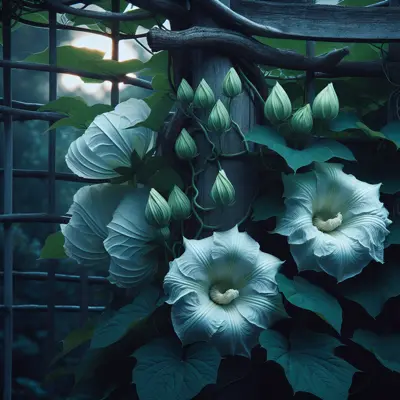
An enchanting night-blooming vine that opens massive white flowers at dusk, filling the evening air with intoxicating fragrance. These dinner-plate sized blooms unfurl in minutes as you watch, creating magical twilight moments in the garden. A fast-growing climber that can reach 15 feet in a season, perfect for covering fences, arbors, or creating a romantic evening garden backdrop.
Sun
Full sun
Zones
10–12
USDA hardiness
Height
10-30 feet
Planting Timeline
Showing dates for Moonflower in USDA Zone 7
All Zone 7 flower →Zone Map
Click a state to update dates
Moonflower · Zones 10–12
Growing Details
Complete Growing Guide
Light: Full sun (6 or more hours of direct sunlight a day). Soil: Clay, Loam (Silt), Sand. Soil pH: Acid (<6.0), Alkaline (>8.0), Neutral (6.0-8.0). Drainage: Good Drainage, Moist. Height: 10 ft. 0 in. - 30 ft. 0 in.. Spread: 3 ft. 0 in. - 6 ft. 0 in.. Spacing: 6-feet-12 feet, 12-24 feet. Growth rate: Rapid. Maintenance: Low. Propagation: Seed, Stem Cutting. Regions: Coastal.
Harvesting
Small capsule with acuminate (pointed) tip 1" long split open and contain 4 smooth white seeds
Color: Brown/Copper. Type: Capsule. Length: < 1 inch.
Storage & Preservation
Cut moonflowers last only 4-6 hours in water due to their ephemeral nature. Place stems immediately in cool water and display in a cool room away from direct light to maximize their brief beauty.
For seed preservation, allow harvested pods to dry completely in a warm, airy location for 2-3 weeks. Remove seeds from dried pods and store in paper envelopes or glass jars in a cool, dry place. Properly stored moonflower seeds remain viable for 3-5 years. Label containers with harvest date and variety information. Store in refrigerator for longest viability, or keep in a cool basement or closet where temperatures remain below 70°F. Avoid plastic bags which can trap moisture and cause seed rot.
History & Origin
Origin: Florida, Mexico, Central and South America
Advantages
- +Attracts: Moths, Pollinators
- +Fast-growing
- +Low maintenance
Considerations
- -Toxic (Seeds): Low severity
Companion Plants
Moonflower grows well alongside morning glory (Ipomoea tricolor) for a straightforward reason — they're in the same genus, share an identical pH tolerance of 6.1–7.8, and both want a vertical structure to climb, so they divide the trellis rather than fight over it. The fact that moonflower opens at dusk while morning glory closes is a side benefit, not a myth worth leaning on. Catnip and sweet alyssum planted at the base draw in parasitic wasps and hoverflies that keep aphid colonies from getting out of hand, and marigolds (Tagetes spp.) add root secretions that make the surrounding soil less welcoming to soft-bodied pests.
Black walnut (Juglans nigra) is the one genuine threat in the companion list — it releases juglone, a compound that disrupts root respiration in many plants, and moonflower doesn't tolerate it. Sunflowers produce their own allelopathic chemicals that suppress neighbors, and tomatoes, while not chemically hostile, share spider mites and several fungal diseases with moonflower, so planting them adjacent just doubles your outbreak exposure.
Plant Together
Catnip
Natural pest deterrent that repels mosquitoes and other insects
Morning Glory
Similar growing conditions and climbing habits, creates beautiful contrast with night and day blooming
Four O'Clock
Both are night-blooming plants that attract nocturnal pollinators like moths
Evening Primrose
Complementary evening bloomer that attracts beneficial night pollinators
Nicotiana
Fellow night-bloomer that attracts moths and provides pest deterrent properties
Marigold
Repels nematodes and aphids while providing daytime color contrast
Nasturtium
Acts as trap crop for aphids and cucumber beetles, protecting moonflower
Sweet Alyssum
Attracts beneficial insects and provides ground cover beneath climbing moonflower
Keep Apart
Black Walnut
Produces juglone which is toxic to many plants including moonflower
Sunflower
Allelopathic compounds inhibit growth of nearby climbing vines
Tomato
May compete for nutrients and both are susceptible to similar fungal diseases
Pests & Disease Resistance
Resistance
Generally disease resistant
Common Pests
Japanese beetles, aphids, spider mites
Diseases
Root rot in waterlogged soil, leaf spot
Troubleshooting Moonflower
What you'll see, why it happens, and what to do about it.
Leaves stippled with tiny pale dots, undersides webby, plant looking washed-out by midsummer
Likely Causes
- Spider mites (Tetranychus urticae) — thrive in hot, dry conditions above 85°F
- Drought stress weakening the plant's defenses
What to Do
- 1.Blast the undersides of leaves with a strong jet of water every 2-3 days to knock mite populations down
- 2.Keep soil consistently moist — 1 inch per week — since stressed plants are far more susceptible
- 3.Apply insecticidal soap or neem oil to the undersides of leaves in the early morning; repeat every 5-7 days for 3 applications
Stems turning brown and mushy at the soil line, plant wilting despite wet soil
Likely Causes
- Root rot — most commonly Pythium or Phytophthora species — caused by waterlogged, poorly drained soil
- Planting in a low spot that holds standing water after rain
What to Do
- 1.Pull the plant; there's no saving a moonflower once the crown is rotted
- 2.Amend the bed with coarse perlite or grit before replanting, and raise the planting area 4-6 inches if drainage is chronically poor
- 3.Water only when the top inch of soil is dry, and never let the root zone sit in standing water
Frequently Asked Questions
What time do moonflowers open?▼
How long do moonflowers take to bloom from seed?▼
Can you grow moonflowers in containers?▼
Are moonflowers poisonous?▼
Do moonflowers come back every year?▼
Why won't my moonflowers bloom?▼
Zone-by-Zone Planting Calendar
| Zone | Indoor Start | Transplant | Direct Sow | Harvest |
|---|---|---|---|---|
| Zone 3 | April – May | June – July | June – August | — |
| Zone 4 | March – April | June – June | June – July | — |
| Zone 5 | March – April | May – June | May – July | — |
| Zone 6 | March – April | May – June | May – July | — |
| Zone 7 | February – March | April – May | April – June | — |
| Zone 8 | February – March | April – May | April – June | — |
| Zone 9 | January – February | March – April | March – May | — |
| Zone 10 | January – January | February – March | February – April | — |
| Zone 1 | May – June | July – August | July – September | — |
| Zone 2 | April – May | June – July | June – August | — |
| Zone 11 | January – January | January – February | January – March | — |
| Zone 12 | January – January | January – February | January – March | — |
| Zone 13 | January – January | January – February | January – March | — |
Growing Guides from Wind River Greens
Sources & References
External authority sources used in compiling this guide.
- ExtensionNC State Extension
See the Methodology page for how this data is sourced, what's AI-assisted, and known limitations.