Poblano 'Poblano Pepper'
Capsicum annuum 'Poblano'
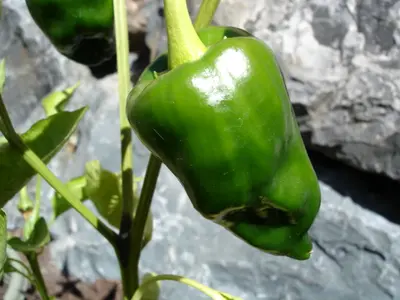
The essential mild chile for authentic Mexican cuisine, offering just enough heat to be interesting without overwhelming delicate palates. These large, heart-shaped peppers are perfect for stuffing to make chiles rellenos or roasting until charred for incredible smoky flavor. When dried, they become the beloved ancho chile that's fundamental to Mexican cooking.
Harvest
65-80d
Days to harvest
Sun
Full sun
Zones
4–11
USDA hardiness
Height
1-3 feet
Planting Timeline
Showing dates for Poblano 'Poblano Pepper' in USDA Zone 7
All Zone 7 pepper →Zone Map
Click a state to update dates
Poblano 'Poblano Pepper' · Zones 4–11
Growing Details
Complete Growing Guide
Poblano peppers require consistent warmth throughout their 65-80 day growing season, so plant transplants only after all frost danger passes and soil reaches 70°F minimum. These cultivars prefer rich, well-draining soil amended with compost and benefit from steady moisture rather than irregular watering, which can cause blossom-end rot—a particular concern for their large fruit. Poblanos tolerate partial shade better than many pepper varieties, making them suitable for slightly less sunny locations, though six to eight hours of direct sun remains ideal. Watch for spider mites and aphids, which thrive in hot, dry conditions; preventative overhead misting helps deter these pests while maintaining the consistent humidity poblanos prefer. One practical tip: stake or cage plants early, as their heavy fruit load can cause branch breakage if plants aren't supported by mid-season. Harvest peppers green for maximum plant production, or allow them to mature to deep red for sweeter, more complex flavor.
Light: Full sun (6 or more hours of direct sunlight a day). Soil: Clay, High Organic Matter, Loam (Silt), Sand. Soil pH: Acid (<6.0), Alkaline (>8.0), Neutral (6.0-8.0). Drainage: Good Drainage. Height: 1 ft. 0 in. - 3 ft. 8 in.. Spread: 0 ft. 6 in. - 1 ft. 0 in.. Spacing: 12 inches-3 feet. Growth rate: Medium. Maintenance: Low. Propagation: Seed. Regions: Coastal, Mountains, Piedmont.
Harvesting
Poblano peppers reach peak harvest when they develop a deep, glossy dark green color and measure 3–4 inches long with a firm, thick-walled texture that resists gentle pressure. The peppers are ready to pick once they feel substantial in your hand and the skin has a waxy sheen, typically around 65–80 days after transplanting. For continuous harvests throughout the season, pick peppers regularly at this green stage, which encourages the plant to produce more fruit rather than focusing energy on fewer mature pods. If you prefer to wait for the red stage (indicating full ripeness and sweeter flavor), allow some peppers to remain on the plant an additional 2–3 weeks, though green poblanos are ideal for traditional chiles rellenos. A key timing tip: harvest in early morning when peppers are firm and full of moisture, avoiding the heat of midday when they may be slightly limp.
Fruits are a non-pulpy berry and vary considerably across cultivars. Some are long, thin, bright red, and spicy; others are thick, large, and sweet-tasting; others still are small and in ornamental shapes and colors, grown as decoration.
Color: Black, Gold/Yellow, Green, Orange, Red/Burgundy. Type: Berry. Length: 1-3 inches. Width: < 1 inch.
Garden value: Edible, Good Dried, Showy
Harvest time: Summer
Edibility: Fruits edible, but spiciness is unpredictable in intensity.
Storage & Preservation
Store fresh poblano peppers in a perforated plastic bag in the refrigerator's crisper drawer at 45–50°F with 90–95% humidity, where they'll keep for two to three weeks. For longer storage, freezing works well: roast and peel the peppers, then freeze them in airtight containers or vacuum-sealed bags for up to eight months. Drying is ideal for this variety since poblanos transform into prized ancho chiles with concentrated flavor—hang whole peppers in a warm, well-ventilated space until leathery, then store in airtight containers away from light. Roasting and freezing in segments is practical for quick weeknight use. Canning as strips or in salsas requires proper pressure-canning techniques due to low acidity. A useful tip: if you're drying poblanos for ancho production, harvest at full maturity when peppers turn deep red for the richest, most authentic flavor and color.
History & Origin
The poblano pepper originates from Puebla, Mexico, where it has been cultivated for centuries as part of indigenous and colonial Mexican farming traditions. Like most Capsicum annuum varieties, it descends from wild chili peppers domesticated in Mesoamerica thousands of years ago, though specific breeder information and formal documentation of its development remain sparse in historical records. The variety became commercially significant throughout Mexico and the American Southwest during the twentieth century, gaining prominence in both fresh and dried (ancho) forms. Its widespread cultivation today reflects its deep roots in Mexican culinary heritage rather than formal breeding programs, making it a true heirloom pepper shaped by generations of traditional selection and cultivation practices.
Origin: Tropical North and South America
Advantages
- +Perfect heart shape makes poblanos ideal for stuffing chiles rellenos.
- +Mild heat level appeals to heat-sensitive eaters and families.
- +Dries into prized ancho chiles for authentic Mexican cooking.
- +Large peppers produce substantial yields per plant over season.
- +Rich, smoky flavor develops beautifully when roasted and charred.
Considerations
- -Susceptible to multiple serious diseases including verticillium wilt and mosaic virus.
- -Requires 65-80 days to maturity, a lengthy growing season commitment.
- -Vulnerable to pepper maggot infestations that can ruin entire crops.
- -Needs consistent warmth and may struggle in cool climates.
Companion Plants
Marigolds — French marigolds (Tagetes patula) specifically — produce root exudates that suppress soil nematodes, and their scent does seem to confuse some flying pests. Basil fits well alongside poblanos for spacing and airflow reasons; it's a shallow-rooted annual that won't crowd pepper roots down in the 12–18 inch range where poblanos feed. Onions and carrots make decent row companions for the same reason — they occupy a different soil depth and leave the mid-profile alone. One practical note from NC State Extension: hot and sweet peppers cross-pollinate readily via insects, so if you're saving seed, don't plant poblanos within a few rows of sweet bells — the capsaicin gene is dominant and will show up in the next generation.
Fennel is the companion to pull off your list entirely. It's allelopathic to a wide range of vegetables, and peppers are no exception — stunted growth is the typical result. Black walnut is a harder structural problem: the tree releases juglone through its roots and surface debris over a wide area, and nightshades rank among the most sensitive plant families to it. If there's a black walnut on or near your property, plant your poblanos as far from its drip line as your space allows.
Plant Together
Basil
Repels aphids, spider mites, and thrips while potentially enhancing pepper flavor
Marigold
Deters nematodes, aphids, and whiteflies with natural pest-repelling compounds
Tomato
Similar growing requirements and can share support structures, mutual pest confusion
Oregano
Repels cucumber beetles and provides ground cover to retain soil moisture
Parsley
Attracts beneficial insects like hoverflies and parasitic wasps that control pests
Carrots
Deep roots don't compete with shallow pepper roots and help break up soil
Onions
Sulfur compounds repel aphids, spider mites, and other common pepper pests
Nasturtium
Acts as trap crop for aphids and cucumber beetles while attracting predatory insects
Keep Apart
Black Walnut
Releases juglone toxin that stunts growth and can kill pepper plants
Fennel
Allelopathic chemicals inhibit growth and development of pepper plants
Kohlrabi
Competes heavily for nutrients and can stunt pepper growth through root competition
Apricot Tree
Can harbor verticillium wilt which spreads to peppers through soil
Nutrition Facts
Per 100g serving. % Daily Value based on 2,000 calorie diet. Source: USDA FoodData Central (FDC #2747662)
Pests & Disease Resistance
Resistance
Moderate resistance to common pepper diseases
Common Pests
Aphids, spider mites, pepper maggot, cutworms
Diseases
Bacterial spot, verticillium wilt, mosaic virus
Troubleshooting Poblano 'Poblano Pepper'
What you'll see, why it happens, and what to do about it.
Sunken, dark, leathery patches on the bottom or side of the fruit — sometimes with gray-black mold developing on top
Likely Causes
- Blossom end rot — localized calcium deficiency in the developing fruit
- Inconsistent watering or drought stress preventing calcium uptake
- High ammonium-nitrogen fertilizer levels interfering with calcium availability
What to Do
- 1.Water consistently — 1 to 1.5 inches per week — and mulch the bed to hold moisture between waterings
- 2.Get a soil test before adding calcium amendments; if pH is already above 7.0, adding lime can cause other problems
- 3.Back off high-nitrogen synthetic fertilizers, especially anything heavy on ammonium; switch to a balanced or low-nitrogen blend once plants are flowering
Small, water-soaked spots on leaves and fruit that darken and turn raised or scabby, sometimes with yellowing around the lesions
Likely Causes
- Bacterial spot (Xanthomonas campestris pv. vesicatoria) — spreads fast in warm, wet weather
- Overhead irrigation or rain splash moving bacteria from soil or infected debris onto foliage
What to Do
- 1.Switch to drip irrigation if you're overhead watering; keeping foliage dry cuts transmission significantly
- 2.Remove and bag — don't compost — heavily infected leaves and fruit
- 3.Rotate this bed out of all nightshades (tomatoes, eggplant, potatoes, peppers) for at least 2 seasons; NC State Extension's organic gardening guidance specifically recommends rotation to break nightshade disease cycles
Colonies of small soft-bodied insects clustered on new growth and leaf undersides; leaves curling or distorted; sticky residue on stems
Likely Causes
- Aphids (commonly Myzus persicae, the green peach aphid) — populations double fast in warm weather
- Ants farming aphid colonies and driving off predators like lacewings and lady beetles
What to Do
- 1.Knock aphids off with a hard stream of water — do this in the morning so foliage dries by evening
- 2.If populations persist after 2–3 days, spray insecticidal soap directly on the clusters; coat the undersides of leaves where they concentrate
- 3.Disrupt ant access to the plants with diatomaceous earth around the base so beneficial predators can reach the aphids
Frequently Asked Questions
How long does poblano pepper take to grow from seed?▼
Can you grow poblano peppers in containers?▼
What does a poblano pepper taste like?▼
When should I plant poblano peppers?▼
Are poblano peppers good for beginners?▼
Poblano vs Anaheim peppers — what's the difference?▼
Zone-by-Zone Planting Calendar
| Zone | Indoor Start | Transplant | Direct Sow | Harvest |
|---|---|---|---|---|
| Zone 3 | April – April | June – July | — | August – October |
| Zone 4 | March – April | June – June | — | August – October |
| Zone 5 | March – March | May – June | — | August – October |
| Zone 6 | March – March | May – June | — | July – September |
| Zone 7 | February – March | April – May | — | July – September |
| Zone 8 | February – February | April – May | — | June – August |
| Zone 9 | January – January | March – April | — | May – July |
| Zone 10 | January – January | February – March | — | May – July |
| Zone 1 | May – May | July – August | — | September – August |
| Zone 2 | April – May | June – July | — | September – September |
| Zone 11 | January – January | January – February | — | April – June |
| Zone 12 | January – January | January – February | — | April – June |
| Zone 13 | January – January | January – February | — | April – June |
Growing Guides from Wind River Greens
Sources & References
External authority sources used in compiling this guide.
See the Methodology page for how this data is sourced, what's AI-assisted, and known limitations.
More Peppers
Carolina Reaper
Sweet Pepper 'Carmen'
Ghost Pepper 'Bhut Jolokia'
Scotch Bonnet 'Scotch Bonnet Orange'
Chocolate Habanero
Sweet Italian Pepper 'Marconi Rosso'
Purple Beauty Bell Pepper
Mad Hatter