Music Hardneck Garlic
Allium sativum var. ophioscorodon 'Music'
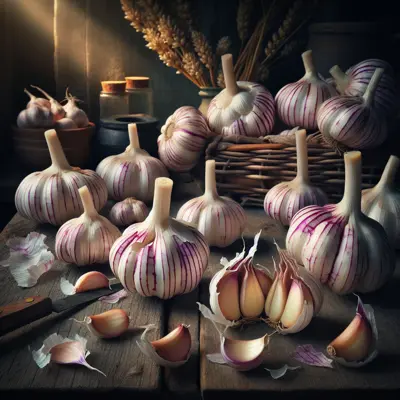
The gold standard of hardneck garlic varieties, prized by both home gardeners and gourmet chefs for its exceptional flavor and reliability. Music produces large, easy-to-peel cloves with a perfect balance of heat and sweetness that intensifies when cooked. This Italian heirloom is incredibly cold-hardy and stores beautifully for 8-10 months.
Harvest
240-270d
Days to harvest
Sun
Full sun
Zones
4–9
USDA hardiness
Height
12-18 inches
Planting Timeline
Showing dates for Music Hardneck Garlic in USDA Zone 7
All Zone 7 allium →Zone Map
Click a state to update dates
Music Hardneck Garlic · Zones 4–9
Growing Details
Complete Growing Guide
Light: Full sun (6 or more hours of direct sunlight a day). Soil: Clay, High Organic Matter, Loam (Silt), Sand. Soil pH: Neutral (6.0-8.0). Drainage: Good Drainage, Moist. Height: 1 ft. 0 in. - 1 ft. 6 in.. Spread: 0 ft. 8 in. - 1 ft. 0 in.. Spacing: Less than 12 inches, 12 inches-3 feet. Growth rate: Medium. Maintenance: Medium. Regions: Coastal, Mountains, Piedmont.
Harvesting
Capsule on top of the flowering stalk. Splits open when ripe.
Color: Cream/Tan. Type: Capsule.
Storage & Preservation
Cure Music garlic immediately after harvest by laying bulbs in a single layer in a warm (80-85°F), well-ventilated area for 2-3 weeks until outer skins are papery and necks are completely dry. Once cured, store in mesh bags or braided bunches in a cool (60-65°F), dry location with good air circulation.
Properly cured Music garlic stores 8-10 months—longer than most hardneck varieties. Avoid refrigerating whole bulbs, which triggers sprouting. For preservation, Music's robust flavor holds up beautifully when fermented into black garlic or preserved in oil (acidified for safety). Dehydrated Music reconstitutes well and maintains much of its complex flavor profile. Freeze whole peeled cloves in ice cube trays with olive oil for convenient cooking portions.
History & Origin
Origin: Asia and Iran
Considerations
- -Toxic: Low severity
- -Causes contact dermatitis
Companion Plants
Garlic's sulfur compounds — the same chemistry that makes it sharp on the tongue — deter aphids and spider mites, which is why tomatoes, cabbage, and roses all benefit from a row nearby. Carrots and lettuce sit alongside it without issue; neither competes at the shallow 6-inch depth where Music's bulbs form. Give beans, peas, and asparagus their own section of the garden, though. Garlic exudes allelopathic compounds from its roots that measurably suppress legume germination, and asparagus crowns — already slow to produce — don't need the additional setback.
Plant Together
Tomatoes
Garlic repels aphids, spider mites, and other pests that commonly attack tomatoes
Cabbage
Garlic deters cabbage worms, cabbage loopers, and aphids that damage brassicas
Carrots
Garlic repels carrot rust flies while carrots help loosen soil for garlic bulb development
Lettuce
Garlic's sulfur compounds deter slugs and aphids that commonly attack leafy greens
Roses
Garlic repels aphids, Japanese beetles, and may reduce fungal diseases like black spot
Spinach
Garlic protects against aphids and leaf miners while both have similar water requirements
Peppers
Garlic deters aphids, spider mites, and various insects that attack pepper plants
Strawberries
Garlic repels slugs, aphids, and spider mites that damage strawberry plants
Keep Apart
Beans
Garlic's allelopathic compounds can inhibit nitrogen fixation and stunt bean growth
Peas
Garlic interferes with the symbiotic relationship between peas and nitrogen-fixing bacteria
Asparagus
Garlic's strong allelopathic properties can inhibit asparagus spear development and root growth
Nutrition Facts
Per 100g serving. % Daily Value based on 2,000 calorie diet. Source: USDA FoodData Central (FDC #1104647)
Pests & Disease Resistance
Resistance
Good resistance to white rot and fusarium, very cold hardy
Common Pests
Onion thrips, bulb mites, nematodes
Diseases
White rot, fusarium basal rot, rust
Troubleshooting Music Hardneck Garlic
What you'll see, why it happens, and what to do about it.
Leaves show silver streaking or stippling, tips drying out before bulb has sized up
Likely Causes
- Onion thrips (Thrips tabaci) — tiny, pale insects feeding in the leaf folds
- Hot, dry spells that stress the plant and favor thrips population explosions
What to Do
- 1.Spray foliage with insecticidal soap every 5-7 days, getting into the leaf folds where thrips hide
- 2.Keep the bed consistently watered at 1 inch per week during active growth — stressed plants take more damage
- 3.After harvest, clear all debris from the bed; thrips overwinter in plant material
Bulbs pulled at harvest are soft at the base, with brown or water-soaked rot starting at the roots
Likely Causes
- Fusarium basal rot (Fusarium oxysporum f. sp. cepae) — soil-borne fungus, worst in warm or waterlogged soil
- Watering too close to harvest — Music needs the last 2-3 weeks dry so the wrappers cure properly
What to Do
- 1.Cut irrigation once roughly half the leaves have browned — don't wait the full 2-3 weeks if the soil is already wet
- 2.Cure harvested bulbs in a dry spot with good airflow at 75-80°F for at least 3-4 weeks before storage
- 3.Rotate garlic out of any bed that's had onion family crops in the last 3 years
Orange or rusty pustules appear on the leaves, usually mid-spring as temperatures warm
Likely Causes
- Garlic rust (Puccinia allii) — a fungal disease that spreads by wind-borne spores and moves fast in humid conditions
- Dense planting at less than 4 inches spacing, which traps moisture between leaves
What to Do
- 1.Pull and trash (not compost) heavily infected leaves as soon as you spot them
- 2.Plant cloves no closer than 4-6 inches apart so air can move through the bed
- 3.A sulfur-based fungicide applied at first sign of rust can slow spread — follow label rates and stop at least 2 weeks before harvest
Frequently Asked Questions
How long does Music hardneck garlic take to grow?▼
Can you grow Music garlic in containers?▼
Is Music hardneck garlic good for beginners?▼
What does Music garlic taste like compared to store-bought?▼
When should I remove garlic scapes from Music plants?▼
Music vs German Extra Hardy garlic - what's the difference?▼
Zone-by-Zone Planting Calendar
| Zone | Indoor Start | Transplant | Direct Sow | Harvest |
|---|---|---|---|---|
| Zone 3 | — | — | May – June | December – October |
| Zone 4 | — | — | April – June | December – October |
| Zone 5 | — | — | April – May | December – November |
| Zone 6 | — | — | April – May | December – November |
| Zone 7 | — | — | March – May | December – November |
| Zone 8 | — | — | March – April | November – December |
| Zone 9 | — | — | February – March | October – December |
| Zone 10 | — | — | January – March | October – December |
| Zone 1 | — | — | June – July | December – September |
| Zone 2 | — | — | May – July | December – September |
| Zone 11 | — | — | January – February | September – December |
| Zone 12 | — | — | January – February | September – December |
| Zone 13 | — | — | January – February | September – December |
Growing Guides from Wind River Greens
Sources & References
External authority sources used in compiling this guide.
See the Methodology page for how this data is sourced, what's AI-assisted, and known limitations.