Broccoli Microgreens
Brassica oleracea
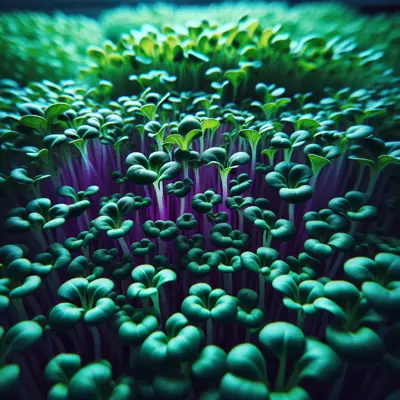
Mildly spicy broccoli flavor. One tablespoon of seed yields approx. 1-1 1/2 cups of sprouts. All of Johnny's high-germination sprouting seeds have tested negative for the presence of E. coli 0157 and Salmonella.
Harvest
7-10d
Days to harvest
Sun
Full sun to partial shade
Zones
6–9
USDA hardiness
Height
10-24 inches
Planting Timeline
Showing dates for Broccoli Microgreens in USDA Zone 7
All Zone 7 microgreen →Zone Map
Click a state to update dates
Broccoli Microgreens · Zones 6–9
Growing Details
Succession Planting
Broccoli microgreens go from sow to harvest in 7–10 days, which makes succession practically built-in. Start a new tray every 5–7 days and you'll have a continuous cut without any gap. There's no bolting threshold to manage — since you're harvesting at the cotyledon stage, the plant never gets far enough along to react to temperature the way a full-season broccoli head would.
The main limit is tray capacity and light. Under a decent LED grow light (aim for at least 2,000–4,000 lux at tray level), you can run 3–4 trays in rotation year-round with no seasonal adjustment needed.
Complete Growing Guide
Broccoli microgreens thrive in the 7–10 day window, making them faster than many brassica cousins, so monitor germination closely to avoid overshooting maturity. These seedlings prefer consistent moisture and moderate light; excessive heat or low humidity can trigger premature bolting or cause the characteristic "stretch" where stems elongate excessively before true leaf development. Unlike slower microgreens, broccoli's rapid growth means you'll need to increase air circulation early to prevent fungal issues, particularly damping-off in the first 3–4 days post-germination. The mild spicy flavor intensifies only if you harvest at peak readiness around day 8–9, before the cotyledons fully yellow. One practical tip: use a shallow tray with pre-moistened growing medium and maintain temperatures between 65–72°F to prevent the leggy growth this cultivar is prone to when conditions swing too warm.
Light: Full sun (6 or more hours of direct sunlight a day), Partial Shade (Direct sunlight only part of the day, 2-6 hours). Soil: Clay, Loam (Silt), Sand. Soil pH: Acid (<6.0), Neutral (6.0-8.0). Drainage: Good Drainage, Moist. Height: 0 ft. 10 in. - 2 ft. 0 in.. Spread: 1 ft. 0 in. - 2 ft. 0 in.. Spacing: 12 inches-3 feet. Growth rate: Medium. Maintenance: Medium. Propagation: Seed, Stem Cutting. Regions: Coastal, Mountains, Piedmont.
Harvesting
Broccoli microgreens reach peak harvest when the cotyledons have fully expanded and turned a vibrant true-green color, typically around day 7-10, while the tiny true leaves begin emerging from the center. At this stage, the stems should feel firm and crisp to the touch, and the overall height will range from 10-24 inches depending on growing conditions. For continuous harvesting, snip individual stems just above soil level using clean scissors rather than pulling the entire crop, allowing remaining plants to regenerate for a second, smaller cutting. Single-harvest growers should cut the entire crop at once when the color is most vivid but before the true leaves become too developed, as this timing captures the optimal balance of mild broccoli flavor with that characteristic peppery bite and ensures the crispest texture for your culinary use.
The fruits dry and split when ripe.
Color: Brown/Copper, Green. Type: Siliqua. Length: > 3 inches.
Garden value: Edible
Harvest time: Fall, Summer
Edibility: The foliage is edible raw or cooked but when cooked can emit an unpleasant odor.
Storage & Preservation
Fresh broccoli microgreens store best when completely dry after washing. Wrap them loosely in paper towels, then place in a breathable container or perforated plastic bag in your refrigerator's crisper drawer. Properly stored, they maintain peak quality for 5-7 days at 32-38°F.
Unlike mature vegetables, microgreens don't preserve well through traditional methods like freezing or canning, which destroy their delicate texture. However, you can dehydrate them at 95°F for 4-6 hours to create a nutritious powder for smoothies—though you'll lose that fresh, crisp appeal.
For maximum nutrition, use microgreens fresh within 2-3 days of harvest. Their vitamin C content degrades rapidly after cutting. If you notice any yellowing leaves or slimy texture, discard the entire batch as microgreens spoil quickly once deterioration begins.
History & Origin
Broccoli microgreens derive from *Brassica oleracea*, the same species that gave rise to cabbage, cauliflower, and heading broccoli through centuries of European cultivation. While the specific microgreen variety lacks documented breeder attribution or introduction year in readily available sources, the practice of sprouting brassicas for consumption spans centuries in Asian and European cuisines. Modern microgreen production emerged as a commercial niche in North America during the 1980s and 1990s, with Johnny's Selected Seeds becoming a major supplier of high-quality sprouting seed. The microgreen format represents an extension of traditional sprouting practices applied to conventional broccoli cultivars, capitalizing on the young seedling's concentrated nutritional profile and milder flavor compared to mature florets.
Origin: W. Europe
Advantages
- +High germination rate tested negative for E. coli and Salmonella
- +Excellent yield of 1-1.5 cups from just one tablespoon seed
- +Quick harvest in only 7-10 days with minimal effort required
- +Distinctive mild broccoli flavor with pleasant peppery bite and crisp texture
- +Easy difficulty level makes broccoli microgreens ideal for beginners
Considerations
- -Prone to damping off disease in overly moist growing conditions
- -Fungus gnats and aphids frequently infest indoor broccoli microgreen crops
- -Requires careful ventilation and watering to prevent mold development
- -Sensitive to overwatering which quickly causes rot and crop failure
Companion Plants
Broccoli microgreens do fine alongside other fast-growing trays like radish microgreens and arugula microgreens — not because of any chemical interaction, but because they share the same growing conditions (pH 5.5–6.5, consistent moisture, moderate light) without competing for root space in a 1–2 inch medium. Pea shoots are similarly compatible; they germinate at the same humidity range and finish on a close enough timeline that you can run them under one grow light without adjusting anything. Chives and dill nearby in a windowsill setup may offer some pest-confusion effect, though at this density and scale the main benefit is just getting more out of a small growing area.
Fennel is the one to physically separate from your brassica trays. It releases allelopathic compounds that suppress germination and early root development in plants like Brassica oleracea, and at microgreen seeding density — where seeds are sown edge-to-edge — even minor cross-contamination from an adjacent tray can produce patchy, uneven germination that's hard to diagnose. Tomato and strawberry are less of an acute concern at microgreen scale, but keeping those trays apart is a reasonable habit if you're also growing them full-size nearby.
Plant Together
Lettuce
Similar growing conditions and harvest timing, doesn't compete for space
Radish Microgreens
Natural pest deterrent properties help protect brassica family plants
Chives
Repels aphids and other pests that commonly attack brassicas
Dill
Attracts beneficial insects and may improve growth of brassica plants
Spinach
Compatible growing requirements and doesn't compete for nutrients
Arugula Microgreens
Fellow brassica with similar needs, can be grown together efficiently
Mint
Deters flea beetles and ants that can damage young brassica shoots
Pea Shoots
Nitrogen-fixing properties benefit brassica growth
Oregano
Provides natural fungicidal properties and pest deterrence
Keep Apart
Strawberry Plants
Can harbor pests and diseases that transfer to brassica microgreens
Tomato
Allelopathic effects can inhibit brassica germination and growth
Fennel
Strong allelopathic compounds inhibit growth of most brassica family plants
Nutrition Facts
Per 100g serving. % Daily Value based on 2,000 calorie diet. Source: USDA FoodData Central (FDC #747447)
Pests & Disease Resistance
Resistance
Generally disease-free when grown with proper ventilation and moisture control
Common Pests
Aphids, fungus gnats (indoor growing)
Diseases
Damping off, mold from overwatering or poor ventilation
Troubleshooting Broccoli Microgreens
What you'll see, why it happens, and what to do about it.
Seedlings collapsing at the stem base, often in a spreading patch, around day 3–5 after germination
Likely Causes
- Damping off (Pythium or Rhizoctonia spp.) — triggered by overwatering, poor airflow, or reused trays that weren't sanitized
- Misting too late in the day, leaving the surface wet overnight
What to Do
- 1.Toss the affected tray — there's no saving it once damping off spreads
- 2.Sanitize trays with a 10% bleach solution before each new sow
- 3.Mist in the morning only, and run a small fan on low for 1–2 hours a day to keep air moving across the tray surface
Tiny flies hovering around the tray, seedlings growing slowly or unevenly after day 5
Likely Causes
- Fungus gnats (Bradysia spp.) — larvae chew roots in the growing medium, especially in peat- or coco-based mixes that stay wet too long
- Overwatering creating the consistently damp surface conditions fungus gnats need to lay eggs
What to Do
- 1.Let the top 1/4 inch of the growing medium dry slightly between mistings — microgreens tolerate this better than you'd think
- 2.Place yellow sticky traps flat across the tray edge to catch adults before they cycle again
- 3.Switch to bottom-watering by setting the tray in 1/2 inch of water for 10 minutes rather than misting from above
Frequently Asked Questions
How long do broccoli microgreens take to grow?▼
Can you grow broccoli microgreens without soil?▼
Do broccoli microgreens taste like regular broccoli?▼
Why are my broccoli microgreens turning yellow?▼
Are broccoli microgreens good for beginners?▼
How much should I water broccoli microgreens?▼
Zone-by-Zone Planting Calendar
| Zone | Indoor Start | Transplant | Direct Sow | Harvest |
|---|---|---|---|---|
| Zone 1 | January – December | — | — | January – December |
| Zone 2 | January – December | — | — | January – December |
| Zone 11 | January – December | — | — | January – December |
| Zone 12 | January – December | — | — | January – December |
| Zone 13 | January – December | — | — | January – December |
| Zone 3 | January – December | — | — | January – December |
| Zone 4 | January – December | — | — | January – December |
| Zone 5 | January – December | — | — | January – December |
| Zone 6 | January – December | — | — | January – December |
| Zone 7 | January – December | — | — | January – December |
| Zone 8 | January – December | — | — | January – December |
| Zone 9 | January – December | — | — | January – December |
| Zone 10 | January – December | — | — | January – December |
Growing Guides from Wind River Greens
Sources & References
External authority sources used in compiling this guide.
See the Methodology page for how this data is sourced, what's AI-assisted, and known limitations.