Watercress
Nasturtium officinale
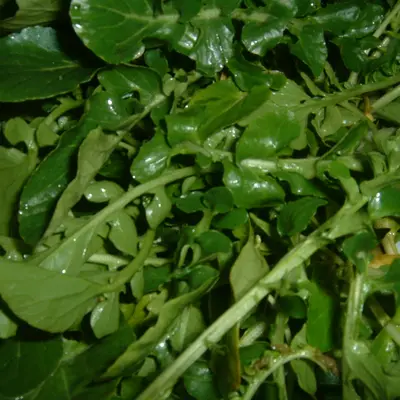
Watercress is a leafy green vegetable with small, rounded, delicate leaves that grow in dense clusters. This fast-growing heirloom variety matures in 60 days and thrives in cool, moist conditions with partial sun exposure. Its most distinctive feature is its peppery, spicy flavor with a subtle mustard-like bite, delivering a crisp texture that sets it apart from milder lettuce varieties. Watercress is highly nutritious and commonly used fresh in salads, soups, and sandwiches. Its vibrant taste makes it an excellent choice for culinary applications where bold, peppery greens are desired.
Harvest
60d
Days to harvest
Sun
Part sun
Zones
1–11
USDA hardiness
Height
6-12 inches
Planting Timeline
Showing dates for Watercress in USDA Zone 7
All Zone 7 lettuce →Zone Map
Click a state to update dates
Watercress · Zones 1–11
Growing Details
Succession Planting
Watercress is worth succession sowing if you want a steady supply rather than one big flush. Direct sow every 3 weeks from March through early May, then pause once daytime highs are consistently above 80°F — heat pushes watercress to bolt and turns the flavor sharp and bitter. Pick back up with a late-August or early-September sowing for a fall run that can carry through October or November in zone 7.
Keep in mind that established watercress regrows after cutting if you harvest above the soil line and maintain moisture, so a single planting can yield 2–3 cuts before quality drops. Factor that in before you over-sow — a 3-foot row cut every 10–14 days goes further than it looks.
Complete Growing Guide
Growing Watercress (Nasturtium officinale) lettuce. Light: Part sun. Hardy in USDA zones 1 to 11. Days to maturity: 60. Difficulty: Easy.
Harvesting
Ready for harvest in 60 days from sowing or transplant. Harvest at peak ripeness for best flavor and storage life. Pick regularly to encourage continued production where applicable.
Storage & Preservation
Harvest watercress at 60 days and refrigerate immediately in a plastic bag or container lined with damp paper towels, keeping it at 32–40°F with high humidity. Fresh watercress stays crisp for 3–5 days when properly chilled; use it promptly for best peppery flavor and nutritional value. For longer storage, blanch stems for 2–3 minutes, plunge into ice water, pat dry, and freeze in airtight containers for up to 8 months. Watercress doesn't preserve well by canning due to its delicate texture, but you can dry it slowly in a cool, dark space or dehydrator at low heat for tea or seasoning blends. Fermentation works reasonably well—pack fresh sprigs with salt in a jar for tangy preserved watercress that keeps for weeks. Keep watercress away from ethylene-producing fruits, as it's particularly sensitive to ripening gases and will yellow quickly.
History & Origin
Watercress or yellowcress is a species of aquatic flowering plant in the cabbage family, Brassicaceae.
Advantages
- +Easy to grow — beginner-friendly
- +Quick harvest — ready in about 60 days
- +Wide hardiness — grows in USDA zones 1-11
Companion Plants
Chives and garlic are the most useful companions here. Both release sulfur compounds that deter aphids — a consistent pest on watercress — and neither competes aggressively for the shallow, wet soil watercress prefers. Mint works similarly well for pest deterrence, but sink it in a pot near the bed rather than planting it loose. Left to its own devices, mint will crowd out a 3-foot watercress row inside a single growing season. Radishes pull their weight by drawing flea beetles (Phyllotreta spp.) away from the watercress; plant them 6–8 inches out as a sacrificial border and pull them before they bolt.
Lettuce and spinach are natural neighbors because they share the same preference for consistent moisture, part sun, and mild temperatures. Planting them within 12 inches of watercress also shades the soil surface, which cuts evaporation enough to matter during dry stretches — not dramatic, but you'll notice it.
Fennel doesn't belong anywhere near watercress. It's broadly allelopathic and suppresses germination and root development in most neighboring vegetables; watercress seedlings are especially exposed in their first 2–3 weeks. Tomatoes create a different problem: they need deep, infrequent watering while watercress needs the opposite, and you can't satisfy both in the same bed. Carrots run into the same mismatch — they prefer drier, well-drained soil and will fork or stunt in the saturated conditions watercress demands.
Plant Together
Chives
Repels aphids and improves flavor while providing natural pest deterrent
Lettuce
Similar growing conditions and water requirements, mutual shade protection
Spinach
Compatible water and shade requirements, efficient use of garden space
Mint
Thrives in similar moist conditions and helps repel ants and rodents
Parsley
Similar moisture needs and attracts beneficial insects like hoverflies
Celery
Both prefer consistently moist soil and cool growing conditions
Radishes
Quick-growing companion that helps break up soil and deters pests
Garlic
Natural fungicide properties help prevent damping-off disease in watercress
Keep Apart
Carrots
Different water requirements - carrots prefer well-drained soil while watercress needs constant moisture
Tomatoes
Require warm, well-drained conditions opposite to watercress's cool, wet preferences
Fennel
Allelopathic properties inhibit growth of most plants including watercress
Nutrition Facts
Per 100g serving. % Daily Value based on 2,000 calorie diet. Source: USDA FoodData Central (FDC #2346388)
Pests & Disease Resistance
Common Pests
Aphids, flea beetles, slugs, snails
Diseases
Powdery mildew, leaf spot, root rot in poorly drained conditions
Troubleshooting Watercress
What you'll see, why it happens, and what to do about it.
Seedlings collapse at the soil line within the first 7–10 days after planting, sometimes with white fuzzy mold visible on the soil surface
Likely Causes
- Damping off — a fungal complex (commonly Pythium or Rhizoctonia solani) that thrives in cold, waterlogged soil
- Reusing the same bed for aquatic or semi-aquatic greens year after year without rotating, which lets fungal spores accumulate
What to Do
- 1.Don't plant into cold, saturated soil — wait until soil temps are consistently above 50°F
- 2.Improve drainage or raise the bed; standing water is the main fuel for damping off in watercress
- 3.If you've lost seedlings in this spot before, send a soil sample to your county extension diagnostic lab before replanting — NC State's IPM guidance recommends this over guessing blind
White powdery coating on leaf surfaces, usually starting on older leaves mid-season
Likely Causes
- Powdery mildew — a fungal disease that spreads during warm days with cool nights and poor airflow, even in consistently wet conditions
- Crowded plantings at less than 6 inches apart that trap humidity around the foliage
What to Do
- 1.Thin plants to at least 6 inches apart to open up airflow
- 2.Remove and trash (not compost) the worst-affected leaves as soon as you see symptoms
- 3.Apply a diluted neem oil solution every 7 days — it won't cure existing mildew but slows the spread
Small ragged holes in leaves, worst on young seedlings in the first 3 weeks after planting
Likely Causes
- Flea beetles (Phyllotreta spp.) — tiny, jumping beetles that pepper leaves with 1–2 mm holes; they hit transplants hardest
- Slugs and snails, which leave larger irregular holes and a slime trail on or near the plant
What to Do
- 1.Cover seedlings with row cover immediately after planting — flea beetle pressure drops significantly once plants hit 4–5 true leaves
- 2.For slugs, set out shallow traps baited with beer near the base of plants and check them every morning
- 3.Diatomaceous earth applied around the base of plants slows slug movement, though it needs reapplying after every watering or rain
Leaves turning yellow and wilting despite consistently wet soil; roots look brown and mushy when you pull a plant
Likely Causes
- Root rot — most often Pythium spp. — triggered when roots sit in stagnant rather than moving water
- Planting in a container or bed with no drainage outlet, so water pools rather than circulates
What to Do
- 1.Watercress wants wet feet, not drowned ones — in containers, drill multiple drainage holes and maintain a slow drip or trickle rather than letting water go static
- 2.Pull affected plants promptly; Pythium root rot spreads through wet soil quickly and there's no saving a plant with fully rotted roots
- 3.Before replanting in the same spot, flush the bed thoroughly and wait several days to assess whether drainage has actually improved
Frequently Asked Questions
How long does watercress take to grow from seed to harvest?▼
Can you grow watercress in containers?▼
Is watercress good for beginners?▼
What does watercress taste like?▼
When should I plant watercress?▼
What are the main differences between watercress and regular lettuce?▼
Zone-by-Zone Planting Calendar
| Zone | Indoor Start | Transplant | Direct Sow | Harvest |
|---|---|---|---|---|
| Zone 1 | — | — | June – July | August – September |
| Zone 2 | — | — | May – July | July – September |
| Zone 11 | — | — | January – February | February – December |
| Zone 12 | — | — | January – February | February – December |
| Zone 13 | — | — | January – February | February – December |
| Zone 3 | — | — | May – June | July – October |
| Zone 4 | — | — | April – June | June – October |
| Zone 5 | — | — | April – May | June – November |
| Zone 6 | — | — | April – May | June – November |
| Zone 7 | — | — | March – May | May – November |
| Zone 8 | — | — | March – April | May – December |
| Zone 9 | — | — | February – March | April – December |
| Zone 10 | — | — | January – March | March – December |
Growing Guides from Wind River Greens
Sources & References
External authority sources used in compiling this guide.
- BreederJohnny's Selected Seeds
- USDAUSDA FoodData Central
See the Methodology page for how this data is sourced, what's AI-assisted, and known limitations.