Helen Mount
Viola tricolor
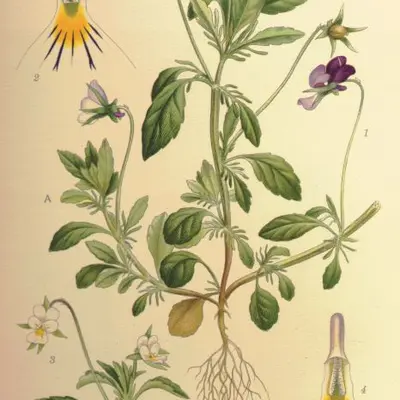
1-2" tricolor flowers in purple, yellow, and white. May reseed. Also known as pansy, heart's ease, Johnny jump-up, and European field pansy. Perennial in Zones 4-9. Edible Flowers: Abundant blooms make dainty garnishes for salads and desserts with slight wintergreen flavor. While a popular choice for brightening up salad mix, the flowers are also good for candying.
Harvest
60-70d
Days to harvest
Sun
Full sun to partial shade
Zones
2–9
USDA hardiness
Height
3-10 inches
Planting Timeline
Showing dates for Helen Mount in USDA Zone 7
All Zone 7 flower →Zone Map
Click a state to update dates
Helen Mount · Zones 2–9
Growing Details
Complete Growing Guide
Light: Full sun (6 or more hours of direct sunlight a day), Partial Shade (Direct sunlight only part of the day, 2-6 hours). Soil: Loam (Silt), Sand. Soil pH: Acid (<6.0), Neutral (6.0-8.0). Drainage: Moist. Height: 0 ft. 3 in. - 0 ft. 10 in.. Spread: 0 ft. 3 in. - 1 ft. 0 in.. Spacing: Less than 12 inches. Growth rate: Rapid. Maintenance: Low. Propagation: Division, Stem Cutting. Regions: Coastal, Mountains, Piedmont.
Harvesting
3-valved capsule which ejects seeds when dry.
Type: Capsule.
Edibility: Flowers are edible and have a slight minty flavor.
Storage & Preservation
Helen Mount pansies are best stored fresh in the refrigerator at 35-40°F with moderate humidity in a perforated container or plastic bag for 3-5 days. For longer preservation, crystallize or candy the petals by brushing with egg white and dusting with superfine sugar, then air-dry completely and store in an airtight container for up to 2 weeks. Alternatively, freeze blooms in ice cubes with water for decorative additions to beverages, lasting several months. Dried flowers can be pressed between parchment paper for 1-2 weeks, then stored flat in an airtight container for 6+ months for craft or culinary decoration.
History & Origin
Helen Mount is open-pollinated, meaning seed saved from healthy plants will produce true-to-type offspring. Listed in the Johnny's Selected Seeds catalog.
Origin: Europe and Asia
Advantages
- +Attracts: Butterflies, Pollinators, Specialized Bees
- +Edible: Flowers are edible and have a slight minty flavor.
- +Fast-growing
- +Low maintenance
Companion Plants
Marigolds and Calendula are the most practical companions here — both deter aphids through scent and pull in parasitic wasps that keep soft-bodied pest populations from building up. Sweet Alyssum is worth tucking in at the border too; it tops out around 3–4 inches and draws hoverflies whose larvae eat aphids before you ever notice them. Nasturtiums make a decent sacrificial trap crop: aphids pile onto them first, which buys Helen Mount some breathing room during the spring flush. In our zone 7 Georgia garden, a fall planting of Helen Mount mixed with Calendula will carry color reliably through November as long as you deadhead both.
Black Walnut trees are the companion to avoid outright — juglone, a compound that leaches from walnut roots and decomposing leaf litter, is toxic to Viola tricolor and will stunt or kill plants inside the drip line. Fennel causes a different problem: root exudates suppress germination and early growth in a wide range of neighboring plants, and violas are not an exception. Neither is worth working around.
Plant Together
Marigolds
Repel nematodes and aphids, attract beneficial insects
Nasturtiums
Act as trap crops for aphids and cucumber beetles, attract pollinators
Basil
Repels thrips, aphids, and flies while attracting beneficial pollinators
Sweet Alyssum
Attracts hover flies and parasitic wasps that control aphids
Cosmos
Attract beneficial insects and create habitat for natural predators
Calendula
Repel aphids and whiteflies, attract beneficial insects
Lavender
Repels moths, fleas, and mosquitoes while attracting pollinators
Petunias
Repel aphids, tomato hornworms, and squash bugs
Keep Apart
Black Walnut Trees
Release juglone toxin that inhibits growth and can kill zinnias
Fennel
Produces allelopathic compounds that stunt growth of nearby flowering plants
Large Sunflowers
Create excessive shade and compete aggressively for nutrients and water
Troubleshooting Helen Mount
What you'll see, why it happens, and what to do about it.
Gray, fuzzy coating on stems and leaves, plants collapsing at the crown during cool, wet weather
Likely Causes
- Botrytis cinerea (gray mold) — thrives in humid, stagnant air and temps between 55–75°F
- Overcrowded planting that prevents airflow between plants
What to Do
- 1.Remove and bag all affected plant material — don't compost it
- 2.Space plants at the full 8-inch interval and thin any crowded spots immediately
- 3.Water at the base only, in the morning, so foliage dries before nightfall
Tiny, irregular holes chewed across petals and leaves, often worse after rain
Likely Causes
- Slugs (Deroceras reticulatum and related species) — active at night and during overcast days, especially in mulched or shaded beds
- Earwigs, which are also nocturnal and feed similarly
What to Do
- 1.Set out beer traps at soil level — check and empty them every morning
- 2.Apply diatomaceous earth around the base of plants after a dry spell, and reapply after rain
- 3.Pull mulch back a few inches from the crown to reduce slug harborage
Plants stop flowering, stems stretch and get leggy, leaves look healthy but bloom count drops to near zero
Likely Causes
- Heat stress — Helen Mount pansy types typically shut down flowering once daytime highs push past 75–80°F
- Failure to deadhead, which signals the plant that seed set is complete
What to Do
- 1.Deadhead spent blooms every 3–5 days to extend the flowering window as long as possible
- 2.Cut leggy stems back by about one-third to encourage a flush of new growth before summer heat finishes them off
- 3.Accept that this is a cool-season flower and plan to replace with a warm-season annual once temps are consistently above 80°F
Frequently Asked Questions
How long do Helen Mount pansy flowers last once picked?▼
Can you grow Helen Mount pansies in containers?▼
Is Helen Mount a good pansy variety for beginners?▼
When should I plant Helen Mount pansy seeds?▼
What does Helen Mount pansy taste like?▼
How do you use Helen Mount pansies in cooking?▼
Zone-by-Zone Planting Calendar
| Zone | Indoor Start | Transplant | Direct Sow | Harvest |
|---|---|---|---|---|
| Zone 3 | April – May | June – July | June – August | — |
| Zone 4 | March – April | June – June | June – July | — |
| Zone 5 | March – April | May – June | May – July | — |
| Zone 6 | March – April | May – June | May – July | — |
| Zone 7 | February – March | April – May | April – June | — |
| Zone 8 | February – March | April – May | April – June | — |
| Zone 9 | January – February | March – April | March – May | — |
| Zone 10 | January – January | February – March | February – April | — |
| Zone 1 | May – June | July – August | July – September | — |
| Zone 2 | April – May | June – July | June – August | — |
| Zone 11 | January – January | January – February | January – March | — |
| Zone 12 | January – January | January – February | January – March | — |
| Zone 13 | January – January | January – February | January – March | — |
Growing Guides from Wind River Greens
Sources & References
External authority sources used in compiling this guide.
- ExtensionNC State Extension
- BreederJohnny's Selected Seeds
See the Methodology page for how this data is sourced, what's AI-assisted, and known limitations.