Thai Long Green
Solanum melongena 'Thai Long Green'
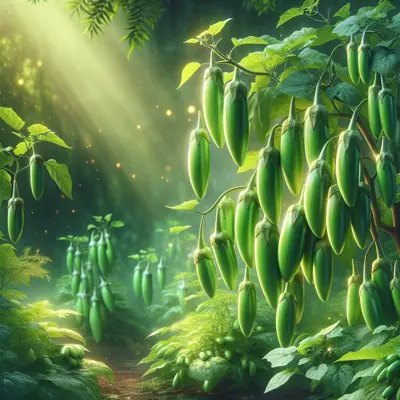
An authentic Asian variety prized for its slender, bright green fruits that are essential in Thai and Southeast Asian cooking. These tender eggplants have thin skin, few seeds, and never develop bitterness, making them perfect for curries, stir-fries, and grilled dishes. A must-grow for anyone serious about Asian cuisine.
Harvest
65-75d
Days to harvest
Sun
Full sun
Zones
9–12
USDA hardiness
Height
2-4 feet
Planting Timeline
Showing dates for Thai Long Green in USDA Zone 7
All Zone 7 eggplant →Zone Map
Click a state to update dates
Thai Long Green · Zones 9–12
Growing Details
Succession Planting
Thai Long Green keeps producing on the same plant for the whole season once it gets going — there's no succession logic here the way there is with lettuce or radishes. Set out transplants once, keep them fed and watered, and harvest every 5–7 days to encourage continued fruiting. One planting per season is the standard approach.
Complete Growing Guide
Thai Long Green eggplants demand consistent warmth above 70°F to thrive and will languish or drop flowers if temperatures dip below this threshold, so delay transplanting until soil is genuinely warm in late spring. Unlike bulkier eggplant varieties, this cultivar's slender form means it requires slightly less fertilizer but benefits from consistent moisture—allow soil to dry only marginally between waterings to prevent the thin fruits from becoming woody. Watch closely for spider mites in hot, dry conditions, as the delicate foliage shows stress quickly; also monitor for verticillium wilt, which affects this variety more readily than some others. These plants tend toward legginess in inadequate light, so provide full sun (minimum eight hours daily) and support with stakes or cages early. A practical secret: pinch off the first flower buds that appear to redirect energy into stronger branching, resulting in more prolific fruit production over the 65-75 day harvest window.
Light: Full sun (6 or more hours of direct sunlight a day). Soil: Loam (Silt), Sand. Soil pH: Acid (<6.0). Drainage: Good Drainage, Moist. Height: 2 ft. 0 in. - 4 ft. 0 in.. Spread: 1 ft. 0 in. - 3 ft. 0 in.. Spacing: 3 feet-6 feet. Growth rate: Medium. Maintenance: Medium. Propagation: Seed.
Harvesting
Harvest Thai Long Green eggplants when they reach 6 to 8 inches in length and display a vibrant, glossy green color with slight give when gently squeezed—avoid waiting until skin dulls or becomes darker, as this indicates overmaturity and potential bitterness. These tender Asian varieties respond exceptionally well to continuous harvesting; picking fruits at peak tenderness encourages the plant to produce prolifically throughout the season rather than setting fewer, larger fruits. For optimal results, harvest in early morning when plants are fully hydrated, which ensures maximum crispness and flavor while minimizing plant stress during hot afternoons.
The fruit is a berry that is egg-shaped, smooth and has glossy skin. The fruit may measure 4 to 8 inches long. It ranges in color from green to white, to purple-black when immature and when it should be eaten. As the fruit matures it gets stringy and bitter. Fruit contains numerous small, flat, pale yellow to brown seeds.
Color: Black, Gold/Yellow, Green, Purple/Lavender, White. Type: Berry. Length: > 3 inches.
Garden value: Edible, Showy
Harvest time: Fall, Summer
Edibility: The immature fruit is edible and best used in food preparation. As the fruit matures, it becomes stringy and bitter. The fruits are usually cooked and served as a vegetable. They may be prepared and eaten by frying, steaming, grilling, roasting, or stewing. They may also be stir-fried, pickled, stuffed, and fried with a light breading.
Storage & Preservation
Store freshly harvested Thai Long Green eggplants at room temperature for 2-3 days maximum, as they're best used immediately for optimal flavor and texture. For longer storage, wrap individually in paper towels and refrigerate in the crisper drawer for up to one week — avoid plastic bags which trap moisture and cause rapid deterioration.
For preservation, blanching and freezing works well for cooked dishes. Slice, salt for 30 minutes to draw out moisture, rinse, then blanch in boiling water for 4 minutes before freezing in portions suitable for curries and stir-fries. The texture won't be suitable for fresh eating after freezing, but perfect for cooked applications.
Pickling is excellent for preserving the mild flavor — cut into rounds or strips and quick-pickle in rice vinegar with Thai chilies and garlic. Grilling and dehydrating creates concentrated flavor for adding to soups and stews later. Unlike globe eggplants, Thai Long Green's thin skin and few seeds make it ideal for these preservation methods.
History & Origin
The Thai Long Green eggplant emerges from Southeast Asia's rich culinary tradition rather than formal commercial breeding documentation. This variety represents a lineage of slender, green eggplants cultivated for centuries throughout Thailand, Laos, and surrounding regions where they remain staple ingredients in everyday cooking. While specific breeder names and introduction dates are not well documented in Western seed archives, the variety reflects generations of farmer selection for tender skin, minimal seeds, and the mild flavor profile essential to Southeast Asian cuisine. Modern seed companies have codified and distributed these traditional landraces, preserving characteristics that local growers developed through repeated seed-saving practices.
Origin: China South-Central, Laos, Malaya, Myanmar, Thailand, Vietnam
Advantages
- +Slender bright green fruits are visually striking and authentic to Thai cuisine.
- +Mild, sweet flavor with zero bitterness makes every dish taste superior.
- +Thin skin and few seeds create ideal tender texture for stir-fries.
- +Relatively quick 65-75 day maturity rewards gardeners with faster harvests.
- +Essential ingredient for serious Asian cooks looking for culinary authenticity.
Considerations
- -Susceptible to multiple wilt diseases requiring excellent soil drainage and rotation.
- -Flea beetles and aphids can severely damage young seedlings and foliage.
- -Moderate growing difficulty means beginners may struggle with consistent production.
Companion Plants
Basil is the companion most people reach for with eggplant, and it holds up under scrutiny. The volatile oils basil releases are reported to confuse aphids and thrips, but the more practical reason to pair them is that basil and Thai Long Green run on nearly identical inputs — pH 6.0–7.0, consistent moisture, full sun — so you're managing one set of conditions instead of two. French marigolds (Tagetes patula, not the tall African types) are worth planting at the bed edges: their root secretions suppress soil nematodes, and the open flowers draw in parasitic wasps that work through aphid populations over a full season. Nasturtium pulls a different trick — aphids colonize it faster than they hit eggplant, which concentrates the problem in one spot where you can blast them off with water or treat with insecticidal soap without touching the main crop.
Peppers and tomatoes coexist fine with Thai Long Green because their cultural needs line up, but they're all nightshades, and that shared biology cuts both ways. If bacterial wilt (Ralstonia solanacearum) or Fusarium oxysporum gets a foothold, a tightly grouped nightshade planting gives it nowhere to stop. Keep the spacing loose and rotate the entire nightshade block as a unit each season — NC State Extension's disease management guidance makes the point that R. solanacearum doesn't break down in soil over time, so the rotation has to actually move.
Fennel belongs nowhere near this bed. Its allelopathic root exudates stunt most vegetables within 2–3 feet, and eggplant is not an exception. Brassicas are a subtler problem — they compete aggressively for calcium, can host shared aphid populations, and add complexity to a bed that's easier to manage clean.
Plant Together
Basil
Repels aphids, spider mites, and thrips while potentially improving eggplant flavor
Marigold
Deters nematodes, aphids, and whiteflies with natural compounds
Peppers
Similar growing requirements and both benefit from shared pest deterrents
Tomatoes
Complementary growth habits and shared beneficial insects for pollination
Nasturtium
Acts as trap crop for aphids, cucumber beetles, and squash bugs
Catnip
Repels ants, aphids, and flea beetles while attracting beneficial predatory insects
Oregano
Deters spider mites, aphids, and cabbage moths with aromatic oils
Borage
Attracts pollinators and beneficial insects while reportedly improving growth
Keep Apart
Fennel
Releases allelopathic compounds that inhibit growth of most vegetables
Black Walnut
Produces juglone toxin that causes wilting and stunted growth in nightshades
Brassicas
Compete for similar nutrients and may attract flea beetles that also damage eggplant
Nutrition Facts
Per 100g serving. % Daily Value based on 2,000 calorie diet. Source: USDA FoodData Central (FDC #169228)
Pests & Disease Resistance
Resistance
Moderate disease resistance, typical of Asian varieties
Common Pests
Flea beetles, aphids, spider mites, whiteflies
Diseases
Bacterial wilt, fusarium wilt, verticillium wilt, anthracnose
Troubleshooting Thai Long Green
What you'll see, why it happens, and what to do about it.
Tiny, irregular holes shotgunned across young leaves, especially on transplants in the first 2-3 weeks after setting out
Likely Causes
- Flea beetles (Epitrix spp.) — they overwinter in soil and leaf litter and hit transplants hard before the plants have size to outgrow the damage
- Transplants set out before they're fully hardened off, making the tissue softer and more attractive
What to Do
- 1.Cover transplants immediately with row cover fabric (Agribon AG-19 or similar) and leave it on until plants are 12+ inches tall and obviously vigorous
- 2.If beetles are already present and cover isn't an option, apply kaolin clay (Surround WP) as a physical barrier — reapply after every rain
- 3.Don't skip hardening off: give transplants at least 7 days of outdoor exposure before planting
Plant wilts suddenly and completely, then collapses — lower stem looks fine on the outside but the pith is discolored brown when you cut it open
Likely Causes
- Bacterial wilt (Ralstonia solanacearum) — soil-borne, spreads through contaminated tools, water, and infected transplants
- Fusarium wilt (Fusarium oxysporum) — also soil-borne, produces similar vascular browning, favors warm soils in the 6.0–6.5 pH range
What to Do
- 1.Dig up and destroy the entire plant, roots included — do not compost it; NC State Extension notes that Ralstonia solanacearum persists in soil indefinitely once introduced
- 2.Rotate all nightshades (eggplant, tomato, pepper, potato) out of that bed for at least 3-4 seasons; if space is tight, grow in containers with fresh potting mix that never contacts native soil
- 3.Disinfect tools with a 10% bleach solution or 70% isopropyl alcohol between plants when working in or near an affected bed
Frequently Asked Questions
How long does Thai Long Green eggplant take to grow?▼
Can you grow Thai Long Green eggplant in containers?▼
What does Thai Long Green eggplant taste like?▼
When should I plant Thai Long Green eggplant?▼
Is Thai Long Green eggplant good for beginners?▼
Thai Long Green vs Japanese Long Purple eggplant — what's the difference?▼
Zone-by-Zone Planting Calendar
| Zone | Indoor Start | Transplant | Direct Sow | Harvest |
|---|---|---|---|---|
| Zone 1 | May – May | July – August | — | September – August |
| Zone 2 | April – May | June – July | — | September – September |
| Zone 11 | January – January | January – February | — | April – June |
| Zone 12 | January – January | January – February | — | April – June |
| Zone 13 | January – January | January – February | — | April – June |
| Zone 3 | April – April | June – July | — | August – October |
| Zone 4 | March – April | June – June | — | August – October |
| Zone 5 | March – March | May – June | — | August – October |
| Zone 6 | March – March | May – June | — | July – September |
| Zone 7 | February – March | April – May | — | July – September |
| Zone 8 | February – February | April – May | — | June – August |
| Zone 9 | January – January | March – April | — | May – July |
| Zone 10 | January – January | February – March | — | May – July |
Growing Guides from Wind River Greens
Sources & References
External authority sources used in compiling this guide.
See the Methodology page for how this data is sourced, what's AI-assisted, and known limitations.