Delicata Squash
Cucurbita pepo
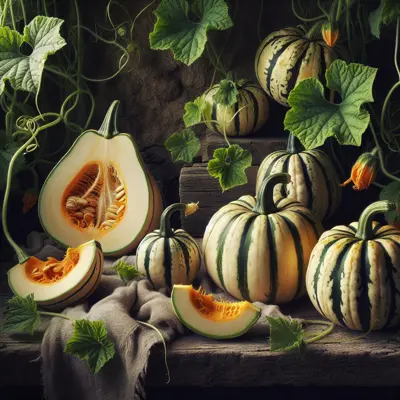
Delicata Squash is an heirloom winter squash known for its elegant, pale yellow-green oblong shape with thin, edible skin when mature. This variety reaches harvest readiness in approximately 95 days, producing small to medium-sized fruits (6-9 inches long) that develop golden-orange undertones as they ripen. The thin, tender rind distinguishes Delicata from other winter squashes and can be eaten when cooked. Its defining characteristic is its exceptionally sweet, creamy flesh with subtle corn and sweet potato notes, making it ideal for roasting, sautéing, or use in both savory and dessert applications. Despite its refined flavor profile, Delicata is surprisingly easy to grow in full sun conditions.
Harvest
95d
Days to harvest
Sun
Full sun
Zones
3–11
USDA hardiness
Height
1-3 feet
Planting Timeline
Showing dates for Delicata Squash in USDA Zone 7
All Zone 7 squash →Zone Map
Click a state to update dates
Delicata Squash · Zones 3–11
Growing Details
Succession Planting
Delicata doesn't suit succession planting — each plant produces a fixed number of fruits over a single 95-day run, and that whole run needs to finish before your first fall frost. In zone 7, that puts your direct sow window from late April through early June at the latest. Push past mid-June and you're gambling that a frost won't cut off the back end before the fruit cures on the vine.
NC State Extension also points to timing as a pest management tool: getting squash in the ground as early as soil temperatures allow — at least 60°F at 2-inch depth — lets vines mature before squash vine borers peak their egg-laying in July. One well-timed planting per season is the right call here.
Complete Growing Guide
This 95-day cultivar rewards patient gardeners with superior flavor when planted in late spring for fall harvest, allowing you to avoid summer heat stress that triggers bolting in shorter-season varieties. Space plants generously at 24 inches in-row to maximize airflow and minimize powdery mildew, which commonly plagues dense squash plantings. Unlike larger winter squash, Delicata's compact 1-3 foot vines require minimal trellising but benefit from consistent moisture during fruit set. Watch for squash vine borers, the primary pest threat; wrapping vine bases with aluminum foil prevents egg-laying. The fruit's thin, edible skin means harvest at 95 days precisely—overmatured specimens become fibrous and lose the signature creamy sweetness. For best results, thin competing vines early in the season to direct energy toward fewer, higher-quality fruits rather than sprawling growth.
Light: Full sun (6 or more hours of direct sunlight a day). Soil: High Organic Matter, Loam (Silt). Soil pH: Neutral (6.0-8.0). Drainage: Good Drainage, Moist. Height: 1 ft. 0 in. - 3 ft. 0 in.. Spread: 2 ft. 0 in. - 25 ft. 0 in.. Spacing: 12 inches-3 feet. Growth rate: Rapid. Maintenance: High. Propagation: Seed. Regions: Coastal, Mountains, Piedmont.
Harvesting
Delicata squash reaches peak harvest maturity when the skin develops its distinctive daisy pattern and transitions from predominantly green to a creamy yellow or orange base color, typically occurring around 95 days from planting. The fruit should feel firm to the touch and weigh approximately 5-8 ounces at optimal size. Rather than a single harvest, practice continuous picking by checking plants every 2-3 days once the first fruits mature, as this encourages additional flowering and fruiting throughout the season. A key timing tip: harvest in the morning after dew dries but before heat peaks, as the skin will be less prone to bruising. Cut fruits from the vine with 1-2 inches of stem attached to improve storage life and reduce disease entry points.
A type of berry called a pepo that has a hard rind. Fruits may be long or round, large or small, smooth or warty– some have edible flesh and some are too hard or insipid to eat, though the seeds of all are edible. Has a harder, thicker stem compared to other species.
Color: Black, Cream/Tan, Gold/Yellow, Green, Orange, Pink, Red/Burgundy, Variegated, White. Type: Berry. Length: > 3 inches. Width: > 3 inches.
Garden value: Edible, Showy
Harvest time: Fall
Storage & Preservation
Cure freshly harvested delicata squash in a warm (80-85°F), well-ventilated area for 7-10 days to toughen the skin for storage. Unlike hard winter squashes, delicata stores for only 1-3 months in cool (50-55°F), dry conditions with good air circulation.
For fresh storage, keep whole squash on counters for up to 2 weeks or in cool pantries for longer storage. Avoid refrigerating whole squash as cold temperatures cause deterioration. Once cut, wrap pieces tightly and refrigerate for up to 5 days.
Freeze cooked delicata by roasting halved squash until tender, scooping out flesh, and storing in freezer bags for up to 8 months. Dehydrate thin slices at 135°F for 8-12 hours to create sweet, chewy snacks. The edible skin makes delicata perfect for pickling rings in apple cider vinegar for a unique preserved treat.
History & Origin
Delicata squash emerged as a modern cultivar developed by Larry Eckler of Niles, Michigan, reflecting the ongoing refinement of winter squash varieties within the Cucurbita pepo species. While detailed documentation of its breeding background remains limited, Delicata belongs to a lineage of oblong, fluted squashes that gained popularity in North American gardens and markets during the late twentieth century. The variety's distinctive daisy-pattern marking at the stem end and its multicolored striping in green, orange, yellow, and white represent deliberate selection for both ornamental appeal and culinary quality. Eckler's development work contributed to establishing Delicata as a recognized garden variety, combining the sweet, creamy flavor profile characteristic of winter squash with manageable plant size and relatively compact fruit.
Origin: North America
Advantages
- +Sweet, creamy flavor with corn notes makes Delicata highly palatable fresh.
- +Small 5-8 oz size perfect for individual servings and home gardens.
- +Beautiful multicolored skin with daisy pattern provides attractive ornamental display.
- +95-day maturity allows reliable harvest in most growing regions.
- +Easy to moderate difficulty rating makes Delicata suitable for beginner gardeners.
Considerations
- -Susceptible to squash bugs, cucumber beetles, and aphids requiring pest management.
- -Vulnerable to powdery mildew and bacterial wilt in humid conditions.
- -Squash mosaic virus can devastate entire plantings if not managed early.
- -Requires precise 24-inch spacing for optimal yield and fruit development.
Companion Plants
Nasturtiums and French marigolds (Tagetes patula) pull real weight near delicata. Nasturtiums act as a trap crop for aphids — they'd rather pile onto those stems than your squash vines, and you can yank and replace a nasturtium plant mid-season without losing anything. Marigolds produce root exudates that suppress certain soil nematodes, and their scent appears to disrupt the host-finding behavior of cucumber beetles, which matter here because cucumber beetles are the primary vector for bacterial wilt (Erwinia tracheiphila). Beans fix nitrogen at a shallow root level, which keeps the soil productive without competing with squash's deeper moisture draw.
Potatoes are a poor match — both crops are heavy feeders and their root zones overlap enough to create real competition, plus potatoes can harbor Colorado potato beetle (Leptinotarsa decemlineata) that spills into adjacent beds. Keep fennel completely separate from your cucurbit patch; it releases allelopathic root compounds that stunt nearby plants, and squash is sensitive enough to the effect that no spacing trick reliably neutralizes it.
Plant Together
Nasturtiums
Acts as trap crop for squash bugs and cucumber beetles, repels aphids
Marigolds
Deters squash bugs, cucumber beetles, and nematodes with natural compounds
Radishes
Repels squash vine borers and cucumber beetles, planted early as deterrent
Corn
Provides natural trellis support and creates beneficial microclimate
Beans
Fixes nitrogen in soil benefiting heavy-feeding squash plants
Catnip
Strongly repels squash bugs, cucumber beetles, and flea beetles
Oregano
Repels cucumber beetles and provides general pest deterrent properties
Sunflowers
Attracts beneficial predatory insects and provides wind protection
Keep Apart
Potatoes
Both are heavy feeders competing for nutrients, potatoes may harbor similar pests
Fennel
Inhibits growth through allelopathic compounds that stunt squash development
Aromatic herbs (Sage)
Strong essential oils can inhibit squash germination and early growth
Nutrition Facts
Per 100g serving. % Daily Value based on 2,000 calorie diet. Source: USDA FoodData Central (FDC #168040)
Pests & Disease Resistance
Resistance
Susceptible to powdery mildew, moderate disease resistance overall
Common Pests
Squash bugs, cucumber beetles, aphids
Diseases
Powdery mildew, bacterial wilt, squash mosaic virus
Troubleshooting Delicata Squash
What you'll see, why it happens, and what to do about it.
Wilting vines that don't recover overnight, with no obvious root damage — plants collapse fast, sometimes within days
Likely Causes
- Bacterial wilt (Erwinia tracheiphila), spread by cucumber beetles feeding on leaves
- Spotted cucumber beetle (Diabrotica undecimpunctata) or striped cucumber beetle (Acalymma vittatum) present on or near plants
What to Do
- 1.Pull and bag the infected plant immediately — bacterial wilt has no cure and spreads fast
- 2.Check remaining plants for cucumber beetles and knock them into soapy water; floating row cover applied at transplant is the more reliable prevention
- 3.NC State Extension notes that crop rotation — waiting at least 3 years before replanting cucurbits in the same bed — helps break the beetle's life cycle
White powdery coating on the upper surface of leaves, usually showing up after day 60 and spreading fast in late summer
Likely Causes
- Powdery mildew (Podosphaeria xanthii or Erysiphe cichoracearum) — a fungal disease that thrives in warm, dry days with humid nights
- Poor airflow from crowded spacing or nearby structures
What to Do
- 1.Remove the most heavily affected leaves and dispose of them in the trash, not the compost
- 2.Apply a diluted neem oil or potassium bicarbonate spray early in the morning — at the first sign, not after it's covered half the plant
- 3.Space plants at least 24–36 inches apart next season and avoid overhead watering in the evening
Stunted plants with mottled, distorted, or mosaic-patterned leaves starting any time after transplant
Likely Causes
- Squash mosaic virus (SqMV), transmitted by aphid feeding — a single aphid pass is enough
- Cucumber mosaic virus (CMV), also aphid-vectored and common in cucurbits
What to Do
- 1.There's no fix once a plant is infected — remove it to keep aphids from spreading the virus to healthy plants nearby
- 2.Knock back aphid populations with strong water sprays or insecticidal soap applied to leaf undersides; check every 3–4 days
- 3.Reflective silver mulch laid at planting time has been shown to confuse and deter aphids before they land
Frequently Asked Questions
How long does delicata squash take to grow?▼
Can you grow delicata squash in containers?▼
What does delicata squash taste like?▼
Is delicata squash good for beginners?▼
When should I plant delicata squash?▼
Delicata vs acorn squash - what's the difference?▼
Zone-by-Zone Planting Calendar
| Zone | Indoor Start | Transplant | Direct Sow | Harvest |
|---|---|---|---|---|
| Zone 1 | — | — | July – August | November – August |
| Zone 2 | — | — | June – August | October – September |
| Zone 11 | — | — | January – March | May – July |
| Zone 12 | — | — | January – March | May – July |
| Zone 13 | — | — | January – March | May – July |
| Zone 3 | — | — | June – July | October – October |
| Zone 4 | — | — | June – July | October – October |
| Zone 5 | — | — | May – June | September – October |
| Zone 6 | — | — | May – June | September – October |
| Zone 7 | — | — | April – June | August – October |
| Zone 8 | — | — | April – May | August – September |
| Zone 9 | — | — | March – April | July – August |
| Zone 10 | — | — | February – April | June – August |
Growing Guides from Wind River Greens
Sources & References
External authority sources used in compiling this guide.
See the Methodology page for how this data is sourced, what's AI-assisted, and known limitations.