Hubbard Blue Squash
Cucurbita maxima 'Blue Hubbard'
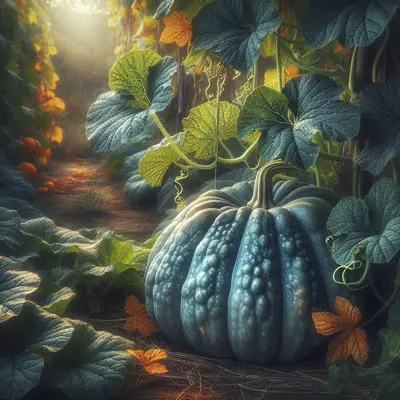
A massive heirloom winter squash that can reach 40+ pounds, prized for its incredible storage life and sweet, fine-textured orange flesh. This impressive variety with its distinctive blue-gray bumpy skin has been a homestead favorite since the 1890s, providing months of nutritious meals from a single harvest. The ultimate storage squash that gets sweeter with time and can last 6-8 months when properly cured.
Harvest
100-120d
Days to harvest
Sun
Full sun
Zones
3–11
USDA hardiness
Difficulty
Moderate
Planting Timeline
Showing dates for Hubbard Blue Squash in USDA Zone 7
All Zone 7 squash →Zone Map
Click a state to update dates
Hubbard Blue Squash · Zones 3–11
Growing Details
Complete Growing Guide
Light: Full sun (6 or more hours of direct sunlight a day). Soil: High Organic Matter, Loam (Silt). Soil pH: Neutral (6.0-8.0). Drainage: Good Drainage, Moist. Spacing: 12 inches-3 feet. Growth rate: Rapid. Maintenance: Medium. Propagation: Seed. Regions: Coastal, Mountains, Piedmont.
Harvesting
Soft or hard-shelled berries called pepos come in a variety of colors, shapes, and sizes and are harvested in the fall. The stems of the fruits generally have a soft corky texture compared to other species.
Color: Blue, Cream/Tan, Gold/Yellow, Gray/Silver, Orange, Pink, Red/Burgundy, Variegated, White. Type: Berry. Length: > 3 inches. Width: > 3 inches.
Garden value: Edible, Long-lasting, Showy
Harvest time: Fall
Storage & Preservation
Hubbard Blue squash stores exceptionally well when kept in a cool, dry place between 50–55°F with moderate humidity. A well-ventilated shed, basement, or garage works perfectly; avoid plastic bags, which trap moisture and encourage rot. Properly cured squash can last four to six months or longer, making it ideal for winter use. For fresh storage, keep individual fruits separated on shelves rather than stacked to prevent bruising and allow air circulation.
Beyond fresh storage, freezing is straightforward: roast cubed flesh until tender, cool completely, then pack into freezer containers for up to eight months. For soups and purees, freeze in ice cube trays for portion control. Canning is also viable using tested hot-pack methods for squash puree. Drying thin slices in a dehydrator yields chewy chips that rehydrate well in soups.
The thick, hard rind of Hubbard Blue makes it one of the longest-storing squash varieties available. Always cure freshly harvested fruit in warm conditions (75–80°F) for 10–14 days before storage to harden the skin and seal any minor cuts.
History & Origin
The Blue Hubbard squash emerged in the nineteenth century as a selection from the broader Hubbard squash lineage, which itself originated from earlier winter squash varieties grown by Indigenous peoples and refined through colonial-era gardening. Though precise breeder attribution remains unclear, the Blue Hubbard became particularly established as a distinct cultivar by the 1890s and entered widespread cultivation through American seed catalogs and homestead preservation. The variety likely developed through farmer selection in New England, where winter storage capabilities were essential for survival, refining traits for size, storage longevity, and sweetening during dormancy. Its documented presence in heirloom seed exchanges and commercial offerings by the late nineteenth century secured its place in American agricultural heritage.
Origin: Central and South America
Advantages
- +Fast-growing
Companion Plants
Nasturtiums and marigolds pull double duty next to Blue Hubbard — they draw aphids off the vines and disrupt cucumber beetle feeding patterns, which matters because cucumber beetles are the primary vector for bacterial wilt (Erwinia tracheiphila). Radishes direct-sown around the vine perimeter act as a trap crop for squash bugs, which prefer them over the squash itself. Corn and beans fit the Three Sisters logic: corn gives vertical structure while beans fix nitrogen that a heavy 100–120 day feeder like Hubbard will deplete from the soil. Keep potatoes out of the same bed — they share several soil-borne diseases with cucurbits — and keep fennel away entirely; it's broadly allelopathic and suppresses germination and root development in most garden neighbors within a few feet.
Plant Together
Nasturtiums
Trap crop for squash bugs and cucumber beetles, repels aphids
Marigolds
Repel cucumber beetles, squash bugs, and nematodes with their strong scent
Radishes
Deter squash vine borers and cucumber beetles, mature quickly without competing
Corn
Provides natural trellis support and shade, part of Three Sisters planting
Beans
Fix nitrogen in soil for heavy-feeding squash, traditional Three Sisters companion
Catnip
Strongly repels squash bugs, cucumber beetles, and other squash pests
Oregano
Repels cucumber beetles and provides ground cover to retain soil moisture
Sunflowers
Attract beneficial insects and pollinators while providing windbreak protection
Keep Apart
Potatoes
Compete for space and nutrients, both are heavy feeders with similar root zones
Fennel
Allelopathic effects inhibit squash growth and development
Aromatic herbs (mint family)
Strong oils can inhibit squash germination and early growth
Nutrition Facts
Per 100g serving. % Daily Value based on 2,000 calorie diet. Source: USDA FoodData Central (FDC #168040)
Pests & Disease Resistance
Resistance
Good natural resistance to storage rots when properly cured
Common Pests
Squash bugs, cucumber beetles, squash vine borers
Diseases
Powdery mildew, bacterial wilt, black rot in storage
Troubleshooting Hubbard Blue Squash
What you'll see, why it happens, and what to do about it.
Wilted vines with no obvious drought stress — plant collapses fast, sometimes within a day or two
Likely Causes
- Bacterial wilt (Erwinia tracheiphila), transmitted by cucumber beetles feeding on leaves
- Squash vine borer (Melittia cucurbitae) — larvae tunnel inside the main stem, cutting off water movement
What to Do
- 1.Cut a wilted stem near the base and touch the cut ends together — if stringy bacterial threads stretch between them, it's bacterial wilt; the plant can't be saved, pull it immediately
- 2.For vine borer, slice the stem lengthwise where you see frass or entry holes, dig out the larvae, and bury that stem section under moist soil — it may re-root
- 3.NC State Extension's IPM guidance is explicit: get squash in the ground as early as possible so vines mature before borer egg-laying peaks in July; on a 100–120 day crop, a late-April direct sow in zone 7 is not optional, it's the whole game
White powdery coating spreading across upper leaf surfaces in late summer
Likely Causes
- Powdery mildew — Erysiphe cichoracearum or related species; spreads fast in warm days (70–85°F) with high ambient humidity even when leaf surfaces stay dry
What to Do
- 1.Strip the worst-affected leaves and bin them — not the compost pile
- 2.Apply potassium bicarbonate or diluted neem oil on a cloudy morning, coating both leaf surfaces
- 3.On a 100–120 day crop harvested in September or October, some late-season mildew is close to unavoidable — focus on protecting the younger growth and the developing fruit rather than trying to keep the whole canopy clean
Stored Hubbards developing soft dark patches within a few weeks of harvest
Likely Causes
- Black rot (Didymella bryoniae) — enters through stem scars, cracks, or any harvest wound
- Skipping or rushing the curing step, which leaves the skin too permeable to resist surface pathogens
What to Do
- 1.Cure freshly cut Hubbards at 80–85°F for 10–14 days before moving them to a 50–55°F storage space
- 2.Any fruit with a crack, soft spot, or blemish at harvest won't make it to December — set those aside and eat them first
- 3.Leave 2–3 inches of stem attached when you cut; a flush cut or a snapped-off stub is a direct entry point for Didymella
Frequently Asked Questions
How long does Hubbard Blue squash take to grow?▼
Can you grow Hubbard Blue squash in containers?▼
What does Hubbard Blue squash taste like?▼
When should I plant Hubbard Blue squash seeds?▼
Is Hubbard Blue squash good for beginners?▼
How do you know when Hubbard Blue squash is ripe?▼
Zone-by-Zone Planting Calendar
| Zone | Indoor Start | Transplant | Direct Sow | Harvest |
|---|---|---|---|---|
| Zone 3 | — | — | June – July | October – October |
| Zone 4 | — | — | June – July | October – October |
| Zone 5 | — | — | May – June | October – October |
| Zone 6 | — | — | May – June | September – November |
| Zone 7 | — | — | April – June | September – October |
| Zone 8 | — | — | April – May | August – October |
| Zone 9 | — | — | March – April | July – September |
| Zone 10 | — | — | February – April | July – August |
| Zone 1 | — | — | July – August | November – August |
| Zone 2 | — | — | June – August | November – September |
| Zone 11 | — | — | January – March | June – July |
| Zone 12 | — | — | January – March | June – July |
| Zone 13 | — | — | January – March | June – July |
Growing Guides from Wind River Greens
Sources & References
External authority sources used in compiling this guide.
See the Methodology page for how this data is sourced, what's AI-assisted, and known limitations.