Breadfruit Ma'afala
Artocarpus altilis 'Ma'afala'
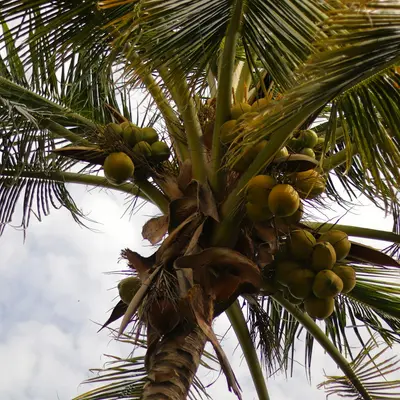
A premium Polynesian breadfruit variety that produces enormous, starchy fruits perfect for roasting, baking, or frying as a potato substitute with incredible nutritional value. This seedless variety is prized for its smooth texture and mild, slightly sweet flavor that takes on the taste of whatever seasonings you use. A single mature tree can feed a family year-round with its prolific fruiting habit.
Harvest
1095-1460d
Days to harvest
Sun
Full sun to partial shade
Zones
8–12
USDA hardiness
Height
60 feet
Planting Timeline
Showing dates for Breadfruit Ma'afala in USDA Zone 11
All Zone 11 tropical →Zone Map
Click a state to update dates
Breadfruit Ma'afala · Zones 8–12
Growing Details
Complete Growing Guide
Growing Breadfruit Ma'afala (Artocarpus altilis 'Ma'afala') tropical. Light: Full sun to partial shade (6+ hours). Hardy in USDA zones 8 to 12. Days to maturity: 1095-1460. Difficulty: Moderate to Difficult. Heirloom — open-pollinated, save seeds for next year. Disease resistance: Generally healthy but susceptible to root rot and leaf blight in humid conditions.
Harvesting
Breadfruit Ma'afala reaches peak harvest readiness when the skin transitions from green to yellowish-green with slightly raised lenticels becoming more pronounced, and the fruit yields gently to thumb pressure without feeling mushy. Mature fruits typically measure 8-12 inches in diameter and feel noticeably lighter than they appear as the starch converts to sugars. Unlike single-harvest varieties, Ma'afala produces continuously throughout its extended fruiting season, with individual trees yielding multiple flushes of fruit over several months. Harvest in early morning when temperatures are coolest to minimize stress on the tree and fruit; fruits picked at this time store longer and develop superior flavor complexity during the 3-5 day ripening period before cooking.
This is an ornamental variety — not grown for harvest. Enjoy in the garden landscape.
Storage & Preservation
Freshly harvested Ma'afala breadfruit keeps best in cool, humid conditions between 55-65°F with 85-90% relative humidity. Store individual fruits in breathable crates or perforated bags rather than sealed containers to prevent moisture buildup and rot. Under ideal conditions, whole fruit maintains quality for 1-2 weeks at room temperature, or up to 3 weeks when refrigerated.
For longer preservation, freezing works exceptionally well with this starchy variety. Peel, cube, and blanch pieces for 3-4 minutes before freezing in airtight containers; they'll keep 8-12 months. Dried breadfruit chips, made by slicing thin and sun-drying or using a dehydrator at 135°F until crisp, store for several months in sealed jars and rehydrate nicely for curries. You can also process cooked flesh into flour by drying and grinding, creating a shelf-stable starch that substitutes well in baking.
A practical tip specific to Ma'afala: mature green fruit continues ripening after harvest if stored at room temperature, so plan your preservation timing accordingly—don't wait until fully soft to process.
History & Origin
Artocarpus is a genus of approximately 60 trees and shrubs of Southeast Asian and Pacific origin, belonging to the mulberry family, Moraceae. Most species of Artocarpus are restricted to Southeast Asia; a few cultivated species are more widely distributed, especially A. altilis (breadfruit) and A. heterophyllus (jackfruit), which are cultivated throughout the tropics.
Advantages
- +Heirloom variety — open-pollinated, save seeds for next year
- +Disease resistance: Generally healthy but susceptible to root rot and leaf blight in humid conditions
Considerations
- -Long season — needs 1095-1460 days to mature
Companion Plants
Breadfruit fits naturally into a multi-story food forest planting, and the companions that work best fill a different vertical layer without competing hard at the roots. Banana and Papaya sit in the mid-story and handle the partial shade a maturing Ma'afala throws off after year 3 or 4; they also share similar high-water and high-fertility needs, so you're not managing two separate irrigation regimes. Taro and Sweet Potato work as ground-level cover, suppressing weeds and keeping soil moisture more consistent — which breadfruit appreciates during dry stretches. Comfrey planted at the drip line earns its keep differently: chop it every few weeks and leave it as mulch, and you've got a free slow-release potassium source. Lemongrass around the base has some evidence for disorienting fruit fly adults (Bactrocera spp.), and around here in the Southeast it's also nearly impossible to kill once established.
Black Walnut is the non-negotiable exclusion: juglone leaches from the roots and will stress or kill breadfruit anywhere inside the affected soil zone — and that zone can be wide. Eucalyptus is a similar problem for different reasons — allelopathic root exudates combined with water uptake that can pull 40+ gallons per day from shared soil. Pine trees don't produce juglone, but needle drop acidifies soil to below pH 5.5 over time, which pushes breadfruit outside its 6.0–7.5 tolerance and locks up the calcium and magnesium it needs to set fruit. Give all three a wide berth.
Plant Together
Coconut Palm
Compatible canopy layers, coconut provides wind protection and shared mycorrhizal networks
Banana
Creates beneficial microclimate, adds organic matter through leaf drop, compatible root systems
Papaya
Fast-growing understory tree that provides early shade and wind protection for young breadfruit
Taro
Ground cover that retains soil moisture and prevents erosion under breadfruit canopy
Sweet Potato
Living mulch that fixes nitrogen and suppresses weeds while not competing with tree roots
Lemongrass
Natural pest deterrent that repels insects and provides aromatic barrier protection
Ginger
Thrives in partial shade under breadfruit, natural fungicide properties protect soil health
Comfrey
Dynamic accumulator that brings deep nutrients to surface and provides mulch material
Keep Apart
Black Walnut
Produces juglone compound that is toxic to breadfruit and most tropical fruit trees
Eucalyptus
Allelopathic oils inhibit growth of nearby plants and competes aggressively for water
Pine Trees
Acidifies soil through needle drop, breadfruit prefers neutral to slightly alkaline conditions
Nutrition Facts
Per 100g serving. % Daily Value based on 2,000 calorie diet. Source: USDA FoodData Central (FDC #171714)
Pests & Disease Resistance
Resistance
Generally healthy but susceptible to root rot and leaf blight in humid conditions
Common Pests
Fruit flies, scale insects, mealybugs, breadfruit shoot borer
Diseases
Phytophthora fruit rot, leaf blight, pink disease, root rot
Troubleshooting Breadfruit Ma'afala
What you'll see, why it happens, and what to do about it.
Fruit surface shows dark, water-soaked lesions that expand and turn brown, often with a white fungal fringe at the margins
Likely Causes
- Phytophthora fruit rot (Phytophthora palmivora) — thrives in wet, humid conditions with poor air circulation
- Fruit sitting in contact with wet mulch or standing water near the canopy drip line
What to Do
- 1.Remove and destroy infected fruit immediately — bag it, don't compost it
- 2.Improve drainage around the root zone; breadfruit will not tolerate waterlogged soil even though it wants consistent moisture
- 3.Apply copper-based fungicide to the canopy during prolonged wet spells, following label rates
Sticky, shiny residue on leaves and young fruit, sometimes followed by black sooty mold coating the upper leaf surface
Likely Causes
- Mealybugs (Pseudococcidae) or soft scale insects feeding on sap and excreting honeydew
- Ants farming the mealybug colonies — if you see ant trails up the trunk, that's the tell
What to Do
- 1.Spray affected areas with neem oil (2 tsp per quart of water with a few drops of dish soap) every 7 days for 3 weeks
- 2.Put a sticky barrier band around the trunk to cut off ant access and break up the colony's protection of the mealybugs
- 3.For heavy infestations, introduce Cryptolaemus montrouzieri (mealybug destroyer) if you can source them locally
New shoot tips wilting and dying back, with small entry holes visible on the stem just below the wilted tip
Likely Causes
- Breadfruit shoot borer (Margaronia sp.) — larvae tunnel into young shoots, killing the growing tip from the inside out
- Damage is worse on young trees under 5 years old with a lot of actively growing flush
What to Do
- 1.Prune out and destroy all affected shoot tips as soon as you spot wilting — don't leave them on the ground
- 2.Time any heavy pruning to avoid stimulating excessive new flush during peak borer activity (typically the wet season)
- 3.Spinosad-based sprays applied to new growth every 10–14 days can reduce adult moth egg-laying
Older leaves developing irregular brown patches that start at the margins, sometimes with a yellow halo; whole leaves eventually dry and cling to the branch
Likely Causes
- Leaf blight (Colletotrichum gloeosporioides or related anthracnose species) — spreads rapidly in warm, wet weather above 75°F
- Pink disease (Erythricium salmonicolor) — look for a salmon-pink fungal crust on branches near the affected leaves
What to Do
- 1.Strip and bag badly affected leaves; prune out any branches showing pink disease crust and disinfect pruners with 70% isopropyl between cuts
- 2.Apply a copper oxychloride or mancozeb fungicide at the first sign of spread, especially before a rainy stretch
- 3.Selectively thin the canopy to improve airflow — a Ma'afala left unpruned past 20 feet in a tight yard is going to fight you on this every wet season
Frequently Asked Questions
How long does it take to grow Breadfruit Ma'afala from planting to first harvest?▼
Is Breadfruit Ma'afala good for beginner gardeners?▼
Can you grow Breadfruit Ma'afala in containers?▼
What does Breadfruit Ma'afala taste like when cooked?▼
How much sun does Breadfruit Ma'afala need to thrive?▼
What pests affect Breadfruit Ma'afala and how do I manage them?▼
Zone-by-Zone Planting Calendar
Growing Guides from Wind River Greens
Sources & References
External authority sources used in compiling this guide.
- Bot. GardenMissouri Botanical Garden
- USDAUSDA FoodData Central
See the Methodology page for how this data is sourced, what's AI-assisted, and known limitations.