Cherokee Trail of Tears
Phaseolus vulgaris 'Cherokee Trail of Tears'
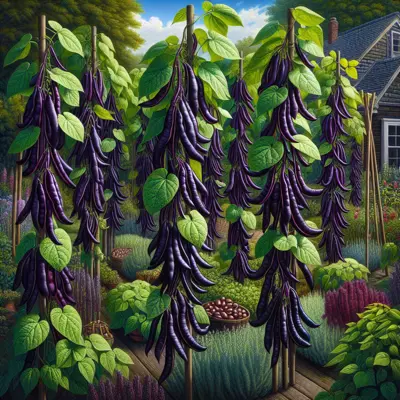
A sacred heirloom bean carried by Cherokee people during their forced relocation in the 1830s, preserving both history and exceptional flavor. These beautiful purple-black beans produce abundantly and are prized for their rich, meaty texture and deep, complex flavor that improves with cooking. A living piece of American history that connects modern gardeners to indigenous agricultural traditions.
Harvest
85-95d
Days to harvest
Sun
Full sun
Zones
2–11
USDA hardiness
Difficulty
Easy
Planting Timeline
Showing dates for Cherokee Trail of Tears in USDA Zone 7
All Zone 7 bean →Zone Map
Click a state to update dates
Cherokee Trail of Tears · Zones 2–11
Growing Details
Succession Planting
Cherokee Trail of Tears runs 85-95 days to harvest and keeps setting pods once it gets going, but heat shuts it down — blossom drop starts in earnest when daytime highs stay above 95°F. In zone 7, direct sow your first planting around April 15 once soil temps are reliably above 60°F, then make a second sowing 3-4 weeks later to push the harvest window toward late September. UGA's vegetable calendar notes a third planting in May is reasonable for snap beans, and that third sowing can carry you into October if the fall stays mild.
Don't sow after June 15 in zone 7. Seeds germinate fine in summer heat, but plants started then will hit their flowering stage right in the worst of August, and pod set suffers badly. That bed space is better used for a fall brassica or turnip planting once the bean season wraps up.
Complete Growing Guide
Light: Full sun (6 or more hours of direct sunlight a day). Soil: High Organic Matter. Drainage: Good Drainage. Spacing: 6-feet-12 feet. Growth rate: Rapid. Maintenance: High. Propagation: Seed. Regions: Coastal, Mountains, Piedmont.
Harvesting
The boat-shaped seed pods are bilaterally symmetrical and can be green, yellow, white, or purple at maturity. There is a wide variety of color and shape choices among cultivars.
Color: Gold/Yellow, Green, Purple/Lavender, White. Type: Legume. Length: > 3 inches. Width: < 1 inch.
Garden value: Edible, Good Dried
Harvest time: Fall, Summer
Storage & Preservation
Fresh pods should be used within 3-4 days when stored in the refrigerator in perforated bags. However, Cherokee Trail of Tears beans truly shine as dried beans. After harvest, ensure beans are completely dry before storage—any residual moisture leads to mold and spoilage.
Store dried beans in airtight containers in a cool, dark location. Glass jars, food-grade buckets, or sealed mylar bags work well. Properly stored dried beans maintain peak flavor for 2-3 years, though they remain edible much longer. For long-term storage, place containers in the freezer for 48 hours to eliminate any potential weevil eggs.
Freezing fresh beans works well after blanching for 3 minutes, though the texture becomes softer. These beans are excellent candidates for traditional Native American preservation methods like drying whole pods and storing them in baskets or clay vessels.
History & Origin
Origin: Tropical America
Advantages
- +Fast-growing
Considerations
- -Toxic (Seeds): Medium severity
- -High maintenance
Companion Plants
The Three Sisters planting — corn, beans, squash — works as well with Cherokee Trail of Tears as with any pole bean. Corn at 6-8 inch spacing gives the vines something to climb, the beans fix nitrogen that feeds the corn through the season, and squash sprawls underneath shading out weeds while slowing soil moisture loss. In our zone 7 Georgia garden, that last part matters more than people expect — anything keeping bare soil out of direct sun from July into September is genuinely earning its space. Marigolds (Tagetes spp.) tucked at the bed edges pull their weight too, deterring Mexican bean beetles and aphids without competing for root room below.
Summer savory is less talked-about but it has a long history planted alongside beans — the herb is said to repel bean beetles, and the pairing shows up in kitchen garden records going back several centuries. Radishes and nasturtiums both work as trap crops: radishes can confuse aphids and are pulled long before the beans fill in, while nasturtiums draw aphids away from bean foliage onto their own leaves where you can deal with them.
Keep onions, garlic, and fennel out of this bed entirely. Alliums produce compounds that interfere with bean germination and early root development — it's consistent enough that most extension sources flag it directly, not as a mild concern. Fennel is worse; it releases allelopathic compounds from its roots that suppress neighboring plants broadly, and it has no practical place in a mixed vegetable planting unless it's isolated in its own container.
Plant Together
Corn
Provides natural trellis structure for climbing beans in Three Sisters method
Squash
Ground cover that retains moisture and suppresses weeds in Three Sisters planting
Marigold
Repels Mexican bean beetles and other harmful insects
Nasturtium
Trap crop for aphids and cucumber beetles, deters bean beetles
Radish
Loosens soil for bean roots and deters cucumber beetles
Carrots
Different root depths prevent competition and carrots help loosen soil
Cucumber
Benefits from nitrogen fixed by beans, compatible growth habits
Summer Savory
Repels bean beetles and may improve bean flavor and growth
Keep Apart
Onion
Inhibits bean growth and nitrogen fixation through root secretions
Garlic
Stunts bean growth and interferes with beneficial soil bacteria
Fennel
Allelopathic compounds inhibit bean germination and growth
Nutrition Facts
Per 100g serving. % Daily Value based on 2,000 calorie diet. Source: USDA FoodData Central (FDC #2346400)
Pests & Disease Resistance
Resistance
Good general disease resistance, typical of heirloom pole beans
Common Pests
Bean beetles, aphids, spider mites
Diseases
Bacterial blight, anthracnose, rust
Troubleshooting Cherokee Trail of Tears
What you'll see, why it happens, and what to do about it.
Leaves with irregular chunks missing, sometimes alongside small orange-bronze beetles clustered on the undersides — showing up anywhere from mid-June onward
Likely Causes
- Mexican bean beetle (Epilachna varivestis) — larvae and adults both chew leaf tissue from the underside, leaving a skeletonized look
- Bean leaf beetle (Cerotoma trifurcata) — punches clean round holes through leaves and can vector bean pod mottle virus
What to Do
- 1.Hand-pick egg clusters (yellow, football-shaped, on leaf undersides) and drop them in soapy water — do this every 2-3 days when populations are building
- 2.For heavy pressure, apply spinosad or pyrethrin per label; UGA's Georgia Pest Management Handbook lists approved materials and pre-harvest intervals
- 3.Pull and bag any heavily infested plant material — don't compost it
Water-soaked spots on leaves that turn brown and papery, sometimes with a yellow halo; pods showing dark, sunken lesions
Likely Causes
- Bacterial blight (Pseudomonas syringae pv. phaseolicola or Xanthomonas axonopodis) — spreads fast in wet, humid weather, especially after overhead irrigation or heavy rain
- Anthracnose (Colletotrichum lindemuthianum) — fungal, produces dark sunken pod lesions and can overwinter in seed and crop debris
What to Do
- 1.Switch to drip or soaker hose and water in the morning so foliage dries before nightfall
- 2.Strip off and trash (not compost) affected leaves and pods at first sign; don't work in the bed when the foliage is wet
- 3.Rotate beans out of this bed for at least 2 seasons — NC State Extension's organic gardening guidance notes that rotating legumes also breaks disease cycles while nitrogen-fixing bacteria in the roots rebuild the soil
Small, powdery orange or rust-brown pustules on the undersides of leaves, with corresponding yellow spots on top — usually appearing 30-40 days after germination
Likely Causes
- Bean rust (Uromyces appendiculatus) — an airborne fungal disease that spreads rapidly in warm, humid conditions, exactly what Georgia summers deliver from July onward
What to Do
- 1.Remove and bag affected leaves as soon as you spot them — every infected leaf is shedding spores onto the ones below it
- 2.Apply sulfur-based fungicide at first sign; reapply every 7-10 days if wet weather continues
- 3.Space plants the full 4-6 inches apart and clear dead foliage off the trellis as it accumulates — Cherokee Trail of Tears is a vigorous climber and the canopy gets dense fast
Frequently Asked Questions
How long does Cherokee Trail of Tears beans take to grow?▼
Can you grow Cherokee Trail of Tears beans in containers?▼
What do Cherokee Trail of Tears beans taste like?▼
When should I plant Cherokee Trail of Tears beans?▼
Are Cherokee Trail of Tears beans good for beginners?▼
Do Cherokee Trail of Tears beans need a trellis?▼
Zone-by-Zone Planting Calendar
| Zone | Indoor Start | Transplant | Direct Sow | Harvest |
|---|---|---|---|---|
| Zone 1 | — | — | July – August | November – August |
| Zone 2 | — | — | June – August | October – September |
| Zone 11 | — | — | January – March | May – July |
| Zone 12 | — | — | January – March | May – July |
| Zone 13 | — | — | January – March | May – July |
| Zone 3 | — | — | June – July | October – October |
| Zone 4 | — | — | June – July | September – October |
| Zone 5 | — | — | May – June | September – October |
| Zone 6 | — | — | May – June | September – October |
| Zone 7 | — | — | April – June | August – October |
| Zone 8 | — | — | April – May | August – September |
| Zone 9 | — | — | March – April | July – August |
| Zone 10 | — | — | February – April | June – August |
Growing Guides from Wind River Greens
Sources & References
External authority sources used in compiling this guide.
See the Methodology page for how this data is sourced, what's AI-assisted, and known limitations.