Japanese Long
Solanum melongena 'Japanese Long'
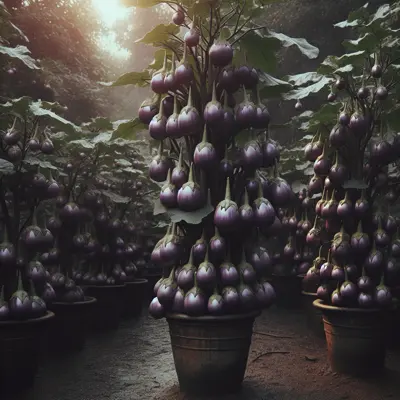
An elegant Asian variety producing slender, foot-long fruits with incredibly tender skin that never needs peeling. The sweet, mild flesh has virtually no bitterness and cooks quickly, making it perfect for stir-fries and Asian cuisine. This productive variety offers a completely different eggplant experience from traditional globe types.
Harvest
70-80d
Days to harvest
Sun
Full sun
Zones
9–12
USDA hardiness
Height
2-4 feet
Planting Timeline
Showing dates for Japanese Long in USDA Zone 7
All Zone 7 eggplant →Zone Map
Click a state to update dates
Japanese Long · Zones 9–12
Growing Details
Succession Planting
Japanese Long eggplant keeps producing on the same plant for the whole season — no succession cadence needed the way there is with lettuce or radishes. One planting per season is the standard move: start seeds indoors 8–10 weeks before your last frost (late January to mid-February in zone 7), transplant out in April or May once nights stay reliably above 55°F, and harvest through September or until frost threatens.
In zones 10–12 where the season genuinely runs year-round, a second round of transplants started 6 weeks after the first can push harvest into late fall. The second-round plants tend to be smaller and lower-yielding before cold or short days slow them down, so it's only worth the bench space if you have a real use for that late fruit.
Complete Growing Guide
Light: Full sun (6 or more hours of direct sunlight a day). Soil: Loam (Silt), Sand. Soil pH: Acid (<6.0). Drainage: Good Drainage, Moist. Height: 2 ft. 0 in. - 4 ft. 0 in.. Spread: 1 ft. 0 in. - 3 ft. 0 in.. Spacing: 3 feet-6 feet. Growth rate: Medium. Maintenance: Medium. Propagation: Seed.
Harvesting
The fruit is a berry that is egg-shaped, smooth and has glossy skin. The fruit may measure 4 to 8 inches long. It ranges in color from green to white, to purple-black when immature and when it should be eaten. As the fruit matures it gets stringy and bitter. Fruit contains numerous small, flat, pale yellow to brown seeds.
Color: Black, Gold/Yellow, Green, Purple/Lavender, White. Type: Berry. Length: > 3 inches.
Garden value: Edible, Showy
Harvest time: Fall, Summer
Edibility: The immature fruit is edible and best used in food preparation. As the fruit matures, it becomes stringy and bitter. The fruits are usually cooked and served as a vegetable. They may be prepared and eaten by frying, steaming, grilling, roasting, or stewing. They may also be stir-fried, pickled, stuffed, and fried with a light breading.
Storage & Preservation
Store freshly harvested Japanese Long eggplants at room temperature for up to 5 days—refrigeration causes the tender skin to pit and the flesh to become bitter. If you must refrigerate, wrap individual fruits in paper towels and use within 3-4 days. These thin-skinned eggplants don't store as long as thick-skinned globe varieties.
For preservation, slice into rounds and salt for 30 minutes to draw out moisture, then freeze in single layers on baking sheets before transferring to freezer bags—frozen slices work perfectly for stir-fries and curries. Japanese Long eggplants also excel when pickled using traditional Asian brining methods with rice vinegar and miso. Avoid canning due to their low acidity, but they dry beautifully when cut into thin strips and dehydrated at 135°F for 8-10 hours, creating concentrated strips perfect for reconstituting in soups and stews.
History & Origin
Origin: China South-Central, Laos, Malaya, Myanmar, Thailand, Vietnam
Advantages
- +Attracts: Bees
- +Edible: The immature fruit is edible and best used in food preparation. As the fruit matures, it becomes stringy and bitter. The fruits are usually cooked and served as a vegetable. They may be prepared and eaten by frying, steaming, grilling, roasting, or stewing. They may also be stir-fried, pickled, stuffed, and fried with a light breading.
Considerations
- -Toxic (Flowers, Leaves, Roots, Stems): High severity
Companion Plants
Basil is the obvious neighbor, and it genuinely pulls its weight near eggplant. The volatile oils in basil — linalool and eugenol specifically — are thought to disrupt thrips and aphids trying to locate a host. How big the effect is in practice is an open question, but basil wants the same heat, the same steady moisture, and the same pH range (6.0–7.0) as eggplant, so there's no resource competition. You're not sacrificing anything to plant it close. Marigolds (Tagetes patula) are a better tool against flea beetles: their root secretions suppress soil nematodes, and a dense planting along bed edges slows beetle movement into the eggplant rows. Place them 12 inches in from the perimeter rather than right at the edge — you want them inside the flight path, not just decorating the border.
Tomatoes and peppers are practical neighbors for spacing and irrigation purposes, but NC State Extension warns against concentrating too many nightshades in one block. Verticillium dahliae doesn't care that you've planted your whole nightshade family together for convenience — it'll move through a monoculture block faster than a diversified planting. Break up the block with a row of beans or something outside the Solanaceae family.
Fennel is the one to cut entirely. Its root exudates are allelopathic — they actively inhibit neighboring plants — and eggplant is sensitive enough that you'll see stunted growth even at moderate proximity. Corn is a different problem: at 6–8 feet it will shade a 2–4 foot eggplant plant hard, and eggplant needs full sun (6+ hours) to set fruit reliably. Unless you have 10–12 feet of clearance between them, they don't belong in the same bed.
Plant Together
Basil
Repels aphids, spider mites, and hornworms while potentially improving eggplant flavor
Tomatoes
Share similar growing requirements and pest management strategies as nightshade family members
Peppers
Compatible nightshades that benefit from similar soil conditions and watering schedules
Marigolds
Repel nematodes, aphids, and whiteflies while attracting beneficial insects
Nasturtiums
Act as trap crops for aphids and flea beetles, drawing pests away from eggplant
Oregano
Deters pests like aphids and spider mites with its strong aromatic compounds
Hot Peppers
Natural pest deterrent that repels many insects harmful to eggplant
Catnip
Repels flea beetles, ants, and aphids that commonly attack eggplant
Keep Apart
Black Walnut
Produces juglone toxin that severely stunts or kills nightshade family plants
Fennel
Releases allelopathic compounds that inhibit growth of most vegetables including eggplant
Corn
Creates excessive shade and competes for nutrients, reducing eggplant fruit production
Nutrition Facts
Per 100g serving. % Daily Value based on 2,000 calorie diet. Source: USDA FoodData Central (FDC #169228)
Pests & Disease Resistance
Resistance
Good resistance to common fungal diseases
Common Pests
Flea beetles, aphids, spider mites, thrips
Diseases
Verticillium wilt, fusarium wilt, bacterial wilt
Troubleshooting Japanese Long
What you'll see, why it happens, and what to do about it.
Tiny shothole-style pits on leaves and stems of young transplants, leaves may look shredded by week 2–3 after setting out
Likely Causes
- Flea beetles (Epitrix fuscula) — overwinter in soil and leaf litter, emerge hungry in spring when transplants go out
- Transplants set out before they're well-established and hardened off
What to Do
- 1.Cover transplants immediately with row cover (Agribon AG-19 or similar) and leave it on until plants are 12+ inches tall and actively pushing new growth
- 2.If damage is already heavy on seedlings under 6 inches, apply spinosad or pyrethrin according to label rates — both are approved for organic use
- 3.Clear out crop debris after harvest; flea beetles overwinter in it
Plant wilts suddenly and completely despite adequate soil moisture — cutting the stem crosswise shows brown or tan streaking in the vascular tissue
Likely Causes
- Verticillium wilt (Verticillium dahliae) or Fusarium wilt (Fusarium oxysporum) — soil-borne fungi that colonize the root system and block water transport
- Planting eggplant or any other nightshade in the same bed two or more years running
What to Do
- 1.Pull and trash the affected plant — don't compost it; fungal spores survive most home compost piles
- 2.Rotate nightshades (eggplant, tomatoes, peppers, potatoes) out of that bed for at least 3 years; NC State Extension notes that some pathogens like Ralstonia solanacearum persist in soil indefinitely, so longer rotations are better where space allows
- 3.If that bed is your only option, grow eggplant in containers using bagged potting mix and make sure the mix never contacts native soil
Fruit skin develops pale, papery patches on the sun-exposed side, with white or tan spongy flesh underneath
Likely Causes
- Sunscald — direct UV exposure on fruit after canopy loss, which can follow aggressive pruning or heavy flea beetle defoliation
- Drought stress causing rapid leaf drop and exposing previously shaded fruit
What to Do
- 1.Mulch the bed before dry spells begin — UGA Extension recommends getting mulch down by blooming time, before the plant needs it rather than after
- 2.Don't strip more than one-third of the canopy at a time when removing damaged leaves
- 3.Pick fruit early if a heat event is coming — Japanese Long types are best harvested at 8–10 inches anyway, and smaller fruit handles heat better than fully mature ones
Frequently Asked Questions
How long does Japanese Long eggplant take to grow from seed?▼
Can you grow Japanese Long eggplant in containers?▼
What does Japanese Long eggplant taste like compared to regular eggplant?▼
When should I plant Japanese Long eggplant seeds?▼
Is Japanese Long eggplant good for beginners?▼
Japanese Long vs Black Beauty eggplant - what's the difference?▼
Zone-by-Zone Planting Calendar
| Zone | Indoor Start | Transplant | Direct Sow | Harvest |
|---|---|---|---|---|
| Zone 1 | May – May | July – August | — | October – August |
| Zone 2 | April – May | June – July | — | September – September |
| Zone 11 | January – January | January – February | — | April – June |
| Zone 12 | January – January | January – February | — | April – June |
| Zone 13 | January – January | January – February | — | April – June |
| Zone 3 | April – April | June – July | — | September – October |
| Zone 4 | March – April | June – June | — | August – October |
| Zone 5 | March – March | May – June | — | August – October |
| Zone 6 | March – March | May – June | — | August – October |
| Zone 7 | February – March | April – May | — | July – September |
| Zone 8 | February – February | April – May | — | July – September |
| Zone 9 | January – January | March – April | — | June – August |
| Zone 10 | January – January | February – March | — | May – July |
Growing Guides from Wind River Greens
Sources & References
External authority sources used in compiling this guide.
See the Methodology page for how this data is sourced, what's AI-assisted, and known limitations.