Beefsteak
Solanum lycopersicum 'Beefsteak'
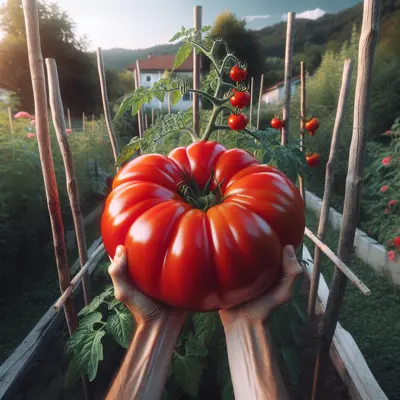
The classic giant of the tomato world, producing massive fruits that can weigh over a pound each. These impressive slicing tomatoes have been a garden favorite for generations, offering substantial, meaty slices perfect for sandwiches and burgers. Their size and reliable production make them a must-have for gardeners who want to impress with truly spectacular harvests.
Harvest
85-90d
Days to harvest
Sun
Full sun
Zones
10–11
USDA hardiness
Height
1-10 feet
Planting Timeline
Showing dates for Beefsteak in USDA Zone 7
All Zone 7 tomato →Zone Map
Click a state to update dates
Beefsteak · Zones 10–11
Growing Details
Complete Growing Guide
Given their massive fruit size, Beefsteak tomatoes demand robust indeterminate support systems—sturdy cages or stakes are essential to prevent branch breakage under fruit weight. These cultivars require consistent watering and feeding throughout their extended 85-90 day season; irregular moisture triggers blossom-end rot and fruit cracking, so drip irrigation with mulch is ideal. Beefsteak varieties are particularly susceptible to early blight in humid conditions, making aggressive pruning of lower foliage and spacing for air circulation critical. Their vigorous vines tend toward excessive leafy growth at the expense of flowering, especially in nitrogen-rich soil, so switch to lower-nitrogen fertilizers once flowering begins. Prune suckers aggressively and limit plants to 2-3 main stems for better light penetration and fruit development. In cooler climates, start seeds indoors 6-8 weeks before the last frost to maximize growing time before season's end.
Light: Full sun (6 or more hours of direct sunlight a day). Soil: Clay, High Organic Matter, Loam (Silt), Sand. Soil pH: Acid (<6.0), Neutral (6.0-8.0). Drainage: Good Drainage, Moist. Height: 1 ft. 0 in. - 10 ft. 0 in.. Spread: 1 ft. 0 in. - 4 ft. 0 in.. Spacing: 3 feet-6 feet. Growth rate: Rapid. Maintenance: High. Propagation: Seed. Regions: Coastal, Mountains, Piedmont.
Harvesting
Beefsteak tomatoes reach peak harvest readiness when they achieve their characteristic deep red color throughout, with fruits weighing a pound or more and yielding slightly to gentle pressure when cradled in your palm. Unlike determinate varieties that produce a single flush, Beefsteak plants deliver fruit continuously throughout the season, rewarding patient harvesting of ripe specimens while leaving immature fruits to develop. For optimal flavor and texture, pick tomatoes in early morning after the dew dries, as this timing preserves their juiciness and reduces stress on the plant, encouraging sustained production through late summer.
The fruits are smooth, shiny, glossy, and are classified as berries. The size, shape, and color will vary depending on the variety or cultivar. The color of the fruits may be red, yellow, orange, green, purple, or pink. The fruits may contain over 100 yellow to light brown seeds.
Color: Gold/Yellow, Green, Orange, Pink, Purple/Lavender, Red/Burgundy, Variegated. Type: Berry. Length: > 3 inches. Width: > 3 inches.
Garden value: Edible, Showy
Harvest time: Fall, Summer
Edibility: The fruits or berries of the tomato are edible. They may be eaten raw, cooked, dried, or processed. They are a rich source of Vitamin A, Vitamin C, folic acid, and antioxidants. Lycopene is an antioxidant that gives the tomato its rich red color. Many plants will drop fruit when ripe or the fruit will come off easily. Tomatoes will continue to ripen once picked. Store them at room temperature.
Storage & Preservation
Store freshly harvested Beefsteak tomatoes at room temperature away from direct sunlight until fully ripe, then move to the refrigerator at 50-55°F with moderate humidity to extend shelf life to 5-7 days. Keep them in a single layer rather than stacked to prevent bruising. Fresh eating is where these tomatoes shine, and refrigeration will dull their mild, balanced flavor, so remove them an hour before serving to restore sweetness.
For preservation, freezing works well if you plan to use them in sauces or soups—core and freeze whole on a tray, then transfer to freezer bags. Roasting and freezing concentrates their flavor nicely. While their size makes them impractical for whole-fruit canning, you can peel, quarter, and freeze them in their own juices. Drying is less ideal given their low acid and mild taste. Their thin skin and large cavity make them excellent candidates for stuffing before freezing—prepare as you would serve them, then freeze on a sheet pan.
History & Origin
The exact origin of Beefsteak tomatoes remains somewhat obscured by history, as the variety emerged from the broader tradition of large-fruited slicing tomatoes developed in North America during the late nineteenth and early twentieth centuries. Rather than tracing to a single breeder or documented introduction, Beefsteak represents a collective achievement across multiple seed companies and home gardeners who selected and stabilized large-fruited types suited to American gardens. The name itself reflects the variety's defining characteristic—thick, substantial flesh reminiscent of beef—though specific genealogical records connecting it to particular parent varieties or breeding programs are limited. What remains clear is that Beefsteak became a cornerstone of American gardening heritage, standardized across numerous seed catalogs by the mid-twentieth century as a reliable, impressive heirloom type.
Origin: Peru
Advantages
- +Massive fruits weighing over a pound provide impressive yields per plant
- +Meaty texture and mild flavor make them ideal for slicing and sandwiches
- +Reliable producer with consistent harvests across 85-90 days
- +Classic variety trusted by gardeners for generations of proven performance
- +Low acidity creates balanced, sweet taste appreciated by most palates
Considerations
- -Prone to blossom end rot when calcium uptake becomes inconsistent
- -Large fruits frequently crack during heavy rain or irregular watering
- -Moderate to challenging difficulty requires careful attention and experience
- -Susceptible to late blight and fusarium wilt in humid growing conditions
Companion Plants
Basil is the obvious neighbor — I plant it within 18 inches of every Beefsteak I put in the ground, and the two share water and fertility needs closely enough that one bed management plan covers both crops without much extra thought. Marigolds (Tagetes patula specifically) pull real weight: their root secretions suppress root-knot nematodes in the surrounding soil, which matters in our zone 7 Georgia gardens where nematode pressure on heirloom tomatoes runs high all season. Carrots and parsley fill the lower canopy without competing for the same root depth as a sprawling Beefsteak. Keep fennel and Black Walnut well clear — fennel is broadly allelopathic and stunts whatever grows near it, and Black Walnut releases juglone through its root zone, which is directly toxic to Solanum lycopersicum even at moderate soil concentrations.
Plant Together
Basil
Repels aphids and whiteflies, may improve tomato flavor
Marigold
Deters nematodes and repels hornworms and other pests
Carrots
Loosens soil around tomato roots and doesn't compete for space
Parsley
Attracts beneficial insects and acts as living mulch
Peppers
Similar growing requirements and compatible root systems
Oregano
Repels aphids and spider mites while attracting pollinators
Chives
Repels aphids and may help prevent fungal diseases
Nasturtium
Acts as trap crop for aphids and cucumber beetles
Keep Apart
Black Walnut
Produces juglone toxin that causes tomato wilt and death
Fennel
Inhibits tomato growth through allelopathic compounds
Corn
Both attract corn earworms and compete for similar nutrients
Brassicas
Heavy nitrogen feeders that compete with tomatoes for nutrients
Nutrition Facts
Per 100g serving. % Daily Value based on 2,000 calorie diet. Source: USDA FoodData Central (FDC #321360)
Pests & Disease Resistance
Resistance
Limited resistance; requires good garden hygiene and air circulation
Common Pests
Tomato hornworm, aphids, spider mites, cutworms
Diseases
Blossom end rot, cracking, late blight, fusarium wilt
Troubleshooting Beefsteak
What you'll see, why it happens, and what to do about it.
Dark, sunken, leathery patch on the blossom end of fruit, appearing as fruit reaches tennis-ball size
Likely Causes
- Blossom end rot — calcium deficiency in developing fruit caused by inconsistent soil moisture, not usually a lack of calcium in the soil itself
- Irregular watering cycles (drought then flood) that interrupt calcium uptake through the roots
What to Do
- 1.Water on a consistent schedule — drip irrigation works best for Beefsteaks; aim for 1 to 1.5 inches per week and don't let the soil dry out between waterings
- 2.Mulch 3–4 inches deep with straw to buffer soil moisture swings
- 3.Pull affected fruit off the plant — it won't recover — so the plant redirects energy to healthy fruit
Fruit skin splitting radially or concentrically after a heavy rain following a dry stretch
Likely Causes
- Cracking — rapid water uptake after drought stress causes the flesh to expand faster than the skin
- Beefsteak types are especially prone to this due to their large fruit size and thin skin relative to volume
What to Do
- 1.Consistent moisture is the fix — mulch heavily and water deeply 2–3 times a week rather than lightly every day
- 2.Harvest fruit at first blush of color and ripen indoors during a stretch of wet weather
- 3.Next season, consider a slightly raised bed with good drainage so roots aren't sitting in saturated soil after storms
Large patches of foliage turning gray-green then brown and collapsing quickly — sometimes overnight — with dark, greasy-looking lesions on fruit
Likely Causes
- Late blight (Phytophthora infestans) — spreads fast in cool, wet conditions; NC State Extension specifically flags this as a disease worth monitoring across the region, and the timing of its appearance varies year to year
- Spores blow in from neighboring fields or infected transplants purchased from a shared retail source
What to Do
- 1.Remove and bag infected plant material immediately — do not compost it
- 2.Apply a copper-based fungicide preventively if late blight has been reported in your county; once symptoms cover most of the canopy, the crop is usually a loss
- 3.NC State's Plant Disease and Insect Clinic (PDIC) monitors late blight pressure in North Carolina annually — check their updates before your July–August window
Entire plant wilts and doesn't recover overnight, no obvious stem damage, roots show brown or tan discoloration inside when cut
Likely Causes
- Fusarium wilt (Fusarium oxysporum f. sp. lycopersici) — soilborne fungus that colonizes vascular tissue and blocks water movement
- Southern bacterial wilt (Ralstonia solanacearum) — also soilborne, also causes sudden collapse; the two look nearly identical above ground
- Beefsteak, as an heirloom variety, carries no built-in resistance to either — NC State Extension notes that heirloom tomatoes often lack resistance to soilborne diseases compared to modern hybrids bred with coded resistance markers
What to Do
- 1.Dig up and destroy affected plants including the full root ball — do not compost
- 2.NC State Extension recommends rotating tomatoes out of an infected bed for five to seven years; if your garden is small, grow in containers using fresh potting mix and make sure container soil never contacts native soil
- 3.For future seasons, look into grafted Beefsteak transplants — NC State's AG-675 guide by Rivard and Louws covers grafting heirloom tomatoes onto disease-resistant rootstock specifically
Frequently Asked Questions
How long do beefsteak tomatoes take to grow from seed?▼
Can you grow beefsteak tomatoes in containers?▼
Why are my beefsteak tomatoes cracking?▼
Are beefsteak tomatoes good for beginners?▼
What does a beefsteak tomato taste like?▼
How big do beefsteak tomato plants get?▼
Zone-by-Zone Planting Calendar
| Zone | Indoor Start | Transplant | Direct Sow | Harvest |
|---|---|---|---|---|
| Zone 3 | April – April | June – July | — | September – October |
| Zone 4 | March – April | June – June | — | September – October |
| Zone 5 | March – March | May – June | — | August – October |
| Zone 6 | March – March | May – June | — | August – October |
| Zone 7 | February – March | April – May | — | July – September |
| Zone 8 | February – February | April – May | — | July – September |
| Zone 9 | January – January | March – April | — | June – August |
| Zone 10 | January – January | February – March | — | May – July |
| Zone 1 | May – May | July – August | — | October – August |
| Zone 2 | April – May | June – July | — | September – September |
| Zone 11 | January – January | January – February | — | April – June |
| Zone 12 | January – January | January – February | — | April – June |
| Zone 13 | January – January | January – February | — | April – June |
Growing Guides from Wind River Greens
Sources & References
External authority sources used in compiling this guide.
See the Methodology page for how this data is sourced, what's AI-assisted, and known limitations.