Hollyhock Chater's Double Mix
Alcea rosea 'Chater's Double'
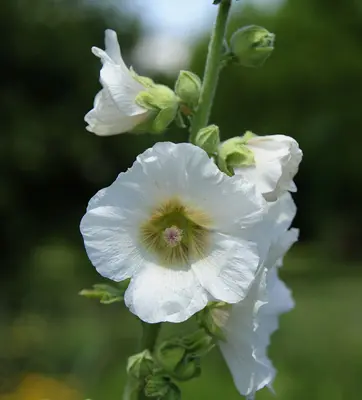
Towering cottage garden favorites that create dramatic vertical accents with their impressive 6-8 foot spikes covered in fully double, ruffled flowers resembling peonies in shades of pink, red, white, yellow, and purple. These old-fashioned beauties are perfect for creating privacy screens, backdrop plantings, or adding height to perennial borders while attracting beneficial insects and hummingbirds. Self-seeding readily to create naturalized colonies over time.
Harvest
120-150d
Days to harvest
Sun
Full sun
Zones
5–9
USDA hardiness
Height
5-8 feet
Planting Timeline
Showing dates for Hollyhock Chater's Double Mix in USDA Zone 7
All Zone 7 flower →Zone Map
Click a state to update dates
Hollyhock Chater's Double Mix · Zones 5–9
Growing Details
Complete Growing Guide
Light: Full sun (6 or more hours of direct sunlight a day). Soil: Clay, Loam (Silt), Sand. Soil pH: Acid (<6.0), Alkaline (>8.0), Neutral (6.0-8.0). Drainage: Good Drainage, Moist, Occasionally Dry. Height: 5 ft. 0 in. - 8 ft. 0 in.. Spread: 1 ft. 0 in. - 2 ft. 0 in.. Spacing: 12 inches-3 feet. Growth rate: Rapid. Maintenance: High. Propagation: Seed. Regions: Coastal, Mountains, Piedmont.
Harvesting
The schizocarp contains oval, flattened, and notched seeds that readily germinate.
Type: Schizocarp.
Harvest time: Fall
Edibility: Can be used as a showy edible garnish or a container for dip.
Storage & Preservation
Fresh hollyhock flowers keep best when stored stem-down in water in the refrigerator for up to 3 days. For immediate use, place cut stems in cool water and use within 24 hours for peak flavor and appearance.
Dry flowers for tea by removing petals and spreading them on screens in a well-ventilated, dark area. Properly dried petals retain color and can be stored in airtight containers for up to one year. Freeze individual petals in ice cube trays for colorful drink garnishes – they'll maintain their appearance for several months.
Young leaves can be dried like other leafy herbs or used fresh in salads. Seeds should be thoroughly dried and stored in paper envelopes in a cool, dry location where they remain viable for 3-4 years.
History & Origin
Origin: Turkey and western Asia
Advantages
- +Attracts: Bees, Butterflies, Hummingbirds, Pollinators, Songbirds
- +Edible: Can be used as a showy edible garnish or a container for dip.
- +Fast-growing
Considerations
- -High maintenance
Companion Plants
Lavender and catmint are genuinely useful neighbors here — both attract pollinators that work the hollyhock blooms, and their aromatic foliage discourages aphids (Aphis fabae and relatives) from settling in. Marigolds pull double duty: they draw in hoverflies that prey on aphids, and their root mass stays shallow enough that it doesn't compete with hollyhocks, which develop a substantial taproot by their second year. Delphinium and foxglove fit naturally into the same bed — similar height, same full-sun preference, and neither crowds hollyhocks at the root level.
Black walnut is a hard no. Its roots and decomposing leaf litter release juglone, a compound that disrupts root respiration in sensitive plants — hollyhocks included. Symptoms look like sudden wilt or slow decline with no obvious cause, and by the time you figure out what happened, the plant is usually done. Cucumbers are a softer concern: they don't chemically interfere, but both crops are fungal-disease magnets, and packing them together creates the still, damp canopy that lets hollyhock rust (Phragmidium alceae) spread unchecked.
Plant Together
Lavender
Repels aphids and other pests that commonly attack hollyhocks
Marigold
Deters nematodes and aphids while attracting beneficial insects
Delphinium
Similar growing conditions and creates attractive tall backdrop combinations
Roses
Hollyhocks attract beneficial insects that help control rose pests
Foxglove
Compatible growing requirements and complementary flowering heights
Catmint
Repels flea beetles and aphids that can damage hollyhock foliage
Cosmos
Attracts beneficial insects and pollinators while requiring similar care
Sunflowers
Compatible tall growth habits and both attract beneficial pollinators
Keep Apart
Black Walnut
Produces juglone toxin that inhibits hollyhock growth and can cause wilting
Cucumber
Both susceptible to similar fungal diseases, increasing disease pressure
Fennel
Allelopathic properties inhibit growth of most companion plants including hollyhocks
Pests & Disease Resistance
Resistance
Susceptible to rust disease, especially in humid conditions
Common Pests
Japanese beetles, aphids, spider mites, hollyhock weevil
Diseases
Rust (most common), anthracnose, leaf spot, powdery mildew
Troubleshooting Hollyhock Chater's Double Mix
What you'll see, why it happens, and what to do about it.
Orange powdery pustules on the undersides of leaves, with corresponding yellow spots on top — often showing up by midsummer
Likely Causes
- Hollyhock rust (Phragmidium alceae) — the single most common hollyhock problem, spreads fast in humid conditions
- Overhead watering that keeps foliage wet overnight
- Poor airflow from crowded spacing under 12 inches
What to Do
- 1.Strip and bag every affected leaf — don't compost them, the spores overwinter
- 2.Water at the base only, in the morning
- 3.Next season, space plants at least 18 inches apart and thin basal foliage to open up airflow
Ragged holes chewed in leaves and flowers, often with metallic green-bronze beetles present in clusters during July and August
Likely Causes
- Japanese beetles (Popillia japonica) — they're drawn to hollyhocks and will skeletonize foliage fast in peak season
What to Do
- 1.Hand-pick beetles in the early morning when they're sluggish and drop them into soapy water
- 2.Avoid Japanese beetle traps near your planting — NC State Extension notes the traps attract more beetles than they catch
- 3.Apply neem oil as a deterrent before populations peak, not after the damage is already heavy
Tiny holes or notches eaten from leaf edges near the base of the plant, with no obvious pest visible during the day
Likely Causes
- Hollyhock weevil (Apion longirostre) — adults feed on foliage and lay eggs in seed capsules; damage looks minor but the seed crop suffers
- Slugs — especially on young plants or during wet springs, feeding at night
What to Do
- 1.Check under leaves and around the soil line at dusk with a flashlight to distinguish weevils from slugs
- 2.For weevils, remove and destroy seed heads before they mature if populations are high — that interrupts the next generation
- 3.For slugs, ring the base of plants with diatomaceous earth or set out a shallow dish of beer as a trap
Frequently Asked Questions
How long does Hollyhock Chater's Double Mix take to bloom from seed?▼
Can you grow Hollyhock Chater's Double Mix in containers?▼
How do you prevent rust disease on Hollyhock Chater's Double Mix?▼
When should I plant Hollyhock Chater's Double Mix seeds?▼
What do Hollyhock Chater's Double Mix flowers taste like?▼
Do Hollyhocks Chater's Double Mix come back every year?▼
Zone-by-Zone Planting Calendar
| Zone | Indoor Start | Transplant | Direct Sow | Harvest |
|---|---|---|---|---|
| Zone 3 | April – May | June – July | June – August | — |
| Zone 4 | March – April | June – June | June – July | — |
| Zone 5 | March – April | May – June | May – July | — |
| Zone 6 | March – April | May – June | May – July | — |
| Zone 7 | February – March | April – May | April – June | — |
| Zone 8 | February – March | April – May | April – June | — |
| Zone 9 | January – February | March – April | March – May | — |
| Zone 10 | January – January | February – March | February – April | — |
| Zone 1 | May – June | July – August | July – September | — |
| Zone 2 | April – May | June – July | June – August | — |
| Zone 11 | January – January | January – February | January – March | — |
| Zone 12 | January – January | January – February | January – March | — |
| Zone 13 | January – January | January – February | January – March | — |
Growing Guides from Wind River Greens
Sources & References
External authority sources used in compiling this guide.
- ExtensionNC State Extension
See the Methodology page for how this data is sourced, what's AI-assisted, and known limitations.