Dill Microgreens
Anethum graveolens
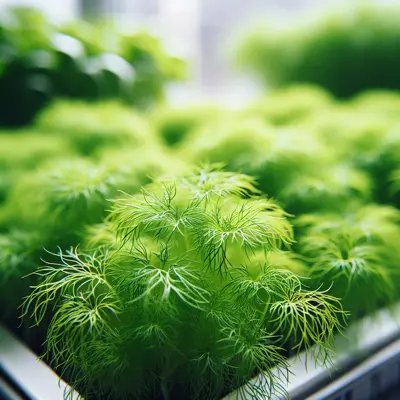
Finely textured, medium-green leaves. Combine micro dill with fish, egg, and potato dishes for delicate, sweet citrusy notes.
Harvest
16-25d
Days to harvest
Sun
Full sun to partial shade
Zones
2–11
USDA hardiness
Height
2-5 feet
Planting Timeline
Showing dates for Dill Microgreens in USDA Zone 7
All Zone 7 microgreen →Zone Map
Click a state to update dates
Dill Microgreens · Zones 2–11
Growing Details
Succession Planting
Dill microgreens don't produce continuously — you cut the whole tray once and that's it — so succession is the only way to keep a steady supply. Sow a new tray every 7 to 10 days. That cadence, stacked against the 16-to-25-day harvest window, means you'll almost always have one tray finishing just as the next clears germination.
Because dill microgreens grow year-round indoors across zones 2–11, there's no seasonal cutoff to plan around. No heat threshold, no frost date — just keep rotating trays on that 7-to-10-day interval as long as you want the harvest coming in.
Complete Growing Guide
Dill microgreens require patience due to their 16-25 day maturation window, significantly longer than most microgreen varieties, so plan accordingly for succession planting. These seeds need consistent moisture and moderate light to prevent the common tendency toward leggy, stretched growth that compromises their delicate texture. Maintain soil temperature between 60-70°F and provide good air circulation to reduce damping-off disease, which particularly affects dill's fine seedlings. Unlike heartier microgreens, dill is prone to bolting prematurely if exposed to excessive heat or light intensity, so avoid direct afternoon sun and keep growing environments cool. One practical advantage: soak dill seeds for 12 hours before planting to accelerate germination and reduce the overall growing timeline by 2-3 days. Harvest at the cotyledon stage before true leaves emerge to capture that intense, citrusy dill flavor at peak potency.
Light: Full sun (6 or more hours of direct sunlight a day), Partial Shade (Direct sunlight only part of the day, 2-6 hours). Soil: High Organic Matter, Loam (Silt), Sand. Soil pH: Acid (<6.0), Neutral (6.0-8.0). Drainage: Good Drainage, Moist. Height: 2 ft. 6 in. - 5 ft. 0 in.. Spread: 2 ft. 0 in. - 3 ft. 0 in.. Spacing: 12 inches-3 feet. Growth rate: Medium. Maintenance: Low. Propagation: Seed. Regions: Coastal, Mountains, Piedmont.
Harvesting
Dill microgreens reach peak harvest readiness when the cotyledons display a vibrant medium-green color and the first true leaves emerge with their characteristic feathery texture, typically between 16-25 days. Gently press the stems—they should feel firm yet tender, not woody or brittle. These microgreens support a single-harvest approach rather than continuous cutting, as regrowth is minimal after the initial cut. For optimal flavor intensity, harvest in the morning after any surface moisture has dried but before the day's heat intensifies the plant's respiration, which can diminish the delicate citrus notes that make dill microgreens distinctive for culinary applications.
Dill fruits are oval, compressed with ridges and progress from bright green color to dark brown with age. They have a pleasant aromatic odor.
Color: Brown/Copper, Green. Type: Schizocarp. Length: < 1 inch. Width: < 1 inch.
Garden value: Edible, Fragrant
Harvest time: Fall, Spring, Summer
Edibility: Leaves (dill weed), seeds, and flowers are edible (used in teas, pickling, and as culinary seasoning). Dill herb and dill seed oils are steam-distilled and used by the food industry as seasonings. Add to pickles, mince in butter, and cook with salmon, borscht, fish, and soups. Dill can be used in teas and as seasoning for butter, cakes, bread, vinegars, soups, fish, pickles, salads, etc.
Storage & Preservation
# Storage and Preservation
Freshly harvested dill microgreens keep best in a sealed container lined with paper towels to absorb excess moisture, stored in the refrigerator at 35–40°F with 85–90% humidity. Use a breathable plastic clamshell or shallow glass dish rather than airtight bags, which can promote rot. Under these conditions, expect a fresh shelf life of 5–7 days, though flavor and texture begin declining after three days.
For longer preservation, freeze dill microgreens in ice cube trays with a touch of water or oil—this works better than dry freezing for maintaining their delicate structure when thawed. Alternatively, dry them slowly in a dehydrator at 95–105°F until brittle, then store in an airtight jar away from light. The dried version concentrates the tangy flavor and works well in winter soups and sauces.
Dill microgreens are particularly suited to infusing vinegars; simply pack fresh greens into a clean jar, cover with white wine or champagne vinegar, and let steep for two weeks. The result captures their aromatic intensity brilliantly for pickling projects and dressings.
History & Origin
Dill microgreens derive from Anethum graveolens, an herb with ancient origins in the Mediterranean and South Asia, cultivated for thousands of years in traditional cuisines and medicine. While the parent dill plant has deep historical roots, the specific breeding lineage and introduction of dill as a commercial microgreen variety lacks detailed documented attribution. The modern microgreens movement gained momentum in the 1980s and 1990s, driven primarily by culinary innovation and seed companies developing fast-growing, nutrient-dense varieties. Dill was naturally adopted into microgreen cultivation due to its rapid germination, attractive appearance, and concentrated flavor profile. Documentation of particular breeders or seed companies credited with formal dill microgreen introduction remains scarce in accessible horticultural records.
Origin: Mediterranean, southern Russia, northern and western Africa
Advantages
- +Intense dill flavor makes micro dill perfect for gourmet culinary applications
- +Finely textured leaves add elegant visual appeal to premium plated dishes
- +Relatively pest-resistant when grown indoors with minimal aphid issues
- +Versatile ingredient pairs excellently with fish, eggs, and potato dishes
- +16-25 day harvest window allows reasonable production turnaround
Considerations
- -Damping-off fungal disease requires careful moisture management during germination
- -Powdery mildew develops easily in humid growing conditions indoors
- -Moderate difficulty rating means beginners may struggle with consistent results
- -Slow germination and extended growth period compared to faster microgreens
Companion Plants
Dill microgreens are harvested so fast — 16 to 25 days — that companion planting is really about what's growing in adjacent trays. Basil, cilantro, and parsley are natural tray-neighbors: all three tolerate the same daily misting schedule and 4-6 hours of light without one crop pulling ahead or falling behind. Fennel is the one to separate out; its volatile compounds (primarily anethole and fenchone) can suppress germination in nearby herb trays even at microgreen scale. Carrot and tomato conflicts are root-zone and allelopathic issues that simply don't transfer to a 10×20 flat.
Plant Together
Basil
Repels aphids and thrips that commonly affect dill, enhances growth through companion synergy
Chives
Natural pest deterrent against aphids and fungus gnats in microgreen growing environments
Lettuce
Compatible growing conditions with similar light and moisture requirements
Cilantro
Similar growing timeline and harvest period, attracts beneficial predatory insects
Parsley
Compatible umbelliferous family member with similar nutrient needs
Spinach
Cool-season companion with complementary root depth and nutrient uptake
Arugula
Fast-growing brassica that deters pests through natural compounds
Radish Microgreens
Natural pest deterrent and soil aerator, compatible growing conditions
Keep Apart
Fennel
Allelopathic compounds inhibit germination and growth of dill and most other plants
Carrots
Competes for similar nutrients and can attract carrot rust fly which also affects dill
Tomatoes
Different pH and nutrient requirements, tomato plants can stunt dill growth
Nutrition Facts
Per 100g serving. % Daily Value based on 2,000 calorie diet. Source: USDA FoodData Central (FDC #172233)
Pests & Disease Resistance
Resistance
Good resistance when properly ventilated
Common Pests
Aphids occasionally, minimal pest issues indoors
Diseases
Damping-off, powdery mildew in humid conditions
Troubleshooting Dill Microgreens
What you'll see, why it happens, and what to do about it.
Seedlings collapse at the soil line within the first 5-8 days after germination
Likely Causes
- Damping-off (Pythium or Fusarium spp.) — fungal rot triggered by excess moisture and poor airflow
- Overwatering or trays sitting in standing water
What to Do
- 1.Back off misting immediately — the medium should feel barely damp, not wet
- 2.Run a small fan on low nearby to improve airflow over the tray surface
- 3.If it keeps happening, soak seeds in a 1% hydrogen peroxide solution for 5 minutes before sowing and start fresh with a sterile growing medium
White powdery coating on cotyledons or first true leaves, usually after day 12
Likely Causes
- Powdery mildew (Erysiphe heraclei) — thrives when humidity stays above 70% with little air movement
- Trays packed too close together, blocking circulation
What to Do
- 1.Space trays so air can move between them — even an inch of gap helps
- 2.Harvest immediately; dill microgreens at this stage are still edible, and waiting only worsens the spread
- 3.Next round, keep ambient humidity below 60% if possible and run a fan continuously
Leggy, pale yellow stems reaching more than 3 inches tall before day 16
Likely Causes
- Insufficient light — fewer than 4 hours of direct sun or a grow light positioned more than 4 inches above the tray
- Skipping the blackout/weight phase during germination, which lets stems stretch before roots have anchored
What to Do
- 1.Move the tray to a south-facing windowsill or drop your grow light to within 2-3 inches of the canopy
- 2.For the next sowing, cover the seeded tray with a second tray and set a small weight on top — a full water bottle works — for the first 4-5 days to push roots down and keep stems upright
Frequently Asked Questions
How long do dill microgreens take to grow?▼
Do dill microgreens taste like regular dill?▼
Can you grow dill microgreens without soil?▼
Are dill microgreens good for beginners?▼
Why are my dill microgreens falling over?▼
Can you regrow dill microgreens after cutting?▼
Zone-by-Zone Planting Calendar
| Zone | Indoor Start | Transplant | Direct Sow | Harvest |
|---|---|---|---|---|
| Zone 3 | January – December | — | — | January – December |
| Zone 4 | January – December | — | — | January – December |
| Zone 5 | January – December | — | — | January – December |
| Zone 6 | January – December | — | — | January – December |
| Zone 7 | January – December | — | — | January – December |
| Zone 8 | January – December | — | — | January – December |
| Zone 9 | January – December | — | — | January – December |
| Zone 10 | January – December | — | — | January – December |
| Zone 1 | January – December | — | — | January – December |
| Zone 2 | January – December | — | — | January – December |
| Zone 11 | January – December | — | — | January – December |
| Zone 12 | January – December | — | — | January – December |
| Zone 13 | January – December | — | — | January – December |
Growing Guides from Wind River Greens
Sources & References
External authority sources used in compiling this guide.
- ExtensionNC State Extension
- USDAUSDA FoodData Central
See the Methodology page for how this data is sourced, what's AI-assisted, and known limitations.