Chia Microgreens
Salvia hispanica
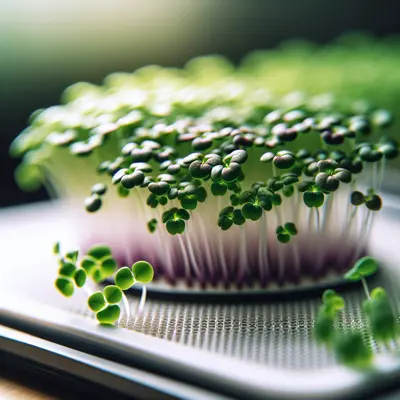
These nutrient-dense microgreens offer a unique growing experience as the seeds become gelatinous when wet, creating their own natural growing medium. Chia microgreens have delicate, tender leaves with a mild, slightly tangy flavor that's completely different from the crunchy seeds. They're packed with omega-3 fatty acids and provide a gourmet touch to salads and smoothies.
Harvest
7-14d
Days to harvest
Sun
Full sun to partial shade
Zones
5–10
USDA hardiness
Height
1-3 feet
Planting Timeline
Showing dates for Chia Microgreens in USDA Zone 7
All Zone 7 microgreen →Zone Map
Click a state to update dates
Chia Microgreens · Zones 5–10
Growing Details
Succession Planting
Chia microgreens are a true succession crop indoors — seed a fresh 10x20 tray every 5-7 days year-round to keep a steady supply. One tablespoon of seed per tray is plenty; the gel coating means heavier seeding just rots.
If you're running a single rack, stagger chia with faster microgreens like radish (6-8 days) so you're not waiting two weeks between harvests. Keep ambient temps between 65-75°F; above 80°F the gel goes slimy and germination drops off.
Complete Growing Guide
Light: Full sun (6 or more hours of direct sunlight a day), Partial Shade (Direct sunlight only part of the day, 2-6 hours). Soil: Clay, High Organic Matter, Loam (Silt), Sand, Shallow Rocky. Drainage: Good Drainage. Height: 1 ft. 0 in. - 3 ft. 0 in.. Spread: 1 ft. 0 in. - 3 ft. 0 in.. Spacing: 12 inches-3 feet. Growth rate: Medium. Maintenance: Low. Propagation: Division, Seed, Stem Cutting. Regions: Coastal, Mountains, Piedmont.
Harvesting
The schizocarp breaks apart into four nutlets. They are held in the calyx until released by wind or taken by birds. Some species, including chia, produce edible nutlets.
Type: Nut, Schizocarp. Length: < 1 inch. Width: < 1 inch.
Garden value: Edible
Edibility: Leaves can be used fresh or dried for seasonings and teas, and the flowers are edible.
Storage & Preservation
Fresh chia microgreens should be stored in the refrigerator immediately after harvest. Gently rinse to remove any gel residue, then thoroughly dry using a salad spinner or paper towels - excess moisture from the mucilaginous coating can cause rapid deterioration. Store in a breathable container lined with paper towels, changing the towels if they become damp.
Properly stored chia microgreens maintain quality for 5-7 days in the refrigerator at 35-40°F with moderate humidity. Unlike heartier microgreens, these don't freeze well due to their high water content and delicate cell structure.
For preservation, dehydrating is your best option - use a dehydrator at 95°F for 6-8 hours until completely crisp. The dried microgreens make excellent additions to spice blends or can be powdered for smoothie supplements. Freezing in ice cubes works for smoothie preparation, though texture will be compromised for other uses.
History & Origin
Origin: Worldwide
Advantages
- +Attracts: Bees, Butterflies, Hummingbirds, Pollinators, Songbirds
- +Edible: Leaves can be used fresh or dried for seasonings and teas, and the flowers are edible.
- +Low maintenance
Companion Plants
Chia is a microgreen, so "companions" here mostly means what plays well in a mixed tray or on the same propagation rack — not field neighbors. Basil, cilantro, arugula, and radish all run on similar 7-14 day timelines and like the same misting routine, so you can stagger them on one shelf without juggling watering schedules. Pea shoots and lettuce are gentler on water but tolerate the same 65-75°F range chia prefers. Chives and spinach round out a salad-mix tray nicely if you're harvesting all at once.
The harmful list is more about adjacency than chemistry. Fennel and mint both put out volatile oils that can taint delicate microgreens stored or grown nearby — chia has a mild, nutty flavor that picks up off-notes easily. Walnut shows up because chia is occasionally grown on coir or compost that's been near walnut debris, and juglone residues can knock down germination on a crop this small. The bigger day-to-day risk with chia trays, though, is overwatering — not bad neighbors.
Plant Together
Basil
Repels aphids and spider mites, creates favorable microclimate for moisture retention
Lettuce
Similar growing conditions and harvest timing, efficient space utilization
Radish
Quick germination helps break soil crust, improving air circulation for chia seeds
Cilantro
Compatible moisture needs and attracts beneficial insects that control pests
Arugula
Similar cool-season preferences and harvest schedule, complementary flavors
Spinach
Shares optimal growing temperature range and light requirements
Pea Shoots
Nitrogen fixation benefits soil, similar water requirements for microgreen production
Chives
Natural antifungal properties help prevent damping-off disease in seedlings
Keep Apart
Fennel
Produces allelopathic compounds that inhibit seed germination and root development
Mint
Aggressive spreading nature competes for space and nutrients in growing medium
Walnut
Juglone toxicity from roots and leaves severely stunts growth of most seedlings
Nutrition Facts
Per 100g serving. % Daily Value based on 2,000 calorie diet. Source: USDA FoodData Central (FDC #167782)
Pests & Disease Resistance
Resistance
Good resistance to most diseases
Common Pests
Minimal pest issues indoors
Diseases
Overwatering can cause rot due to gel coating
Troubleshooting Chia Microgreens
What you'll see, why it happens, and what to do about it.
Seeds form a thick gel mat but never sprout, or sprout unevenly after day 5
Likely Causes
- Seeded too heavily — chia's mucilage coating swells 9-12x its dry volume and suffocates seeds underneath
- Tray kept too wet during the blackout phase, no air reaching the seed
What to Do
- 1.Re-seed at 1 tablespoon per 10x20 tray, no more — spread by hand, don't pour
- 2.Mist 2-3 times daily instead of bottom-watering during days 1-3; the gel holds its own moisture
- 3.Uncover the tray briefly each day to let surface air exchange happen
Fuzzy white growth on the gel layer around day 3-4, sometimes mistaken for mold
Likely Causes
- Root hairs — normal on chia, cress, and arugula; they look like mold but are fine and white, hugging the seed
- Actual damping-off (Pythium) — gray-white, web-like, and the seedlings collapse at the soil line
What to Do
- 1.Mist the tray lightly; if the 'fuzz' disappears or flattens, it was root hairs
- 2.If seedlings are flopping and the growth is slimy, toss the tray and sterilize with a 10% bleach rinse before reusing
- 3.Drop ambient humidity below 70% and increase airflow with a small fan
Leggy, pale yellow stems 2-3 inches tall with tiny undeveloped cotyledons by day 8
Likely Causes
- Blackout period extended too long — chia only needs 3-4 days covered, not a full week
- Insufficient light after uncovering (less than 12 hours under grow lights, or weak window light)
What to Do
- 1.Uncover at day 3 once you see consistent germination, even if stems look pale
- 2.Run grow lights 14-16 hours daily at 6-12 inches above the tray
- 3.Harvest at day 10-12 once cotyledons green up; don't wait for true leaves — chia gets bitter
Frequently Asked Questions
How long do chia microgreens take to grow?▼
Can you grow chia microgreens without soil?▼
Why do my chia microgreens get slimy?▼
What do chia microgreens taste like?▼
Are chia microgreens good for beginners?▼
Can chia microgreens be grown in regular potting soil?▼
Zone-by-Zone Planting Calendar
| Zone | Indoor Start | Transplant | Direct Sow | Harvest |
|---|---|---|---|---|
| Zone 1 | January – December | — | — | January – December |
| Zone 2 | January – December | — | — | January – December |
| Zone 11 | January – December | — | — | January – December |
| Zone 12 | January – December | — | — | January – December |
| Zone 13 | January – December | — | — | January – December |
| Zone 3 | January – December | — | — | January – December |
| Zone 4 | January – December | — | — | January – December |
| Zone 5 | January – December | — | — | January – December |
| Zone 6 | January – December | — | — | January – December |
| Zone 7 | January – December | — | — | January – December |
| Zone 8 | January – December | — | — | January – December |
| Zone 9 | January – December | — | — | January – December |
| Zone 10 | January – December | — | — | January – December |
Growing Guides from Wind River Greens
Sources & References
External authority sources used in compiling this guide.
See the Methodology page for how this data is sourced, what's AI-assisted, and known limitations.