Desert Rose
Helianthus annuus
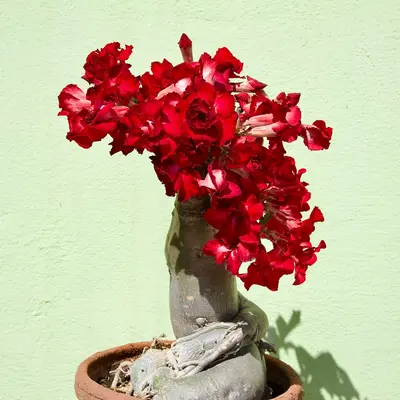
Desert Rose (Adenium obesum) is a striking succulent prized for its vibrant pink, red, or bicolor flowers and distinctive swollen stem base. Blooms emerge after 85-95 days of maturity, thriving in full sun conditions. The plant's thick, fleshy leaves and sculptural trunk create an eye-catching focal point in arid gardens or container displays. Highly toxic and not edible; primarily valued as an ornamental houseplant or landscape accent. Popular among collectors for its exotic appearance and relatively low maintenance requirements in well-draining cactus soil.
Harvest
85-95d
Days to harvest
Sun
Full sun
Zones
2–11
USDA hardiness
Height
1-10 feet
Complete Growing Guide
Desert Rose sunflowers thrive when started indoors four to six weeks before your last spring frost, allowing seedlings to develop sturdy root systems before transplanting outdoors. Direct sowing is equally viable if soil temperatures reach at least 50°F, though indoor starting gives you a head start in shorter growing seasons. Plant seeds half an inch deep in seed-starting mix, keeping soil consistently moist until germination occurs in seven to ten days. Once seedlings emerge, provide bright light to prevent legginess, as these branching varieties need strong stems to support their multiple flower heads.
When transplanting Desert Rose into the garden, space plants 18 to 24 inches apart in full sun locations receiving at least six hours of direct light daily. This cultivar's sturdy, thick stems and prolific branching habit—potentially yielding 20 to 25 stems per plant—requires room to develop properly without crowding. Prepare soil by working in compost or aged manure to improve drainage and nutrient content. Sunflowers prefer slightly alkaline to neutral soil, so aim for a pH between 6.0 and 7.5. Though tolerant of average soil, Desert Rose rewards enriched beds with more robust growth and larger blooms.
Water deeply at soil level once or twice weekly, depending on rainfall and heat. During establishment, keep soil evenly moist but not waterlogged, as this variety is susceptible to root rot in overly wet conditions. Once established, reduce frequency but maintain consistent moisture, especially as flower buds develop. Feed monthly with a balanced, low-nitrogen fertilizer starting when plants reach 12 inches tall. Excessive nitrogen promotes foliage at the expense of flowers, so avoid the temptation to overfeed.
Desert Rose's branching tendency requires minimal pruning, though removing the terminal bud when plants reach 12 inches encourages bushier development and more side shoots. Spider mites thrive in hot, dry conditions and commonly attack these plants, particularly in stressed greenhouse or indoor settings. Check leaf undersides regularly, especially during heat waves, and spray with water or neem oil if stippling appears. Mealybugs and scale insects also target Desert Rose; inspect stems and leaf joints frequently and treat early infestations with horticultural soap. Monitor carefully for stem rot and leaf spot fungal diseases by ensuring good air circulation and avoiding overhead watering.
One critical mistake gardeners make is underestimating Desert Rose's mature height and branching spread. These plants reach eight to ten feet tall and develop wide lateral growth, requiring sturdy support structures and ample space. Plant them where they won't shade smaller neighbors, and stake or cage early to prevent storm damage to laden stems.
Harvesting
Peak harvest readiness for Desert Rose occurs when the back of the flower head transitions from bright green to golden-brown and the outer disc florets fully mature, typically 7-10 days after the petals fully open. The stem should feel firm but not brittle when gently squeezed. Desert Rose exhibits a continuous branching pattern, producing successive flushes of flowers rather than a single harvest, allowing multiple cuts per plant throughout the growing season. For optimal stem longevity in arrangements, harvest in early morning before heat stress accumulates, cutting stems at a 45-degree angle just as the flower reaches full diameter but before pollen fully develops, which maximizes vase life.
Seeds are ovoid and somewhat flattened
Color: Black, Brown/Copper. Type: Achene. Length: < 1 inch. Width: < 1 inch.
Garden value: Edible
Harvest time: Fall
Edibility: Seeds are used for cooking oil, livestock feed, and as a snack food or garnish. Petals are edible and young flower buds can be steamed like artichokes.
Storage & Preservation
Desert Rose plants are best kept in a warm location (65-85°F) with low humidity to prevent root rot. Store on a bright counter or windowsill rather than the refrigerator. Mature plants can last 10-20+ years with proper care. For preservation: (1) Propagation from stem cuttings allows easy plant multiplication—let cuttings dry 1-2 days, then root in sandy soil; (2) Seed collection from mature plants enables long-term storage and seasonal reproduction; (3) Winter dormancy management by reducing water and temperature maintains plant vigor through cold months.
History & Origin
Desert Rose emerged as a significant ornamental sunflower breakthrough, representing a major advancement in branching sunflower breeding. As the successor to the variety Sonja, it was developed to address the demand for larger blooms and stronger stems suitable for cut flower production and commercial floristry. The variety achieved recognition as the first sunflower to receive an All-America Selections award, establishing its importance in American horticulture. While specific breeder attribution and exact development year are not well documented in readily available sources, Desert Rose clearly belongs to the ornamental sunflower breeding lineage that prioritized branching habit, multiple stems per plant, and greenhouse-friendly day-length neutral characteristics, positioning it within mid-to-late twentieth-century commercial flower breeding programs.
Origin: Western United States
Advantages
- +Larger flowers and thicker stems than Sonja variety provide superior visual impact
- +Produces 20-25 stems per plant for substantial cut flower yield
- +First sunflower to win All-America Selections award demonstrates superior breeding
- +Day-length neutral allows year-round greenhouse production without light manipulation
- +Minimal pollen reduces allergen concerns and keeps arrangements cleaner
Considerations
- -Susceptible to spider mites, mealybugs, and scale insects requiring regular monitoring
- -Vulnerable to root rot and stem rot in poorly draining or overwatered conditions
- -Moderate difficulty level requires more expertise than beginner-friendly varieties
Companion Plants
The succulents and drought-tolerant plants listed as beneficial companions — Echeveria, Jade Plant, Barrel Cactus, Agave, Sedum — make good neighbors for one straightforward reason: they all want the same soil conditions. Well-draining, low-organic, allowed to dry out between waterings. Grouping them together means you're not fighting competing schedules. Lavender and Rosemary fit the same profile — both prefer lean, gritty soil with a pH around 6.0-7.0 and won't suffer if the top 2 inches go dry before the next watering. No allelopathy or pest-confusion chemistry at play here; it's purely about compatible care rhythms.
Impatiens, Ferns, and Hostas are a problem for the opposite reason. All three want consistently moist, humus-rich soil, and keeping them happy means you're chronically overwatering a Desert Rose. Ferns in particular prefer shade and high humidity — conditions that actively invite the Phytophthora root rot and Cercospora leaf spot this plant is most susceptible to. Separate beds, full stop.
Plant Together
Jade Plant
Similar watering and light requirements, creates attractive succulent groupings
Echeveria
Complementary growth habits and identical drought tolerance needs
Aloe Vera
Matches desert conditions and low-water requirements perfectly
Barrel Cactus
Thrives in same arid conditions and provides contrasting textures
Sedum
Ground-covering habit complements upright Desert Rose structure
Lavender
Drought-tolerant with natural pest-repelling properties
Rosemary
Mediterranean herb with similar low-water needs and pest deterrent qualities
Agave
Architectural form creates visual interest while sharing desert growing conditions
Keep Apart
Impatiens
High moisture requirements conflict with Desert Rose's need for dry conditions
Ferns
Prefer humid environments and frequent watering that causes Desert Rose root rot
Hostas
Require shade and consistent moisture, opposite of Desert Rose needs
Pests & Disease Resistance
Resistance
Generally disease resistant, susceptible to root rot
Common Pests
Spider mites, mealybugs, scale insects
Diseases
Root rot, stem rot, leaf spot
Troubleshooting Desert Rose
What you'll see, why it happens, and what to do about it.
Stems turning black or mushy at the base, leaves wilting despite moist soil
Likely Causes
- Root rot or stem rot (Phytophthora or Pythium spp.) — almost always triggered by overwatering or a pot with no drainage
- Heavy clay soil or compacted mix that holds water around the crown
What to Do
- 1.Unpot the plant, cut off all blackened roots with clean shears, and let the bare roots air-dry for 24-48 hours before repotting into fresh, gritty mix (at least 50% perlite or coarse sand)
- 2.Use a container with drainage holes — standing water at the bottom of a sealed pot is the most reliable way to kill this plant
- 3.Water only when the top 2 inches of soil are fully dry; in cool weather that might mean once every 10-14 days
Tiny yellow stippling or fine webbing on leaves, especially in hot, dry spells
Likely Causes
- Spider mites (Tetranychus urticae) — they thrive in low humidity and above 80°F, and spread fast between plants in close quarters
- Dusty or dry indoor conditions that go unchecked for weeks
What to Do
- 1.Spray the undersides of leaves thoroughly with insecticidal soap — repeat every 5-7 days for at least 3 rounds to break the egg cycle
- 2.Isolate the affected plant immediately so mites don't cross to neighboring succulents
- 3.Rinse the plant down with a firm stream of water outdoors before treating — knocks off a large portion of the population
Brown or tan circular spots on leaves, sometimes with a yellow halo, appearing after a wet stretch
Likely Causes
- Leaf spot (Cercospora or Alternaria spp.) — fungal, spreads via water splash and poor airflow
- Leaving water sitting on the foliage overnight, especially in humid conditions
What to Do
- 1.Remove and discard all spotted leaves — don't compost them
- 2.Water at the soil line rather than overhead, and do it in the morning so any splash dries by midday
- 3.If spotting continues to spread, apply a copper-based fungicide every 7-10 days until new growth comes in clean