Kapoor Tulsi (Holy Basil)
Ocimum africanum
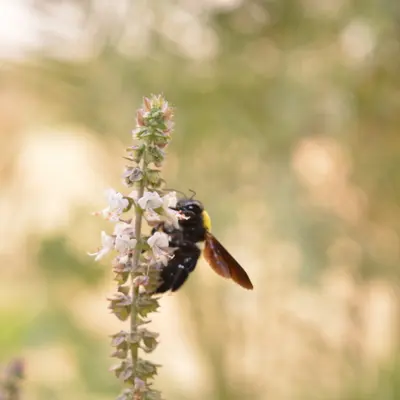
Compact but very full, attractive plants. Mild spicy aroma with hints of sweetness. Faster growing than green holy basil, and its purple flowers also make it a nice beneficial and/or ornamental. For teas, culinary, and medicinal use. Appears to have some resistance to downy mildew in our trials. Also known as "Spice Basil" and often referred to as Ocimum sanctum, although sanctum is not botanically correct. Ht. 12-18".
Harvest
60d
Days to harvest
Sun
Full sun
Zones
10–10
USDA hardiness
Height
0 ft. 4 in. - 3 ft. 0 in.
Planting Timeline
Showing dates for Kapoor Tulsi (Holy Basil) in USDA Zone 7
All Zone 7 herb →Zone Map
Click a state to update dates
Kapoor Tulsi (Holy Basil) · Zones 10–10
Growing Details
Succession Planting
Kapoor Tulsi keeps producing through the warm season as long as you stay on top of pinching flower heads before they open fully — once a plant bolts and sets seed, leaf production drops sharply and the flavor turns bitter. Rather than sowing in tight succession, most growers do better keeping 3 to 4 plants going and harvesting hard every 10 to 14 days to push that flowering cycle back.
If you want a fresh flush of younger plants mid-season, start a second round indoors 6 to 8 weeks after your first transplant date. In most zones, a second wave transplanted in late June or early July will carry through to first frost without issue. Stop sowing once daytime highs are consistently above 90°F — germination rates hold up, but seedlings struggle to establish in peak summer heat.
Complete Growing Guide
Kapoor Tulsi performs best when started indoors four to six weeks before your last frost date, allowing seedlings to develop strong root systems before transplanting outdoors. Direct sowing is also possible after all danger of frost has passed and soil has warmed to at least 70°F, though indoor starting gives you faster, more uniform plants ready to harvest sooner. Seeds are tiny and should be scattered on moist seed-starting mix and pressed gently into the surface without covering, as they need light to germinate. Germination occurs within seven to ten days under warm conditions.
Space Kapoor Tulsi plants twelve to eighteen inches apart to accommodate their naturally compact yet full growth habit. These plants are bushier and more vigorous than green holy basil, so proper spacing prevents crowding and improves air circulation around the foliage. Plant in well-draining soil rich in organic matter; Kapoor Tulsi appreciates fertility but struggles in waterlogged conditions. Work compost into your planting area before transplanting and ensure your garden bed receives full sun for at least six to eight hours daily to encourage the fastest growth and best flavor development.
Water consistently, keeping soil evenly moist but never soggy. During hot weather, daily watering may be necessary, but in cooler periods, reduce frequency to prevent root rot. Once established, Kapoor Tulsi is moderately drought-tolerant, though productivity declines with stress. Feed every three to four weeks with a balanced fertilizer diluted to half strength, as excessive nitrogen can dilute the distinctive spicy-sweet flavor profile this variety is prized for. Reduce feeding as plants mature to concentrate aromatic compounds.
The most notable pest and disease advantage of Kapoor Tulsi is its demonstrated resistance to downy mildew, a fungal disease that devastates many basil varieties in humid conditions. However, monitor for Japanese beetles and spider mites, which occasionally trouble holy basil. Good air circulation helps prevent both pest populations and fungal issues.
Pinch out the growing tips when plants reach six inches tall to encourage bushier, fuller development and delay flowering. Continue pinching throughout the season to maximize leaf harvest and extend productivity. The purple flowers are ornamental and beneficial to pollinators, but removing them before full bloom redirects energy into foliage production. Succession planting every three to four weeks provides continuous harvests through the growing season.
The most common mistake gardeners make with Kapoor Tulsi is over-watering, especially early in the season when plants are still establishing. The combination of poor drainage and cool soil temperatures creates conditions where roots rot before the plant even reaches productive size. Let soil dry slightly between waterings and ensure exceptional drainage by amending heavy clay soils generously with compost or perlite.
Harvesting
Bloom time: Summer
Edibility: Leaves and flowers in tea, as flavoring
Storage & Preservation
# Storage and Preservation
Fresh Kapoor Tulsi leaves are best stored in the refrigerator at 4–8°C in a sealed plastic bag or container lined with paper towel to absorb excess moisture; expect 7–10 days of usable shelf life before leaves begin to darken and lose potency. For longer-term preservation, drying is ideal—hang bundles in a warm, well-ventilated space away from direct sunlight for 1–2 weeks, then strip leaves and store in airtight glass jars away from light. Freezing also works well: blanch leaves briefly, pat dry, and freeze on trays before transferring to freezer bags for up to three months. Kapoor Tulsi's camphoraceous oils are particularly volatile, so avoid heat-based drying methods that can diminish the distinctive aroma prized in traditional preparations. For medicinal infusions, drying concentrates the therapeutic compounds, making this the preferred method if you're harvesting specifically for wellness tea blends.
History & Origin
Kapoor Tulsi (Holy Basil) is open-pollinated, meaning seed saved from healthy plants will produce true-to-type offspring. Listed in the Johnny's Selected Seeds catalog.
Origin: Tropical Africa and Asia
Advantages
- +Edible: Leaves and flowers in tea, as flavoring
- +Fast-growing
- +Low maintenance
Companion Plants
Kapoor Tulsi slots in well next to tomatoes, peppers, and eggplant — all warm-season crops going in around the same time, needing similar water and sun, and getting harvested on overlapping schedules through summer. The whitefly and aphid deterrence claim gets repeated a lot; what's more provable is that dense plantings of strong-scented herbs do disrupt pest navigation, and basil at 12 to 18 inches won't shade out a tomato cage or compete for the same root zone. Cucumber is a reasonable neighbor too, and Kapoor Tulsi's aromatic oils may reduce whitefly pressure on cucurbit leaves — which are already prone to late-season trouble from downy mildew and spider mites without adding insect stress on top.
French marigolds (Tagetes patula) belong at the edges of any bed where you're growing tulsi near eggplant or cucumber with nematode history. NC State Extension specifically recommends a solid planting of French marigolds in affected beds before rotating back to susceptible crops — they suppress root-knot nematodes at a level that most other companion plants don't. Mint works fine as a neighbor if it's physically contained, a pot sunk into the soil being the standard approach; left loose in a bed it can consume 2 square feet in a single season and crowd out anything nearby.
Fennel is the one to keep well away — it produces allelopathic compounds that inhibit germination and growth in many neighboring plants, and basil is notably sensitive to it. Give fennel its own isolated corner at least 3 to 4 feet from anything you value. Black walnut produces juglone at the root level, a compound toxic to a wide range of plants; don't put tulsi anywhere within the drip line of one.
Plant Together
Tomatoes
Holy basil repels hornworms, aphids, and whiteflies that commonly attack tomatoes
Peppers
Deters aphids, spider mites, and thrips while enhancing pepper growth
Eggplant
Repels flea beetles and aphids that frequently damage eggplant leaves
Cucumber
Helps deter cucumber beetles and improves overall plant vigor
Marigolds
Both plants repel nematodes and create a strong pest-deterrent combination
Mint
Enhances aromatic pest-repelling properties and deters ants and rodents
Oregano
Complements pest control by repelling aphids and provides similar growing conditions
Rosemary
Repels carrot flies, cabbage moths, and mosquitoes while tolerating similar soil conditions
Keep Apart
Black Walnut
Produces juglone toxin that inhibits growth and can kill holy basil plants
Fennel
Releases allelopathic compounds that stunt growth of most herbs including holy basil
Rue
Secretes compounds that inhibit seed germination and growth of basil family plants
Nutrition Facts
Per 100g serving. % Daily Value based on 2,000 calorie diet. Source: USDA FoodData Central (FDC #172232)
Pests & Disease Resistance
Resistance
Downy Mildew (Intermediate)
Common Pests
Spider mites, aphids, whiteflies
Diseases
Downy mildew (some resistance noted), powdery mildew, root rot in poorly drained soil
Troubleshooting Kapoor Tulsi (Holy Basil)
What you'll see, why it happens, and what to do about it.
Gray or white fuzzy coating on upper leaf surfaces, usually appearing in late summer when humidity stays high
Likely Causes
- Powdery mildew — a fungal infection that thrives in warm, humid conditions with poor airflow
- Overcrowded planting at less than 12 inches apart, trapping moisture around foliage
What to Do
- 1.Mix 1 tablespoon baking soda plus 1 tablespoon summer horticultural oil in 1 gallon of water and spray as a preventive every 3 to 5 days — NC State Extension's organic disease management guidance lists this combination as effective against powdery mildew
- 2.Neem oil also works as a preventive; reapply every 4 days or so since water and sunlight break it down within about 100 hours
- 3.Strip and trash the worst-affected leaves, and thin plants to improve airflow between stems
Stems turning brown and mushy at the soil line, plant wilting even when soil is moist
Likely Causes
- Root rot — most often Pythium or Rhizoctonia spp. — triggered by waterlogged, poorly drained soil
- Transplanting into cold, wet soil before it has warmed sufficiently in spring
What to Do
- 1.Pull the affected plant; once the crown is gone it won't recover
- 2.Before replanting, work compost or coarse perlite into the bed to open up drainage — Kapoor Tulsi wants consistent moisture but can't sit in standing water
- 3.Hold off on transplanting until soil temperature is reliably warm; NC State Extension notes that cold, wet planting conditions set up similar warm-season crops for exactly this kind of crown and root failure
Tiny stippled or bronzed patches on leaves, fine webbing on the undersides, typically showing up during a hot dry stretch
Likely Causes
- Spider mites (Tetranychus urticae) — populations spike when temperatures stay above 85°F and humidity drops
- Water stress that weakens the plant and makes it more attractive to mite colonization
What to Do
- 1.Blast the undersides of leaves with a firm stream of water early in the morning so foliage has time to dry before evening
- 2.Follow up with neem oil applied to the leaf undersides — NC State Extension's organic guidelines note neem functions as a miticide in addition to suppressing fungal disease
- 3.Don't let the soil dry out completely between waterings; a plant that's already stressed draws mite pressure faster than one that isn't
Frequently Asked Questions
How long does Kapoor Tulsi take to grow from seed to harvest?▼
Is Kapoor Tulsi good for beginners?▼
Can you grow Kapoor Tulsi in containers?▼
What does Kapoor Tulsi taste like and how do you use it?▼
When should I plant Kapoor Tulsi seeds?▼
Does Kapoor Tulsi have disease resistance?▼
Zone-by-Zone Planting Calendar
| Zone | Indoor Start | Transplant | Direct Sow | Harvest |
|---|---|---|---|---|
| Zone 3 | April – May | June – July | — | July – October |
| Zone 4 | March – April | June – July | — | July – October |
| Zone 5 | March – April | May – June | — | June – October |
| Zone 6 | March – April | May – June | — | June – November |
| Zone 7 | February – March | April – June | — | June – November |
| Zone 8 | February – March | April – May | — | May – December |
| Zone 9 | January – February | March – April | — | April – December |
| Zone 10 | January – January | February – April | — | April – December |
Growing Guides from Wind River Greens
Sources & References
External authority sources used in compiling this guide.
- BreederJohnny's Selected Seeds
- USDAUSDA FoodData Central
See the Methodology page for how this data is sourced, what's AI-assisted, and known limitations.