King Richard
Allium porrum
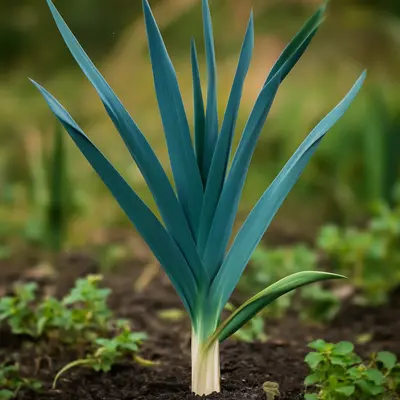
Beautiful full-sized leeks. In favorable soil and culture, the white shanks are over a foot long to the first leaf. Medium-green leaves with full habit. For baby leeks, plant closely (40 seeds/ft.) and harvest at finger size. While not hardy enough for overwintering, they will withstand medium-heavy frost (32° to 20°F/0° to -7°C) without losing their healthy appearance.
Harvest
75d
Days to harvest
Sun
Full sun to partial shade
Zones
4–9
USDA hardiness
Height
1-3 feet
Planting Timeline
Showing dates for King Richard in USDA Zone 7
All Zone 7 allium →Zone Map
Click a state to update dates
King Richard · Zones 4–9
Growing Details
Succession Planting
King Richard runs 75 days from transplant, so stagger your sowings if you want leeks on the table from midsummer through fall rather than all at once. In zone 7, direct sow outdoors starting March 1, make a second sowing around April 1, and a third in early May if you want harvest pushing into late November. Three to four weeks between sowings is plenty — leeks hold in the ground well once they size up, so the harvest window is naturally more forgiving than with lettuce or radishes.
Cut yourself off by early May in most zones. Leeks started after that don't have enough season left to reach full size before hard frost. If you want baby leeks — pulled at pencil thickness, around 2-3 inches spacing — earlier sowings can do double duty: thin some at the baby stage and let the rest run to full size, which stretches your harvest without adding another sowing date.
Complete Growing Guide
Beautiful full-sized leeks. In favorable soil and culture, the white shanks are over a foot long to the first leaf. Medium-green leaves with full habit. For baby leeks, plant closely (40 seeds/ft.) and harvest at finger size. While not hardy enough for overwintering, they will withstand medium-heavy frost (32° to 20°F/0° to -7°C) without losing their healthy appearance. According to Johnny's Selected Seeds, King Richard is 75 days to maturity, open pollinated. Notable features: Organic Seeds, Plants, and Supplies.
Light: Full sun (6 or more hours of direct sunlight a day), Partial Shade (Direct sunlight only part of the day, 2-6 hours). Soil: High Organic Matter, Loam (Silt), Sand. Drainage: Good Drainage. Height: 1 ft. 0 in. - 3 ft. 0 in. Spread: 0 ft. 6 in. - 2 ft. 0 in. Spacing: Less than 12 inches. Growth rate: Medium. Maintenance: Low. Propagation: Division. Regions: Coastal, Mountains, Piedmont.
Harvesting
King Richard reaches harvest at 75 days from sowing per Johnny's Selected Seeds.
The capsule splits longitudinally and contains small round black seeds.
Type: Capsule.
Storage & Preservation
King Richard leeks store best in a refrigerator at 32–40°F with high humidity, ideally in a perforated plastic bag in the crisper drawer, where they'll keep for 2–3 weeks. For longer storage, trim the roots and tops, wrap individually in damp paper towels, and place in sealed containers to extend shelf life to a month.
Freezing works well for cooked applications: blanch sliced leeks for 3–4 minutes, cool immediately, and freeze in airtight bags for up to eight months. Dehydration is another option—slice thin, dry at 140°F until brittle, and store in airtight jars for soups and seasonings. Pickling also suits leeks effectively; use a vinegar brine and process according to tested canning guidelines.
King Richard's relatively thin white section makes it particularly suited to quick-cooking methods post-freezing, so consider blanching and freezing in meal-sized portions rather than whole leeks.
History & Origin
King Richard is open-pollinated, meaning seed saved from healthy plants will produce true-to-type offspring. Listed in the Johnny's Selected Seeds catalog.
Origin: Northern Hemisphere, North America and Eurasia
Advantages
- +Exceptional white shank length exceeds one foot in good conditions
- +Versatile for both full-size and baby leek production methods
- +Tolerates medium-heavy frost down to 20°F without quality loss
- +Quick maturity at 75 days reduces overall growing season
Considerations
- -Not cold-hardy enough for winter overwintering in most regions
- -Requires favorable soil conditions to achieve advertised shank length
- -Demands consistent moisture and nutrients for optimal performance
Companion Plants
Carrots and leeks are one of the more dependable pairings you'll find in the allium family. Leek's sulfur-heavy scent reportedly disrupts carrot fly (Psila rosae) while carrots return the favor by confusing leek moth (Acrolepiopsis assectella). Whether that mutual pest interference holds up perfectly in practice is debatable, but the two crops share similar water needs and root at different depths, so at minimum they don't get in each other's way. Brassicas make good neighbors for similar reasons — allium scent may deter aphid colonization — and they don't pull the same nutrients hard enough to cause obvious competition.
Beans and peas are the ones to relocate. Leeks produce sulfur compounds that suppress the Rhizobium bacteria living on legume roots, and those bacteria are how beans and peas fix nitrogen. Plant them too close and your legumes underperform quietly all season — no dramatic collapse, just noticeably smaller yields. Asparagus is a different problem: it's a perennial that needs permanent real estate, and leeks planted nearby compete directly for moisture and root space across multiple years, slowly grinding down the asparagus crown's productivity.
Plant Together
Tomatoes
Leeks repel aphids and improve tomato flavor while tomatoes don't compete for nutrients
Carrots
Leeks deter carrot fly while carrots help break up soil for leek roots
Brassicas
Leeks repel cabbage worms and flea beetles that commonly attack brassicas
Lettuce
Shallow-rooted lettuce doesn't compete with leeks and benefits from their pest-repelling properties
Strawberries
Leeks deter slugs and aphids that damage strawberry plants
Roses
Leeks repel aphids and may reduce black spot disease in roses
Celery
Both have similar water needs and leeks help repel celery leaf miner
Marigolds
Both plants repel nematodes and work together to deter various garden pests
Keep Apart
Beans
Legumes can inhibit allium growth and development through root competition
Peas
Peas and other legumes may stunt leek growth through allelopathic effects
Asparagus
Both are heavy feeders that compete for similar nutrients, reducing yields for both
Nutrition Facts
Per 100g serving. % Daily Value based on 2,000 calorie diet. Source: USDA FoodData Central (FDC #170000)
Pests & Disease Resistance
Common Pests
Leek moth, onion thrips, leek rust mite
Diseases
Leek rust, fusarium wilt, pink root
Troubleshooting King Richard
What you'll see, why it happens, and what to do about it.
Orange powdery pustules on leaf surfaces, usually appearing mid-summer
Likely Causes
- Leek rust (Puccinia allii) — a fungal disease that spreads by airspores, worse in humid conditions with poor airflow
- Overcrowded planting at less than 4-inch spacing
What to Do
- 1.Remove and bin (don't compost) heavily infected leaves immediately
- 2.Thin plants to at least 4 inches apart to open up airflow
- 3.Avoid overhead watering in the evening — water at the base in the morning instead
Leaves showing silver streaking or flecking, tips browning, plants look dull and bleached
Likely Causes
- Onion thrips (Thrips tabaci) — tiny insects feeding between leaf layers, especially bad during hot dry stretches
- Leek rust mite (Aceria tulipae) — too small to see without magnification, causes similar silvering
What to Do
- 1.Blast plants with a firm stream of water to knock thrips off; repeat every 3-4 days for two weeks
- 2.Apply insecticidal soap or spinosad if populations are heavy — coat both leaf surfaces
- 3.Keep soil consistently moist; water-stressed leeks attract significantly more thrips than well-watered ones
Plants wilting and yellowing from the base up, roots turning pink or red when pulled
Likely Causes
- Pink root (Phoma terrestris) — a soil-borne fungal pathogen that persists in the soil for years
- Fusarium wilt (Fusarium oxysporum) — also soil-borne, symptoms overlap closely with pink root
What to Do
- 1.Pull and discard affected plants; don't replant alliums in that bed for at least 3 seasons
- 2.Improve drainage — both pathogens thrive in waterlogged, compacted soil
- 3.Start fresh transplants in a different bed with clean compost worked in to a depth of 8-10 inches
Frequently Asked Questions
How long does it take to grow King Richard leeks from seed?▼
Can you grow King Richard leeks in containers?▼
What does King Richard leek taste like?▼
When should I plant King Richard leeks?▼
What are common culinary uses for King Richard leeks?▼
Zone-by-Zone Planting Calendar
| Zone | Indoor Start | Transplant | Direct Sow | Harvest |
|---|---|---|---|---|
| Zone 3 | — | — | May – June | July – October |
| Zone 4 | — | — | April – June | July – October |
| Zone 5 | — | — | April – May | June – November |
| Zone 6 | — | — | April – May | June – November |
| Zone 7 | — | — | March – May | June – November |
| Zone 8 | — | — | March – April | May – December |
| Zone 9 | — | — | February – March | April – December |
| Zone 10 | — | — | January – March | April – December |
| Zone 1 | — | — | June – July | August – September |
| Zone 2 | — | — | May – July | August – September |
| Zone 11 | — | — | January – February | March – December |
| Zone 12 | — | — | January – February | March – December |
| Zone 13 | — | — | January – February | March – December |
Growing Guides from Wind River Greens
Sources & References
External authority sources used in compiling this guide.
- BreederJohnny's Selected Seeds
- USDAUSDA FoodData Central
See the Methodology page for how this data is sourced, what's AI-assisted, and known limitations.