Long Purple
Solanum melongena 'Long Purple'
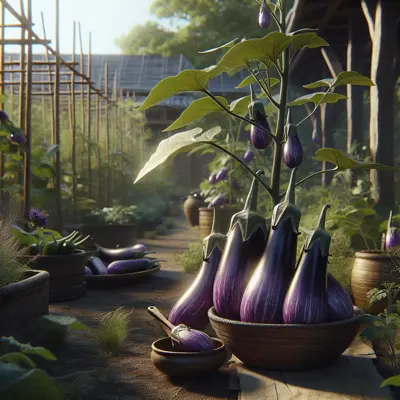
A classic heirloom variety that has been grown in American gardens since the 1800s, producing beautiful elongated purple fruits with excellent flavor. This reliable variety is known for its consistent production and traditional eggplant taste that's perfect for classic recipes. The fruits have tender flesh with a rich, satisfying flavor that develops beautifully when cooked.
Harvest
75-85d
Days to harvest
Sun
Full sun
Zones
9–12
USDA hardiness
Height
2-4 feet
Planting Timeline
Showing dates for Long Purple in USDA Zone 7
All Zone 7 eggplant →Zone Map
Click a state to update dates
Long Purple · Zones 9–12
Growing Details
Succession Planting
Long Purple is a single-season fruiting crop — you set transplants once in April or May and the same plants carry you through the July–September harvest window. Staggering successions the way you would with lettuce or radishes doesn't gain you much; these plants just keep setting fruit until frost or until August heat slows them down.
That said, if you want a safety net in zone 7, start a second tray of seeds indoors in early March — roughly 8–10 weeks before last frost — and grow out a few backup transplants. It's not succession planting in the strict sense, but if flea beetles shred your first planting or a late cold snap takes it out, you're not starting over from seed in June.
Complete Growing Guide
This heirloom variety demands warmth more than many modern eggplants—wait until soil consistently reaches 70°F before transplanting, as Long Purple seedlings are prone to stunting in cool conditions. Its extended 75–85 day maturity means starting seeds indoors 8–10 weeks before your last frost is essential for reliable harvests in shorter seasons. The plants' open growth habit makes them susceptible to sunscald on exposed fruits; provide afternoon shade in regions above 90°F or maintain consistent leaf cover through pruning discipline. Watch for spider mites, which thrive in the dry conditions this variety prefers, and scout weekly once flowering begins. A practical advantage: Long Purple's vigorous 2–4 foot frame tolerates heavy fruit loads without staking if you pinch side shoots early, concentrating energy into 4–6 main branches that produce uniform, market-quality fruits ideal for traditional Italian and Asian preparations.
Light: Full sun (6 or more hours of direct sunlight a day). Soil: Loam (Silt), Sand. Soil pH: Acid (<6.0). Drainage: Good Drainage, Moist. Height: 2 ft. 0 in. - 4 ft. 0 in.. Spread: 1 ft. 0 in. - 3 ft. 0 in.. Spacing: 3 feet-6 feet. Growth rate: Medium. Maintenance: Medium. Propagation: Seed.
Harvesting
Harvest Long Purple eggplants when they reach six to eight inches in length and display a deep, glossy purple skin—this lustrous appearance indicates peak maturity and optimal flavor development. The fruit should yield slightly to gentle pressure but still feel firm; if it becomes soft or dull, the seeds inside have begun to mature and bitterness increases. Unlike single-harvest varieties, Long Purple produces continuously throughout the season, so pick fruits regularly to encourage more blooms and extend productivity. Begin harvesting in the morning when temperatures are cooler, as this timing helps the plant direct energy toward additional fruit development rather than repairing stress from daytime heat.
The fruit is a berry that is egg-shaped, smooth and has glossy skin. The fruit may measure 4 to 8 inches long. It ranges in color from green to white, to purple-black when immature and when it should be eaten. As the fruit matures it gets stringy and bitter. Fruit contains numerous small, flat, pale yellow to brown seeds.
Color: Black, Gold/Yellow, Green, Purple/Lavender, White. Type: Berry. Length: > 3 inches.
Garden value: Edible, Showy
Harvest time: Fall, Summer
Edibility: The immature fruit is edible and best used in food preparation. As the fruit matures, it becomes stringy and bitter. The fruits are usually cooked and served as a vegetable. They may be prepared and eaten by frying, steaming, grilling, roasting, or stewing. They may also be stir-fried, pickled, stuffed, and fried with a light breading.
Storage & Preservation
Fresh Long Purple eggplants store best at room temperature for 2-3 days, maintaining their glossy appearance and firm texture. Avoid refrigeration unless absolutely necessary, as cold temperatures below 50°F cause chilling injury, leading to brown spots and bitter flavors.
For longer storage, wrap individual fruits in paper towels and refrigerate in the crisper drawer for up to one week. Use immediately once you notice any soft spots or wrinkling.
Freeze prepared eggplant by slicing into ½-inch rounds, blanching for 4 minutes, then cooling in ice water before packaging in freezer bags. Frozen eggplant works perfectly in cooked dishes like ratatouille or eggplant parmesan.
Preserve by grilling or roasting slices until tender, then freezing in portions for winter cooking. You can also pickle small, young fruits whole in vinegar brine, creating traditional Italian-style preserved eggplant that keeps for months in the refrigerator.
History & Origin
The precise origins of 'Long Purple' eggplant remain somewhat obscured by time, though historical records indicate this variety was well-established in American gardens by the mid-1800s. As a classic heirloom, it likely descends from elongated eggplant types cultivated across Europe and Asia, reflecting centuries of selection for the characteristic long fruit shape and purple coloring. Documentation of specific breeders or introduction dates is limited, but seed catalogs from the late nineteenth century confirm its presence in American cultivation, suggesting it was either brought by immigrant gardeners or selected and maintained through American seed houses. The variety's persistence across generations speaks to its reliable performance and culinary qualities rather than documented formal breeding work.
Origin: China South-Central, Laos, Malaya, Myanmar, Thailand, Vietnam
Advantages
- +Proven heirloom variety with reliable production since the 1800s
- +Classic elongated purple fruits are visually striking and attractive
- +Rich, meaty flavor develops beautifully when cooked in recipes
- +Moderate difficulty makes it accessible for most home gardeners
- +Consistent 75-85 day harvest window provides predictable growing timeline
Considerations
- -Vulnerable to multiple serious diseases including verticillium and bacterial wilt
- -Susceptible to multiple pest pressures including flea beetles and hornworms
- -Requires consistent warmth and longer growing season in cool climates
Companion Plants
Basil is the first thing I tuck in nearby — 12 inches off every plant — and I'll be straight with you: the aphid-repellent claim is thin on evidence, but it's a useful herb and it doesn't compete for the same root depth. Marigolds (Tagetes patula, the French dwarf type) are a better functional choice; their root secretions actively suppress soil nematodes, and a border around the bed pulls some flea beetle pressure away from your eggplant during that vulnerable first month. Peppers and hot peppers share nearly identical water, fertilizer, and pH requirements (6.0–6.8), so mixing them in the same bed simplifies your whole irrigation schedule. Fennel is allelopathic and stunts most vegetables planted within 18 inches of it — in our zone 7 Georgia garden, where you're racing to get eggplant producing before August heat slows fruit set, that's not a drag you want on a crop that already takes 75–85 days to harvest. Keep beans separate too: NC State Extension notes that legumes cycling through a plot add nitrogen, but planting them right alongside eggplant can spread Verticillium wilt pressure across the whole bed.
Plant Together
Basil
Repels aphids and whiteflies, may improve flavor
Tomatoes
Share similar growing requirements and pest management strategies
Peppers
Fellow nightshades with compatible growing conditions and pest resistance
Marigolds
Repel nematodes and various insect pests through natural compounds
Nasturtiums
Act as trap crops for aphids and cucumber beetles
Parsley
Attracts beneficial insects and doesn't compete for nutrients
Hot Peppers
Deter browsing animals and share similar water/soil needs
Oregano
Repels spider mites and provides ground cover
Keep Apart
Fennel
Inhibits growth of most garden plants through allelopathy
Black Walnut
Produces juglone which is toxic to nightshade family plants
Beans
Heavy nitrogen fixation can cause excessive foliage growth at expense of fruit production
Nutrition Facts
Per 100g serving. % Daily Value based on 2,000 calorie diet. Source: USDA FoodData Central (FDC #169228)
Pests & Disease Resistance
Resistance
Typical heirloom disease tolerance, susceptible to bacterial and fungal diseases
Common Pests
Flea beetles, Colorado potato beetle, aphids, hornworms
Diseases
Verticillium wilt, bacterial wilt, early blight, late blight
Troubleshooting Long Purple
What you'll see, why it happens, and what to do about it.
Tiny ragged holes scattered across young leaves, especially on transplants in the first 2-3 weeks after setting out
Likely Causes
- Flea beetles (Epitrix fuscula) — they overwinter in soil and leaf litter and hit eggplant hard the moment you transplant
- Plants stressed from transplant shock, which slows the rapid leaf growth that lets seedlings outpace minor flea beetle damage
What to Do
- 1.Cover transplants immediately with row cover (Agribon AG-19 or similar) and keep it on until plants are 12-15 inches tall and putting on strong new growth
- 2.Mulch the bed with straw as soon as plants are established — UGA's Vegetable Garden Calendar specifically flags mulching eggplant before dry spells as a priority
- 3.If populations are severe and you can't use row cover, apply a kaolin clay product (Surround WP) as a physical barrier; reapply after rain
Plant wilts suddenly and completely — leaves don't recover overnight — with no obvious root rot when you dig it up
Likely Causes
- Bacterial wilt caused by Ralstonia solanacearum — confirmed by cutting the stem near the base and seeing a brown, slimy interior; a thin thread of bacterial ooze will hang if you touch the cut ends together and pull them apart slowly
- Colorado potato beetle defoliation putting the plant into severe stress (secondary wilting, less sudden)
What to Do
- 1.If the stem-thread test confirms Ralstonia, pull and bag the entire plant — roots and all — and trash it; do not compost it
- 2.NC State Extension is clear that Ralstonia solanacearum persists in the soil indefinitely once introduced, so rotate that bed out of all nightshades (tomatoes, peppers, potatoes) for as many seasons as you can manage, or switch to container growing in that spot
- 3.For Colorado potato beetle, handpick egg clusters (orange-yellow, laid in tight rows on leaf undersides) and drop them in soapy water; apply spinosad if populations get ahead of you
Lower leaves showing dark brown, roughly circular spots with a yellow halo, progressing upward on the plant by mid-summer
Likely Causes
- Early blight (Alternaria solani) — a soil-borne fungus that splashes onto lower leaves during rain or overhead irrigation; eggplant shares this pathogen with tomatoes and potatoes in the nightshade family
- Planting closer than 24 inches apart, cutting off airflow and keeping foliage wet longer after rain
What to Do
- 1.Strip affected lower leaves at the stem — don't leave stubs — and put them in the trash, not the compost pile
- 2.Lay 3-4 inches of straw mulch around the base of each plant to stop soil splash; do this before the first hard rain of summer
- 3.NC State Extension's disease management guidance recommends rotating nightshade crops out of the same bed each year; don't follow eggplant with tomatoes or potatoes in the same spot next season
Frequently Asked Questions
How long does Long Purple eggplant take to grow?▼
Can you grow Long Purple eggplant in containers?▼
Is Long Purple eggplant good for beginners?▼
What does Long Purple eggplant taste like?▼
When should I plant Long Purple eggplant seeds?▼
How do you prevent flea beetles on Long Purple eggplant?▼
Zone-by-Zone Planting Calendar
| Zone | Indoor Start | Transplant | Direct Sow | Harvest |
|---|---|---|---|---|
| Zone 1 | May – May | July – August | — | October – August |
| Zone 2 | April – May | June – July | — | September – September |
| Zone 11 | January – January | January – February | — | April – June |
| Zone 12 | January – January | January – February | — | April – June |
| Zone 13 | January – January | January – February | — | April – June |
| Zone 3 | April – April | June – July | — | September – October |
| Zone 4 | March – April | June – June | — | August – October |
| Zone 5 | March – March | May – June | — | August – October |
| Zone 6 | March – March | May – June | — | August – October |
| Zone 7 | February – March | April – May | — | July – September |
| Zone 8 | February – February | April – May | — | July – September |
| Zone 9 | January – January | March – April | — | June – August |
| Zone 10 | January – January | February – March | — | May – July |
Growing Guides from Wind River Greens
Sources & References
External authority sources used in compiling this guide.
See the Methodology page for how this data is sourced, what's AI-assisted, and known limitations.