Sugar Maple
Acer saccharum
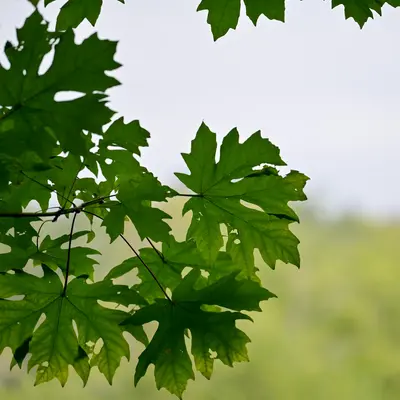
The iconic maple tree that defines autumn in North America with its spectacular yellow, orange, and red fall display. Known for producing the finest maple syrup, sugar maples are slow-growing but long-lived trees that create dense, cooling shade. Their symmetrical oval shape and reliable fall color make them one of the most sought-after landscape trees.
Sun
Full sun to partial shade
Zones
3–8
USDA hardiness
Height
40-120 feet
Planting Timeline
Showing dates for Sugar Maple in USDA Zone 7
All Zone 7 shade-tree →Zone Map
Click a state to update dates
Sugar Maple · Zones 3–8
Growing Details
Complete Growing Guide
Light: Full sun (6 or more hours of direct sunlight a day), Partial Shade (Direct sunlight only part of the day, 2-6 hours). Soil: Clay, High Organic Matter, Loam (Silt), Sand. Soil pH: Acid (<6.0), Neutral (6.0-8.0). Drainage: Good Drainage, Moist. Height: 40 ft. 0 in. - 120 ft. 0 in.. Spread: 30 ft. 0 in. - 60 ft. 0 in.. Spacing: 24-60 feet, more than 60 feet. Growth rate: Slow. Maintenance: Medium. Propagation: Layering, Seed, Stem Cutting. Regions: Coastal, Mountains, Piedmont.
Harvesting
The fruit is U-shaped, paired, papery-winged samara that averages 1 inch in length. Color is green maturing to brown. Available from June to September in North Carolina.
Color: Brown/Copper, Green. Type: Samara. Length: < 1 inch.
Garden value: Edible
Harvest time: Fall, Summer
Edibility: Sap used for maple syrup
Storage & Preservation
Sugar maple wood should be stored in a cool, dry location with good air circulation. For fresh maple syrup, store in airtight containers in a cool pantry or refrigerator at 40°F; unopened syrup lasts indefinitely, while opened containers last 1-2 years when refrigerated. For preservation: (1) Grade and crystallize syrup for long-term shelf stability—crystallized maple sugar keeps for years in airtight containers; (2) freeze pure syrup in portions for extended storage; (3) can maple syrup following USDA canning guidelines for shelf-stable preservation in sealed jars.
History & Origin
Origin: Eastern and central North America
Advantages
- +Attracts: Butterflies, Moths, Pollinators, Small Mammals, Songbirds
- +Edible: Sap used for maple syrup
Companion Plants
The shade-tolerant perennials in our database pair well with Sugar Maple for straightforward reasons: they've adapted to grow under a canopy. Wild Ginger, Trillium, Mayapple, and Hostas all thrive in the dappled light and organic-rich, slightly acidic soil a mature maple produces — soil pH in the 6.0–6.5 range suits both the tree and most of these understory plants. Ferns and Astilbe appreciate the same moderate moisture. They also stay low enough — most top out well under 2 feet — that their fibrous roots occupy the top few inches of soil rather than competing with the maple's wider lateral system. Around here in the Georgia piedmont, Coral Bells and Wild Columbine are especially practical choices because they handle 90°F summers better than some of the northern woodland species in this list.
Keep Black Walnut a minimum of 50–80 feet away. Walnut produces juglone (5-hydroxy-1,4-naphthoquinone) through its roots and decomposing hulls, and Sugar Maple is among the documented sensitive species — you'll see leaf scorch and dieback that looks like drought stress but won't respond to watering. Norway Maple is a different kind of problem: it's a prolific seeder that naturalizes aggressively across the eastern U.S., outcompetes native understory plants, and if it gets established near your Sugar Maple it'll be a removal project, not a companion.
Plant Together
Wild Ginger
Thrives in maple's shade and helps suppress weeds while providing ground cover
Trillium
Natural woodland companion that flourishes under maple canopy and attracts beneficial pollinators
Hostas
Shade-loving perennials that complement maple's understory and help retain soil moisture
Ferns
Create natural forest floor ecosystem and thrive in the filtered light and acidic soil conditions
Astilbe
Tolerates shade well and adds colorful blooms while benefiting from maple's leaf litter
Coral Bells
Shade-tolerant perennial that adds foliage color and texture beneath maple canopy
Wild Columbine
Native woodland flower that attracts hummingbirds and thrives in partial shade
Mayapple
Woodland native that forms colonies under maples and helps create natural forest understory
Keep Apart
Black Walnut
Releases juglone which is toxic to maples and can cause stunted growth or death
Kentucky Coffee Tree
Competes aggressively for nutrients and water, and its large size can overwhelm young maples
Norway Maple
Creates dense shade that suppresses sugar maple seedlings and outcompetes for resources
Pests & Disease Resistance
Resistance
Moderate resistance, sensitive to salt and pollution
Common Pests
Asian longhorned beetle, maple borers, aphids
Diseases
Verticillium wilt, tar spot, leaf scorch
Troubleshooting Sugar Maple
What you'll see, why it happens, and what to do about it.
Scattered black or dark olive blotches on leaves by midsummer, leaves drop early but tree otherwise looks fine
Likely Causes
- Tar spot (Rhytisma acerinum) — a fungal disease that overwinters in fallen leaf litter and releases spores in spring
What to Do
- 1.Rake up and bag all fallen leaves in autumn — don't compost them, the fungus survives
- 2.Tar spot is cosmetic and won't kill the tree; no fungicide is needed for an established specimen
- 3.If it's a young tree under 10 feet and defoliation is heavy two years running, a preventive copper fungicide at bud break can reduce infection
Wilting or dying branches on one side of the canopy, with brown or olive streaking visible in the sapwood when you cut into an affected branch
Likely Causes
- Verticillium wilt (Verticillium dahliae or V. albo-atrum) — soil-borne fungus that colonizes the vascular system and blocks water movement
- Tree planted in a site that previously grew tomatoes, potatoes, strawberries, or other susceptible crops
What to Do
- 1.Prune out affected branches at least 6 inches below any visible streaking and sterilize the saw between cuts with 70% isopropyl alcohol
- 2.Keep the tree vigorous with consistent watering and a side-dressing of balanced 10-10-10 fertilizer in early spring — a stressed tree declines faster
- 3.There's no cure, but healthy trees can wall off infection and survive for decades; only remove the tree if more than half the canopy is affected
Sawdust-like frass at the base of the trunk or on major limbs, with round or oval exit holes roughly 3/8 to 1/2 inch in diameter
Likely Causes
- Asian longhorned beetle (Anoplophora glabripennis) — a federally regulated invasive pest; sightings must be reported
- Maple borer (Glycobius speciosus) — native clearwing moth whose larvae tunnel under the bark of young maples
What to Do
- 1.If you see a shiny black beetle with white spots and long banded antennae, report it immediately to USDA APHIS at 1-866-702-9938; Asian longhorned beetle is a quarantine pest and the response window matters
- 2.For maple borer on trees under 6 inches diameter, a soil drench with imidacloprid in early spring can protect new wood; follow label rates carefully
- 3.Keep the root zone mulched 3-4 inches deep with wood chips (kept away from the trunk) and avoid nicks from mowers and string trimmers — wounded bark is the primary entry point for both species
Frequently Asked Questions
How long does it take a sugar maple to produce syrup?▼
Can you grow a sugar maple in a container?▼
When is the best time to plant a sugar maple?▼
Is a sugar maple good for beginners?▼
What pests should I watch for on sugar maples?▼
How do I know when maple sap is ready to harvest?▼
Zone-by-Zone Planting Calendar
Growing Guides from Wind River Greens
Sources & References
External authority sources used in compiling this guide.
- ExtensionNC State Extension
See the Methodology page for how this data is sourced, what's AI-assisted, and known limitations.