Benary's Giant White
Zinnia elegans
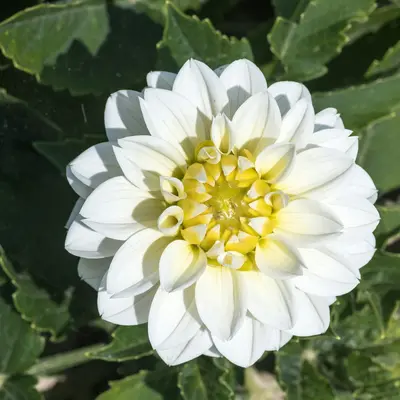
Benary's Giant White is a heirloom flower variety prized for its impressive large white blooms. Plants mature in 75-90 days and thrive in full sun with rich, well-draining soil. This variety is renowned for producing oversized flowers that make striking cut arrangements and garden displays. The abundant white petals create a dramatic focal point in any floral composition. An easy-to-grow heirloom that performs reliably in most conditions.
Harvest
75-90d
Days to harvest
Sun
Full sun
Zones
2–11
USDA hardiness
Height
0-3 feet
Planting Timeline
Showing dates for Benary's Giant White in USDA Zone 7
All Zone 7 flower →Zone Map
Click a state to update dates
Benary's Giant White · Zones 2–11
Growing Details
Succession Planting
Direct sow every 2–3 weeks from April through early June in zone 7, stopping once daytime highs are consistently above 90°F — germination rates drop sharply in hot soil, and seedlings started in that heat tend to rush to flower before they've built much stem. Aim for at least 3 staggered sowings to keep fresh cuts coming from midsummer through frost.
If you're starting indoors, begin 4–6 weeks before your last frost date and don't rush transplanting out — zinnias stall in cold soil below 60°F. For a continuous cutting garden, the 2–3 week sow cadence outperforms trying to deadhead your way to a second flush. Benary's Giant White reblooms reasonably well, but plants started fresh produce more uniformly than older ones pushed past their peak.
Complete Growing Guide
Recommended by the Association of Specialty Cut Flower Growers. High yields of long, sturdy stems with 4-6" fully double, dahlia-like blooms. Excellent vase life. Vigorous plants hold up well in summer heat and rain. Low susceptibility to powdery mildew. Cut-and-come-again flower, yielding multiple cuts over the season. According to Johnny's Selected Seeds, Benary's Giant White is 75 - 90 days to maturity, annual, open pollinated. Notable features: Use for Cut Flowers and Bouquets.
Light: Full sun (6 or more hours of direct sunlight a day). Soil: High Organic Matter, Loam (Silt). Soil pH: Acid (<6.0), Alkaline (>8.0), Neutral (6.0-8.0). Drainage: Good Drainage, Occasionally Dry. Height: 0 ft. 6 in. - 3 ft. 0 in.. Spread: 0 ft. 8 in. - 1 ft. 0 in.. Spacing: 12 inches-3 feet. Growth rate: Rapid. Maintenance: Medium. Propagation: Seed. Regions: Coastal, Mountains, Piedmont.
Harvesting
Benary's Giant White reaches harvest at 75 - 90 days from sowing per Johnny's Selected Seeds. Expect 4-6" at peak. As an annual, harvest continues until frost ends the season.
Type: Achene.
Storage & Preservation
Fresh-cut Benary's Giant White stems have exceptional vase life of 10-14 days when properly handled. Immediately place cut stems in room-temperature water with commercial floral preservative—the preservative provides sugar for nutrition and biocide to prevent bacterial growth. Store in a cool location (65-70°F) away from ripening fruit and direct sunlight. Refill vases daily with fresh, cool water and recut stem ends every 2-3 days at a 45-degree angle.
For preservation, the blooms dry exceptionally well. Hang-dry by suspending stems upside-down in a dark, warm, well-ventilated space (attic, shed, or garage) for 2-3 weeks until papery. Dried blooms retain their white color and form indefinitely for winter arrangements. Alternatively, press individual petals between parchment paper under books for 1-2 weeks to create botanical specimens for crafting or pressed-flower projects. Silica gel drying preserves three-dimensional form and color most faithfully but requires careful handling due to the delicate petals.
History & Origin
Benary's Giant White is open-pollinated, meaning seed saved from healthy plants will produce true-to-type offspring. Listed in the Johnny's Selected Seeds catalog.
Origin: Mexico
Advantages
- +Produces abundant long stems ideal for professional cut flower arrangements
- +Large 4-6 inch fully double blooms resemble dahlias for striking visual impact
- +Exceptional vase life means arrangements stay fresh considerably longer than typical zinnias
- +Thrives in summer heat and rain without significant performance decline
- +Cut-and-come-again variety yields multiple harvests from single planting
Considerations
- -Requires 75-90 days to maturity, delaying first blooms significantly
- -White petals may show bruising or discoloration during handling and transport
- -Tall vigorous plants need staking or support in windy locations
Companion Plants
Marigolds are the most practical companion here — specifically French marigolds (Tagetes patula), which release thiophenes from their roots that suppress certain soil nematodes. Planted as a border, they also pull in parasitic wasps without competing for the same root depth as zinnias. Cosmos are another good fit: shallow-rooted, they don't shade out Benary's Giant White, and the two bloom on slightly offset schedules, which means your pollinator traffic stays steadier across the season rather than peaking all at once.
Sweet alyssum planted at the bed edges draws hoverflies (Syrphidae), whose larvae eat aphids before the aphids become your problem. It tops out at 3–6 inches, so it won't crowd a zinnia that's pushing 3 feet tall and needs every bit of airflow it can get to keep powdery mildew in check. Nasturtiums are worth planting nearby as a trap crop — aphids will pile onto them and largely leave the zinnias alone. Give nasturtiums their own lane, though; they sprawl wide enough to smother smaller neighbors if you tuck them in between plants.
The harmful companions are worth taking seriously even if they're not dramatic. Black walnut (Juglans nigra) produces juglone, a chemical that moves through the soil and damages roots — NC State Extension notes that sensitive plants within the drip line, sometimes 50–60 feet out, can show wilting and dieback that looks like drought stress but doesn't respond to watering. Fennel (Foeniculum vulgare) causes problems through root secretions that suppress a broad range of neighboring plants; it's easier to grow it in a container entirely separate from your flower beds than to try to manage proximity.
Plant Together
Marigolds
Repel aphids, whiteflies, and nematodes while attracting beneficial insects
Basil
Deters aphids, spider mites, and thrips with its strong aromatic oils
Nasturtiums
Act as trap crops for aphids and cucumber beetles while attracting pollinators
Sweet Alyssum
Attracts beneficial insects like lacewings and parasitic wasps for pest control
Cosmos
Attract beneficial insects and pollinators while providing complementary garden structure
Lavender
Repels moths, fleas, and mosquitoes while attracting bees and butterflies
Petunias
Natural pest deterrent against hornworms, aphids, and squash bugs
Zinnia
Attract beneficial predatory insects and butterflies for pollination
Keep Apart
Black Walnut Trees
Release juglone toxin that inhibits growth and can kill sensitive plants
Eucalyptus
Produces allelopathic compounds that suppress growth of nearby plants
Fennel
Inhibits growth of most garden plants through allelopathic root secretions
Pests & Disease Resistance
Common Pests
Slugs, spider mites (in humid conditions)
Diseases
Powdery mildew (low susceptibility in this variety), root rot (with poor drainage or overwatering)
Troubleshooting Benary's Giant White
What you'll see, why it happens, and what to do about it.
White powdery coating on upper leaf surfaces, usually appearing mid-summer when nights cool down
Likely Causes
- Powdery mildew (Erysiphe cichoracearum) — airborne fungal spores that thrive when warm days meet cool, humid nights
- Crowded spacing that restricts airflow between plants
What to Do
- 1.Benary's Giant White has low susceptibility, so heavy coverage usually means plants are too close — check that spacing is at least 18 inches
- 2.Strip and trash affected leaves — don't compost them
- 3.A diluted neem oil spray (2 tsp per quart of water) applied early morning can slow spread; avoid spraying midday in full sun
Stems collapsing at soil level, roots dark and mushy, often after a stretch of wet weather or heavy irrigation
Likely Causes
- Root rot caused by Pythium or Rhizoctonia — both thrive in waterlogged, poorly drained soil
- Overwatering or planting in a low spot that holds water
What to Do
- 1.Pull and discard affected plants; they won't recover once the crown is gone
- 2.Let the bed dry out before replanting, and amend with coarse perlite or compost to improve drainage
- 3.Water at soil level — zinnias are especially susceptible when foliage stays wet; drip irrigation or a wand held low does the job
Ragged holes in leaves and seedlings disappearing overnight, especially after rain
Likely Causes
- Slugs — they feed at night and hide under mulch or debris during the day
- Young transplants under 4 inches tall are the most vulnerable
What to Do
- 1.Set out slug traps (a shallow dish of cheap beer sunk to soil level) near affected plants
- 2.Sprinkle diatomaceous earth in a ring around seedlings — reapply after rain
- 3.Pull mulch back a few inches from the base of plants to eliminate daytime hiding spots
Stippled, bronzed, or silvery-looking leaves with fine webbing on the undersides, typically in hot dry spells
Likely Causes
- Two-spotted spider mites (Tetranychus urticae) — populations explode when temperatures stay above 85°F and humidity drops
- Plants stressed by drought or inconsistent watering are hit hardest
What to Do
- 1.Knock mites off with a sharp spray of water aimed at the undersides of leaves — do this in the morning so foliage dries quickly
- 2.Keep up with consistent watering (1–2 inches per week); drought-stressed plants attract mites and recover more slowly
- 3.If the infestation is heavy, apply insecticidal soap every 5–7 days for 2–3 applications, targeting leaf undersides
Frequently Asked Questions
How long does Benary's Giant White take to flower from seed?▼
Is Benary's Giant White good for beginners?▼
Can you grow Benary's Giant White in containers?▼
How often should I harvest Benary's Giant White blooms?▼
What is the difference between Benary's Giant White and other white zinnia varieties?▼
When should I plant Benary's Giant White seeds?▼
Zone-by-Zone Planting Calendar
| Zone | Indoor Start | Transplant | Direct Sow | Harvest |
|---|---|---|---|---|
| Zone 3 | April – May | June – July | June – August | — |
| Zone 4 | March – April | June – June | June – July | — |
| Zone 5 | March – April | May – June | May – July | — |
| Zone 6 | March – April | May – June | May – July | — |
| Zone 7 | February – March | April – May | April – June | — |
| Zone 8 | February – March | April – May | April – June | — |
| Zone 9 | January – February | March – April | March – May | — |
| Zone 10 | January – January | February – March | February – April | — |
| Zone 1 | May – June | July – August | July – September | — |
| Zone 2 | April – May | June – July | June – August | — |
| Zone 11 | January – January | January – February | January – March | — |
| Zone 12 | January – January | January – February | January – March | — |
| Zone 13 | January – January | January – February | January – March | — |
Growing Guides from Wind River Greens
Sources & References
External authority sources used in compiling this guide.
- BreederJohnny's Selected Seeds
See the Methodology page for how this data is sourced, what's AI-assisted, and known limitations.