Chabaud Orange Sherbet
Dianthus caryophyllus
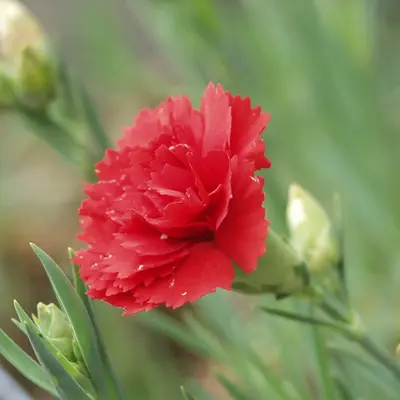
Vintage carnations present the sweet and spicy fragrance of clove. Frilly, 1 1/2-2" double blooms with a small percentage of singles. Orange creamsicle-colored petals striped and flaked with tangerine. Grass-like, gray or blue-green foliage. Blooms late July through August in our trials and is best grown as an annual for cut-flower production. Chabaud is an old-fashioned type dating back to as early as 1904. D. caryophyllus is native to the Mediterranean, where emotional attachment to this flower first took root. Also known as annual carnation. Pronounced shab-o, with a long "o." Tender perennial in Zones 6-8. Edible Flowers: Use the flower petals to garnish salads, desserts, soups, icing, and cold drinks. Flavor is of mild clove. Remove the petals from the flower base before consuming as the base can be quite bitter.
Harvest
130-140d
Days to harvest
Sun
Full sun to partial shade
Zones
6–9
USDA hardiness
Height
1-4 feet
Planting Timeline
Showing dates for Chabaud Orange Sherbet in USDA Zone 7
All Zone 7 flower →Zone Map
Click a state to update dates
Chabaud Orange Sherbet · Zones 6–9
Growing Details
Complete Growing Guide
Vintage carnations present the sweet and spicy fragrance of clove. Frilly, 1 1/2-2" double blooms with a small percentage of singles. Orange creamsicle-colored petals striped and flaked with tangerine. Grass-like, gray or blue-green foliage. Blooms late July through August in our trials and is best grown as an annual for cut-flower production. Chabaud is an old-fashioned type dating back to as early as 1904. D. caryophyllus is native to the Mediterranean, where emotional attachment to this flower first took root. Also known as annual carnation. Pronounced shab-o, with a long "o." Tender perennial in Zones 6-8. Edible Flowers: Use the flower petals to garnish salads, desserts, soups, icing, and cold drinks. Flavor is of mild clove. Remove the petals from the flower base before consuming as the base can be quite bitter. According to Johnny's Selected Seeds, Chabaud Orange Sherbet is 130 - 140 days to maturity, tender perennial, open pollinated. Notable features: Heirloom, Use for Cut Flowers and Bouquets, Edible Flowers, Fragrant.
Light: Full sun (6 or more hours of direct sunlight a day), Partial Shade (Direct sunlight only part of the day, 2-6 hours). Soil: Clay, High Organic Matter, Loam (Silt), Sand. Soil pH: Alkaline (>8.0), Neutral (6.0-8.0). Drainage: Good Drainage, Moist. Height: 1 ft. 0 in. - 4 ft. 0 in.. Spread: 0 ft. 6 in. - 1 ft. 0 in.. Spacing: Less than 12 inches. Growth rate: Medium. Maintenance: Medium. Propagation: Seed, Stem Cutting. Regions: Coastal, Mountains, Piedmont.
Harvesting
Chabaud Orange Sherbet reaches harvest at 130 - 140 days from sowing per Johnny's Selected Seeds. Expect 1 1/2-2" at peak.
Type: Capsule.
Edibility: Flowers are edible.
Storage & Preservation
Cut flowers last 7-10 days in a clean vase with fresh water and floral preservative, stored out of direct sunlight and away from ripening fruit or heat sources. Change water every 2-3 days and recut stems slightly to maximize uptake. For longer preservation, dry flowers by hanging upside-down in a warm, dark, well-ventilated space for 2-3 weeks—they retain color and fragrance well and last indefinitely as dried arrangements.
For edible petals, store fresh-harvested petals in an airtight container in the refrigerator for 1-2 days maximum on a paper towel to absorb excess moisture. Freeze petals by layering them in parchment paper in a freezer bag for up to 3 months; use in beverages or garnishes (thawing is optional). Candying petals preserves them longer: brush petals lightly with egg white, dust with superfine sugar, and dry at room temperature on parchment for 3-4 days, then store in an airtight container for several weeks.
History & Origin
Chabaud Orange Sherbet is open-pollinated, meaning seed saved from healthy plants will produce true-to-type offspring. Listed in the Johnny's Selected Seeds catalog.
Origin: Mediterranean area but exact range unknown
Advantages
- +Stunning orange creamsicle striped petals create visually striking cut flowers
- +Sweet clove fragrance adds vintage charm and aromatic appeal to arrangements
- +Edible petals garnish desserts and drinks with mild clove flavor notes
- +Long blooming period from late July through August maximizes harvest window
- +Easy to grow as annual requiring minimal expertise or special care
Considerations
- -Short 130-140 day growing season limits production in cooler climates
- -Tender perennial only hardy in zones 6-8, unsuitable for cold regions
- -Requires removal of bitter flower base before consuming petals safely
Companion Plants
Marigolds are the strongest companion here — their root exudates suppress soil nematode populations, and in our zone 7 Georgia beds that's genuinely useful rather than just garden folklore. Sweet Alyssum pulls in parasitic wasps that knock back the thrips that start bothering dianthus once August heat sets in. Fennel releases allelopathic compounds through its roots that stunt most nearby plants, so give it 3 or more feet of clearance; Black Walnut produces juglone, a root toxin that dianthus simply can't tolerate — site your carnation bed well outside the canopy.
Plant Together
Marigolds
Repel aphids, whiteflies, and nematodes while attracting beneficial insects
Nasturtiums
Act as trap crops for aphids and cucumber beetles, protecting carnations
Sweet Alyssum
Attracts beneficial predatory insects like lacewings and hoverflies
Lavender
Repels moths, fleas, and mosquitoes while attracting pollinators
Petunias
Repel aphids, tomato hornworms, and other garden pests
Snapdragons
Attract beneficial insects and provide structural diversity in flower beds
Chives
Repel aphids and other soft-bodied insects with their sulfur compounds
Zinnia
Attract beneficial predatory insects and butterflies for pollination
Keep Apart
Black Walnut Trees
Release juglone toxin that inhibits growth and can kill carnations
Fennel
Produces allelopathic compounds that inhibit growth of most flowering plants
Eucalyptus
Releases allelopathic compounds that suppress growth of nearby flowers
Pests & Disease Resistance
Common Pests
Spider mites (in hot, dry conditions); occasional thrips
Diseases
Fusarium wilt (rare in well-draining soil); rust (minor in high humidity)
Troubleshooting Chabaud Orange Sherbet
What you'll see, why it happens, and what to do about it.
Fine webbing on the undersides of leaves, with stippled, silvery-grey discoloration across the leaf surface — most common in July and August
Likely Causes
- Two-spotted spider mite (Tetranychus urticae) — thrives when temps crack 90°F and humidity drops
- Overcrowded planting that traps heat and reduces air circulation
What to Do
- 1.Blast the undersides of leaves with a strong jet of water every 2-3 days — mites hate that
- 2.Apply insecticidal soap or neem oil in the early morning before temperatures climb; repeat every 5-7 days for 2-3 cycles
- 3.Space plants at least 12 inches apart to keep airflow moving through the bed
Plant wilts suddenly and doesn't recover overnight, with browning or rotting at the crown even though the soil isn't waterlogged
Likely Causes
- Fusarium wilt (Fusarium oxysporum) — soil-borne fungus that moves in fast once roots sit in poorly draining ground
- Planting in a bed that previously hosted other carnations or dianthus without rotating
What to Do
- 1.Pull and trash the affected plant immediately — don't compost it
- 2.Improve drainage before replanting: work in perlite or coarse sand to break up heavy clay, or raise the bed by 4-6 inches
- 3.Avoid replanting dianthus in the same spot for at least 2 seasons
Frequently Asked Questions
How long does Chabaud Orange Sherbet take to flower from seed?▼
Can you grow Chabaud Orange Sherbet in containers?▼
Is Chabaud Orange Sherbet good for beginners?▼
What does Chabaud Orange Sherbet smell like?▼
When should I plant Chabaud Orange Sherbet seeds?▼
Are Chabaud Orange Sherbet flowers edible, and what do they taste like?▼
Zone-by-Zone Planting Calendar
| Zone | Indoor Start | Transplant | Direct Sow | Harvest |
|---|---|---|---|---|
| Zone 1 | May – June | July – August | July – September | — |
| Zone 2 | April – May | June – July | June – August | — |
| Zone 11 | January – January | January – February | January – March | — |
| Zone 12 | January – January | January – February | January – March | — |
| Zone 13 | January – January | January – February | January – March | — |
| Zone 3 | April – May | June – July | June – August | — |
| Zone 4 | March – April | June – June | June – July | — |
| Zone 5 | March – April | May – June | May – July | — |
| Zone 6 | March – April | May – June | May – July | — |
| Zone 7 | February – March | April – May | April – June | — |
| Zone 8 | February – March | April – May | April – June | — |
| Zone 9 | January – February | March – April | March – May | — |
| Zone 10 | January – January | February – March | February – April | — |
Growing Guides from Wind River Greens
Sources & References
External authority sources used in compiling this guide.
- ExtensionNC State Extension
- BreederJohnny's Selected Seeds
See the Methodology page for how this data is sourced, what's AI-assisted, and known limitations.