Holy Basil
Ocimum tenuiflorum
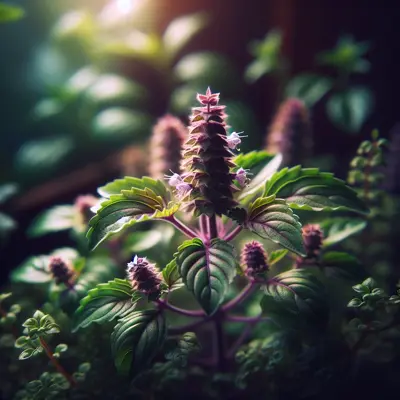
1 1/2" long green leaves, with purple stems. Known for its use in Hindu culture and Ayurveda. Also known as Tulsi. A common ingredient in Thai cuisine and in teas. Used medicinally for digestion and immune system support. Ht. 16-22".
Harvest
90-100d
Days to harvest
Sun
Full sun
Zones
3–11
USDA hardiness
Difficulty
Easy
Planting Timeline
Showing dates for Holy Basil in USDA Zone 7
All Zone 7 herb →Zone Map
Click a state to update dates
Holy Basil · Zones 3–11
Growing Details
Succession Planting
Holy basil isn't a true succession crop — one planting keeps producing as long as you keep pinching it — but starting a second round of seeds indoors in late June gives you insurance. The first planting, started indoors in February or March and transplanted out between April and June, will start slowing down by late August as nights cool and the plant shifts energy toward flowering. A second set of transplants started 10–12 weeks before your first frost date brings fresh, vigorous plants into the harvest window through October and November.
The hard limit is soil temperature: holy basil needs soil above 60°F to germinate reliably and sulks when transplanted into anything cooler. That puts the last realistic transplant date at mid-August in zone 7. Push it later and a cold snap below 50°F will stall the plant before it ever reaches the 90–100 day mark.
Complete Growing Guide
Light: Full sun (6 or more hours of direct sunlight a day). Soil: High Organic Matter, Loam (Silt), Sand. Soil pH: Acid (<6.0), Alkaline (>8.0), Neutral (6.0-8.0). Drainage: Good Drainage, Moist. Growth rate: Rapid. Maintenance: High. Propagation: Seed.
Harvesting
Purple-green to brown smooth to slightly pitted elliptical nutlets 0.8-1.2 mm long with numerous seeds inside.
Color: Brown/Copper, Green, Purple/Lavender. Length: < 1 inch. Width: < 1 inch.
Edibility: A culinary herb especially in Asia used in the same ways as sweet basil though it is commonly cooked or used in teas rather than used raw. Fragrant leaves have a spicy bite that is a mix of clove, mint, and basil flavor.
Storage & Preservation
Fresh holy basil leaves store best at room temperature in a glass of water, like cut flowers, lasting 3-5 days. Avoid refrigerating fresh leaves, as cold temperatures cause them to blacken and lose potency quickly.
For longer preservation, air-drying is the traditional method that best maintains holy basil's medicinal properties. Bundle stems and hang in a warm, dry, well-ventilated area away from direct sunlight. Properly dried leaves retain their potency for up to two years when stored in airtight containers.
Freezing works well for tea blends — spread clean leaves on baking sheets, freeze solid, then store in freezer bags. Frozen leaves become mushy when thawed but are perfect for brewing. You can also make holy basil ice cubes by blending fresh leaves with water and freezing in ice cube trays.
Tincture-making is popular among herbalists: pack fresh leaves in a jar, cover with vodka or glycerin, and steep for 4-6 weeks, straining before use.
History & Origin
Origin: Southeast Asia
Advantages
- +Edible: A culinary herb especially in Asia used in the same ways as sweet basil though it is commonly cooked or used in teas rather than used raw. Fragrant leaves have a spicy bite that is a mix of clove, mint, and basil flavor.
- +Fast-growing
Considerations
- -High maintenance
Companion Plants
Holy basil does its best work planted 8–12 inches from tomatoes, peppers, and eggplant. Whether it actually repels thrips or aphids from those crops is hard to confirm at the backyard scale, but mixing plant families — as NC State Extension recommends — slows the spread of crop-specific pests by breaking up large blocks of the same host. Marigolds (Tagetes spp.) nearby reinforce that same logic, and their shallow roots don't compete with basil's. Lettuce is a practical pairing for a different reason: a taller basil plant can throw enough shade to extend a lettuce planting by a week or two in midsummer heat, and the two crops share no meaningful pest pressure.
Oregano fits in the same bed without friction — similar water needs (0.5–1 inch per week), same full-sun preference, no root competition worth worrying about. Carrots and beans fill out the space without crowding basil's 8–12 inch spacing.
Rue (Ruta graveolens) is the one to keep well away from — it releases allelopathic compounds that can suppress neighboring plants, and basil is notably sensitive to it. Sage is less aggressive but the two are thought to inhibit each other's growth at close range, and practically speaking they want the same warm, well-drained soil without giving each other anything in return. Put them on opposite sides of the herb bed, at least 18–24 inches apart.
Plant Together
Tomatoes
Holy basil repels tomato hornworms, aphids, and whiteflies while potentially improving tomato flavor
Peppers
Deters aphids, spider mites, and thrips that commonly attack pepper plants
Eggplant
Repels flea beetles and aphids that damage eggplant foliage
Oregano
Both herbs have similar growing requirements and complement each other's pest-repelling properties
Marigolds
Both plants repel nematodes and various garden pests, creating a strong protective barrier
Lettuce
Holy basil provides shade for lettuce in hot weather and repels aphids that attack leafy greens
Carrots
Helps deter carrot fly and other root pests while improving soil health
Beans
Holy basil repels bean beetles and aphids while beans fix nitrogen in soil
Keep Apart
Rue
Allelopathic properties can inhibit holy basil growth and development
Cucumber
Holy basil can stunt cucumber growth and may affect fruit development
Sage
Competes for similar nutrients and may inhibit holy basil's growth through root competition
Nutrition Facts
Per 100g serving. % Daily Value based on 2,000 calorie diet. Source: USDA FoodData Central (FDC #172232)
Pests & Disease Resistance
Resistance
Excellent natural disease resistance, very hardy
Common Pests
Few pest problems, occasionally aphids
Diseases
Rare disease issues, very resilient
Troubleshooting Holy Basil
What you'll see, why it happens, and what to do about it.
Soft, distorted new growth with sticky residue on leaves and stems
Likely Causes
- Aphid colony (likely Myzus persicae or Aphis gossypii) — most common on tender growing tips
- Overfertilizing with nitrogen, which produces the lush soft growth aphids prefer
What to Do
- 1.Blast the colonies off with a strong stream of water — do it three mornings in a row
- 2.If the infestation persists, spray with insecticidal soap, making sure to hit the undersides of leaves
- 3.Back off on nitrogen fertilizer; side-dressing with heavy compost can push too much leafy growth
Leaves wilting hard in midday heat even with moist soil, plant not recovering by evening
Likely Causes
- Fusarium wilt (Fusarium oxysporum) — soil-borne, can persist for years in the same bed
- Root rot from waterlogged soil, especially in heavy clay with poor drainage
What to Do
- 1.Pull the plant and check the roots — brown, mushy roots point to rot; a brown streak inside the stem base points to Fusarium
- 2.Don't replant basil in that spot for at least 2 seasons; Fusarium builds up fast in beds that see basil every year
- 3.Amend heavy clay beds with compost before next season to improve drainage, targeting a soil pH of 6.0–7.5
Leaves developing dark brown or black patches after a period of cool, wet weather
Likely Causes
- Downy mildew (Peronospora belbahrii) — the most destructive foliar disease on basil, spreads fast in humid conditions above 60% relative humidity
- Overcrowded planting that blocks airflow between plants
What to Do
- 1.Remove and trash (do not compost) all affected leaves and stems immediately
- 2.Thin or transplant to maintain at least 8–12 inches between plants — NC State Extension notes that overcrowding decreases air movement and creates conditions where foliar diseases take hold fast
- 3.Water at the base only, never overhead, and water in the morning so foliage dries before nightfall
Plant sends up a tall flower spike and leaves turn small and sharp-tasting well before first frost
Likely Causes
- Heat stress triggering premature flowering, common when daytime temps stay above 85°F for more than a week
- Plant reaching 90–100 days with no consistent harvest pressure to keep it in vegetative mode
What to Do
- 1.Pinch flower spikes off as soon as they appear — check every 4–5 days during peak summer
- 2.Harvest the top 2–3 inches of each stem every 2 weeks; this delays bolting significantly
- 3.A plant that's been flowering hard for 2+ weeks is mostly done — start fresh seeds and plan a late-summer planting to carry you through fall
Frequently Asked Questions
How long does holy basil take to grow from seed?▼
Can you grow holy basil in containers?▼
What does holy basil taste like compared to regular basil?▼
Is holy basil good for beginner gardeners?▼
When should I plant holy basil seeds?▼
Can I harvest holy basil flowers or just the leaves?▼
Zone-by-Zone Planting Calendar
| Zone | Indoor Start | Transplant | Direct Sow | Harvest |
|---|---|---|---|---|
| Zone 3 | April – May | June – July | — | July – October |
| Zone 4 | March – April | June – July | — | July – October |
| Zone 5 | March – April | May – June | — | June – October |
| Zone 6 | March – April | May – June | — | June – November |
| Zone 7 | February – March | April – June | — | June – November |
| Zone 8 | February – March | April – May | — | May – December |
| Zone 9 | January – February | March – April | — | April – December |
| Zone 10 | January – January | February – April | — | April – December |
| Zone 11 | January – January | January – March | — | March – December |
Growing Guides from Wind River Greens
Sources & References
External authority sources used in compiling this guide.
- ExtensionNC State Extension
- USDAUSDA FoodData Central
See the Methodology page for how this data is sourced, what's AI-assisted, and known limitations.